If you live in a small house, apartment, or compact home, your kitchen needs to do a lot in a little space. It should help you cook, store items, move freely, and still look good. That is why kitchen furniture design matters so much in small spaces.
| What to choose | Why it works |
|---|---|
| Extendable or foldable table | Saves space daily and expands when needed |
| Round or compact table | Improves movement and fits tighter layouts better |
| Slim-profile chairs or bench seating | Reduces visual bulk and frees up walking room |
| Light colors and simple finishes | Makes the kitchen feel more open and less crowded |
| Central-leg table base | Gives more legroom and easier circulation |
| Multi-purpose pieces with storage | Adds function without adding extra furniture |
A small kitchen does not have to feel crowded or difficult to use. With the right layout, smart storage, and the right furniture choices, you can turn even a tight kitchen into a comfortable and stylish part of your home. The goal is simple: make the space work harder without making it feel full.
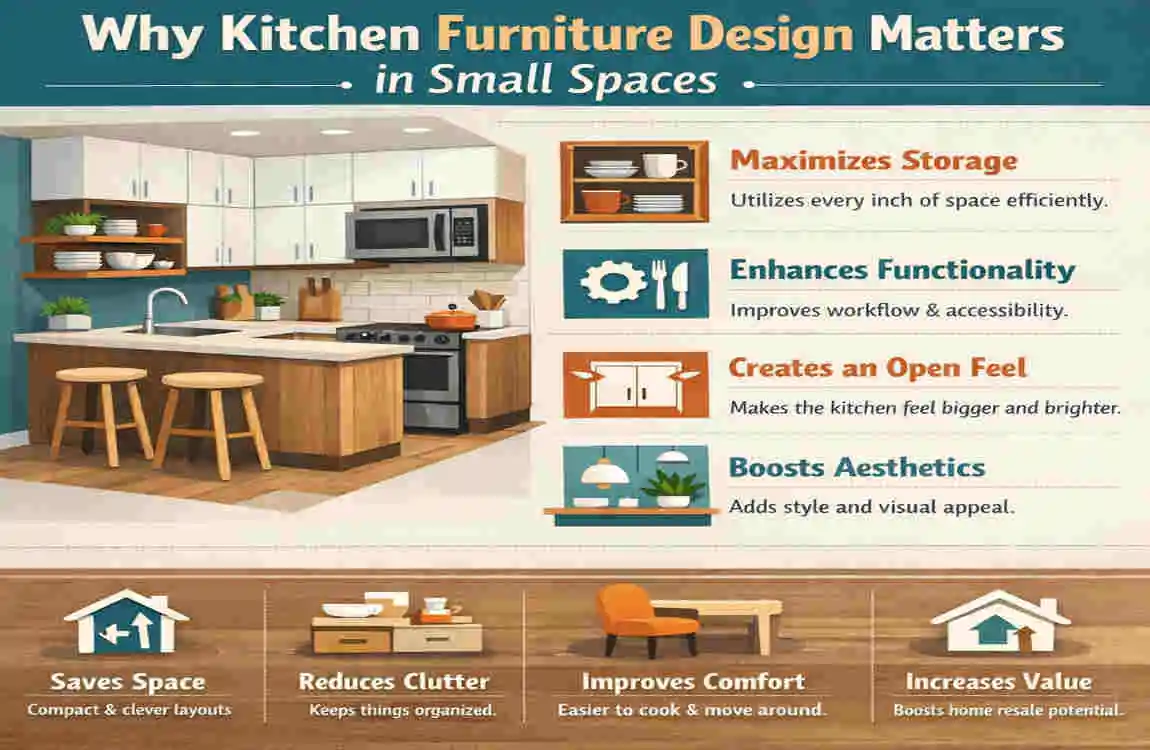
Why Kitchen Furniture Design Matters in Small Spaces
Functionality Comes First
In a small kitchen, every piece of furniture should have a clear purpose. You want a layout that helps you move from one task to another without stress. For example, your sink, stove, and prep area should be easy to reach.
Good kitchen furniture design supports smooth cooking. It keeps plates, pans, spices, and tools close by. When everything has a place, you save time and avoid frustration.
Space Optimisation Improves Comfort
A small kitchen can quickly become messy if furniture is not well planned. The right design helps you avoid clutter and use every inch wisely.
This means more open floor space, easier cleaning, and a more relaxed overall feeling. Kitchen organisation ideas are not just about storage. They also help your kitchen feel calm and usable.
Good Design Enhances Home Value
A well-designed compact kitchen can make your entire home feel more modern. Buyers often notice kitchens first, and a smart layout gives a strong impression.
Even simple upgrades like better cabinets, cleaner lines, and practical storage can increase appeal. A compact kitchen design often adds value because it shows the home was planned with care.
Understand Your Small Kitchen Layout Before Choosing Furniture
Common Small Kitchen Layouts
Before buying furniture, look at the shape of your kitchen. Different layouts need different solutions.
Here are the most common ones:
- Galley kitchen: Two parallel counters with a walkway in between
- L-shaped kitchen: Cabinets and counters along two walls
- One-wall kitchen: All furniture placed on a single wall
- U-shaped compact kitchen: Cabinets on three sides for strong storage
Each one has benefits. The key is choosing furniture that fits the shape instead of fighting it.
Measure Your Kitchen Correctly
Do not guess the size of your kitchen. Measure it carefully.
Write down wall lengths, window positions, door swings, and appliance spaces. Also, leave enough walking room so you can move safely. Even a few inches can make a difference in a small kitchen.
When you measure first, you avoid buying furniture that is too wide, too deep, or hard to place.
Identify Your Daily Kitchen Needs
Think about how you use your kitchen every day. Do you cook often? Do you need space for family meals? Do you store a lot of dry goods?
Your habits should guide your choices. A single person may need a simple layout. In contrast, a family may need more cabinets, including stronger kitchen cabinets, in small spaces. The best design is the one that matches your real life.
Kitchen Layout, Best Furniture Choice, Main Benefit
Galley Slim cabinets, wall shelves , easy movement
L-shaped Corner units, compact dining set, Better storage use
One-wall Vertical storage, foldable table , saves floor space
U-shaped Built-in cabinets, pull-out drawers , Strong organization
Best Kitchen Furniture Design Ideas for Small Spaces House
Choose Multi-Functional Furniture
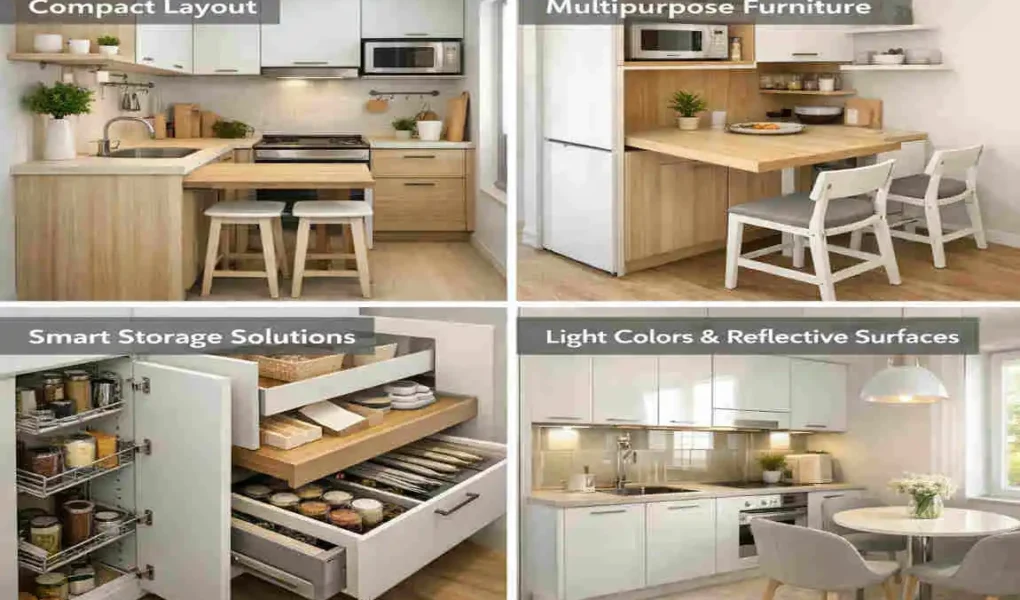
Multi-use furniture is one of the smartest choices for a small kitchen. A piece that does more than one job saves space and money.
You can use:
- Foldable tables for quick meals
- Pull-out counters for extra prep space
- Storage benches for seating and storage
- Convertible kitchen islands that work as prep areas and dining spots
These pieces are ideal because they help the kitchen stay flexible.
Use Vertical Storage Solutions
When floor space is limited, go upward. Vertical storage is one of the best small kitchen storage ideas.
Tall cabinets make use of wall height. Open shelves keep items easy to reach. Wall-mounted racks and hanging organisers help clear counter space.
This is especially useful in small homes where every surface matters. It also gives the kitchen a cleaner and more open look.
Install Slim and Compact Cabinets
Bulky cabinets can make a small kitchen feel crowded. Slim cabinets and narrow drawers work better because they save room while still offering useful storage.
Corner storage units are also helpful because they turn awkward spaces into working spaces. Soft-close compact cabinetry adds a polished feel without taking up too much room.
Opt for Built-In Furniture
Built-in pieces make a small kitchen feel neat and intentional. They fit the room closely and reduce wasted space.
Examples include built-in microwave shelves, hidden storage drawers, and integrated appliances. This type of modular kitchen furniture creates a cleaner look and often improves daily use.
Add Mobile Furniture Pieces
Mobile furniture gives you more control over your space. If you need extra storage or prep space, you can move it when needed.
Good choices include rolling carts, portable islands, and movable storage units. These are especially useful in rental homes or kitchens that change with your needs.
How to Choose the Right Materials for Kitchen Furniture
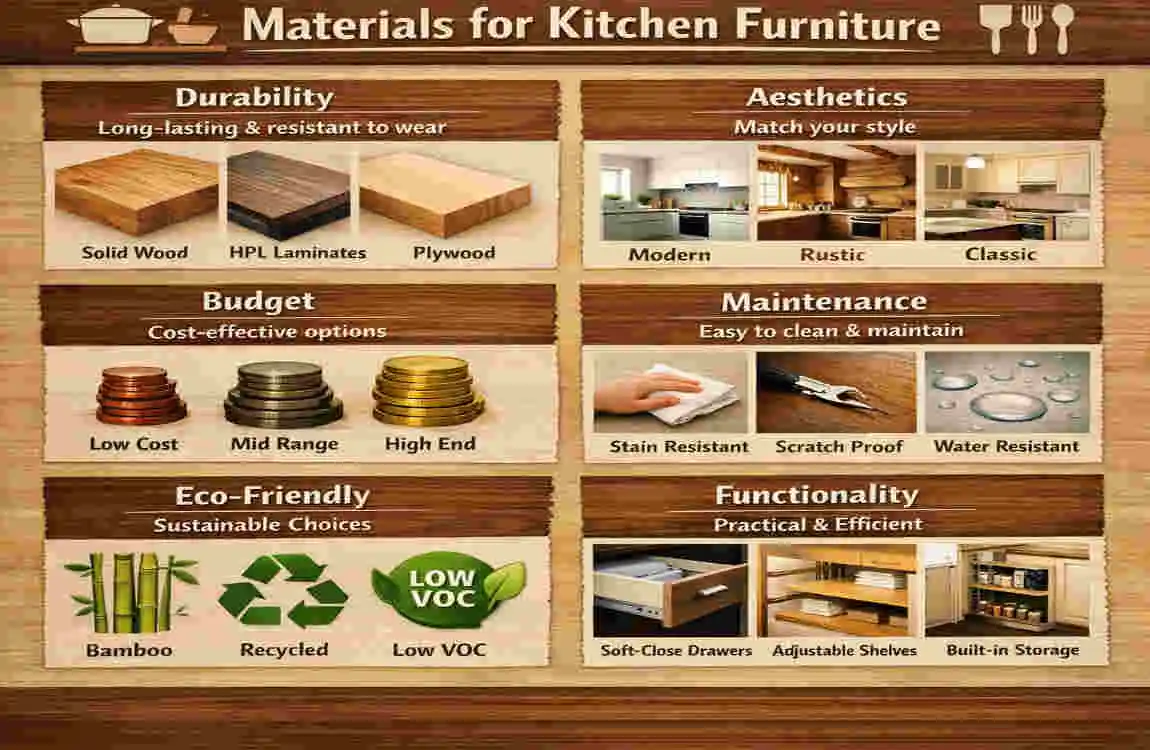
Wood Furniture for Warmth
Wood brings warmth and a sense of comfort to a kitchen. It works well if you want a friendly and natural look.
Solid wood is strong, but it may cost more. Engineered wood and MDF are more budget-friendly and still work well in many homes. The best option depends on your budget and how much wear your kitchen gets.
Metal Furniture for Modern Kitchens
Metal gives a clean, sharp look. It suits modern kitchen furniture styles very well.
Stainless steel is durable and easy to clean. Aluminium frames are light and practical. Metal elements work especially well in small kitchens because they often look simple and uncluttered.
Glass Elements for Spacious Feel
Glass can make a small kitchen feel less heavy. Glass cabinet doors, shelves, and reflective accents help the room look more open.
You do not need too much glass. Even small touches can make a big difference by adding light and reducing visual bulk.
Durable Countertop Materials
Your countertop should be durable, easy to maintain, and suitable for daily use.
- Quartz: Durable and stylish
- Granite: Strong and long-lasting
- Laminate: Good for budget kitchens
Choose a material that matches your cooking habits and cleaning routine. In small kitchens, durability matters because the space is used often.
Colour and Style Tips for Small Kitchen Furniture Design
Best Colours for Small Kitchens
Light colours work best because they make the room feel brighter and more open. Good options include white, beige, light grey, and soft pastels.
These shades reflect light and help the kitchen feel less closed in. If you want a clean and airy look, this is usually the safest choice.
Use Minimalist Furniture Styles
Minimalist design is a strong choice for compact homes. It removes visual noise and keeps things simple.
Look for clean lines, handleless cabinets, and Scandinavian-style furniture. These choices support a minimalist kitchen design that feels neat and modern.
Reflective Finishes Make Kitchens Look Bigger
Glossy cabinet finishes, mirror backsplashes, and glass details can help bounce light around the room.
This creates the feeling of more space, which is very helpful in small kitchens. Just use reflective surfaces in a balanced way so the room still feels warm and natural.
Match Furniture With Overall Home Decor
Your kitchen should feel connected to the rest of your home. If your home is modern, choose sleek furniture. If it is rustic, use warmer wood tones. If it is contemporary, keep the design simple and balanced.
A matching style helps the home feel more complete and well planned.
Space-Saving Kitchen Furniture Design Trends in 2026
Smart Storage Technology
More homes are now using smart storage features, such as sensor cabinets and hidden charging stations. These additions save space and add convenience.
They also support a cleaner look because fewer things sit on the counter.
Modular Kitchen Furniture
Modular kitchen furniture is growing fast because it is flexible. You can change the layout, add more units later, or adjust pieces based on your needs.
This works well for renters and small homeowners who want practical solutions.
Eco-Friendly Furniture Designs
Sustainable wood and recycled materials are becoming more common. These options are better for the environment and often look beautiful in modern homes.
Many people now want furniture that is both useful and responsible.
Minimalist Open Kitchen Concepts
Open shelving and seamless furniture designs continue to trend in 2026. They make small kitchens feel lighter and less crowded.
This style works best when you keep items organised and avoid overfilling the shelves.
Common Mistakes to Avoid When Choosing Kitchen Furniture Design
Buying Oversized Furniture
Big furniture can block movement and reduce workspace. It may look attractive in a showroom, but it can feel overwhelming in a small kitchen.
Always choose pieces that fit the room, not just your wishlist.
Ignoring Storage Needs
If you do not plan storage well, clutter will take over quickly. You need enough space for utensils, food, cookware, and cleaning items.
Smart kitchen organisation ideas help prevent this problem.
Choosing Dark Colours in Tiny Kitchens
Dark shades can make a small kitchen feel cramped when used too heavily. They absorb light, reducing the sense of openness.
If you like darker tones, use them carefully as accents rather than the main colour.
Poor Lighting Placement
Even the best furniture will not look good in a dark kitchen. Good lighting improves both style and safety.
Make sure work areas, counters, and storage zones are well lit so they can be used comfortably.
Following Trends Over Functionality
Trends are helpful, but your kitchen must still work for you. A stylish piece that makes cooking harder is not a smart choice.
Always ask: Will this furniture help my daily routine?
Budget-Friendly Kitchen Furniture Design Tips
Repurpose Existing Furniture
You do not always need to buy everything new. Old cabinets can be repainted. Shelves can be reused. Some furniture can be adjusted to improve functionality.
A little DIY effort can save money and still improve the kitchen.
Invest in Essential Pieces First
Start with the most important items first, like cabinets, counters, and storage. These pieces affect how the kitchen works every day.
Once the basics are in place, you can add extra features later.
Shop Ready-to-Assemble Furniture
Ready-to-assemble furniture is often cheaper and easier to install. It can be a good choice for renters, first homes, or small upgrades.
Just make sure the quality is strong enough for regular use.
Mix Open and Closed Storage
This approach helps reduce cabinet costs while keeping the kitchen organised. Open shelves are good for daily items, while closed cabinets hide clutter.
It is a simple and practical balance.
Small Kitchen Furniture Design Ideas for Different Home Types
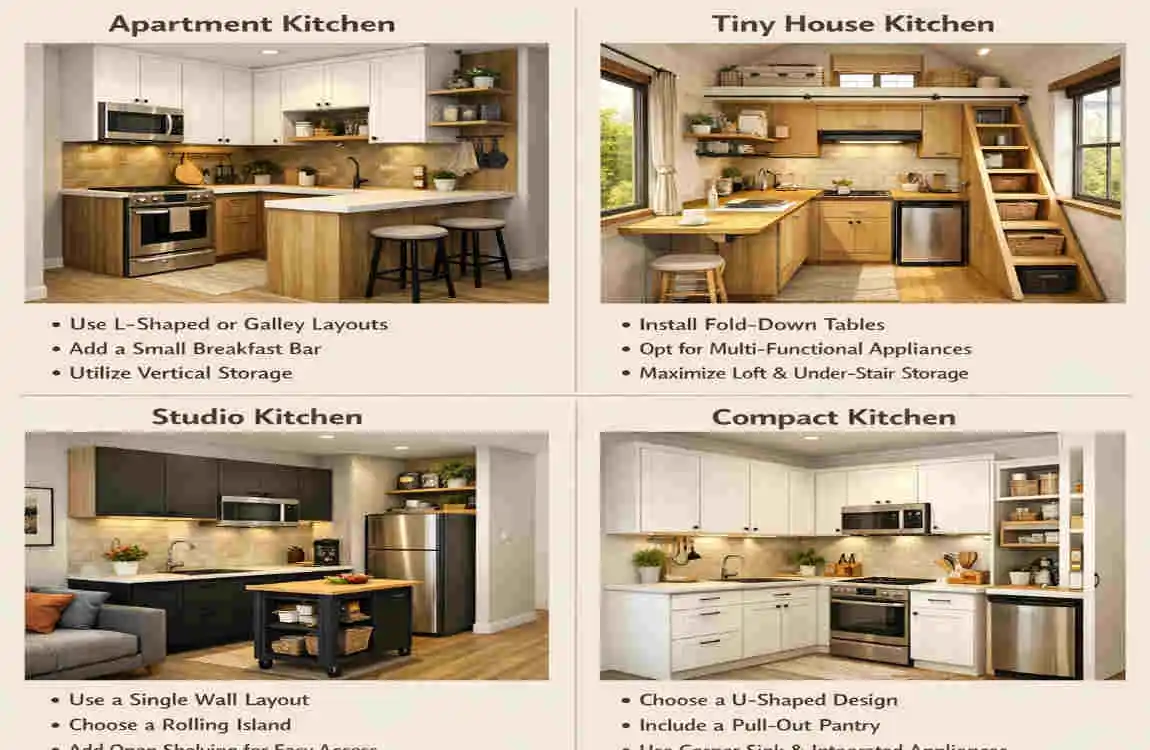
Apartment Kitchens
Apartment kitchens usually need compact dining sets and wall-mounted tables. These save floor space and still give you a place to eat or work.
Light furniture and slim storage units also help the room feel bigger.
Studio Homes
Studio homes need furniture that can do more than one job. A kitchen island can work as a prep area, dining spot, and divider between zones.
This makes the space feel more organised.
Tiny Houses
Tiny houses need foldable furniture and hidden storage. Every piece should serve a purpose.
The goal is to keep the kitchen functional without detracting from the rest of the home.
Family Homes With Small Kitchens
Families need more organisation, even in a small kitchen. Space-efficient pantry cabinets and child-friendly layouts help keep the room safe and easy to use.
You want enough storage for everyone without making the kitchen feel full.
Expert Tips to Make a Small Kitchen Look Bigger
Use Natural Lighting
If your kitchen has windows, let the light in. Natural light makes the room feel open and fresh.
Avoid heavy curtains that block brightness.
Keep Countertops Clutter-Free
Clear counters create the feeling of more space. Store items in cabinets or wall units whenever possible.
A tidy counter instantly improves the room’s look.
Add Open Shelving Carefully
Open shelves can make the kitchen feel airy, but do not overcrowd them. Use them only for a few neat items.
Too many objects can create a visual mess.
Use Consistent Colour Schemes
Keeping colours consistent helps the kitchen feel smooth and connected. It reduces visual breaks and makes the room appear larger.
FAQ
What is the best kitchen furniture design for small spaces?
The best design combines function, storage, and simple style. Multi-functional furniture, slim cabinets, and vertical storage usually work best.
How can I maximise storage in a small kitchen?
Use tall cabinets, wall shelves, hanging organisers, and pull-out drawers. These help you store more without using extra floor space.
Which colours make a small kitchen look bigger?
Light colours like white, beige, light grey, and soft pastels make a small kitchen feel bigger and brighter.
Are modular kitchens good for small houses?
Yes, modular kitchen furniture is a smart choice for small homes because it is flexible, organised, and easy to adapt.
Which cabinet styles work best in compact kitchens?
Slim cabinets, corner units, and built-in cabinets work very well. They use space wisely and help reduce clutter.
How much does small kitchen furniture design cost?
The cost can vary widely depending on materials, size, and style. Budget-friendly options use laminate or ready-to-assemble furniture, while custom-built-ins cost more.
Can I add a kitchen island in a small kitchen?
Yes, but choose a small, mobile, or convertible island. It should support your space rather than block movement.