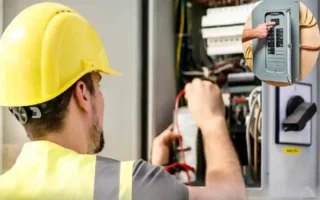
Imagine this: you’re sitting in your cosy living room, enjoying a good book or your favourite TV show, and suddenly, the lights flicker and go out. Or worse, you smell something burning coming from an outlet. These scenarios are not only inconvenient but can be downright dangerous. That’s where house rewiring comes into play.
Rewiring a house is not just about keeping the lights on; it’s about ensuring the safety and efficiency of your home’s electrical system. But one question that often comes up is, “How much does it cost to rewire a house in the UK?”
What is House Rewiring?

Understanding the Process
House rewiring is the process of replacing or upgrading the electrical wiring system in your home. It involves removing old, potentially hazardous wiring and installing new, safer, and more efficient electrical components. This can include everything from the wires themselves to the consumer unit (fuse box) and outlets.
Why Rewire Your Home?
There are several reasons why homeowners might need to rewire their houses:
- Age of the Home: If your house is older, the wiring may not meet current safety standards or may be deteriorating.
- Safety Concerns: Faulty wiring can lead to electrical fires, shocks, or other hazards.
- Electrical Upgrades: You might want to upgrade your electrical system to support more devices, smart home technology, or renewable energy systems.
The Importance of Professional Electricians
While it might be tempting to try a DIY approach, rewiring a house is a job best left to qualified professionals. Electricians have the knowledge, skills, and experience to ensure the job is done safely and in compliance with code. They can also provide the necessary certification to prove that your home’s electrical system meets current standards.
Average Cost to Rewire a House in the UK
Price Ranges by Property Size and Type
The cost of rewiring a house can vary significantly depending on factors such as the size and type of your property. Here’s a breakdown of typical price ranges:
- One-bed flat: £3,000 – £4,800
- Two-bed house or flat: £3,800 – £5,800
- Three-bed house: £4,500 – £8,000
- Four-bed house: £6,000 – £9,500
- Larger or detached houses: £7,500 – £12,500+
Regional Cost Variations
Keep in mind that these are average costs; prices can vary by location. For example, rewiring costs tend to be higher in London and the South East due to higher labour rates and living expenses.
Materials and Labour Costs
The total cost of rewiring house includes both materials and labour. Materials can range from £500 to £1,500 or more, depending on the quality and quantity needed. Labour costs typically make up the majority of the total, with electricians charging between £150 and £250 per day.
Additional Services and Costs
In addition to the basic rewiring, you may need to budget for extra services like:
- Consumer unit (fuse box) replacement: £200 – £500
- Electrical safety certification: £100 – £200
These additional costs can add up, so it’s important to factor them into your overall budget.
Factors Affecting the Cost of Rewiring
Size and Type of Property
As we mentioned earlier, the size and type of your property play a significant role in determining the cost of rewiring. Larger homes with more rooms and electrical points will naturally cost more to rewire than smaller properties.
Age and Condition of Existing Wiring
The age and condition of your home’s existing wiring can also impact the cost. Older homes may have outdated or damaged wiring that requires more extensive replacement. In some cases, the electrician may need to remove old wiring that’s been covered by walls or floors, which can increase labour costs.
Accessibility of Wiring
The accessibility of your home’s wiring is another critical factor. If the wiring is easily accessible, the job may be quicker and less expensive. However, if the wiring is hidden behind walls, floors, or ceilings, the electrician may need to do more work to access and replace it, which can increase the cost.
Extent of Rewiring Needed
You may need a full rewire or a partial rewire, depending on the condition of your existing electrical system. A full rewire, which involves replacing all the wiring in your home, will be more expensive than a partial rewire, which focuses on specific areas or circuits.
Quality of Materials and Fittings
The quality of the materials and fittings you choose can also affect the cost. Basic plastic fittings will be less expensive than Premium finishes, such as metal or decorative options. Keep in mind that while higher-quality materials may cost more upfront, they can also be more durable and long-lasting.
Location and Electrician Rates
As we mentioned earlier, the cost of rewiring can vary depending on your location. Electrician rates tend to be higher in urban areas like London and lower in rural areas. It’s a good idea to get quotes from several electricians in your area to compare prices and find the best value.
Additional Upgrades or Safety Improvements
Consider additional upgrades or safety improvements while you’re rewiring your home. For example, you should install new lighting fixtures, add more electrical outlets, or upgrade your consumer unit to a modern, safer model. These extras can add to the overall cost but can also improve the safety and functionality of your home’s electrical system.
Hidden Costs and Unexpected Complications
Finally, it’s essential to be aware of potential hidden costs and unexpected complications that can arise during a rewiring project. For example, the electrician may discover damaged or outdated wiring that needs to be replaced, or they may encounter structural issues that make the job more challenging. While it’s impossible to predict every potential problem, it’s wise to set aside a contingency budget to cover any unexpected expenses.
How Long Does Rewiring Take?
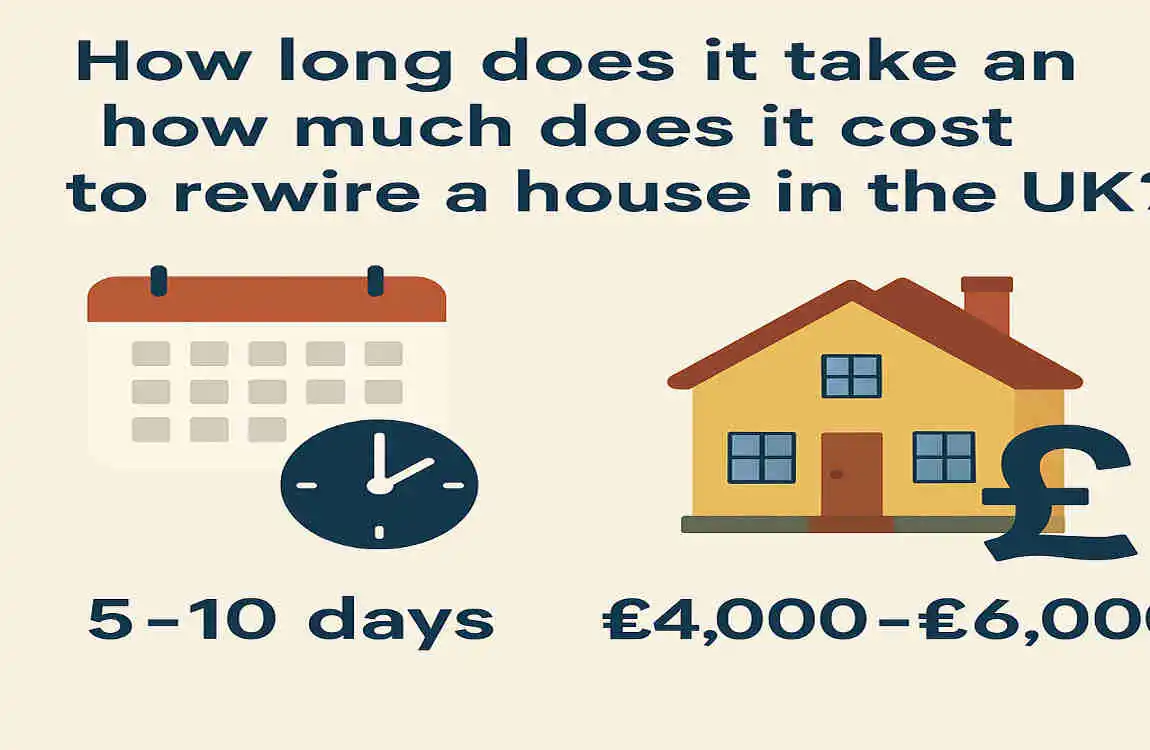
Typical Duration by House Size
The duration of a rewiring project can vary depending on the size of your home and the extent of the work needed. Here are some rough estimates:
- One-bed flat: 3-5 days
- Two-bed house or flat: 5-7 days
- Three-bed house: 7-10 days
- Four-bed house: 10-14 days
- Larger or detached houses: 2-3 weeks or more
Keep in mind that these are rough estimates, and the actual duration may vary depending on your project’s specific circumstances.
Impact on Project Cost and Disruption
The time required to rewire your home can affect both the overall cost and the level of disruption you experience. Longer projects will naturally cost more in terms of labour, and they may also require you to make more extensive arrangements for living without electricity or with limited access to certain areas of your home.
Managing Daily Life During Rewiring
If you’re planning to stay in your home during the rewiring process, it’s essential to make arrangements to minimise disruption. You may need to set up a temporary kitchen or living area, or make plans to stay with friends or family for a few days. Communicate openly with your electrician about your needs and any concerns, and they can help you plan accordingly.
Money-Saving Tips for House Rewiring
Get Multiple Quotes
One of the best ways to save money on a rewiring project is to get quotes from multiple certified electricians. This will give you a better idea of the going rate in your area and help you find the best value for your money. Don’t automatically go with the lowest quote, though – make sure to check references and ensure that the electrician is qualified and experienced.
Prioritise Areas That Need It Most
If you’re on a tight budget, you may need to prioritise specific areas of your home for rewiring. Please focus on the areas that need it most, such as kitchens and bathrooms, where water and electricity can be a dangerous combination. You can always tackle other areas later as your budget allows.
Opt for Standard Fittings
While Premium finishes can be tempting, opting for standard fittings can help you save money on your rewiring project. Basic plastic fittings are often just as functional as more expensive options, and they can be easily replaced or upgraded later if you want to change the look of your home.
Plan Rewiring with Other Renovations
If you’re planning other home renovations, such as a kitchen or bathroom remodel, consider scheduling your rewiring project at the same time. This can help you save on labour costs, as the electrician can work alongside other tradespeople to minimise disruption and maximise efficiency.
Check for Government Grants or Schemes
Finally, don’t forget to check for any government grants or schemes that may help offset the cost of your rewiring project. Some programs offer financial assistance for energy-efficient upgrades or safety improvements, so it’s worth researching whether you qualify.
Risks of Cheap or DIY Rewiring
Dangers of Unsafe Electrical Work
While it may be tempting to try to save money by hiring a cheap electrician or attempting a DIY rewiring project, the risks aren’t worth it. Unsafe electrical work can lead to fires, shocks, or other serious hazards that can put your home and your family in danger.
Potential Costs of Poor Workmanship
In addition to the safety risks, poor artistry can also lead to costly repairs down the line. If the rewiring is not done correctly, you may need to hire another electrician to fix the problems, which can end up costing you more in the long run.
Importance of Qualified Professionals and Certification
That’s why it’s so essential to hire a qualified, certified electrician for your rewiring project. Look for electricians who are members of professional organisations such as the National Inspection Council for Electrical Installation Contracting (NICEIC) or the Electrical Contractors’ Association (ECA). These organisations ensure their members meet strict safety and quality standards.
Additionally, a qualified electrician will provide you with the necessary certification to prove that your home’s electrical system meets current safety standards. This certification may be required for insurance purposes and to ensure the safety of your home and family.