Have you ever wondered just how much space you need for a two-car garage? Whether you’re planning to build a new garage or want to understand the space you already have, knowing the square footage of a two-car garage is crucial. In this comprehensive guide, we’ll dive into garage sizes, helping you understand standard dimensions and plan your space effectively.
Understanding the size of a two-car garage goes beyond just parking your vehicles. It’s about creating a functional space that meets your needs, whether it’s for storage, a workshop, or even a home gym.
What is a Two-Car Garage?
Definition and Purpose
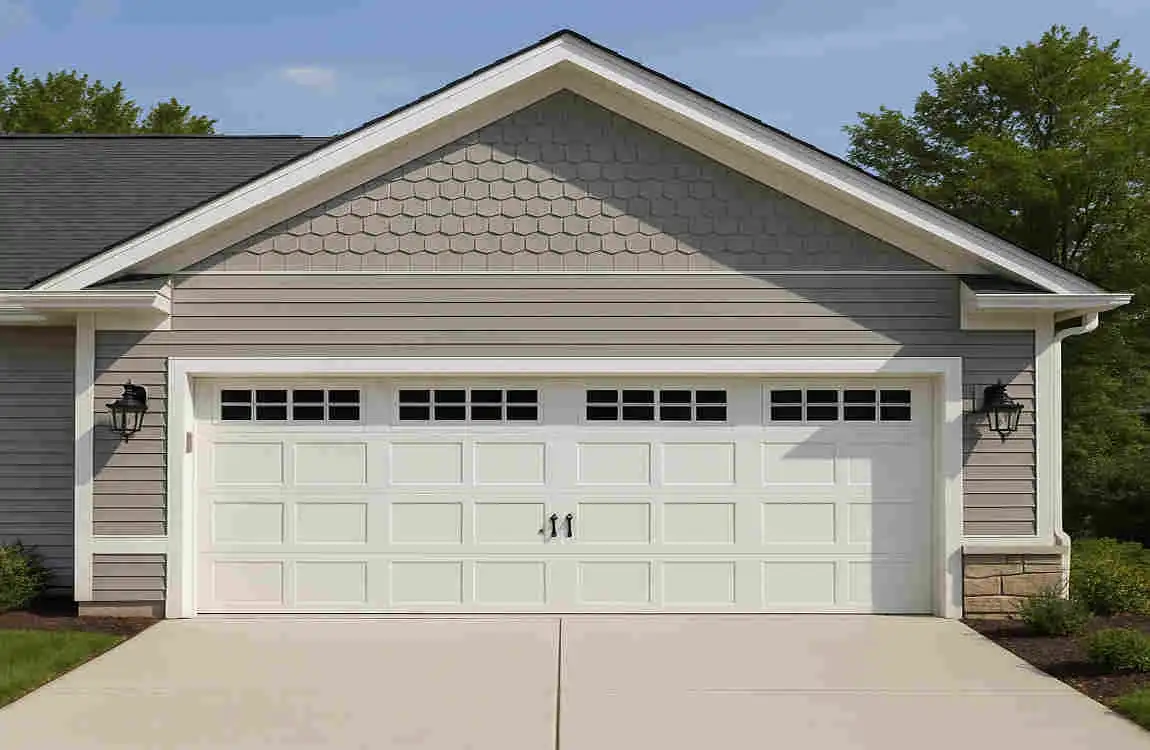
A two-car garage is a structure designed to house two vehicles, typically side by side. It’s a common feature in many homes, providing a convenient and secure place to park your cars. But a two-car garage is more than just a parking spot – it’s a versatile space that can serve multiple purposes.
Typical Uses Beyond Car Storage
While the primary function of a two-car garage is to protect your vehicles from the elements, many people use this space for much more. Here are some common uses for a two-car garage beyond car storage:
- Storage: From tools and gardening equipment to seasonal decorations and bicycles, a two-car garage can be an excellent storage solution.
- Workspace: Many homeowners convert part of their garage into a workshop, perfect for DIY projects, woodworking, or crafting.
- Hobby Area: Whether you’re into painting, pottery, or model building, a two-car garage can provide the space you need for your hobbies.
- Home Gym: With some creative planning, a two-car garage can be transformed into a home gym, complete with exercise equipment and workout space.
Standard Size Dimensions of a Two-Car Garage
When it comes to the size of a two-car garage, there are some standard dimensions that most builders follow. However, variations may depend on your specific needs and the space available on your property.
Minimum Standard Dimensions
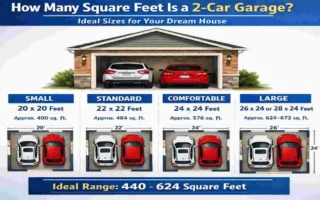
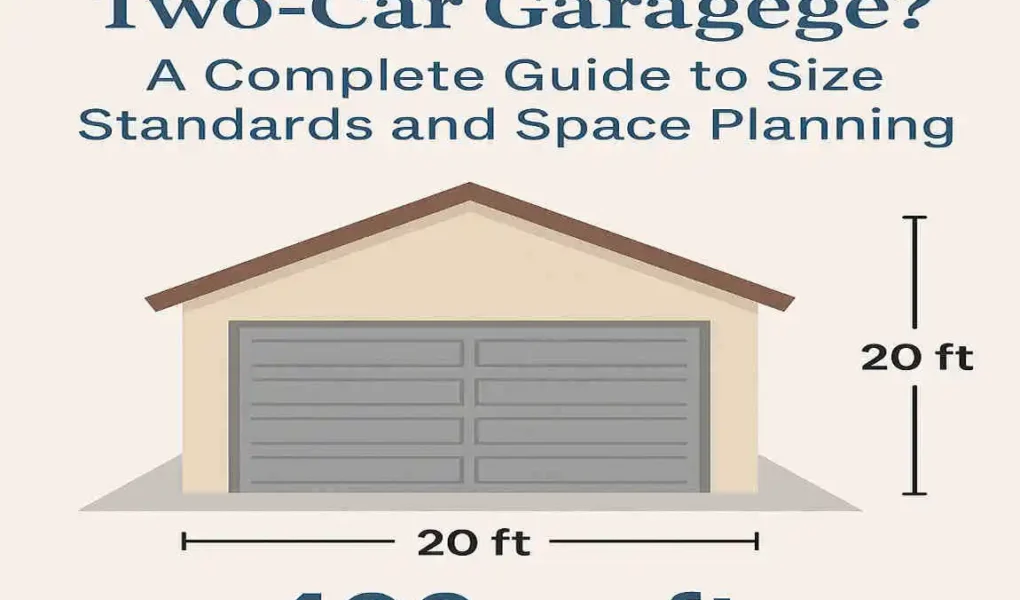
The minimum standard size for a two-car garage is typically 20 feet by 20 feet, totaling 400 square feet. This size is just enough to comfortably fit two standard-sized cars side by side, with minimal extra space for movement or storage.
Common Variations
While the 20×20 size is the minimum, many two-car garages are built slightly larger to provide more comfort and flexibility. Some common variations include:
- 20 feet by 22 feet: This size adds an extra 2 feet of depth, bringing the total square footage to 440.
- 20 feet by 24 feet: With an additional 4 feet of depth, this size totals 480 square feet, providing more room for movement and storage.
- 24 feet by 24 feet: This larger size, at 576 square feet, is ideal for those who need more space for larger vehicles or additional storage.
Larger Sizes for Trucks/SUVs or Additional Storage
If you own larger vehicles like trucks or SUVs, or need even more space for storage or a workshop, consider a two-car garage. Some standard sizes for these purposes include:
- 24 feet by 30 feet: At 720 square feet, this size provides ample space for larger vehicles and additional storage or workspace.
- 24 feet by 36 feet: With 864 square feet, this size offers even more flexibility for your needs, whether it’s parking, storage, or a dedicated hobby area.
How to Calculate Square Feet in a Two-Car Garage
Calculating the square footage of your two-car garage is a simple process: measure the width and depth of the space, then multiply them.
Measuring Width and Depth
To get started, you’ll need a tape measure and a notepad to record your measurements. Begin by measuring the width of your garage, which is typically the shorter dimension, from one side wall to the other. Next, measure the depth of your garage, which is the longer dimension, from the back wall to the garage door.
Multiplying for Total Square Footage
Once you have your width and depth measurements, multiply them to get the total square footage of your two-car garage. For example, if your garage is 20 feet wide and 22 feet deep, the calculation would be:
20 feet (width) x 22 feet (depth) = 440 square feet
Examples Based on Common Size Ranges
Let’s look at some examples of square footage calculations based on standard two-car garage size ranges:
- 20 feet by 20 feet: 20 x 20 = 400 square feet
- 20 feet by 22 feet: 20 x 22 = 440 square feet
- 20 feet by 24 feet: 20 x 24 = 480 square feet
- 24 feet by 24 feet: 24 x 24 = 576 square feet
- 24 feet by 30 feet: 24 x 30 = 720 square feet
- 24 feet by 36 feet: 24 x 36 = 864 square feet
Factors Influencing Garage Size Choice
When deciding on the size of your two-car garage, several factors should be considered. These factors will help you determine the best size for your specific needs and circumstances.
Vehicle Sizes and Types
The size and type of vehicles you own will play a significant role in determining the appropriate size for your two-car garage. Here are some considerations:
- Sedans: Standard sedans typically fit nicely in a 20×20 garage, with some extra space for movement.
- Trucks: Larger trucks may require a deeper garage, such as a 20×22 or 20×24, to accommodate their length.
- SUVs: Like trucks, SUVs may need additional depth and possibly width to fit comfortably in the garage.
Space Needed for Door Opening and Ease of Movement
Another essential factor to consider is the space needed to open car doors and move around the garage. You’ll want to ensure there’s enough room for you and your family to enter and exit your vehicles comfortably, and to move around the garage without feeling cramped.
Storage Needs
Many people use their two-car garage for storage beyond just their vehicles. Consider your storage needs when deciding on the size of your garage:
- Tools: If you have many tools, allocate space for a workbench and tool storage.
- Bicycles: Bicycles can take up a significant amount of space, so consider how many you need to store and plan accordingly.
- Shelving: Shelving units can help maximize your storage space, but they’ll also take up floor space, so factor that into your garage size decision.
Workspace or Hobby Area Considerations
If you plan to use part of your two-car garage as a workspace or hobby area, you’ll need to consider the space requirements for those activities. For example:
- Workshop: A workshop may require space for a workbench, tools, and storage for materials.
- Art Studio: An art studio might need space for an easel, painting supplies, and storage for completed works.
- Home Gym: A home gym will require space for exercise equipment, such as a treadmill and weights, as well as a workout area.
Space Planning Tips for Two-Car Garages
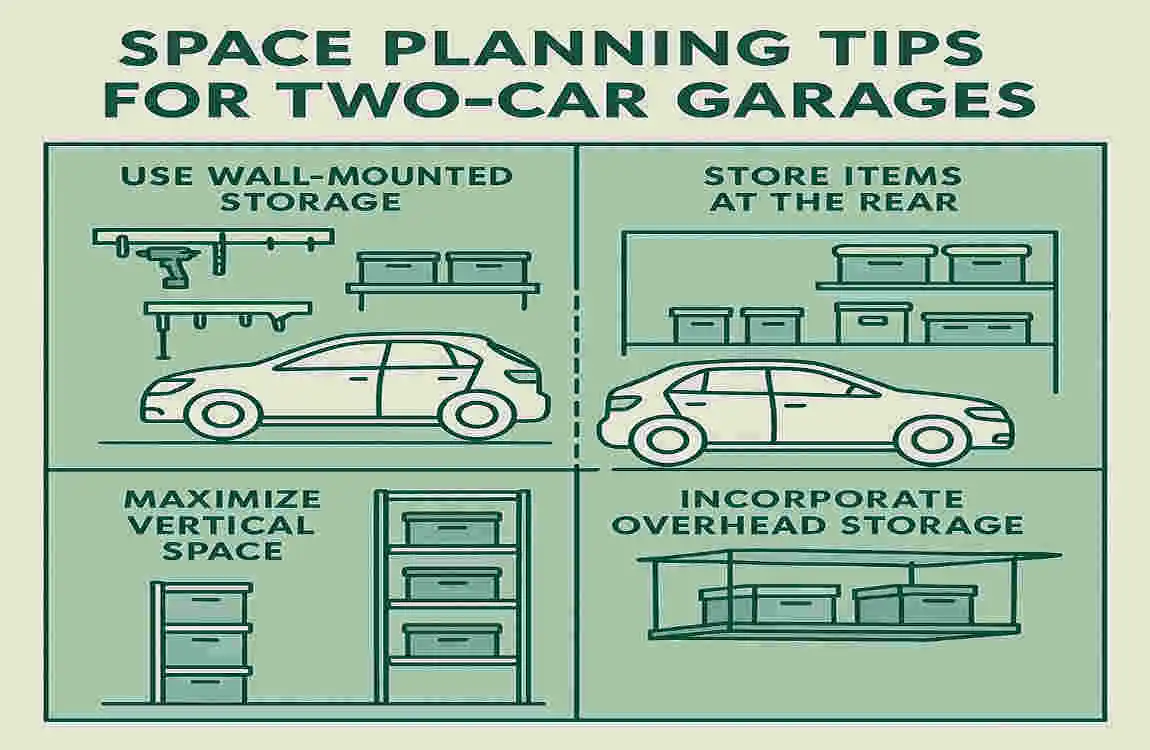
Now that you have a better understanding of the factors that influence garage size, let’s dive into space-planning tips to help you make the most of your two-car garage.
Layout Ideas for Parking and Walking Space
When planning the layout of your two-car garage, consider the following tips:
- Leave enough space between parked cars: Aim for at least 2-3 feet to allow easy access and movement.
- Allocate space for opening car doors: Ensure that there’s enough room on either side of each parked car to open the doors comfortably.
- Create a clear path to the garage door: Keep the area in front of it clear to allow for easy entry and exit.
Storage Solutions that Maximize Garage Space
To maximize your garage space, consider these storage solutions:
- Wall-mounted shelving: Utilize vertical space by installing wall-mounted shelving units to store items such as tools, paint cans, and seasonal decorations.
- Overhead storage: If your garage has high ceilings, consider installing overhead storage racks to keep items like luggage or camping gear out of the way.
- Cabinet systems: Invest in a garage-specific cabinet system to keep your tools and supplies organized and easily accessible.
Planning for Future Needs
When planning your two-car garage, it’s essential to think about your future needs. Consider the following:
- Additional vehicles: If you anticipate adding more cars to your household in the future, plan for the extra space you’ll need.
- Changing storage requirements: Your storage needs may change over time, so consider how you can adapt your garage layout to accommodate those changes.
- New hobbies or interests: If you think you might take up a new hobby or interest that requires space in the garage, plan for that possibility.
Why Size Matters: Benefits of Larger Garages
While a larger garage may come with a higher price tag, there are several benefits to having more space. Let’s explore some of the advantages of larger two-car garages.
More Comfortable Parking and Vehicle Access
One of the most significant benefits of a larger garage is the increased comfort and ease of parking and accessing your vehicles. With more space, you’ll have:
- Easier entry and exit: More room to open your car doors and get in and out comfortably.
- Fewer dings and scratches: Ample space between parked cars reduces the likelihood of accidental damage.
- Better maneuverability: More room to maneuver your vehicles in and out of the garage, especially if you have larger vehicles.
Extra Space for Storage and Activities
A larger garage also provides more space for storage and other activities:
- Increased storage capacity: More room for shelving, cabinets, and other storage solutions to keep your belongings organized and accessible.
- Dedicated workspace: Space for a workbench, tools, and materials to pursue your hobbies or DIY projects.
- Home gym or fitness area: Room for exercise equipment and a workout space to stay active and healthy.
Impact on Home Value and Resale Considerations
Finally, a larger garage can have a positive impact on your home’s value and resale potential:
- Increased appeal to buyers: A spacious garage is a desirable feature for many homebuyers, especially those with multiple vehicles or storage needs.
- Higher resale value: Homes with larger garages often command higher prices on the real estate market.
- Flexibility for future owners: A larger garage allows them to use the space as they see fit, enhancing the home’s overall appeal.
Customizing Your Two-Car Garage
If you’re building a new garage or considering a renovation, consider customizing your two-car garage to meet your specific needs and preferences.
When to Consider Oversized Garages
An oversized garage may be the right choice for you if:
- You have larger vehicles: Trucks, SUVs, or RVs may require more space than a standard two-car garage can provide.
- You need extra storage: If you have a lot of items to store, such as tools, sports equipment, or seasonal decorations, an oversized garage can accommodate your needs.
- You want a dedicated workspace: A larger garage can provide the space you need for a workshop, art studio, or other hobby area.
Adding Space for Workshops, Laundry, or Gym Equipment
When customizing your two-car garage, consider adding space for:
- Workshops: A dedicated workspace with a workbench, tools, and storage for materials can be a valuable addition to your garage.
- Laundry: If you want to move your laundry facilities out of your main living space, a garage can be an ideal location for a laundry room.
- Gym equipment: A larger garage can accommodate a home gym, providing a convenient space to stay active and healthy.
Budget and Design Considerations
When planning to customize your two-car garage, keep these budget and design considerations in mind:
- Set a realistic budget: Determine how much you can afford to spend on your garage customization project, including materials, labor, and any necessary permits.
- Work with a professional designer: Consult with a designer or architect to create a customized garage that meets your needs and fits your budget.
- Choose durable materials: Select high-quality, durable materials for your garage customization to ensure longevity and minimize maintenance costs.
- Consider energy efficiency: Incorporate energy-efficient features, such as insulation and LED lighting, to reduce your garage’s environmental impact and save on utility costs.