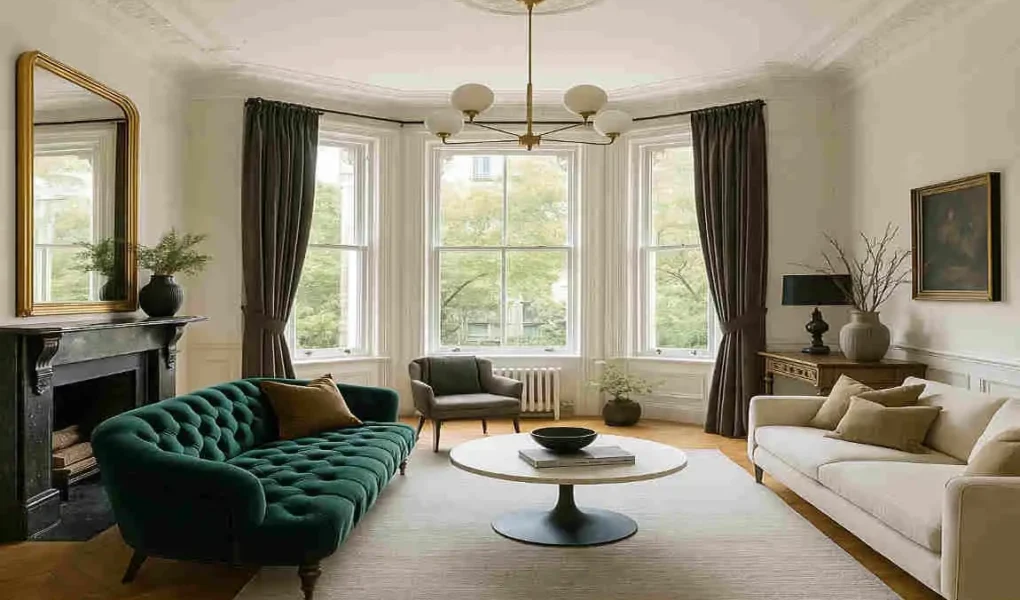
The Victorian era is synonymous with grandeur, elegance, and intricate detailing. Today, this timeless aesthetic continues to captivate homeowners, especially when reimagined with a modern twist. A “Victorian-style house interior” embraces rich colors, ornate details, and dramatic symmetry, all inspired by the design trends of the 19th century. Yet, modern interpretations of Victorian interiors balance this opulence with contemporary sensibilities, creating spaces that are both luxurious and livable.
Understanding Modern Victorian Style
Core Elements of Victorian Style House Interior
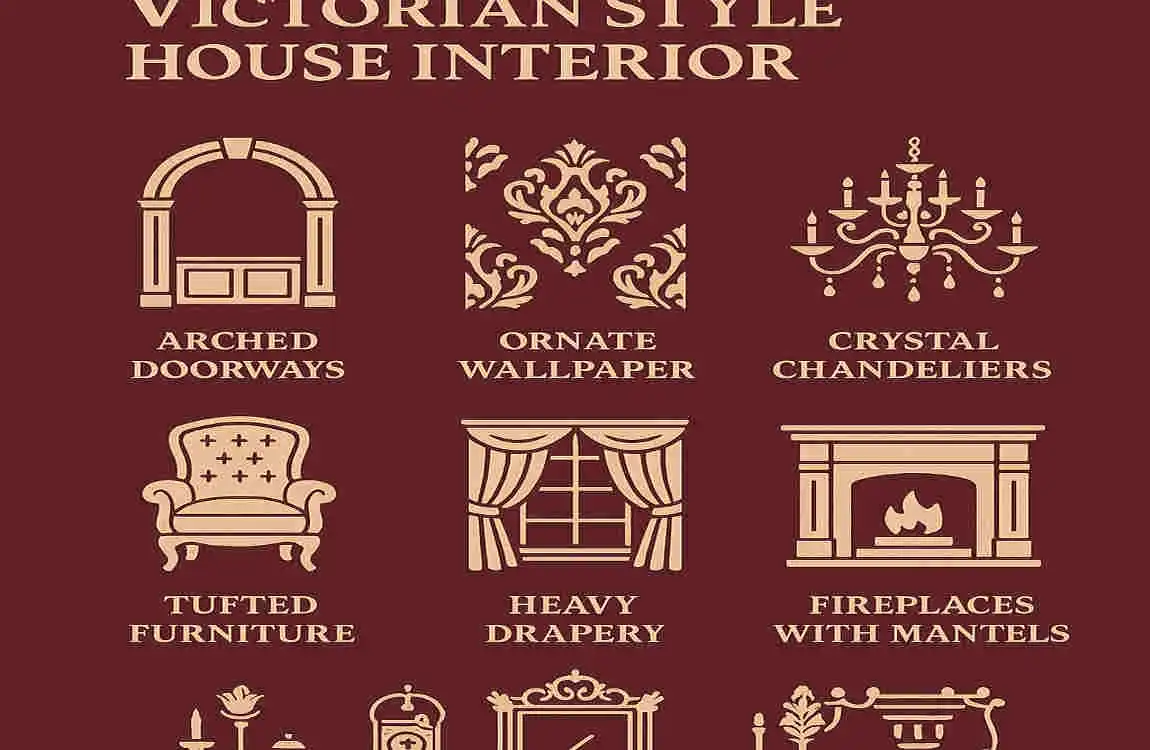
The Victorian style originated during Queen Victoria’s reign (1837–1901), a period marked by eclectic design trends influenced by Gothic, Rococo, and even Asian aesthetics. Key characteristics include:
- Ornate architectural details such as crown moldings, ceiling medallions, and bay windows.
- Bold color palettes, featuring rich jewel tones like emerald green, ruby red, and sapphire blue.
- Heavy, intricate furniture made of dark woods and adorned with carvings.
- Layered textiles, including velvet drapes, brocade upholstery, and patterned rugs.
Victorian interiors were designed to impress, showcasing wealth and taste through opulence and attention to detail.
Modern Adaptations: Breathing Life Into Tradition
Modern Victorian style tones down some of the era’s excesses while preserving its sophistication. Here’s how:
- Simplified Color Schemes: Pair jewel tones with neutral backdrops like cream, dove gray, or soft beige to create balance.
- Sustainability: Incorporate upcycled or vintage furniture for an eco-friendly nod to Victorian design.
- Minimalism Meets Maximalism: Introduce ornate pieces sparingly, allowing them to shine without overwhelming the space.
Top 10 Tips for Luxe, Timeless Victorian Style House Interior
Embrace Bold Colors Strategically
Color is a cornerstone of Victorian interiors. Jewel tones like emerald green, navy blue, and burgundy create warmth and drama, but modern interpretations use these shades more sparingly.
How to implement:
- Paint an accent wall in a rich color while keeping the rest of the room neutral.
- Use bold colors on smaller elements, such as trim, door frames, or furniture.
- Incorporate velvet cushions, patterned curtains, or rugs in deep hues.
Layer Lighting for Warmth
Victorian homes often had high ceilings, which can make spaces feel cold without proper lighting. Layered lighting creates warmth and highlights architectural details.
How to implement:
- Use a mix of chandeliers, wall sconces, and table lamps.
- Opt for dimmable LEDs to mimic the glow of traditional gaslights.
- Place lighting at varying heights to create depth and ambiance.
Highlight Architectural Features
Restoring and emphasizing original architectural elements is key to Victorian interiors. These features add character and depth.
How to implement:
- Restore crown moldings, ceiling medallions, and fireplaces.
- Paint dado rails and cornices in contrasting colors for added drama.
- Highlight staircase balustrades with dark paint or polished wood finishes.
Choose Ornate Yet Scaled Furniture
Victorian furniture is known for its elaborate designs, but modern spaces demand a more balanced approach.
How to implement:
- Select tufted sofas, carved wooden chairs, and ottomans with intricate detailing.
- Pair ornate furniture with sleeker, modern pieces to create contrast.
- Use proportionate furniture in smaller rooms to avoid overcrowding.
Incorporate Rich Textures and Patterns
Layering textures and patterns creates the cozy, lived-in feel that defines Victorian interiors.
How to implement:
- Mix velvet, brocade, and silk on upholstery, pillows, and drapes.
- Use floral or damask patterns for wallpaper or accent fabrics.
- Add area rugs in Persian or Oriental styles to define spaces.
Maximize Natural Light and Windows
Victorian homes often feature large windows that flood rooms with light. Make the most of this feature.
How to implement:
- Frame windows with sheer drapes or lace curtains to let in the light.
- Add stained glass or decorative film for a touch of Victorian charm.
- Use mirrors to reflect natural light and brighten the space.
Curate Statement Flooring
Flooring plays a significant role in tying a room together. Victorian interiors favor intricate patterns and warm tones.
How to implement:
- Opt for parquet or herringbone wood flooring for a classic look.
- Layer Persian or Oriental rugs for added texture and warmth.
- Consider encaustic tiles in entryways or kitchens for an extra touch of flair.
Accessorize with Mirrors and Art
Victorian interiors are never complete without carefully chosen accessories.
How to implement:
- Hang oversized gilt mirrors to reflect light and add grandeur.
- Decorate with period-inspired paintings, such as landscapes or portraits.
- Add small decorative items like candlesticks, vases, and book collections.
Blend Metals: Brass and Gold Accents
Metallic accents are essential for achieving a luxe Victorian look.
How to implement:
- Replace cabinet hardware with brass or gold knobs.
- Use metallic finishes on light fixtures, picture frames, and decorative elements.
- Incorporate gold-painted trims or furniture accents.
Zone Open Spaces Thoughtfully
Victorian homes often feature open layouts, but they balance this with well-defined zones.
How to implement:
- Use furniture and rugs to delineate areas, such as the living and dining spaces.
- Add pocket doors or room dividers for privacy when needed.
- Arrange furniture to create cozy conversation areas.
Room-by-Room Application
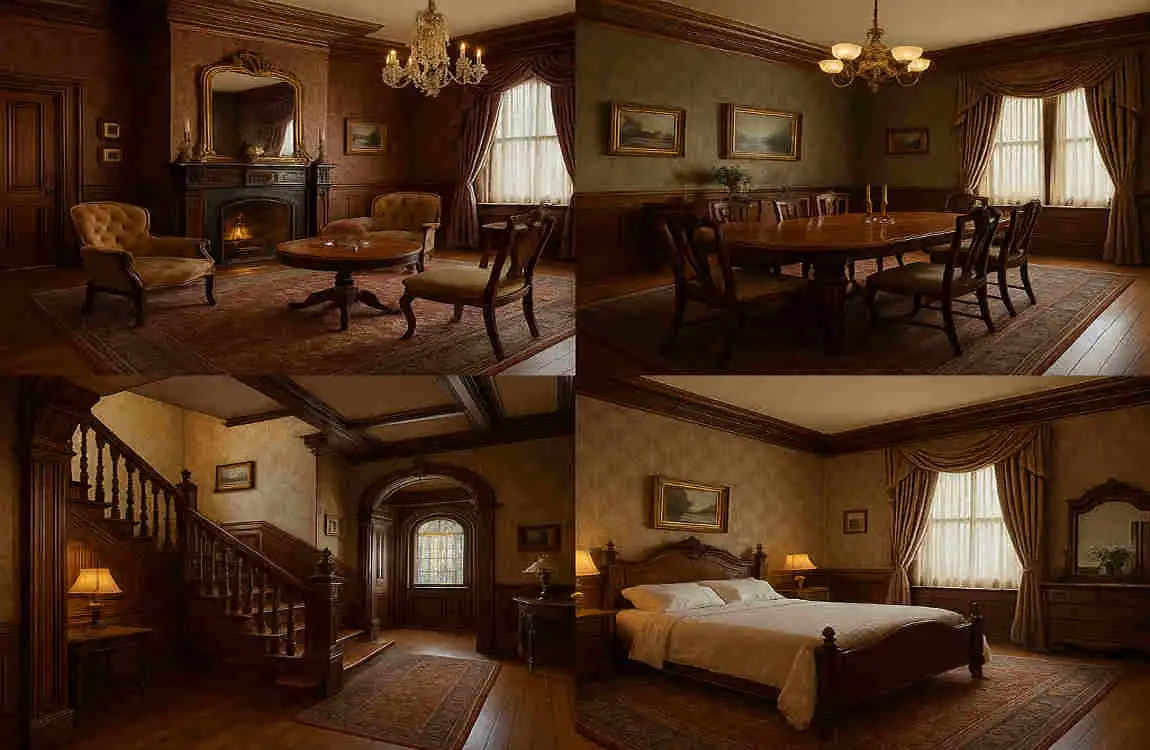
Here’s how to apply these tips to specific rooms in your home:
RoomKey Tip Focus Element
Living Room Layer Lighting Chandeliers and sconces
Bedroom Bold Colors Jewel-toned drapes
Kitchen/Dining Blend Metals Brass hardware
Budgeting and Sourcing for Victorian Style House Interior
Creating a modern Victorian interior doesn’t have to break the bank. Here’s a quick breakdown of costs:
- Furniture: $500–$2,000 per significant piece (sofa, table).
- Lighting: $100–$500 per fixture.
- Decor: $50–$200 for vintage accessories.
Where to source:
- Antique stores: Find unique, authentic Victorian pieces.
- Etsy: Discover handmade replicas and vintage items.
- DIY projects: Add crown moldings or repaint existing furniture for a budget-friendly update.