Finding out that your roof needs to be replaced can be daunting. Whether it’s due to leaks, missing shingles, or simply reaching its lifespan, the first question that likely comes to mind is: how much does it cost to replace a roof?
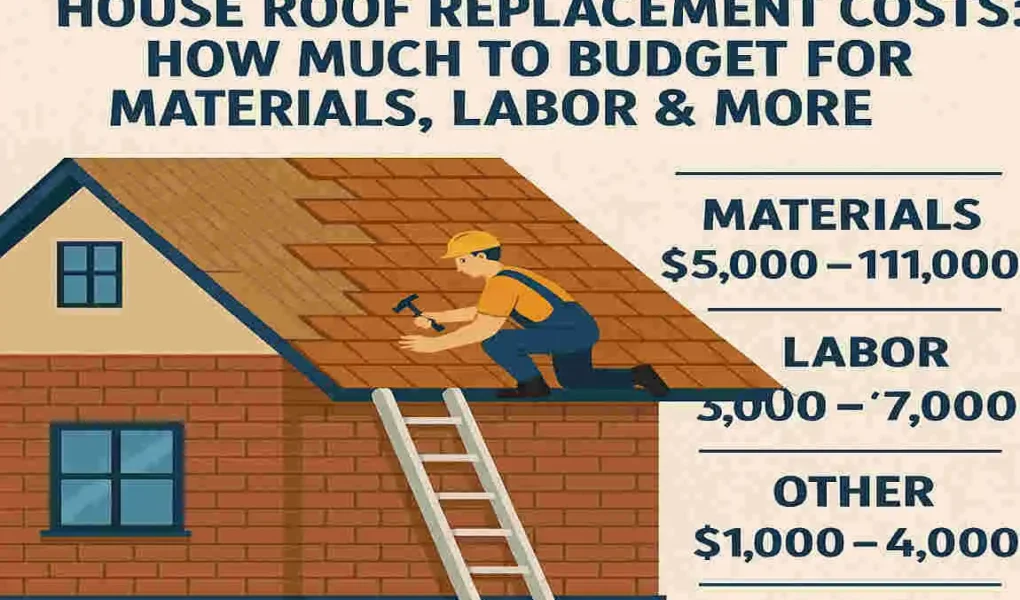
Roof replacement is a significant investment, and understanding the costs involved is essential for proper planning. On average, replacing a roof in 2026 costs between $8,000 and $20,000, but prices can vary widely depending on factors like materials, labor, location, and additional upgrades.
Average Roof Replacement Cost in 2026 (By Roof Size and Type)
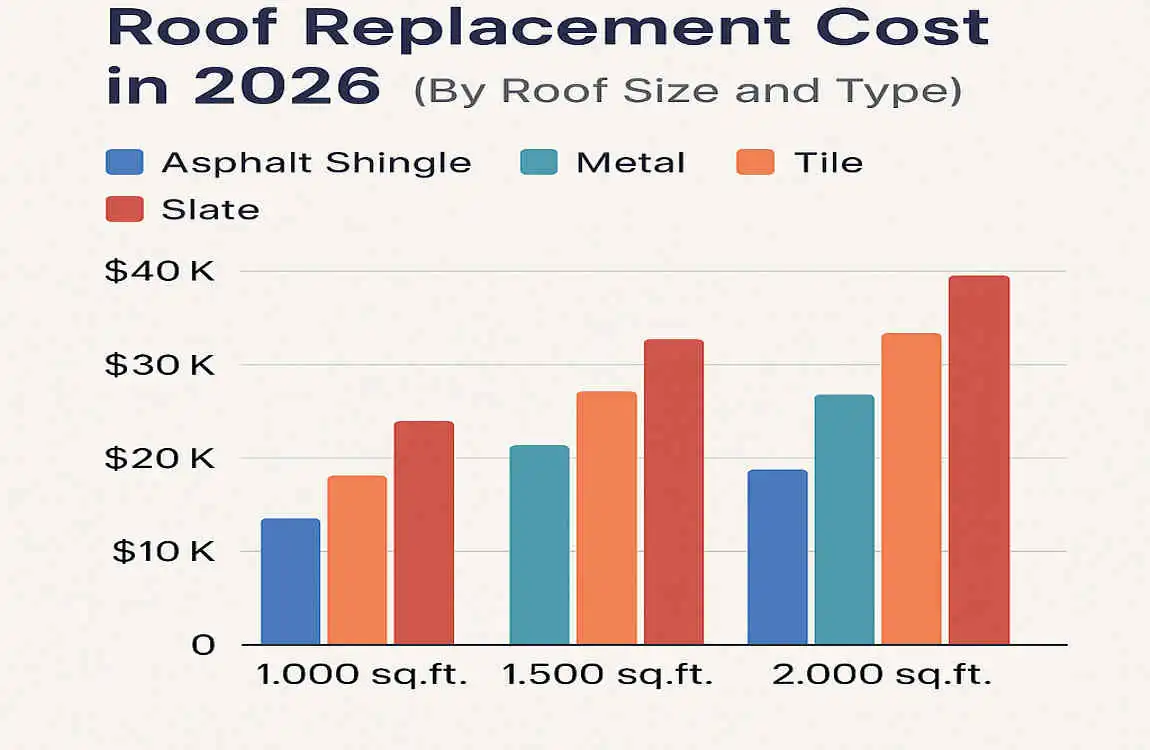
One of the most significant factors influencing the cost of a roof replacement is the size of your roof. Roof sizes are often measured in “squares,” with 1 square equaling 100 square feet. Larger roofs require more materials and labor, leading to higher costs.
Here’s a breakdown of average roof replacement costs based on home size:
Roof Size (Squares)Low-End Cost Average Cost High-End Cost
10–15 (1,000–1,500 sq ft) $5,000 $8,000–$12,000 $18,000
20–25 (2,000–2,500 sq ft) $10,000 $15,000–$20,000 $30,000
30+ (3,000+ sq ft) $18,000 $25,000+ $50,000+
Regional Variations
It’s important to note that roofing costs can vary significantly by location. For instance, in high-cost areas like coastal cities, prices can increase by 20–50% due to higher labor rates and stricter building codes. Conversely, rural areas may see slightly lower costs. According to industry data, the average cost to replace a roof is highest in regions like California and the Northeast.
When budgeting for your roof replacement, always consider these regional variations to avoid surprises.
Roof Material Costs: Breaking Down Your Options
The material you choose for your house roof has one of the most significant impacts on overall costs. Different materials come with varying price points, durability, and aesthetic appeal. Let’s break down the most popular roofing materials available in 2026:
Material Cost per Square Durability (Years)Best For
Asphalt Shingles $100–$200 20–30 Budget-friendly homes
Metal Roofing $300–$600 40–70 Long-lasting durability
Tile (Clay/Concrete) $400–$800 50–100 Homes with aesthetic focus
Wood Shakes $250–$500 20–40 Rustic, natural look
Slate $600–$1,200 75–100 High-end, luxury builds
Key Considerations for Material Costs
- Asphalt shingles are the most common and affordable option, making them a popular choice for many homeowners. However, they typically require more frequent replacement than other materials.
- Metal roofing is an excellent choice if you’re looking for durability and energy efficiency. It’s initially more expensive but can save money in the long run.
- Tile and slate roofs are often chosen for their visual appeal and longevity, but they come with higher upfront costs and require expert installation.
To save money on materials, consider opting for basic-grade options or purchasing in bulk.
Labor Costs for Roof Replacement: What to Expect
Labor costs typically account for 40–50% of the total roof replacement budget. The complexity of your roof, accessibility, and local labor rates can all influence these costs.
Labor Cost Breakdown
- Tear-Off and Removal Costs: Removing the old roof usually costs between $1 and $2 per square foot.
- Installation Costs: Installing the new roof typically costs $3 to $7 per square foot, depending on the material and roof complexity.
Labor Costs by Roof Complexity
Here’s a quick comparison of labor costs based on roof complexity:
Roof Complexity, Labor Cost per Square, Time Estimate
Simple (low pitch) $2–$4 1–2 days
Moderate (standard slope) $3–$5 3–4 days
Complex (steep/multi-level) $5–$8+ 5+ days
For complex roofs with steep pitches or multiple levels, labor costs can increase by 20–30%. Additionally, accessibility issues (e.g., hard-to-reach areas) can increase labor time and costs.
Additional Costs: Permits, Disposal, and Hidden Fees
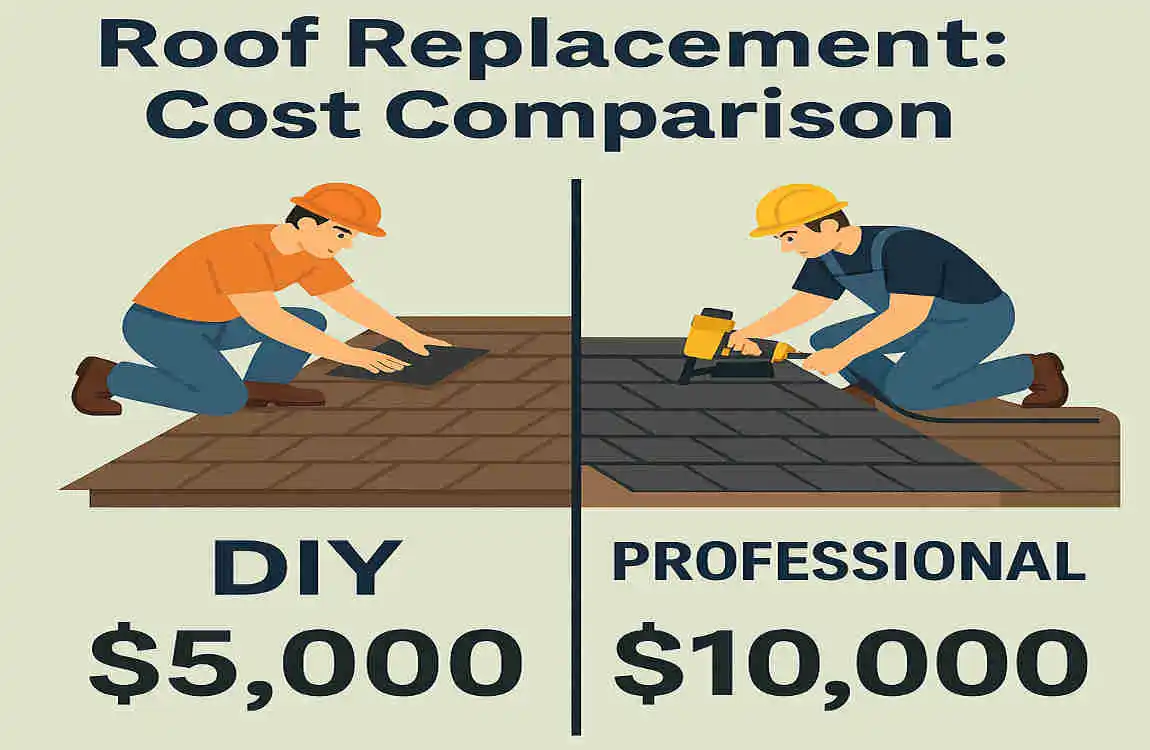
Beyond materials and labor, there are several additional costs to consider. These can quickly add up if you’re not prepared.
Common Additional Costs
- Permits: Roof replacement permits typically cost between $100 and $500, depending on your city or state.
- Debris Removal: Renting a dumpster or hiring a disposal service costs around $300 to $800, depending on the amount of waste.
- Underlayment and Flashing: These essential components cost $1 to $3 per square foot and are necessary for protecting your roof from moisture.
- Gutters and Skylights: Replacing or upgrading gutters costs between $5 and $15 per linear foot, while skylights can cost $1,000 or more each.
Insurance and Discounts
If a storm or other natural disaster damaged your roof, your homeowner’s insurance may cover 80–100% of the replacement cost. Always check with your provider to see what’s covered.
Factors That Affect Your Roof Replacement Cost
Several factors can influence how much you’ll pay to replace your roof. Here are some of the most common:
- Location: Urban areas and regions with extreme weather often have higher costs.
- Roof Age and Condition: Older roofs may require additional demolition or repairs.
- Roof Style: Complex styles, such as hip roofs, typically cost more than simpler gable roofs.
- Upgrades: Energy-efficient options, like cool roofs, can add to upfront costs but save money in the long term.
- Inflation: Material and labor costs tend to rise over time, so 2026 rates may be higher than previous years.
Case Study: Midwest vs. California
Replacing a 2,000 sq ft asphalt roof in the Midwest might cost around $12,000, while the same project in California could run $20,000 or more, primarily due to labor and permit costs.
Roof Replacement Cost by Location (U.S. Averages for 2026)
Here’s a quick snapshot of average costs by region:
Region Average Cost (20 Squares)Key Driver
Northeast $18,000–$25,000 Higher labor + permits
South $12,000–$18,000 Hurricane preparation
Midwest $10,000–$15,000 Standard costs
West Coast $20,000–$30,000 Seismic requirements
How to Save Money on Roof Replacement
Looking to save money on your roof replacement? Here are some practical tips:
- Get Multiple Quotes: Compare at least three contractors to find the best deal.
- Choose Mid-Range Materials: Balance cost and durability.
- Time Your Replacement: Schedule work during the off-season (fall and winter) to take advantage of potential discounts.
- DIY Prep Work: Clearing gutters and removing obstacles can reduce labor time.
- Look for Rebates: Energy-efficient roofs may qualify for tax credits or rebates.