Ask anyone who has completed a renovation, and you’ll usually hear the same thing: “It looked different in my head.” Not drastically wrong. Just… not quite what was expected.
A kitchen that feels tighter than imagined. A rear extension that doesn’t bring in as much light as hoped. A loft conversion that technically works but never quite feels generous. These outcomes are rarely the result of bad construction. More often, they stem from something much simpler — decisions made without fully seeing the final result.
When Drawings Don’t Tell the Whole Story
Floor plans are precise. Elevations are accurate. Measurements are correct. But for most homeowners, they remain abstract.
It’s surprisingly difficult to translate lines on paper into a sense of atmosphere. A three-metre span can feel wide or narrow depending on glazing. A ceiling height can feel impressive or compressed depending on light and proportion. Even small changes in window placement can dramatically alter how a room feels throughout the day.
This is where many renovation misunderstandings begin — not in the build, but in the imagination.
Visual previews bridge that gap. Instead of interpreting technical drawings mentally, homeowners can review realistic representations of how the space may look once completed.
The Real Cost of “We’ll Adjust It Later”
Small mid-project changes are common. A window moves slightly. A material choice is reconsidered. The kitchen island shifts by a few centimetres. Each adjustment seems minor in isolation.
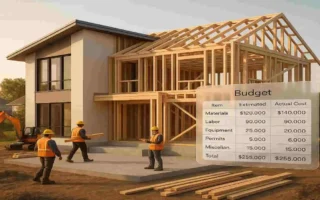
But once construction has started, even small revisions can affect timelines, labour coordination, and budget. Structural work rarely pauses cheaply.
Seeing a project in realistic detail before work begins often reveals things that drawings alone do not — proportions that feel heavy, finishes that compete rather than complement, layouts that look balanced on plan but feel awkward in perspective.
Studios that specialise in real estate 3D rendering typically create these kinds of visual studies for larger developments, but the principle applies equally to private renovations. When scale, materials and lighting are visualised accurately, decisions become more deliberate. And deliberate decisions are less expensive than reactive ones.
Light Changes Everything
One of the most underestimated factors in renovation is natural light. On a floor plan, a window is a symbol. In reality, it defines the mood of a room.
A rear extension may technically increase floor area while unintentionally darkening the original structure. A loft dormer may provide head height but create unexpected shadow patterns. South-facing glazing can transform a living space — or cause overheating if not planned carefully.
Visual previews allow homeowners to assess how light interacts with layout and materials before committing to structural changes. That foresight often prevents disappointment later.
Planning Conversations Become Easier
In areas where visual impact matters — conservation zones, dense residential streets — clarity helps. When neighbours can see what is proposed rather than imagining it, objections tend to soften. When planning officers review contextual visuals instead of abstract drawings, scale and proportion become easier to evaluate.
Drawings explain compliance. Visualisations explain appearance. The distinction matters.
Materials Rarely Behave as Expected
Selecting finishes from samples can be misleading. A flooring board viewed in isolation may look warmer or cooler once installed next to cabinetry. A façade material may appear subtle in a brochure but dominant on an entire elevation.
Seeing combinations together in a realistic setting provides perspective. It becomes easier to judge balance, contrast and texture when everything is viewed as a whole rather than in fragments. This reduces the likelihood of second-guessing after installation.
Clearer Communication, Fewer Assumptions
Renovations involve multiple professionals. Architects think in structure. Builders think in sequencing. Interior designers think in atmosphere. Homeowners think in lived experience. Even when everyone studies the same drawing, they may visualise the outcome differently.
A shared visual reference reduces interpretation gaps. Conversations shift from “I thought it would feel bigger” to “Let’s adjust this proportion.” Subtle but important difference.
A Calmer Way to Approach Renovation
No renovation is entirely predictable. There will always be practical variables. But uncertainty does not have to define the process. Seeing a realistic representation of a proposed change before construction begins doesn’t guarantee perfection. What it does offer is perspective.
For many homeowners, that perspective makes the entire process feel more controlled. Decisions become clearer. Communication becomes easier. Revisions become fewer. In the end, most people renovate for the same reason — to create a home that feels better to live in. Being able to see that improvement before it physically exists is not about presentation. It is about confidence.