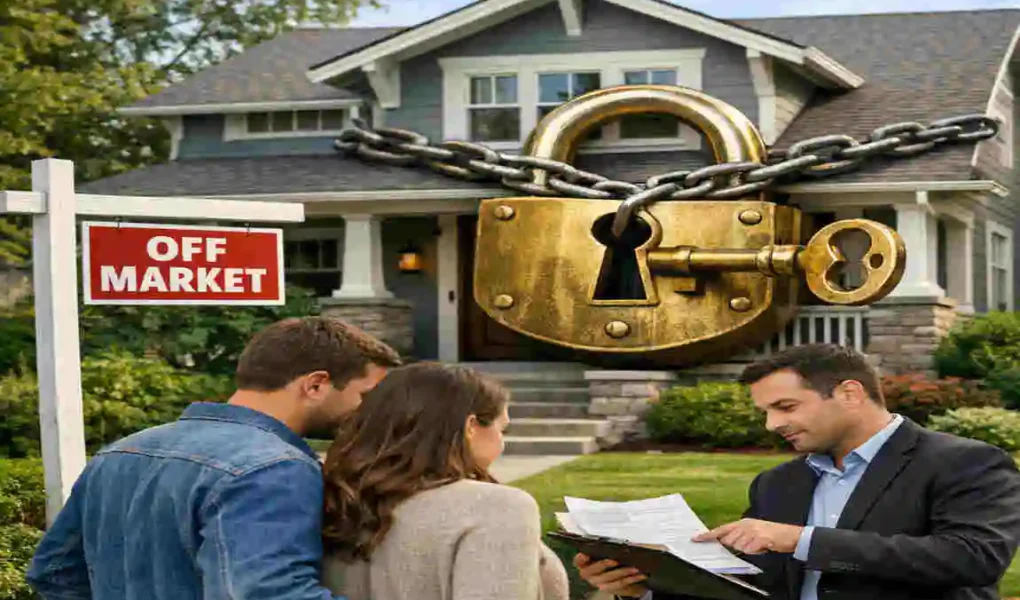
Imagine this scenario: It is late at night, and you are scrolling through property listings on your phone. Suddenly, you see it. The perfect house. It has the right number of bedrooms, that sprawling backyard you have always wanted, and a kitchen that looks like it belongs in a magazine. Your heart skips a beat. You are ready to call the agent immediately. But then, you spot a small, grey tag next to the price: “Off Market.”
Your heart sinks. Does this mean it is sold? Did you miss your chance? Is it gone forever?
If you have ever found yourself in this frustrating position, you are definitely not alone. It is one of the most confusing terms in real estate for everyday buyers. But here is the secret that most experienced investors and savvy homebuyers know: “Off Market” does not always mean “Sold.” In fact, it often means the exact opposite—it could be a golden opportunity waiting just for you.
So, if a house is off the market, what does it mean exactly? In simple terms, it means the property is not currently listed on major public platforms like the Multiple Listing Service (MLS) or popular portals like Zameen.com or Zillow. However, just because it isn’t shouting for attention doesn’t mean it isn’t for sale. Many of these luxury homes are still available to purchase, provided you know how to find them and who to ask.
What Does “Off Market” Really Mean for Homebuyers?

Let’s get straight to the core of the issue. When you ask, “If a house is off market, what does it mean?” you are usually looking at one of two scenarios.
First, it can mean that the home is literally not for sale. The owners are happy, living their lives, and have no intention of moving. The listing you might be seeing on a real estate website is just an old record of the property.
However, the second meaning is the lucrative one. In the real estate industry, an “off-market” listing (often called a “pocket listing”) refers to a property that is for sale, but isn’t being advertised to the general public. The seller has hired an agent or is selling it themselves, but they haven’t uploaded the data to the MLS (Multiple Listing Service).
Why does this distinction matter? Because the MLS is where Zillow, Redfin, Realtor.com, and in Pakistan, sites like Zameen, pull their data from. If a house isn’t on the MLS, it is invisible to 99% of buyers. That gives you—the 1% who know where to look—a massive advantage.
Comparing Property Statuses
To help you visualise where off-market homes sit in the real estate lifecycle, let’s look at how they compare to other common status tags you might see.
StatusMeaningBuyer’s Chance
Off-market private sale, not listed on MLS, or temporarily withdrawn. High (If you have the right network)
Active Listed publicly on MLS; open to everyone. High (But high competition)
Pending: An offer has been accepted; the deal is under contract. Low (Unless the deal falls through)
Contingent: Offer accepted, but subject to conditions (e.g., inspection). Medium (Deal could still fail)
Sold Ownership has officially transferred. Zero
Legal Nuances in Different Markets
It is also important to understand that “off-market” works differently depending on where you are located.
In the United States, the National Association of Realtors has specific rules (like the “Clear Cooperation Policy”) that try to limit pocket listings to ensure fair housing. However, loopholes still exist, and private networks are thriving.
In Pakistan, specifically in active markets like Lahore, the concept is even more prevalent but less regulated. Under local laws, such as the Punjab Property Act, private sales are perfectly legal and common. In areas like DHA Lahore or Bahria Town, many luxury properties never make it online. They are sold purely through “word of mouth” and intense networking among dealers. While this avoids public auctions and digital footprints, it requires you to do your due diligence to ensure the paperwork is legitimate.
The Pros and Cons of Off-Market Status
Before you start hunting, you need to weigh the good with the bad.
Pros:
- Privacy: Deal negotiations happen quietly.
- Price: Often priced lower because the seller isn’t paying marketing fees.
- Speed: Closings can happen faster without the public open luxury house circus.
Cons:
- Information Void: You won’t find 50 high-res photos or virtual tours online.
- Insider Competition: You are competing against professional investors who do this for a living.
Why Do Houses Go Off Market? Top Reasons Sellers Choose Privacy
You might be wondering, “Why would a seller hide their house? Don’t they want the most buyers possible?”
It seems counterintuitive. Usually, in Economics 101, higher demand equals a higher price. But real estate is personal, and life is complicated. There are many reasons why a seller might prioritise privacy over a public bidding war. In 2026, with market volatility in places like Lahore and high interest rates globally, these reasons are becoming even more common.
Celebrity and High-Profile Privacy
This is the most obvious reason. If a famous cricketer, a politician, or a high-net-worth business owner in Gulberg wants to sell their mansion, they do not want strangers walking through their bedroom during an open house. They do not want photos of their safe or art collection on the internet.
For these sellers, an off-market sale offers anonymity. They will only allow pre-vetted, serious buyers with proof of funds to even know the property is available.
Testing the Waters
Sometimes, a seller isn’t 100% sure they want to sell. They might tell their agent, “Look, if you can get me 5 Crore for this house, I’ll sell. But I don’t want to put up a ‘For Sale’ sign yet.”
This is a soft launch. If the agent finds a buyer at that price, great. If not, the seller hasn’t accrued “days on market” (DOM) stats. A high DOM count makes a house look “stale” or undesirable to future buyers. Keeping it off-market protects the home’s reputation.
Family Situations and Distress
Life events such as divorce, a family member’s death, or sudden financial trouble often require a quick sale. In these sensitive situations, the family might not want the neighbours asking questions. They prefer a quiet, quick transaction to liquidate the asset without the public spectacle of a “For Sale” sign in the yard.
The “Coming Soon” Strategy
In hot seller’s markets, agents use off-market periods to build hype. They might whisper to other agents, “I have a stunning villa coming up in Phase 6 next month.” This creates a sense of urgency. Buyers who get in early feel like they are winning a prize, which can actually drive the price up before it ever hits the public websites.
Saving on Commissions
This is a financial decision. A traditional sale involves listing fees, staging costs, and professional photography. By selling For Sale By Owner (FSBO) off-market, a seller can save the standard 5-6% commission fee. In a high-value transaction, that 6% can equal the price of a luxury car. They might pass some of those savings on to you, the buyer.
Types of Off-Market Properties You Can Still Buy
Now that we have answered “if a house is off market, what does it mean?” let’s look at the specific types of properties you will encounter in this hidden market. Not all off-market homes are the same.
Pocket Listings
A pocket listing is the classic “secret” home. A real estate agent has a signed contract to sell the house, but they keep it in their “pocket.” They don’t put it on the MLS. Instead, they share it within their own brokerage or with a select group of top-tier agents.
Why you want this: These are usually high-quality, well-maintained homes. How to get it: You must have a strong relationship with a well-connected local agent.
FSBO Off-Market Homes For Sale By Owner
These are homes sold directly by the owner without any agent representation. You might see a handwritten sign in a window or a post on a community Facebook group, but you won’t find it on major property portals.
Why you want this: You can speak directly to the decision-maker. Negotiation is often easier because there is no intermediary protecting the price. Tip: Look for these in local newspapers or community bulletin boards.
Pre-Foreclosures and Distressed Sales
This is where investors make their money. A pre-foreclosure occurs when a homeowner has missed mortgage payments, but the bank hasn’t yet seized the house. The owner is desperate to sell to pay off the loan and save their credit score.
These homes are technically off-market because the bank hasn’t listed them yet. If you can approach the owner with a solution before the auction, you can get a house at a steep discount.
Expired Listings
This is a clever category. Sometimes, a house is listed on the market for 3 months and doesn’t sell. The contract expires, and the listing is removed. Technically, it is now “off market.”
But here is the thing: The owner still wants to sell. They are probably frustrated and tired of their agent. If you approach them now, privately, they might be willing to cut a deal just to be done with it.
Updates
In 2026, we are seeing a rise in “iBuyer” off-market inventory. Companies that buy homes for cash (like Opendoor in the US or various investment groups in Pakistan) often hold inventory that isn’t publicly listed while they renovate it. Contacting these companies directly can sometimes yield a purchase before the renovation is even finished.
How to Find Off-Market Houses in 2026: Proven Strategies
Finding these homes isn’t as easy as opening an app. It requires detective work. But the payoff is worth the effort. Here is a step-by-step guide to hunting down these deals, whether you are in Lahore or London.
Network with Local Power Agents
Real estate is a people business. In cities like Lahore, the “dealer network” is king. Go to Zameen.com, find the agents with the most active listings in your target area (like DHA or Gulberg), and call them.
Don’t just say: “Do you have listings?” Do say: “I am a serious buyer looking for X. I have cash/financing ready. Do you have any pocket listings or homes coming up soon that aren’t online yet?”
Agents love this. It saves them the work of marketing the home. If they know you can close, you will be their first call.
Leverage Direct Mail Marketing
This is an old-school tactic that still works wonders. Drive around the neighbourhood you like. Look for houses that look a bit neglected—tall grass, peeling paint, or overflowing mailboxes. These are signs of absentee owners.
You can use public records (or apps like LandGlide) to find the owner’s mailing address. Send them a polite, personal letter.
- “Hi, I love your house at [Address]. I’m looking to move into the neighbourhood. If you ever consider selling, please call me. I can buy as-is.”
Join Online Groups and Marketplaces
In 2026, social media is a shadow MLS.
- Facebook Groups: Search for “Off Market Real Estate [city Name]” or “Handyman Specials [city Name].”
- WhatsApp Groups: In Pakistan, real estate relies heavily on WhatsApp. Ask your local agent to add you to “investor broadcast lists.” Deals are often posted there and sold within minutes, never reaching the web.
- OLX and Craigslist: These platforms are full of FSBO sellers who don’t want to pay agent fees.
Monitor Rental Listings
Sometimes, a landlord is tired of being a landlord. If you see a house listed for rent, call the owner. Ask them, “Would you be interested in selling instead of renting?” You would be surprised how often the answer is, “Actually, yes. I’m tired of managing this place.”
Use Specialised Software
For the tech-savvy buyer, tools like PropStream or Reonomy (both US-based) let you search public records for “high equity” or “pre-foreclosure” homes. You can filter for owners who have owned the home for 20+ years (likely to sell soon) and get their contact info.
In Pakistan, checking the FBR (Federal Board of Revenue) active taxpayer lists or verifying ownership via local Patwari records (if accessible) can help you verify potential leads you find through word of mouth.
Pros and Cons of Buying Off-Market Homes
Is buying off-market right for you? It is not for everyone. Let’s look at a balanced view.
The Advantages Why You Should Do It
- Zero Competition: This is the biggest benefit. On the open market, a great house gets 10 offers in 24 hours. In off-market deals, you are often the only offer.
- Negotiation Power: Without other buyers driving the price up, you have more room to negotiate terms, repairs, and closing dates.
- Less Stress: No rushing to an open house at 10 AM on a Sunday. You can view the home at your own pace.
The Disadvantages Why You Should Be Careful
- Accurate Pricing is Hard: Without other active listings to compare it to, it can be hard to know if you are paying a fair price. You need to run your own “comps” (comparables).
- Due Diligence is On You: In a private sale, the seller might not provide a detailed disclosure statement. You risk buying a house with hidden structural issues.
- Slower Process (Sometimes): If the seller isn’t motivated, they might drag their feet because they don’t have to sell.
ProsCons
Lower competition, less market exposure
Price flexibility, Inspection challenges
Flexible closing timeline, Harder to determine fair market value
Direct communication with seller, Risk of complications with title/paperwork
Real-Life Success Stories: Unlocking Hidden Deals
To prove this works, let’s look at a couple of examples (names have been changed for privacy).
The Lahore Villa Deal: Mr Khan wanted a 1-Kanal house in DHA Phase 5, but everything online was beyond his 6 Crore budget. He started attending local investor meetups. He met a dealer who mentioned a family moving to Canada urgently. The family hadn’t listed the house yet because they were busy with visa paperwork. Mr Khan viewed the house the next day, offered 5.5 Crore in cash, and closed the deal in two weeks. He saved roughly 50 Lakhs just by getting in before the listing went public.
The “Ugly Duckling” Flip: Sarah, a first-time buyer, drove through her favourite neighbourhood every weekend. She noticed a house with overgrown bushes and no curtains. She left a note in the mailbox. Three weeks later, the owner called. It was an inherited property, and the owner lived in another state. Sarah bought it for 15% under market value because the owner didn’t want the hassle of cleaning it up for a Realtor.
The Takeaway: In both cases, speed and personal connection won the deal. The best deals aren’t found; they are created.
Risks and How to Protect Yourself When Buying Off-Market
While the rewards are high, the risks are real. When you step outside the standard MLS system, you lose some of the safety nets. Here is how to protect yourself.
Beware of Wholesalers
“Wholesalers” are middlemen who get a contract on a house and then sell that contract to you for a fee. This is legal, but their fee (assignment fee) is baked into your price. Make sure you know exactly what the original seller is getting and what the wholesaler is taking.
Never Skip the Inspection
Since off-market sellers are often selling “as-is,” you must hire an independent home inspector. Do not rely on the seller’s word that the roof is “fine.” If they refuse an inspection, walk away.
Verify the Title Crucial!
In private sales, title fraud is a risk.
- In the US/Global: Use a reputable Title Company to run a title search. Ensure there are no liens (unpaid taxes, contractor bills) on the property.
- In Pakistan: This is vital. You must verify the ownership documents with the relevant authority (LDA, CDA, or the Housing Society office). Ensure the person selling to you is the actual owner on the Fard or transfer letter. Check for any stay orders or litigation on the property.
Use a Real Estate Attorney
Even if you don’t use an agent, use a lawyer. They can draft a purchase agreement that protects your deposit and ensures the terms are legally binding.
Off-Market vs On-Market: Which Wins in Today’s Market?
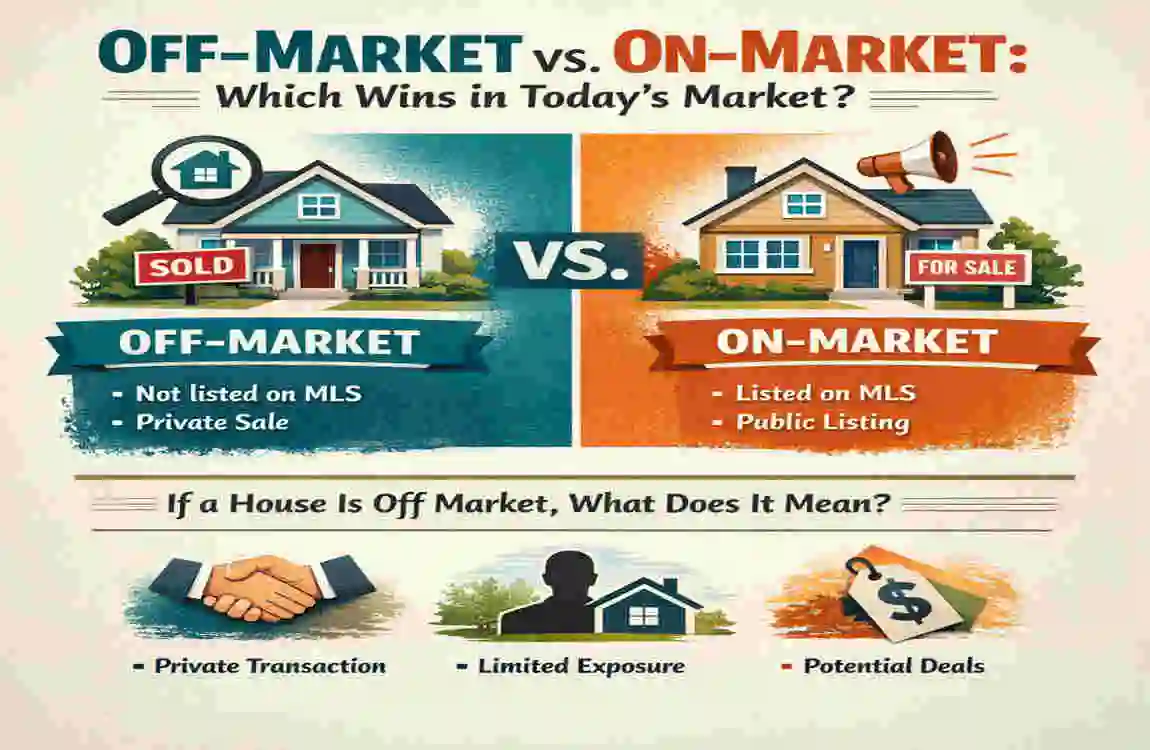
So, if a house is off-market, what does that mean for your strategy? Should you ignore Zillow and Zameen entirely?
Absolutely not. The best strategy is a hybrid approach.
On-Market is great for seeing what is available right now. It gives you a baseline for prices and design trends. Off-Market is where you find the bargains and the unique opportunities.
2026 Trends: Data suggests that off-market transactions are on the rise. In highly competitive areas such as Punjab’s urban centres and major US metros, off-market deals are expected to account for nearly 25% of all sales this year. Sellers are becoming more privacy-conscious, and buyers are becoming more aggressive.
If you limit yourself only to on-market homes design, you are missing out on a quarter of the inventory.
FAQs: Common Questions About Off-Market Houses
Here are answers to the most common questions buyers ask about this topic.
1. If a house is off the market, what does it mean exactly? It simply means the property is not listed on the public Multiple Listing Service (MLS) or major real estate websites. It may still be for sale privately, or the owner may not be selling at all.
2. Can off-market homes go back on the market? Yes. If an off-market or pocket listing doesn’t sell privately, the owner will often list it publicly on the MLS to get more exposure.
3. Are off-market deals always cheaper? Not always. While you can save on commission fees or find distressed sales (which are cheaper), some luxury off-market homes are priced higher because of their exclusivity and privacy.
4. How do I find off-market houses in Lahore? Networking is key. Connect with authorised dealers in areas such as DHA or Bahria Town. Join “Property Dealer” WhatsApp groups and check listings on OLX.pk that are posted directly by owners.
5. Is buying off-market safe in Pakistan? It is safe if you are careful. You must verify the file/title with the housing authority (e.g., DHA office) to ensure the seller is the legal owner. Never hand over cash without a token receipt and proper documentation.