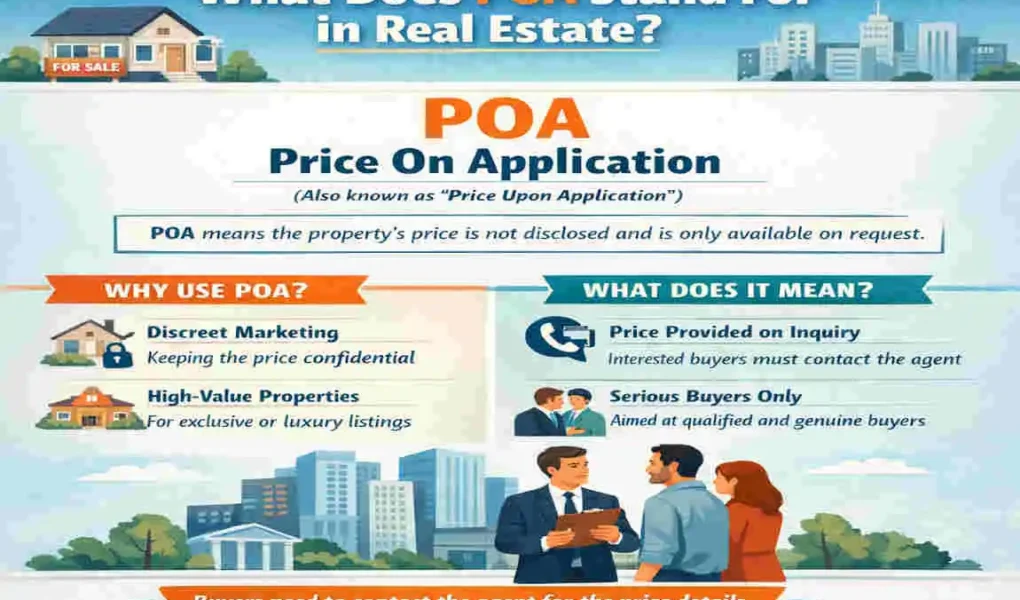
If you are asking what POA stands for in real estate, the short answer is Price on Application. In simple terms, it means the property listing does not show the price upfront. Instead, you must contact the agent or seller to ask for it.
You may notice POA on luxury homes, commercial spaces, land, or other high-value listings. Sellers use it for different reasons, such as privacy, flexible negotiation, or marketing strategy. If you are a buyer, seller, or investor, understanding POA can help you make smarter decisions and avoid confusion.
What Does POA Stand for in Real Estate?

Full Meaning of POA
In most real estate markets, POA means Price on Application. This tells buyers that the asking price is available only after they contact the agent.
In some places, people may also use POA to mean Price on Asking. Still, Price on Application is the most common and widely accepted meaning.
Why the Term Is Used
Agents and sellers often use POA for properties where they do not want to display a public price. This is common in:
- Luxury properties
- Commercial real estate
- Confidential pricing
- High-value transactions
It gives the seller more control and can make the listing feel more exclusive.
Why Do Real Estate Listings Say POA?
Seller Privacy
Some sellers do not want everyone to see the price of their property. They may prefer to keep the listing private, especially if the home is expensive or unique.
Flexible Negotiations
POA can open the door for direct discussion. Instead of showing a fixed number right away, the seller can first talk with serious buyers.
Market Competition
In some cases, the seller wants to test buyer interest before setting a clear price. This can help them understand the market better.
Premium Property Marketing
POA is often used in high-end real estate because it can make the property seem more exclusive. That marketing style may attract buyers who are already interested in premium homes.
How Does POA Work?
Contact the Agent
If a property is listed as POA, you usually need to contact the real estate agent to request the price.
Property Qualification
Sometimes the agent may ask a few questions first. They may want to know if you are a serious buyer, if you already have financing, or what type of property you are looking for.
Receive Property Details
After that, the agent may share:
- Price
- Features
- Viewing arrangements
This helps you decide whether the property fits your budget and goals.
Advantages of POA Listings
POA listings can be useful in the right situation.
- Greater seller privacy
- Better negotiation opportunities
- Flexible pricing
- Exclusive marketing
- Suitable for luxury properties
For sellers, a POA can provide greater control. For buyers, it can sometimes lead to more open negotiation.
Disadvantages of POA Listings
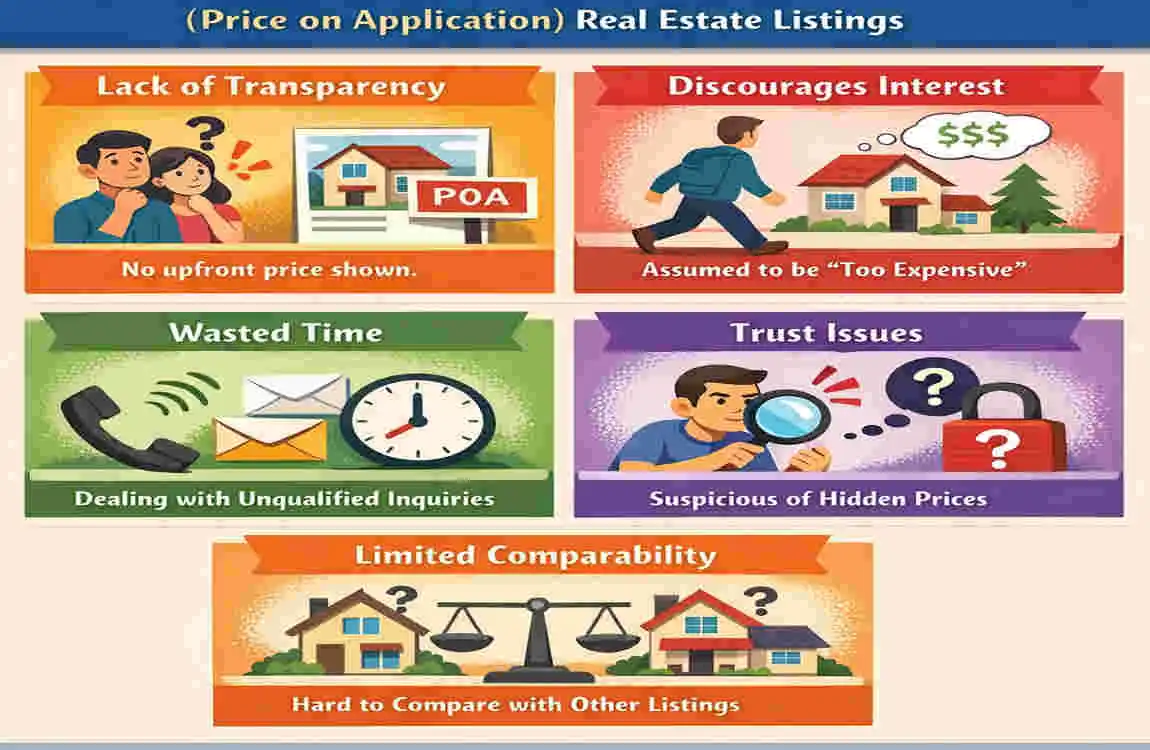
POA is not always the easiest option for buyers.
- Less transparency
- Buyers may hesitate
- Longer buying process
- Difficult price comparison
If you want to compare homes quickly, a POA listing can be frustrating because you cannot see the price right away.
POA vs Fixed Price
Feature POA Fixed Price
Price Displayed No Yes
Negotiation High Limited
Transparency Lower Higher
Luxury Homes Common Less Common
Buyer Inquiry Required Yes No
A fixed price listing is simpler because you can immediately see whether the property fits your budget. A POA listing requires more contact, but it may allow more room for discussion.
Where Is POA Commonly Used?
Residential Luxury Homes
POA is very common in upscale homes. Sellers may want to keep the price private or invite only serious buyers.
Commercial Properties
Office buildings, retail spaces, and other commercial properties often use POA because values can depend on location, income, and business potential.
Land Sales
Land pricing can vary a lot depending on size, zoning, and development potential. That is why POA is sometimes used here too.
Investment Properties
Some investment properties are listed as POA because the price may depend on rental income, future growth, or the buyer’s plans.
Should Buyers Be Concerned About POA?
Not necessarily. A POA listing is not automatically a bad sign.
What matters is whether the seller or agent gives you clear information when you ask. You should always:
- Ask for full pricing
- Compare with similar properties
- Understand extra costs
- Work with an experienced real estate agent
The key is to stay informed. A POA listing should still be treated like any other property purchase.
Tips for Buying a POA Property
If you are interested in a POA home or investment, keep these simple tips in mind:
- Research market value
- Prepare financing
- Ask detailed questions
- Request written pricing
- Compare multiple listings
- Negotiate confidently
This helps you avoid surprises and gives you a better idea of whether the property is worth the asking price.
Common Misunderstandings About POA

POA Does Not Mean No Price Exists
Some buyers think POA means the seller has no price in mind. That is not true. The price is usually available, but it is shared privately.
POA Is Not Always More Expensive
People often assume POA means luxury pricing only. In reality, it simply means the price is not shown publicly.
POA Listings Are Legal
In many markets, POA listings are completely normal and legal. They are just another way of marketing property.
Buyers Can Request Pricing
You are always allowed to ask for the price. If a listing says POA, the agent should be able to explain it.
Frequently Asked Questions
What does POA stand for in real estate?
POA usually stands for Price on Application, meaning buyers must contact the agent to get the asking price.
Why don’t some properties show a price?
Sellers may want privacy, flexible negotiation, or a more exclusive way to market the property.
Is POA only used for luxury homes?
No. It is common in luxury real estate, but it can also appear in commercial, land, and investment listings.
Can I negotiate the price of a POA property?
Yes. Many POA listings allow room for negotiation depending on the market and the seller’s goals.
Is buying a POA property safe?
Yes, as long as you check the price, review the documents, and do proper due diligence.
Does POA mean the property is expensive?
Not always. It only means the price is not shown publicly.
| Aspect | Information |
|---|---|
| Term | POA (Power of Attorney) |
| Meaning | A legal document that allows one person (the agent or attorney-in-fact) to act on behalf of another person (the principal) in real estate matters. |
| Purpose | Enables someone to buy, sell, lease, refinance, or manage property when the owner cannot act personally. |
| Common Uses | Property sales, real estate closings, mortgage transactions, investment property management, and handling affairs for owners who are overseas or incapacitated. |
| Types of POA | General Power of Attorney, Limited (Special) Power of Attorney, Durable Power of Attorney, and Springing Power of Attorney (where recognized). |
| Who Grants It? | The property owner (principal) voluntarily grants authority to a trusted individual or professional. |