Have you ever found yourself walking down a charming, cobbled street in a British town, looking at rows of identical houses, and wondered why this specific style dominates so much of the UK landscape? If you watch shows like Coronation Street or Peaky Blinders, you’ve seen them. They are the backbone of British architectural history. We are talking, of course, about the classic two-up, two-down house.
But what exactly is it?
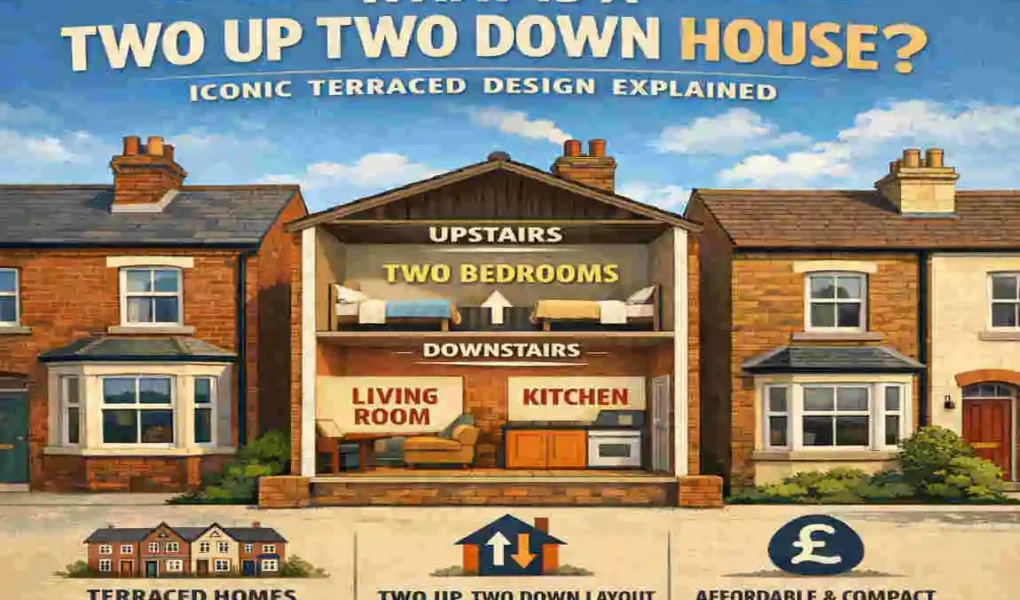
To answer the question: What is a two-up two-down house? It is a small terraced house with two rooms on the ground floor (usually a living room and a kitchen) and two rooms on the upper floor (two bedrooms). It is a literal description of the layout—two rooms up, two rooms down.
While that definition sounds simple, the reality is far more fascinating. These homes are not just bricks and mortar; they are a testament to the nation’s industrial heritage. Despite their modest origins, they remain incredibly relevant today. In fact, over 25% of UK homes are terraced, and a huge portion of those fit this specific layout.
The Origins: A Brief History of the Two Up Two Down House
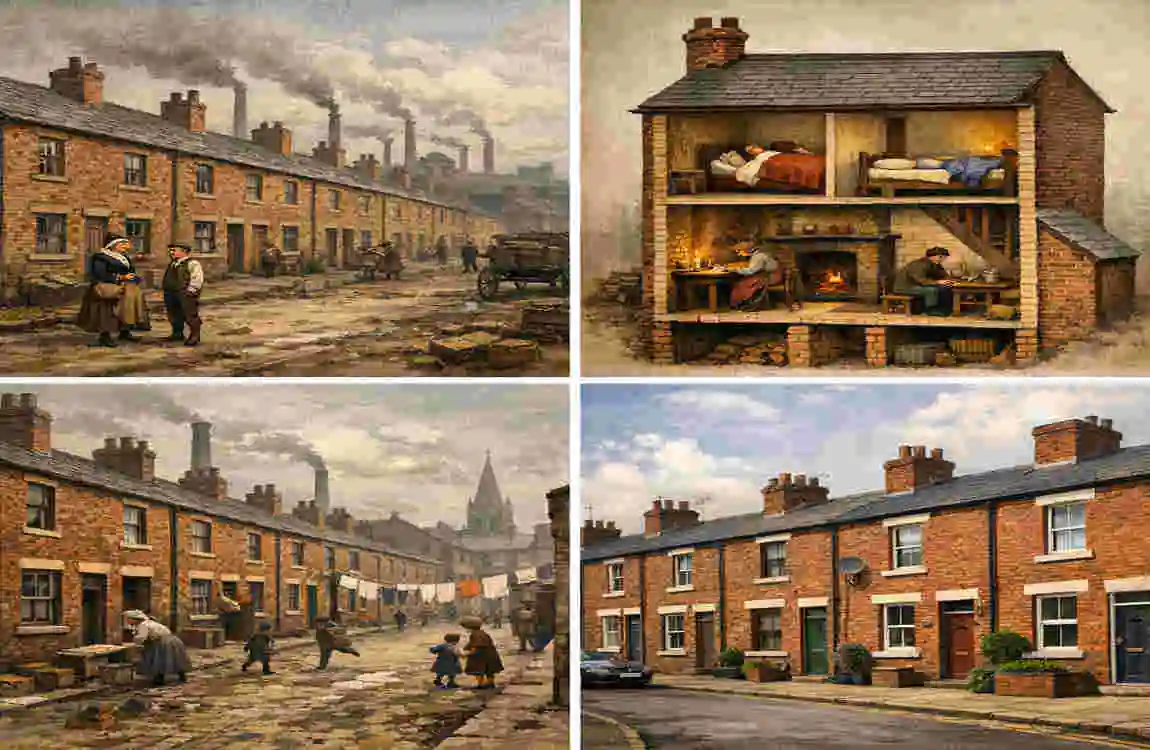
To truly understand the meaning of the two-up-two-down house, we have to travel back in time. We need to look at the Industrial Revolution.
In the 18th and 19th centuries, the UK was undergoing a massive transformation. People were leaving the countryside in droves to find work in the booming factories and mills of cities like Manchester, Liverpool, Birmingham, and Leeds. This sudden influx of workers created a massive problem: where would everyone live?
The Need for Speed and Affordability
Factory owners and speculators needed to build housing quickly and cheaply. Space in the expanding cities was at a Premium. The solution was high-density housing.
Initially, this led to the creation of “back-to-back” houses. These were notoriously cramped, sharing three walls with neighbors and having no back windows or backyards. Ventilation was poor, and sanitation was often nonexistent.
The Evolution of the Terrace
As the 19th century progressed, public health became a major concern. The Public Health Act of 1875 was a game-changer. It mandated that new homes needed access to fresh air and waste removal. This effectively banned the old back-to-backs and gave rise to the “through” terraced house—the two-up two-down as we know it today.
These houses were an upgrade. They had a front door opening onto the street and a back door opening onto a small yard or alleyway (often called a “ginnel” or “snicket,” depending on where you are from). This allowed for airflow and a dedicated space for an outdoor toilet (privy) and coal storage.
Regional Hotspots
While you can find these homes in London, they are truly iconic in the industrial north and the Midlands.
- Liverpool & Manchester: Miles of red brick terraces define these cities. They were built to house dock workers and cotton mill operatives.
- Yorkshire: Here, you often see stone-built terraces rather than brick, reflecting the local geology.
- The Mining Towns: In Wales and the North East, pit villages were constructed almost entirely of two-up, two-down rows to house coal miners.
By the time the post-WWII era rolled around, many of these homes were considered slums and were demolished. However, a massive preservation movement in the late 20th century realized their value. Today, instead of being knocked down, they are being snapped up and modernized. They have transitioned from working-class necessities to desirable, character-filled homes.
Classic Layout and Design Features
When you walk into a traditional two-up two-downtwo-up, two-down house, the layout is almost instantly recognizable. It is a design born of efficiency. There is very little wasted space. Let’s break down exactly what you find in this terraced house layout.
Ground Floor Breakdown
The ground floor is the heart of the home, traditionally split into two distinct zones.
The Front Room (The Parlor): historically, this room faced the street. In the Victorian era, this was the “best room.” It was kept pristine for guests, funerals, or Sundays. The family rarely used it daily. Today, this is usually the main living room or lounge. It often features a fireplace on the party wall (the wall shared with the neighbor) and a large window facing the street.
The Back Room (The Kitchen/Dining): This was the engine room. Historically, it served as a kitchen, dining room, and living space all in one. It would have a range cooker (often coal-fired back in the day) and a sink. It looks out onto the backyard.
The Hallway (or Lack Thereof): In many two-up two-downs, particularly the smaller ones, the front door opens directly into the front room. There is no hallway. In slightly larger versions, you might find a narrow corridor leading to the stairs.
The Yard: Out back, you have a small, walled courtyard. Originally, this housed the outdoor toilet and coal bunker. Today, it’s a prime spot for a bistro table and some potted plants.
Upper Floor Details
You head up a typically steep staircase—often sandwiched between the two rooms to save space—to reach the upper level.
The Front Bedroom: This sits directly above the parlor. It spans the full width of the house and is usually the “main” bedroom. It is often surprisingly spacious because it spans the hallway below.
The Back Bedroom: Sitting above the kitchen, this room is usually smaller. In the past, this might have housed three or four children in one bed!
The “Third” Room (The Bathroom): Wait, where is the bathroom? Originally, there wasn’t one indoors. In modern two-up, two-downs, the bathroom is often carved out of the back bedroom or located in a ground-floor extension behind the kitchen.
Visualizing the Space
To help you picture it, here is a typical layout breakdown:
FloorRoom 1 (Front)Room 2 (Back)Additional Features
Ground Parlor / Living Room: Street-facing, fireplace, main social space. Kitchen / Dining: Yard-facing, cooking area, often leads to stairs. Yard: Small walled outdoor space. Stairs: Steep, central, or side.
Upper Main Bedroom: Large, spans the width of the house, usually two windows. Second Bedroom: Smaller, overlooks yard. Landing: Very small. Attic: Potential storage above.
Architectural Quirks
Living in one of these homes means embracing the quirks.
- High Ceilings: Despite the small footprint, Victorian builders loved height. This makes the rooms feel airier than they actually are.
- Fireplaces: You will often find chimney breasts in every room, encroaching on the floor space but adding immense character.
- Steep Stairs: We cannot stress this enough—the stairs can be incredibly steep and narrow. Moving furniture upstairs often involves pivoting like Ross from Friends.
Pros and Cons of Living in a Two-Up Two-Down House
Is a two-up two-down right for you? Like any property type, there are distinct advantages and disadvantages. If you are considering buying in 2026, you need to weigh these carefully.
The Advantages
- Affordability: This is the biggest draw. These homes are usually the most affordable freehold properties on the market. They are the perfect entry point for first-time buyers who want a house rather than a flat.
- Community Spirit: You are physically close to your neighbors. This fosters a sense of community that you rarely find in detached housing estates. People talk over garden fences; they know who lives three doors down.
- Location: Because these were built for workers, they are often centrally located near town centers, transport links, and amenities. You can often ditch the car and walk everywhere.
- Character and Charm: You can’t buy this kind of soul in a new build. Original floorboards, sash windows, and brick fireplaces give these homes a cozy, “hygge” vibe.
- Heat Retention: Being terraced means you have insulation on both sides from your neighbors. It keeps the house warmer in winter compared to a detached home.
The Challenges
- Space Limitations: There is no getting around it—they are small. Storage is always a battle. If you have a growing family, you might outgrow the space quickly.
- Noise Transfer: Victorian walls can be thin. You might hear your neighbor’s TV or their dog barking. It’s part of the terraced living package.
- Maintenance Issues: Old houses have old house problems. Damp is the most common enemy. Whether it is rising damp or condensation, you will likely have to manage moisture levels carefully.
- Parking: Most two-up two-downs open directly onto the street. Dedicated driveways are rare, so you are often fighting for on-street parking spots.
- The “Bathroom Situation”: As mentioned, if the bathroom is downstairs (off the kitchen), it can be inconvenient in the middle of the night.
Market Context: In 2026, the average price of a two-up two-down varies wildly depending on location, but generally falls between £150,000 and £250,000 outside of London. This makes them a highly competitive segment of the market.
Modern Renovations and Extensions
This is where things get exciting. The humble two-up two-down is a blank canvas. In 2026, homeowners are doing incredible things to transform these historic shells into modern masterpieces.
If you are wondering how to renovate a two-up two-down house, the focus is usually on maximizing light and space.
Popular Upgrades
The Open-Plan Conversion: The most common renovation is knocking down the wall between the front living room and the back dining room. This creates one long, dual-aspect room. It allows light to flow from the front street window all the way to the back yard, instantly making the house feel bigger and brighter.
The Side Return Extension: If your house has an “L” shape at the back (where the kitchen sticks out), there is usually a wasted strip of yard along the side. Filling this in with a glass-roofed extension is a massive trend. It creates a large, open-plan kitchen/diner that serves as the house’s social hub.
Loft Conversions: Need a third bedroom? Look up. Converting the attic is a great way to add value. Because terraced roofs are often high, you can sometimes add a “dormer” extension to the rear, creating a decent-sized bedroom and even an en-suite.
Eco-Retrofitting: With energy bills on everyone’s mind and UK net-zero goals in play, eco-renovations are huge. This involves:
- Solid Wall Insulation: Since these houses don’t have cavity walls, owners are adding internal or external insulation.
- Solar Panels: Terraced roofs are often perfect for solar arrays.
- Double Glazing: Replacing old sash windows with heritage-style double glazing keeps the look while stopping drafts.
Renovation Cost Breakdown (2026 Estimates)
Planning a project? Here is a rough guide on what you might spend and the return on investment (ROI).
UpgradeAvg Cost (2026)ROI PotentialNotes
Loft Conversion £25,000 – £45,000 High Adds a bedroom; often increases value by 20%.
Kitchen Extension £20,000 – £35,000 Medium/High Transforms the living style; huge “wow” factor.
Knocking Through Walls £3,000 – £6,000 Medium Relatively cheap way to increase light and flow.
New Bathroom £5,000 – £10,000 Medium Essential if the current suite is dated.
Two Up Two Down vs. Other House Types
When you are house hunting, you are likely comparing the two-up two-down against other common UK property types. How does it stack up?
Two Up Two Down vs. Semi-Detached
A semi-detached house shares only one wall with a neighbor.
- Space: Semis are usually larger, often having three bedrooms and a hallway.
- Access: Semis have side access to the garden (great for bringing bins or bikes round), whereas in a terrace, you have to bring everything through the house.
- Price: You pay a Premium for a semi. If your budget is tight, the terrace gives you more house for your money in a better location.
Two Up Two Down vs. Bungalow
A bungalow is a single-story home.
- Layout: No stairs! This is the main selling point for bungalows, making them popular with older people or those with mobility issues.
- Footprint: Bungalows usually sit on larger plots of land.
- Vibe: Bungalows are typically found in suburbs. If you want the hustle and bustle of city life, the two-up two-down is the better choice.
Comparison Table
FeatureTwo Up Two DownSemi-DetachedBungalow
Bedrooms : Typically 2 , Typically 3 2-3
Price Point Low / Entry Level Medium / High High (due to land size)
Privacy Low (neighbors on both sides) Medium (one neighbor) High (often detached)
Target Audience Singles, Couples, Investors, Families, Retirees, Downsizers
Buying or Renting a Two-Up Two-Down House
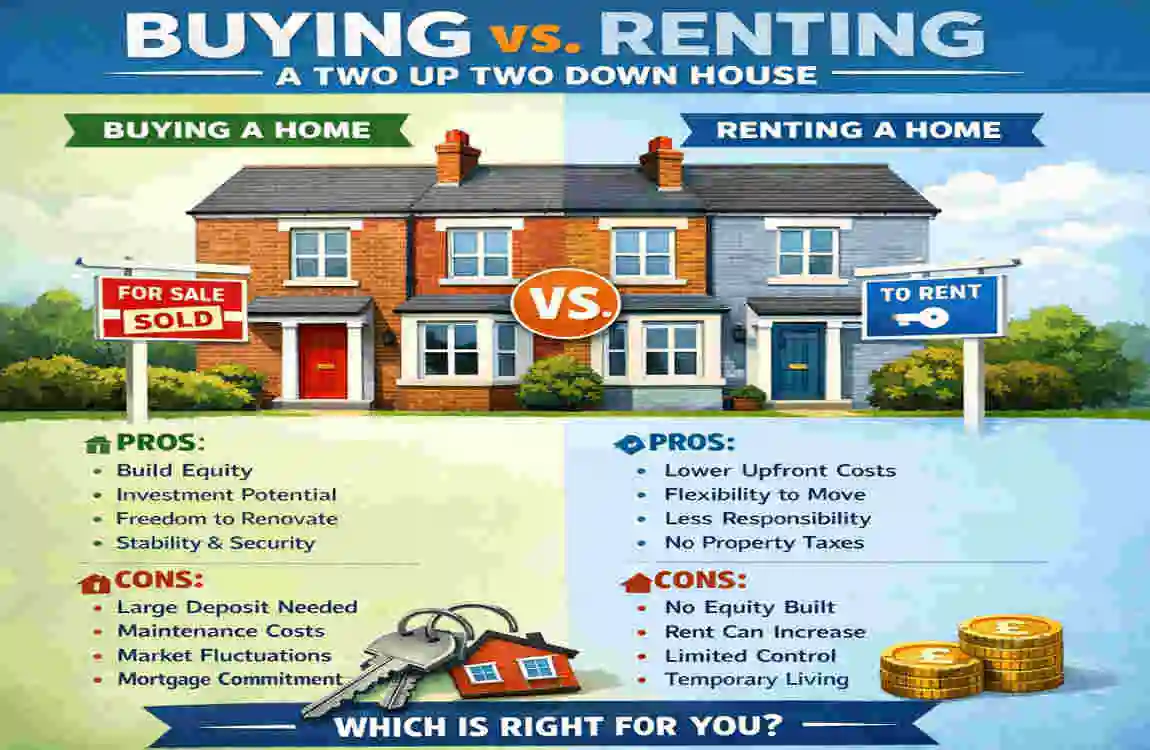
If you have decided that this iconic house style is for you, here is what you need to know about the current market.
Demand is rising. As interest rates settle, first-time buyers are swarming back to cities like Liverpool, Leeds, and Sheffield, snapping up these homes because they offer freehold ownership without the service charges associated with flats.
The Buyer’s Checklist
Before you sign on the dotted line, you must be vigilant. These houses are often over 100 years old. Do not let the charm blind you to structural realities.
- Check the Roof: Step back across the street and look at the roofline. Is it sagging? Are tiles missing? Roof repairs are expensive.
- Look for Damp: Check the corners of rooms, especially on the ground floor. Look for peeling wallpaper or a musty smell. Rising damp is common in brick terraces that have had their damp-proof courses bridged.
- Survey the Electrics: If the fuse box looks like it belongs in a museum, factor in £3,000+ for a rewire.
- Sound Check: Visit the property in the evening if possible. Can you hear the neighbor’s TV?
- The Survey: Never skip the survey. Get a HomeBuyer Report (Level 2) at a minimum, but a Building Survey (Level 3) is better for older properties.
Tips for Renters
If you are renting, look for a landlord who has modernized the heating. Old terraces can be cold. Check the EPC (Energy Performance Certificate) rating. If it is an ‘E’ or ‘F’, you are going to pay a fortune in heating bills. Look for a ‘C’ or above if possible.
FAQ Section
What constitutes a two-up, two-down house? A two-up, two-down house is a residential property, typically terraced, that has two main rooms on the ground floor (living and kitchen) and two on the upper floor (bedrooms). They traditionally have a small backyard and were built during the Victorian or Edwardian eras.
How many bedrooms does a two-up two-down have? By definition, it has two bedrooms located on the upper floor. However, many modern owners convert the attic (loft) into a third bedroom, or sometimes split a large front bedroom into two smaller rooms, though this is less common due to window layouts.
Are two-up, two-down houses worth buying? Yes, they are often considered excellent investments. They are usually more affordable than semi-detached homes, making them great for first-time buyers. Because they are freehold (you own the land), they tend to appreciate well, especially in up-and-coming city areas.
Where is the bathroom in a two-up, two-down? Historically, the toilet was outside. In modernized versions, the bathroom is usually found on the ground floor (behind the kitchen) or upstairs, carved out of the back bedroom. Moving the bathroom upstairs is a popular renovation choice to increase value.
Are two-up two-down houses cold? They can be if they haven’t been updated. Solid brick walls do not hold heat as well as modern cavity walls. However, because they are terraced, you benefit from the heat of neighbors on both sides. Adding insulation and double glazing makes them very comfortable.