
You’ve just closed escrow on your dream home. The keys are in your hand, the paperwork is signed, and you’re ready to move in. But when you walk through the door, you notice the elegant chandelier you fell in love with is gone. The seller took it! Suddenly, what should be a joyful moment turns into a heated dispute.
This scenario happens more often than you might think. The confusion usually boils down to one question: What is considered furniture when selling a house? Understanding the difference between fixtures, furnishings, and personal items is crucial for both buyers and sellers. It can mean the difference between a smooth transaction and a stressful argument.
Defining Key Terms
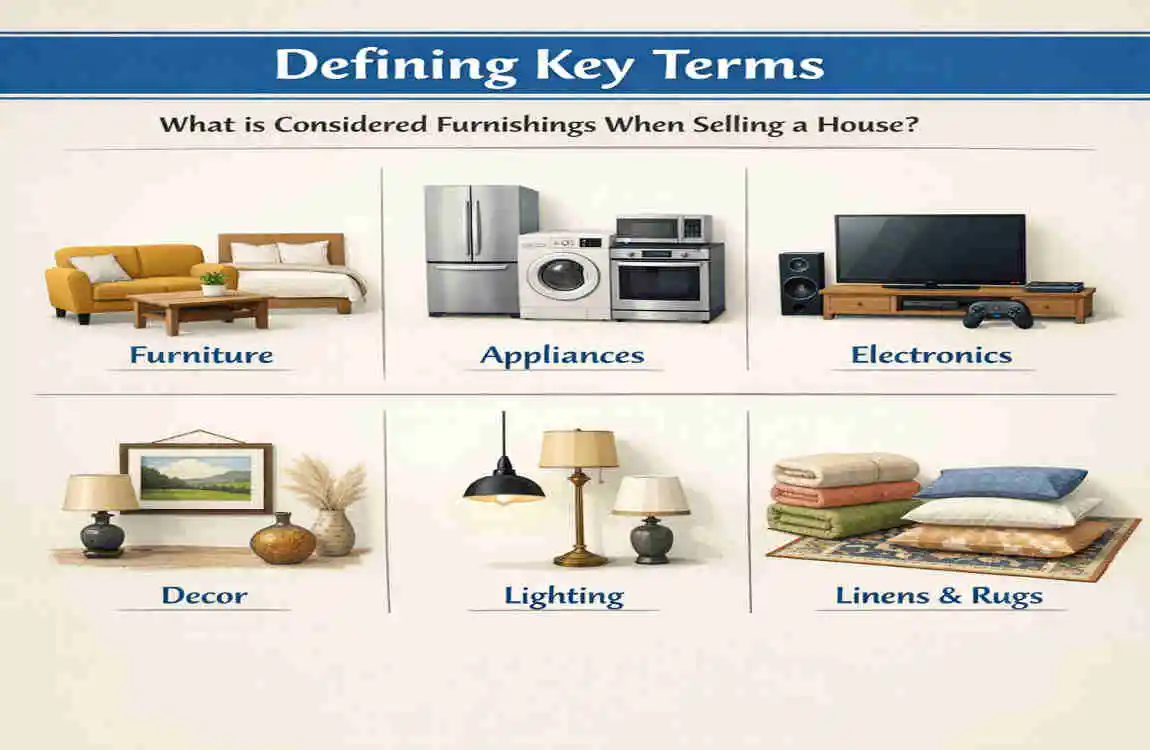
Before we get into the nitty-gritty, let’s clarify the basics. Understanding the language of real estate is the first step to a smooth sale or purchase.
What Are Fixtures in Real Estate?
Fixtures are items that are permanently attached to the property. If you need tools—like a screwdriver, wrench, or glue—to remove it, it’s probably a fixture. Think of things like:
- Built-in shelves
- Ceiling fans
- Wired lighting (like chandeliers)
- Wall-mounted cabinets
Why do fixtures matter? By law, fixtures are considered part of the property. They are included in the sale unless specifically excluded in the contract. This means you can’t just unscrew the dining room chandelier and take it with you unless you’ve made that clear in writing.
Quick tip: If it’s bolted, nailed, glued, or otherwise permanently attached, it’s a fixture and stays with the house.
What Counts as Furnishings?
Furnishings are the movable items that make a house feel like a home. These include:
- Curtains and drapes
- Rugs and carpets (not wall-to-wall)
- Lamps and light fixtures that plug in
- Decorative pillows and throws
Furnishings are usually not included in the sale unless you and the buyer agree otherwise. They’re considered part of the home’s decor, not its structure.
Remember: If you can pick it up and walk away with it, it’s probably a furnishing—not a fixture.
Personal Property vs. Real Property
Here’s where things can get confusing. Personal property refers to anything you can move—your sofa, your TV, your favorite piece of art. Real property is the land and anything permanently attached to it, like the house itself and its fixtures.
Let’s make it even clearer with a table:
Category Examples: Stays with House? Why?
Fixtures, blinds, and chandeliers. Yes, permanently attached
Furnishings, Rugs, lamps, Negotiable Movable decor
Personal Items: TVs, beds, artwork. No Portable belongings
Bottom line: Fixtures stay, personal items go, and furnishings are up for negotiation.
Fixtures That Stay
When you sell a house, certain items are legally expected to remain. Let’s break down the most common fixtures that must stay with the property.
Kitchen and Laundry Fixtures
Built-in appliances are almost always considered fixtures. This includes:
- Ovens (if built-in)
- Dishwashers
- Cooktops
- Built-in microwaves
- Range hoods
- Cabinetry and countertops
What about the fridge? If it’s a built-in or integrated fridge, it stays. If it’s a freestanding fridge, it’s usually considered personal property. The seller can take it—unless the contract says otherwise.
Laundry rooms follow the same logic. Built-in washers and dryers stay; portable ones go.
Lighting and Window Treatments
Lighting is a common source of disputes. Here’s how to tell what stays:
- Chandeliers and ceiling lights: If they’re hardwired, they’re fixtures.
- Plug-in lamps: These are furnishings and can be taken.
- Curtain rods and blinds: If they’re screwed into the wall, they’re fixtures and stay.
- Curtains and drapes: These are usually considered furnishings and can be removed.
The MARIA Test is a handy way to remember what counts as a fixture:
- Method of attachment (Is it nailed, screwed, or glued?)
- Adaptability (Is it custom-fit for the space?)
- Relationship of the parties (Buyer vs. seller)
- Intention (Was it meant to be permanent?)
- Agreement (What does the contract say?)
Outdoor Fixtures
Don’t forget the outside! Outdoor fixtures that stay with the house include:
- Sheds (if anchored)
- Fences and gates
- In-ground sprinklers
- Mailboxes (if built-in)
- Decks and patios
- Built-in grills
- Landscape lighting
- Retaining walls
- Permanent playsets
- Flagpoles (if installed in the ground)
Tip: If it’s attached to the land or house, it’s probably a fixture.
Personal Items You Can Take
Now, let’s talk about what you can pack up and move with you.
Furniture and Large Decor
Furniture is almost always considered personal property. This includes:
- Sofas and armchairs
- Dining tables and chairs
- Beds and mattresses
- Dressers and nightstands
- Freestanding bookcases
Unless you and the buyer agree to include these items in the sale (and put it in writing), you’re free to take them with you.
Electronics and Small Appliances
Electronics and small kitchen gadgets are also personal property:
- Televisions (unless wall-mounted brackets are included)
- Stereos and speakers
- Coffee makers, toasters, and blenders
- Computers and printers
Remember: If it’s not built-in or attached, it’s yours to take.
What Is Considered Furnishings When Selling a House? Gray Areas
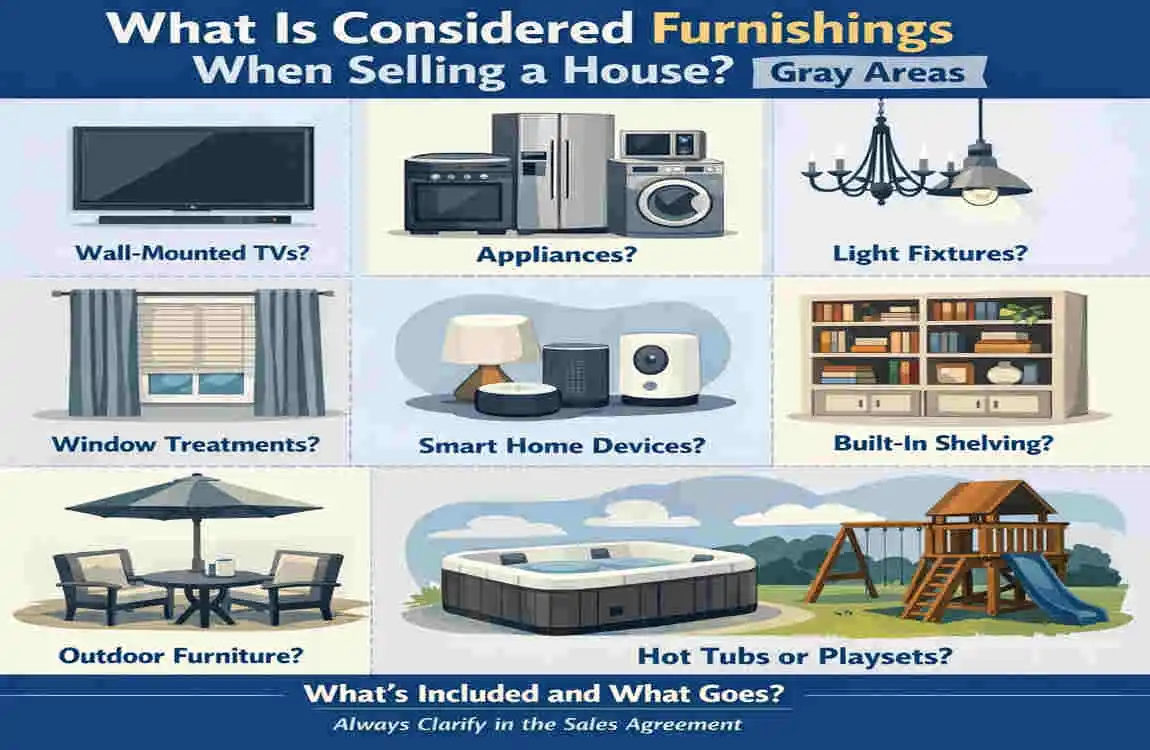
Some items fall into a gray zone. These are the things that often cause last-minute arguments or confusion.
Negotiable Furnishings
Here are some common gray-area items and tips for handling them:
Item Typically Fixture? Negotiation Tip
Mounted TV Bracket, yes, TV no. Specify in the contract
Washer/Dryer Built-in yes List as personal otherwise
Window AC Unit: No clarification in writing
Mirrors (wall-mounted) Sometimes specified in the contract
Freestanding Grill No Negotiate if desired
Portable Hot Tub No List if included
Garage Storage Systems: Yes (if built-in). Clarify in the contract
Outdoor Planters: No Negotiate if desired
Light Fixtures (designer) Yes, Exclude in contract if keeping
Smart Home Devices: Yes (if wired), specify in contract
Pro tip: When in doubt, spell it out in the contract.
Fully Furnished Sales
Sometimes, sellers offer a fully furnished home—everything from the beds to the silverware. This can be a major selling point for buyers seeking a turnkey property.
Benefits:
- Faster sales
- Higher perceived value
- Convenience for both parties
But beware:
- Use a bill of sale to list every included item.
- There may be tax implications for both buyer and seller.
- Make sure to clarify what’s included to avoid disputes.
Legal and Regional Differences
Laws about fixtures and furnishings can vary by state and country. Here’s what you need to know:
- United States: Most states use the MARIA test or similar guidelines. Always check your state’s real estate laws.
- United Kingdom: “White goods” (like fridges and washing machines) are often included, but not always. Check the property listing and ask for an inventory.
- Pakistan: Practices can vary widely. It’s common for sellers to take most appliances and even light fixtures unless otherwise agreed.
Key takeaway:
Always review your local laws and consult with a real estate professional to avoid surprises.
Checklists for Sellers and Buyers
Stay organized and avoid disputes with these handy checklists.
Seller Checklist
- Inventory all items before listing your home.
- Remove or clearly mark personal items before showings.
- Exclude personal items from listing photos.
- Use an addendum to specify what’s included or excluded.
- Discuss gray-area items with your agent.
Buyer Checklist
- Ask for a written list of inclusions before making an offer.
- Clarify any gray-area items in your offer.
- Do a final walkthrough to verify that the included items are still present.
- Get everything in writing—don’t rely on verbal agreements.
Staging Tips to Maximize Value
Staging your home can help it sell faster and for a higher price. But be careful not to create confusion about what’s included.
- Use attractive, neutral furnishings to highlight your home’s best features.
- Avoid staging with items you plan to take, such as a statement chandelier, unless you’re willing to leave them.
- Remove or replace personal items before showings.
Tip: A well-staged home helps buyers imagine themselves living there—without making promises about what comes with the sale.
Common Mistakes and How to Avoid Them
Don’t let these common errors derail your sale:
- Removing fixtures after accepting an offer: This is a top cause of disputes. If you want to keep something, exclude it in the contract.
- Vague contracts: Always list included and excluded items clearly.
- Assuming buyers know what stays: Spell it out to avoid misunderstandings.
Solution:
Work closely with your real estate agent and use detailed contracts.
FAQs
What is considered furnishings when selling a house?
Furnishings are movable items that enhance a home’s appeal, like rugs, curtains, and lamps. They’re usually not included in the sale unless the contract specifies otherwise.
Does a fridge count as a fixture?
If the fridge is built-in or integrated, it’s a fixture and stays. If it’s freestanding, it’s personal property and can be taken by the seller—unless the contract says otherwise.
Are curtains fixtures or furnishings?
Curtain rods and blinds (if attached) are fixtures and stay. Curtains and drapes themselves are usually furnishings and can be removed.
What if selling fully furnished?
A fully furnished sale means everything is included. Use a bill of sale to list all items, and be aware of possible tax implications.
Can buyers demand furniture?
Buyers can request furniture, but it’s up to the seller to agree. Any included items should be listed in the contract.
Tax rules for furnishings?
Tax rules vary by region. In some places, including furnishings, can affect property taxes or capital gains. Consult a tax professional for advice.
Regional differences (e.g., Pakistan)?
In Pakistan, sellers often take most appliances and fixtures unless otherwise agreed. Always clarify in writing what’s included.