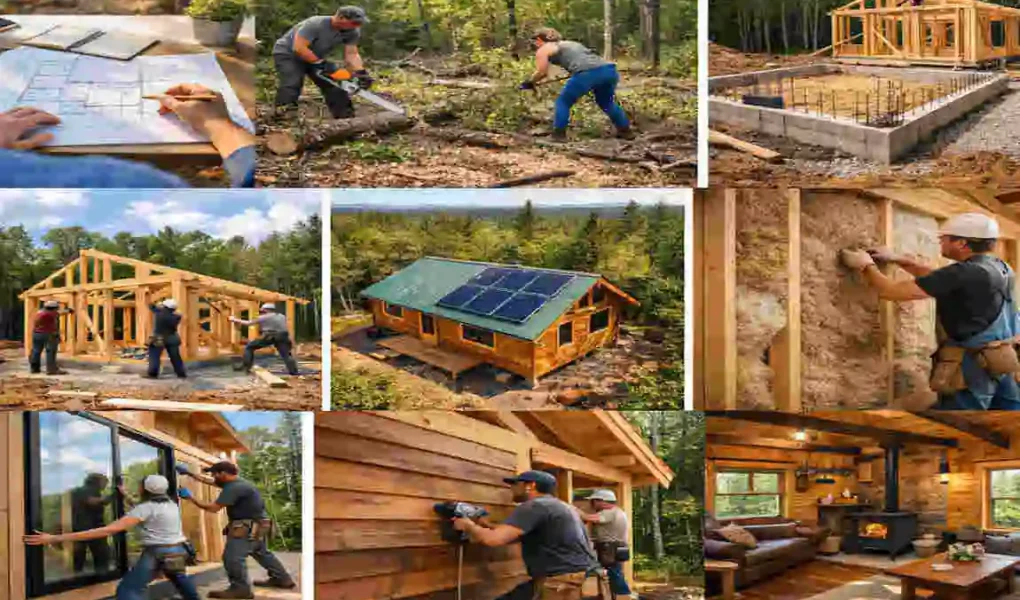
Have you ever closed your eyes and imagined escaping the concrete jungle for a home that actually breathes? There is something deeply primal and incredibly satisfying about the idea of a wooden cabin. It could be the scent of fresh pine, the warmth of the grain, or the way a timber structure grows right out of the earth. If you are dreaming of a lifestyle that is quieter, simpler, and kinder to the planet, learning how to build a wooden house is the ultimate first step toward that reality.
Building a home is often seen as a destructive process, but it doesn’t have to be. In fact, choosing to build a wooden house can be one of the greenest decisions you ever make. Did you know that wood homes can reduce a building’s carbon footprint by about 25% compared to traditional concrete or steel structures? Wood is a natural “carbon sink,” meaning it traps CO2 rather than releasing it into the atmosphere.
Why Choose to Build a Wood House?
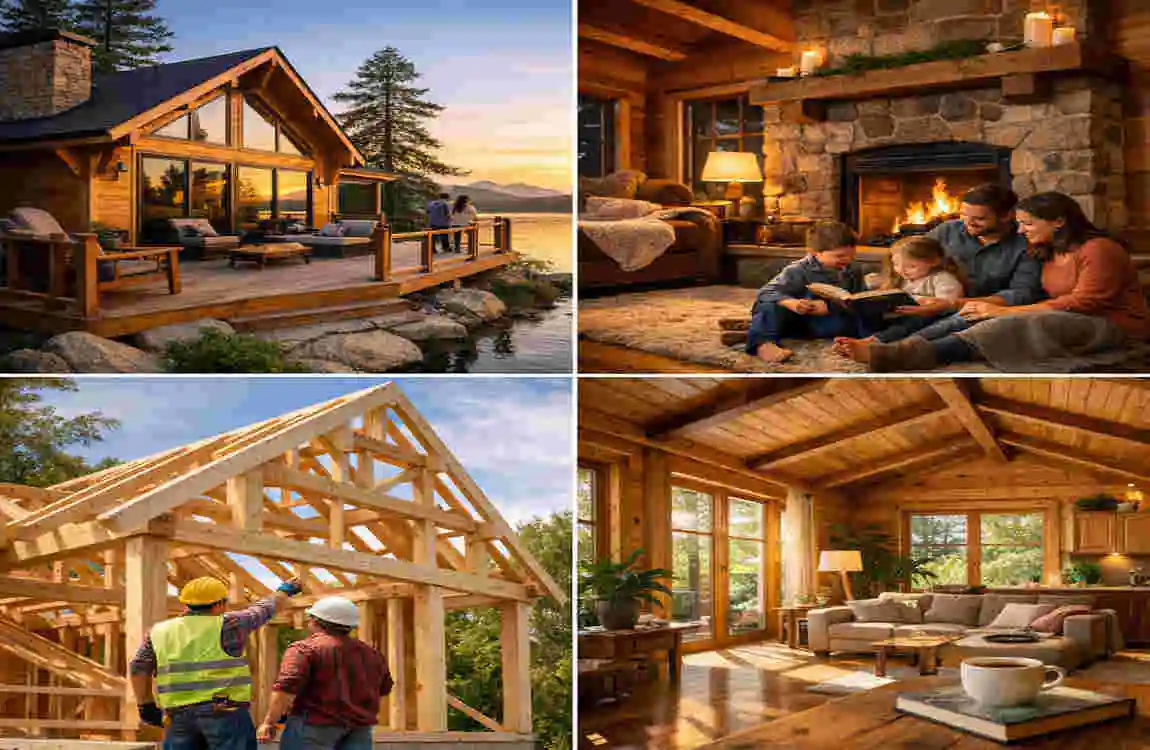
Before we pick up a hammer, let’s talk about the “why.” Why is wood making such a massive comeback in the world of sustainable architecture? It isn’t just about the “rustic look”—though that is certainly a perk. The benefits of a wooden home go deep into the science of living well and living long.
Eco Benefits of Wooden Cabins
When you build a wood house, you are essentially using a giant battery of stored solar energy. Trees grow with sunlight and water, and when harvested responsibly, they provide a renewable building material that requires far less energy to process than brick or cement.
Furthermore, wood is a natural insulator. Have you ever touched a stone wall in the winter? It’s freezing. Now, touch a wooden plank. It feels neutral or even warm. This natural thermal resistance means your cabin stays cooler in the summer and warmer in the winter. On average, a well-built wooden home can cut your heating and cooling energy bills by up to 30%. That is good for the Earth and great for your wallet.
Cost and Durability Advantages
There is a common myth that wooden houses are flimsy or won’t last. Tell that to the people living in timber-framed homes in Europe that are over 500 years old! If you treat the wood correctly and keep it away from standing water, it can last for generations.
From a financial perspective, building with wood is often much more approachable for the DIY enthusiast or the budget-conscious builder. While prices fluctuate, the average cost to build a wood house typically ranges between $100 and $200 per square foot. This is significantly lower than high-end masonry. Plus, wood is lightweight, which means you can save a fortune on heavy machinery and massive foundations.
Ideal for Dream Cabins
Wood is incredibly forgiving and flexible. If you decide halfway through the build that you want an extra window to catch the sunrise, it is much easier to cut a hole in a wooden wall than a brick one. This makes it the perfect material for custom, creative “dream cabins” located in remote areas where transporting heavy concrete trucks would be impossible.
plan Your Eco Wood House Design
Every great project starts on paper—or a computer screen. When you decide to build a wooden house, your first job is to be a detective. You need to investigate your land and understand how the environment will interact with your structure.
Site Analysis and Size
Where does the sun hit your land at noon? Where does the wind blow from during the winter? These aren’t just trivia questions; they are the keys to a “passive” home design. You want to place your largest windows facing the sun (usually South in the Northern Hemisphere) to soak up free heat during the day.
Keep your size realistic. A 400-square-foot cabin is much easier to heat, clean, and maintain than a 2,000-square-foot mansion. Think about your actual needs. Do you really need a guest room, or would a cozy loft suffice? Using free tools like SketchUp or even just graph paper can help you visualize the flow of your rooms before you buy a single board.
Prioritizing Passive Solar
Passive solar design is the “holy grail” of eco-friendly building. It means your house does the work for you. By using wide roof overhangs, you can block the high summer sun (keeping the house cool) while allowing the low winter sun to shine deep into the rooms (keeping the house warm). It’s a simple architectural trick that costs nothing but saves thousands in energy bills over time.
Select Sustainable Wood Sources
Not all wood is created equal. If you want to build a truly green wooden house, you have to look at where the timber comes from. You don’t want to destroy a forest to build a home meant to celebrate nature.
FSC-Certified and Reclaimed Wood
Always look for the FSC (Forest Stewardship Council) logo. This certification ensures that the wood was harvested from responsibly managed forests, where trees are replanted, and local ecosystems are protected.
Another fantastic option is reclaimed wood. This is timber salvaged from old barns, factories, or even shipyards. It has a beautiful, aged character that you can’t buy at a big-box hardware store. Plus, using reclaimed wood means you aren’t cutting down any new trees at all!
Eco-Friendly Woods for Construction
- Cedar: Naturally resistant to rot and insects. It smells amazing and doesn’t require heavy chemical treatments.
- Pine: Fast-growing and widely available. It’s affordable but needs to be kept dry.
- Bamboo: Technically a grass, but it’s incredibly strong and grows back in just a few years. Great for flooring.
- Douglas Fir: Known for its strength-to-weight ratio. It’s the “workhorse” of the timber framing world.
- Oak: Very durable and beautiful, though more expensive. Best for structural beams that you want to show off.
Secure Permits and Prep the Site
This is the part most people want to skip, but please, don’t! Before you start digging, you need to make sure the government won’t come along and tell you to tear it all down.
Navigating Local Zoning
Every area has different rules. Some places are very “pro-cabin,” while others have strict rules about how small a house can be or what kind of toilet you can use. Visit your local planning office and have a friendly chat. Tell them you want to build a wooden house with eco-friendly features. Sometimes, they even offer “green building” incentives or faster permit processing for sustainable projects.
Environmental Impact Assessments
When you prep your site, try to be a “ghost.” This means disturbing the land as little as possible. Instead of bulldozing every tree, try to tuck your cabin into a natural clearing. Use a solar survey to make sure you aren’t cutting down trees that you actually need for shade or wind protection.
Build a Green Foundation
Traditional concrete foundations are a major source of carbon emissions. If you want a truly eco-friendly wood house, you should consider alternatives that leave a smaller “footprint” on the earth.
Pier Foundations
Instead of pouring a massive slab of concrete, why not use piers? These are essentially “stilts” made of concrete or steel that hold the house up off the ground. This allows air to circulate under the house (preventing rot) and keeps the soil underneath healthy. It also makes the house much easier to level on a sloped lot.
Recycled Concrete and Gravel
If you must use a slab, ask your supplier for recycled aggregate. This is concrete made from crushed-up old buildings. It’s just as strong as the “new” stuff but keeps waste out of landfills. Always ensure you have a thick layer of gravel for drainage. Water is the #1 enemy of a wood house, so you want it to flow away from your structure as fast as possible.
Frame the Structure Sustainably
The framing is the skeleton of your home. This is where the “build a wooden house” project really starts to look like a house. There are two main ways to go about this: traditional timber framing or modern SIPs.
Timber Framing vs. SIPs
Timber framing is the old-school method of using large, heavy beams held together with wooden pegs. It’s beautiful and lasts forever, but it requires a lot of skill (or a very good contractor).
On the other hand, many modern eco-builders use SIPs (Structural Insulated Panels). These are “sandwiches” of wood with a thick layer of foam insulation in the middle. They are made in a factory and shipped to your site. You can put them together like giant Lego blocks. Because they are so airtight, they make your cabin incredibly energy-efficient from day one.
Essential Tools for Framing
To get the job done right, you’ll need a core set of tools. You don’t need a massive warehouse of equipment, but you do need quality.
- Chainsaw or Miter Saw: For cutting those thick beams.
- Nail Gun: To speed up the process (your shoulders will thank you).
- Spirit Level: Because a crooked house is a nightmare to finish.
- Heavy-Duty Drill: For those long structural screws.
install Eco Roof and Insulation
Once the skeleton is up, you need to put a “hat” on it. The roof protects your wood from the rain, and the insulation keeps you from shivering at night.
Choosing Your “Green” Roof
You have two great eco-friendly options here:
- Metal Roofing: It lasts 50+ years, is 100% recyclable, and is the best surface for collecting rainwater.
- Living “Green” Roof: This is where you grow grass or plants on top of your house! It provides incredible insulation and helps the house blend into the forest, though it requires a very strong structure to hold the weight of the dirt.
Natural Insulation
Forget that pink fiberglass stuff that makes your skin itch. If you are building an eco-cabin, look at sheep’s wool or cellulose (recycled denim/paper). Sheep’s wool is amazing because it can actually absorb moisture from the air without losing its ability to keep you warm. It’s naturally fire-resistant and completely non-toxic. Aim for an R-value (insulation thickness) of at least R-40 in the roof to keep that heat from escaping.
Add Energy-Efficient Windows and Doors
Windows are the “eyes” of your home, but they are also where most of your heat escapes. When you build a wood house, you want to invest the most money in your “envelope,” which means your walls, roof, and windows.
The Power of Triple-Pane
If you live in a cold climate, triple-pane windows are a must. They have three layers of glass with a special gas (such as Argon) trapped between them. This creates a massive barrier against the cold. Look for frames made of FSC-certified wood or recycled aluminum rather than vinyl (a plastic that off-gasses chemicals).
Strategic Placement
As we mentioned in the planning phase, place your largest windows on the south side. On the north side, where the sun never shines, keep your windows small. This prevents the “refrigerator effect” where a large north-facing window sucks the heat out of your living room.
Window TypeEco RatingInsulation (U-Value)Best For
Single Pane Poor High (Bad) Summer sheds only
Double Pane Good Moderate Standard homes
Triple Pane Excellent Low (Great) Cold-climate cabins
Low-E Glass Excellent Variable Sun-heavy areas
Integrate Off-Grid Systems
One of the biggest reasons people want to build a wooden house is to gain independence. Integrating off-grid systems allows you to live comfortably even if the power lines go down.
Solar Power and Rainwater
A few solar panels on your metal roof can easily power your LED lights, laptop, and a small fridge. Pair this with a rainwater harvesting system—where gutters lead to a filtered tank—and you have your own private water utility. It’s an empowering feeling to know that your morning coffee was brewed using sunlight and rain.
The Composting Toilet
I know, I know—people get nervous about this. But modern composting toilets are odorless and incredibly efficient. They turn waste into soil-enriching compost rather than flushing gallons of clean drinking water down the drain. If you are building in a remote area, this can save you $10,000 to $20,000 on septic system costs!
Finish Interiors with Natural Materials
The inside of your house should be as healthy as the outside. Many modern homes are full of “VOCs” (Volatile Organic Compounds)—basically nasty chemicals that leak out of carpets and cheap paint.
Reclaimed Flooring and Lime Plaster
For your floors, use reclaimed wood or cork. Cork is harvested from the bark of trees without killing them, and it feels soft and warm underfoot. For the walls, consider lime plaster instead of drywall. Lime plaster is “breathable,” meaning it helps regulate humidity and prevents mold—a common problem in wooden houses.
Non-Toxic Paints and Oils
When it comes time to stain your wood, look for natural oils like linseed or tung oil, which soak into the wood and protect it without creating a plastic-like film. If you want color, choose “Milk Paint” or clay-based paints. They are so safe you could almost eat them (though we don’t recommend it!).
Final Inspections and Landscaping
You’re almost there! Before you move in the furniture, you need to do a final check to make sure everything is safe and sound.
The “Green” Certification
If you want to prove your home’s value, you can have it certified by organizations like LEED or the Living Building Challenge. They will check your energy use, your water systems, and the “health” of your materials. Even if you don’t get the official plaque, doing a “blower door test” is a great idea. This test finds tiny air leaks so you can seal them up and keep your energy bills low.
Native Landscaping
Don’t surround your beautiful eco-cabin with a thirsty, chemical-heavy grass lawn. Instead, plant native species. These are plants that belong in your area. They don’t need extra water or pesticides, and they provide food for local bees and birds. It’s the final touch that makes your “build a wooden house” project feel like a part of the forest.
Tools, Materials, and Budget Breakdown
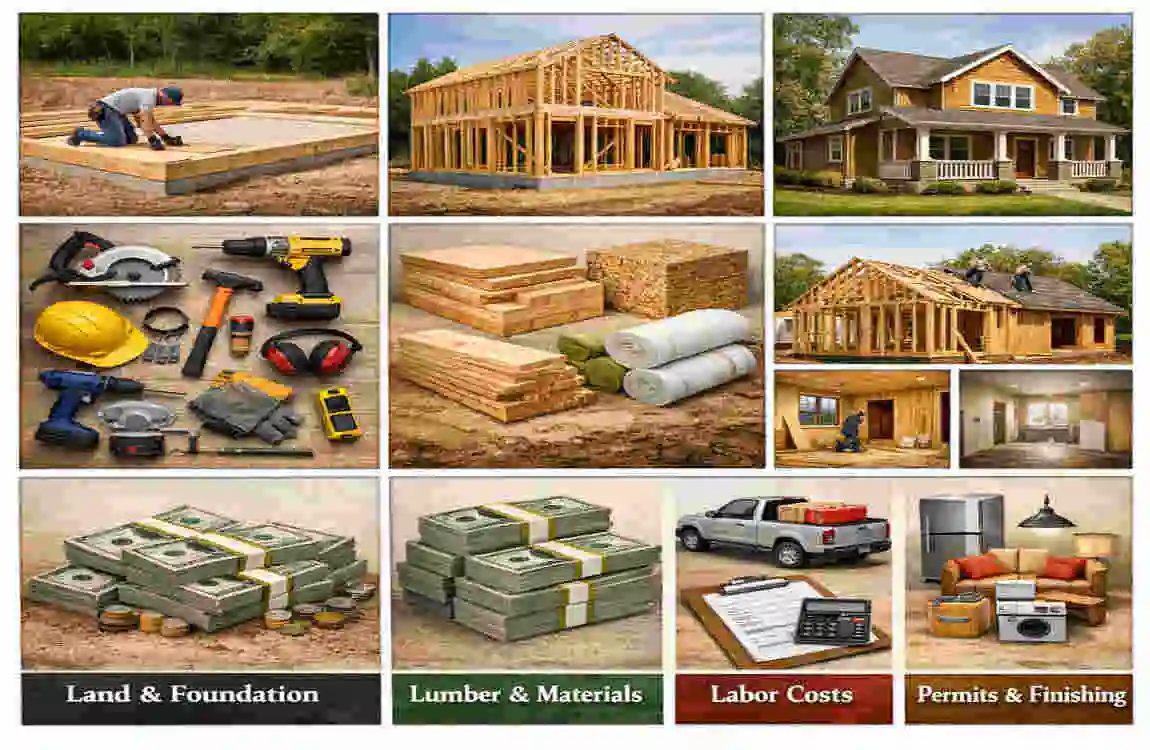
Building a cabin is a big financial commitment, but being eco-friendly can actually save you money if you plan correctly.
Essential Toolkit
- Safety Gear: Boots, goggles, and ear protection.
- Measuring Tape & Chalk Line: For precision.
- Impact Driver: For driving long screws into timber.
- Circular Saw: For general cutting.
- Chisels: For fine-tuning wood joints.
Budget Table Estimated for a 600 sq ft Cabin
CategoryEstimated Cost (Eco-Materials)
Land & Permits $5,000 – $15,000
Foundation (Piers) $3,000 – $6,000
Timber & Framing $15,000 – $25,000
Roofing & Windows $8,000 – $12,000
Off-Grid Systems $7,000 – $12,000
Interior Finishes $5,000 – $10,000
TOTAL $43,000 – $80,000
Note: These are estimates. Doing the labor yourself can save you 30-50% of the total cost!
Common Mistakes to Avoid When You Build a Wood House
Even the best builders make mistakes. Here are the three “big ones” to watch out for:
- Poor Moisture Control: Never let wood house touch the bare ground. Always have a “capillary break” (like a piece of rubber or metal) between your foundation and your wooden walls.
- Skipping the Vapor Barrier: You need a “house wrap” that lets moisture out but doesn’t let wind or rain in. If you skip this, your wood can rot from the inside out.
- Buying “Cheap” Wood: If the price seems too good to be true, it’s probably not sustainable, or it hasn’t been dried properly. “Green” (wet) wood will shrink and warp as it dries, which can crack your windows and jam your doors.
FAQs
How much does it cost to build a wooden house?
On average, you can expect to pay between $100 and $200 per square foot. However, if you use reclaimed materials and do the work yourself, you can significantly reduce that cost.
What is the best wood for an eco-cabin?
Cedar and Douglas Fir are top choices for their durability and natural resistance. Bamboo is excellent for eco-friendly flooring.
How long does it take to DIY a wooden house?
For a small cabin (around 500 sq ft), a dedicated DIYer can finish the main structure in 3 to 6 months. Finishing the interior and off-grid systems usually takes another 6 months of weekend work.
Is a wooden house fire-safe?
Actually, yes! Large timber beams are surprisingly fire-resistant because they “char” on the outside, protecting their cores. This is often safer than thin steel beams that melt and collapse quickly in high heat.