Choosing the right pipe for your home water system is more important than many people think. The pipe you pick affects water pressure, leak risk, repair costs, and even the safety of your drinking water. If the material is weak or unsuitable for your home, you may face ongoing problems later.
| Application | Recommended Pipe | Pros | Typical Drawbacks |
|---|---|---|---|
| Indoor hot & cold supply (concealed) | CPVC or PEX | Resistant to corrosion, easy to install, good for hot water (CPVC) and flexible runs (PEX) . | CPVC can be brittle in very cold; PEX not UV-stable and can’t be used outdoors . |
| Underground service/main from street | HDPE / MDPE | Highly durable, flexible, corrosion-resistant, long life for buried runs . | Higher material cost than PVC; requires fusion or mechanical joints . |
| Drinking-water lines / longevity | Copper (Type L) | Very durable, heat-resistant, inert taste profile, proven longevity . | Higher cost, potential theft risk, can corrode in aggressive soils/water if not protected . |
| Exterior irrigation / sewer (non‑pressure) | PVC (schedule 40) | Low cost, widely available, good for non-pressurized or above-ground irrigation . | Not for hot potable hot-water; can crack under freezing/impact . |
| Flexible retrofit / tight spaces | PEX | Flexible, fast to install, fewer fittings, good for remodels and radiant heating . | Not for outdoor/UV exposure; some fittings require specific tools . |
There are many types of home plumbing pipes available today, and each has its own strengths. Some pipes are better for hot water. Some work best underground. Others are chosen because they are affordable and easy to install. So, if you are wondering which pipe is best for house water supply, the answer depends on your home, budget, climate, and water quality.
What Should You Consider Before Choosing a Water Pipe?
Before selecting any pipe, consider how your home uses water every day. A pipe that works well in one house may not be the best fit for another.
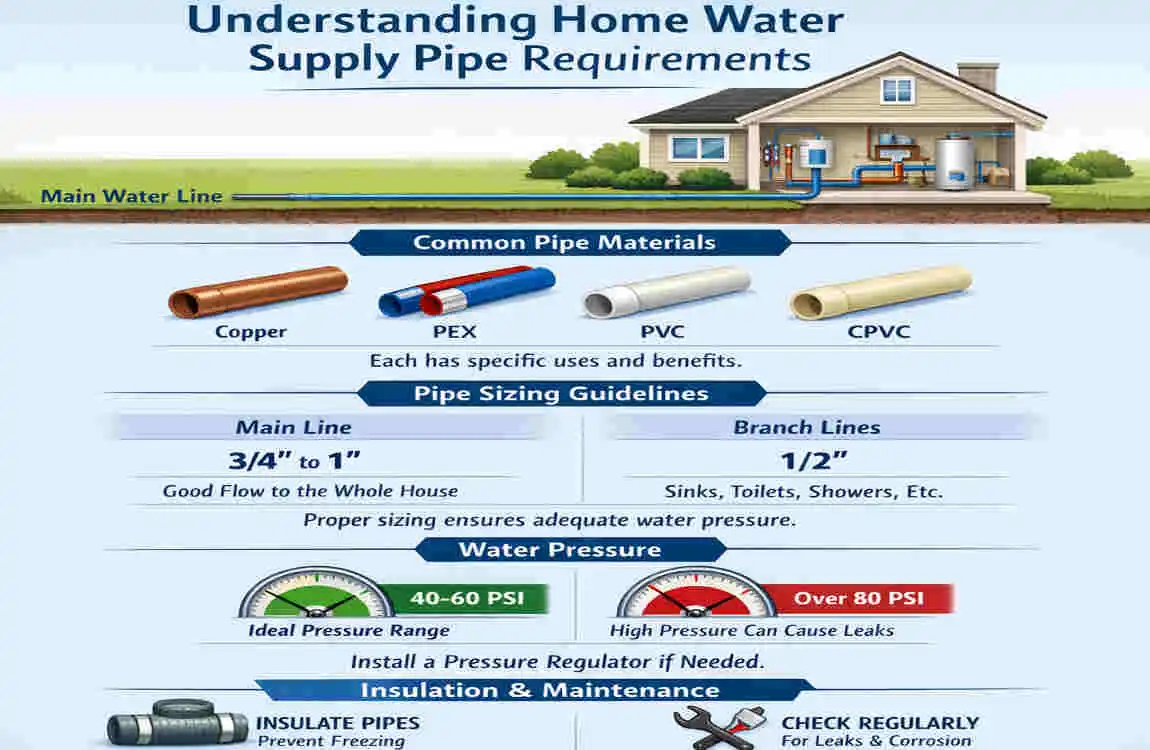
Water Pressure
Your water pipe must handle the pressure in your home without cracking or leaking. If the pipe is too weak, it may wear out faster. If it is not sized properly, water flow may feel slow or uneven.
Climate and Temperature
Weather matters more than many homeowners realize. In cold areas, pipes can freeze and burst. In hot areas, some plastic pipes may not perform well. That is why climate is a major factor in choosing the best plumbing pipes for homes.
Lifespan and Maintenance
Some pipes last much longer than others. You should also consider how often they need repairs or inspections. A cheaper pipe may save money now, but cost more later if it needs frequent fixing.
Indoor vs Outdoor Water Supply Pipes
Indoor pipes usually need to handle daily use, hot water, and clean water delivery. Outdoor and underground pipes are subject to soil pressure, moisture, and changing temperatures. That means residential water supply pipes must be chosen based on location, not just cost.
Common Types of Pipes Used for House Water Supply
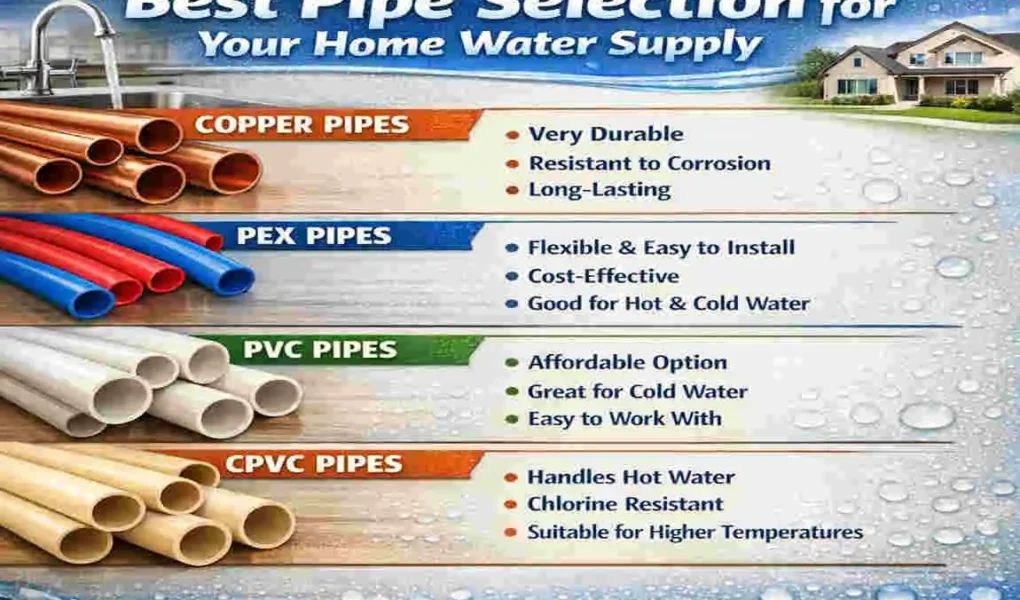
Copper Pipes
Copper is one of the most trusted pipe materials in plumbing. It has been used for many years because it is strong, durable, and safe for drinking water.
Advantages of copper pipes:
- Very durable
- Handles hot water well
- Resists bacteria growth
- Long lifespan
Disadvantages of copper pipes:
- More expensive than many other options
- Can corrode in acidic water
- Installation cost is often higher
Copper is a good choice if you want a premium option and are willing to pay more upfront.
PVC Pipes
PVC is a lightweight, affordable pipe commonly used for cold-water lines. It is easy to work with and does not rust.
Advantages of PVC pipes:
- Low cost
- Rust-proof
- Lightweight
- Easy to install
Limitations of PVC pipes:
- Not ideal for hot water
- May not be the best choice for all home plumbing systems
PVC is often chosen when cost matters most and the pipe will carry only cold water.
CPVC Pipes
CPVC is an upgraded version of PVC. It can handle both hot and cold water, which makes it more useful in many homes.
Why people choose CPVC:
- Handles higher temperatures than PVC
- Corrosion-resistant
- Easy to install
- Good for general plumbing
If you are comparing PEX vs CPVC, CPVC is often seen as a solid middle-ground choice for homeowners who want good performance without paying copper prices.
PEX Pipes
PEX has become very popular in modern homes. It is flexible, easy to install, and works well in many plumbing systems.
Why PEX stands out:
- Very flexible
- Fast installation
- Resists freezing better than rigid pipes
- Works for hot and cold water
For many homeowners, PEX is the best overall answer to the question of which pipe is best for a house’s water supply. It gives a strong balance of cost, ease, and performance.
Galvanized Steel Pipes
These were used in older homes for many years. They are strong, but they do not age well.
Downsides of galvanized steel:
- Rust can build up over time
- Can clog water flow
- Harder to maintain
- Less common in new homes
If your house still has this type of pipe, it may be worth replacing it during a renovation.
HDPE Pipes
HDPE pipes are often used underground. They are flexible, durable, and highly corrosion-resistant.
Why HDPE is useful:
- Great for underground water supply
- Handles moisture and soil conditions well
- Flexible and strong
- Long-lasting
If you need an HDPE pipe for water supply, especially outside the home, it is a very reliable choice.
Which Pipe Is Best for House Water Supply?
The best pipe depends on where it will be used, but some materials are clearly stronger choices than others.
Pipe Type Durability Cost Hot Water Use Corrosion Resistance Installation Ease Best For
Copper High High Yes Moderate Medium Premium homes
PVC Medium Low No High Easy Cold water lines
CPVC High Medium Yes High Easy General plumbing
PEX High Medium Yes High Very Easy Modern homes
Galvanized Steel Medium Medium Yes Low Difficult Old structures
HDPE High Medium Limited Excellent Easy Underground supply
Best Overall Choice
For most homes, PEX is the best overall pipe because it is flexible, affordable, and easy to install.
Best Budget Choice
If you want a lower-cost option, PVC or CPVC can work well, depending on whether you need hot-water support.
Best for Long-Term Durability
If you want a premium and very long-lasting option, copper is a strong choice.
Best for Underground Use
For buried lines, HDPE is often the safest and most practical option.
Factors That Help Decide the Best Pipe for Your House

Climate Conditions
If you live in a cold region, choose a pipe that can resist freezing. PEX performs well here because it is flexible and less likely to burst. In hot climates, you need a pipe that can handle heat without weakening.
Water Quality
Your water quality can affect the lifespan of your pipes. Hard, acidic, or mineral-rich water may cause wear over time. Copper can be affected by acidic water, while plastic pipes usually resist corrosion better.
Budget
You should consider both installation and future maintenance costs. A cheaper pipe may seem attractive at first, but if it causes repeated repairs, it may not save money.
Building Type
Apartments, villas, and larger homes may need different pipe systems. A small home may do well with PEX or CPVC, while a larger property may need a more carefully planned system.
PEX vs CPVC vs Copper: Which One Should You Choose?
PEX Pipes
PEX is a great choice if you want flexibility and easy installation. It also lowers labor cost, which is a big advantage during home construction or renovation.
CPVC Pipes
CPVC is ideal if your home needs both hot and cold water lines and you want a strong pipe without paying for copper. It is a practical and balanced option.
Copper Pipes
Copper is still one of the most trusted choices for homeowners seeking premium quality and long-lasting performance. It costs more, but many people like it because it performs very well over time.
Simple Recommendation
- For most homes: PEX
- For hot water systems: CPVC
- For luxury durability: Copper
Best Pipe for Underground Water Supply to a House
Underground pipes require extra protection because they are subject to soil pressure, moisture, and shifting ground. If the wrong pipe is used, it may crack or corrode faster.
Best underground choices:
- HDPE for strong underground performance
- PEX in some installations
- PVC for cold underground lines
For buried lines, the pipe should be strong, flexible enough to handle movement, and resistant to corrosion.
Pipe Installation and Maintenance Tips
Installation Tips
Always hire licensed plumbers for the job. They will know the right pipe size, fittings, and local code requirements. It is also smart to match the pipe diameter with your home’s water pressure needs.
Maintenance Tips
A good pipe still needs care. Check for leaks regularly, avoid harsh chemical cleaners, and protect pipes from freezing during cold weather. It also helps to monitor water pressure, as sudden changes can damage the system.
Common Mistakes to Avoid When Choosing Water Supply Pipes
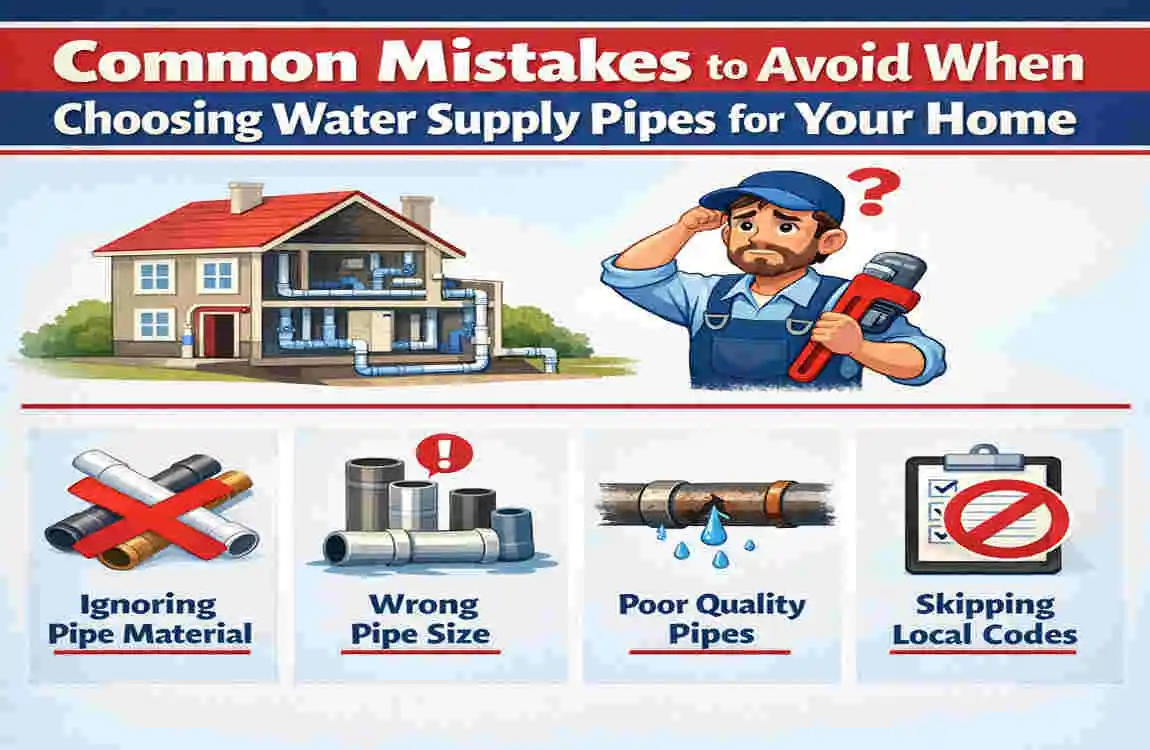
Avoid These Costly Errors
- Choosing a pipe only because it is cheap
- Ignoring local plumbing rules
- Using the wrong pipe for hot water
- Mixing incompatible materials
- Forgetting underground insulation
These mistakes can lead to leaks, poor pressure, and expensive repairs later.
Frequently Asked Questions
Which pipe is best for house water supply?
PEX is often the best overall choice because it is flexible, affordable, corrosion-resistant, and easy to install.
Is PVC pipe good for drinking water supply?
Yes, PVC can be used for cold water lines, but it is not the best choice for hot water.
Which pipe lasts longest in a home?
Copper and PEX both offer a long lifespan when installed correctly.
Is CPVC better than PVC?
Yes. CPVC is better than PVC because it can handle hot water and offers more flexibility in home plumbing.
What is the safest pipe for drinking water?
Copper, PEX, and CPVC are common, safe options when certified for drinking water use.