
Welcoming guests into your home does not have to feel stressful. With a little planning and a few simple touches, you can make your space feel clean, cozy, and inviting. You do not need expensive decorations or hours of cleaning. What matters most is creating a home that feels comfortable and warm for those who come in.
Below are simple, practical ways to get your home guest-ready without much effort.
Start with a Quick Clean
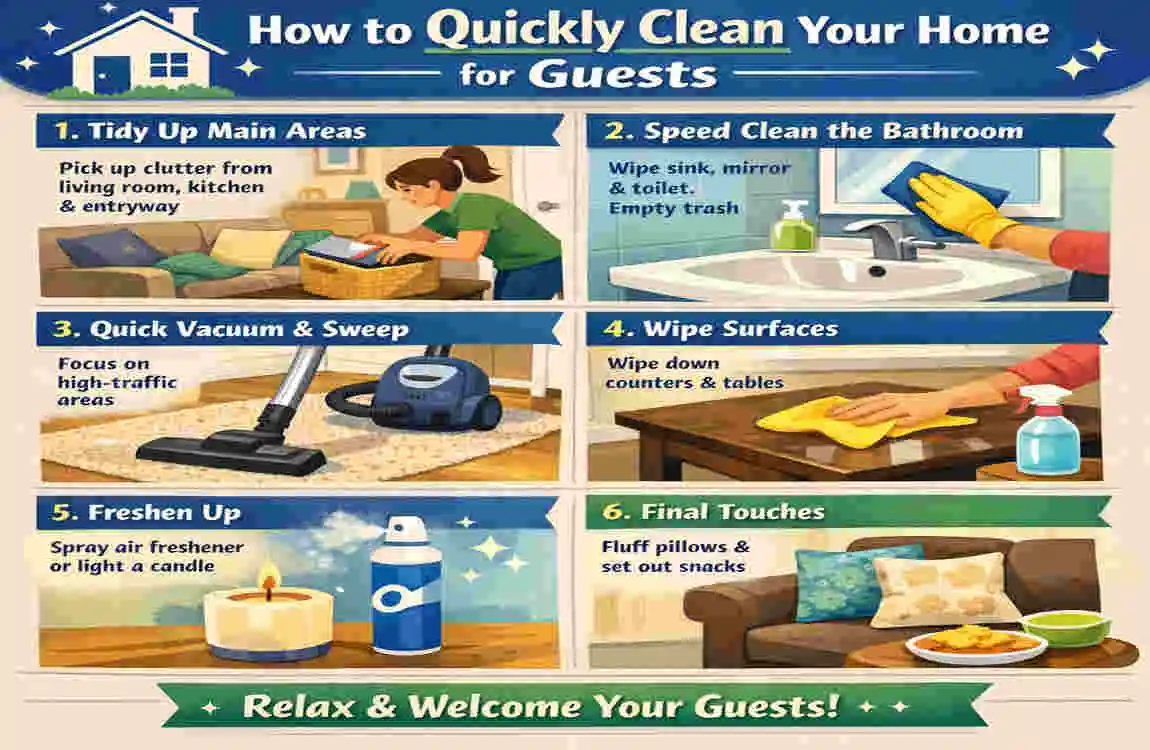
A clean home space always creates a better first impression. You do not need to clean every corner of the house deeply. Instead, focus on the rooms your guests will actually see and use.
Focus on the main areas.
Give extra attention to:
- Living room
- Kitchen
- Bathroom
- Entryway
What to do
Dust surfaces, wipe counters, vacuum floors, and empty trash bins. Straighten pillows, fold blankets, and put away anything that looks messy. Even a short cleaning session can make your home feel fresh and ready.
Declutter Common Spaces
Clutter can make even a clean room feel busy and uncomfortable. Before guests arrive, take a few minutes to clear surfaces and open up the space.
Simple decluttering ideas
- Put magazines, books, and mail in one place
- Store toys and personal items in baskets
- Clear dining tables and coffee tables
- Remove items from bathroom counters
A tidy room feels bigger, calmer, and more welcoming. Your guests will notice that right away.
Refresh the Guest Bathroom
The bathroom is one of the most important spaces to prepare. Guests should feel comfortable using it without needing to ask for anything.
Bathroom Essentials: Why They Matter
Clean towels Give guests comfort and convenience
Hand soap Helps keep hands clean
Toilet paper Prevents awkward shortages
Air freshener Keeps the room smelling pleasant
Trash bin Adds convenience and cleanliness
Make sure the bathroom is spotless, stocked, and easy to use. A neat bathroom shows that you care about your guests’ comfort.
Make Your Home Smell Fresh
A fresh-smelling home feels more inviting. You do not need a strong fragrance. In fact, lighter scents are usually better because some guests may be sensitive to strong smells.
Easy ways to freshen the air
- Open windows for a bit of fresh air
- Light a mild-scented candle
- Use a simple air freshener
- Try an essential oil diffuser with a light scent
The goal is to make the home smell clean and pleasant, not overwhelming.
Create Comfortable Seating
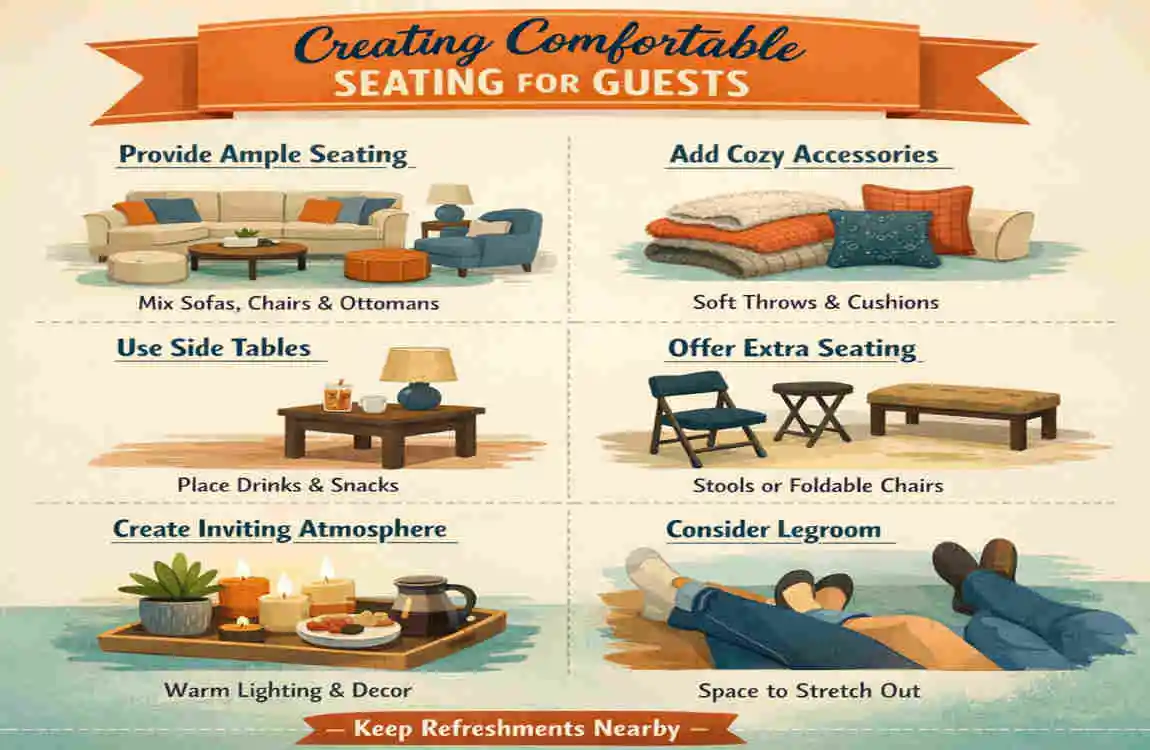
Guests should have a place to sit and relax. Rearrange chairs and sofas if needed so everyone can comfortably talk and spend time together.
Add small comfort touches.
- Place extra cushions on the sofa
- Fold a throw blanket over a chair
- Make sure seating is not too crowded
- Keep walking areas clear
These small changes can make your space feel more relaxed and welcoming.
Adjust the Lighting
Lighting changes the mood of a room more than many people realize. Bright, harsh light can feel cold, while soft light makes a space feel warm and peaceful.
Best lighting tips
- Open curtains during the day for natural light
- Use warm lamps in the evening
- Avoid overly bright overhead lights when possible
Good lighting helps guests feel comfortable and at ease the moment they walk in.
Prepare Simple Snacks and Drinks
You do not need a full meal to make guests feel welcome. A few easy snacks and drinks can go a long way.
Good options include
- Water, tea, or coffee
- Fresh fruit
- Cookies or crackers
- Chips with dip
These simple refreshments show thoughtfulness and help guests feel cared for. Even a small snack table can make guests feel more special.
Check the Temperature
A dream home that is too hot or too cold can make guests uncomfortable. Before they arrive, think about the season and adjust the temperature as needed.
Quick temperature tips
- Use fans in warm weather
- Turn on the air conditioning if needed
- Increase the heat during colder months
- Keep blankets nearby for extra comfort
When the room temperature feels right, guests can relax and enjoy themselves more easily.
Add Small Decorative Touches
You do not need major decor changes to make your home look nice. Small details can make a big difference.
Easy decorative ideas
- Place fresh flowers on a table
- Arrange pillows neatly
- Clear and style the coffee table
- Add a simple centerpiece
These little touches help your home feel thoughtful and cared for without taking much time.
Prepare a Guest Room If Needed
If someone is staying overnight, make the room clean, simple, and comfortable. A few essentials are enough.
Guest room basics
- Fresh bed linens
- Extra pillows
- Clean towels
- Access to a charging outlet
- A glass of water
You can also clear a small space for luggage or personal items. These details help your guest settle in with ease.
Common Mistakes to Avoid
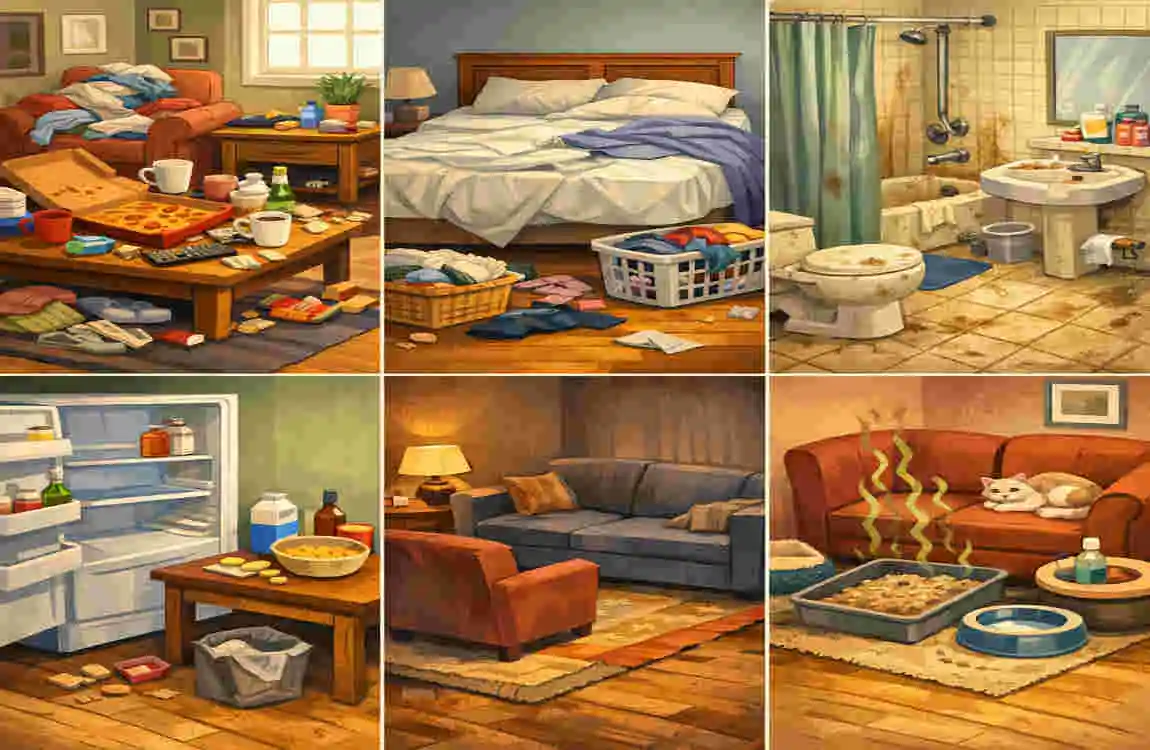
Even with good intentions, it is easy to miss a few things. Try to avoid these common mistakes:
- Waiting until the last minute to home clean
- Leaving clutter in shared spaces
- Forgetting bathroom supplies
- Using strong air fresheners
- Not planning enough seating
A little preparation ahead of time can save you stress later.
Frequently Asked Questions
How do I quickly prepare my home for unexpected guests?
Focus on the living room, bathroom, and kitchen. Clear clutter, wipe surfaces, empty trash bins, and put out fresh towels.
What should every guest bathroom include?
A guest bathroom should have clean towels, hand soap, toilet paper, a trash bin, and a fresh smell.
What snacks are good for guests?
Simple snacks like fruit, cookies, crackers, chips, tea, coffee, and cold drinks work well for most visits.
| Preparation Tip | Why It Matters | Quick Action |
|---|---|---|
| Clean Entryway | Creates a great first impression | Sweep, wipe the door, and organize shoes. |
| Tidy Living Room | Makes guests feel comfortable | Remove clutter, dust furniture, and arrange cushions. |
| Freshen the Bathroom | Improves hygiene and comfort | Clean surfaces, replace towels, and stock toilet paper. |
| Prepare Guest Bedroom | Ensures a relaxing stay | Use fresh bedding and provide extra pillows and blankets. |
| Organize the Kitchen | Makes serving food easier | Clean countertops and wash dishes before guests arrive. |
| Add Pleasant Fragrance | Creates a welcoming atmosphere | Open windows or use a light air freshener or candles. |