Choosing the right pipe material is more important than many homeowners first think. Your plumbing affects water quality, repair costs, home safety, and long-term value. It also affects how easy it is to maintain your system over time.
Many homeowners wonder which metal is used for plumbing pipes in a house and which option offers the best balance of strength, safety, and price. The most common metal choices are copper, brass, galvanized steel, and stainless steel. Each one has a different balance of cost, durability, and performance.
Why Pipe Material Matters in Home Plumbing
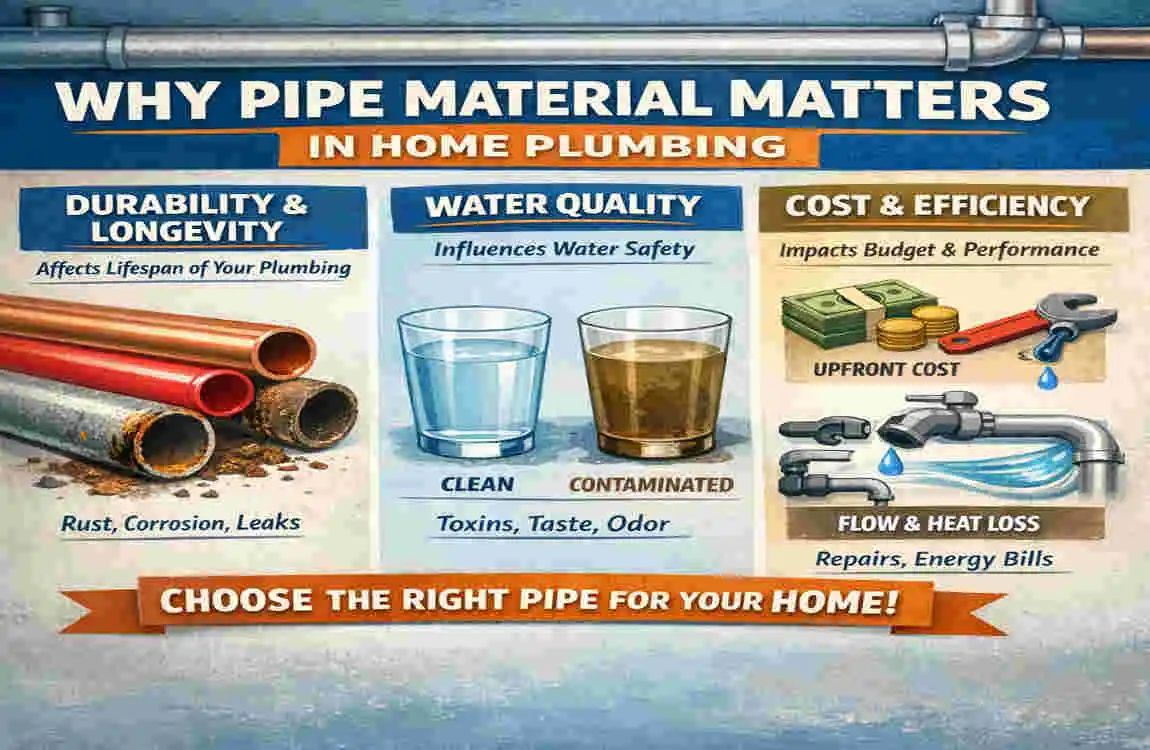
The metal you choose for your home plumbing system affects much more than just how the pipes look behind the walls. It can change how long the system lasts, how often you need repairs, and even how clean your water tastes.
Impact on Water Quality
Some metals hold up better when they are exposed to water every day. Others corrode more easily or leave behind buildup inside the pipe. That buildup can affect taste, smell, and safety.
A good pipe material should resist rust and mineral deposits. When a pipe starts to break down, tiny particles can enter your water supply. That is not something most homeowners want to deal with.
Effect on Durability and Lifespan
A strong pipe should last for many years without leaking or failing. Durability matters because pipe replacement is messy and expensive. You do not want to open walls or floors more often than needed.
Some pipes handle pressure changes, heat, and cold better than others. In home plumbing systems, that strength can make a big difference in how often repairs come up.
Maintenance and Repair Costs
The cheapest pipe to buy is not always the cheapest pipe to own. Some materials cost less upfront but fail sooner, which means more replacement work later.
A pipe that is easy to repair can save you money too. If plumbers can work on it quickly, your labour costs may stay lower.
Energy Efficiency Considerations
Metal pipes can also affect how fast hot water loses heat. In some homes, pipe material and insulation work together to improve efficiency. That matters if you want faster hot water and lower energy waste.
In simple words, the right material helps your plumbing run better and last longer. That is why this choice deserves careful attention.
Common Metals Used for Plumbing Pipes in Homes
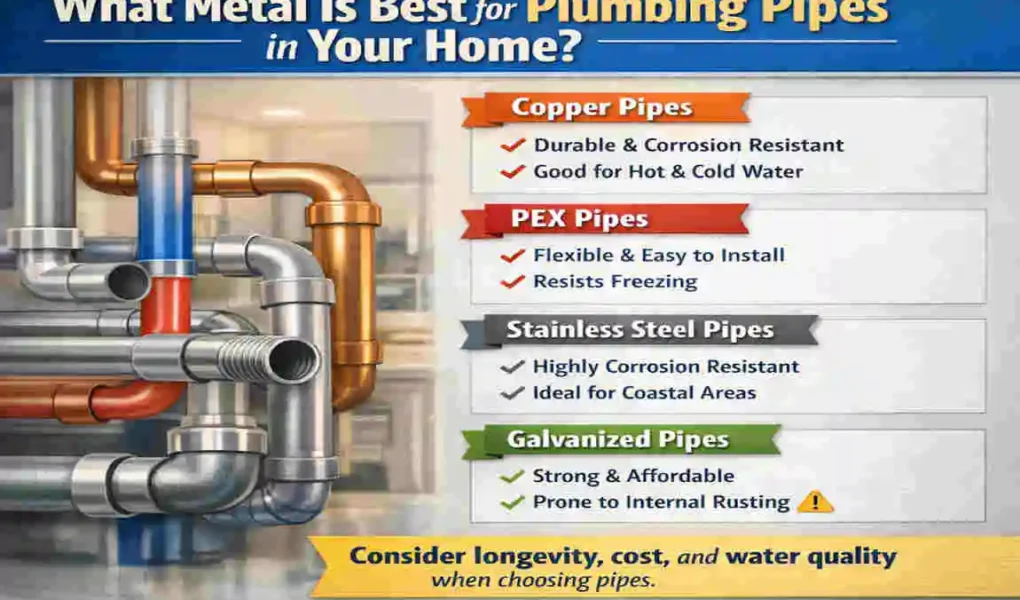
Several types of metal are used for plumbing pipes in a house, and each has its own strengths.
Copper pipes are known for long life and reliable performance.
Brass pipes and fittings are valued for strength and corrosion resistance.
Galvanised steel pipes were common in older homes but are now considered outdated.
Stainless steel pipes are strong, corrosion-resistant, and easy to clean, but they cost more.
When comparing residential plumbing materials, these four metals are the ones you will hear about most often.
Copper Pipes – The Most Popular Choice
Copper is one of the most trusted choices for home plumbing. Many plumbers like it because it has a long track record and performs well in a wide range of homes.
What Are Copper Pipes?
Copper pipes are made from solid copper metal. They are commonly used for water supply lines inside homes. You will often find them carrying both hot and cold water.
They are popular because they are dependable and familiar. Plumbers know how to work with them, and many building codes accept them without issue.
Advantages of Copper Pipes
One of the biggest benefits of copper plumbing pipes is their long life. In many homes, copper can last 50 years or more when installed and maintained properly.
Copper also resists corrosion better than many older pipe types. That means fewer problems with rust and breakdown.
Another advantage is heat tolerance. Copper handles hot water well, which makes it a strong choice for kitchens, bathrooms, and other indoor plumbing areas.
Copper is also considered a safe material for drinking water when installed correctly. That gives many homeowners peace of mind.
Finally, copper is widely accepted and easy for professionals to install in many situations. That makes it a reliable choice for everyday home use.
Disadvantages of Copper Pipes
Copper is not perfect. One of its main drawbacks is cost. It usually costs more to buy and install than many other pipe materials.
Copper can also develop pinhole leaks over time in certain water conditions. This can happen when water chemistry is aggressive or when the system ages.
Freezing is another concern. Copper pipes can split if water inside them freezes and expands. In cold climates, insulation matters a lot.
Types of Copper Pipes
There are three common types of copper pipes:
- Type K: Thickest and strongest, often used underground or in high-demand areas
- Type L: A common choice for residential plumbing because it balances strength and cost
- Type M: Thinner and less expensive, often used where pressure demands are lower
For many homes, Type L is the most practical option. It offers a good mix of durability and price.
Best Applications for Copper Pipes
Copper works best for hot and cold water supply lines and for most indoor plumbing systems. If you want a dependable pipe with a strong reputation, copper is often the first material people compare.
It is especially useful when you want a long-lasting system and are willing to spend more upfront for fewer issues later.
Brass Pipes – Durable and Corrosion Resistant
Brass is another trusted metal in plumbing, though it is more often used for fittings, valves, and connectors than for full pipe runs.
What Is Brass Plumbing?
Brass is made from a mix of copper and zinc. That combination gives it strength and good corrosion resistance.
Because of that, brass parts are often used where pipes need to connect, turn, or shut off water. It is common to see brass in valves, adapters, and faucet parts.
Benefits of Brass Pipes
Brass is very durable. It can handle stress well and withstand daily use.
It also resists corrosion better than many cheaper metals. That makes it a smart choice in areas with rough water conditions.
Another plus is installation flexibility. Brass components can help plumbers create secure connections without too much trouble.
Brass also has a polished look, which is why it can be used in visible parts of some plumbing systems.
Downsides of Brass Pipes
The biggest downside is price. Brass tends to cost more than many basic pipe materials.
There is also an important concern in older brass systems: lead content. Older brass parts may have contained more lead than modern plumbing standards allow. That is why homeowners should be careful with older brass fixtures and fittings.
Where Brass Pipes Work Best
Brass is best for water distribution systems, fittings, and valves. It is not usually the first choice for long pipe runs through the whole house, but it plays a very important supporting role.
If you want strong connections and reliable water control, brass is a very useful material.
Galvanized Steel Pipes – Traditional but Outdated?
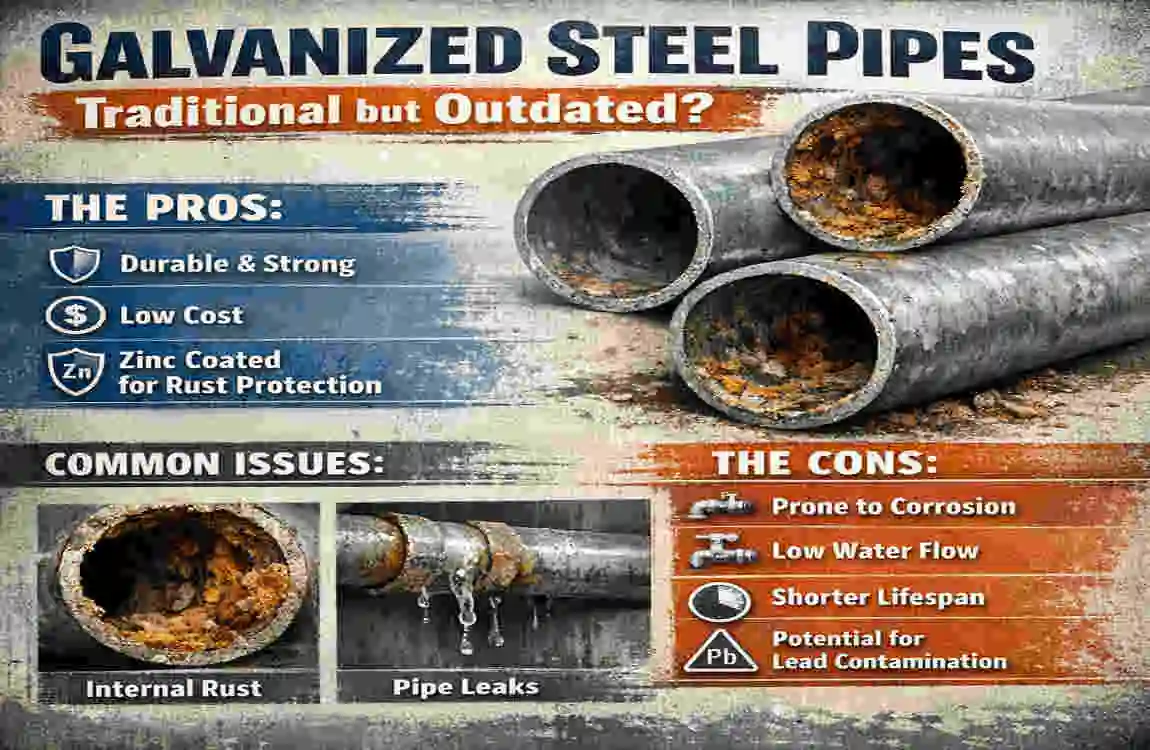
Galvanized steel was once a common choice in home plumbing. Today, it is mostly found in older homes.
What Are Galvanized Steel Pipes?
These pipes are made from steel covered with a zinc coating. The zinc was meant to protect the steel from rust.
For a while, this worked well enough. But over time, the coating wears down, and rust begins to form inside the pipe.
Advantages of Galvanized Steel
Galvanized steel is strong. It can handle physical impact better than some softer pipe materials.
It was also once a budget-friendly solution, which is why many older homes still have it.
Major Problems with Galvanized Pipes
The biggest issue is rust. Once corrosion starts, it can build up inside the pipe, restricting water flow.
That leads to low water pressure, dirty-looking water, and a shorter lifespan. In many cases, galvanised pipes do not last as long as copper or stainless steel pipes.
Rust can also loosen small particles in the plumbing system, which can degrade water quality.
Signs Your Home Has Old Galvanized Plumbing
You may have old galvanized pipes if you notice:
- Brown or rusty water
- Weak water pressure
- Frequent leaks
- Older plumbing in a home built decades ago
These signs often mean the inside of the pipes is corroding.
Should You Replace Galvanized Pipes?
In many cases, yes. Modern plumbers often recommend replacing galvanized systems, especially if they are causing water problems.
If you are thinking about resale value, updated plumbing can also make your home more attractive to buyers. Old galvanized pipes can worry buyers because they often signal future repairs.
Stainless Steel Pipes – Premium Plumbing Solution
Stainless steel is a strong, modern choice for homeowners who want high performance and long-term value.
Features of Stainless Steel Plumbing Pipes
Stainless steel is known for its strength and resistance to rust. It handles moisture very well and holds up in demanding conditions.
This makes it a great option for homes that need a tougher plumbing system.
Advantages of Stainless Steel
One major benefit is lifespan. Stainless steel can last a very long time when installed properly.
It also resists corrosion extremely well, which helps protect water quality.
Another advantage is that it performs well in harsh environments. If your home is in a coastal area or a place with challenging weather, stainless steel may be a smart fit.
Disadvantages of Stainless Steel
The biggest drawback is cost. Stainless steel materials and labor can be expensive.
It is also less common in typical homes than copper, so not every plumber uses it on a daily basis for residential projects.
Best Uses
Stainless steel pipes are often best for coastal homes, high-end residential projects, and places where corrosion is a big concern.
If you want premium performance and can handle the higher price, stainless steel is worth considering.
Copper vs Brass vs Steel Pipes Comparison
Here is a simple plumbing pipe comparison to help you see the differences side by side.
Pipe Material Lifespan Cost Corrosion Resistance Maintenance Best Use
Copper 50+ years Medium to high Good Low to moderate Whole-house water supply
Brass 40+ years High Very good Low Fittings, valves, connectors
Galvanized Steel 20–40 years, often less in older homes Low to medium Poor over time High Older homes, replacement only
Stainless Steel 50+ years High Excellent Low Premium homes, coastal areas
What This Means for You
If you want the best balance of cost and performance, copper is often the strongest overall choice.
If you want strong fittings and long-lasting connectors, brass is a good choice.
If you are dealing with old pipes, galvanised steel is usually the best option for replacement.
If you want premium protection and can afford it, stainless steel plumbing pipes are excellent.
Which Metal Pipe Is Best for Different Homes?
The right pipe depends on your home type, your budget, and the condition of your current plumbing.
Best for Older Homes
Older homes often need copper replacements or a full upgrade from galvanized steel. If your house still has rust-prone pipes, replacement is usually a smart move.
A new system can improve pressure, water taste, and reliability right away.
Best for New Construction
For new homes, copper remains a very common and trusted choice. In some cases, stainless steel may be used in premium builds or in special conditions.
Builders usually look for a material that meets code, lasts well, and fits the project budget.
Best for Budget-Conscious Homeowners
If cost is your main concern, you may focus on the total project price rather than just the pipe price. Some materials are cheaper to buy but more expensive to maintain.
That is why it helps to think beyond the first bill. A low-cost pipe that fails early is rarely a good deal.
Best for Luxury or Coastal Homes
For luxury homes or homes near the ocean, stainless steel can be a strong choice because of its corrosion resistance.
Brass fittings also help in these settings because they hold up well and support a dependable plumbing system.
Factors to Consider Before Choosing Plumbing Pipes
Before you pick a pipe material, take a moment to think about the bigger picture.
Local Water Quality
Hard water can leave mineral buildup inside pipes. If your water has a lot of minerals or is more corrosive, some pipe materials will age faster than others.
This is one reason why water testing matters.
Climate Conditions
If you live in a cold area, freezing is a real risk. Pipes need protection from expanding ice.
In damp or coastal areas, corrosion becomes more important. A material that resists rust can save you a lot of trouble.
Plumbing Codes and Regulations
Always make sure your choice complies with local building regulations. Codes exist for safety, and they can affect what materials are allowed in your area.
Budget and Installation Costs
Consider both material and labour costs. Some pipes are easier to install, which can reduce the final bill.
Expected Lifespan
Ask yourself how long you plan to stay in the home. If you want a long-term investment, paying more now may save you money later.
Professional Installation vs DIY Plumbing
Plumbing is one area where professional help often makes a big difference.
When to Hire a Professional
Hire a licensed plumber for large projects, full pipe replacement, or any job that affects your main water lines.
A professional can also help you choose the best pipe material for your specific home.
Risks of DIY Installation
DIY plumbing can lead to leaks, bad joints, and code violations. A small mistake can quickly turn into serious water damage.
That is why it is best to be careful. If the job is too large or too technical, call a pro.
Cost Expectations
Installation costs vary by pipe type, home size, and labor rates. Copper and stainless steel usually cost more to install than galvanized steel, but they may also save money over time.
Maintenance Tips for Metal Plumbing Pipes
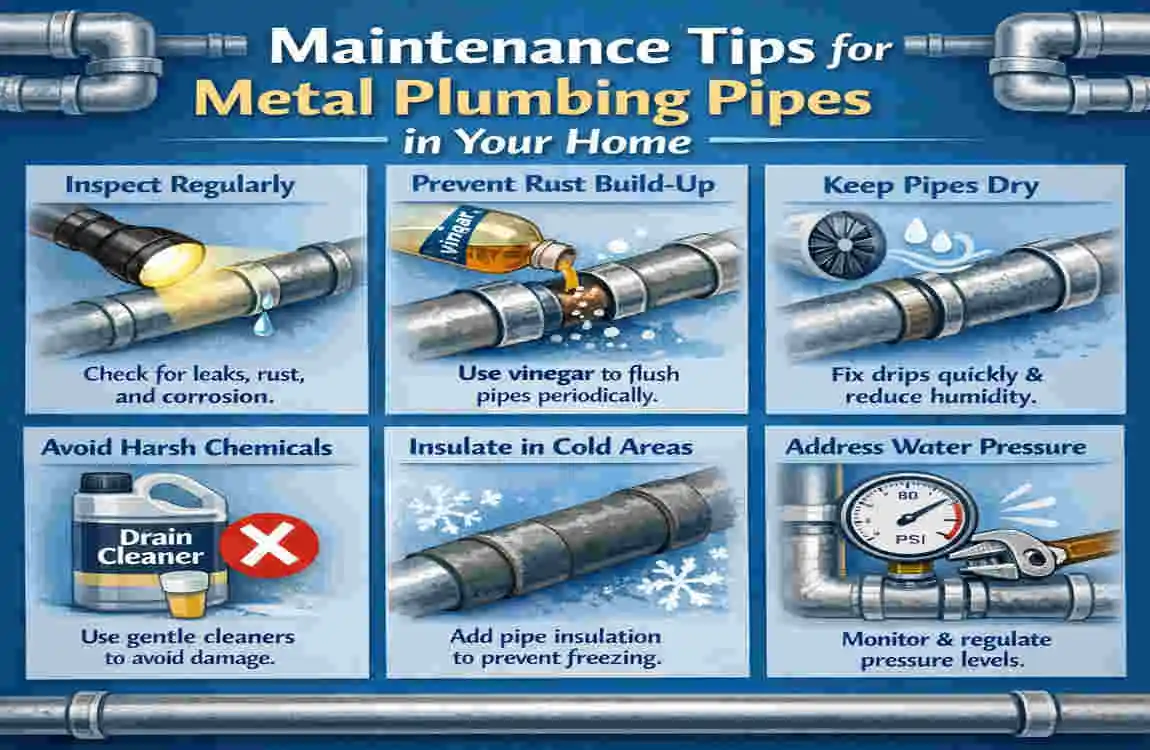
No matter which pipe you choose, good care helps it last longer.
Preventing Corrosion
Use water treatment if your water is hard or aggressive. In some homes, a water softener can help reduce scale and buildup.
Pipe insulation can also help protect against temperature swings and freezing.
Leak Prevention Tips
Check your plumbing regularly for damp spots, water stains, or weak pressure. These are often early warning signs.
It also helps to keep water pressure at a safe level. Very high pressure can stress joints and fittings.
Cleaning and Upkeep
Use safe cleaning methods only. Do not use harsh chemicals that can damage your plumbing system.
If you notice strange water color, smells, or pressure changes, get the system checked early.
Frequently Asked Questions
What metal is used for pipes in plumbing in a house?
The most common metals are copper, brass, galvanized steel, and stainless steel. Copper is the most widely used for water supply lines in many homes.
Are copper pipes better than galvanized steel?
Yes, in most cases. Copper lasts longer, resists corrosion better, and usually provides cleaner water than old galvanized steel pipes.
How long do metal plumbing pipes last?
It depends on the material. Copper and stainless steel can last 50 years or more. In contrast, galvanised steel often lasts less, especially in older homes with poor water quality.
What is the safest pipe material for drinking water?
Copper and stainless steel are both strong choices for drinking water when installed properly. They are widely trusted for safe residential plumbing use.
Are stainless steel pipes worth the cost?
They can be, especially if you live in a coastal area, want a premium system, or need excellent corrosion resistance. For many standard homes, though, copper is more common and cost-effective.
Should old galvanized pipes be replaced?
In most cases, yes. Old galvanized pipes often rust inside, reduce water pressure, and affect water quality. Replacing them can improve the whole home plumbing system.