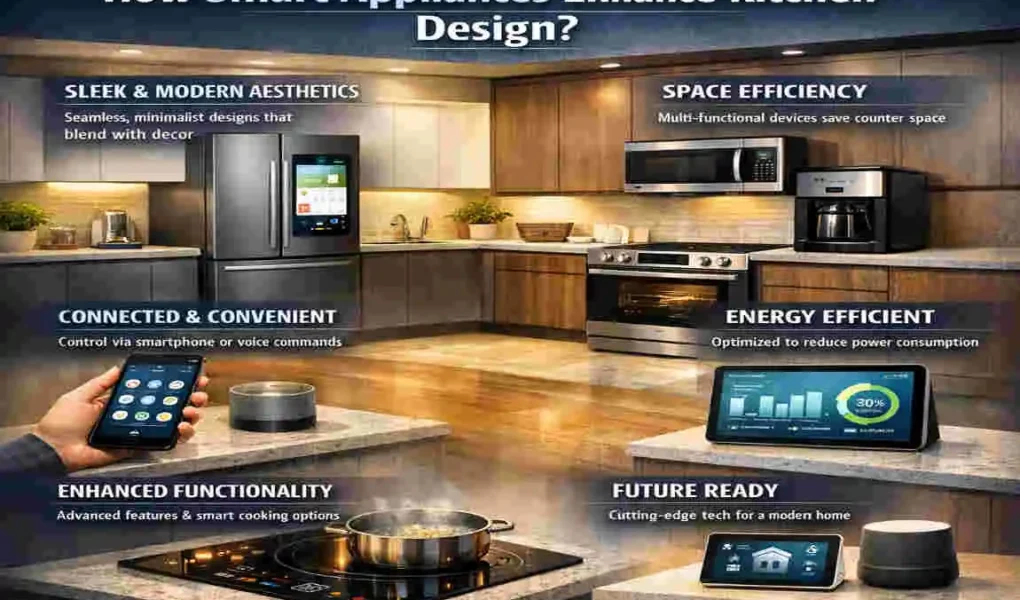
Smart kitchens are no longer a future idea. They are becoming a normal part of modern homes, and for good reason. People want kitchens that do more than hold cabinets, counters, and a stove. They want a space that feels easier to use, looks clean, and saves time every day.
| Enhancement | What it does | Example |
|---|---|---|
| Improved workflow | Automates tasks and streamlines cooking, reducing steps and time. | Smart oven preheats remotely and runs programmed recipes. |
| Space efficiency | Built‑in, compact, or multi‑function smart units free counter space and reduce clutter. | Panel-ready fridge and integrated coffee module save visible footprint. |
| Energy and water savings | Monitors and optimises usage to lower utility bills and waste. | Dishwasher adjusts water cycle to load size; fridge reports power use. |
| Better lighting & ambiance | Programmable lighting adapts to tasks and moods for both function and style. | Task lights brighten for prep, warm tones for dining scenes. |
| Integrated control & connectivity | Centralised apps or voice control unify devices for simpler operation. | Voice assistant starts a timer, reads a recipe, and controls hood fan. |
| Personalized cooking results | Sensors and automation adjust settings for consistent outcomes. | Cooktop senses pan temperature and maintains precise heat. |
| Design cohesion | Matching smart interfaces and hidden displays create a sleek, modern look. | Flush touch displays and coordinated finishes across appliances. |
This is where Smart home kitchen design comes in. It blends connected appliances, simple layouts, and modern style into one practical space. Instead of treating appliances as separate items, the kitchen becomes a smooth system that works with your routine.
Smart appliances can improve convenience, energy efficiency, safety, and even the overall look of the room. A smart fridge can track groceries. A smart oven can help with cooking. Smart lighting can change the mood and make the space more useful.
What Is Smart Home Kitchen Design?
Understanding Smart Kitchen Technology
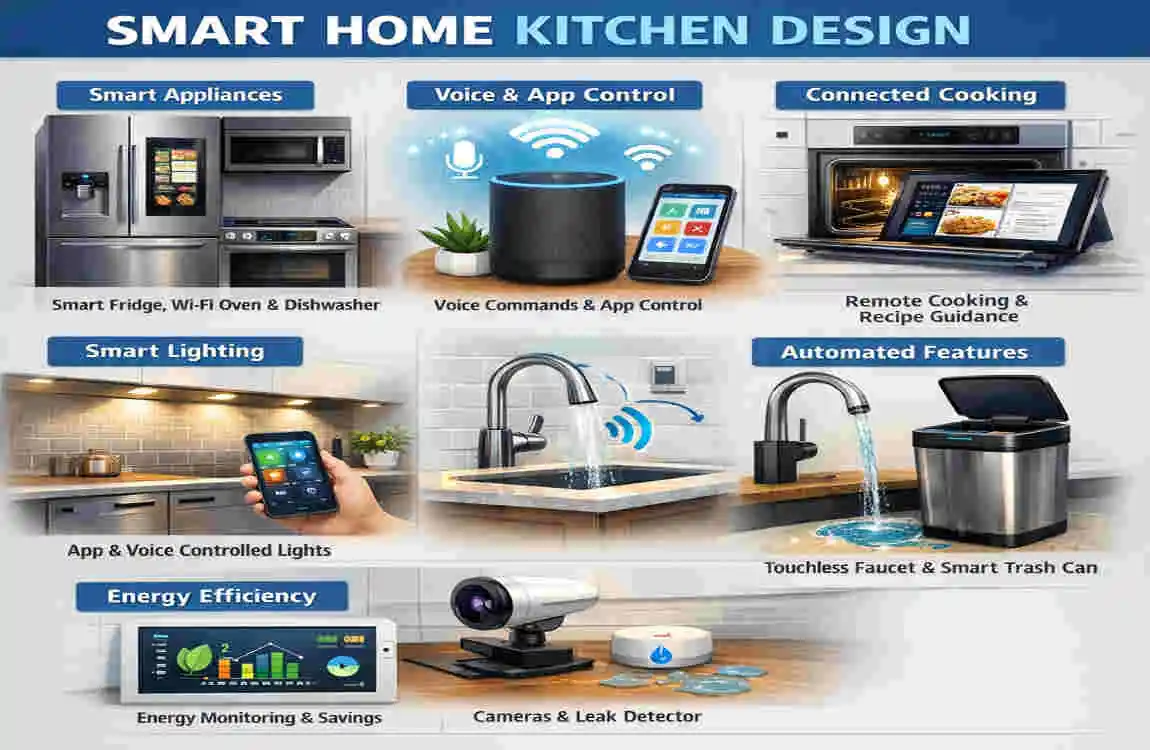
Smart home kitchen design means building or updating a kitchen with appliances and systems that connect or to your phone, tablet, or voice assistant.
These are not just regular appliances with extra buttons. They are connected kitchen devices that can send alerts, learn your habits, and help automate daily tasks. Some can be controlled through an app. Others work with home automation systems to make cooking and cleaning easier.
Why Smart Kitchens Are Becoming Popular
Smart kitchens are growing because people want homes that fit busy lives. Most families need faster meal prep, easier cleanup, and better control over energy use.
They are also popular because they match modern home trends. Many homeowners like the clean look of built-in technology and the feeling of a Premium, organized space. In short, smart kitchens offer both style and function.
The Role of Smart Appliances in Modern Kitchen Design
Combining Functionality with Style
Smart appliances often look sleek and modern. They use smooth finishes, hidden controls, and built-in displays that keep the kitchen looking tidy.
Instead of bulky machines that stand out, many intelligent home appliances blend into the room. That creates a cleaner and more polished design.
Creating a Seamless Layout
A good kitchen layout should feel natural. Smart appliances help with that by saving space and reducing clutter.
For example, multifunctional devices can replace two or three separate tools. This makes the kitchen easier to move through and gives you more room on your counters.
Improving Workflow in the Kitchen
Smart appliances also improve how the kitchen works day to day. They can speed up meal prep, send reminders, and help you manage food better.
That means less stress and fewer wasted steps. You spend more time cooking and less time searching, checking, and guessing.
Key Smart Appliances That Enhance Kitchen Design
Smart Refrigerators
Smart refrigerators do more than keep food cold. They can show you what is inside, track groceries, and even remind you what to buy.
Many include touchscreen panels, internal cameras, and inventory tools. These features help reduce waste and make planning meals easier.
Smart Ovens and Ranges
Smart ovens give you more control over cooking. You can preheat them remotely, follow recipe-guided steps, and set exact temperatures with confidence.
This helps you cook better meals while keeping the kitchen layout neat and modern.
Smart Dishwashers
Smart dishwashers save water, run quietly, and let you monitor cycles through an app. Some also allow scheduling so that you can run them at a better time for your routine.
They support both convenience and a calmer kitchen environment.
Smart Faucets
Touchless faucets improve hygiene and make daily tasks easier. You can turn them on without touching the handle, which is great when your hands are messy.
They also help save water and add a stylish, modern look to the sink area.
Smart Lighting Systems
Lighting changes how a kitchen feels and works. Smart lighting lets you adjust brightness for cooking, eating, or relaxing.
Motion control and voice control make the space feel more advanced, while energy-saving settings help lower power use.
Smart Coffee Makers and Small Appliances
Small smart appliances also matter. A connected coffee maker can brew your drink on schedule, and other countertop devices can remember your settings.
These small changes improve convenience without making the space feel crowded.
Quick Comparison Table
Smart Appliance Design Benefit Practical Benefit
Smart Refrigerator Clean, Premium look Inventory tracking and reminders
Smart Oven Built-in, modern style Remote cooking and precise control
Smart Dishwasher Quiet and streamlined Water saving and scheduling
Smart Faucet Sleek sink area Touchless use and hygiene
Smart Lighting Flexible atmosphere Better visibility and energy savings
How Smart Appliances Improve Kitchen Aesthetics
Minimalist and Clean Designs
One of the biggest design benefits of smart appliances is their clean look. Many come in stainless steel, matte black, or other simple finishes that suit modern interiors.
They often use hidden displays and smooth surfaces, which helps the kitchen feel less cluttered.
Smart Storage Solutions
Smart home kitchen design also supports better storage. Built-in cabinets, hidden charging areas, and compact appliance setups keep the room organized.
This makes the kitchen look more open and more expensive, even if the space is not very large.
Modern Luxury Appeal
Smart appliances create a high-tech feel that many homeowners love. When paired with good lighting and a thoughtful layout, they make the kitchen feel stylish and Premium.
It is not just about technology. It is about creating a space you enjoy using every day.
Practical Benefits of Smart Home Kitchen Design
Energy Efficiency
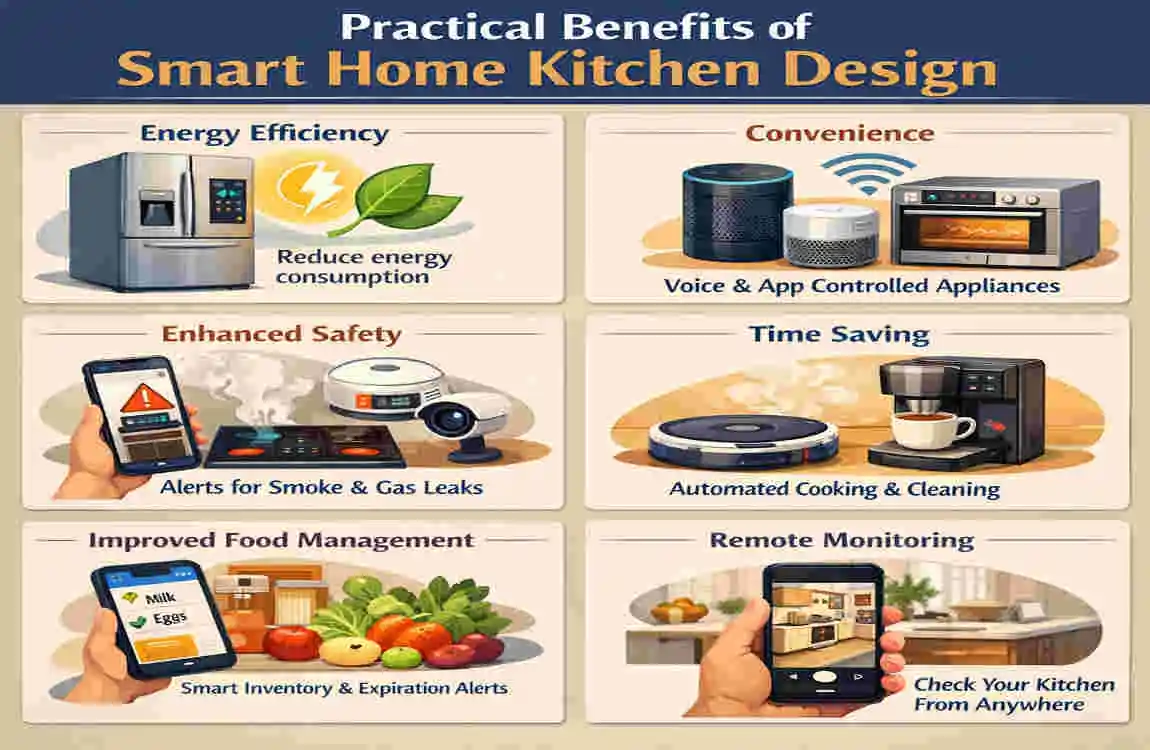
Smart appliances often use less energy because they run more efficiently and allow better control. You can schedule them, monitor use, and choose eco-friendly modes.
That can lower monthly bills and support a more sustainable home.
Time-Saving Convenience
A big advantage of smart kitchen appliances is how much time they save. You can start appliances from another room, get alerts when food is ready, and manage tasks with your phone.
This makes daily routines smoother and easier to handle.
Safety and security
Smart kitchens can also protect your home. Many appliances include auto-shutoff features, leak detection, and child-safety controls.
These tools reduce risk and give you more peace of mind, especially in busy households.
Better Kitchen Organization
Smart systems help you stay organized by tracking groceries, suggesting meal ideas, and reducing food waste.
That means less forgetting, less overbuying, and less stress during the week.
Key Benefits at a Glance
- Less waste
- Better time control
- Easier cleaning
- More safety
- Cleaner kitchen appearance
How Smart Appliances Improve Kitchen Space Planning
Maximizing Small Kitchens
In smaller homes, every inch matters. Compact smart appliances can do more without taking up extra space.
This is where smart kitchen layout planning becomes important. A multifunctional appliance can replace several separate items, helping you keep counters clear.
Open-Concept Kitchen Integration
In open-plan homes, the kitchen needs to blend with nearby living areas. Smart appliances help because many are built to look discreet and modern.
Wireless controls also reduce the need for extra panels or messy wires.
Smart Zoning
A well-planned kitchen works in zones. Smart appliances make that easier.
You can create clear areas for:
- Cooking
- Cleaning
- Food prep
- Storage
This keeps movement simple and helps the kitchen feel more efficient.
Smart Appliance Connectivity and Automation
Voice Assistant Integration
Voice control makes cooking easier when your hands are busy. You can ask for timers, light changes, or appliance actions without stopping your task.
That hands-free support is one of the most helpful parts of kitchen automation systems.
Smartphone App Control
Apps let you check on appliances from anywhere. You can receive alerts, change settings, and monitor performance with just a few taps.
This level of control adds convenience and helps you stay on top of daily tasks.
AI and Machine Learning in Kitchens
Some appliances now learn your habits. They can suggest settings, remember routines, and help predict what you need next.
This makes the kitchen feel more personal and more responsive to your lifestyle.
Challenges of Smart Home Kitchen Design
Higher Initial Cost
Smart appliances usually cost more at first. You may also need to pay for installation or updates to your electrical setup.
Still, many homeowners see this as a long-term investment.
Compatibility Issues
Not all devices work well together. Some brands use different systems, so check compatibility before buying.
This matters if you want all your devices to connect smoothly.
Maintenance and Updates
Smart appliances need software updates, and sometimes repairs require more technical expertise. You also need to think about cybersecurity and keep your devices secure.
A little upkeep goes a long way here.
How to Choose the Right Smart Appliances for Your Kitchen
Evaluate Your Kitchen Size
Start with the space you have. A small kitchen may need compact, multifunctional devices, while a larger kitchen may support more built-in units.
The goal is to choose appliances that fit the room rather than crowd it.
Focus on Daily Needs
Think about what you actually do every day. Do you cook often? Do you clean up fast? Do you need help with meal planning?
Choose devices that support your habits, not just the latest trend.
Prioritize Energy Efficiency
Look for energy-efficient kitchen appliances when possible. These can lower bills and support a more eco-friendly home.
Over time, that savings can really add up.
Match Design Style
Your appliances should fit your cabinets, colors, and overall style. A smart kitchen still needs to feel like part of the home.
Check Compatibility
Make sure the appliance works with your Wi-Fi and smart home system. This avoids frustration and helps everything work together.
Future Trends in Smart Home Kitchen Design
AI-Powered Appliances
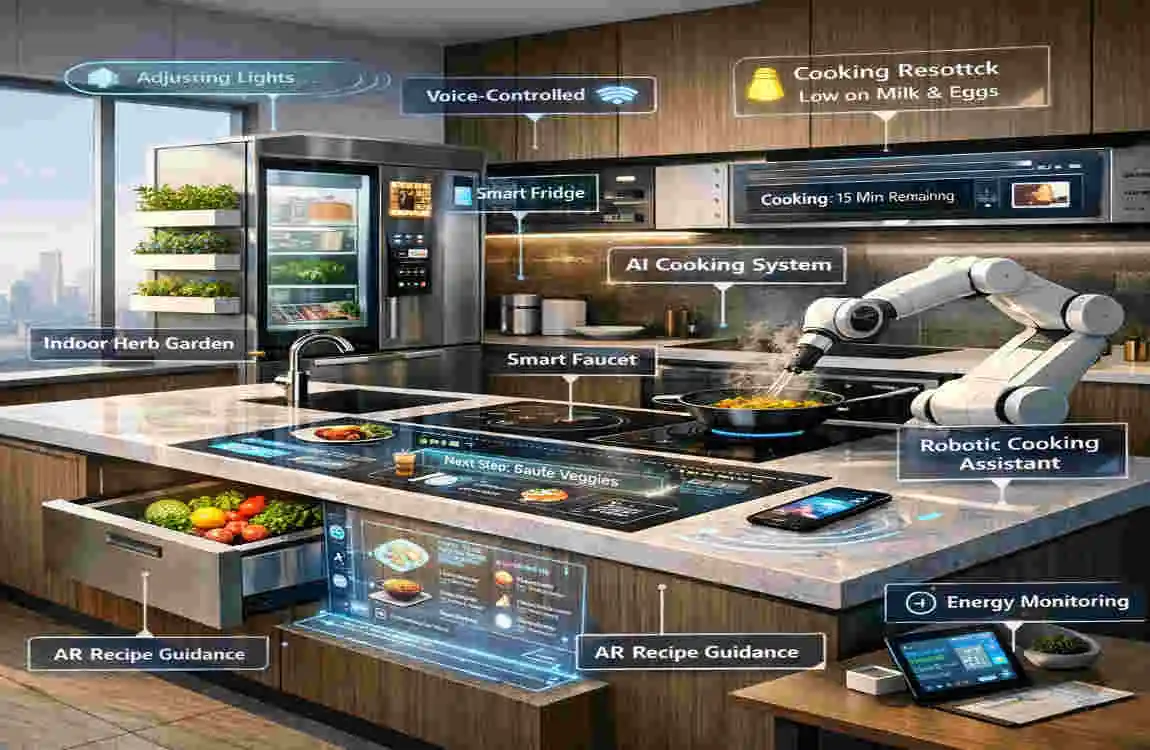
Future appliances will likely become even smarter. They may predict problems earlier, suggest better settings, and handle more tasks on their own.
Sustainable Smart Kitchens
Expect more focus on saving water and energy. That means smarter dishwashers, better scheduling, and devices that use resources more carefully.
Fully Connected Kitchens
Soon, more appliances may communicate directly with each other. This will create a smoother and more unified kitchen experience.
Voice-Free Gesture Controls
Touchless control is also growing. Motion sensors and gesture features can make the kitchen even easier to use.
FAQs
What is Smart home kitchen design?
It is a kitchen design style that uses connected appliances and automation to improve convenience, efficiency, and appearance.
Are smart kitchen appliances worth it?
Yes. They can save time, improve safety, reduce energy use, and make the kitchen easier to manage.
Which smart appliance should I buy first?
A smart refrigerator, oven, or lighting system is a good place to start.
Can smart appliances fit small kitchens?
Yes. Compact, multifunctional smart appliances work well in smaller spaces.
Do smart kitchens increase home value?
They can. A well-designed smart kitchen can enhance appeal and boost resale value in many markets.