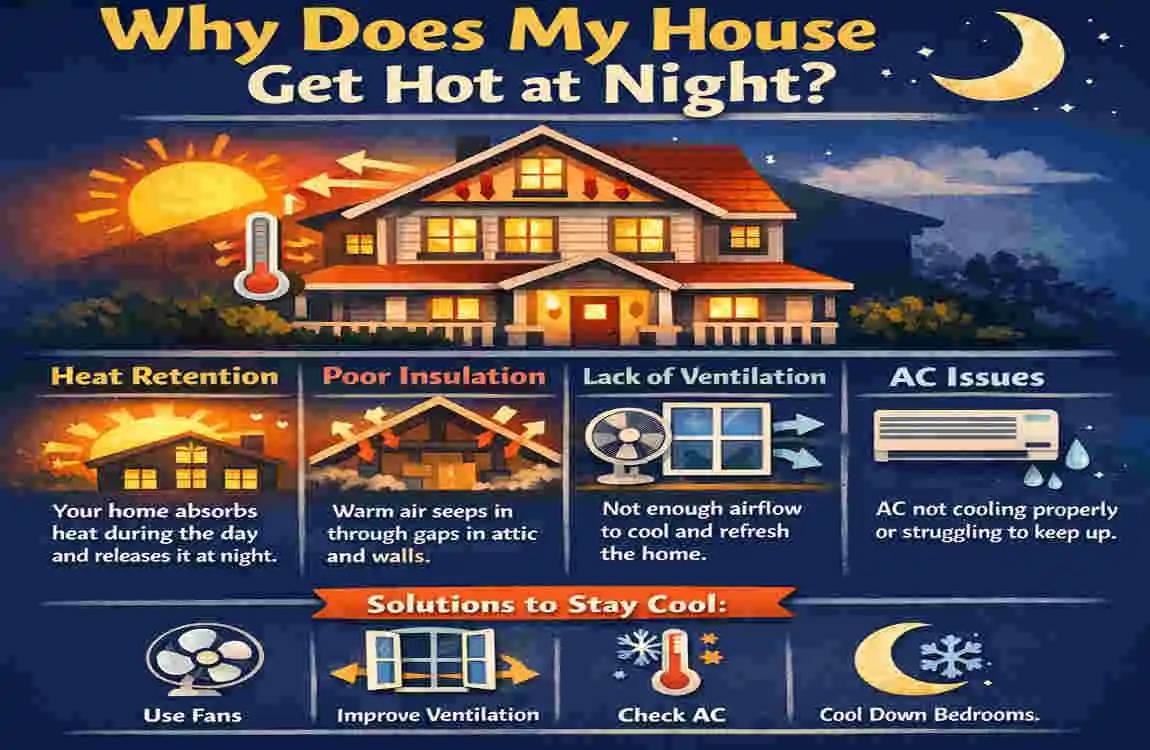
Have you ever tossed and turned in your bed, staring at the ceiling and wondering, why does my house get hot at night? You are certainly not alone. It is a highly common and incredibly frustrating problem. The sun goes down, the outdoor temperature finally drops, yet the inside of your home feels like a baking oven.
Instead of enjoying a cool and restful evening, you find yourself kicking off the blankets, turning up the air conditioning, and still waking up in a sweat. You might even walk outside and realize that the night air is actually quite pleasant, making you wonder how your bedroom managed to trap so much stifling heat.
This nighttime heat phenomenon is not just a figment of your imagination. It is a real issue caused by the way modern and historic homes absorb, store, and release thermal energy. Throughout the bright, sunny daytime hours, your home acts like a giant heat-absorbing sponge. The materials that make up your roof, your walls, and even your furniture soak in the sun’s warm rays.
When evening arrives and the outside air cools, your home slowly releases all that stored-up energy into your living spaces. This delayed heat release can make your home feel hot for hours after sunset. Furthermore, hidden issues like sneaky air leaks, degraded attic insulation, and struggling HVAC systems can make the situation significantly worse.
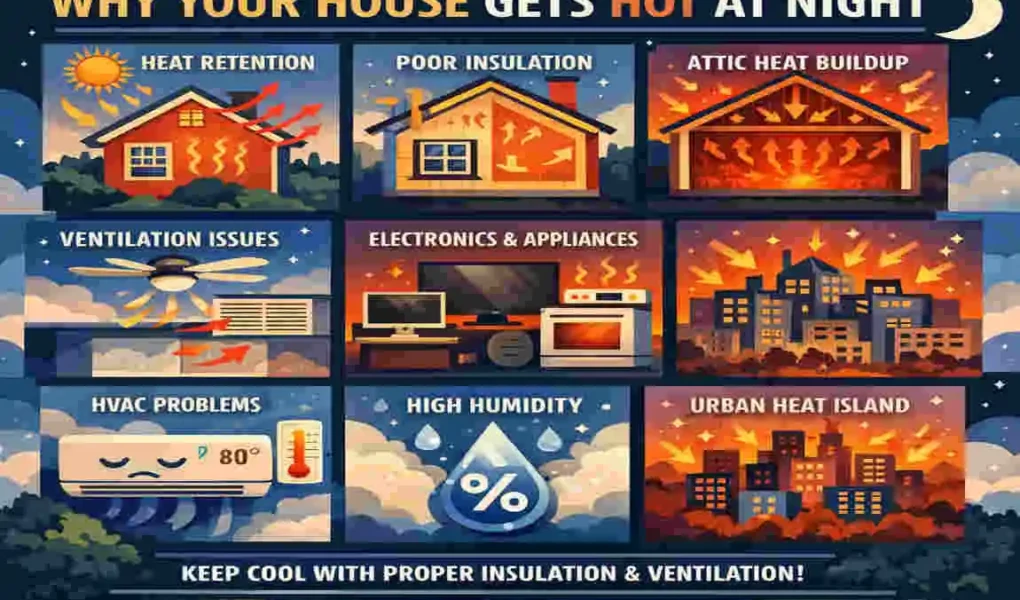
| Reason | Why It’s Shocking | Easy Fix |
|---|---|---|
| 1. Roof Heat Radiation | Your attic stores daytime sun heat and radiates it down all night, turning your ceiling into a hot plate . | Add reflective roof coatings or extra attic insulation; vent the attic during evenings. |
| 2. Poor Wall Insulation | Uninsulated walls absorb and slowly release heat like a brick oven, even after sunset . | Install wall insulation foam boards or thermal barrier paint; seal gaps with caulk. |
| 3. Leaking Ductwork | Cool air escapes through hidden duct holes, leaving rooms warm and wasting energy . | Seal joints with mastic tape; use a smoke test to find leaks and patch them. |
| 4. Clogged Air Filters | Dirty filters block airflow, so AC can’t fight nighttime heat buildup . | Replace filters monthly; opt for high-MERV reusable ones. |
| 5. Single-Pane Windows | These leak radiant heat like sieves, amplifying warmth indoors . | Apply window film or replace with double-pane; use blackout curtains during day. |
| 6. Direct Sun Exposure | Windows facing west bake rooms all afternoon, trapping heat till midnight . | Install exterior shades or awnings; close blinds before peak sun. |
| 7. Blocked Vents | Furniture or rugs over vents traps hot air, creating stuffy hot spots . | Relocate items; clean and open all return vents for better circulation. |
| 8. Appliances & Lights | Ovens, electronics, and bulbs generate sneaky internal heat that lingers . | Switch to LED bulbs; unplug devices; avoid cooking late evening. |
| 9. No Cross-Ventilation | Sealed homes hold daytime heat without airflow to flush it out . | Open opposite windows at night when outdoor air cools; use fans to push hot air up and out. |
| 10. Thermostat Placement | A sunny or high-traffic spot reads falsely warm, tricking your AC . | Relocate to a central, shaded wall; upgrade to a smart model for accurate zoning. |
Understanding the Core Problem: Why Does My House Get Hot at Night?
To solve the mystery of your sweltering bedroom, we must first look at the invisible forces of thermodynamics at play inside your living space. Heat always wants to move from a warmer area to a cooler area. If your house cannot properly block heat from entering or cannot efficiently push hot air out, you will experience severe nighttime discomfort. Let us dive into the ten most common culprits behind this issue.
Heat Stored in the Roof and Attic

One of the biggest reasons your home stays so warm after dark is located right above your head. Your roof and attic space endure the absolute worst of the sun’s punishing heat all day long.
Dark-colored roof shingles are notorious for absorbing massive amounts of solar radiation. On a typical summer day, the temperature inside an unventilated attic can easily soar past 150 degrees Fahrenheit. Because heat radiates outward, this trapped pocket of boiling air slowly pushes down through your ceiling and right into your living areas.
Even after the sun sets, the heavy materials in your roof—like wood framing, shingles, and decking—hold onto that high temperature. This concept is known as “thermal inertia.” The heat slowly drips down into your upper rooms, acting like a giant, invisible radiant heater positioned directly over your bed.
The Fix: You can combat this problem by improving your attic’s ventilation and insulation. Make sure your soffit and ridge vents are completely unblocked so that hot air can escape naturally. You can also add reflective foil barriers to the underside of your roof decking to bounce radiant heat back into the atmosphere, significantly reducing heat buildup in your roof space.
Poor Insulation in Walls and Ceilings
If you frequently ask yourself, why is my house so hot at night, you might need to take a closer look at what is hiding inside your walls. Insulation is your home’s primary defense against extreme temperatures.
Many people mistakenly believe that insulation is only meant to keep a house warm during the freezing winter months. In reality, insulation is a two-way street. During the summer, high-quality insulation is essential for blocking outdoor heat from entering your cool living spaces while simultaneously trapping your expensive, air-conditioned air inside.
If you live in an older home, or if your insulation has compressed and degraded over the years, heat will easily pass through your walls and ceilings. You will likely notice that your cooling system runs constantly, yet the house never quite reaches a comfortable temperature.
The Fix: The best course of action is to check the insulation levels in your problem rooms, especially the ceiling and attic floor. Upgrading your blown-in or batt insulation to a higher R-value will create a stronger thermal barrier. If your walls are entirely uninsulated, you may want to consider professional injection foam services to seal hidden cavities.
Air Leaks Around Doors and Windows
Drafts are not just a nuisance during a winter snowstorm. Small cracks, gaps, and poorly sealed crevices around your home allow hot, humid air to creep inside during the day and prevent your home from cooling down efficiently at night.
These tiny leaks can be found almost everywhere. They lurk around window frames, under exterior doors, around electrical outlets, and near exhaust vents. When your air conditioner is running, it creates pressure changes inside your home. If your house is not properly sealed, this pressure can physically suck hot air in from the outside, or push your expensive, cool air right out the door.
Over time, this constant exchange of air forces your cooling system to work overtime, leaving your interior rooms feeling sticky and uncomfortable long into the night.
The Fix: Walk around your home on a windy day and feel for drafts around your windows and doors. You can also safely use a lit stick of incense; hold it near window frames, and if the smoke pulls inward or pushes outward, you leak. Apply fresh weatherstripping to your door frames, install heavy-duty door sweeps at the bottom of exterior doors, and use silicone caulk to seal any obvious gaps around window edges.
Windows Letting in Heat During the Day

Your windows provide beautiful natural light, but they are also major culprits when it comes to solar heat gain. When bright sunlight pours through your glass windows during the afternoon, it creates a powerful greenhouse effect inside your living space.
The sun’s rays pass through the glass and strike your indoor surfaces. Your carpets, hardwood floors, couches, and even your interior walls absorb this solar energy, beginning to heat up. Single-pane windows and large, unshaded glass doors make this problem exceptionally worse because they offer zero resistance to the sun’s thermal energy.
Once the sun goes down, all of those sun-baked surfaces inside your home begin to release the stored heat back into the ambient air. This means that your living room furniture is literally warming up your house while you are trying to wind down for the evening.
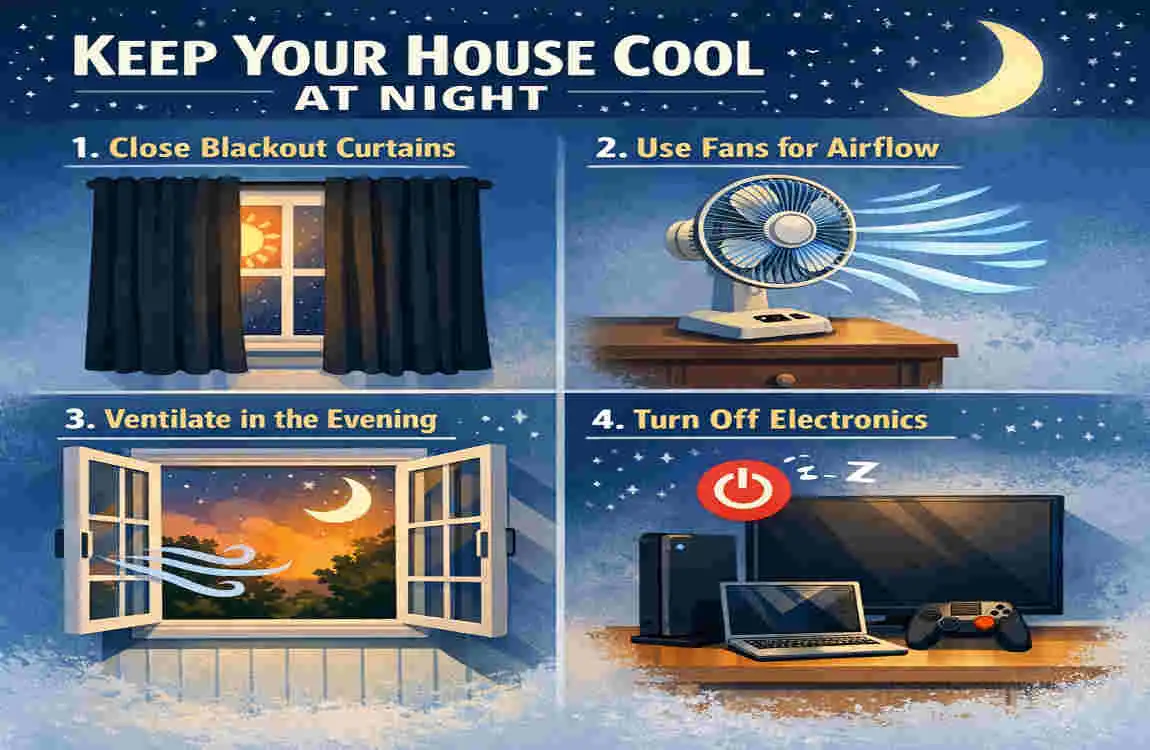
The Fix: Prevention is the best strategy here. Get into the habit of closing your blinds, shades, or curtains before the hottest part of the day, specifically on the south and west-facing sides of your home. To take it a step further, invest in heavy thermal blackout curtains or apply reflective, heat-blocking window film to your glass to drastically reduce the amount of heat that enters in the first place.
Heat Coming Through the Walls
Sometimes, the heat you feel radiating at night is coming directly through the solid structure of your home. Sun-exposed exterior walls, particularly those made of dense materials like brick, stone, or solid concrete, act as massive thermal batteries.
Throughout the day, these heavy walls bake in the direct sunlight. Homes with dark-colored siding or those that lack the shade of large trees are particularly vulnerable to this effect. The exterior walls absorb the heat deeply into their core.
As the evening cools, the outside air must release its stored energy. Unfortunately, much of that heat is radiated inward, directly into your living areas. If your bed is pushed up against a west-facing brick wall, you will likely feel this lingering heat radiating toward you well past midnight.
The Fix: While you cannot easily move your walls, you can protect them from the sun. Planting shade trees or tall, leafy shrubs on the sunniest sides of your home can naturally block harsh rays. You can also install exterior awnings to cast shade. For a more aggressive approach, upgrading your interior wall insulation or applying specialized, heat-reflective exterior wall coatings can minimize the amount of heat that successfully transfers indoors.
HVAC Problems or Weak Cooling
If your house stays hot at night even with the air conditioner running, the problem might lie with your cooling equipment. An AC system is designed to extract heat and humidity from your indoor air. However, if the system is neglected or failing, it simply cannot keep up with the demand.
There are several reasons your HVAC system might struggle. It could be drastically undersized for your home’s square footage, leaving it unable to cool the space. Alternatively, it might be suffering from poor airflow due to a thickly clogged air filter, or it might be running low on essential chemical refrigerants due to a slow leak.
When your cooling system falls behind during the hottest parts of the afternoon, it faces an uphill battle trying to catch up at night. If the AC cannot remove heat effectively, your house will remain a humid, uncomfortable trap.
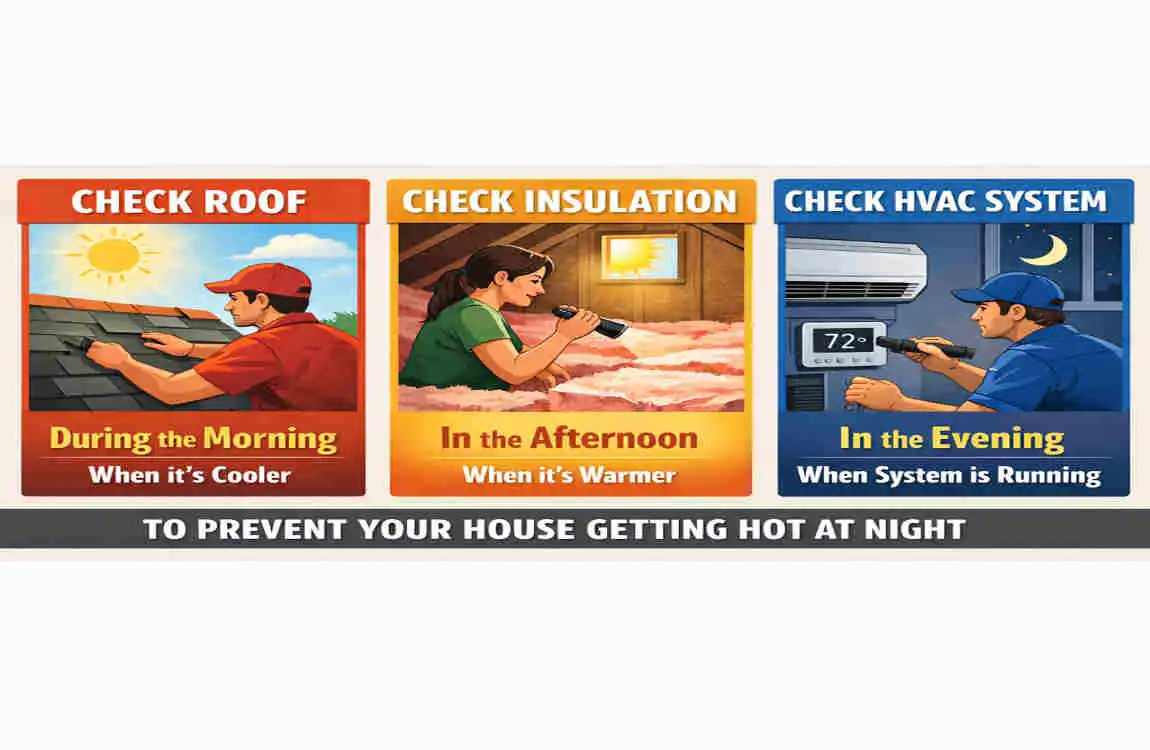
The Fix: Always start with the easiest solution: check and replace your HVAC air filters every 30 to 90 days. A clean filter ensures maximum airflow. Next, use a hose to gently wash away leaves, dirt, and debris from your outdoor compressor unit. If the air coming from your vents still feels weak or lukewarm, it is time to call a certified technician to check your refrigerant levels and service the system.
Leaky or Poorly Sealed Ductwork

Even if your air conditioning unit is working perfectly, the cold air it produces still has to travel through a maze of ductwork to reach your rooms. If those ducts are leaky, you are fighting a losing battle.
In many homes, ductwork runs through unconditioned, boiling spaces like attics or crawl spaces. If your ducts have holes, loose joints, or cracks, two terrible things happen. First, you end up pumping your freshly cooled air directly into your attic, wasting money and energy. Second, the ductwork can suck in hot, dusty attic air and blow it straight into your bedroom.
Leaky ducts cause massive temperature imbalances. This is a primary reason why some rooms in your house might feel like an icebox while your bedroom is hot at night.
The Fix: Inspect any exposed ductwork you can safely access in your attic or basement. Look for disconnected joints or degraded tape. Never use standard cloth “duct tape” for this job, as the adhesive quickly dries out and fails. Instead, use specialized aluminum foil tape or paint-on mastic sealant to permanently close the gaps. For hidden ducts, professional duct sealing services can seal leaks from the inside out.
Internal Heat From Appliances and Activities
We often blame the sun and the weather for our hot homes, but we frequently generate a massive amount of heat ourselves. Everything you do inside your home requires energy, and the byproduct of that energy is almost always heat.
Cooking a large meal on the stove or running the oven can quickly raise the temperature of your kitchen and surrounding rooms. Furthermore, heavy appliances like clothes dryers, dishwashers, and older refrigerators exhaust warm air as they operate. Even your electronics play a role; large television screens, gaming computers, and old incandescent light bulbs generate a surprising amount of residual heat.
Finally, do not forget about body heat! Every person and large pet in the home acts as a small, 98-degree radiator. When the house is closed up tight at night, all of this internally generated heat has nowhere to go.
Common Heat-Generating Culprits in Your Home:
- The Oven and Stovetop: Easily the biggest producers of indoor heat.
- The Clothes Dryer: Vents incredibly hot air and radiates warmth into laundry rooms.
- The Dishwasher: Especially during the heated dry cycle.
- Incandescent Bulbs: Up to 90% of the energy they use is wasted as heat, not light.
- Electronics: High-end gaming PCs, gaming consoles, and large amplifiers.
The Fix: Adjust your daily habits to minimize internal heat generation. Try running your dishwasher and clothes dryer late at night or early in the morning, when the house is naturally cooler. Limit your oven use during summer evenings; opt for outdoor grilling, slow cookers, or air fryers instead. Finally, replace any remaining old light bulbs with cool, energy-efficient LED bulbs.
Poor Nighttime Airflow and Ventilation
Sometimes the temperature in your room isn’t actually that high, but it feels unbearably hot because the air is completely stagnant. When the air stops moving, heat and humidity settle heavily into the space, preventing your body from cooling itself naturally.
Humans cool down through the evaporation of sweat from our skin. When the air around us is completely still, that evaporation process slows down to a crawl, making a 75-degree room feel like an 85-degree room. Furthermore, if you keep your bedroom doors closed at night for privacy, you might be unintentionally cutting off your room from the main airflow pathways in your home.
Without proper ventilation, the heat trapped in your bedroom has absolutely no avenue of escape.
The Fix: Get the air moving. If the outdoor temperature has finally dropped below your indoor temperature, open windows on opposite sides of your home to encourage a refreshing cross-breeze. Use fans strategically: place a box fan pointing out of a window in a hot room to exhaust warm air, and open a window in a cooler room to pull in fresh air. Even keeping your bedroom door cracked open can significantly improve airflow from your HVAC system.
Two-Story Homes and Upstairs Heat Buildup
If you live in a multi-level home, you are likely intimately familiar with this rule of physics: hot air rises. Due to thermal buoyancy, warm air naturally floats upward, while cool, dense air sinks to the lowest levels of the house.
This means that all the heat generated on your first floor—from cooking, sunlight, and bodies—gradually drifts up your stairwell and settles on the second floor. When you combine this rising heat with the intense heat radiating down from the roof and attic, your upstairs bedrooms become trapped in a suffocating thermal squeeze.
This is the primary reason why an upstairs bedroom is hot at night while the basement or ground-floor living room feels perfectly chilled.
The Fix: If you rely on a single central AC unit, balancing the temperatures can be tricky. Try partially closing a few of the air supply vents on the much cooler first floor; this forces more cold air pressure up into the second-story vents. Additionally, keep your HVAC fan setting turned to “ON” rather than “AUTO” to continuously circulate and mix the air between the floors. For a long-term fix, consider installing a zoned ductwork system or adding a ductless mini-split AC unit specifically for the upstairs master bedroom.
Actionable Solutions: How to Cool Your House at Night
Now that we have explored the underlying causes, it is time to take action. You do not always need to spend thousands of dollars to find relief. Let us summarize the most practical, straightforward solutions in a quick-action guide.
Keep this section handy so you can start making immediate changes tonight without rereading the entire article.
Easy Fixes to Cool Your House at Night
The Issue: The Simple Solution: Effort Level
Sunlight Heating Rooms Close blinds, drop shades, and draw blackout curtains before noon, especially on West-facing windows. Very Low
Stagnant, Still Air Turn on ceiling fans (ensure they rotate counter-clockwise in summer to push air down) and use box fans to create cross-ventilation. Low
Drafty Windows/Doors Apply self-adhesive weatherstripping to door frames and use silicone caulk to seal small gaps around window edges. Medium
Dirty AC Filters : Locate your HVAC intake vent and replace the dusty air filter with a fresh, highly rated pleated filter. Low
Heat from appliances. Delay running the dishwasher and clothes dryer until late evening. Cook meals on an outdoor grill or in a microwave. Low
Closed-off Rooms Keep bedroom doors open a few inches at night to allow cool air to circulate back to the main AC return vent. Very Low
By implementing just two or three of these easy fixes, you can drastically reduce the thermal load on your home and help it stay warm at night.
When to Call a Professional
While simple DIY adjustments and behavioral changes can work wonders, persistent heat problems may signal a deeper structural or mechanical issue. You cannot fix a dying compressor with a box fan, nor can you cure severe insulation gaps with a pair of blackout curtains.
It might be time to call in the professionals if you notice any of the following warning signs:
- Your air conditioner runs continuously for hours, but the house never reaches the temperature set on the thermostat.
- You experience incredibly uneven temperatures: one room feels like a freezer, while the room right next to it feels like a sauna.
- You feel very weak, or barely noticeable airflow from your cooling vents.
- Your monthly energy bills have suddenly skyrocketed, even though your usual usage hasn’t changed.
- You constantly hear strange grinding, squealing, or rattling noises coming from your HVAC unit.
If these symptoms sound familiar, do not wait for the system to break down completely in the middle of a heatwave. Contact a licensed HVAC technician to thoroughly inspect and tune up your cooling equipment.
Alternatively, if your AC is working fine but your home still cannot hold a temperature, consider hiring a certified energy auditor. They can use specialized tools, such as thermal imaging cameras and blower door tests, to pinpoint exactly where your home is leaking air and where crucial insulation is missing.
Frequently Asked Questions
Why does my house get hotter at night than during the day? Your house does not actually generate new heat from the sun at night; rather, it is releasing the heat it collected during the day. Materials like roofing, brick, concrete, and heavy furniture absorb solar energy during the brightest hours. Once the sun sets, these materials slowly radiate that trapped warmth back into your living spaces. Additionally, when you close your windows and doors for nighttime security, you often trap the newly released heat inside, making the house feel hotter than it did earlier in the day.
Why is my upstairs bedroom so hot at night? This is primarily due to the laws of thermodynamics: hot air naturally rises, while cool air sinks. Throughout the day, any heat generated on your lower floors will gradually float up the stairwells and settle on the second floor. Furthermore, your upstairs bedroom is situated directly beneath the attic. If your attic lacks proper ventilation and thick insulation, the massive amount of heat trapped inside the roof space will radiate directly down through your bedroom ceiling, creating a suffocatingly hot sleeping environment.
How do I cool down my house fast at night? To achieve rapid cooling, you need to flush out the hot air and pull in the cool air. Once the outside temperature drops below the inside temperature, open your windows. Place a high-powered box fan securely in one window facing outward to blow the hot, stagnant indoor air outside. Then, open a window on the opposite side of the house to draw in the crisp, fresh night air. Combine this cross-ventilation with turning on your ceiling fans, and you will quickly lower the ambient room temperature.
Can bad insulation make a house hot at night? Absolutely. Insulation acts as a thermal barrier, slowing the transfer of heat. If your home has poor, degraded, or entirely missing insulation, the intense heat from your attic and exterior walls will easily pass through the drywall into your living rooms. Worse still, bad insulation allows the expensive, cool air produced by your air conditioner to easily escape the house. Upgrading your insulation is one of the most effective ways to keep your indoor temperature cool.
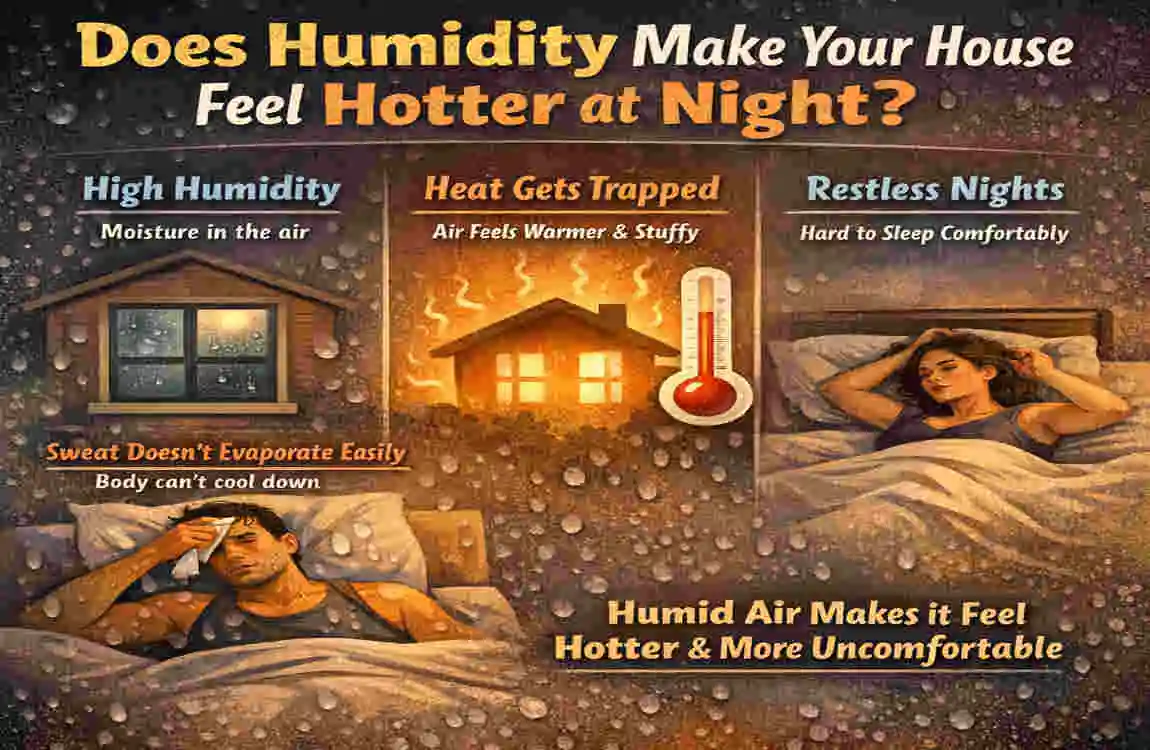
Why does my AC struggle more at night? While it might seem like your AC struggles more at night, the issue usually begins in the late afternoon. If your AC is undersized, low on refrigerant, or fighting against severe air leaks, it will fall heavily behind during the peak heat of the day. By the time night falls, the AC is already overworked, trying to cool a house whose physical structure (walls, floors, furniture) is actively radiating stored heat. Additionally, nighttime often brings higher outdoor humidity levels, and AC units must work much harder to remove heavy moisture from the air before they can effectively lower the actual temperature.