
If your windows fog up every morning, your bathroom never seems to dry, or a musty smell lingers in the basement, your home is telling you something: there is too much moisture in the air. Learning how to control moisture in house spaces is one of the most useful things a homeowner can do, because excess humidity quietly damages paint, wood, and furnishings, and it creates the perfect conditions for mold.
The good news is that most humidity problems can be fixed with a handful of practical habits and the right equipment. In this guide, you will learn what a healthy humidity level looks like, where the moisture comes from, and the best ways to reduce home humidity step by step.
What Is a Healthy Indoor Humidity Level?
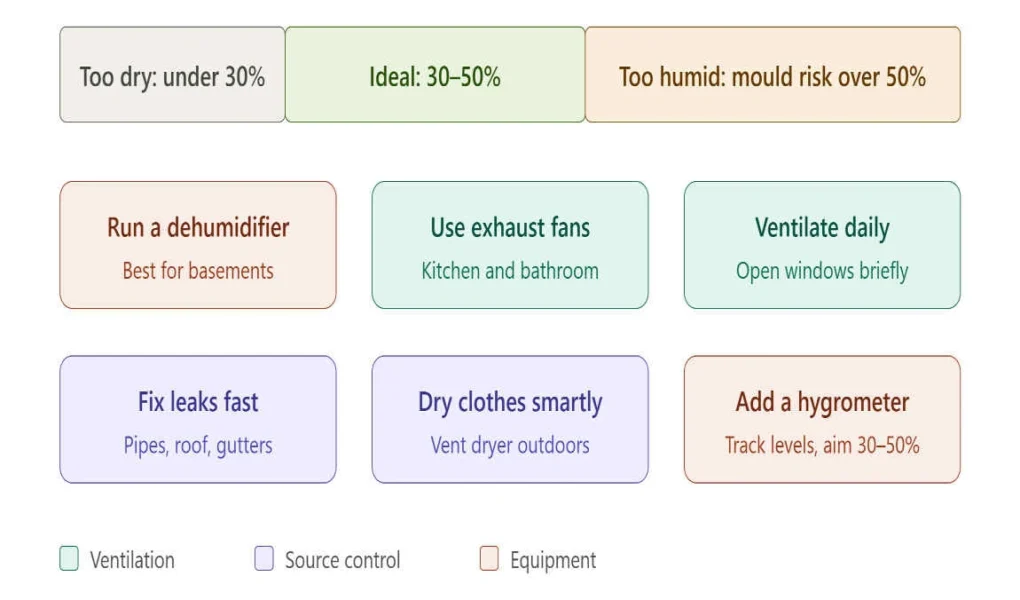
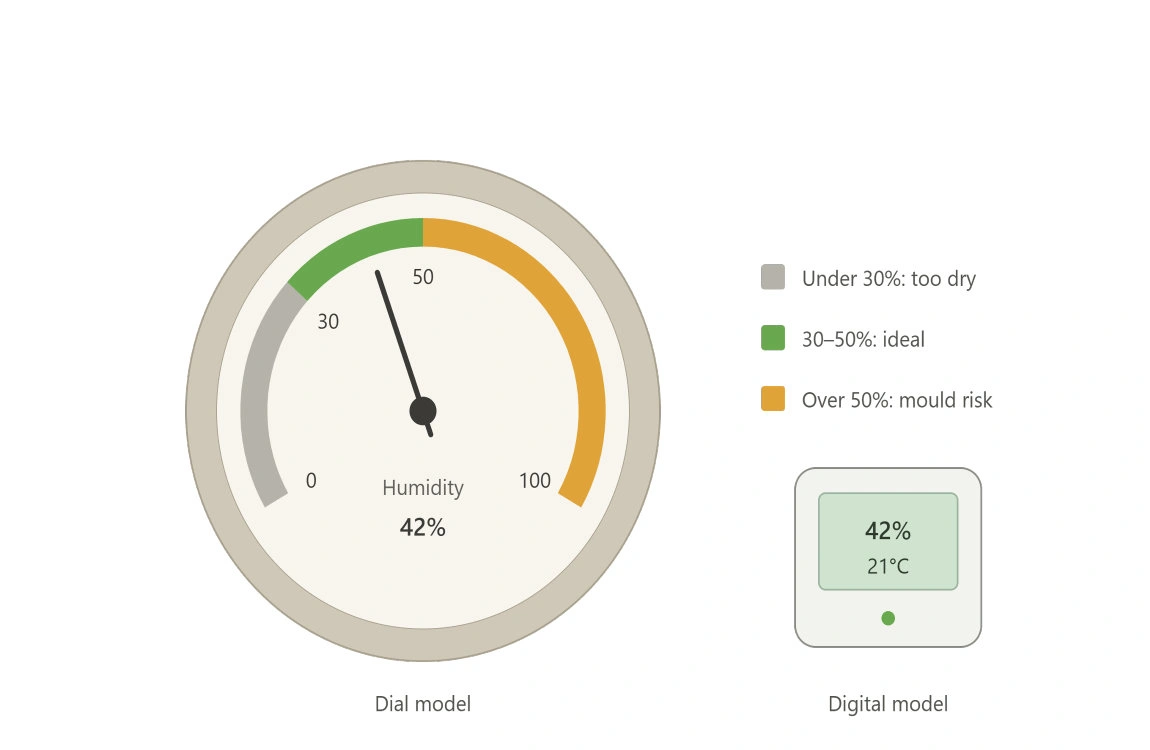
The U.S. Environmental Protection Agency advises keeping indoor relative humidity below 60 percent, and ideally between 30 and 50 percent. Above that range, moisture can condense on home cool surfaces and give mold what it needs to grow. Very dry air is not ideal either, since it can feel uncomfortable, so the 30–50% window is the sweet spot.
You cannot manage what you do not measure. The EPA notes that a humidity meter can be found at hardware stores for less than $50, and many models track temperature as well. Place one in your living area and another in the basement or bathroom, then check readings at different times of day.
Where Does Excess Moisture in a House Come From?
Moisture enters a home in more ways than most people expect. According to the EPA, water can leak in, seep through basement floors, or be released into the air by showers and cooking. Everyday sources include:
- Showers, baths, and boiling water on the stove
- Clothes dryers that are not vented outdoors
- Plumbing leaks and roof or window leaks
- Damp basements and crawl spaces
- Poor ventilation in closets, attics, and tight rooms
- Drying laundry indoors
Because the EPA stresses that mold will not grow without moisture, finding and removing these sources is always step one.
9 Best Ways to Reduce Home Humidity
Fix Leaks Immediately
No dehumidifier can keep up with a steady water source. Check under sinks, around toilets, near the water heater, and along ceilings and window frames. The EPA recommends repairing leaky plumbing and building envelope leaks as soon as possible. Dry any wet materials quickly, too. EPA guidance says it is important to dry water-damaged areas and items within 24 to 48 hours to prevent mold.
Use Exhaust Fans in the Kitchen and Bathroom
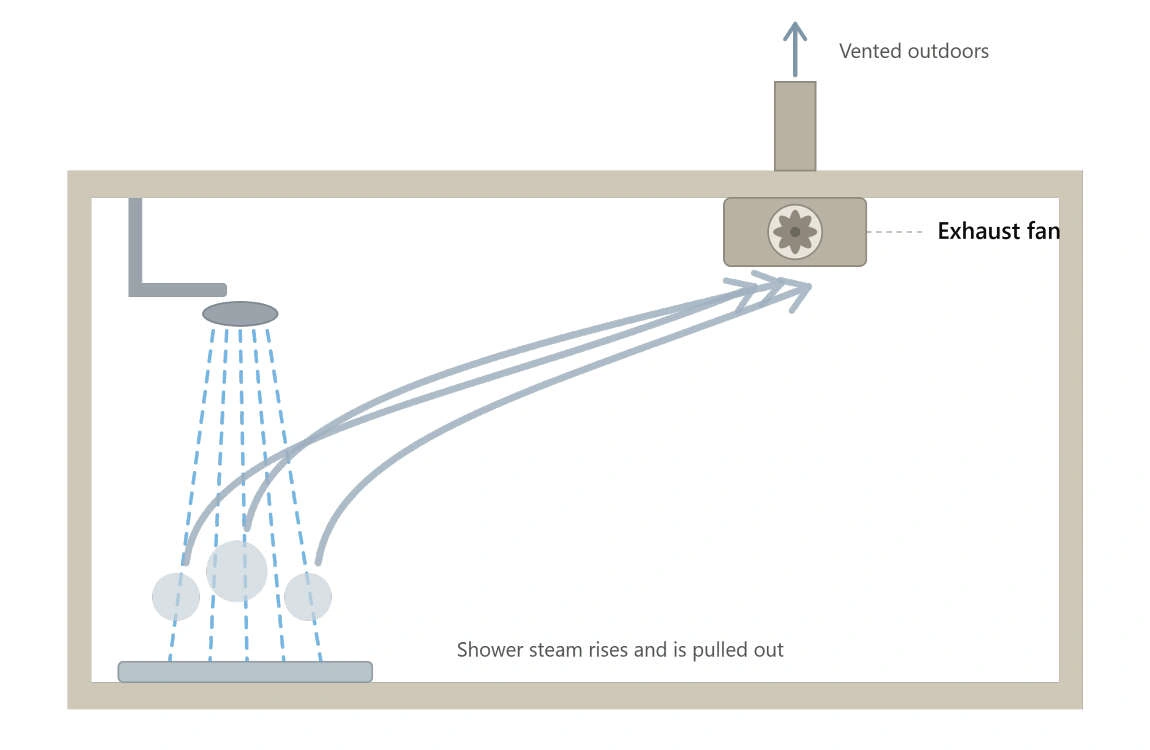
Exhaust fans pull steam out at the source. The EPA advises using them in bathrooms and kitchens to remove moisture to the outside, not into the attic. Run the bathroom fan during your shower and for a while afterward, and switch on the range hood whenever you cook. A University of Georgia Extension checklist suggests confirming that kitchen and bathroom fans vent outside the house, and even offers a simple toilet-paper test to check fan suction.
Run a Dehumidifier Where You Need It
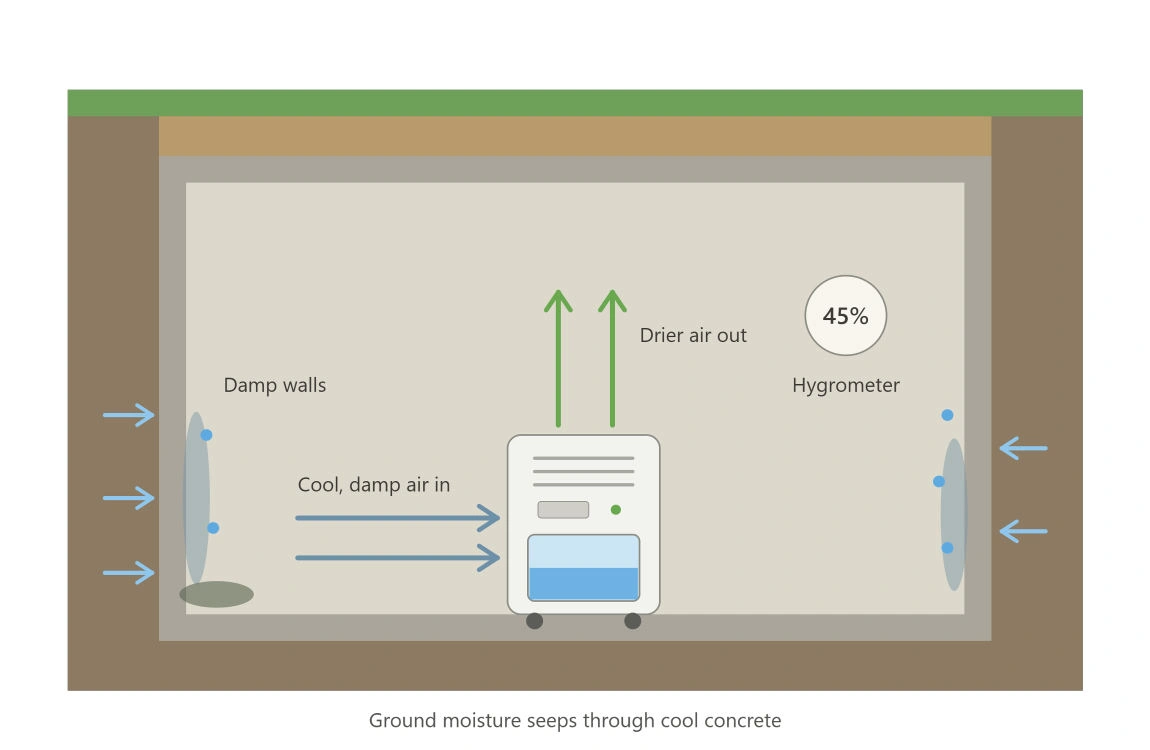
A dehumidifier is the most direct tool for lowering humidity, especially in basements and closed-up rooms. The Minnesota Department of Commerce explains that dehumidifiers are often found in basements, where temperatures are cooler and humidity is higher, and many units can be hooked to a hose that drains into a floor drain, so you do not have to empty the bucket. The same guide notes that dehumidifiers release a little heat while working, though the drier air usually offsets it.
Pick a unit sized for the room, set it to around 45–50%, and look for an ENERGY STAR certified model to keep power bills down.
Vent the Clothes Dryer Outdoors
A dryer that exhausts into a garage, basement, or crawl space pumps gallons of moisture into your home. The EPA recommends you vent your clothes dryer to the outside. Check the duct for kinks, clogs, or loose joints.
Improve Air Circulation
Stagnant air traps moisture in corners and closets. Use ceiling fans, open interior doors, and pull furniture a few inches away from exterior walls. The EPA suggests increasing air circulation with fans and moving furniture from wall corners so air and heat can move freely. If you notice mold in a closet, UGA Extension points out that poor ventilation may be the cause.
Use Your Air Conditioner in Warm, Humid Weather
Air conditioning cools and dries the air at the same time. According to EPA mold-prevention guidance, you can reduce moisture by increasing ventilation when outdoor air is cold and dry, or dehumidifying when outdoor air is warm and humid. In other words, do not simply throw the windows open on a sticky summer day; that can bring more moisture in.
Warm Up Cold Surfaces to Stop Condensation
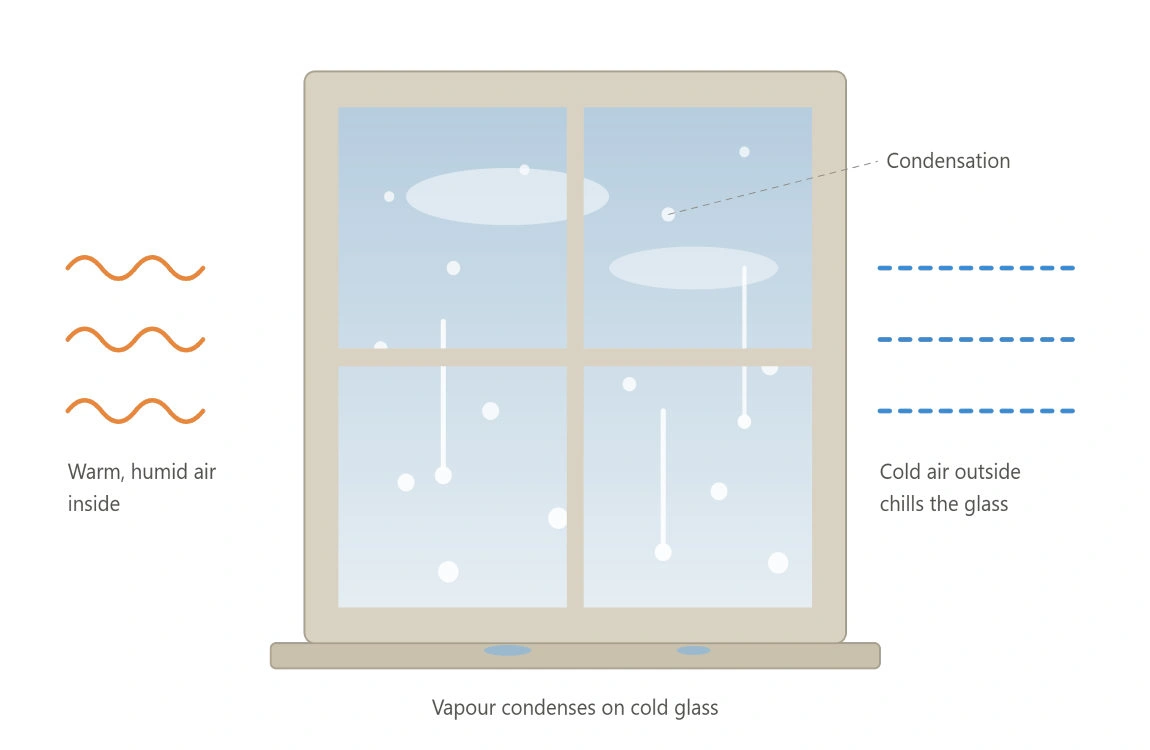
Moisture condenses where warm, humid air meets a cold surface, such as single-pane windows, exterior walls, and uninsulated pipes. The EPA advises you raise the temperature of cold surfaces where moisture condenses. Insulation, storm windows, and better air circulation all help. If you use a humidifier or humidistat in winter, note the EPA’s tip that your humidistat is set too high if excessive moisture collects on windows.
Manage Moisture Outside the House
Humidity problems often start at the foundation. Keep gutters clear, direct downspouts away from the walls, and grade soil so water flows away from the house. UGA Extension also recommends checking that plantings around your foundation are not overwatered and that your crawl space is inspected for leaks and properly sealed.
Add Dedicated Dehumidification to Energy-Efficient Homes
Modern, tightly sealed homes keep heat in, but they can also trap moisture. Research from the National Renewable Energy Laboratory, sponsored by the U.S. Department of Energy, found that in hot-humid climates, dehumidification separate from the cooling system is required to keep indoor humidity below 60% year-round in efficient homes with controlled ventilation. If your newer home still feels clammy even with the A/C running, a whole-house dehumidifier is worth discussing with an HVAC professional.
Quick Daily Habits That Keep Humidity Down
- Take shorter, cooler showers and run the fan for 20 minutes afterward.
- Cover pots when cooking and use the range hood.
- Dry laundry outdoors or in a vented dryer rather than on indoor racks.
- Wipe up condensation from windows and tiles.
- Keep houseplants in check, since soil and watering add moisture.
- Check your hygrometer weekly and adjust as the seasons change.
Signs Your Humidity Problem Needs Professional Help
Call a professional if you see recurring condensation despite your best efforts, hear or smell water in walls, notice peeling paint or warped wood, or find mold returning after cleanup. A returning problem usually means the moisture source has not been solved. For larger mold issues, EPA-based public health guidance says that if mold covers more than 10 square feet, a qualified remediation contractor should be contacted.
Frequently Asked Questions
What is the fastest way to reduce humidity in a house?
Run a dehumidifier in the dampest room, turn on exhaust fans, and use the air conditioner. Fixing any active leak will make the biggest long-term difference.
What humidity level is too high indoors?
Anything consistently above 60% is considered too high by the EPA, and staying between 30% and 50% is the ideal target.
Can I control moisture in my house without a dehumidifier?
Yes. In many homes, fixing leaks, using exhaust fans, venting the dryer outdoors, and improving airflow are enough. A dehumidifier helps most in basements, humid climates, and tightly sealed homes.
Do houseplants raise indoor humidity?
They can add a small amount of moisture, particularly when you water them often. In a room that already struggles with dampness, keep plants to a minimum.
Final Thoughts
Knowing how to control moisture in house spaces comes down to three simple ideas: stop moisture at its source, remove it with ventilation, and dry the air with a dehumidifier or air conditioner when needed. Keep your humidity between 30% and 50%, monitor it with an inexpensive hygrometer, and act quickly when you spot leaks or condensation. Your home will feel more comfortable, your air will be healthier, and you will protect one of your biggest investments.