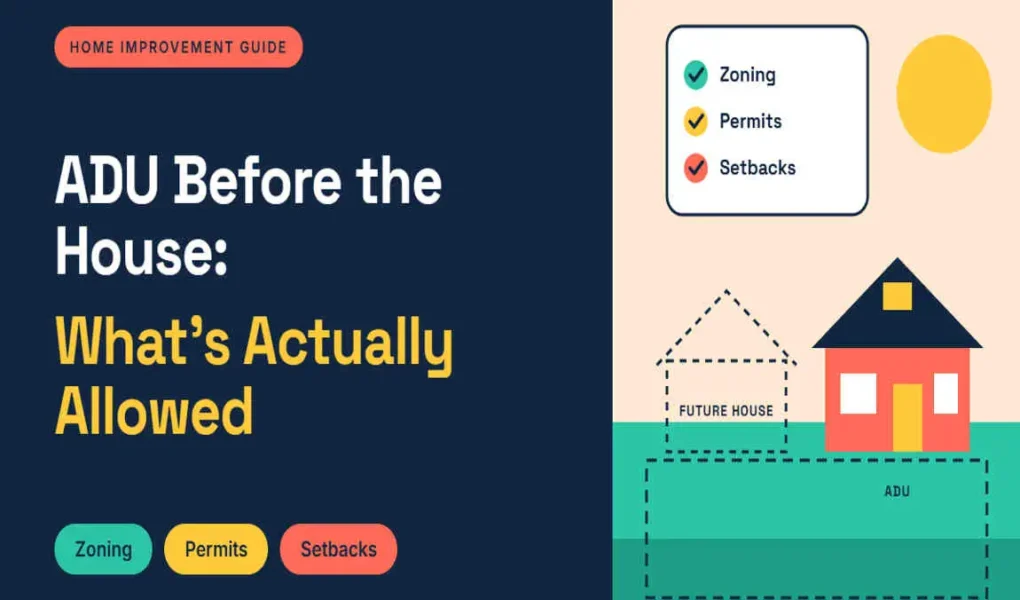
An accessory dwelling unit (ADU) is, by definition, secondary to a primary home. Most cities and counties therefore require a main house to already exist, or to be built at the same time. A few places allow the ADU to go first, usually with conditions such as a deadline for building the main home. Because the rule is set locally, always confirm with your planning department before you buy plans or break ground.
What Is an ADU (and Why Does the Main House Matter)?
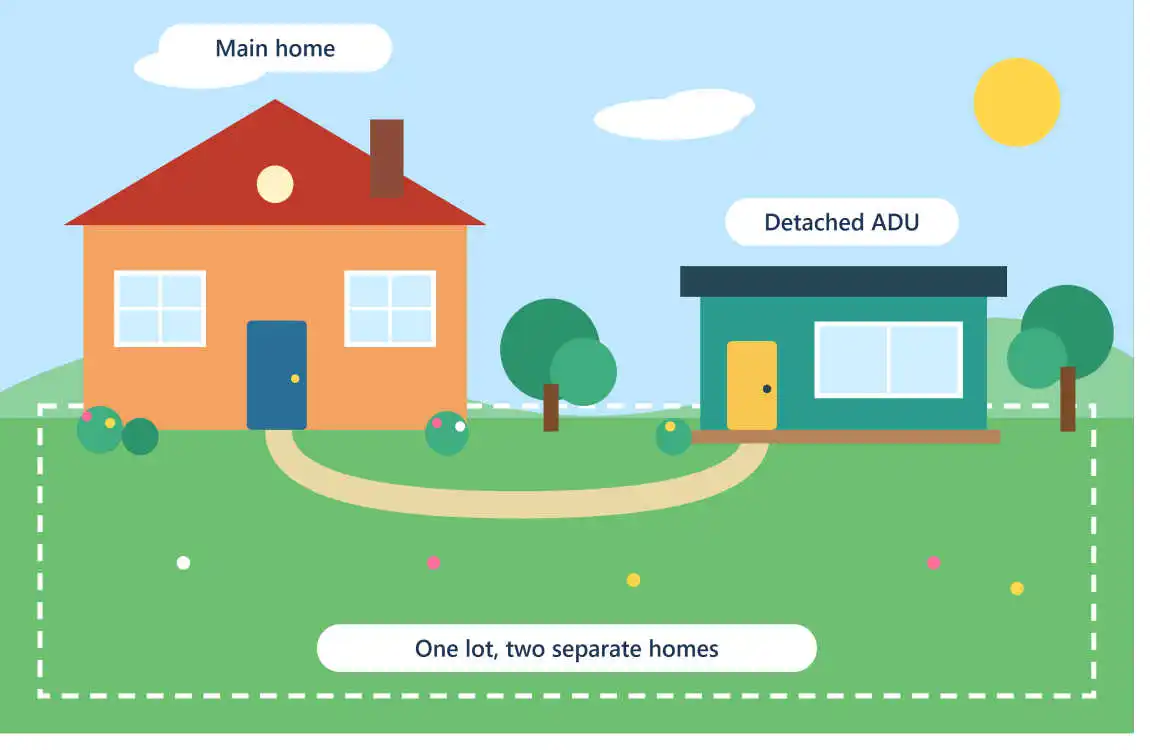
An ADU is a self-contained home on the same lot as a primary residence. It has its own sleeping, cooking and bathroom facilities, and it can be detached (a backyard cottage), attached (an addition) or converted from space such as a garage. People use them for aging parents, adult children, renters or a home office.
The word “accessory” is the reason the main house matters. Zoning treats an ADU as an add-on to something else. Without a primary home, many codes have nothing to attach the ADU to, so the permit can be denied or the finished unit can be refused a certificate of occupancy.
What Do the Rules Say? Real Examples
There is no single national rule. Here is how a handful of jurisdictions word it, based on their own official documents.
| Place | Can the ADU come first? | What the official source says |
|---|---|---|
| California (state law) | Allowed alongside a proposed home | HCD’s reviews of local ordinances refer to ADUs on a lot with an existing or proposed single-family dwelling. |
| Carlsbad, CA | Only with the main house | The property needs an existing primary residence, or the ADU must be built concurrently with the primary home. |
| Norco, CA | Only with the main house | The city’s ADU handout says a single-family home must exist or be built at the same time. |
| Sebastopol, CA | Yes, with a deadline | An ADU can be built in advance, but if no main house is completed within four years, the ADU is deemed the primary dwelling and fees change. |
| Philomath, OR | No | On a vacant lot, the owner must first build a house or duplex, per the city’s ADU page. |
| Lehi, UT | No | Accessory buildings cannot be established before the main use is operating or under construction. |
| Little Rock, AR | Built together, but not occupied first | A city planning presentation notes the ADU cannot be occupied before the primary dwelling is complete. |
The pattern is clear: “at the same time” is the most common rule, “first” is rare, and “occupied first” is rarer still.
Is Change Coming?
Some legislators want to make this more flexible. A North Carolina bill tracked by the UNC School of Government would let ADUs be built or sited before, during or after the main home design, and a Virginia proposal described by the Virginia Association of Counties carried similar language. Bills change quickly, so check whether yours passed before relying on them.
What Happens If You Build the ADU First Anyway?
Where it is allowed, the main risk is classification. If a code says the ADU becomes the primary dwelling when no main home follows, as Sebastopol’s does, you can end up paying different fees and meeting different standards than you planned. Other risks to weigh:
- Permit denial: in places that require a primary home, the application may simply be refused.
- No certificate of occupancy: you could finish construction and still be unable to live in or rent the unit.
- Utility and fire-safety design: distance between buildings, separate meters and service connections can affect both structures, so designing them together is easier than retrofitting.
- Lender and insurance issues: a lot with only a secondary unit can confuse underwriting. Ask both before you commit.
3 Smart Ways to Get a Small Home Built Sooner
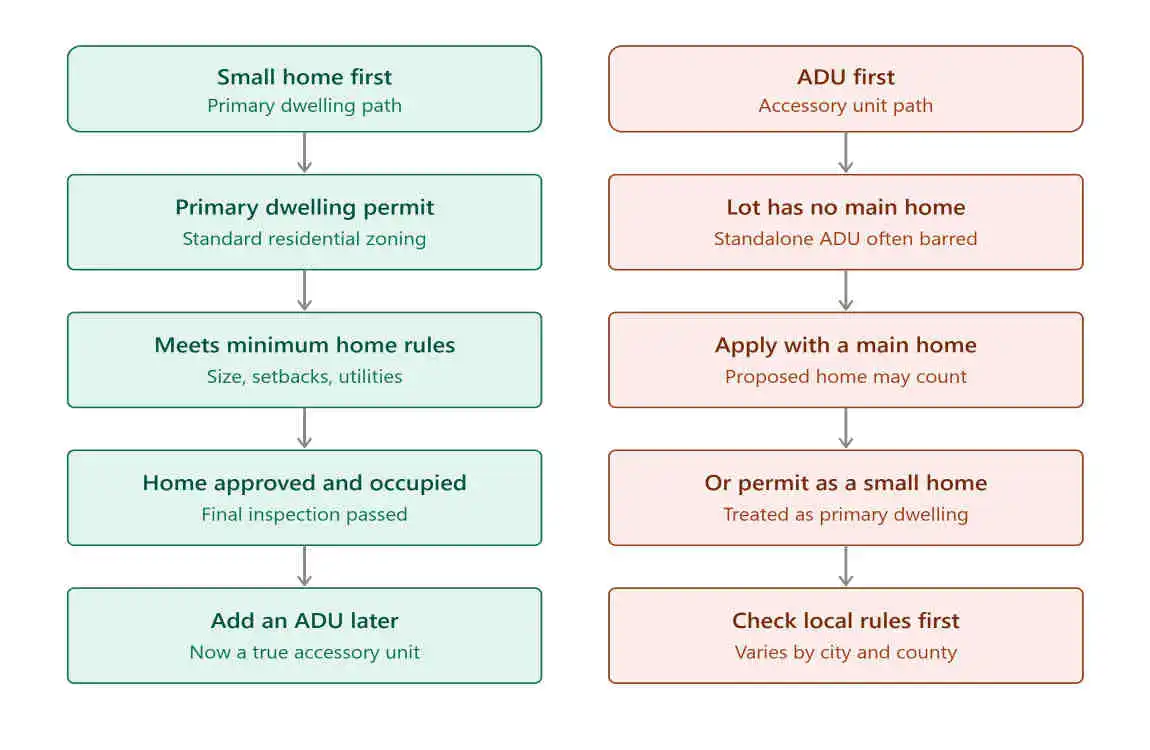
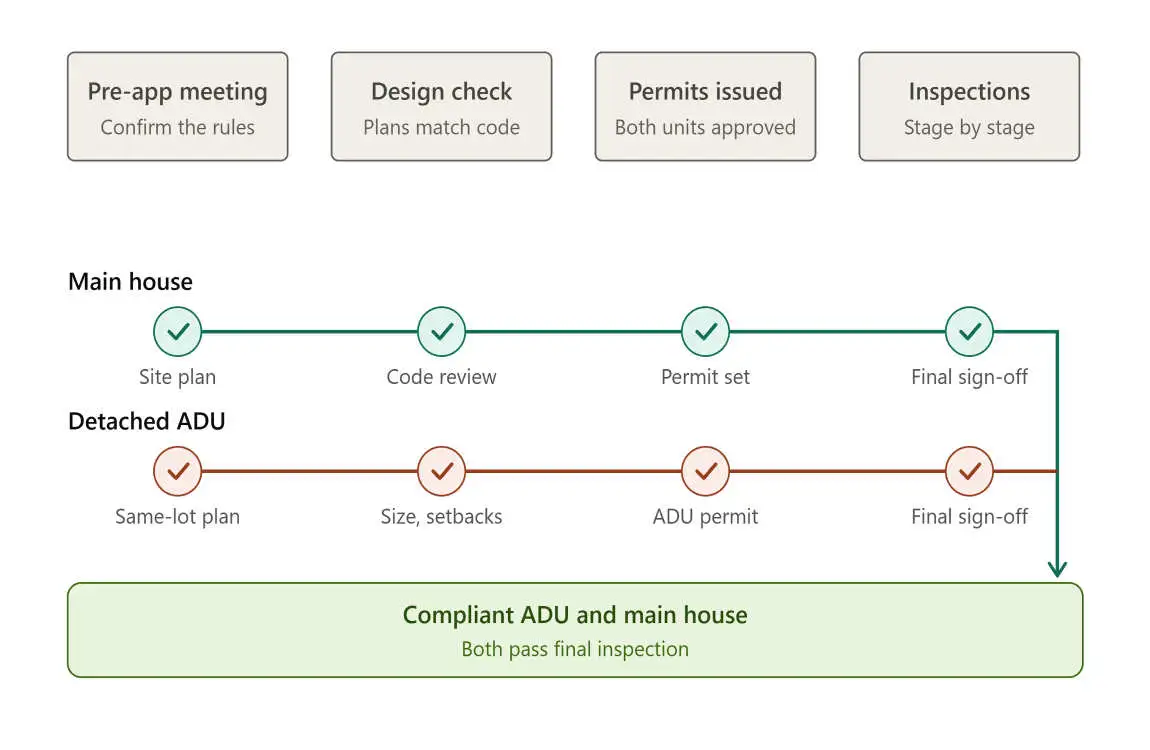
- Apply for both buildings together. Submit one package with the main house and the ADU. This is the cleanest option in cities that require “existing or concurrent” construction, and it is how most builders in California handle it.
- Build a small primary home first. Instead of an ADU, permit a modest primary dwelling that meets all standards, then add the larger house later and, where your city allows it, redesignate the first home as the ADU. Ask your planner whether that conversion is permitted.
- Choose a jurisdiction-specific exception. A few cities have explicit “ADU first” provisions with a deadline. If your lot is in one, read the deadline and fee language closely.
How Much Does an ADU Cost?
Costs vary widely by region, size and site conditions. Home-services marketplace Angi puts the average ADU at about $180,000, with many homeowners spending from roughly $40,000 to $360,000. AARP notes that cost remains a real barrier even where ADUs make housing more affordable. Get local quotes, and budget for permits, utility connections and impact fees on top of construction cost.
For context, AARP’s design and development guide reports that an ADU can be built for as little as one-third the cost of a comparable multifamily unit. That is one reason cities keep opening the door to them.
Step-by-Step: How to Check Your Own Lot
- Find your zoning. Search your city or county’s zoning map and confirm the lot allows residential use.
- Read the ADU ordinance. Look for phrases such as “existing,” “proposed,” “concurrent” or “principal dwelling.” That wording answers your question.
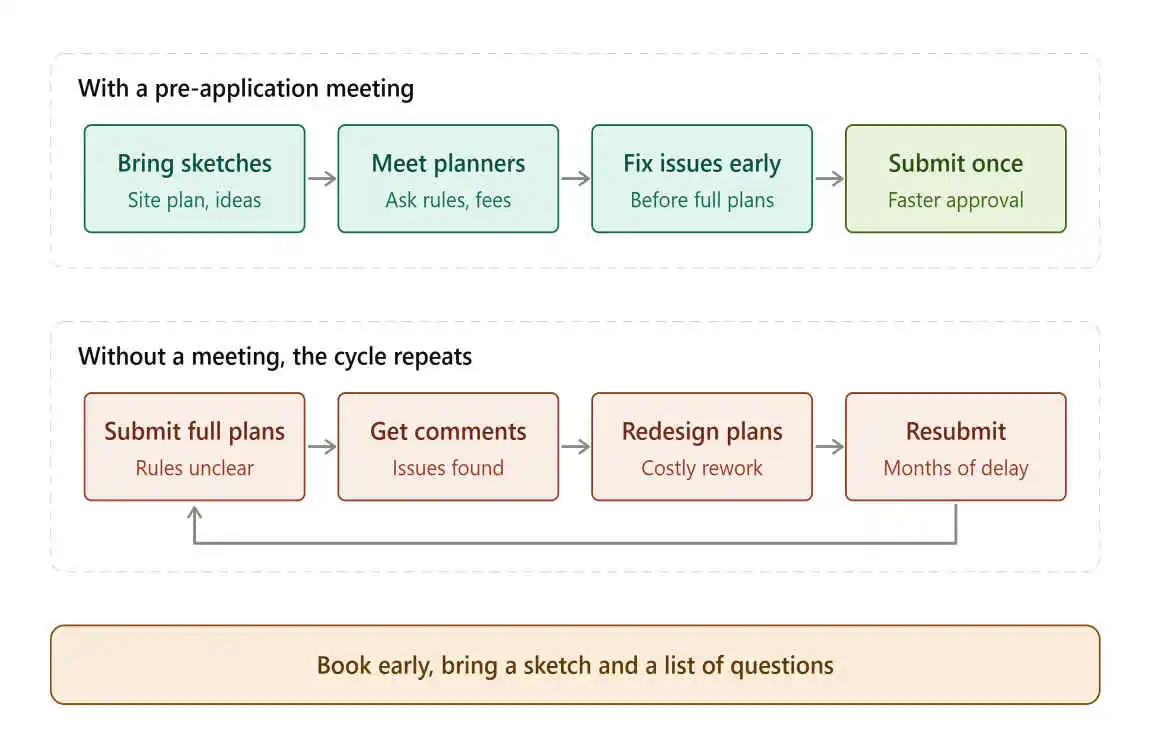
- Ask about vacant lots specifically. Email the planning counter: “Can I permit and build an ADU on a vacant lot before the primary home?” Keep the reply.
- Check occupancy rules. Ask when the ADU can be lived in relative to the main house’s final inspection.
- Confirm utilities. Ask your water, sewer and power providers what they require for each building cost.
- Get it in writing. Rules and interpretations differ by staff and change by year.
Frequently Asked Questions
Can I live in an ADU while I build my main house?
It depends on your city. Many places allow temporary living arrangements during construction, but some block occupancy of the ADU until the main house is complete. Ask your planning department how your jurisdiction treats it.
Does California let you build an ADU on an empty lot?
California’s statute refers to a lot with an “existing or proposed” home, so permitting both together is supported. Whether an ADU can be built first depends on the city’s ordinance, and several, like Carlsbad and Norco, require a main house to exist or be built concurrently.
What is the difference between an ADU and a primary dwelling?
A primary dwelling is the main home on the lot. An ADU is a smaller, additional home that is subordinate to it. If there is no main home, many codes will treat a lone small house as the primary dwelling rather than an ADU.
Can I convert my first small house into an ADU later?
Often yes, if you later build a larger primary home and your local code allows the first building to be reclassified. Confirm size limits, setbacks and fee changes with your planner before you design it.
Do I need a permit for an ADU?
Yes. An ADU is a full dwelling, so you need building permits and final inspections, even in states with streamlined ADU laws.
Bottom Line
You can sometimes build an ADU before the main house, but most local codes expect the primary home to exist or be built alongside it, and some also stop you from moving in first. Check your city’s wording, get answers in writing, and consider a combined permit or a compliant small primary home if you want to start small.
Sources
- California Department of Housing and Community Development (HCD), ordinance review letter to the City of San Pablo
- City of Carlsbad, CA, ADU information bulletin
- City of Norco, CA, ADU requirements handout
- Sebastopol Municipal Code, Section 17.295.030
- City of Philomath, OR, Accessory Dwelling Units
- Lehi City, UT, Development Code Chapter 26
- City of Little Rock, AR, ADU community conversation presentation
- UNC School of Government, Legislative Reporting Service, ADU regulation bill
- Virginia Association of Counties, ADU by-right bill summary
- AARP, ADUs Make Housing More Affordable for Older Adults
- AARP Public Policy Institute, Accessory Dwelling Units: A Step by Step Guide to Design and Development
- Angi, How Much Do ADUs Cost?