Yes, in most cases. Landlords are generally responsible for keeping the plumbing in a rented home safe and working, including water supply, pipes, drains, toilets, sinks and baths. The main exception is damage the tenant causes through misuse or neglect, such as a blockage from flushing the wrong items. In that case, the tenant usually pays.
The exact rules depend on where you live. In the United States, they come from state and local law and your lease. In England and Wales, they come mainly from Section 11 of the Landlord and Tenant Act 1985.
Landlord vs Tenant: Who Pays for What?
| Plumbing problem | Usually responsible | Why |
|---|---|---|
| Burst or leaking pipe (wear, age, freezing) | Landlord | Part of the home’s core plumbing system |
| No running water or no hot water | Landlord | Essential service for a habitable home |
| Sewer line or main drain problem | Landlord | Outside the tenant’s control |
| Faulty toilet, sink or bath fittings (normal wear) | Landlord | Fixtures supplied with the property |
| Blockage caused by wipes, grease, hair or objects | Tenant | Misuse or neglect |
| Damage caused by a guest or family member | Tenant | Tenant is responsible for household use |
| Minor clogs fixable with a plunger | Often tenant (check lease) | Routine upkeep |
| Tenant’s own appliances (e.g., washing machine they own) | Tenant | Personal property, not part of the building |
Landlord Plumbing Responsibilities in the United States
Most US states recognize an implied warranty of habitability. This is a legal promise that a rental will be safe and livable even if the lease says nothing about it. According to FindLaw, this warranty exists in every rental agreement, and landlords must substantially follow local building codes. Working plumbing and running water are core parts of that standard. FindLaw’s list of landlord repairs includes running water as a typical landlord responsibility.

When the tenant pays
Landlords are generally not responsible for damage the tenant or the tenant’s guests cause. Nolo explains that tenants are expected to use plumbing properly and keep fixtures reasonably clean. Its example is a toilet clogged by a babysitter flushing a diaper: the problem affects habitability, but the tenant pays for the fix. Nolo also notes that a landlord cannot charge a tenant for normal wear and tear.
Your lease still matters
Leases often say who handles minor repairs pipe, such as clearing a simple clog. Landlords can sometimes assign small, routine tasks to tenants. They generally cannot sign away the core duty to provide a habitable home. Rules vary by state and sometimes by city, so check your local landlord-tenant law.
Landlord Plumbing Responsibilities in England and Wales
The law is more specific in the UK. Section 11 of the Landlord and Tenant Act 1985 requires landlords on shorter tenancies to keep in repair the structure and exterior, including drains, gutters and external pipes. It also covers the installations for water, gas, electricity and sanitation, including basins, sinks, baths and toilets, plus heating and hot water.
The government’s own guidance agrees. GOV.UK says landlords are always responsible for repairs to basins, sinks, baths and other sanitary fittings, including pipes and drains, as well as heating and hot water.

What the law does not require of landlords
According to Shelter England, Section 11 does not make a landlord fix problems caused by the tenant failing to use the home in a tenant-like manner. It also does not cover appliances such as washing machines unless the tenancy agreement says so. Landlords cannot avoid these duties by writing them out of the contract.
How fast must a landlord act?
Shelter explains that repairs must be done within a reasonable time after the landlord is told about the problem. There is no fixed legal number of days. The time depends on how serious the problem is, whether parts are available and whether the tenant is living there. A burst pipe or no water supply is urgent. A slow drip may allow more time. Notice can be given by email or text as well as in writing, as long as it clearly explains the issue.
What to Do If You Have a Plumbing Problem in a Rental
- Limit the damage. Turn off the water supply at the stopcock or shut-off valve if there is a leak, and move belongings away from water.
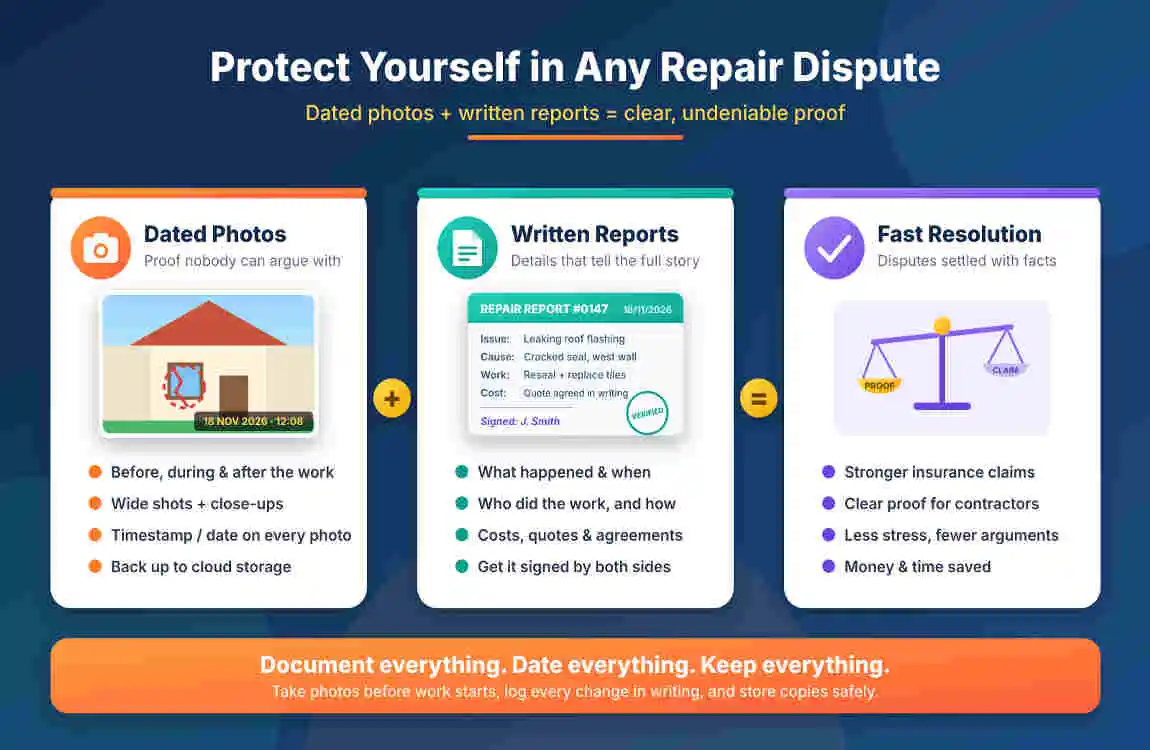
- Take photos and video. Record the problem and any damage as it is.
- Notify your landlord in writing. Email or text creates a dated record. Describe the issue and when it started.
- Allow reasonable access. Let the landlord or plumber in at sensible times. In England, landlords generally need to give at least 24 hours’ notice for non-emergency visits, as GOV.UK guidance for tenants outlines.
- Follow up. If nothing happens, send a second written request and keep copies.
- Escalate if needed. Contact your local housing or environmental health office, or a tenant advice service, for help.
Important: do not stop paying rent without legal advice. Rules on withholding rent or deducting repair costs vary a lot and can backfire if done wrongly.
Tips for Landlords: Prevent Plumbing Disputes
- Put it in writing. Spell out in the lease who handles minor pipe clogs and how to report problems.
- Document the starting condition. A move-in report with photos protects both sides.
- Respond fast. Water damage grows quickly, and delays raise repair costs and legal risk.
- Schedule inspections. Check under sinks, around toilets and near water heaters for slow leaks.
- Use qualified tradespeople. Professional repairs reduce repeat call-outs.
Simple Plumbing Care Every Home Needs (Tenants and Owners)
- Only flush toilet paper and human waste. Wipes labeled “flushable” can still cause blockages.
- Keep grease and cooking fat out of sinks. Let it cool and bin it.
- Use hair catchers in showers and tubs.
- Know where the main water shut-off is, and show everyone in the home.
- In cold weather, keep the home heated enough to reduce the risk of frozen pipes.
- Report drips and slow pipe drains early, before they become costly repairs.

Frequently Asked Questions
Is a landlord responsible for a leaking pipe?
Usually yes, if the leak comes from age, wear, freezing or a defect in the system. If the tenant caused the damage, the tenant may have to pay.
Who pays for a blocked toilet or drain in a rental?
It depends on the cause. A blockage from a pipe defect or main sewer problem is normally the landlord’s cost. A blockage caused by items the tenant flushed or washed down the drain is normally the tenant’s cost.
Can a landlord make a tenant pay for all plumbing repairs?
Not for the core plumbing system. A lease can assign small, routine tasks to tenants, but it generally cannot remove the landlord’s legal duty to keep the home habitable. In England and Wales, Section 11 duties cannot be contracted out of.
How long does a landlord have to fix plumbing?
The law usually says “within a reasonable time” rather than a set number of days. Urgent problems such as no water, a burst pipe or a sewage backup should be treated as emergencies. Some US states set specific deadlines, so check your local rules.
Is the landlord responsible for damage to my belongings from a leak?
Often not directly. Landlords are responsible for repairing the plumbing, but damage to a tenant’s personal property is usually covered by the tenant’s own renters or contents insurance, unless the landlord was negligent. Consider getting a policy.
Does the landlord have to fix a washing machine or dishwasher?
Only if the landlord supplied it or the lease says so. Under Section 11 in England and Wales, appliances are generally outside the landlord’s automatic repair duties unless the tenancy agreement includes them.
What if my landlord ignores a plumbing repair request?
Report the problem in writing again, keep copies, and contact your local housing or environmental health department or a tenant advice organization. Do not stop paying rent or carry out repairs and deduct the cost without checking your local law first.
Final Thoughts
So, are landlords responsible for plumbing? In nearly every case, yes for the essentials: running water, working toilets, sound pipes and safe drainage. Tenants share the responsibility by using the plumbing sensibly and reporting problems early. Clear written communication, good records and a well-drafted lease prevent most disputes.
Sources and Further Reading
- Landlord and Tenant Act 1985, Section 11: Repairing obligations in short leases (legislation.gov.uk, UK Government)
- Private renting: Repairs (GOV.UK)
- Repairs under section 11 (Shelter England)
- Tenant Repair and Maintenance Responsibilities (Nolo)
- Is My Landlord Responsible for Repairs? (FindLaw)
- Landlord Repairs and Maintenance of Rented Premises (FindLaw)