In most cases, no. Landlords are generally responsible for keeping a rental’s plumbing in working order. A landlord can usually charge you only if you or your guests caused the damage through misuse or negligence, or if your lease validly assigns minor upkeep to you. Exact rules depend on your state and local housing code.
Why Plumbing Is Usually the Landlord’s Job
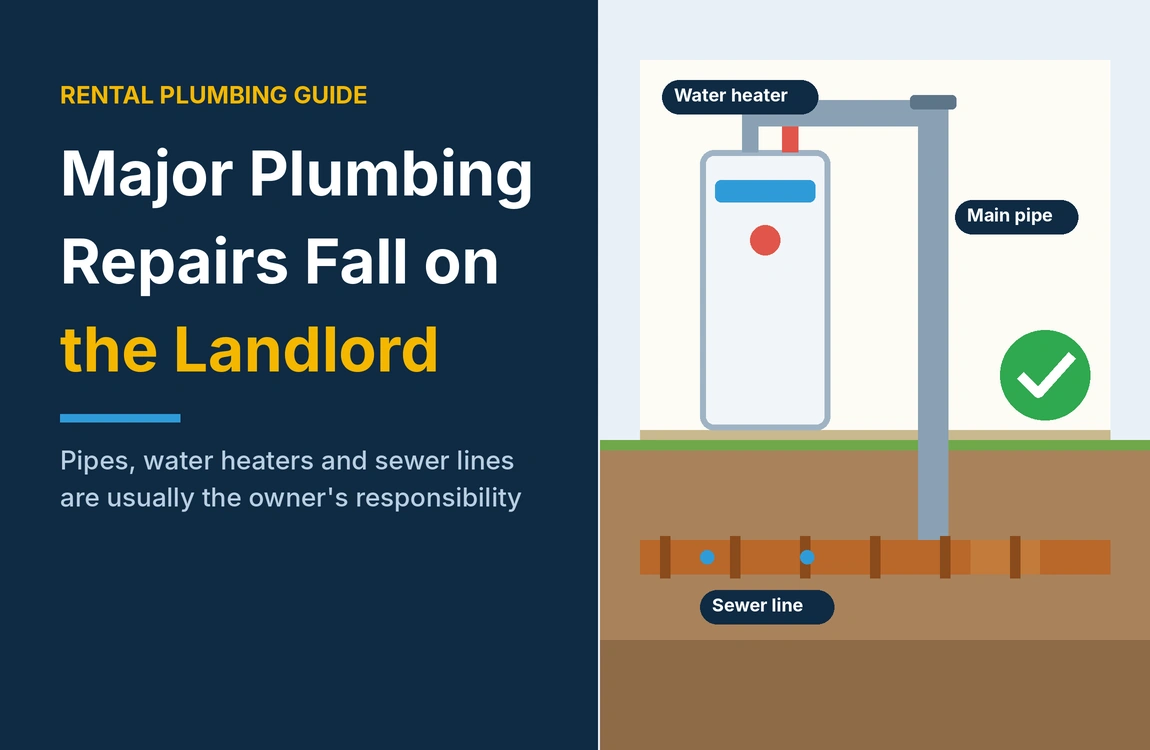
Most U.S. jurisdictions recognize the implied warranty of habitability, a legal doctrine that applies to residential leases. Put simply, the home must be safe and livable, even if your lease never mentions repairs. Nolo explains that landlords are required to keep rental premises livable.
Plumbing is named as a core part of that duty. FindLaw lists plumbing repairs among the items a landlord is responsible for, and notes the warranty requires landlords to substantially follow local building codes. Working water, drains and hot water are basic habitability needs, not optional extras.
When a Landlord CAN Charge You
The landlord’s duty has limits. You may be billed when:
- You caused the damage. Examples: flushing wipes, pouring grease down the drain pipe, or a bathtub overflow left unattended. A LawDepot guide states that if a tenant causes damage, the tenant is responsible for the repair.
- The lease shifts minor upkeep to you. A University of California Berkeley student legal guide notes that landlords and tenants can agree the tenant will handle certain repairs. Courts generally do not allow major habitability duties to be waived.
- You failed to report a problem. A small leak you ignored that becomes major water damage can shift some blame to you. Wisconsin’s extension-service renter curriculum lists reporting problems promptly as a tenant responsibility.
Who Pays? Common Plumbing Problems
| Problem | Usually Pays |
|---|---|
| Burst or leaking pipe from age or freezing | Landlord |
| Broken water heater | Landlord |
| Sewer backup from main line | Landlord |
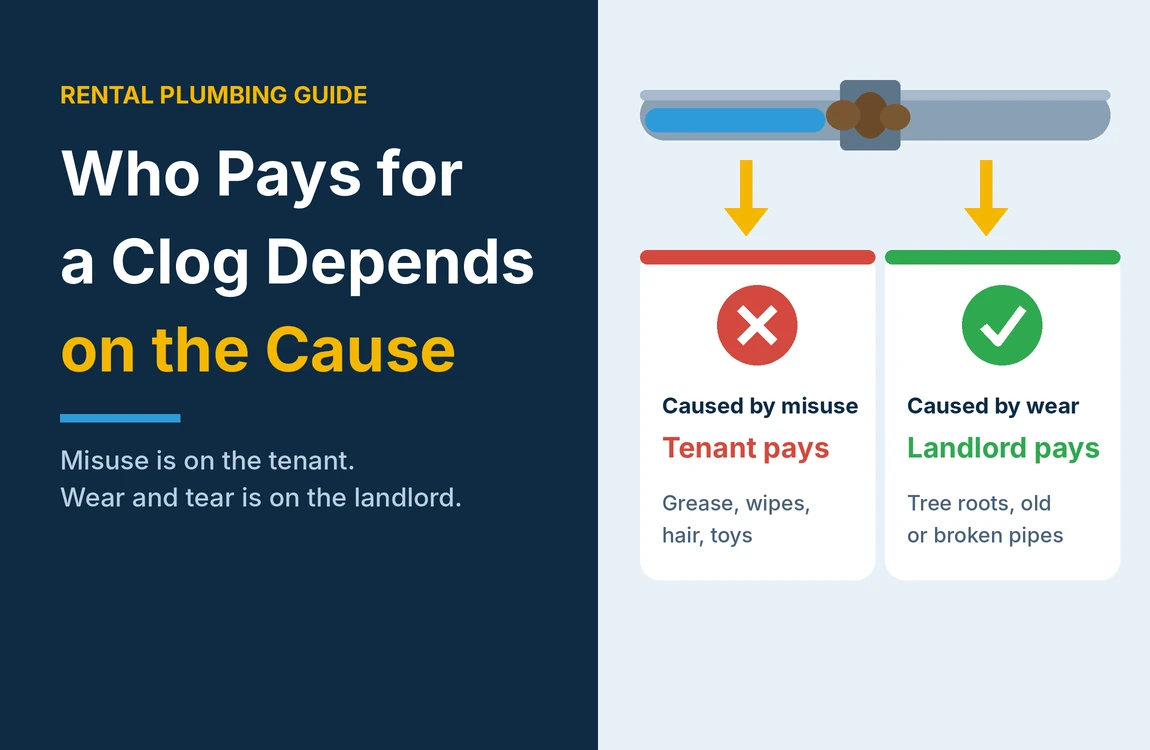
| Clog from wipes, grease or objects | Tenant |
| Damage from tenant misuse | Tenant |
| Dripping faucet or running toilet (minor) | Depends on lease and state |
| Your belongings damaged by a leak | Often your renters insurance |
How Fast Must a Landlord Fix Plumbing?
Timelines vary by location. As one example, a City of Houston housing page states landlords should make necessary repairs within a reasonable time, generally three to seven business days, and respond to water or sewage flooding requests immediately. Always check your own state or city rules.
What to Do If Your Landlord Refuses or Bills You Unfairly
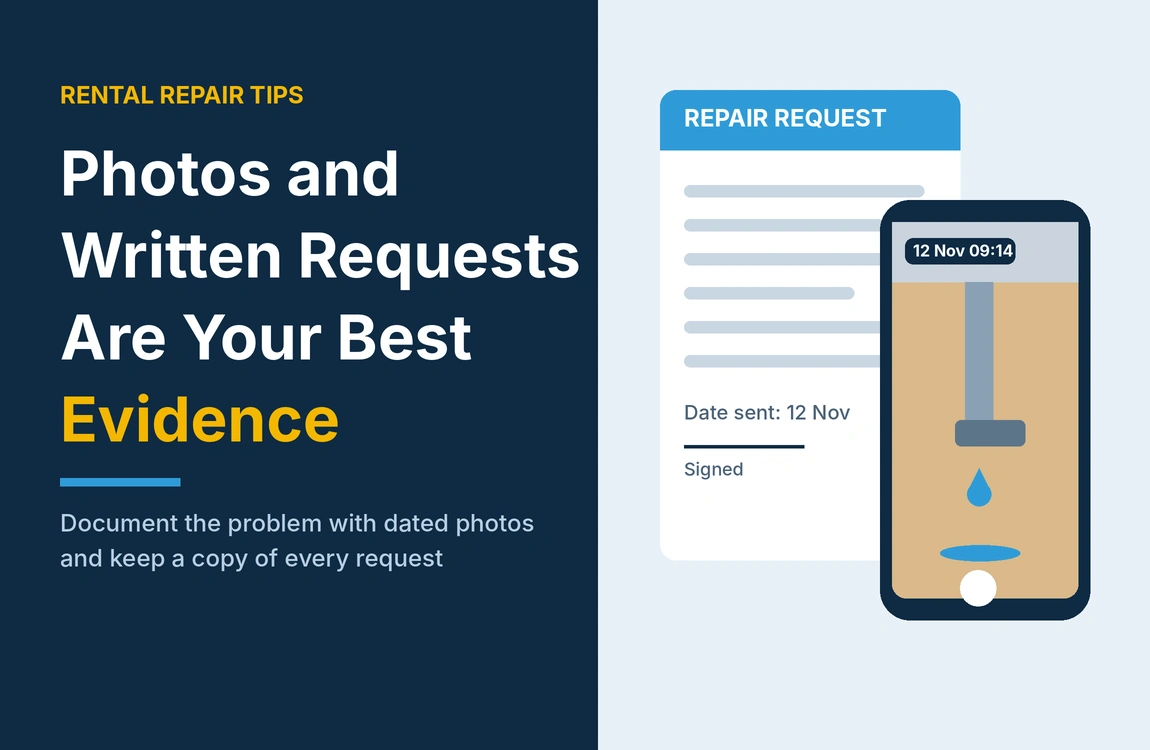
- Report in writing. Send an email or letter, describe the problem, and keep copies and photos.
- Allow reasonable time. Give the landlord a fair window to respond.
- Know your remedies. FindLaw outlines options where state law allows: withholding rent (sometimes through an escrow account), repair and deduct, or small claims court.
- Don’t withhold rent blindly. Doing so where it is not allowed can lead to eviction. Confirm your local rules first.
- Contact local code enforcement. Many cities inspect habitability complaints.
- Get legal help. If you live in HUD-assisted housing, HUD’s Resident Rights & Responsibilities brochure explains your rights, and the New York City Bar offers a free tenant guide with attorney referrals.
Smart Tips for Renters
- Read the repairs and maintenance section of your lease before signing.
- Photograph plumbing condition at move-in.
- Buy renters insurance to cover belongings damaged by leaks.
- Know where your main water shut-off valve is.
- Avoid flushing anything except toilet paper.
Frequently Asked Questions
Can a landlord charge you for plumbing repairs?
Usually not. Landlords must keep plumbing working under the implied warranty of habitability. Charges are generally allowed only when the tenant caused the damage or the lease validly shifts minor upkeep to the tenant.
Who pays for a clogged drain in a rental?
It depends on the cause. Clogs from wipes, grease or foreign objects are typically the tenant’s cost. Clogs from aging pipes or main-line problems are the landlord’s.
Can I withhold rent for a plumbing problem?
Only if your state allows it, and typically after written notice and a reasonable wait. Rules vary, so verify local law first.
Can a landlord deduct plumbing costs from my deposit?
Only for damage beyond normal wear and tear that you caused. Normal aging of pipes cannot be deducted.
Bottom Line
Plumbing is almost always the landlord’s responsibility, unless you caused the damage or your lease fairly assigns small tasks to you. Report problems in writing, keep records, and check your local rules before taking action.
Sources
- Cornell Law School Legal Information Institute: Implied Warranty of Habitability
- Nolo: What Is the Implied Warranty of Habitability?
- FindLaw: Is My Landlord Responsible for Repairs?
- FindLaw: Landlord’s Duties Regarding Repairs and Maintenance
- U.S. Department of Housing and Urban Development: Resident Rights & Responsibilities
- New York City Bar: Landlords’ Duties & Obligations
- City of Houston Housing Department: Landlord and Tenant Laws
- LawDepot: Repair Responsibilities for Tenants and Landlords
- UC Berkeley Student Legal Services: Repairs Legal Guide
- University of Wisconsin Extension: Rent Smart, Who Is Responsible for What