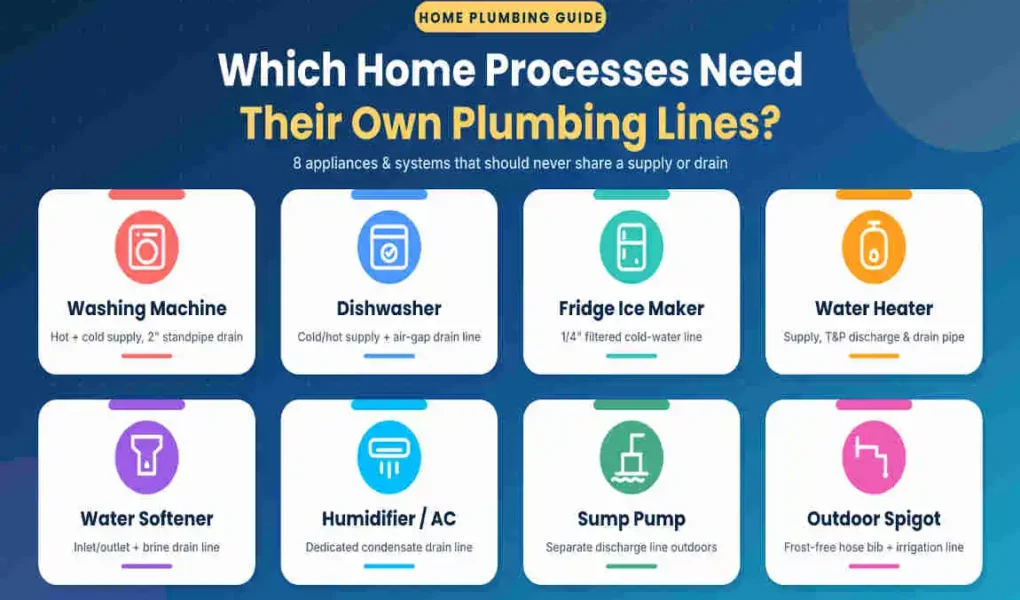
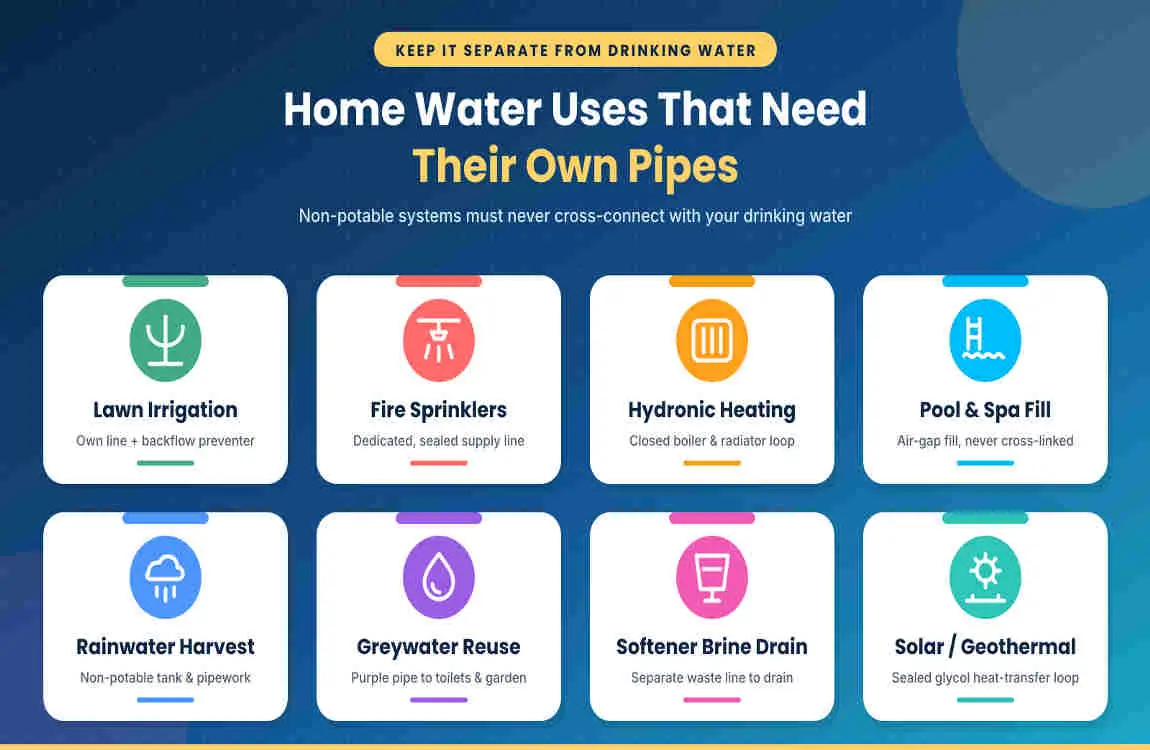
The processes that require separate plumbing are the ones that use non-drinking (non-potable) water or could contaminate your tap water. In a home, that includes standalone fire sprinkler systems, lawn irrigation, greywater and rainwater reuse, and closed-loop radiant heating. Everyday uses like sinks, showers, dishwashers and washing machines share the normal drinking-water plumbing.
If you found this question in a quiz or exam, look for the answer choice involving reused water, irrigation, fire protection or a heating loop. Those are the ones plumbing codes keep apart from the potable supply. Exact answer options vary by test, so match the logic above to the choices you have.
Why Plumbing Codes Keep Water Systems Separate
The reason is cross-connection. Virginia’s rainwater regulations define it as any physical connection between two otherwise separate piping systems where water could flow from one to the other, depending on pressure (Virginia Administrative Code, 12VAC5-635). If the pressure in your supply drops, water in a second system can be pulled backward into the pipes you drink from. Keeping the systems separate, or protecting the join with an approved device, is how codes prevent that.
The Quick Reference Table
| Home process | Needs separate plumbing? | Key reason |
|---|---|---|
| Showering, sinks, dishwasher, washing machine | No | Uses the normal potable supply |
| Standalone fire sprinklers | Yes | Piping kept separate from drinking taps |
| Lawn irrigation | Yes, with backflow protection | Irrigation piping counts as non-potable |
| Greywater reuse | Yes | Reused water must not reach drinking taps |
| Rainwater harvesting | Yes | Needs labelled piping and cross-connection control |
| Radiant floor heating | Yes (closed loop) | Heating components may not be rated for drinking water |
Fire Sprinkler Systems
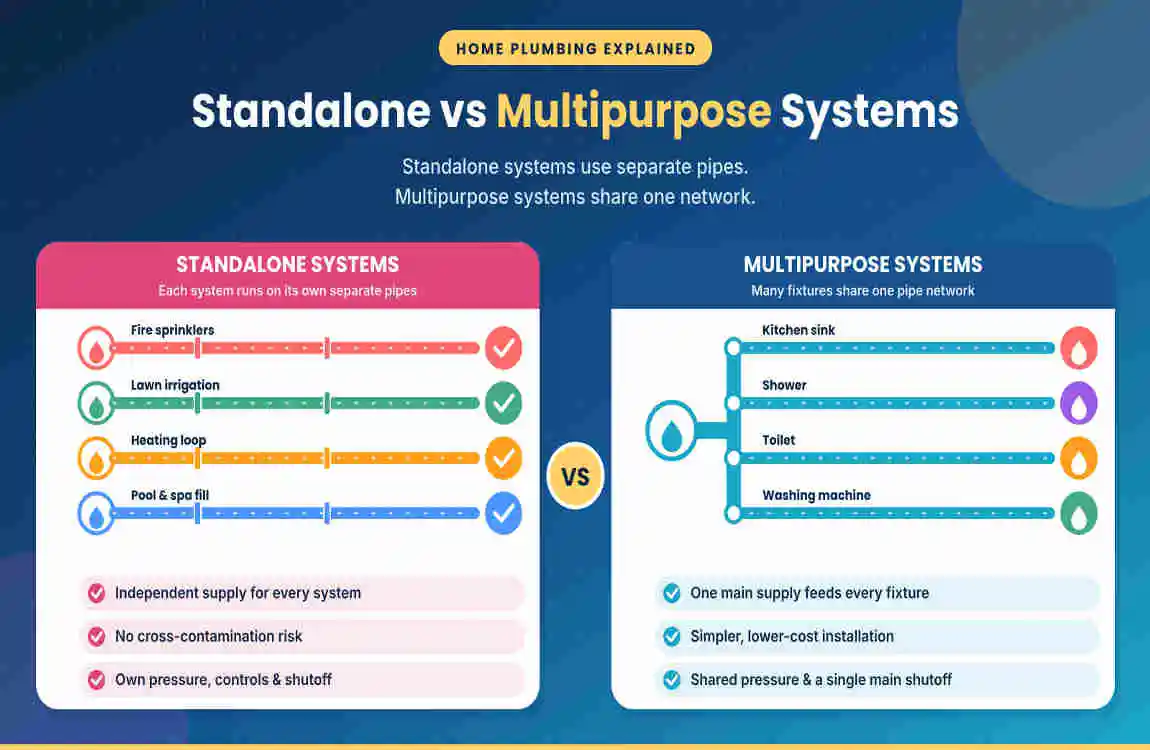
Home fire sprinklers are designed under NFPA 13D. The Pacific Northwest National Laboratory explains that a standalone system has above-ground sprinkler piping separate from the piping serving the home’s drinking-water taps, while a multipurpose system serves both fire protection and domestic fixtures (PNNL Building America Solution Center). So a standalone system is the textbook example of separate plumbing in a house.
The Washington State Department of Health notes that, from a water utility’s point of view, a residential sprinkler system is a potential source of contamination for the potable supply (Washington State Department of Health). That is why design and backflow rules matter even when a system shares a water service.
Lawn Irrigation
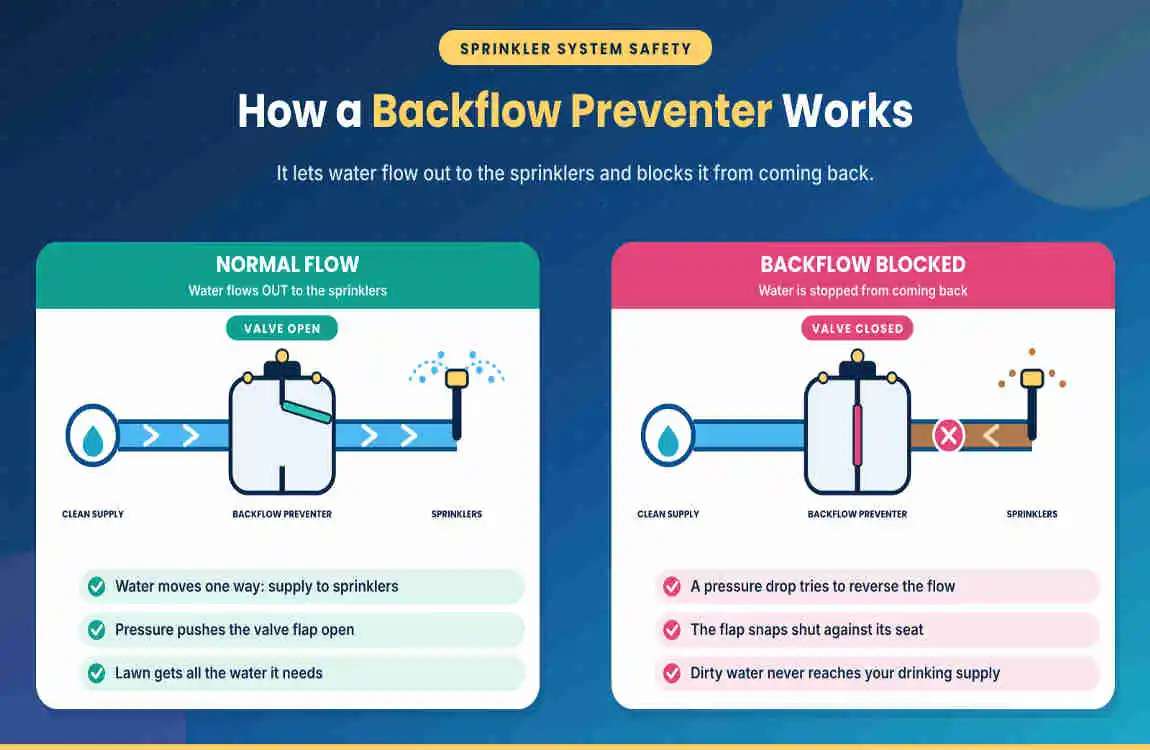
Washington’s Department of Health advises that all irrigation piping should be considered a non-potable water system because of the actual or potential health hazard (Washington State Department of Health, Lawn Irrigation and Backflow Prevention). Irrigation is kept on its own pipe run and protected with an approved backflow prevention assembly.
Colorado State University Extension explains the risk: any drop in pressure in the main line can cause back-siphonage of fertilizers, pesticides and other contaminants through sprinkler heads into the potable supply (Colorado State University Extension). Check your local requirements, because many areas also require annual testing of the device.
Greywater Reuse
Greywater is household wastewater other than toilet water. Virginia Tech Extension notes that the most complex reuse setups involve storage and treatment with a separate plumbing network, and that distribution pipes and reservoirs usually must be clearly identified as non-potable (Virginia Tech Cooperative Extension). Reclaimed water inside a home must flow through clearly marked purple pipe under both the Uniform and International Plumbing Codes (ARCHITECT Magazine).
A West Virginia University technical overview describes reuse for toilet flushing as requiring two plumbing loops: one potable loop for taps with human contact, and a second for non-potable use (West Virginia University ACTAT). It is also cheaper to plan during new construction: the Washington State Department of Health says re-plumbing an existing building can be expensive and impractical (Washington State Department of Health). Rules differ by state, since there is no national greywater policy (Green Building Advisor).
Rainwater Harvesting
Collected rainwater used indoors for things like toilet flushing is also non-potable. Virginia’s rules require separation between potable and non-potable distribution systems through color-coded, labeled piping and cross-connection control (Virginia Administrative Code, 12VAC5-635-240). The IAPMO’s code history for rainwater catchment shows the plumbing industry now has standardized tools for safe use of rainwater (IAPMO).
Radiant Floor and Hydronic Heating
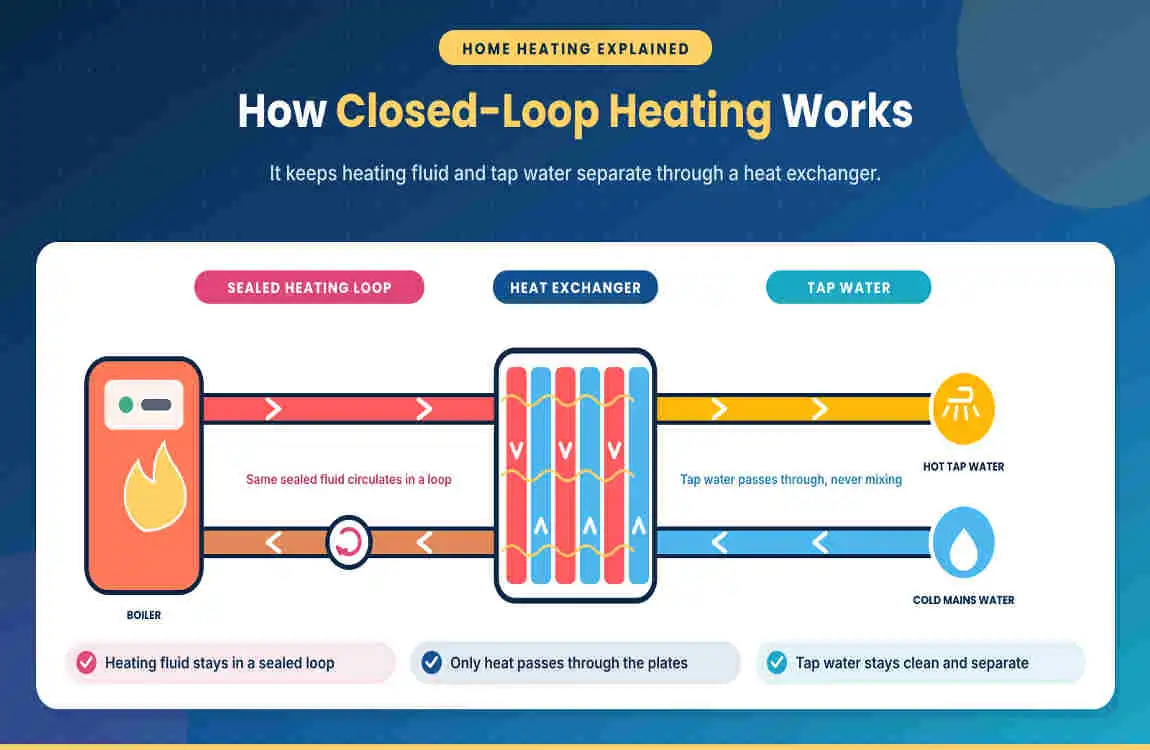
Caleffi, a leading hydronic equipment maker, states that the vast majority of modern hydronic heating systems are closed-loop (Caleffi Hydronic Solutions). The Plastics Pipe Institute warns that combining hydronic and potable water can create health and safety issues, partly because certain heating components are not certified for use with drinking water (Plastics Pipe Institute, Modern Hydronics). A heat exchanger lets heat pass between the loops without the water mixing.
Which Processes Do NOT Need Separate Plumbing?
Standard fixtures that deliver and drain water, such as sinks, showers, tubs, dishwashers and washing machines, connect to the normal supply and drain lines. Some devices around the home, including hand-held showerheads, hose bibbs, lawn irrigation and boilers, need extra protection against backflow even though they are not separate systems (East Alamosa Water & Sanitation District).
Homeowner Checklist
- Find out whether your local code allows multipurpose or requires standalone fire sprinkler piping.
- Confirm your irrigation system has an approved backflow assembly, and test it as required.
- Plan greywater or rainwater plumbing during construction or a major remodel, when it costs less.
- Use purple, labeled pipe for any non-potable line.
- Choose a closed-loop design with a heat exchanger for radiant heating.
- Hire a licensed plumber and get permits. Requirements vary by state and city.
Frequently Asked Questions
Which of the following processes requires separate plumbing?
Any process using non-drinking water or posing a contamination risk: standalone fire sprinklers, irrigation, greywater and rainwater reuse, and closed-loop radiant heating.
What is a cross-connection in plumbing?
A cross-connection is any physical link between two separate piping systems where water could flow from one into the other depending on pressure.
Why is purple pipe used for non-potable water?
Purple pipe flags reclaimed or non-potable lines so nobody mistakes them for drinking water. Both major U.S. plumbing codes call for clearly marked pipe for reused greywater indoors.
Does a home sprinkler system need its own pipes?
Not always. NFPA 13D allows standalone systems with separate piping as well as multipurpose systems that share piping with domestic fixtures. Local code decides.
Can I connect a lawn sprinkler system directly to my home plumbing?
Only through an approved backflow prevention assembly, because irrigation piping is treated as non-potable.
Sources
- PNNL Building America Solution Center: Indoor Sprinklers (Fire Protection)
- Washington State Department of Health: Sprinkler Systems
- Washington State Department of Health: Lawn Irrigation and Backflow Prevention
- Colorado State University Extension: Home Sprinkler Systems and Backflow Prevention Devices
- Virginia Tech Cooperative Extension: Greywater Reuse
- West Virginia University ACTAT: Greywater Systems Technical Overview
- Washington State Department of Health: What is Greywater?
- ARCHITECT Magazine: Product Review, Greywater Systems
- Green Building Advisor: An Introduction to Greywater Systems
- Virginia Administrative Code, 12VAC5-635 (definitions)
- Virginia Administrative Code, 12VAC5-635-240 (design and installation)
- IAPMO: Codes to Harvest Rainwater
- Caleffi: Hydronic Heating Fundamentals
- Plastics Pipe Institute: Mixing Hydronic Heating Water with Potable Water
- East Alamosa Water & Sanitation District: Backflow Prevention