Planning your dream kitchen? One detail that often gets overlooked is countertop width. It may seem small, but it affects how your kitchen looks, feels, and works every day.
If you have ever asked, “How wide is a kitchen countertop?” you are already thinking in the right direction. The answer is not one-size-fits-all. It depends on your kitchen layout, your cooking habits, and the style you want.
| Kitchen Countertop Topic | Quick Details |
|---|---|
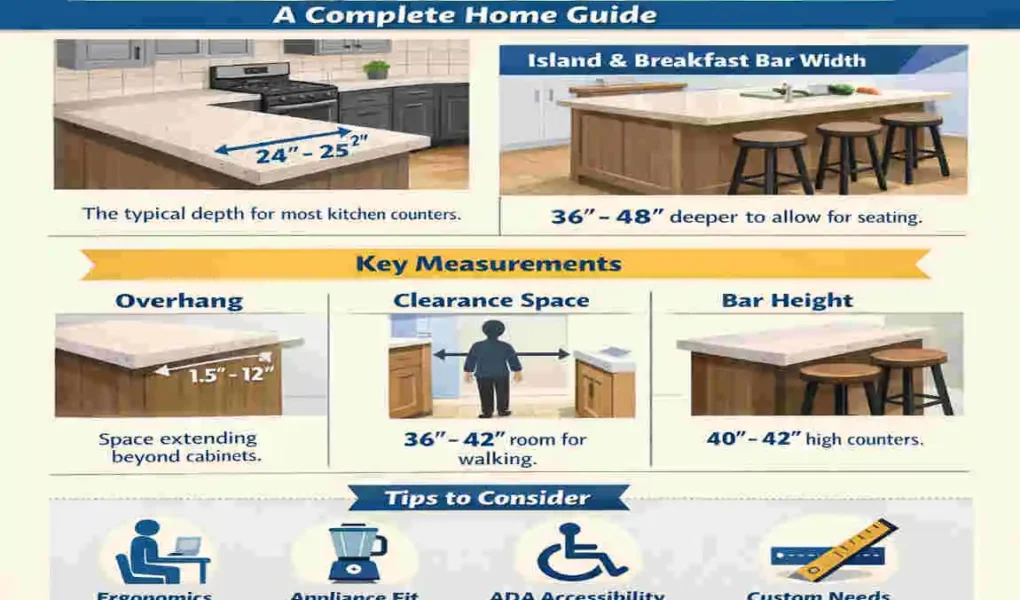
| Standard Countertop Width | Most kitchen countertops are about 24 inches deep from wall to edge |
| Kitchen Island Width | Islands can range from 24–48+ inches depending on layout and seating |
| Counter Height Standard | Typical countertop height is around 36 inches |
| Narrow Countertops | Compact kitchens may use counters under 24 inches deep |
| Wide Countertops | Larger kitchens may include extra-deep prep or baking stations |
| Overhang for Seating | Breakfast bars often include a 10–15 inch overhang for legroom |
| Material Impact | Granite, quartz, wood, and laminate can affect edge thickness and design |
Why Kitchen Countertop Width Matters
Comfort and daily use
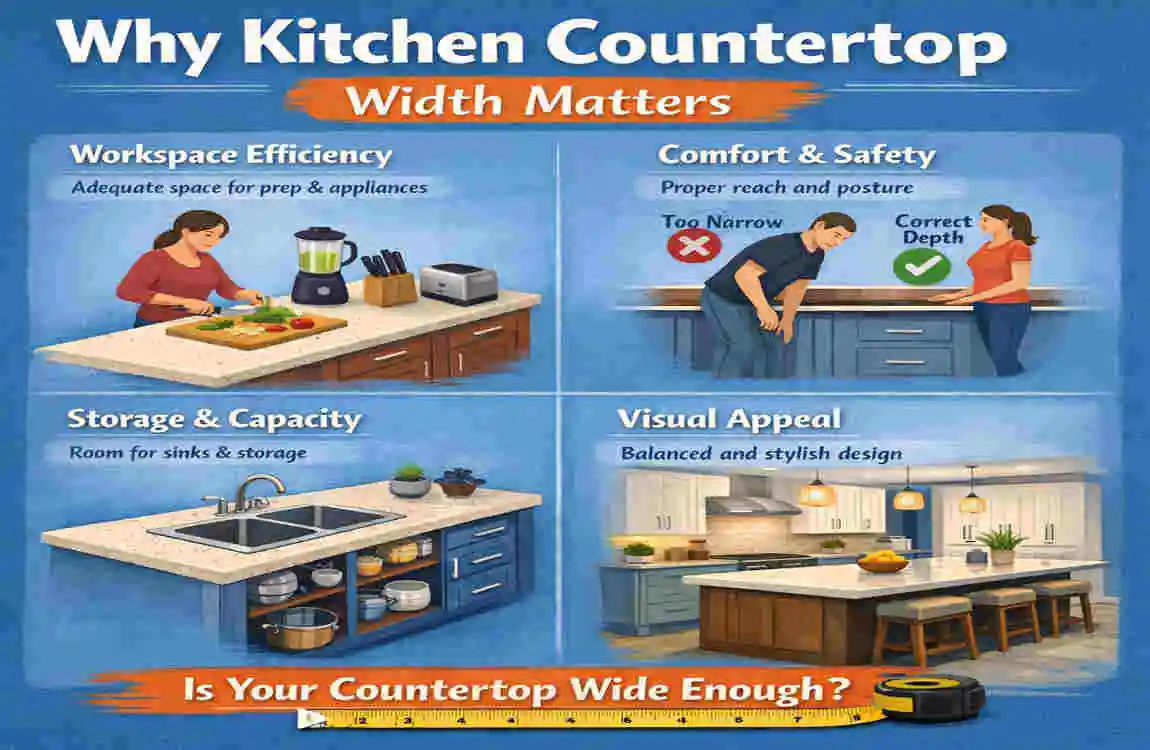
Countertop width affects how easy it is to cook, chop, mix, and clean. If the surface is too narrow, you may feel crowded. If it is too wide, you may have to reach too far across the counter.
That is why asking how wide a kitchen countertop is matters more than people think. A good width helps you work comfortably without stretching or squeezing into a small space.
Better use of space
Every kitchen has a different layout. Some are small and compact. Others are large and open. The right countertop width helps you use the space wisely without wasting room.
A nicer overall look
Countertops also shape the kitchen’s style. A balanced width makes cabinets, backsplashes, and appliances look well-planned. It creates a clean and finished appearance.
Standard Kitchen Countertop Widths
What is the standard width?
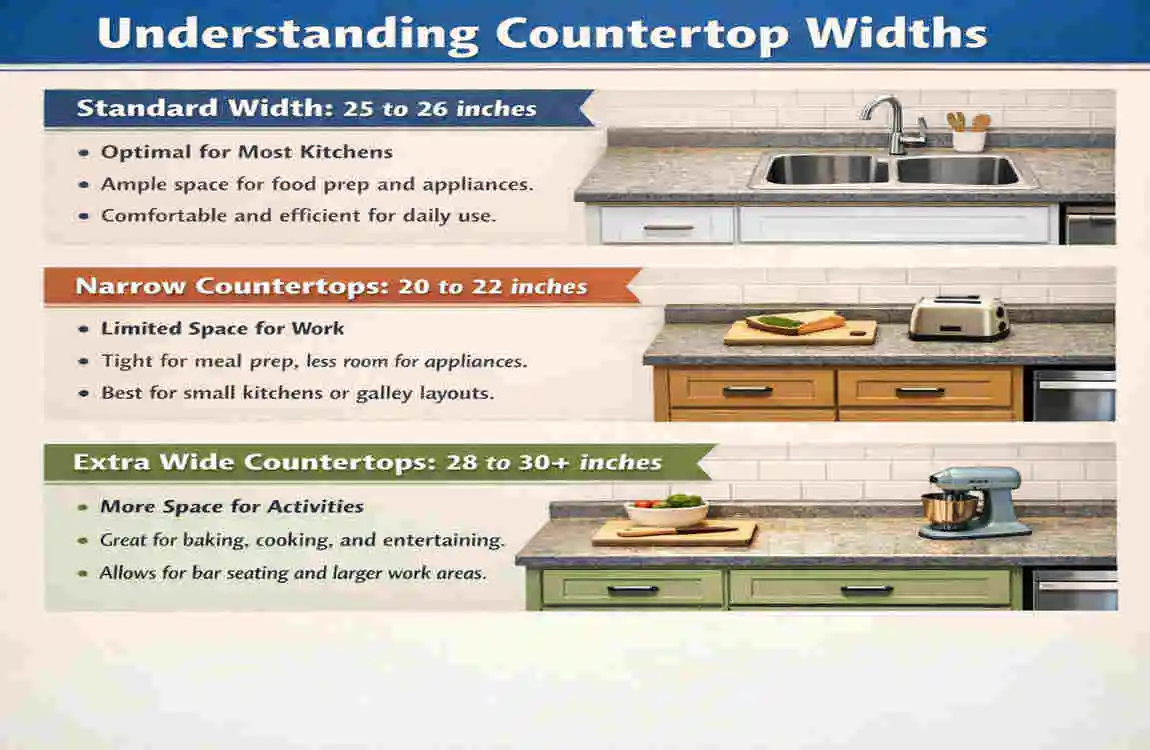
In many homes, standard kitchen countertops are about 24 inches deep, with a small overhang that can bring the total to around 25 to 26 inches. This is the most common setup because it works well with standard base cabinets.
If you are wondering how wide a kitchen countertop is in most homes, the answer is usually close to that range.
Regional differences
Countertop sizes can vary depending on where you live. Some countries and builders use slightly different cabinet and surface measurements. Still, the goal stays the same: enough space for prep, storage, and comfortable use.
Custom options
Custom countertops can be made wider or narrower than the standard size. This is useful when you have a unique layout or specific design goals.
Common countertop width comparison
Countertop Type: Typical Width: Best For
Standard countertop 24–26 inches , Everyday kitchens
Island countertop 30–36+ inches Prep, dining, and entertaining
Bar countertop 12–15 inches overhang or narrower top , Seating areas
Custom countertop varies, special layouts and needs
Factors That Influence Countertop Width
Kitchen layout
The shape of your kitchen has a big impact on countertop width.
- Galley kitchens often need narrower or more efficient surfaces.
- L-shaped kitchens give more flexibility.
- U-shaped kitchens may offer longer, wider work areas.
The more open the layout, the more room you usually have to adjust the size.
Appliance placement
Sinks, stoves, and refrigerators all affect how much counter space you can use. A sink cutout, for example, reduces usable surface area. A cooktop may also change the width you need around it for safe and easy cooking.
Personal preference
Your height and cooking style matter too. Taller users may prefer a surface that feels easier to reach. People who bake often may want more room for rolling dough and organizing tools.
Material choice
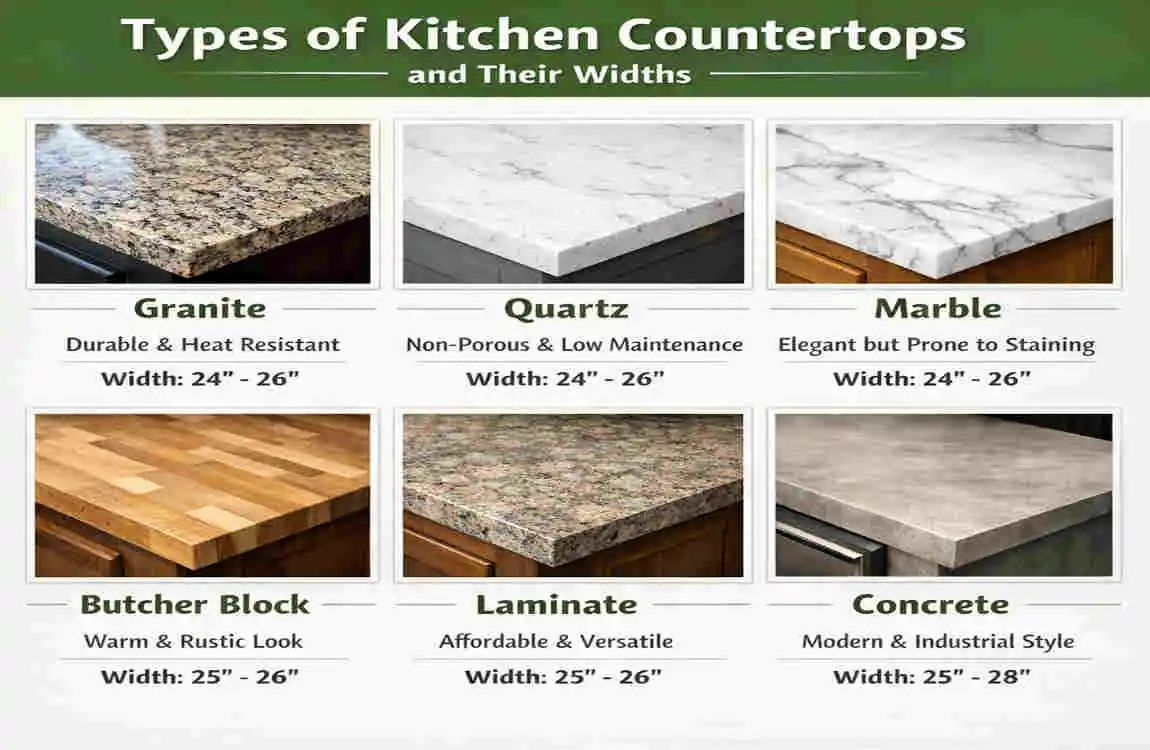
Some materials are easier to cut and customize than others. Granite, quartz, and marble can all be used in different widths, but the slab size and support requirements may affect the final design.
Types of Kitchen Countertops and Their Widths
Standard countertops
These are the most common. They usually sit on top of base cabinets and provide a practical work surface for daily cooking tasks.
Island countertops
Kitchen islands are often wider because they serve multiple purposes. They may be used for meal prep, storage, seating, and even casual dining. That is why island widths often start around 30 to 36 inches or more.
Bar countertops
Bar counters are usually narrower or designed with an overhang for stools. They are great for quick meals, drinks, and social spaces.
Custom countertops
Custom designs are perfect when standard sizes do not fit your kitchen. You can choose the exact width that matches your space and your lifestyle.
Quick visual tip
If you are comparing styles, use sketches or sample layouts to see how each width changes the room. It helps you picture the final result before installation.
How to Measure Your Kitchen Countertop Correctly
What you need
Before measuring, gather a few simple tools:
- Measuring tape
- Pencil
- Paper or notebook
Step-by-step process
First, measure from the wall to the front edge of the existing cabinet or planned surface. Then add any overhang if your design includes one. Be sure to check each section separately, especially in kitchens that are not perfectly square.
Mistakes to avoid
One common mistake is forgetting the cabinet size. Another is ignoring uneven walls, which are common in older homes. Even a small difference can affect the final fit.
To figure out how wide is a kitchen countertop in your home, careful measuring is essential. A small error now can lead to bigger problems during installation.
Customizing Countertop Widths for Your Needs
When to go wider
Wider countertops are helpful if you cook often, bake regularly, or need room for family meals. They also work well in large kitchens where extra surface space will not make the room feel crowded.
When to go narrower
Smaller kitchens often benefit from slimmer countertops. A narrower surface can free up walking space and help the room feel less tight.
Design balance
Try to balance countertop width with cabinets, backsplash height, and appliance size. When everything works together, the kitchen feels coordinated and comfortable.
Cost matters
Custom widths can raise the price because they may require extra material, special cutting, or more complex installation. Still, the extra cost may be worth it if the result better fits your daily routine.
How Countertop Width Impacts Kitchen Functionality
Better workflow
The right countertop width supports the kitchen work triangle: the movement between sink, stove, and refrigerator. When the surface fits well, cooking feels smoother and less stressful.
More storage potential
Wider countertops can also mean more room beneath them for cabinets and drawers. That gives you better storage and helps keep the kitchen tidy.
Easier entertaining
If you enjoy hosting, a wider island can double as a serving area or casual dining spot. This makes your kitchen more social and flexible.
Pros and Cons of Different Countertop Widths
Standard widths
Pros:
- Easy to find
- Cost-effective
- Works in many kitchens
Cons:
- Not always the best fit for unique layouts
Wider countertops
Pros:
- More prep space
- Great for families and entertaining
Cons:
- Higher cost
- Needs more room
Narrow countertops
Pros:
- Good for small kitchens
- Helps save space
Cons:
- Less room for cooking and storage
FAQs About Kitchen Countertop Widths
How wide is a kitchen countertop in a small kitchen?
Usually, it is still around 24 inches deep, but some small kitchens use narrower custom sizes to save space.
Can I customize my countertop width?
Yes. Custom countertop sizes are common and useful when standard measurements do not fit your needs.
What is the ideal width for a kitchen island?
Many islands use 30 to 36 inches or more, depending on whether you want prep space, seating, or both.