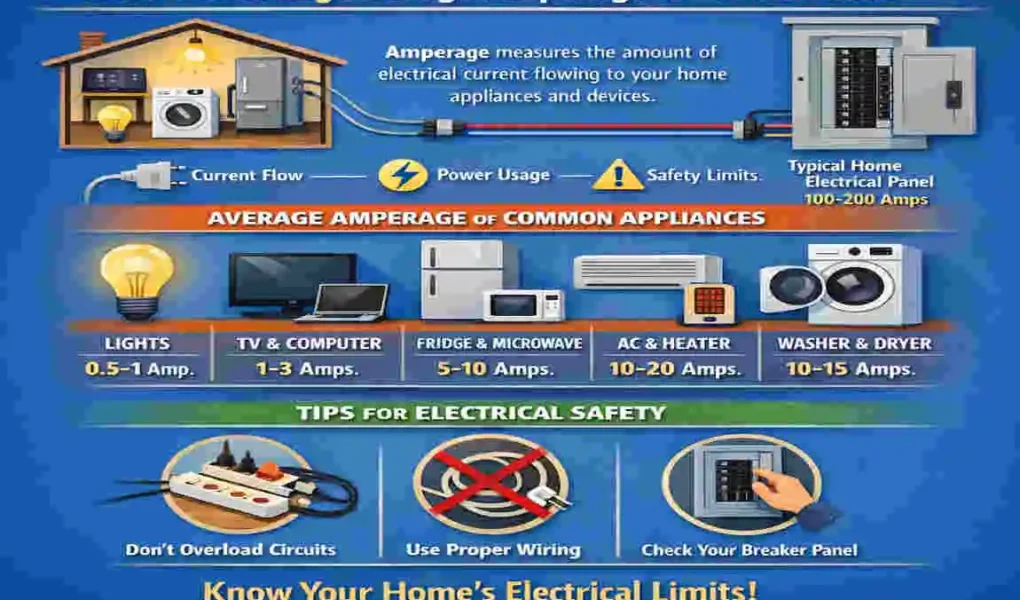
Household electrical amperage is the amount of electrical current that your home’s wiring can safely carry. Knowing this number helps you plan for new appliances, avoid overloads, and understand whether your system can handle future upgrades.
| Electrical Service | Typical Home Use |
|---|---|
| 60 amps | Older or very small homes |
| 100 amps | Smaller homes with basic electrical needs |
| 150 amps | Moderate electrical demand |
| 200 amps | Common for many modern homes |
| 400 amps | Large homes with high electrical demand |
What Is the Average Amperage of a House?
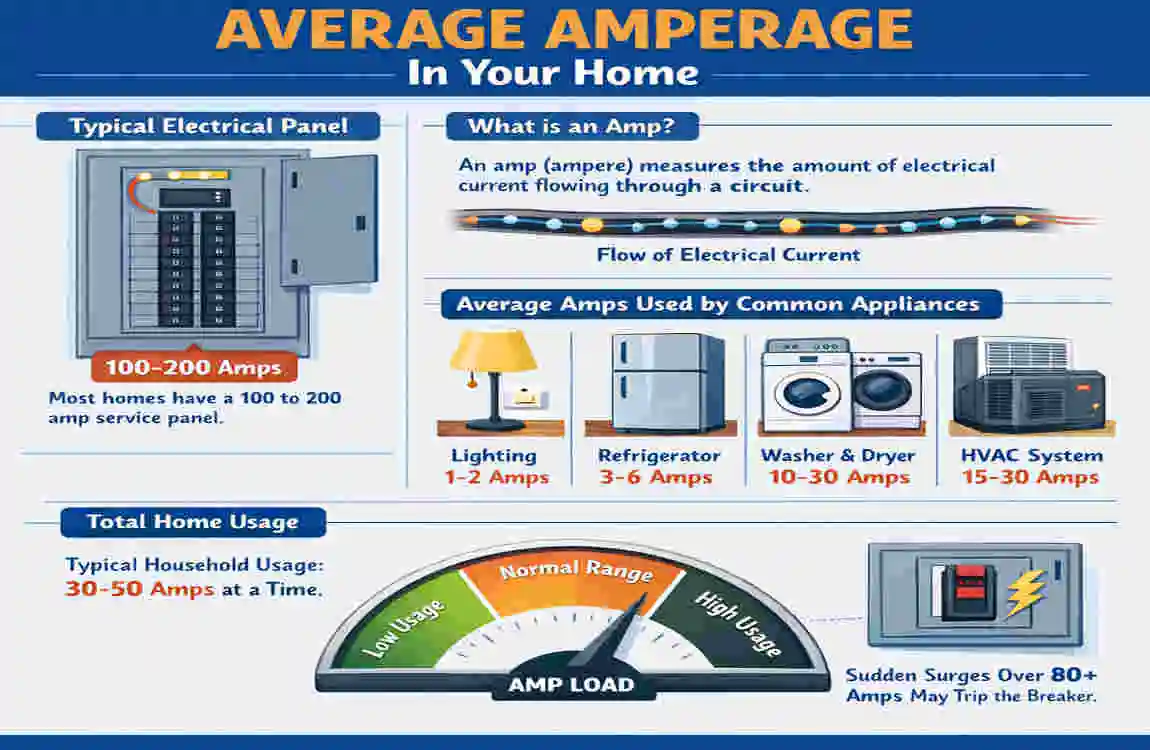
Most newer homes have 100‑amp, 150‑amp, or 200‑amp service. Older houses might still have a 60‑amp or 100‑amp panel. Remember, the panel rating tells you the maximum current the service can supply—not how many amps you constantly use.
What Does Amperage Mean?
Amperage (amps) measures the flow of electric current, like water flowing through a pipe. Higher amps mean more electricity is moving at that moment.
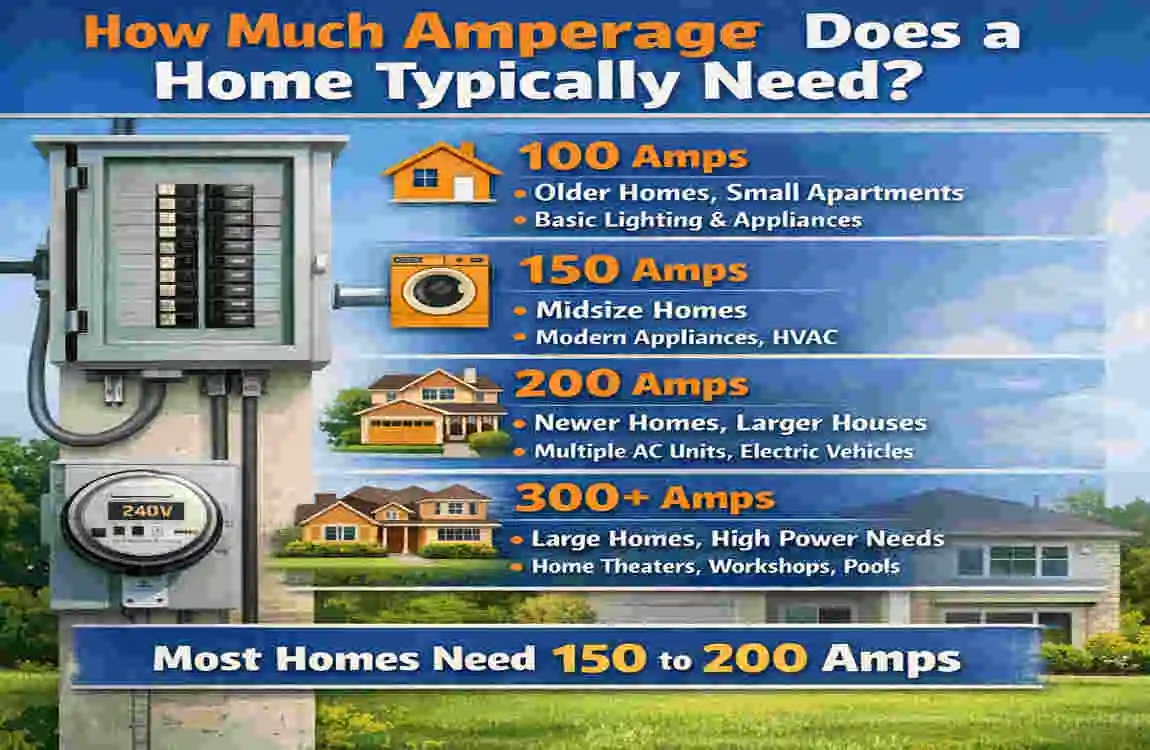
Typical Residential Service Sizes
- 60 amps – Very small or older homes.
- 100 amps – Common in older or modest‑size houses.
- 150 amps – Medium-size homes with several major appliances.
- 200 amps – Standard for most modern homes.
- 400 amps – Large properties or homes with very high demand.
Amperage vs. Electricity Usage
Your service size is a ceiling, not a daily reading. You might draw only 20–30 amps on a typical day, but the panel must be ready for short spikes when several heavy loads run at once.
How Much Amperage Does a Home Typically Need?
The required amperage depends on the number and type of devices you use.
Common Household Appliances
- Refrigerators, ovens, and microwaves draw a few amps each.
- Air conditioners and electric water heaters can pull 20–30 amps when they run.
- Laundry machines typically need 15–20 amps.
Peak Electrical Demand
When a dryer, HVAC, and kitchen appliances operate at the same time, the current demand can briefly climb toward the panel’s limit.
Why Home Size Matters
Larger homes usually have more rooms, more lighting circuits, and more outlets, which often means a higher service rating. However, a small house packed with high‑power equipment may need the same amperage as a larger, low‑usage home.
How to Check Your Home’s Electrical Amperage
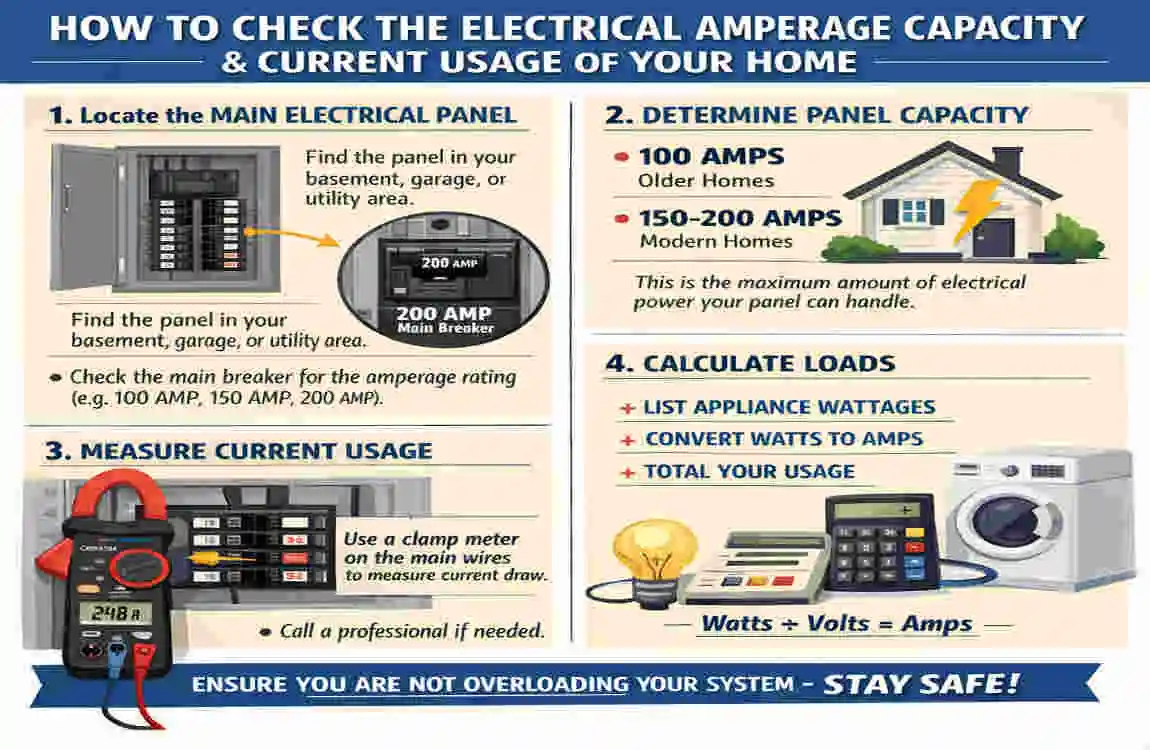
You don’t need to open the panel to get a good idea of your service size.
Check the Main Breaker
The main breaker is labelled with a number—100 A, 150 A, etc. That number is your service rating.
Look at the Electrical Panel Label
Inside the panel door, there’s often a label that lists the service size, voltage, and phase.
When to Contact an Electrician
If the markings are faded, missing, or you plan to add major loads, call a licensed electrician. Working on live panels is dangerous.
When Does a House Need More Amperage?
Your current service may feel stretched when you add new, power‑intensive equipment.
Adding Major Appliances
A new electric stove or a second air‑conditioning unit can exceed the capacity of a 100‑amp panel.
Installing an EV Charger
Charging an electric vehicle often requires 30 amps or more, which may push a modest service beyond its limit.
Electric Heating and Cooling
Heat pumps, electric furnaces, or whole‑home electric heating can significantly raise demand.
Older Electrical Systems
Homes built before the 1970s often have 60- or 80-amp service, which may be inadequate for today’s gadget-filled lifestyle.
Average House Amperage: Safety, Capacity, and FAQs
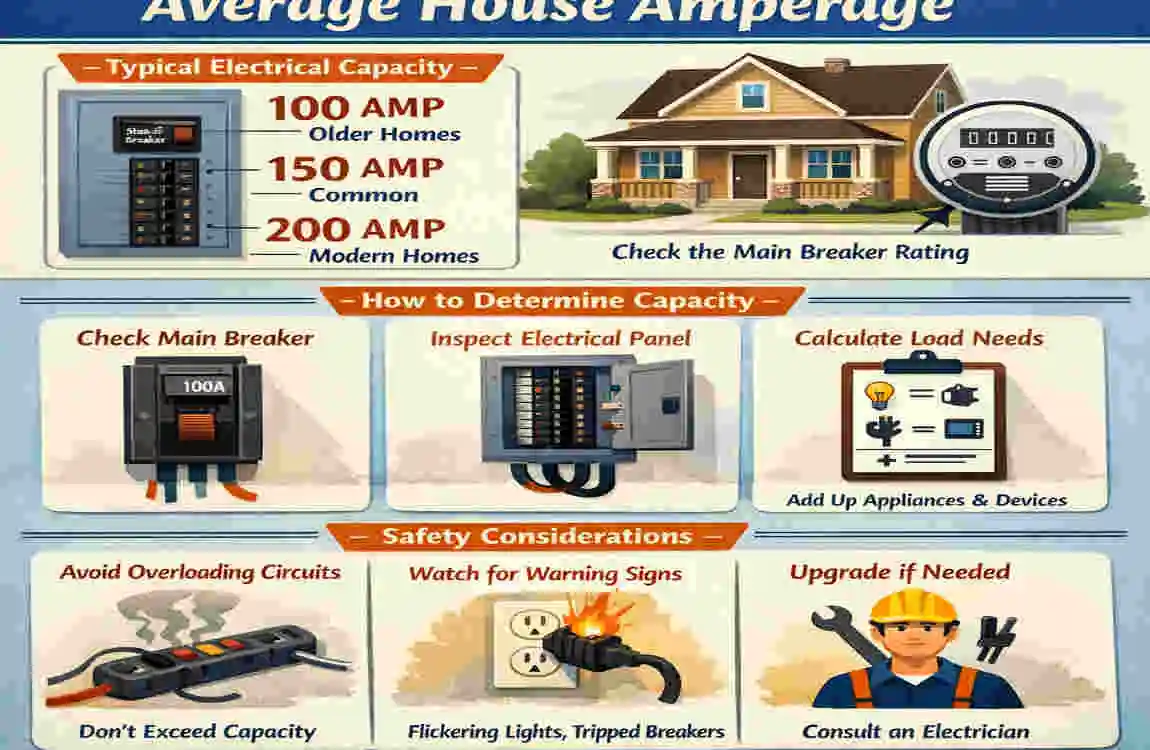
No single “average” fits every home. The right amperage matches the load you put on the system and follows local electrical codes.
Quick Comparison Table
Home Electrical Service General Use
60 amps Older or very small homes
100 amps Smaller/older residential systems
150 amps Medium electrical demand
200 amps Common modern residential service
400 amps Large homes or unusually high electrical demand
FAQ
What is the average amperage of a house?
Residential service typically falls between 100 amps and 200 amps, but the exact number depends on home size, age, and electrical load.
Is 100 amps enough for a house?
It can be sufficient for smaller or older homes with modest appliance usage. Larger or more tech-heavy homes often need 150 amps or more.
Is 200 amps a lot for a house?
A 200-amp service is common for modern homes and provides plenty of headroom for most appliances, but it doesn’t mean the house constantly uses 200 amps.
How many amps does a house use at one time?
Real-time usage varies; a typical household might run between 20 amps and 60 amps, spiking higher when many large appliances run together.
How do I know how many amps my house has?
Check the main breaker or the panel label for a rating. When in doubt, call a licensed electrician.
Can too many appliances overload a house?
Yes—if the combined demand exceeds the panel’s rating, breakers will trip to protect the wiring. Proper circuit sizing prevents this.