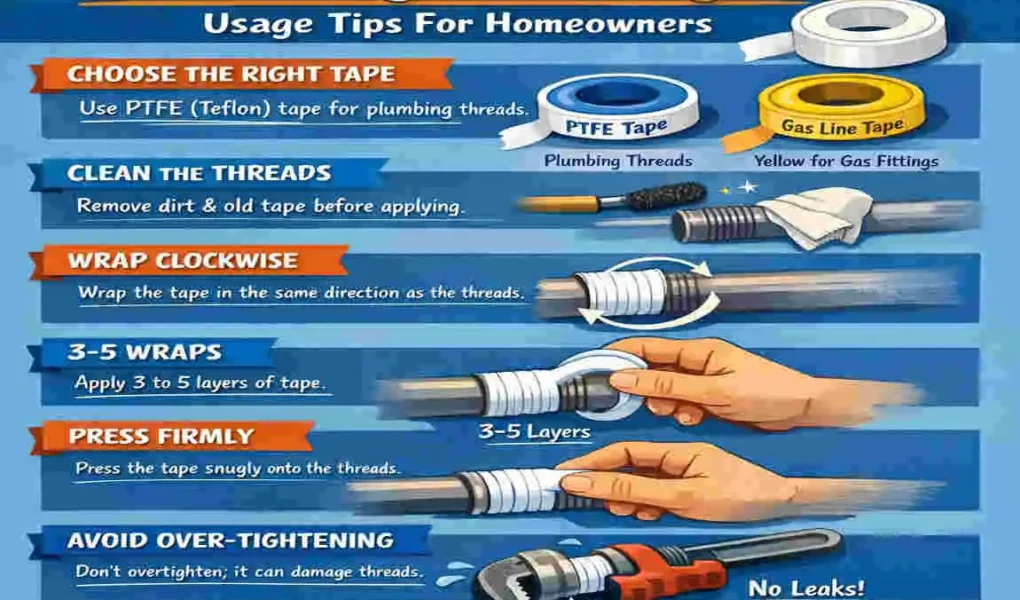
Below is a clear, step‑by‑step guide that walks you through everything you need to know about using plumbing (PTFE) tape. The language is simple, the tone is friendly, and each section is broken into bite-sized paragraphs so you can follow along easily.
| Plumbing Tape Tip | Quick Guidance |
|---|---|
| How Much to Use | Use a few snug, even wraps around the threads. |
| Wrapping Direction | Wrap in the same direction the fitting will tighten. |
| Thread Preparation | Clean and dry the threads before applying tape. |
| Tape Placement | Keep tape on the threads and away from the pipe opening. |
| Avoid Overuse | Too much tape can interfere with proper thread engagement. |
| Check for Leaks | Slowly turn the water on and inspect the connection. |
Understanding Plumbing Tape and Its Purpose
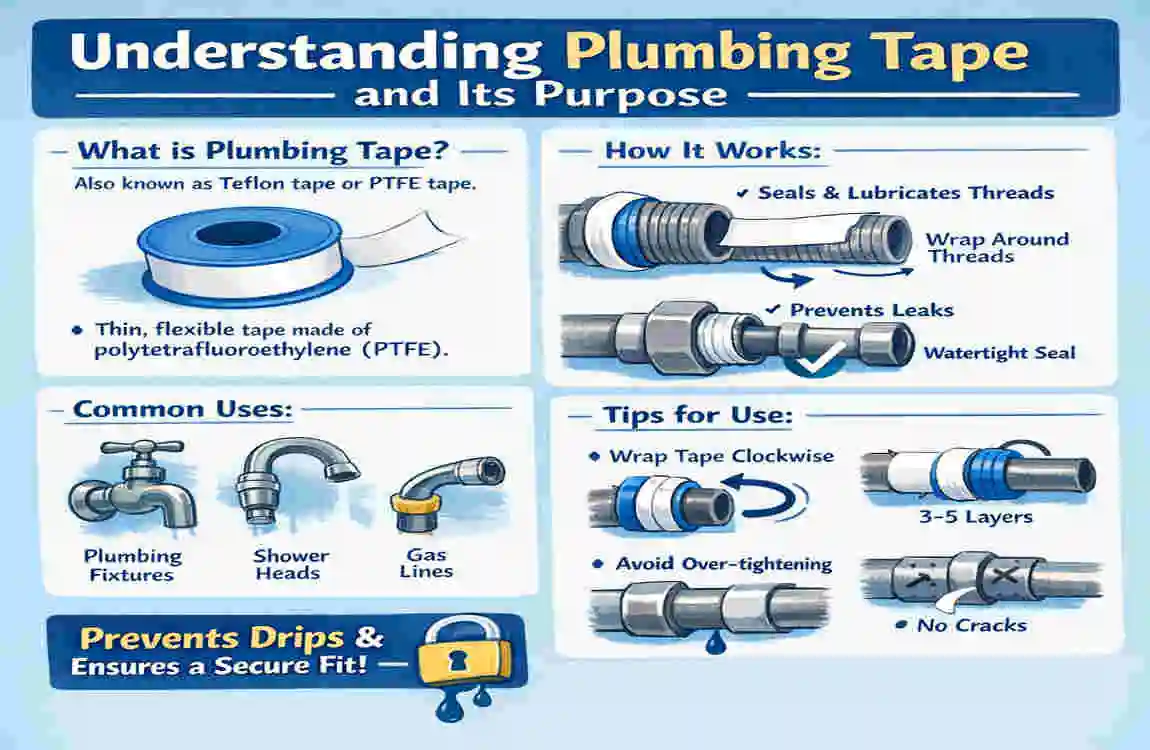
Plumbing tape—often called PTFE tape or Teflon tape—is a thin white strip that wraps around a pipe’s threads. Its main job is to fill the tiny gaps between threaded surfaces, creating a leak‑free seal when the joint is tightened.
What Is Plumbing Tape?
- Made from polytetrafluoroethylene (PTFE), a material that’s slippery, chemically inert, and water-resistant.
- It’s flexible enough to conform to thread shapes but strong enough to stay in place under pressure.
Where Is Plumbing Tape Used?
- Threaded shower arms and faucet connections.
- Shut‑off valves for sinks and toilets.
- Water‑supply lines that join copper, steel, or PVC fittings.
Plumbing Tape vs. Thread Sealant
Feature PTFE Tape Liquid/Paste Sealant
Form Thin strip, wraps on threads Paste or gel applied with a brush
Clean‑up Easy to peel off Can be messy, may need a solvent
Best for Standard water‑supply threads Gas lines or high‑temperature applications
Re‑use Not recommended; replace each time Usually not reused either
Both work well when used on the right type of joint, so pick the one the manufacturer recommends.
How Much House Plumbing Tape to Use
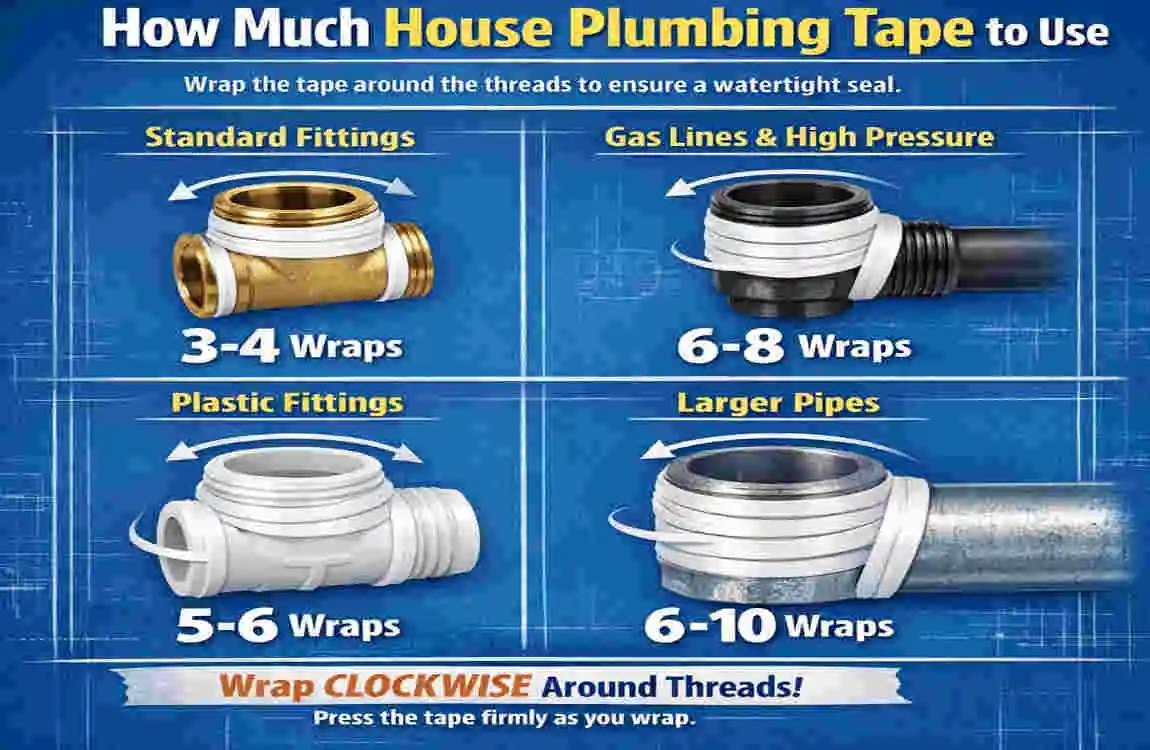
The phrase how much house plumbing tape to use often worries DIYers. The answer isn’t a precise number of inches; it’s about covering the threads evenly without building a bulky layer.
How Many Wraps Are Usually Needed?
- Aim for three to five smooth, overlapping turns around the threaded portion.
- Each wrap should sit snugly against the previous one, filling the gaps without stacking thickly.
How Tight Should the Tape Be?
- Hold the tape gently as you wrap; you want it to stay in place without stretching or wrinkling.
- If the tape starts to bunch up, undo a turn and smooth it out before continuing.
Does Pipe Size Change Tape Usage?
- Smaller fittings (½‑inch or less) need fewer wraps—often just three.
- Larger fittings (¾‑inch and up) may benefit from an extra turn or two for full coverage.
- The goal is always the same: a thin, uniform barrier that fills the thread crevices.
How to Apply Plumbing Tape Correctly
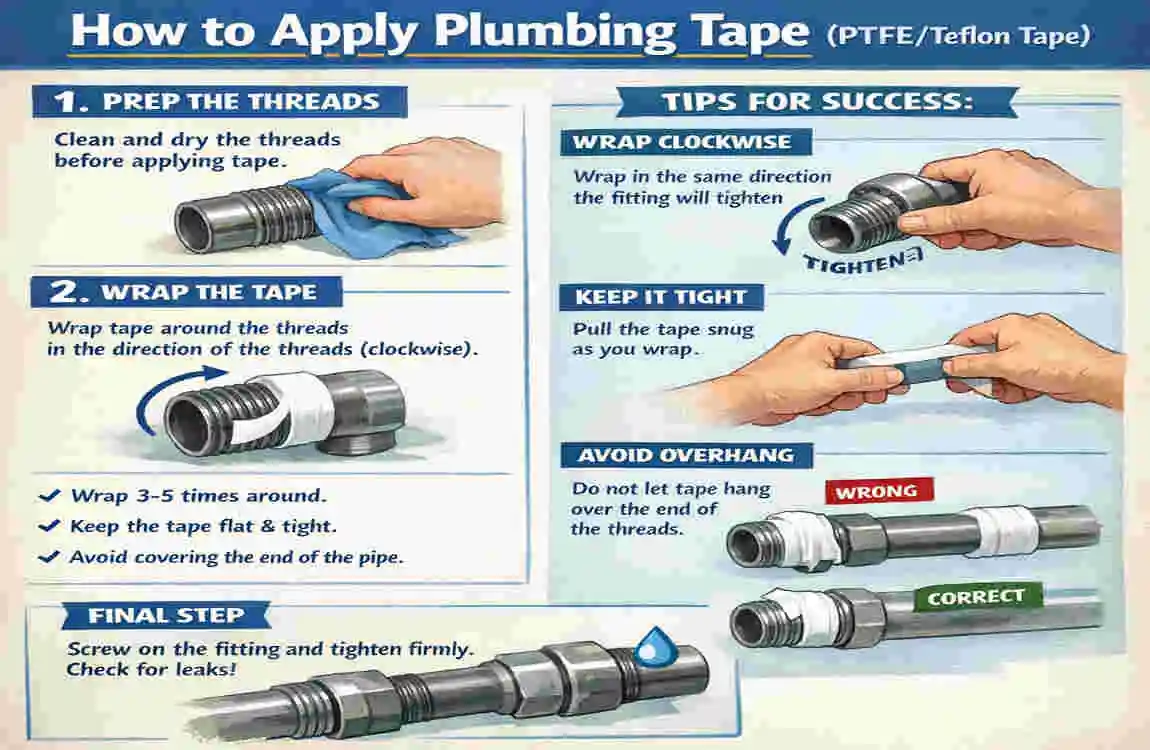
Follow these steps for a solid seal every time.
Clean the Threads First
- Wipe away old tape, rust, or debris with a rag.
- If the threads are corroded, use a wire brush to smooth them out.
Wrap in the Correct Direction
- Turn the fitting clockwise (the direction you’ll tighten it) and wrap the tape the same way.
- This prevents the tape from unravelling as you screw the parts together.
Keep Tape Off the Pipe Opening
- Stop wrapping just before the pipe’s end—don’t cover the opening where water flows.
- Covering the opening can restrict flow and cause back‑pressure problems.
Tighten the Connection Carefully
- Start with a hand‑tight fit, then use an adjustable wrench for a final quarter‑turn.
- Avoid over‑tightening; too much force can strip the threads or crush the tape.
Common Plumbing Tape Mistakes to Avoid
Even a tiny slip can turn a perfect joint into a slow leak. Here’s what to watch out for.
Using Too Much Tape
- A thick pile of tape can prevent the threads from fully engaging, leading to leaks or a loose fitting.
Using Too Little Tape
- Skipping wraps leaves gaps that let water seep through.
Wrapping the Wrong Direction
- If you wrap opposite the tightening direction, the tape will unwrap as you tighten, losing its seal.
Using Tape on the Wrong Connection
- Some joints rely on rubber washers or O‑rings for sealing; PTFE tape isn’t needed and can actually impede the seal.
Tips for Reliable Home Plumbing Repairs
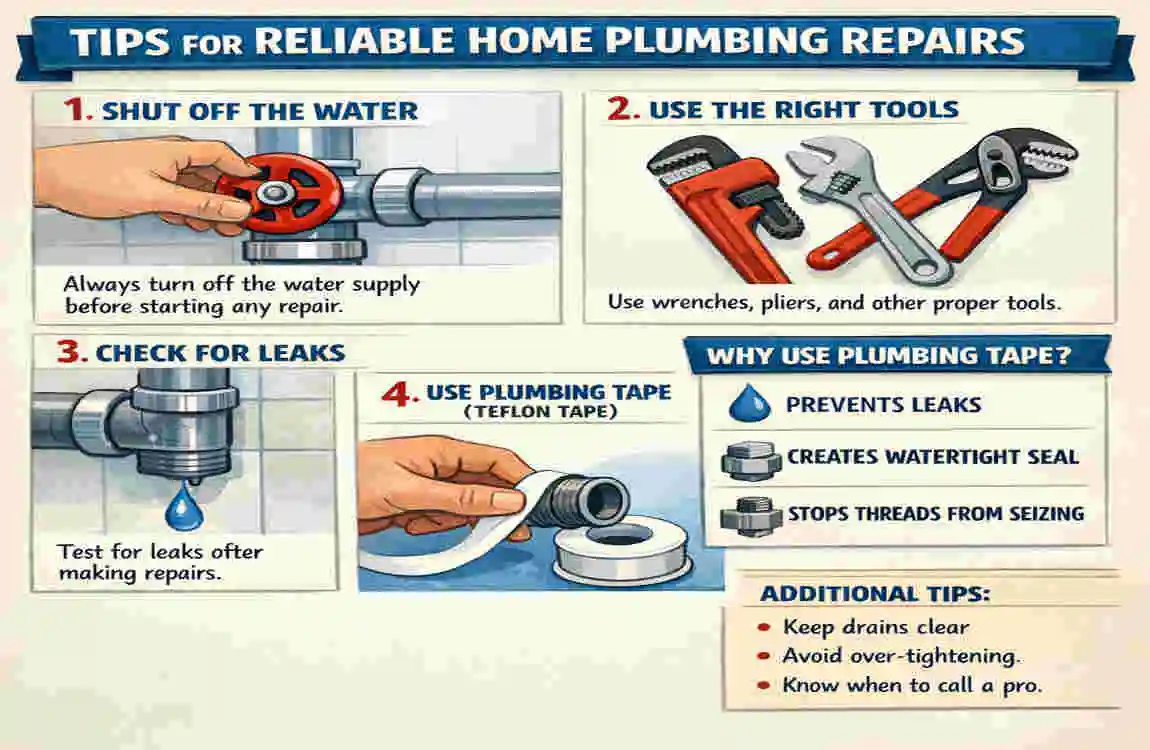
These quick habits keep your projects leak‑free and stress‑free.
Choose the Right PTFE Tape
- Look for tape labelled “Water‑Safe” for standard supply lines.
- For gas lines or high‑temperature applications, pick a specialty tape that’s rated for those conditions.
Inspect Threads Before Installation
- Run a fingertip along the threads; they should feel smooth and free of burrs.
- If you spot damage, replace the fitting instead of taping over it.
Test for Leaks
- After reconnecting, turn the water back on slowly and watch the joint for drips.
- A short dry period, followed by slow pressurization, helps catch hidden leaks.
Know When to Call a Plumber
- Persistent leaks after multiple attempts.
- Corroded or cracked pipes hidden behind walls.
- Any gas‑line work or high‑pressure systems.
Frequently Asked Questions About Plumbing Tape
How much house plumbing tape to use on a fitting?
A few snug, overlapping turns—usually three to five—are enough.
Can you use too much plumbing tape?
Yes. Too much tape blocks thread engagement and can cause leaks.
Which direction should you wrap plumbing tape?
Wrap in the same direction you’ll tighten the fitting (clockwise).
Should plumbing tape cover the end of the pipe?
No. Keep the tape on the threads only, away from the pipe opening.
Can plumbing tape stop every plumbing leak?
No. It works only on threaded connections meant to be sealed with tape. Cracked pipes, bad washers, or damaged threads need other solutions.
Is plumbing tape better than pipe thread sealant?
Neither is universally better; choose based on the manufacturer’s recommendation and the joint type.
Can plumbing tape be reused?
Better to remove old tape, clean the threads, and apply fresh tape each time you disconnect and reconnect.