A metal building roof can be a smart choice for many homes, garages, workshops, and home additions. People like it because it lasts a long time, looks modern, and often costs less than other roofing options. But there is one problem many owners notice quickly: metal roofs can get very hot in summer and very cold in winter.
| Reason | Why It Matters for Your Home |
|---|---|
| Energy Efficiency | Metal roofs have poor thermal insulation; insulation reduces heat gain in summer and heat loss in winter, lowering heating/AC bills |
| Temperature Comfort | Creates a stable indoor environment by preventing extreme hot/cold swings from the metal conducting temperature |
| Condensation & Mold Prevention | Without insulation, water condenses on metal panels causing humidity, mildew, mold, and structural rot |
| Noise Reduction | Insulation absorbs sound from rain, hail, and outside noise, making metal roofs quiet inside |
| Longevity & Property Value | Protects against moisture damage and wear, maintaining roof quality and increasing home resale value |
| Tax Credits | Some jurisdictions offer energy tax credits (e.g., $500) for installing energy-saving roof insulation |
That is where insulation matters. If you are learning how to insulate a metal building roof, you are already taking the right step toward a more comfortable, energy-efficient space. Insulation helps keep indoor temperatures steady, lowers energy bills, reduces noise, and protects the roof from moisture damage.
What Is a Metal Building Roof?
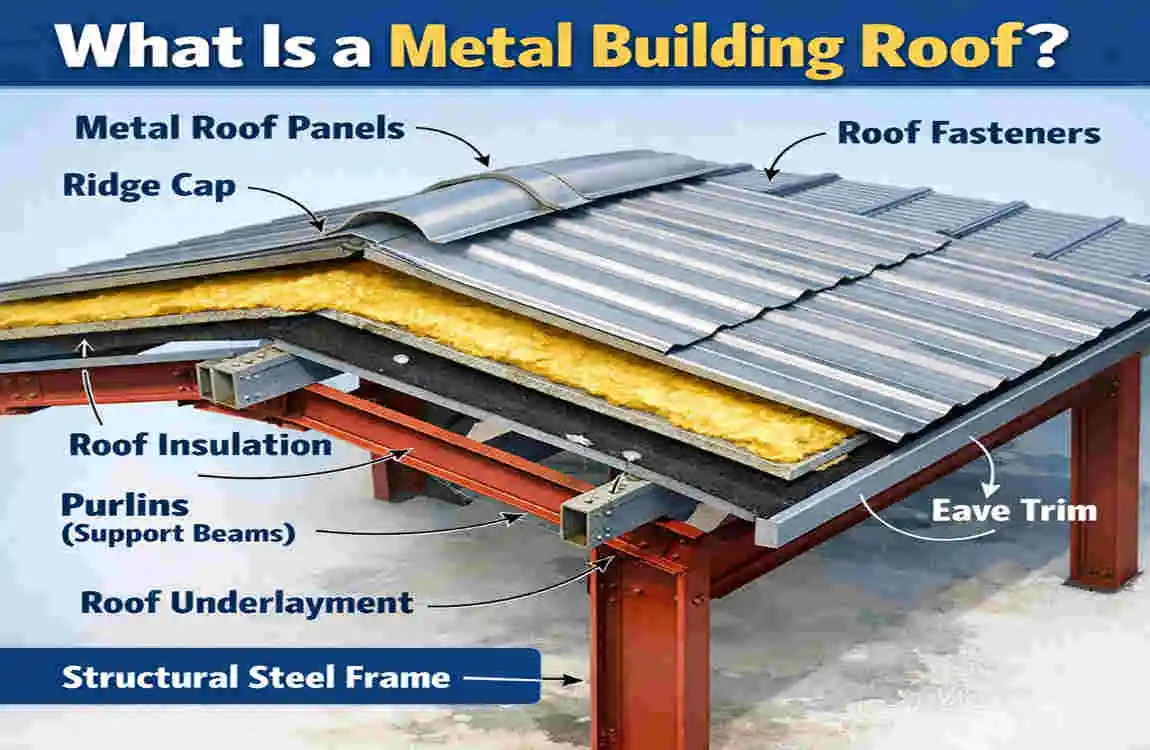
Basic structure
A metal building roof is made from metal panels such as steel or aluminum. These panels are usually fastened to a frame with screws, clips, or other connectors. Common styles include corrugated panels, standing seam roofs, and ribbed panels.
Common uses in homes
Metal roofs are often used on:
- Garages
- Workshops
- Home extensions
- Storage spaces
- Modern homes
Main features
Metal roofs are strong and durable, but they also move heat quickly. That means they can heat up fast in summer and lose warmth quickly in winter. They can also be noisy during rain or hail. Another issue is expansion and contraction, since metal changes shape slightly when temperatures shift.
Why Insulating a Metal Roof Is Important
Temperature control
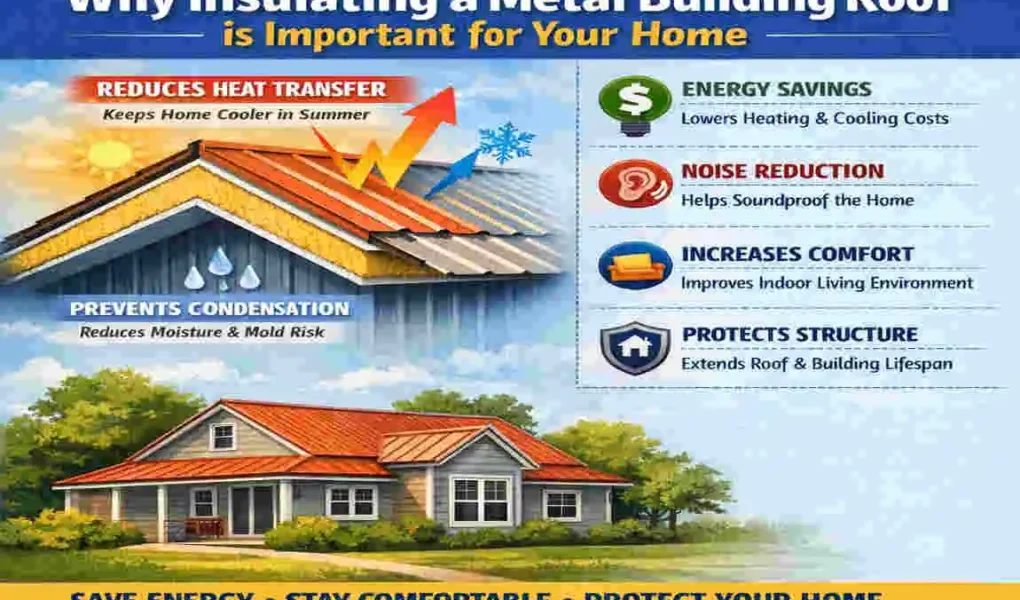
Without insulation, a metal roof can make a building feel too hot or too cold. In summer, heat from the roof rises, raising indoor temperatures. In winter, warm air escapes more easily. Insulation slows heat transfer, helping keep your space more comfortable.
Energy savings
When the roof is insulated well, your heating and cooling system does not need to work as hard. That can lead to lower electricity bills and less wear on your HVAC system. Over time, this can save a lot of money.
Condensation control
A major issue with metal roofs is condensation. When warm, moist air meets a cooler roof surface, water droplets can form beneath it. This can lead to rust, mold, and damage. Good insulation helps reduce this problem, especially when combined with a proper vapor barrier.
Noise reduction
If you have ever heard rain hitting a bare metal roof, you know how loud it can be. Insulation helps soften that sound. This makes the building much more pleasant to live or work in.
Longer roof life
Insulation also helps protect the roof from stress caused by big temperature changes. Less stress means fewer problems with wear, corrosion, and panel movement over time.
Common Problems Without Insulation
Overheating in summer
A metal roof without insulation can act like a heat collector. The indoor space may feel like a greenhouse. This is especially true in direct sunlight.
Heat loss in winter
In cold weather, the building may feel drafty and hard to warm. That means your heater runs longer and costs more.
Moisture and rust
When condensation builds up under the panels, metal can start to rust. Moisture can also damage framing and insulation materials if the roof is not set up properly.
Uncomfortable living conditions
Noise, temperature swings, and poor air comfort can make the space hard to enjoy. This is why many owners choose to insulate early rather than wait for problems to grow.
Best Methods: How to Insulate a Metal Building Roof
There is no single best choice for every roof. The right method depends on your climate, budget, and how the space is used. Here are the most common options.
Fiberglass insulation
Fiberglass is one of the most affordable choices. It is often placed between roof framing members. It helps slow heat movement and works well for many basic projects.
Pros: low cost, easy to find, simple for many DIY jobs
Cons: must be installed carefully, does not seal air gaps by itself
Spray foam insulation
Spray foam expands as it is applied, filling small gaps and sealing air leaks very well. It also helps with moisture control.
Pros: excellent air sealing, strong moisture protection, high performance
Cons: more expensive, usually better for professional installation
Rigid foam board insulation
Rigid foam boards offer strong insulation value in a thin layer. This is useful when you have limited space under the roof.
Pros: good insulation per inch, easy to cut and fit, lightweight
Cons: seams must be sealed well to avoid air leaks
Reflective foil insulation
This type reflects heat away from the building. It works especially well in hot climates and is often paired with an air gap for better results.
Pros: good for heat reflection, lightweight, useful in warm areas
Cons: less effective alone in cold climates
Insulated metal panels
These panels come with insulation already built in. They offer strong performance and a clean finish, but they usually cost more.
Pros: high efficiency, neat appearance, easy system design
Cons: higher upfront cost
Hybrid systems
Some roofs use a mix of materials, such as foam board plus reflective barrier. This can improve performance in both hot and cold weather.
Quick Comparison Table
Insulation TypeBest ForMain BenefitCost Level
Fiberglass Basic projects Affordable Low
Spray Foam Air sealing and moisture control Excellent sealing High
Rigid Foam Board Tight spaces High insulation value Medium
Reflective Foil Hot climates Reflects heat Low to Medium
Insulated Metal Panels New builds or upgrades Strong all-around performance High
Step-by-Step Guide: How to Insulate a Metal Building Roof
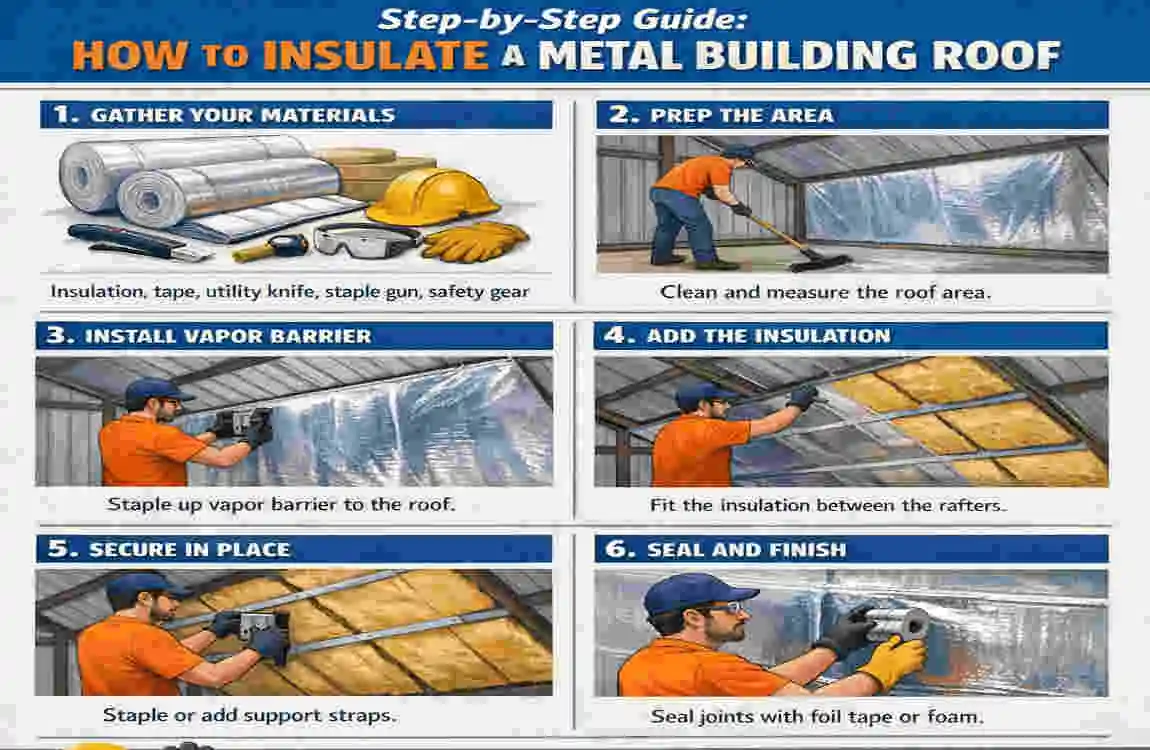
Plan first
Start by considering the roof type, the building’s condition, and your climate. A hot, dry area may need a different solution than a cold or humid one.
Choose the right material
Pick insulation based on your goals. If you want the best air seal, spray foam may be the best option. If you want a budget-friendly option, fiberglass or reflective foil may work well.
Clean and prepare the roof area
Remove dust, dirt, and debris. Make sure the structure is ready before you install anything.
Add a vapor barrier if needed
In humid areas, a vapour barrier can help prevent moisture from entering the roof system. This step is important for reducing condensation.
Install the insulation
Fit the material carefully between framing members or under the roof panels. Make sure it covers the space evenly.
Seal the joints and edges
This step is very important. Gaps can let air and moisture pass through, reducing the insulation’s value.
Finish the interior if needed
Some owners add drywall, panels, or another interior layer for a cleaner look and extra protection.
Check your work
Look for open gaps, loose areas, or places where air could escape. A careful final inspection can save problems later.
DIY Overview: What You Should Know
If you want to do the job yourself, keep the process simple and safe.
Safety comes first
Use gloves, eye protection, a mask if needed, and a stable ladder. Be careful around tools, sharp metal edges, and electrical parts.
Best DIY steps
- Clean the roof underside
- Install the vapor barrier if needed
- Place insulation between framing
- Seal all joints and edges
- Add the interior finish if planned
If the roof is large, complex, or difficult to access, hiring a professional may be the better option.
Cost of Insulating a Metal Roof
The cost depends on the material, roof size, and whether you do it yourself.
Basic cost guide
- Fiberglass: usually the cheapest
- Rigid foam board: mid-range
- Spray foam: more expensive, but very effective
DIY vs professional help
DIY can save labor costs, but only if you know how to install the material correctly. A poor installation can waste money and reduce performance. Professional work costs more upfront, but it can give you better results and fewer future problems.
Long-term savings
Good insulation often pays for itself through lower energy bills, fewer repairs, and better indoor comfort.
Factors to Consider Before You Insulate
Climate
Hot climates often benefit from reflective barriers. Cold climates may require thicker insulation and stronger air sealing. Humid areas need good moisture control.
Building use
A storage shed does not need the same insulation level as a living space. Think about how often the building is used and how comfortable it needs to be.
Roof design
Slope, ventilation, and framing all affect the insulation choice. Some roof designs are easier to insulate than others.
Budget
Choose a solution that balances cost and performance. The cheapest option is not always the best one in the long run.
Best Practices for Better Results
- Combine insulation with proper ventilation
- Use a vapor barrier in humid locations
- Seal all joints and edges carefully
- Inspect the roof regularly
- Choose materials with a good R-value for your climate
Common Mistakes to Avoid
- Skipping the vapor barrier
- Leaving gaps around edges
- Choosing the wrong insulation for the weather
- Ignoring ventilation
- Installing material too loosely or unevenly
Benefits Summary
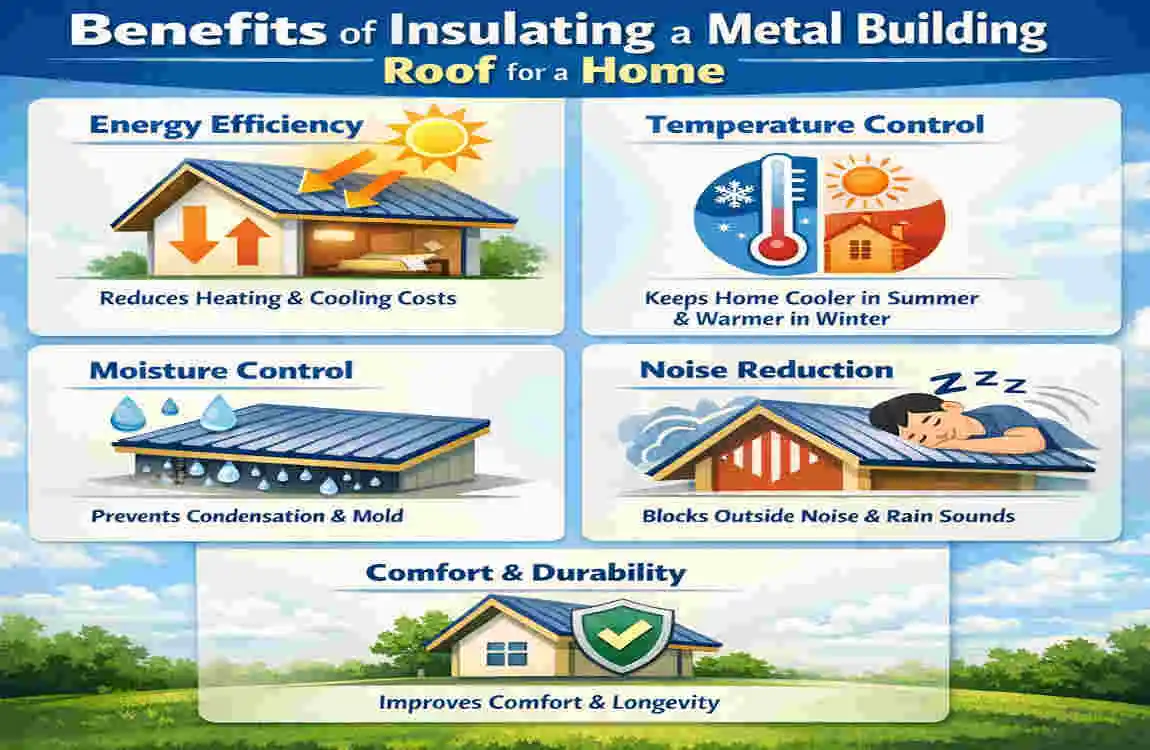
A well-insulated metal roof can give you:
- Better energy efficiency
- Lower utility bills
- Less noise from rain and hail
- Better moisture control
- A longer roof lifespan
- Higher comfort inside the building
FAQs
What is the best insulation for a metal building roof?
Spray foam is often the best for sealing air and moisture, but fibreglass or foam board may be a better option if you want a lower-cost option.
Can I insulate a metal roof myself?
Yes, you can if the roof is simple and you are comfortable with basic tools. For larger or more complex projects, professional help is safer.
Does insulation stop condensation completely?
Not always. It helps a lot, but proper ventilation and a vapor barrier are also important.
How long does insulation last?
Many insulation materials can last 20 to 30 years or more, depending on quality and installation.
Is insulating a metal roof worth it?
Yes. It improves comfort, saves energy, and helps protect the roof over time.