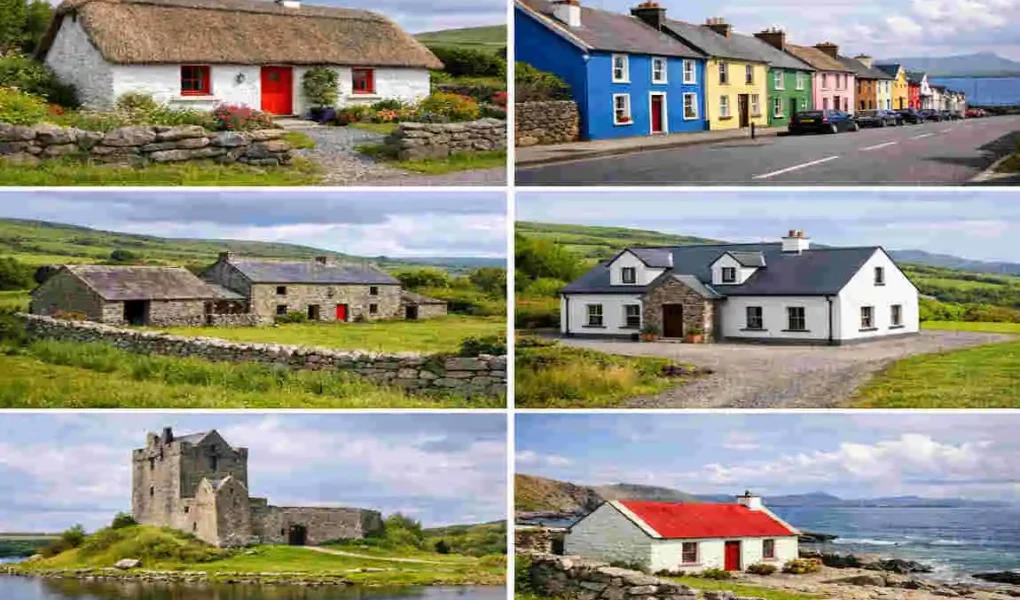
Ireland has a very distinct housing style, and it is part of what makes the country feel so special. Irish homes often mix tradition, comfort, and practical design, which helps them suit the weather and the landscape. If you have ever wondered what do houses in Ireland look like, the answer is not just one style. You will find old cottages, elegant Georgian homes, modern suburban houses, and strong coastal builds.
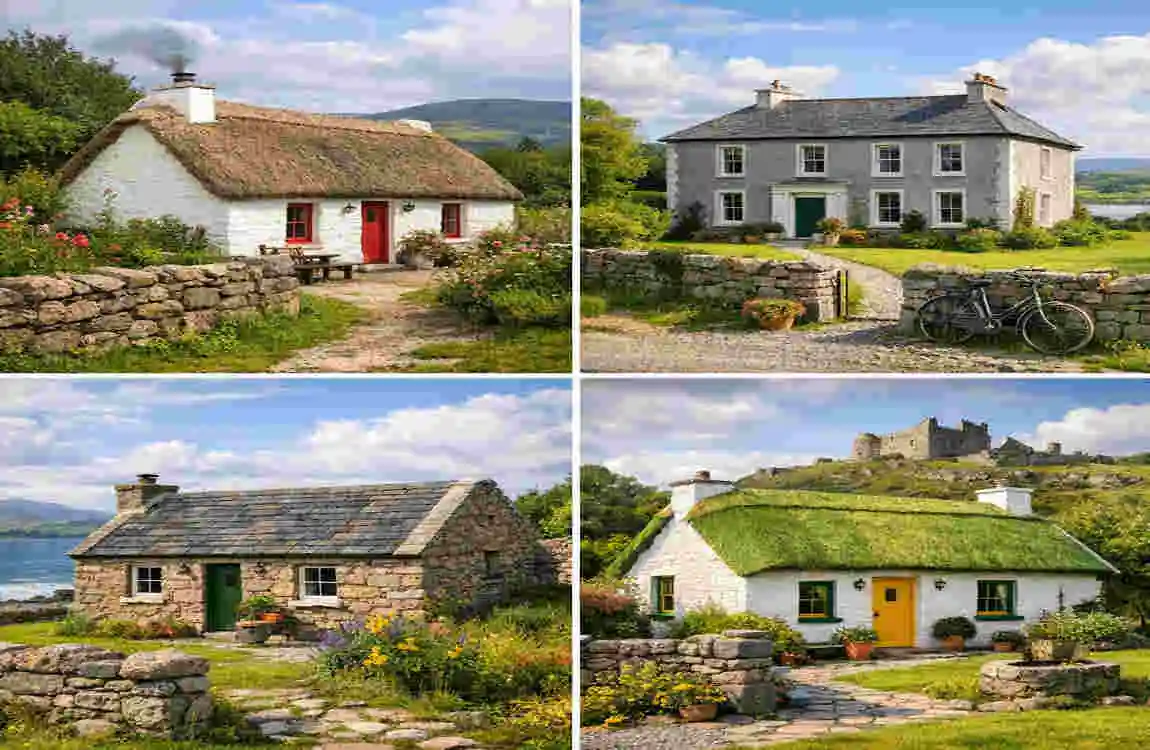
| Style | Key features | Typical materials | Mood / Why people love it |
|---|---|---|---|
| Traditional Cottage | Thatched or pitched roof, small windows, central fireplace | Stone, lime render, thatch, timber | Cozy, rustic, nostalgic — evokes heritage and simplicity |
| Georgian Country House | Symmetrical façades, sash windows, classical proportions | Cut stone, brick, slate roofs | Elegant, formal, timeless — sense of grandeur and order |
| Vernacular Rural | Simple rectangular forms, low eaves, functional layout | Local stone, whitewash, timber | Practical, warm, connected to landscape |
| Contemporary Irish Newbuild | Open-plan living, large glazed areas, indoor–outdoor flow | Render, timber cladding, double glazing | Light, airy, modern — designed for comfort and views |
| Cottage-Revival / Neo-Traditional | Pitched roofs, dormers, modern layouts inside | Mix of traditional stone/thatched look with modern finishes | Storybook charm with modern conveniences |
What Do Houses in Ireland Look Like? An Overview
Key Characteristics of Irish Homes
Irish houses often have a few common features that make them easy to recognize. Many have stone exteriors, whitewashed or painted walls, steep roofs, and chimneys. Traditional homes are usually compact, but they still feel very cozy.
A lot of older houses also have small windows, thick walls, and fireplaces. These features were not only stylish in the past, but also useful in Ireland’s cool and wet climate. Today, even modern homes sometimes borrow these details to keep that classic Irish look.
Why Irish Houses Have a Unique Appearance
The look of Irish homes comes from several things working together. Weather has a big influence, because homes need to handle rain, wind, and cooler temperatures. That is why you often see steep roofs and strong materials.
History also matters. Ireland has been shaped by many building traditions over the centuries, so its houses reflect both local customs and outside influences. At the same time, builders often used what was available nearby, like stone, timber, and slate. This gave Irish homes a natural and grounded look.
Differences Between Rural and Urban Homes
In the countryside, you will often find small cottages, farmhouses, and detached homes with open land around them. These homes usually feel quiet, private, and connected to nature.
In cities like Dublin, homes look different. You may see Georgian townhouses, terraced homes, and apartments. These are usually built closer together and have a more formal city style. Along the coast, homes often use weather-resistant materials and wide windows to make the most of sea views.
Traditional Irish House Designs Explained
The Famous Irish Cottage
The Irish cottage is one of the most loved home styles in the country. It is usually a small, simple house with a thatched or slate roof, thick stone walls, and small windows. Many cottages were built for farm families and were designed to be practical rather than grand.
Inside, these homes often feel rustic and warm. You may find wooden beams, a fireplace, and simple furniture. The charm of the Irish cottage house style lies in its homely feel and natural beauty.
Georgian Homes in Ireland
Georgian homes are very different from cottages. These homes are known for symmetry, tall sash windows, elegant doorways, and balanced facades. They became especially popular in Dublin and other urban areas.
Many of these houses still stand today, and they are admired for their refined look. Georgian architecture gives Irish cities a sense of history and class. If you walk through older parts of Dublin, this style is easy to spot.
Farmhouses Across the Irish Countryside
Irish farmhouses were built for daily working life. They usually had large kitchens, practical layouts, and attached spaces for farm use. These homes focused on function, family, and warmth.
They often sit in open countryside and feel very connected to the land. Today, many people love this style because it feels honest, simple, and full of character.
Irish Castles and Manor Homes
Ireland is also known for its castles and manor homes. These buildings often feature stone construction, towers, decorative interiors, and historic details. Many were built for power and protection in earlier times.
Today, some of these homes are preserved, restored, or used for tourism. They show another side of Irish architecture: grand, dramatic, and deeply tied to history.
Modern Irish House Styles Today
Contemporary Irish Architecture
Modern Irish homes often focus on open-plan layouts, clean lines, and energy efficiency. They usually feel brighter and more spacious than older homes. Large windows are common because they bring in more natural light.
These homes may look simple on the outside, but they are built for modern living. The goal is to create comfort without losing a sense of style.
Eco-Friendly Homes in Ireland
Sustainability is now a big part of home design in Ireland. Many new homes include better insulation, solar panels, and smart heating systems. These features help save energy and keep homes warm during colder months.
Eco-friendly homes are becoming more popular because they are practical and future-focused. They also fit well with Ireland’s growing interest in greener living.
Popular Exterior Finishes
Modern Irish homes often use a mix of stone cladding, rendered walls, slate roofs, and timber accents. This combination helps them look fresh while still fitting into the Irish landscape.
Some homes keep a traditional touch on the outside but feel very modern inside. That balance is one reason Irish housing design is so appealing.
New Build Housing Trends
New housing developments in Ireland often include semi-detached homes, suburban estates, and compact modern builds. These homes are usually designed for families and everyday convenience.
Even in newer areas, builders often try to reflect local style through roof shapes, materials, and color choices. This keeps new homes from feeling too plain or out of place.
Why Irish Houses Are Designed the Way They Are
Ireland’s Weather and Climate
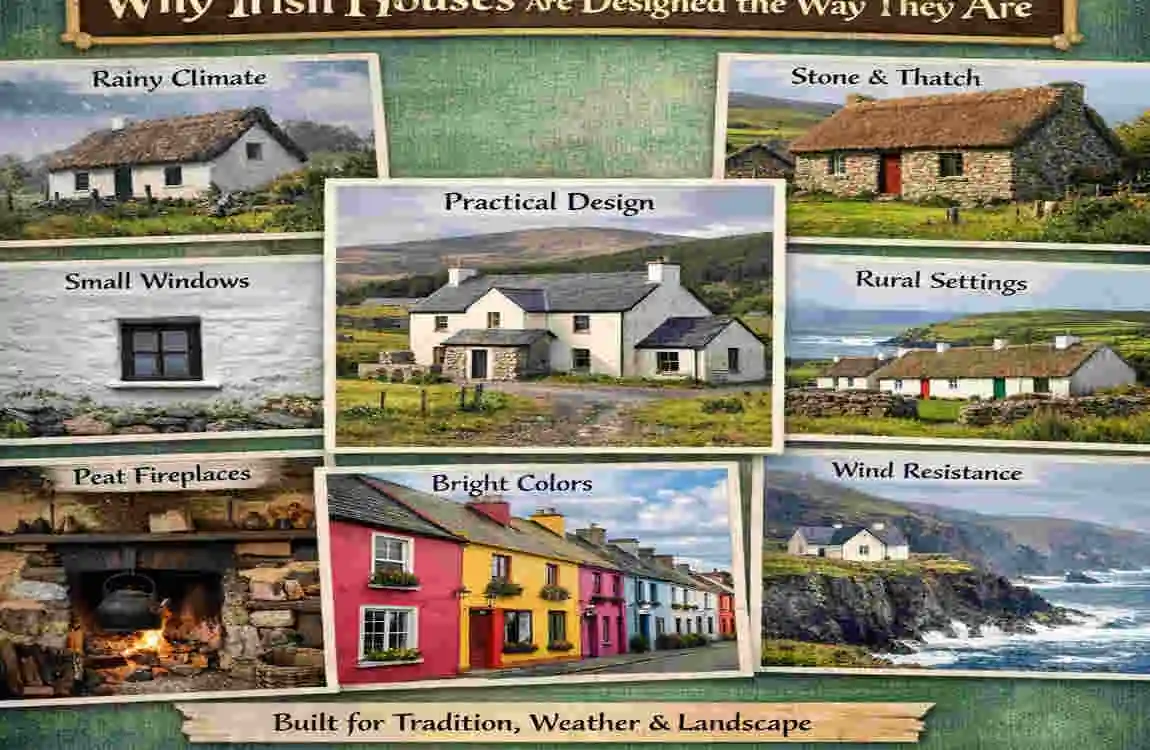
The weather is one of the biggest reasons Irish homes look the way they do. Rain, wind, and cooler temperatures mean houses need strong roofs, good insulation, and protective walls.
Steep roof shapes help water run off quickly. Thick walls and fireplaces helped keep homes warm in the past, and insulation does that job now.
Historical and Cultural Influences
Irish homes also reflect Celtic heritage, British building influence, and local craftsmanship. Over time, these layers of history created a style that feels both practical and meaningful.
Building Materials Found in Ireland
Irish builders often used limestone, slate, timber, and local stone. These materials were easy to find and suited the land well. They still remain important in Irish home design today.
The Evolution of Irish Home Architecture
Ireland’s earliest homes were simple stone huts and ring forts. Later, medieval and Georgian styles brought castles, townhouses, and formal city layouts. Today, Irish architecture continues to change with smart homes, sustainable design, and luxury countryside retreats.
This evolution shows that Irish houses are not stuck in the past. They keep adapting while still holding onto their character.
Why Irish Houses Are Designed the Way They Are
Ireland’s Weather and Climate
The weather is one of the biggest reasons Irish homes look the way they do. Rain, wind, and cooler temperatures mean houses need strong roofs, good insulation, and protective walls.
Steep roof shapes help water run off quickly. Thick walls and fireplaces helped keep homes warm in the past, and insulation does that job now.
Historical and Cultural Influences
Irish homes also reflect Celtic heritage, British building influence, and local craftsmanship. Over time, these layers of history created a style that feels both practical and meaningful.
Building Materials Found in Ireland
Irish builders often used limestone, slate, timber, and local stone. These materials were easy to find and suited the land well. They still remain important in Irish home design today.
The Evolution of Irish Home Architecture
Ireland’s earliest homes were simple stone huts and ring forts. Later, medieval and Georgian styles brought castles, townhouses, and formal city layouts. Today, Irish architecture continues to change with smart homes, sustainable design, and luxury countryside retreats.
This evolution shows that Irish houses are not stuck in the past. They keep adapting while still holding onto their character.
Interior Features Common in Irish Homes
Cozy Living Rooms and Fireplaces
Irish living rooms are often designed to feel warm and inviting. A fireplace is still a popular feature, especially in traditional homes. Some houses use wood stoves or turf fires to create that familiar cozy feeling.
The colors inside are usually soft and warm. Think of creams, browns, greys, and earthy tones. These help the room feel calm and comfortable.
Irish Kitchens and Dining Areas
The kitchen is often the heart of the home in Ireland. Many Irish kitchens include wooden cabinets, farmhouse sinks, and large family tables. These spaces are made for cooking, talking, and spending time together.
Dining areas are usually practical but welcoming. They often reflect family life more than luxury, which is part of their charm.
Flooring and Materials
Common flooring choices include hardwood, stone, and natural textures. These materials help the home feel grounded and warm. They also suit both traditional and modern interiors very well.
Traditional vs Modern Interiors
Traditional interiors often feel rustic, detailed, and homey. Modern interiors are usually cleaner, brighter, and more open. Many Irish homes now blend both styles, giving them the best of both worlds.
Rural Irish Homes vs City Homes
Feature Rural Irish Homes City Homes
Common style Cottages, farmhouses, detached homes Terraced homes, apartments, townhouses
Space Larger plots and gardens Smaller, compact spaces
Feel Quiet, scenic, private Busy, practical, connected
Materials Stone, render, timber Brick, render, plaster
Main advantage Space and charm Convenience and location
Life in the Irish Countryside
Rural homes in Ireland often enjoy wide views, fresh air, and more privacy. They are usually detached and surrounded by nature. This makes them feel peaceful and spacious.
Homes in Dublin and Major Cities
City homes are more compact and often built in rows. They are perfect for people who want to stay close to work, schools, and services. Apartments are also common in urban areas.
Coastal Homes in Ireland
Coastal houses need to handle strong winds and salty air. That is why they often use durable materials, strong roofs, and large windows. These homes are beautiful because they connect directly to the sea and sky.
Which Style is Most Popular?
Today, many buyers like a mix of old and new. They want traditional charm with modern comfort. That is why hybrid designs are becoming so common across Ireland.
Popular Irish Home Design Trends in 2026
Modern Irish homes are leaning toward sustainability, open spaces, and smart technology. People want homes that save energy and feel comfortable at the same time.
Some of the biggest trends include:
- Cottage exteriors with modern interiors
- Natural light through skylights and glass extensions
- Smart heating and energy monitoring
- Eco-friendly insulation and net-zero design
These trends show how Irish home style is changing while keeping its identity.
Pros and Cons of Irish House Designs
Pros
Irish homes have many strengths. They offer a cozy atmosphere, timeless appearance, and strong cultural identity. Many are also built to handle difficult weather.
Cons
Older homes can need renovation. Heating costs may be higher in historic houses, and some traditional cottages have smaller rooms. Still, many people feel these trade-offs are worth it for the character they get.
Tips for Designing an Irish-Style Home Anywhere
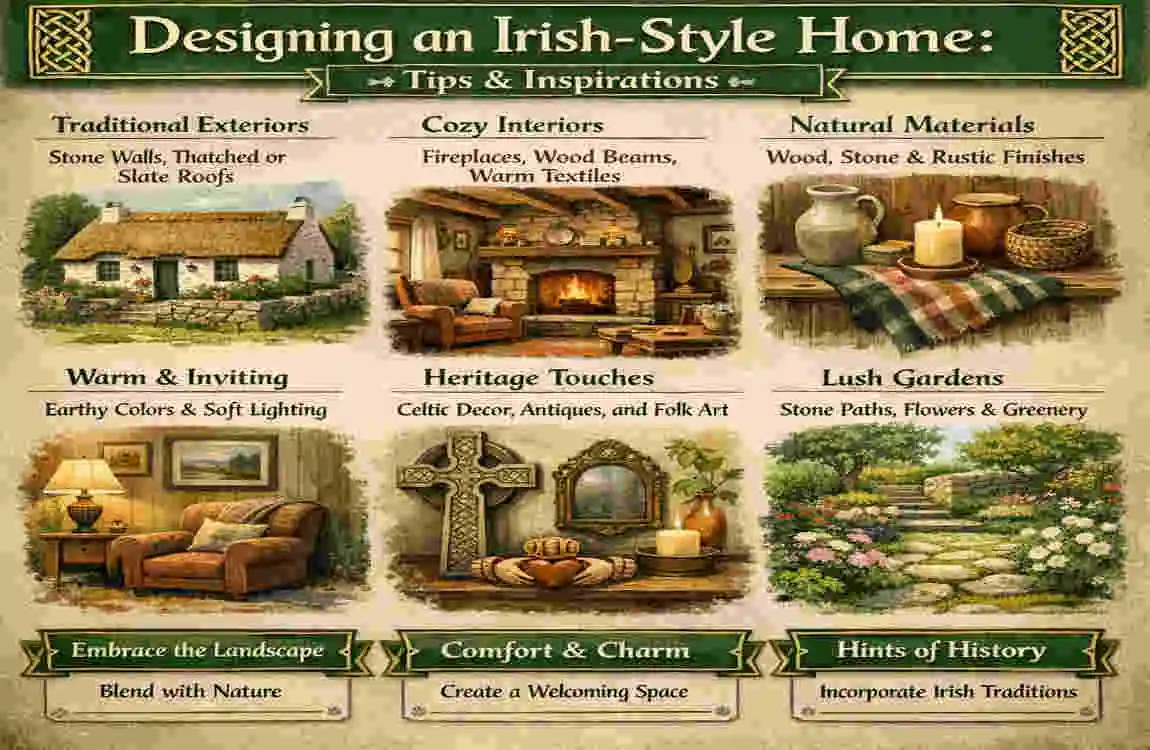
If you want to bring Irish style into your own home, keep it simple and natural.
Use Natural Materials
Choose stone, wood, and slate where possible. These materials instantly create a more authentic Irish feel.
Focus on Warm and Cozy Interiors
Use soft colors, comfortable furniture, and a fireplace or stove as a focal point. This helps your space feel welcoming.
Add Traditional Irish Elements
Try cottage-style windows, rustic beams, vintage decor, or natural textures. Small details can make a big difference.
Combine Old and New
The best Irish-inspired homes often mix classic charm with modern comfort. That balance feels fresh, practical, and timeless.
Frequently Asked Questions About Irish Homes
What do houses in Ireland look like?
Houses in Ireland usually have stone or painted exteriors, steep roofs, chimneys, and cozy interiors. Traditional homes include cottages and farmhouses, while modern homes often have clean lines, large windows, and energy-efficient features.
Why are Irish houses so colorful?
Many Irish houses are colorful because of cultural style, personal choice, and local character. Bright colors also make homes feel lively and stand out in villages and towns.
What is the most common house type in Ireland?
One of the most common house types in Ireland is the semi-detached home. These are popular in suburban areas and work well for families.
Are Irish homes expensive?
Prices vary depending on location, age, and size. Homes in cities like Dublin are usually more expensive, while rural properties can be more affordable.
What are traditional Irish cottages called?
They are usually just called Irish cottages or country cottages. Some regions may use local terms, but “Irish cottage” is the most common name.
Why do Irish homes have steep roofs?
Steep roofs help rainwater drain quickly. This makes them very useful in Ireland’s wet climate.