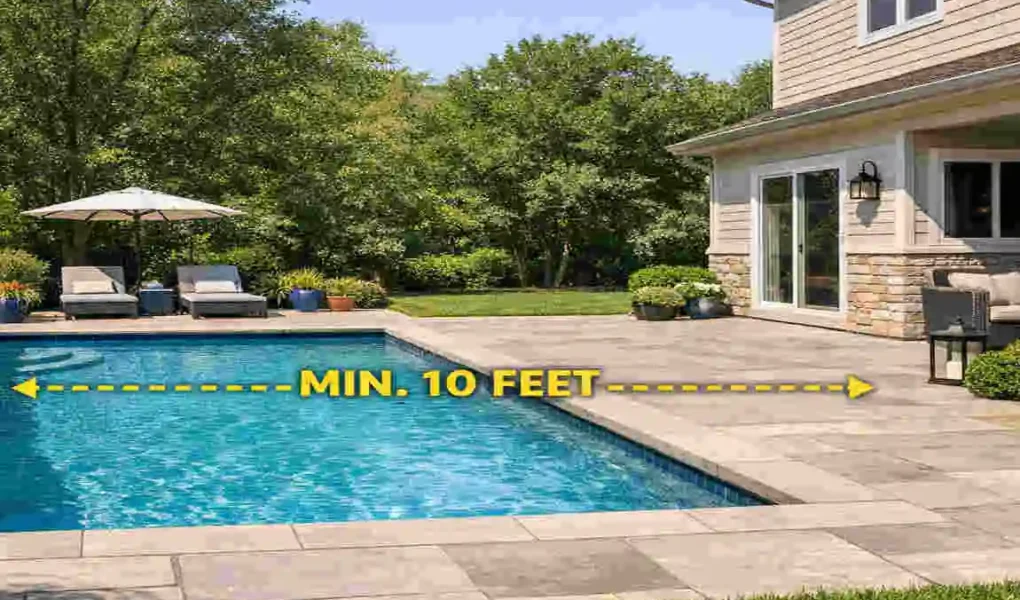
How Far Should a Pool Be from Your House
SWIMMING POOL

How Far Should a Pool Be from Your House? Expert Guidelines for Safe, Stylish Backyards

Imagine this: It’s the middle of July, and the sun is blazing. You step out your back door, coffee in hand, and walk just a few steps to dip your toes into your sparkling, crystal-clear pool. It sounds like a dream, doesn’t it? Transforming your backyard into a personal oasis is one of the most exciting home improvement projects you can undertake. However, there is a fine line between a backyard paradise and a structural nightmare.

If you place that pool too close to your home, you might be trading that dream for a reality filled with flooded basements, cracked foundations, and code violations. On the other hand, place it too far away, and you lose that seamless indoor-outdoor living vibe that everyone craves.

So, here is the big question every homeowner asks: How far should a pool be from your house?

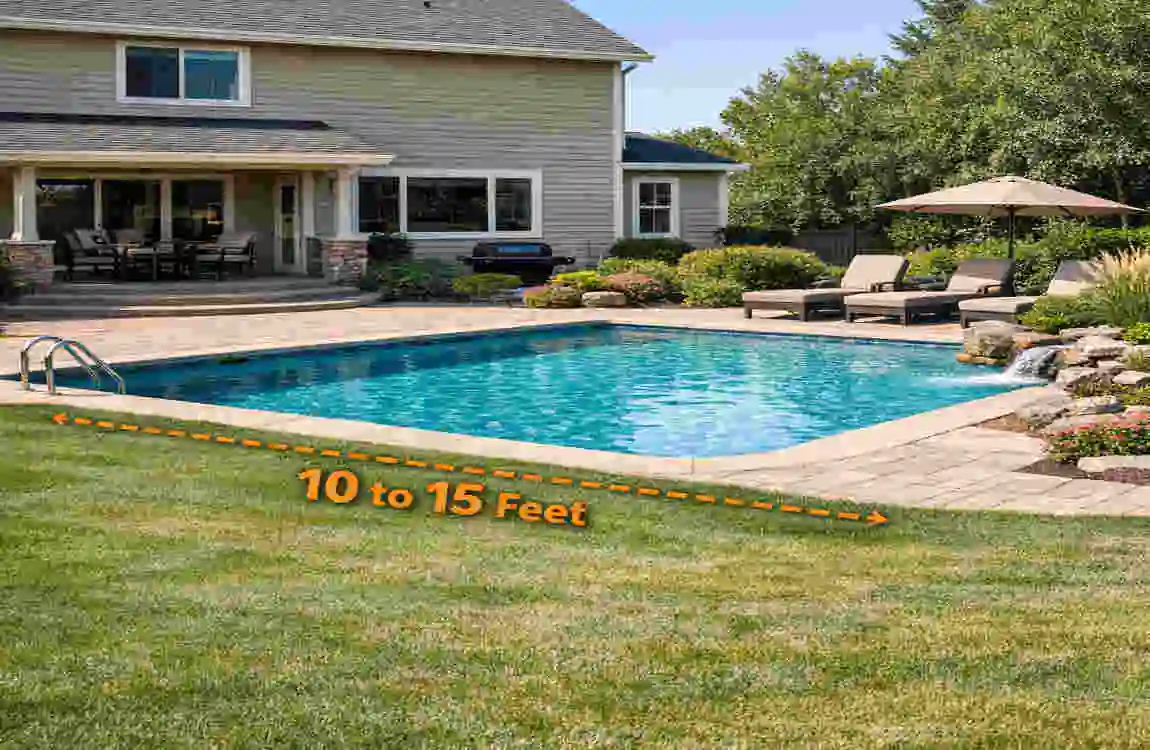
The short answer from most experts is that a minimum of 5 to 10 feet is usually required. However, the “perfect” distance isn’t a one-size-fits-all number. It depends heavily on local zoning codes, your soil type, the kind of pool you are building, and your overall design goals.

Why does the pool distance from the house matter?

How Far Should a Pool Be from Your House

You might be thinking, “It’s my yard, can’t I just put the pool wherever I want?” While that is a tempting thought, the placement of your pool affects much more than just the look of your backyard. It impacts the structural integrity of your luxury house, the safety of your family, and even your property value.

The Risks of Poor Placement

When you dig a massive hole near your home, you are altering the earth that supports your foundation. If a pool is placed too close, water damage becomes a very real threat. Splash-out from cannonballs or minor leaks can saturate the soil near your home. Over time, this wet soil expands and contracts, which can lead to foundation cracks.

Furthermore, there is the issue of erosion. If the drainage isn’t perfect, water runoff can wash away the soil stabilizing your home or the pool shell itself. We also can’t ignore the noise factor. Do you really want to hear the pool pump humming or kids screaming and splashing right outside your bedroom window at 7 AM? Probably not.

The Benefits of Optimal Distance

Getting the distance right solves these problems instantly. An optimal distance allows for better drainage, ensuring that rainwater and splash-out flow away from your home’s foundation. It also makes maintenance easier; you will have plenty of room to walk around the perimeter with a skimmer net without bumping into your patio furniture or exterior walls.

Additionally, proper placement boosts property value. According to data from the National Association of Realtors (NAR), well-maintained in-ground pools can boost home value by 5-8%. However, a pool that looks like it was squeezed into a tight spot can actually deter buyers who fear structural issues.

To help you visualize the trade-offs, here is a quick breakdown of common distances:

DistanceProsCons

Less than 5 ft is extremely space-saving for small yards; it creates an intimate feel. High flood risk; difficult to get permits; potential foundation damage; often violates codes.

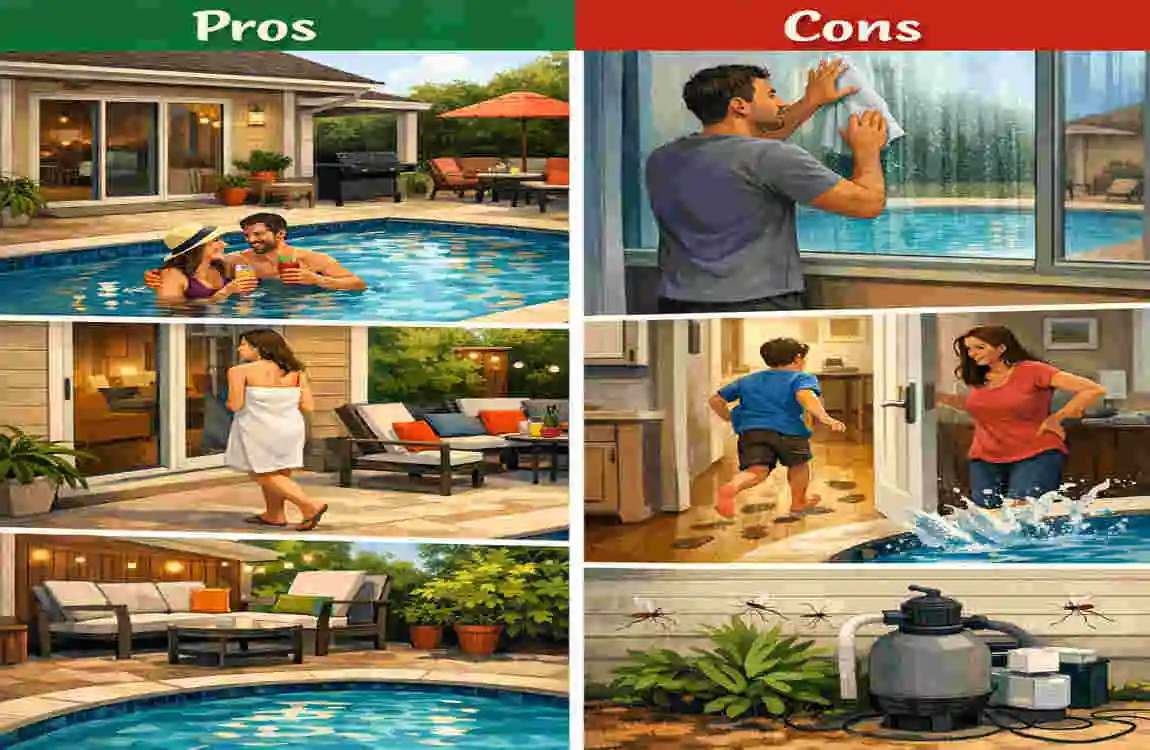
5-10 ft Balanced access; seamless indoor-outdoor flow; easier to supervise kids. Moderate drainage requirements; requires careful splash management.

10+ ft Max safety and aesthetics; distinct “zones” in the yard; quiet inside the house. Uses more yard space; requires a longer walk to the water; utility lines may cost more to run.

Now that we understand the stakes, let’s dive into the core question of rules and regulations.

Legal and Building Code Guidelines

When you type “how far should a home pool be from a house” into a search engine, you are often looking for a legal number so you don’t get in trouble with the city. This is the most critical step in your planning process. If you build without adhering to codes, you could be forced to fill the pool in or pay massive fines.

Federal and National Baselines

Generally speaking, most building codes in the United States are based on the International Residential Code (IRC) or the International Building Code (IBC). These codes act as a baseline for safety. While they don’t always mandate a specific “distance from house” number for every single situation, they strongly suggest ensuring that the pool does not undermine the structural stability of the adjacent building.

A common rule of thumb derived from these standards is a 5-foot minimum from any structure. This isn’t just about the water; it is about the “angle of repose” of the soil. Basically, you don’t want the weight of your house pushing down on the soil that is holding up your pool walls, and vice versa.

State and Local Variations

This is where things get tricky—and why you need to check your local rules. The definition of a safe distance from home varies depending on where you live.

  • California: Due to earthquake risks and shifting soil, many municipalities in California prefer a wider berth, often recommending or mandating 10 feet.
  • Florida: With high water tables and sandy soil, you might see requirements around 8 feet, though some engineering solutions allow for closer builds.
  • Texas: In areas with expansive clay soil, setbacks can range widely from 5 to 15 feet to prevent foundation heaving.

You should always verify these details by visiting your local city hall or using online tools like UpCodes to view the specific amendments for your zip code.

Pool Type Specifics

The type of pool you choose also dictates the setback requirements:

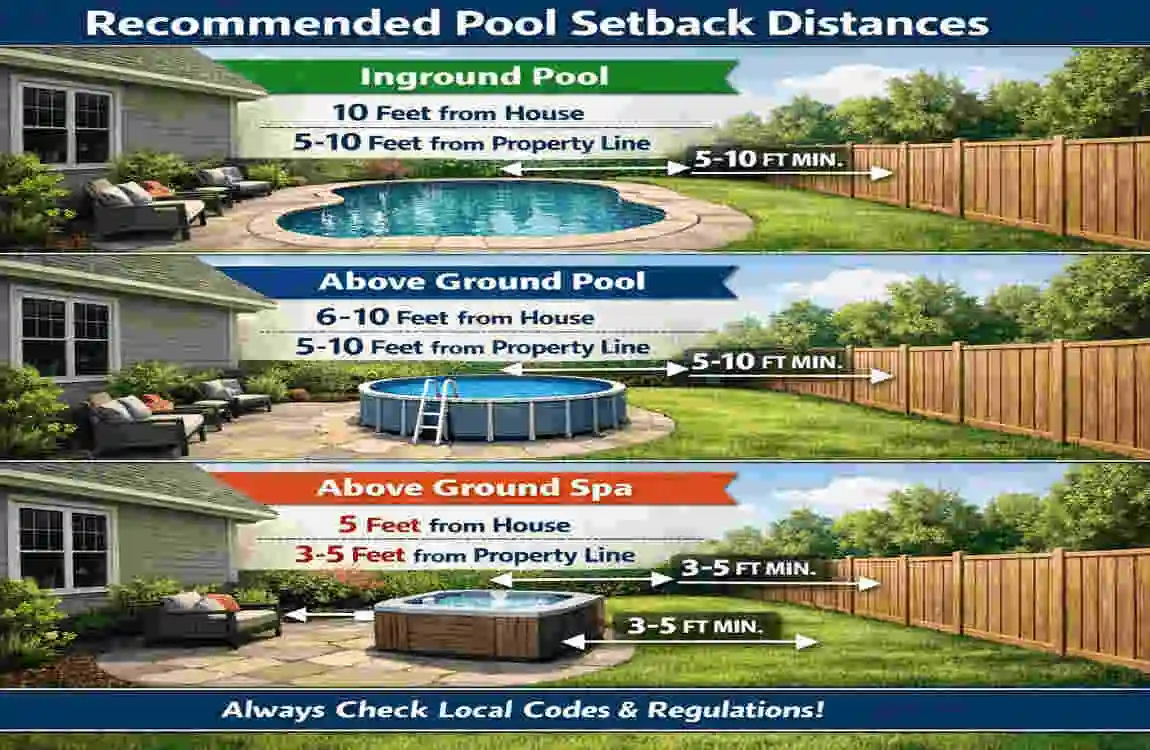
  • Inground Pools: These require the most rigorous setbacks, typically falling in that 8-12 foot range to account for excavation and soil pressure.
  • Above-Ground Pools: These are lighter and don’t require deep excavation, so codes are sometimes more lenient, allowing for a 4-6 foot minimum. However, you still need to prevent water from splashing against your siding.
  • Fencing Rules: Don’t forget the barrier! Most codes require a 4-5 foot barrier (fence) around the pool. Sometimes, the wall of your house can count as one side of the barrier, but only if all doors leading to the home pool have alarms. This creates a functional “distance” requirement to ensure the barrier can be installed correctly.

The Permit Process

You cannot simply guess the distance. To officially verify the safe pool distance from home, you will need to go through a permit process. This usually involves:

  1. Site Survey: A professional measures your property lines and existing structures.
  2. Engineer Stamp: A structural engineer reviews your plans to ensure the pool won’t collapse your house foundation.
  3. Inspection: City officials will come out to measure the setbacks before you pour concrete.

Safety Considerations for Pool Placement

While codes protect the building, we also need to protect the people inside and outside the building. Safety is the number one priority for any pool owner.

Child and Pet Safety

According to the CDC, drowning is a leading cause of accidental death for children. When a pool is too close to the house—say, right off the back step—it creates an immediate hazard. If a child slips out the back door, they are in the water in seconds.

Experts often recommend a distance of 10+ feet to avoid these “hidden hazards.” This buffer zone gives you time to react if a door alarm goes off. It also provides enough space to install a proper safety fence between the house and the water, which is the gold standard for drowning prevention.

Emergency Access

Have you considered how a paramedic or firefighter would get to the pool area in an emergency? If the pool is squeezed within 3 feet of the house, it creates a “choke point.” Fire department guidelines (often referenced in NFPA codes) suggest maintaining a clear path of 6-8 feet around the perimeter. This ensures that a stretcher or emergency equipment can be maneuvered easily around the deck.

Slip and Fall Zones

The area immediately surrounding your pool is the “splash zone.” It is wet, slippery, and dangerous. If this zone overlaps with your main patio where you grill or eat dinner, you are inviting accidents. Integrating your deck at a distance of 7-10 feet allows you to separate the “wet zone” (swimmers) from the “dry zone” (diners). This keeps Grandma safe from slipping while walking to the table with a plate of burgers.

Expert Safety Tips for Placement

To maximize safety regardless of distance, keep these tips in mind:

  1. Elevate the Pool Edge: Building the pool coping slightly above the grade (6 inches or so) prevents someone from accidentally walking right into the water.
  2. Install Auto-Covers: If you must build close to the house, an automatic safety cover is non-negotiable.
  3. Landscape Buffers: Use low shrubs between the house and the pool to create a natural visual barrier that slows down running kids.
  4. Lighting: Ensure the gap between the house and pool is brightly lit. Shadows hide tripping hazards.
  5. Ground-Fault Protection: All electrical outlets near the pool must be GFCI protected to prevent electrocution, especially if the pool is close to outdoor wall outlets.

Structural and Practical Factors

Let’s get technical for a moment—but in simple terms. The earth beneath your feet is powerful, and you need to respect it when placing a pool.

Foundation Protection

Your house sits on a foundation that exerts downward and outward pressure. Your pool exerts pressure on the soil walls that hold the water. If these two “pressure bulbs” overlap, you have a problem. This is where hydrostatic pressure comes in.

In areas with clay soil or heavy rain, the soil swells. If your pool is only 3 feet away, that swelling soil can crack your pool shell or shove your basement wall inward. Soil tests are crucial here. If you have unstable soil, engineers might insist on an 8-15-foot buffer to keep both structures safe.

Drainage Essentials

Water is the enemy of foundations. When you build a pool, you are creating a giant concrete bucket that displaces water. You must ensure the ground slopes away from your house. A slope of about 2% (1/4 inch per foot) is the minimum standard.

If you are tight on space (5-10 feet), you will likely need to install French drains or channel drains between the house and the pool deck. These catch splash-out and rain, piping it away before it can seep down to your foundation footer.

Utility Lines

Before you fall in love with a spot 10 feet from the kitchen, check what is underground. EPA rules and local codes often require pools to be at least 10 feet from septic tanks and sewer lines. Moving a sewer line is incredibly expensive and messy. Overhead power lines are another issue; you typically cannot have water underneath high-voltage wires.

Climate Tweaks

Do you live in a freeze zone? In places like the Midwest or Northeast, the ground freezes and expands in winter. This “frost heave” can be destructive. If a pool is too close to a house, the freezing soil gets trapped between the two rigid concrete structures (the pool and the foundation) with nowhere to go. This can cause the pool deck to buckle. In these climates, giving the pool 12+ feet of breathing room allows for safer expansion.

Case Study: A Cautionary Tale

Consider the story of a homeowner in Texas who insisted on placing his pool just 7 feet from his slab foundation, against his contractor’s advice. He wanted to save space. Two years later, a minor leak in the pool return line saturated the clay soil between the pool and house. The soil heaved, lifting the corner of his living room by an inch. What is the cost to repair the foundation and move the pool equipment? Over $20,000. Don’t be that guy.

Aesthetic and Design Best Practices

Now that we have covered the scary stuff, let’s talk about style! The distance of the pool dictates the “vibe” of your backyard.

Stylish Integration

An 8-12 foot distance is often considered the “sweet spot” for design. It provides enough room for a transition zone. You can install a beautiful paved patio, a row of lounge chairs, or even a narrow planter box.

If you want a seamless look, consider how the flooring transitions. Using the same tile or stone from your indoor living room out to the pool deck creates an illusion of massive space. This works best when the pool is closer (around 8-10 feet).

Feng Shui and Zoning Hacks

In design terms, you want “flow.” You don’t want the pool to block the natural path through the yard. Curved layouts (kidney or freeform pools) can soften the look if the pool is close to the house’s straight lines.

Think about “zoning.”

  • Zone 1 (0-5 ft from house): This is for transit and dining. Keep it dry.
  • Zone 2 (5-10 ft): This is for lounging and sunbathing.
  • Zone 3 (10+ ft): This is the water.

Visualizing Layouts

  • The Modern Lap Pool: Imagine a long, narrow rectangular pool running parallel to the back of the house, set exactly 10 feet away. Between the house and pool, you have a sleek wooden deck. It feels like a boutique hotel.
  • The Family Hub: A kidney-shaped pool set 15 feet back allows for a large patio with a BBQ grill right next to the house, keeping the smoke away from the swimmers but keeping everyone together.
  • The Luxury Infinity Edge: If your property has a slope, an infinity pool set 12 feet out can create a visual trick that makes the water seem to merge with the horizon, visible from your living room window.

The Luxury Angle

High-end brands know that space equals luxury. Look at magazine layouts featuring Versace-inspired tile lines or luxury resorts. They rarely cram the water right against the villa. They use distance to create anticipation. Walking those extra few feet to the water makes the destination feel more special.

Cost Implications of Pool Distance

Believe it or not, the distance you choose affects your wallet, both now and in the future.

Budget Breakdown

In the short term, building closer to the house can sometimes be cheaper regarding excavation and electrical runs. If the pool is 5 feet away, you need less wire to connect the pump to your main electrical panel. That might save you a few hundred dollars.

However, the excavation itself becomes trickier. Digging 5 feet from a house requires smaller, more precise machinery to avoid hitting the house. This can actually increase labor costs because it takes longer than using a giant excavator in an open field.

Long-Term ROI

The real cost discussion is about risk.

  • Closer (5 ft): You save on patio pavers (less deck to build), but you face higher risks of flood damage repairs.
  • Further (15 ft+): You pay more for decking, longer plumbing runs, and longer electrical trenching. However, you have almost zero risk of the pool damaging your home foundation.

Here is a simple look at the Return on Investment (ROI) regarding distance:

DistanceInstall Cost Add-OnMaintenance/Risk Savings

5 ft Low (Short utility runs) Low (High risk of flood fixes/foundation issues)

10 ft Medium (Standard decking) High (Safe foundation, standard drainage)

20+ ft High (Long utility runs, more deck) High (Zero structural risk to home)

Financing Tip: If you are reading this from regions like Rawalpindi or similar international markets, keep in mind that imported pool equipment costs can fluctuate. Local contractors often charge by the square foot for plumbing runs, so placing a pool far away can significantly jump your budget. Always ask for a line-item quote based on distance.

Step-by-Step Guide to Determine Your Ideal Distance

Ready to finalize your plan? Don’t just guess. Follow this step-by-step workflow to find your perfect number.

 Check Local Codes Online Before you dream, check the rules. Go to your city’s building department website. Search for “pool setback requirements” or “accessory structure zoning.” Write down the minimum number.

Hire a Surveyor or Engineer. You need to know exactly where your property lines and easements are. A surveyor will mark these flags. An engineer can tell you if your soil is sandy, clay, or rocky, which dictates how close you can safely dig to the house.

Assess Yard Slope and Soil. Walk your yard after a heavy rain. Where does the water pool? If it puddles right where you want the swimming pool, you have a drainage issue to solve first.

 Sketch Your Designs. You don’t need to be an artist. Use graph paper, simple software like Pool Studio, or even the free PoolMath app to visualize the layout. Draw your house, then draw the pool at 5 feet, 10 feet, and 15 feet. Which one looks right?

Contractor Quotes. Never settle for the first bid. Ask three different pool builders: “Given my soil and house type, how far would you place the pool?” If they all give you different answers, ask them to explain why. Their experience is invaluable.

Finalize with a Safety Audit. Once you have a tentative spot, do a mental safety walk. “If I trip out the back door, do I land in the water?” “Can the fire department get through the side gate?” Adjust the distance until the answer is “Safe.”

Common Mistakes and How to Avoid Them

How Far Should a Pool Be from Your House

Even smart homeowners make mistakes. Here are the pitfalls that usually cost the most in terms of money and stress.

  • Ignoring Setbacks: Some people think, “The city won’t notice if I’m one foot too close.” They will. And they can fine you up to $10,000 or force you to dig up the pool.
  • Skimping on Drainage: Never cut costs on drains. If you build 8 feet from the house, install that channel drain. It is cheaper than fixing a flooded basement.
  • Overlooking Neighbors’ Views: If you place your pool equipment or a slide 5 feet from your property line (which might be 10 feet from your house), you might be blasting noise right into your neighbor’s window. Be a good neighbor.

FAQs

How far should a pool be from the house in California vs. Florida? In California, due to seismic activity, experts often recommend 10 feet or more. In Florida, 5 to 8 feet is common, provided you manage the water table and drainage correctly. Always check your specific city codes.

What is the minimum safe pool distance from home? The absolute legal minimum in many places is 5 feet. Still, for safety and structural integrity, most engineers recommend a minimum of 8 to 10 feet.

Do above-ground pools have different setbacks? Yes, they often have slightly more lenient setbacks (sometimes 4-6 feet) because they don’t require deep excavation. However, you must still adhere to barrier and electrical safety codes.

How to check local pool setback requirements? Visit your local city hall’s building department or zoning office. Many cities also have their municipal codes published online. Look for sections on “Accessory Structures” or “Swimming Pools.”

Can I build closer to my house if I get a variance? It is possible, but difficult. You will likely need a structural engineer to design a reinforced plan (e.g., helical piles) to demonstrate to the city that the pool won’t damage the house’s foundation. This will cost extra.

You may also like...

Leave a Reply

Your email address will not be published. Required fields are marked *