Building a new home is an exciting journey, but it often comes with one pressing question: how long does it take to build a house? While the thought of moving into a brand-new, custom-designed space is thrilling, the timeline can feel daunting and uncertain. Many homeowners underestimate the process, focusing solely on the construction phase and overlooking planning, approvals, and the inevitable delays.
What Is the Average Timeline to Build a House?
The home construction timeline varies significantly depending on the type of home you’re building and the design’s complexity. Below is a closer look at key factors that influence build times.
Typical Build Times by Home Type
Production/Spec Homes
These homes are built using pre-approved plans, which speeds up the process. Materials are often standardized and readily available, allowing for a quicker timeline of approximately 4–7 months.
Custom Homes
Custom builds take longer because every decision, from the floor plan to the finishes, is unique. Homeowners often spend extra time on design revisions and selecting materials. Expect a timeline of 8–18 months, depending on the level of customization.
Luxury or Complex Builds
High-end homes with intricate designs, specialty materials, and custom features may take the longest to build. The timeline can extend to 12–24 months or more due to additional inspections, engineering, and longer material lead times.
A Simple Timeline Snapshot
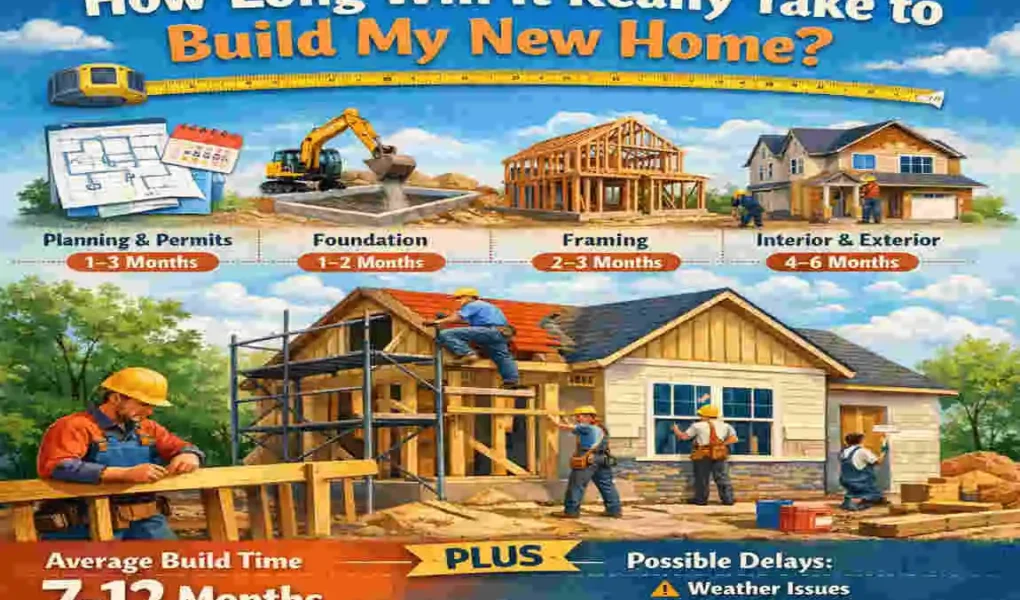
Here’s a quick breakdown of each phase of the house-building process:
Phase Estimated Time
Planning and permitting 1–4+ months
Site prep and foundation 2–6 weeks
Framing and shell 1–3 months
Mechanical rough-ins 1–2 months
Interior finishes 2–4 months
Final inspections and punch list 2–6 weeks
What Homeowners Often Overlook
Several factors can extend the timeline unexpectedly:
- Waiting for permits: Permit approval times vary widely by jurisdiction.
- Design revisions: Changes to plans can lead to delays at any stage.
- Utility hookups: Connecting water, electricity, and gas isn’t always immediate.
- Weather-related interruptions: Rain, snow, or extreme temperatures can impact progress.
Planning, Design, and Permits
The timeline for building a house begins long before construction crews arrive on site. This phase includes selecting the lot, finalizing the design, and securing approvals.
Choosing the Lot and Finalizing the Plan
The lot you choose can significantly impact your timeline. Factors like soil conditions, slope, and drainage must be considered. A challenging lot may require additional preparation, delaying the project.
Architectural Design and Engineering
Custom homes often require multiple design revisions. Structural engineering and energy compliance are also critical steps, and changes after finalizing plans can add weeks or months to the schedule.
Permits and Approvals
Obtaining permits can be one of the most time-consuming steps. Common approvals include:
- Zoning permits
- Environmental reviews
- HOA (Homeowners Association) approvals, if applicable
In some areas, permitting delays are unavoidable, so it’s essential to plan for this.
Financing and Pre-Construction Paperwork
Before construction begins, you’ll need to finalize:
- Construction loans
- Appraisals
- Insurance requirements
- Contractor agreements
This phase highlights a key point: the timeline to build a house often starts before the first shovel hits the ground.
Site Preparation and Foundation
Once planning is complete, the physical work begins. Preparing the land and laying the foundation are crucial steps in the house-building process.
Clearing and Preparing the Land
This involves tree removal, grading, and excavation. Soil testing and utility trenching are also performed to ensure the site is ready for construction.
Pouring the Foundation
The type of foundation (slab, crawlspace, or basement) affects the timeline for this stage. Weather can also impact curing times, and inspections are required before moving to the next phase.
Framing and Getting the Shell Built
This is when your home starts to take shape!
Framing the Structure
The framing stage includes building walls, floors, roof trusses, and sheathing. This is one of the most exciting phases because the house begins to look real.
Installing the Roof, Windows, and Doors
Sealing the home with a roof, windows, and doors—known as “drying in”—is a major milestone. Once the house is sealed, interior work can proceed more efficiently.
Why This Phase Matters
Delays in framing and shell construction can ripple through the rest of the project. Material shortages or crew availability are common challenges during this stage.
Rough-In Work for Electrical, Plumbing, and HVAC
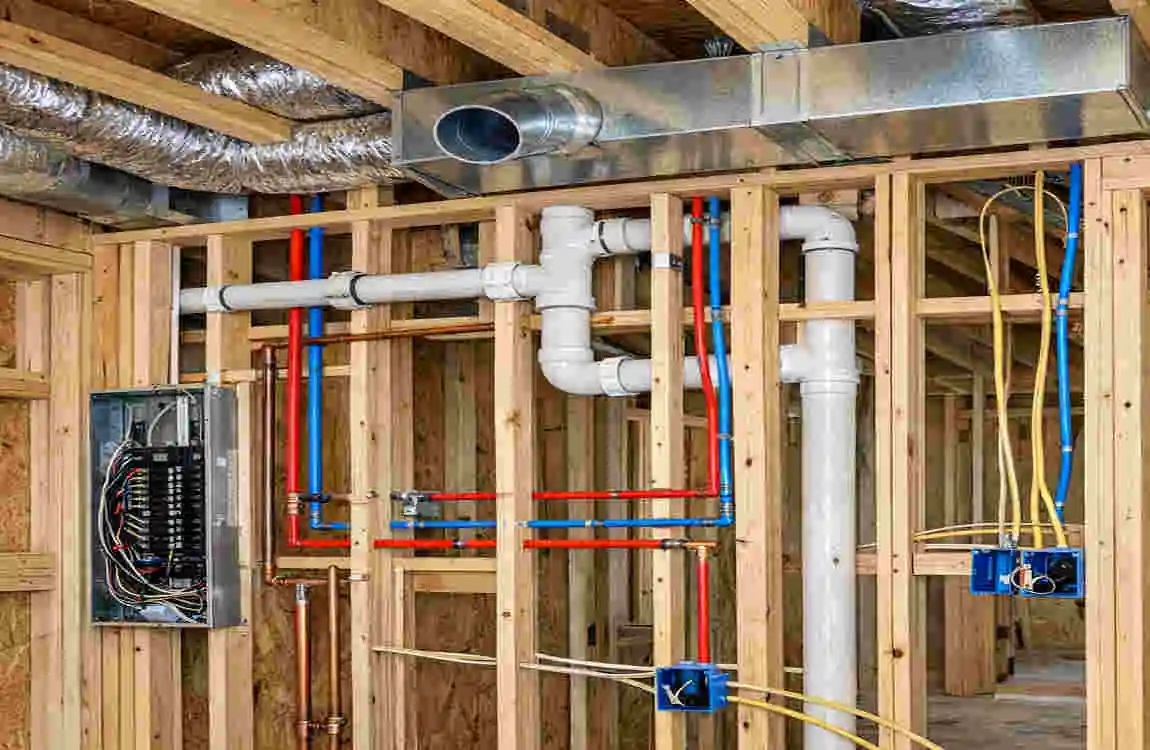
The rough-in phase involves installing all the mechanical systems your home needs to function.
Mechanical Systems Installation
This includes plumbing lines, electrical wiring, HVAC ductwork, and any smart home systems.
Inspection Checkpoints
Each rough-in system must pass inspections before the next phase can proceed. Waiting for inspection approvals can temporarily pause construction.
Common Causes of Delay
- Backordered equipment
- Design changes after framing
- Scheduling multiple subcontractors
Insulation, Drywall, and Interior Surfaces
With the mechanical systems in place, it’s time to insulate and finish the interior walls.
Insulation and Energy Compliance
Insulation must meet energy code requirements, which may require additional inspections.
Hanging, Finishing, and Sanding Drywall
Drywall installation and finishing take longer than many homeowners expect due to the drying time required between coats.
Interior Finishes and Final Details
This phase involves transforming your house into a livable home.
Floors, Cabinets, and Trim
Finishing touches like flooring, cabinetry, and baseboards bring your home’s interior to life.
Painting and Fixtures
Painting and installing light fixtures, plumbing fixtures, and hardware add personality and function to your space.
Punch List and Final Walk-Through
Before move-in, a punch list of small fixes is addressed. The final walk-through ensures everything is up to standard.
What Can Make a House Build Take Longer?
Several factors can delay your build:
- Weather delays: Rain or extreme temperatures can slow construction.
- Labor shortages: Skilled trades may be booked far in advance.
- Material shortages: Items like lumber or appliances may have long lead times.
- Change orders: Mid-project changes can disrupt the schedule.
How Homeowners Can Keep the Timeline on Track
Here are a few tips to help your project stay on schedule:
- Make decisions early: Avoid late changes to finishes or layouts.
- Order long-lead items upfront: Cabinets, windows, and custom items should be ordered as soon as possible.
- Work with an experienced builder: A knowledgeable builder will anticipate delays and plan accordingly.
Realistic Expectations by Home Type
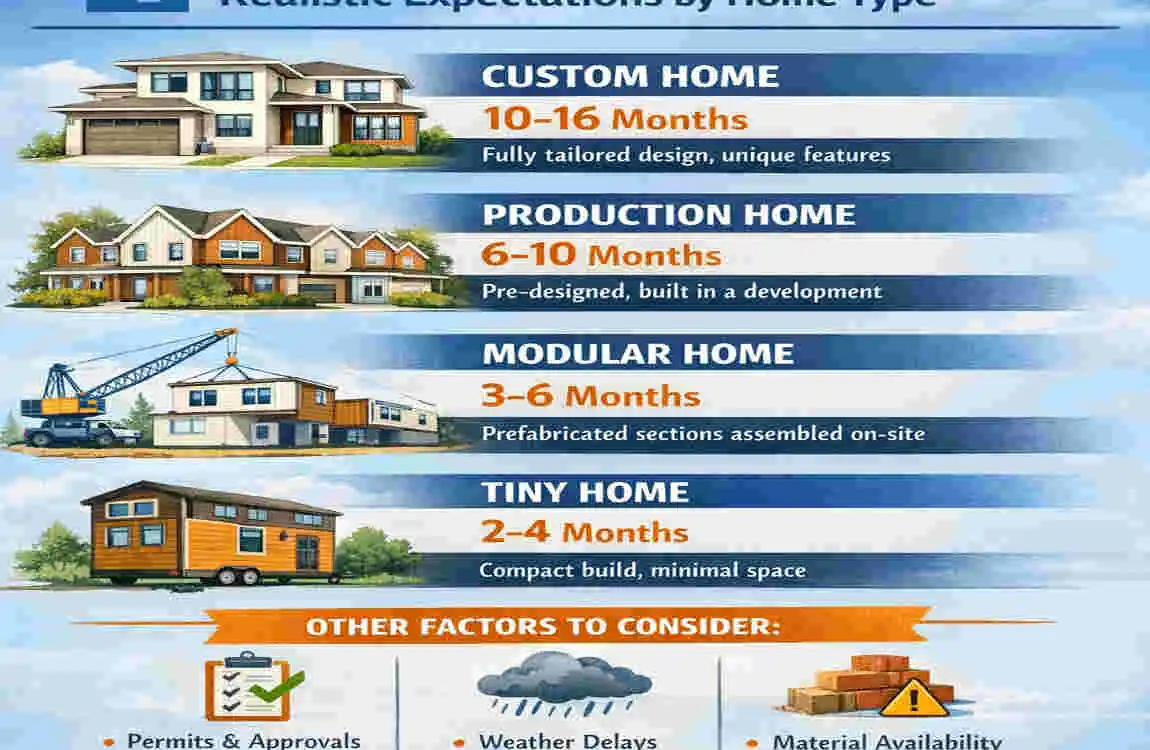
Home Type Timeline
Standard production 4–7 months
Average custom 8–18 months
Large luxury builds 12–24+ months
FAQs About Building a New Home
What is the fastest way to build a house?
Choose a standard plan on a prepared lot with readily available materials.
Why do custom homes take longer?
Custom homes involve more design decisions, unique materials, and additional approvals.
Can the weather really delay construction?
Yes, especially during site prep, foundation, framing, and roofing.
| Home Type | Typical Build Time | Key Factors Affecting Timeline |
|---|---|---|
| Production Home | 4 to 7 months | Pre-approved plans, standardized materials, faster permits |
| Custom Home | 8 to 18 months | Design complexity, permit approvals, custom finishes |
| Luxury/Complex Build | 12 to 24+ months | Specialty materials, extensive inspections, high customization |
| Fast-Track Builds | 3 to 5 months | Modular/prefab methods, simplified design, ready lot |