You have finally saved up enough money to buy a piece of land, perhaps on the peaceful, growing outskirts of Lahore or tucked away in the beautiful rural landscapes of Pakistan. You are ready to build your dream home. But then, reality hits hard. Traditional building costs are skyrocketing, skilled labor is expensive, and the thought of managing a chaotic construction site for over a year sounds like an absolute nightmare. You want a home that goes up quickly, does not empty your bank account, and can withstand the toughest weather. Does this sound familiar? If so, you are not alone.
Across the globe, and increasingly in places with rising housing demands like Pakistan, future homeowners are turning to a brilliant, modern solution. Enter steel a-frame house kits. These incredible structures are rapidly changing the way we think about home construction. They offer the perfect blend of timeless design and modern engineering. If you are looking for an affordable, durable prefab solution that stands up to heavy rain and goes up in a fraction of the time, you have found it.
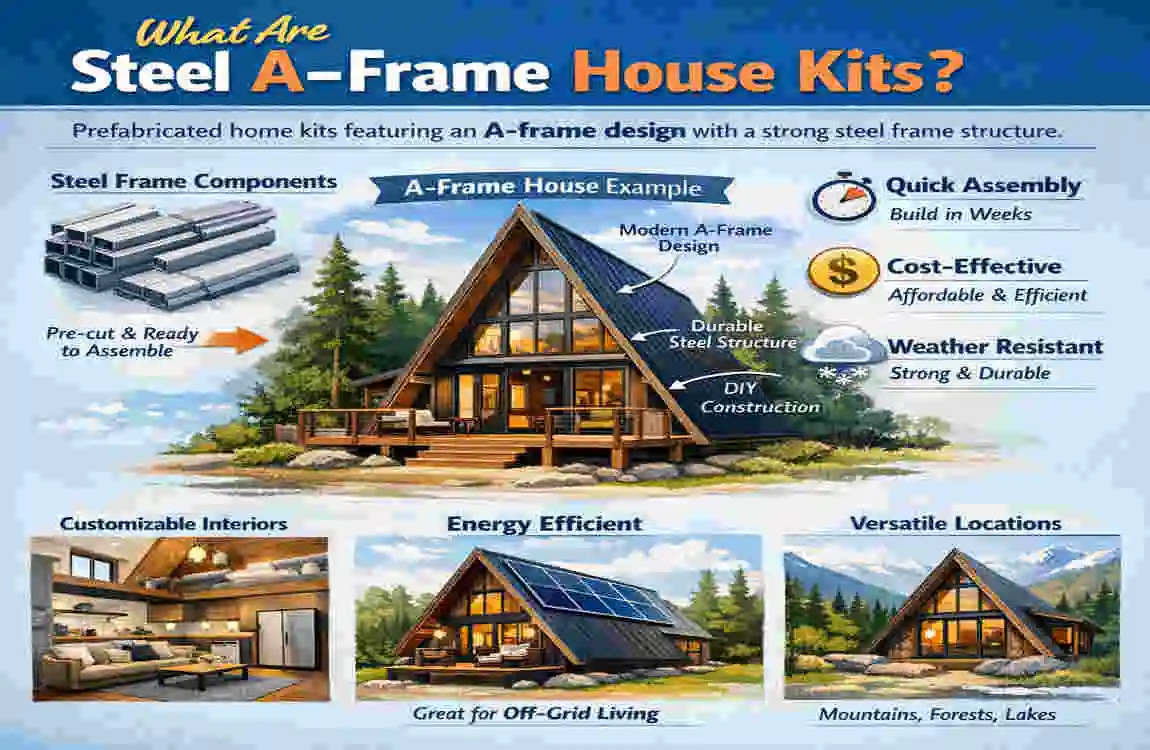
What Are Steel A-Frame House Kits?

Before we talk about the incredible benefits, let us clearly define what we are dealing with. You have probably seen an A-frame house before. They are stunning, iconic, and impossible to miss.
The Iconic A-Frame Design
The A-frame design features a steeply angled roofline that begins at or near the foundation line and meets at the top, creating the shape of the letter “A.” Originally designed centuries ago to mimic the shape of simple tent frames, this design is structurally brilliant. The steep slope is not just for looks; it is highly functional. It allows heavy snow and torrential rain to slide right off, preventing roof damage and leaks. Inside, this shape creates gorgeous, soaring ceilings and incredibly cozy loft spaces.
Inside the Prefab Steel Magic
Now, let us add the magic word: prefab. When we talk about prefab steel a-frame house kits, we mean homes manufactured in a controlled factory environment. Instead of bringing raw materials to your land and cutting them there, engineers design and pre-cut every single piece in a factory. They use high-quality, galvanized steel panels and framing components.
Once everything is cut, drilled, and clearly labeled, the entire home is flat-packed and shipped directly to your building site. It arrives ready to assemble. Think of it like a giant, adult-sized piece of flat-pack furniture, but much sturdier and designed to last a lifetime. Because everything is pre-measured and pre-cut, the guesswork is completely removed from the building process.
Key Components You Should Know
When your kit arrives on the back of a truck, what exactly are you getting? While every manufacturer is slightly different, most modular steel a-frame homes include a few standard components:
- The Steel Frame: This is the skeleton of your house. It includes heavy-duty steel beams that bolt together to form the rigid A-shape.
- Roofing and Siding: In an A-frame, the roof and walls are essentially the same. Your kit will include durable, weather-resistant steel panels to cover the frame.
- Hardware: You will receive all the specialised bolts, nuts, and fasteners needed to securely fasten the frame.
- Foundation Options: While the actual concrete is not included in the box, your kit will come with specific engineering plans for your foundation. You can usually choose between a solid concrete slab or raised concrete piers, depending on your land.
Imagine looking at a simple diagram provided by the manufacturer. You lay the base tracks on your foundation, bolt the pre-welded triangular trusses into place, connect them with cross-beams, and then attach your exterior panels. It is systematic, logical, and incredibly satisfying to watch come together.
Top Benefits of Steel A-Frame House Kits
Why should you choose steel over traditional bricks, mortar, or wood? Let us break down the massive advantages that make these kits so appealing to modern homebuyers.
Unbeatable Affordability
Let us talk about your budget, because this is where steel a-frame house kits truly shine. Building a traditional home can easily cost upwards of $100 per square foot, and that does not even include the hefty fees for architects and designers.
With a steel kit, your core structure costs are slashed dramatically. You can expect to pay between $20 and $50 per square foot for the kit itself. Because the home is pre-engineered, you avoid the expense of architect fees. Furthermore, the quick assembly time drastically reduces the cost of hiring a construction crew. Every day saved on construction is cash kept firmly in your pocket.
Unmatched Durability
If you are building a home, you want it to last. Steel is arguably the toughest building material available to residential consumers. First, the steel used in these kits is galvanised, meaning it is coated with a protective zinc layer to prevent rust and corrosion.
Second, unlike wood, steel is completely immune to termites and other wood-boring pests. You will never have to worry about insects eating away at the structural integrity of your home.
Finally, steel is incredibly flexible yet strong, making it highly resistant to severe weather. For areas in Pakistan that sit in active seismic zones, steel frames can flex and absorb earthquake tremors without snapping, unlike rigid brick or concrete walls. A well-maintained steel A-frame has a lifespan of 50 years or more, easily outlasting many traditional builds.
Lightning-Fast Speed of Assembly
Time is money. A traditional site-built home can take anywhere from six months to over a year to complete. You have to deal with weather delays, material shortages, and scheduling conflicts with contractors.
Because prefab steel a-frame house kits arrive ready to build, you can assemble the entire structural shell in a matter of weeks. If you are handy and have a few strong friends, you can even take the DIY route and bolt it together yourselves. Even if you hire a local crew, their labour hours will be a fraction of what a traditional build would require.
Impressive Energy Efficiency
You might worry that a steel house will feel like an oven in the summer and a freezer in the winter. Thankfully, modern kits are designed with high energy efficiency in mind.
You can outfit your steel frame with deeply insulated panels. Because the A-frame design is naturally compact and encourages air circulation, heating and cooling the space is remarkably easy. The shape allows hot air to rise to the top of the loft in the winter, keeping the living areas cozy. Many homeowners report cutting their monthly heating and cooling bills by up to 30% compared to traditional, sprawling homes.
A Greener, Eco-Friendly Footprint
If you care about the environment, you will love building with steel. Steel is one of the most recycled materials on the planet. Many kits are constructed using a high percentage of recycled steel. If the house is ever torn down, the materials can be recycled again.
Additionally, because the parts are precision-cut in a factory, there is virtually zero construction waste left on your build site. Compare that to a traditional wood build, where dumpsters full of cut-off wood scraps are hauled away to landfills every single day.
Quick Recap of the Benefits
To summarize, here is why you should consider a steel kit:
- Cost-effective: Saves thousands on labor, materials, and architect fees.
- Weather and Pest Proof: Resists rust, termites, high winds, and earthquakes.
- Rapid Build Time: Move into your new home in months, not years.
- Energy Savings: Compact, insulated design lowers utility bills.
- Zero Waste: Factory-cut precision means a clean, eco-friendly job site.
Comparing Steel A-Frame House Kits to Wood or Traditional Builds
To truly understand the value of affordable steel a-frame house kits, we need to put them head-to-head with traditional building methods. How do they stack up against classic wood framing or the concrete and brick homes so common in South Asia? Let us look at a direct comparison.
Material Comparison Table
Feature Steel A-Frame Kits Wood Framing Concrete & Brick
Material Cost Low to Medium Medium to High High
Labor Cost Low (Fast assembly) High (Requires skilled carpenters) Very High (Slow, intensive labor)
Durability Excellent (Rust/pest proof) Moderate (Prone to rot/termites) Excellent (Strong but rigid)
Build Time 2 to 4 Weeks (for the shell) 3 to 6 Months 6 to 12 Months
Maintenance Very Low High (Painting, pest control) Medium (Crack repairs, sealing)
Fire Resistance Non-combustible Highly combustible Non-combustible
Why Steel Outperforms the Rest
As you can see from the table, steel offers a massive advantage in almost every category. When you compare affordable steel a-frame house kits vs. wood, steel easily wins on longevity and safety. Wood can warp, rot when exposed to moisture, and acts as kindling in a fire. Steel is completely fireproof, giving you peace of mind that your family is safe. Furthermore, you do not have to spend your weekends maintaining it. There is no wood to stain, seal, or protect from insects.
However, we must be honest about the minor drawbacks. The biggest con of a steel kit is the upfront shipping cost. Because steel is heavy and the panels are large, transporting the kit from a factory to a remote site can be pricey. But when you factor in the thousands of dollars you save on labor, the shipping cost is easily justified.
The Pakistan Context: Monsoons and Seismic Zones
Why is steel particularly winning over builders in regions like Pakistan? It comes down to geography and climate.
During intense monsoon seasons, traditional brick-and-mud homes often suffer severe water damage, dampness, and structural weakening. Wood rots quickly in high humidity. A galvanized steel A-frame, however, is practically monsoon-proof. The steep roof sheds torrential rain instantly, and the steel frame does not absorb moisture.
Furthermore, parts of Pakistan are located in active seismic zones. When an earthquake hits, heavy, rigid concrete structures are prone to cracking and collapsing. Steel has a high strength-to-weight ratio and natural flexibility. It can sway and absorb the shock of an earthquake without shattering, keeping the occupants safe inside.
Popular Steel A-Frame House Kits: Reviews and Recommendations
Now that you know the benefits, you are probably wondering which kits are available. The market is flooded with options, but for 2026, a few standout models consistently rank high for quality and affordability. While we encourage you to research local suppliers, here is a look at the types of “best steel a-frame house kits 2026” you can expect to find from major global manufacturers.
The Budget-Friendly Starter Kit
If you are looking to build a starter home, a guest house, or a cozy retreat, the budget kit is your best friend.
- Size: Typically around 800 square feet.
- Estimated Price: ~$25,000 (for the shell).
- The Vibe: This kit usually features an open-concept ground floor with a small kitchenette, a bathroom, and a ladder or spiral staircase leading up to a snug sleeping loft.
- Pros: Incredibly cheap, super fast to build (a team of three can put the shell up in under a week), and fits on tiny plots of land.
- Cons: Space is tight; you will need clever, space-saving furniture.
The Family-Sized Haven
Need more space for the kids? The mid-range kits offer the perfect blend of A-frame charm and practical family living.
- Size: Around 1,500 to 1,800 square feet.
- Estimated Price: $40,000 to $60,000 (for the shell).
- The Vibe: These kits often feature extended side dormers. This breaks up the steep A-shape on the inside, allowing for traditional vertical walls in the bedrooms and bathrooms.
- Pros: Fully customizable floor plans, multiple bedrooms, and enough room for a proper living and dining area.
- Cons: Requires a larger, more expensive foundation and a small crane for assembling the heavier steel trusses.
The Off-Grid Explorer
For those who want to build far away from the hustle and bustle of the city, off-grid kits are the ultimate solution.
- Size: 1,000 to 1,200 square feet.
- Estimated Price: $35,000 to $50,000.
- The Vibe: Designed with self-sufficiency in mind. These kits come with reinforced roof panels specifically pitched and bracketed to hold heavy solar panel arrays.
- Pros: Ready for solar integration, highly insulated for extreme weather, and designed to collect rainwater efficiently.
- Cons: Setting up off-grid utility systems (solar batteries, septic tanks) adds significant cost beyond the kit price.
Cost Breakdown: How Affordable Are Steel A-Frame House Kits?
We have thrown some numbers around, but let us get specific. Exactly how much money do you need to pull this off? It is crucial to understand that buying the kit is only one part of the total project. To give you a realistic picture, let us break down the expenses.
The Core Kit Costs
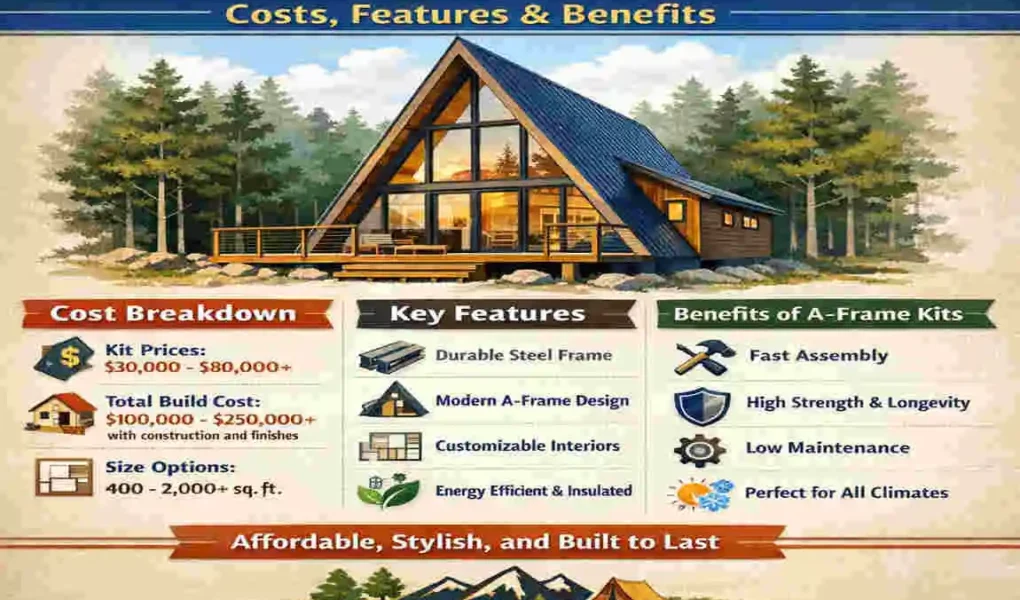
As mentioned, the physical steel a-frame house kit will likely run you between $15,000 and $40,000, depending on the size (which generally ranges from 400 to 2,000 square feet). This price covers your structural steel frame, exterior wall panels, roof panels, and the necessary assembly hardware.
If you are shipping internationally or bringing a kit to a remote area in Pakistan, you must budget an additional 10% to 20% of the kit price for freight, shipping, and potential customs duties.
Foundation and Finishing Expenses
You cannot put a steel house on plain dirt. You need a rock-solid foundation. Depending on whether you pour a concrete slab or sink concrete piers, expect to spend between $5,000 and $10,000 on site preparation and foundation work.
Next comes the interior finishing. Your kit is essentially a weatherproof shell. You still need to add insulation, drywall, plumbing, electrical wiring, flooring, and a kitchen. Finishing costs are entirely up to your personal taste, but a safe estimate is $10,000 to $20,000. If you want luxury marble countertops, this number goes up. If you are happy with simple, clean laminates, it stays low.
Smart Ways to Save on Your Build
Do you want to keep those costs as low as possible? Here are three ways to save:
- Embrace DIY Assembly: If you act as your own general contractor and assemble the frame with friends, you can save thousands in labour costs.
- Buy Bulk Insulation: Steel frames require good insulation. Buying spray foam or fibreglass batts in bulk from local wholesalers rather than specialised retailers will lower costs.
- Keep the Floor Plan Open: Every interior wall you add increases the framing and drywall costs. Keep the main floor open-concept to save money and make the space feel larger.
The Long-Term ROI
When looking at the total cost (Kit + Foundation + Finishes), you might spend $50,000 to $70,000 for a beautiful, finished home. While this is a serious investment, the Return on Investment (ROI) is incredible. Because the exterior requires practically no maintenance, you save money every single year. You do not have to replace rotting wood or fix cracked brickwork. Most homeowners find that the low maintenance costs alone pay for the home over 20 years.
Step-by-Step Guide to Building with Steel A-Frame House Kits
Are you feeling inspired? Are you ready to roll up your sleeves? Let us walk through exactly what the building process looks like from start to finish.
Planning and Permits
Before you buy anything, you must prepare your site. This means clearing the land, ensuring access to water and electricity, and, most importantly, securing your permits. If you are building in Pakistan, you will need to submit your architectural plans (provided by the kit manufacturer) to the local building authority. Ensure your plans comply with local building codes, particularly regarding seismic safety and zoning laws.
Ordering and Delivery
Once your permits are approved, it is time to order. You will work with the manufacturer online or by phone to customise your kit. You will select your exterior colours, specify your window placements, and finalise the floor plan. From the moment you place the order, it typically takes 4 to 8 weeks for the factory to cut your kit and ship it to your site.
Laying the Foundation
While the factory is busy cutting your steel, you need to prepare your foundation. For a steel A-frame, you have two main choices. A concrete slab provides a solid, flat floor that is great for heat retention. Concrete piers (putting the house on raised posts) are cheaper, require less concrete, and are fantastic for uneven or sloping land. Laying the foundation usually takes 1 to 2 days of pouring, followed by a week of curing time.
The Grand Assembly
This is the fun part! Your kit arrives on a truck. You will start by bolting down the base tracks to your concrete foundation. Next, you will assemble the giant, triangular steel trusses on the ground. Depending on the size of your kit, you might need to hire a small local crane for a day to lift these heavy trusses upright.
Once they are vertical, you bolt them into the base track and connect them with horizontal steel purlins. Suddenly, the skeleton of your house is standing! Finally, you screw the exterior metal panels onto the frame. This entire assembly process for the shell usually takes 1 to 2 weeks.
Finishing Touches
With your home completely weatherproofed, you move inside. This step looks just like finishing a traditional home. You will hire an electrician to run wiring through the pre-drilled holes in the steel frame. A plumber will set up your pipes. You will spray insulation into the walls, hang your drywall, and lay down your floors.
Common Pitfalls to Avoid: The biggest mistake beginners make is tightening the bolts completely before the entire frame is up. Always leave your bolts slightly loose until the whole frame is assembled and perfectly squared, then tighten everything down. Also, ensure you have a high-quality impact driver—you will be driving hundreds of screws!
Customization and Design Ideas for Steel A-Frame House Kits

Just because your home comes out of a factory does not mean it has to look like a warehouse. Steel a-frame house kits offer amazing flexibility for interior and exterior design.
Modern Twists on a Classic
The A-frame is naturally dramatic. To modernize the look, many homeowners opt to replace the entire front-facing triangular wall with floor-to-ceiling glass. This floods the interior with natural light and seamlessly blends your indoor living space with the beautiful outdoors.
Inside, the steep roof allows for incredible loft bedrooms. Imagine waking up in a cozy loft, looking out at the sunrise over your property through a massive glass wall. For those looking to downsize, these kits make perfect tiny home conversions. You can utilize the space under the stairs for hidden storage, creating a minimalist, clutter-free lifestyle.
Adapting for Local Climates
If you are building in a hot climate like Pakistan, customization is key to staying comfortable. You must plan for ventilation. Installing operable skylights at the very peak of your A-frame allows trapped hot air to escape instantly, creating a natural cooling breeze through the house.
Furthermore, the expansive, angled roof of an A-frame is perfectly positioned to catch the sun. Integrating solar panels on the roof is a brilliant way to take advantage of the sunny climate, ensuring you always have power, even during local grid outages.
Challenges and Solutions for Steel A-Frame House Kits
We want to be completely transparent. While steel A-frames are amazing, they do come with a couple of specific challenges. But do not worry, every problem has an easy solution.
Insulation in Extreme Temperatures
Because steel conducts heat and cold much faster than wood, a poorly insulated steel house will be freezing in the winter and boiling in the summer. Furthermore, the metal can create condensation inside the walls if not properly sealed. The Fix: Do not skimp on insulation. The best solution is closed-cell spray foam insulation. It sprays directly onto the steel panels, expanding to fill every tiny gap. It creates a complete vapor barrier, stopping condensation in its tracks and keeping your interior climate perfectly controlled.
The Industrial Aesthetic
Some people worry that a steel building will look too much like a commercial warehouse or a storage shed, lacking the cozy warmth of a traditional home. The Fix: Soften the look! You are not forced to look at bare metal. Many builders use beautiful wood cladding on the front and back flat walls of the A-frame. Inside, wrapping exposed steel beams in warm cedar or pine gives you the strength of steel with the cozy, rustic cabin aesthetic you crave.