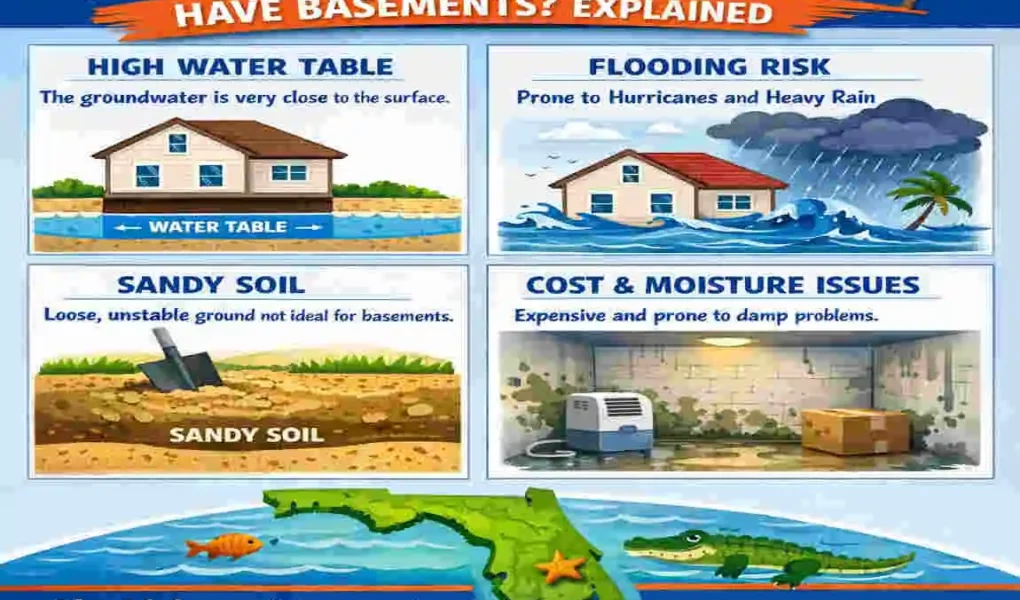
Ever wondered why don’t houses in Florida have basements while so many homes in northern states seem to have one? It’s a fair question. If you move from the Midwest, Northeast, or even parts of the South, you may expect a basement to be a normal part of a house. Then you start shopping in Florida and notice something right away: most homes are built on a concrete slab, not over a basement.
In Florida, basements are rare. In fact, many real estate professionals estimate that well under 1% of Florida homes have true basements. That number may surprise you, but once you understand the ground conditions, it makes perfect sense. Florida is a state with a high water table, flat terrain, heavy rain, flood risk, porous limestone, and a well-known history of sinkholes. All of those factors work against deep underground construction.
There is also the flood factor. Florida faces regular tropical storms, hurricanes, and intense seasonal rainfall. Some estimates suggest that about 1 in 5 properties in Florida face significant flood exposure, making underground living or storage even less practical. When water rises, a basement is usually the first place to flood.
Why Don’t Houses in Florida Have Basements? Start With the High Water Table
Florida’s shallow groundwater reality
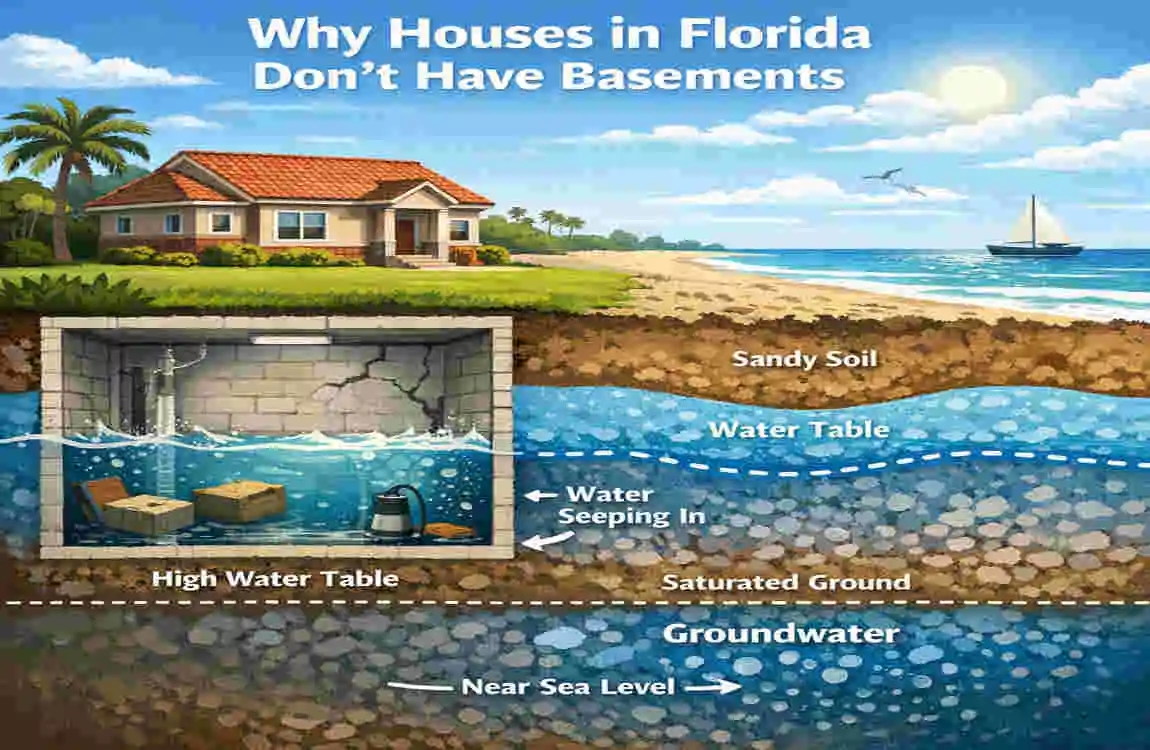
The first and biggest reason houses in Florida don’t have basements is the water table.
The water table is the level underground at which the soil is saturated with water. In simple terms, if you dig down far enough, you hit wet ground. In many parts of Florida, that wet ground is very close to the surface.
In South Florida, groundwater may sit only 2 to 6 feet below the ground in many areas. In other regions of the country, the water table can be much deeper, which makes basement excavation more practical. But in Florida, the builder often doesn’t need to dig very far before hitting water.
That creates an obvious problem. A standard basement requires digging well below the surface. If groundwater is already just a few feet below the surface, the excavation area can begin to fill with water almost immediately. That is not just inconvenient. It can delay construction, increase costs, weaken soil stability, and create long-term moisture issues.
This is one of the clearest answers to why don’t houses in Florida have basements. If you try to build underground where the ground is already wet, you are fighting nature from day one.
Why wet ground makes basements hard to build
Think about what a basement needs to stay usable:
- Dry walls
- Stable soil around the foundation
- Reliable drainage
- Moisture control
- Long-term waterproofing
Florida makes all of those harder.
Even if a basement can technically be built, it often requires extensive waterproofing, specialized drainage layers, sealed concrete walls, pumps, and ongoing humidity control. That means more money upfront and more maintenance later.
And here is the bigger issue: Florida storms can knock out power. During hurricanes, sump pumps and drainage systems may fail right when they are needed most. If that happens, water can collect fast. A basement that looked safe in a dry season can become a serious problem during a major storm.
Why slab foundations make more sense
Because of that risk, most Florida builders choose the simpler, safer option: a slab foundation.
A slab foundation is exactly what it sounds like. The home sits on a thick concrete pad poured at or slightly above ground level. It avoids deep excavation, reduces contact with groundwater, speeds up construction, and lowers the chance of underground water damage.
For builders, this is practical. For homeowners, it usually means fewer long-term surprises.
That is a major reason behind no basements in Florida homes. A slab does the job without inviting water into the structure.
The cost side of the water-table problem
The high water table in Florida does not just create engineering problems. It also creates budget problems.
In many Florida markets, adding a basement can cost 2 to 3 times as much as building a standard slab foundation. Why? Because the builder may need to add:
- Excavation support
- Waterproof membranes
- Drainage systems
- Dehumidification equipment
- Reinforced foundation walls
- Pump systems and backups
That is before you even talk about maintenance.
If the basement ever leaks, the costs keep going. Repairs can include mold treatment, water damage restoration, crack sealing, flooring replacement, and mechanical work. In a humid climate, moisture problems do not stay small for long.
For many buyers, it makes no sense to pay more for a feature that carries higher risk and lower usefulness.
Humidity makes the problem worse
Florida is already humid above ground. Now imagine a room below ground, surrounded by damp soil, in a hot and humid climate. That space will naturally struggle with:
- Condensation
- Musty odors
- Mold growth
- Mildew
- Air quality issues
Even a well-built basement may need constant climate control. So the question is not only can you build it. It should also be built.
For most people, the answer is no.
What this means for buyers
If you are moving to Florida from another state, you may be giving something up by losing the basement. But in reality, Florida homes are designed around local conditions. Instead of basements, many homes use:
- Large garages
- Interior storage rooms
- Attic storage
- Outdoor sheds
- Elevated closets and utility spaces
Why Don’t Houses in Florida Have Basements? Flat Terrain and Flood Risk Play a Huge Role
Why flat land traps water
The second big reason houses in Florida don’t have basements is Florida’s landscape.
Florida is flat. Very flat.
The state’s average elevation is low compared to many other parts of the country, and large areas lack strong natural drainage. In hilly regions, rainwater often runs downhill and away from homes more quickly. In Florida, water tends to collect, spread, and linger.
That matters during everyday rain. It matters even more during tropical storms and hurricanes.
When heavy rain falls on flat, saturated ground, it has nowhere to go fast. It pools on roads, fills yards, and pushes toward structures. If a home had a basement, that basement would be the lowest point and the easiest place for water to enter.
Florida flood risks are not theoretical
This is where Florida flood risks become central to the discussion.
Florida regularly faces intense weather systems that can drop 10 to 20 inches of rain or more over a short period. Even homes not near the beach can face flooding from rainfall alone. Add storm surge in coastal areas, and the danger grows even more.
That is why builders, insurers, and local officials take elevation seriously. In many areas, raising living space above ground level is the smart move. Digging down for a basement is the opposite approach.
A basement in a flood-prone environment is not extra security. It is often extra exposure.
Historical flood events show the risk clearly
Florida’s storm history helps explain the building choices seen across the state. Major storms have caused widespread rainfall flooding, property damage, and long recovery periods.
Here is a simple look at a few well-known flood-producing events:
Flood Event Rainfall (in)Damage ($B)Affected Counties
Hurricane Dora (1964) 23+ 0.2 North Florida
Hurricane Fay (2008) 16+ N/A Central Florida
Hurricane Ian (2022) 20+ 112 Southwest Florida
These events show why underground space is such a poor fit for flood-prone Florida soil. When water arrives in that volume, a basement becomes one of the first places to take the hit.
Hurricanes make drainage systems less dependable
Even if a basement is built with drains and pumps, storms create another problem: system failure.
Hurricanes bring high winds, power outages, clogged drainage paths, and water intrusion from multiple directions. If a pump stops working during peak flooding, a basement can fill quickly. In extreme cases, water pressure against basement walls can also become a structural concern.
That is one reason many Florida building decisions focus on staying above floodwater rather than hiding underground.
Floodplain rules and practical design
Large parts of Florida fall within areas where flood-resistant design matters. That does not mean every parcel is the same. Still, it means local building rules often favor raised foundations, which are simpler and easier to protect.
This helps explain why Florida neighborhoods often feature:
- Slab-on-grade homes
- Slightly elevated stem-wall foundations
- Pile-supported homes in some coastal zones
- Utility systems placed above expected flood levels
These choices are not random. They reflect the reality of a state where flood exposure shapes construction from the start.
Why buyers should care
If you are shopping for property, this point matters. A home with a basement may seem attractive if you want extra space. But in Florida, you should ask:
- Is the property in a flood-sensitive area?
- How high is the finished floor elevation?
- What kind of drainage surrounds the lot?
- How does the insurance company view underground space?
- What would happen during a long power outage after a storm?
Those questions are often more important than the basement itself.
So yes, flat land may sound harmless. But in Florida, flat land, storms, and saturated ground are major reasons why houses don’t have basements.
Florida Basements Geology: Limestone Bedrock and Karst Ground Create Serious Problems
Porous geology basics
To really understand this topic, you need to understand the geology of Florida basements.
Much of Florida sits on limestone, a porous rock formed over millions of years from ancient marine deposits. That is why people often refer to Florida limestone bedrock when discussing construction challenges. Limestone is not always solid and uniform like many people imagine bedrock to be. In Florida, it can contain cracks, voids, channels, and weakened pockets.
That matters because a basement requires deep excavation into or near that underground structure.
If the soil and rock below a site are full of openings and dissolved spaces, digging becomes much more complicated. The ground may not behave predictably. Water can move through it. Soil can shift. Empty pockets may form below the surface.
This is why the geology issue is more than “Florida has rock.” The real issue is that the rock is often porous, uneven, and tied to karst conditions.
What karst means in plain language
Karst is a landscape formed when water slowly dissolves limestone. In Florida, that process can create underground cavities and weak zones. Sometimes the ground remains stable for years. Other times, it collapses.
That is where sinkholes come into the conversation.
When people talk about sinkholes in Florida construction, they are referring to the challenge of building on land where underground support may not be as solid as it appears from the surface.
A slab foundation still needs good engineering, of course. But a basement goes deeper into the zone where those geological problems are more likely to matter.
Why excavation can increase risk
Digging a basement is not like digging a shallow foundation trench. It changes the soil structure more dramatically. It may expose weak layers, alter groundwater movement, and put stress on nearby ground.
In an area with karst conditions, that adds risk.
Basement construction may require:
- Soil testing
- Geotechnical reports
- Reinforcement design
- Advanced drainage planning
- Extra concrete and support work
All of this costs money. And even then, the builder may still decide the risk is not worth it.
Sinkhole concerns are real in some parts of Florida
Florida has thousands of documented sinkhole events, especially in parts of Central and West Florida. Counties such as Pasco and Hillsborough are often mentioned in discussions about sinkhole activity. Still, the concern can occur in other areas as well.
This does not mean every lot will develop a sinkhole. It does mean the state has a known geological pattern that makes deep excavation more complicated than it would be in many other regions.
If you are wondering why houses in Florida don’t have basements, this is another major reason: builders don’t want to cut deep into the ground that may already have hidden voids.
Moisture, limestone, and structural headaches
Limestone and water interact in ways that create greater uncertainty. Water moves through porous limestone, and over time it can enlarge cracks and underground spaces. That is a very different setting from building in dry, dense, stable soil.
From a homeowner’s point of view, a basement in this environment can mean:
- Higher structural engineering costs
- Greater long-term monitoring needs
- More concern about cracks or settlement
- More expensive insurance conversations
- Lower buyer confidence at resale
That last point is important. Even if a basement is built well, some buyers may still feel nervous about underground space in a state known for water and sinkhole concerns.
Why builders usually choose safer paths
Builders generally want repeatable, efficient, lower-risk systems. In Florida, the safest path is usually not to dig down. It is to build at grade or slightly above grade, using a slab, a stem wall, or an elevated support system when needed.
That approach avoids many of the geological uncertainties associated with Florida limestone bedrock.
A practical way to think about it
If you were building a home in a place with:
- wet ground,
- heavy storms,
- porous rock,
- and known sinkhole potential,
would you want your extra storage space underground?
Most people would not.
That is why the geology piece matters so much. It is not just one small detail. It is one of the strongest reasons for the lack of basements in Florida homes.
Why Don’t Houses in Florida Have Basements? Hurricane Codes and Insurance Matter Too
Building code priorities in Florida
The fourth reason why houses in Florida don’t have basements is how Florida builds for storms.
After major hurricanes, especially in the modern code era, Florida strengthened many building standards. The focus has been clear: build homes that perform better in wind, water, and storm surge conditions.
That often means homes are designed with:
- Stronger roof connections
- Better window and door protection
- Elevated finished floors in some areas
- Foundation systems that work with flood-zone rules
In many flood-sensitive locations, underground living space does not fit that strategy.
If the goal is to protect the structure from rising water, you usually do not create a room below grade that can trap it.
Basements and flood-zone compliance
Florida has many communities where flood maps, elevation rules, and insurance requirements shape what builders can do. In these places, putting major usable space below ground may create code problems, inspection challenges, or insurance complications.
Even when a basement is technically allowed, it may still be discouraged by the combined effect of:
- local rules,
- engineering limits,
- lender concerns,
- and insurance costs.
This helps explain why why don’t houses in Florida have basements is not just a geology question. It is also a regulatory and financial one.
Insurance can become much more expensive
Insurance companies look at risk, not wishful thinking.
If a home includes a basement in a state known for flooding, groundwater, humidity, and storm exposure, that can affect premiums. In some situations, homeowners may see significantly higher coverage costs or tighter policy conditions. The reason is simple: underground space is harder to protect and more expensive to restore after water damage.
That can make a basement feel less like a luxury and more like a long-term liability.
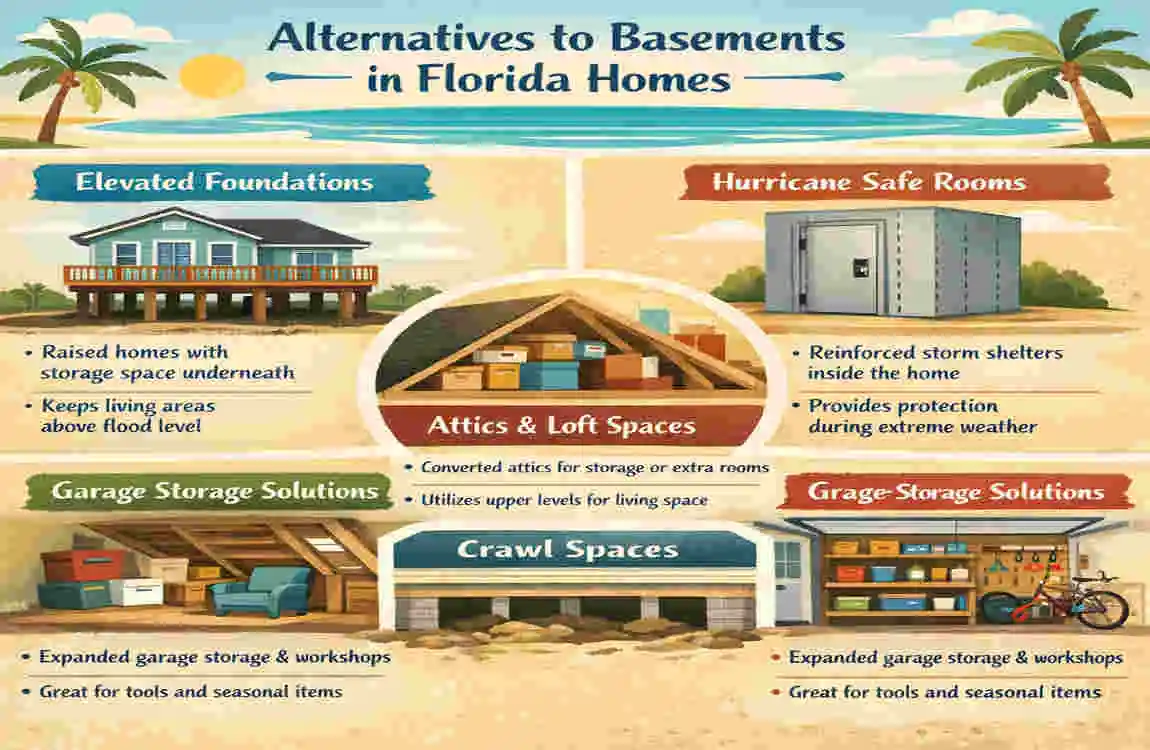
Practical alternatives builders use instead
Florida builders have not ignored the need for storage or elevation. They have found better ways to handle it.
Common alternatives include:
- Stem wall foundations, which slightly raise the home above grade
- Elevated slab systems, which improve drainage protection
- Pilings or piers in coastal and high-risk flood areas
- Conditioned storage rooms built on the main level
- Garage storage designed for real everyday use
These solutions match Florida’s climate better than a traditional basement.
The big takeaway on codes
When you combine storm codes, floodplain rules, and insurance pricing, the answer becomes even clearer. Florida homes are designed to resist water, not invite it below ground.
That is one more solid reason why don’t houses in Florida have basements in most neighborhoods across the state.
Why Don’t Houses in Florida Have Basements? The Economics Usually Don’t Work

Cost-benefit breakdown
The fifth reason why houses in Florida don’t have basements is simple: for most buyers and builders, the numbers don’t add up.
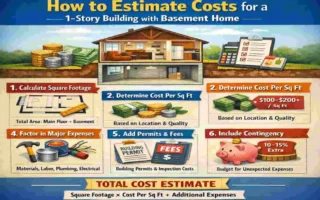
A basement in Florida can add $50,000 to $100,000 or more to a project depending on the lot, location, waterproofing needs, engineering, and materials. In some cases, the price can go even higher.
Now ask the obvious question: what do you get for that extra cost?
In many states, a basement adds useful square footage, storm shelter space, storage, or mechanical room separation. In Florida, however, you often get a space that is:
- more likely to deal with humidity,
- more vulnerable to water intrusion,
- more expensive to insure,
- and less desirable to some future buyers.
That is not a great return on investment.
Slab homes are faster and cheaper to build
One-story slab homes dominate much of Florida construction for a reason. They are usually:
- faster to build,
- easier to inspect,
- simpler to maintain,
- and better suited to the local environment.
They also work well for many Florida buyers, including retirees, families with young children, and people who want easy evacuation access during storm events.
Foundation comparison table
Here is a simple side-by-side look at the foundation choices:
Foundation Type Cost Premium Flood Risk Build Time
Slab Baseline Low Fast
Basement +200% High 2x Longer
Elevated Piling +50% Medium Moderate
This table makes the logic easy to see. In Florida, the slab foundation is often the best balance of cost, speed, and risk control.
Termites, moisture, and maintenance add more downside
Florida homeowners already deal with climate-related maintenance. Heat, humidity, salt air in coastal areas, and pests all shape how homes age.
A basement adds another enclosed, moisture-sensitive area that may need regular monitoring. That can mean:
- mold checks,
- waterproofing upkeep,
- crack monitoring,
- dehumidifier use,
- pest management,
- and repair planning.
And because Florida is also termite-heavy in many areas, homeowners already have enough reason to keep moisture under control.
Buyers do not expect basements in Florida
This part matters more than people think.
In many northern markets, buyers may strongly expect a basement. In Florida, most buyers do not. They are used to slab homes, garages, outdoor storage, and open floor plans. That means a basement may not deliver the same resale premium it might in another state.
In other words, you may spend a lot more without getting much more back.
Practical living patterns are different in Florida
Florida living also changes what people want from their homes. A lot of daily life happens on the main level, on lanais, in garages, or in outdoor areas. Storage needs are often met with built-ins, sheds, attic areas, or oversized closets rather than a basement.
So while a basement might sound attractive in theory, the local lifestyle does not depend on it nearly as much.
The economics are hard to ignore
When you combine all the issues—wet ground, flood exposure, geology, insurance, codes, and maintenance—the cost question becomes very clear.
That is why why don’t houses in Florida have basements is often answered with three words: because it’s impractical.
Homeowner Solutions: Smart Alternatives to a Florida Basement
If you are buying or building in Florida, you still have options for storage and protection. You do not need a basement to make a home functional.
Here are a few smart alternatives:
- Crawl spaces in select locations, when designed correctly
- Elevated storage platforms in garages
- Flood vents where required for certain enclosure types
- Built-in storage rooms inside the home
- Attic storage for lightweight seasonal items
- Outdoor sheds placed on proper foundations
- Raised utility areas for water heaters, HVAC equipment, and electrical systems
You should also pay close attention to lot drainage, finished floor elevation, and flood insurance needs before you buy. A smart Florida home is not the one with the deepest foundation. It is the one built to handle water, wind, and humidity well.
If you publish related blog content, this is also a good place to direct readers to guides on hurricane-resistant homes, Florida flood insurance basics, signs of poor yard drainage, and best foundations for coastal properties.
What Homebuyers Should Remember
If you want the shortest possible answer to why don’t houses in Florida have basements, here it is:
Florida’s ground and weather make basements expensive, risky, and unnecessary for most homes.
But if you want the fuller answer, remember these five facts:
- The water table is shallow, so digging down often means digging into water.
- Flooding is common enough that underground space becomes a major risk.
- Limestone and karst geology can create instability and sinkhole concerns.
- Building codes and insurance rules often favor elevation over excavation.
- The cost rarely pays off in resale value or everyday practicality.
That is the real story behind why don’t houses in Florida have basements.
FAQ
Why don’t houses in Florida have basements?
The main reasons are the high water table, frequent flood risks, porous limestone geology, and the high cost of waterproofing and reinforcement. In many areas, a basement would be harder to build, more expensive to maintain, and more likely to flood.
Can you build a basement in Florida?
Yes, in some locations you can. But it is usually rare, expensive, and heavily dependent on the lot, local code, water conditions, and engineering. It is much more practical in limited non-flood-prone areas than in coastal or low-lying zones.
Is Florida geology bad for basements?
In many places, yes. Florida’s basement geology is challenging due to porous limestone, karst features, shallow groundwater, and sinkhole risk in some regions. These factors make underground construction less predictable and more costly.
What is the best foundation for a Florida home?
For most homes, a concrete slab foundation is the most common and practical choice. In higher-risk flood areas, builders may also use stem walls, piers, or pilings to raise the structure.