
Have you ever wondered how much a house weighs? It’s not something we think about every day, but the weight of a house plays a crucial role in construction, transportation, and even insurance. For instance, did you know that a typical 2,000-square-foot wood-frame house weighs approximately 200-250 tons? That’s the equivalent of about 50 elephants!
Understanding the weight of a house is essential for homeowners, builders, and even movers. Whether you’re planning a renovation, moving a modular home, or simply curious, knowing the weight of your home can help you make informed decisions. In this guide, we’ll break down the average weights of wood, brick, and modern homes, explore the factors that influence these weights, and even show you how to calculate your home’s weight.
Why House Weight Matters for Homeowners

The weight of a house isn’t just a fun fact—it has real-world implications that can affect your home’s foundation, insurance costs, and even its resale value. Let’s explore why understanding house weight is so important.
Impact on Foundations
A house’s weight directly impacts the type of foundation it needs. Heavier homes, like those made of brick, require stronger and more expensive foundations. For example, a brick home might increase foundation costs by 20-30% compared to a lighter wood-frame house. This is because the foundation must support the additional weight without sinking or cracking over time.
Insurance and Real Estate Value
Insurance companies often consider the weight and materials of a house when determining premiums. Heavier homes made of durable materials like brick or concrete may have lower fire risks but higher repair costs, which can influence insurance rates. Additionally, the weight and materials of a home can affect its resale value, as buyers may prefer lighter, more modern homes for easier maintenance.
Modular Home Transport and Disaster Recovery
For modular or prefabricated homes, weight plays a significant role in transportation costs. A single section of a modular home can weigh 20-50 tons, and moving costs can range from $5-25 per square foot, depending on the materials. Similarly, in disaster recovery scenarios, knowing the weight of a home can help engineers and contractors assess structural damage and plan repairs.
FactorLight Wood HomeHeavy Brick Home
Foundation Cost Lower 20-30% higher
Moving Cost $5-10/sq ft $15-25/sq ft
Average House Weights by Size and Stories
The weight of a house varies significantly based on its size, number of stories, and materials used. Here’s a breakdown of average house weights to give you a clearer picture.
Size (sq ft)1-Story Wood (tons)2-Story Wood (tons)Brick Equivalent (tons)
1,000 100 137.5 200+
2,500 250 343.75 400+
5,000 500 687.5 800+
How to Estimate House Weight
To estimate the weight of your house, you can use the following formula:
Weight (lbs) = Square Footage × Weight per Square Foot
- For wood-frame houses: 50-100 lbs/sq ft
- For brick houses: 150+ lbs/sq ft
For example, a 2,500-square-foot wood-frame house would weigh approximately 125,000-250,000 lbs (or 62.5-125 tons).
Wood Frame Houses: Lightest and Most Common
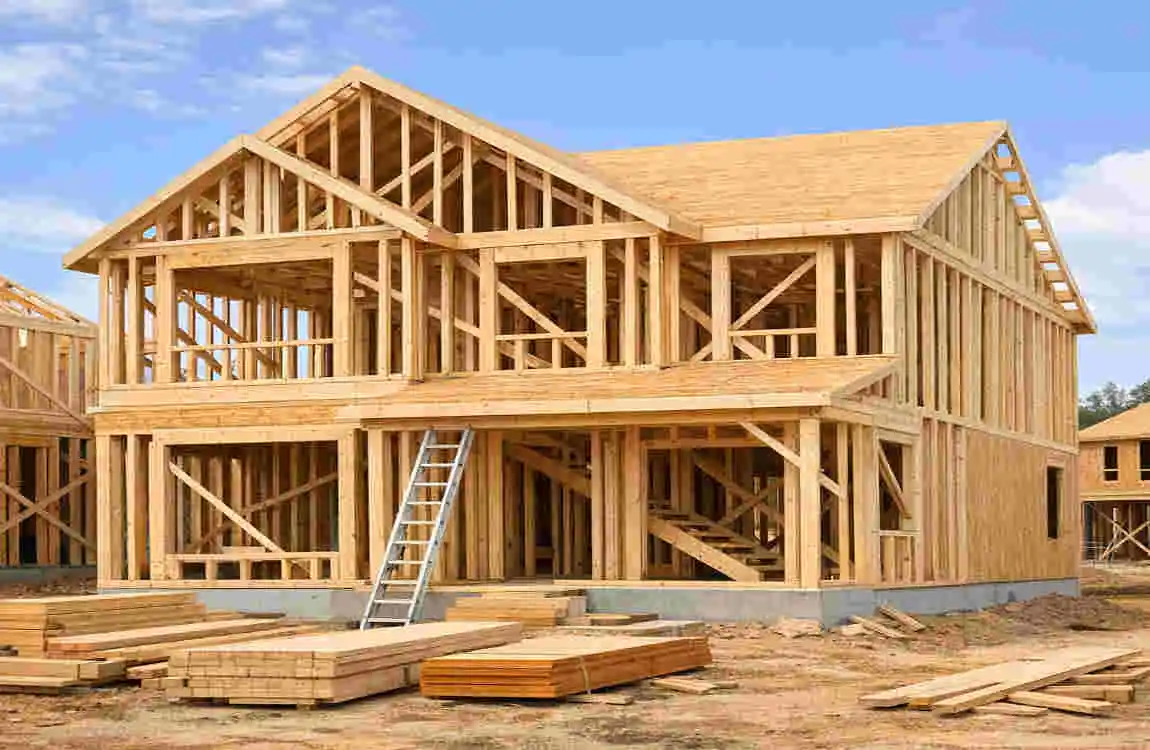
Wood-frame houses are the most common type of home in many parts of the world, thanks to their affordability and versatility. But how much do they weigh?
Average Weight of a Wood House
A typical wood-frame house weighs between 25 and 60 lbs per square foot, depending on the type of lumber, roofing, and insulation used. For a standard 2,500-square-foot single-story home, this translates to a total weight of 80-100 tons.
Factors Affecting Wood House Weight
Several factors influence the weight of a wood-frame house:
- Lumber: The type and amount of wood used can significantly impact the weight. For example, hardwoods are denser and heavier than softwoods.
- Roofing: Asphalt shingles weigh 2-4 lbs per square foot, while metal roofing can add even more weight.
- Insulation: Heavier insulation materials, like spray foam, can increase the overall weight of the house.
Comparison to Shipping Containers
To put things into perspective, a standard shipping container weighs between 8,000 and 30,000 lbs. A wood-frame house is significantly heavier, even though it might look less imposing.
Brick Homes: Heavy-Duty and Durable
Brick homes are known for their durability and timeless appeal, but they come with a hefty weight.
How Much Does a Brick House Weigh?
Bricks weigh approximately 4.5-5 lbs each, and a 2,000-square-foot brick home can weigh over 300,000 lbs (or 150 tons). This is nearly double the weight of a comparable wood-frame house.
Material Weight per Unit Total for 2,000 sq ft
Clay Brick 5 lbs 300,000+ lbs
Concrete Block 43 lbs 500,000+ lbs
Pros and Cons of Brick Homes
- Pros: Brick homes are fire-resistant, energy-efficient, and require minimal maintenance.
- Cons: They are heavier, which increases foundation and transportation costs.
Modern Homes: Steel, Concrete & Lightweight Trends

Modern homes often use innovative materials like steel and aerated concrete, which offer a balance between strength and weight.
Weight of Modern Homes
Modern homes can weigh anywhere from 100 to 150 lbs per square foot, depending on the materials used. For example, steel-frame homes are lighter than brick but heavier than wood.
TypeAvg Weight (2,500 sq ft)Key Material
Wood 250 tons Lumber
Brick 400+ tons Masonry
Modern Steel 200-300 tons Metal frame
How to Calculate Your House’s Exact Weight
If you’re curious about your home’s exact weight, follow these steps:
- Measure the Square Footage: Include all floors and stories.
- Estimate Weight per Square Foot: Use 50-100 lbs for wood and 150+ lbs for brick.
- Add Roof and Foundation Weight: These can add an extra 20-30% to the total weight.
For a more precise calculation, consider hiring a structural engineer, which typically costs $500-1,000.
Factors Influencing Total House Weight
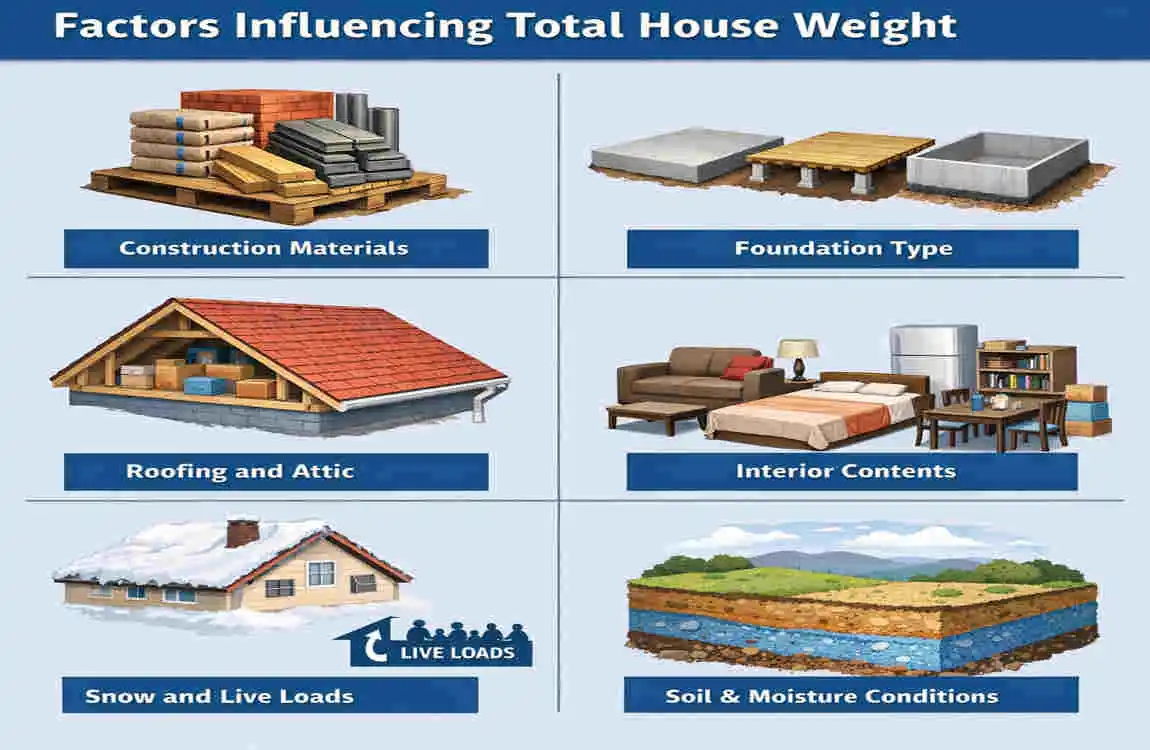
Several factors can influence the total weight of a house:
- Roofing Materials: Asphalt shingles weigh 2-4 lbs per square foot, while tile roofs are much heavier.
- Design: Multi-story homes distribute weight differently than single-story homes.
- Add-Ons: Features like pools, patios, and heavy appliances can add significant weight.
Real Examples from Around the World
- United States: A 2,500-square-foot wood-frame house weighs approximately 250 tons.
- Lahore, Pakistan: Traditional brick homes weigh around 400 tons due to their masonry construction.
- Modern Prefab Homes: These weigh between 150 and 200 tons, depending on the materials used.
FAQs: How Much Does a House Weigh?
How much does a 1,000 sq ft house weigh?
A 1,000 sq ft house weighs 50-137 tons, depending on the materials.
Is wood lighter than brick?
Yes, wood is approximately 2x lighter than brick.