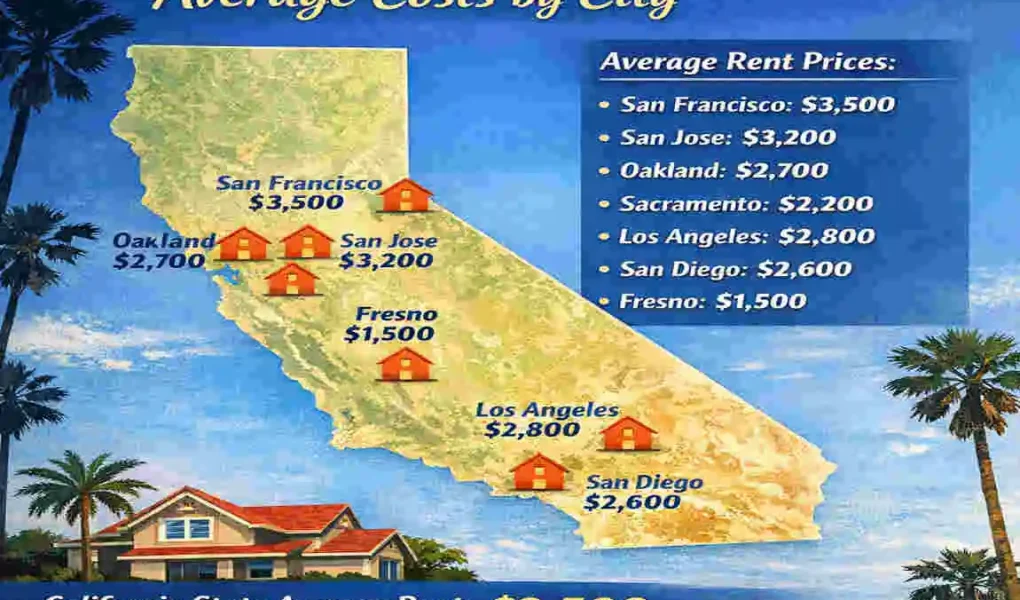
If you are asking how much it costs to rent a house in California, the short answer is: it depends largely on the city, the size of the home, and the neighborhood. California is one of the most expensive rental markets in the country, but prices can still vary widely from place to place.
A house near the coast or in a major job center usually costs much more than a home inland. A small family home in one city may feel expensive, while a similar home elsewhere may be far more manageable. That is why it helps to look at local averages before you move.
How Much Is It to Rent a House in California?
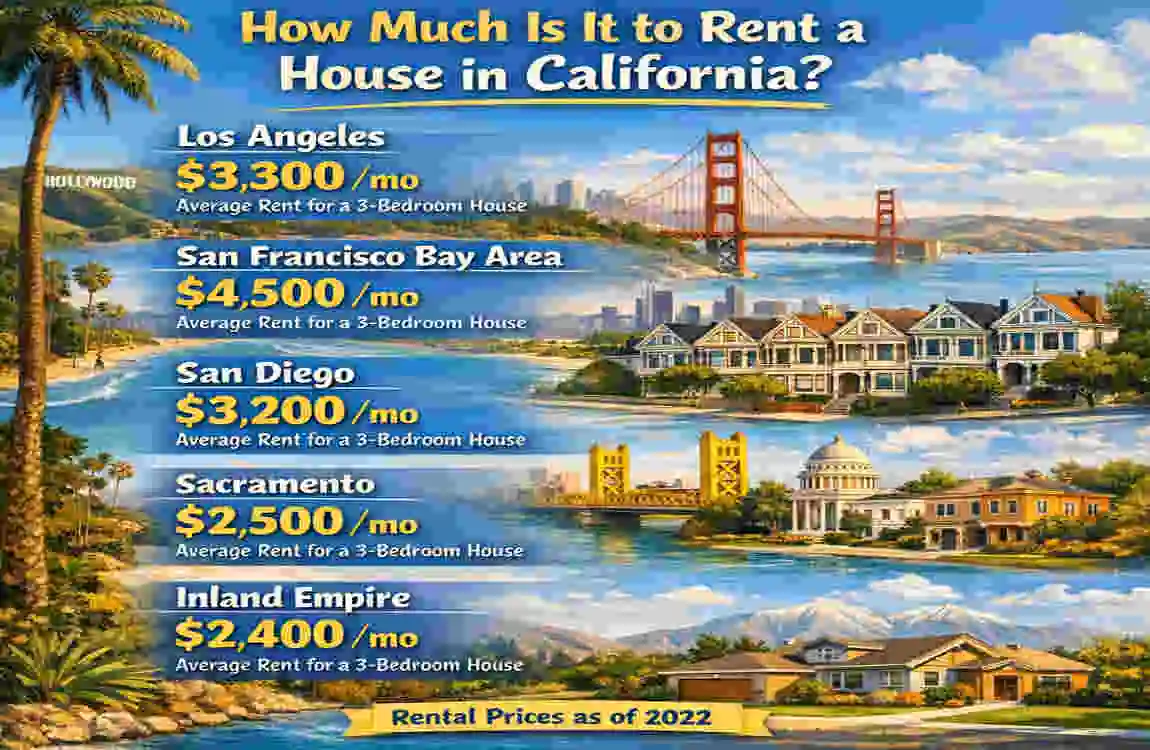
The average monthly rent for a single-family house in California often falls between $2,500 and $ 5,500, depending on the city and home size. In high-demand areas, that number can go much higher.
Houses usually cost more than apartments or condos because they offer more space, privacy, and sometimes a yard or garage. Urban homes near job centers tend to be pricier than homes in suburban or inland areas.
Average House Rent by California City
California rents vary widely by location. A house in Los Angeles is not priced the same as one in Fresno or Bakersfield.
Los Angeles
Los Angeles is one of the most expensive rental markets in the state. A house here often ranges from $3,500 to $6,500+ per month, depending on the neighborhood.
Popular areas like West LA, nearby Santa Monica, and certain parts of the valley can drive prices up. You pay more for location, convenience, and access to jobs and entertainment.
San Francisco
San Francisco is among the most expensive places to rent a luxury house in California. Monthly rent often starts around $4,500 and can go far beyond that.
High demand, limited space, and strong job markets keep prices high. Even smaller homes can be very costly.
San Diego
San Diego is also expensive, but many renters still see it as worth the price because of the weather and lifestyle. A house may cost around $3,200 to $5,500+ per month.
Families often look at areas that offer a better balance of space, schools, and commute times.
Sacramento
Sacramento is usually more affordable than the big coastal cities. House rent often falls around $2,500 to $4,000.
It has become more popular because more renters want a lower-cost option without leaving a major city area.
San Jose
San Jose is expensive because of the tech industry. House rent can often range from $4,000 to $6,500+.
Strong salaries in the area drive demand higher, which keeps prices up.
Fresno
Fresno is one of the more affordable large cities in California. A luxury house may cost around $1,800 to $3,000.
This makes it attractive for renters who want lower monthly costs.
Bakersfield
Bakersfield is also known for budget-friendly rentals. House rent often falls between $1,700 and $2,900.
If you want lower rent and do not mind living farther from the coast, this city can be a smart choice.
Riverside
Riverside is popular with commuters and families looking for more space at a lower price. House rent often ranges from $2,500 to $4,200.
It sits in a middle range compared with coastal cities and inland budget spots.
California City Average Monthly Rent Affordability
Los Angeles $$$ High
San Francisco $$$$ Very High
San Diego $$$ High
San Jose $$$$ Very High
Sacramento $$ Moderate
Riverside $$ Moderate
Fresno $ Affordable
Bakersfield $ Affordable
What Affects House Rental Prices in California?
Several things shape the final rent you will pay. Two houses that look similar can still have very different prices.
Location
Coastal cities usually cost more than inland cities. Homes near beaches, major offices, or popular downtown areas are often priced higher.
Home Size
More bedrooms, more bathrooms, and more square footage usually mean a higher monthly rent. A 4-bedroom house will almost always cost more than a 2-bedroom home.
Neighborhood
Good school districts, safer streets, and nearby shops or parks can all raise rent. People often pay more for convenience and peace of mind.
Property Condition
A newly renovated home will usually cost more than an older home. Updated kitchens, bathrooms, flooring, and appliances often increase the price.
Market Demand
When more people want to rent in one area, prices go up. This happens often in places with strong job growth or limited housing.
Average Rent by House Size
The size of the home also plays a big role. Here is a simple way to think about it.
1-Bedroom House
This is usually the cheapest option, but true 1-bedroom houses are less common than apartments. They may suit single renters or couples.
2-Bedroom House
A 2-bedroom home works well for couples, small families, or roommates. It offers more space without jumping into the highest price range.
3-Bedroom House
A 3-bedroom house is one of the most common choices for families. In California, this can be a major cost jump, especially in bigger cities.
4-Bedroom Family Homes
These are often much more expensive and are usually chosen by larger families or shared households. In popular cities, they can become very costly very quickly.
California’s Most Affordable Cities for Renting a House
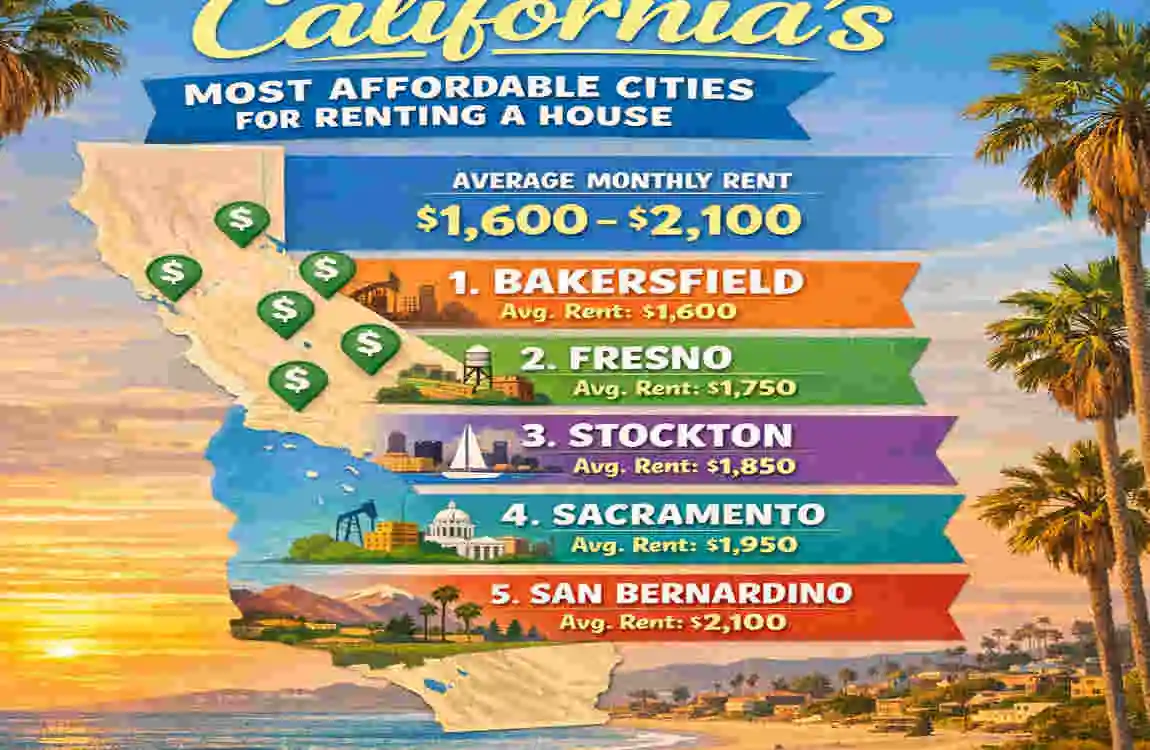
If you want lower rent, inland cities are often the best place to look.
Bakersfield
Bakersfield stays affordable compared with coastal markets. It is often a good option for renters who want more space for less money.
Fresno
Fresno usually offers one of the lowest costs among larger California cities. That makes it popular with families and budget-conscious renters.
Stockton
Stockton can also offer better value than many parts of the Bay Area or Southern California.
Modesto
Modesto is another lower-cost option where renters may find more manageable monthly payments.
Chico
Chico can be a good choice for people who want a smaller-city feel with lower rent than major urban centers.
Most Expensive Cities to Rent a House
Some California cities stay expensive because demand is very high and housing supply is tight.
San Francisco
Limited space and strong demand keep rent high year after year.
Palo Alto
Palo Alto is one of the priciest markets because of its location, schools, and proximity to tech jobs.
San Jose
Tech employment keeps demand strong and pushes rents upward.
Santa Monica
This area is highly desirable, which means higher rents for most types of housing.
Irvine
Irvine is known for strong schools, planning, and family appeal, but that also means higher prices.
Additional Costs When Renting a House in California
Monthly rent is only part of the total cost. You should also plan for extra expenses.
Security Deposit
Many landlords ask for a deposit before move-in. This can be equal to or exceed one month’s rent, depending on the lease.
Utilities
You may need to pay for electricity, gas, water, and trash. These costs can add a noticeable amount each month.
Internet
Most renters pay separately for internet service.
Pet Fees
If you have pets, expect possible pet rent or an extra deposit.
Parking
Some homes include parking, but others charge extra, especially in crowded urban areas.
Renters Insurance
This is often affordable, but it is still another cost to include in your budget.
Tips to Save Money on House Rent
If you want to lower your monthly cost, a few smart choices can help.
- Compare several neighborhoods
- Look outside the city center
- Share costs with roommates or family
- Ask about lease flexibility
- Try a longer lease for better pricing
- Search during slower rental seasons
Even small changes in location or timing can save you a lot over the course of a year.
Is Renting Better Than Buying in California?
This depends on your goals, budget, and how long you plan to stay.
Monthly Costs
Renting usually means lower upfront costs than buying. You do not need a large down payment or closing costs.
Flexibility
Renting gives you more freedom if you may move soon. Buying makes more sense if you plan to stay long term.
Maintenance Responsibilities
Renters usually do not pay for major repairs. That can be a big advantage.
Upfront Expenses
Buying requires more money upfront. Renting is usually easier if you want a simpler move.
Long-Term Financial Considerations
Buying can build equity, but renting may be better if prices are too high or your plans may change.
Things to Check Before Renting a House
Before you sign, take a careful look at the full offer.
- Lease agreement
- Home condition
- Neighborhood safety
- Commute time
- Included utilities
- Parking access
- Maintenance rules
These details matter just as much as the rent itself.
Frequently Asked Questions
How much is it to rent a house in California on average?
On average, rent in California ranges from $2,500 to $5,500+ per month, depending on the city and home size.
Which California city has the cheapest house rentals?
Cities like Bakersfield and Fresno are usually among the more affordable places to rent a house.
Why is rent so expensive in California?
High demand, limited housing, strong job markets, and popular coastal locations all help drive prices up.
How much does a three-bedroom house cost to rent in California?
A 3-bedroom house can cost anywhere from around $2,500 to $6,000+, depending on the city and neighborhood.
Is it cheaper to rent inland than on the California coast?
Yes, inland areas are usually cheaper than coastal cities like San Francisco, Los Angeles, or San Diego.
| City | Average Monthly Rent (House) | Typical Price Range |
|---|---|---|
| San Francisco | $4,200–$5,500 | $3,500–$7,000+ |
| San Jose | $3,600–$4,800 | $3,000–$6,000 |
| Los Angeles | $3,200–$4,500 | $2,700–$6,000 |
| San Diego | $3,000–$4,200 | $2,500–$5,500 |
| Irvine | $3,300–$4,600 | $2,800–$5,800 |
| Sacramento | $2,200–$3,200 | $1,800–$4,000 |
| Riverside | $2,300–$3,300 | $1,900–$4,200 |
| Oakland | $2,800–$4,000 | $2,300–$5,000 |
| Fresno | $1,700–$2,700 | $1,400–$3,200 |
| Bakersfield | $1,600–$2,500 | $1,300–$3,000 |