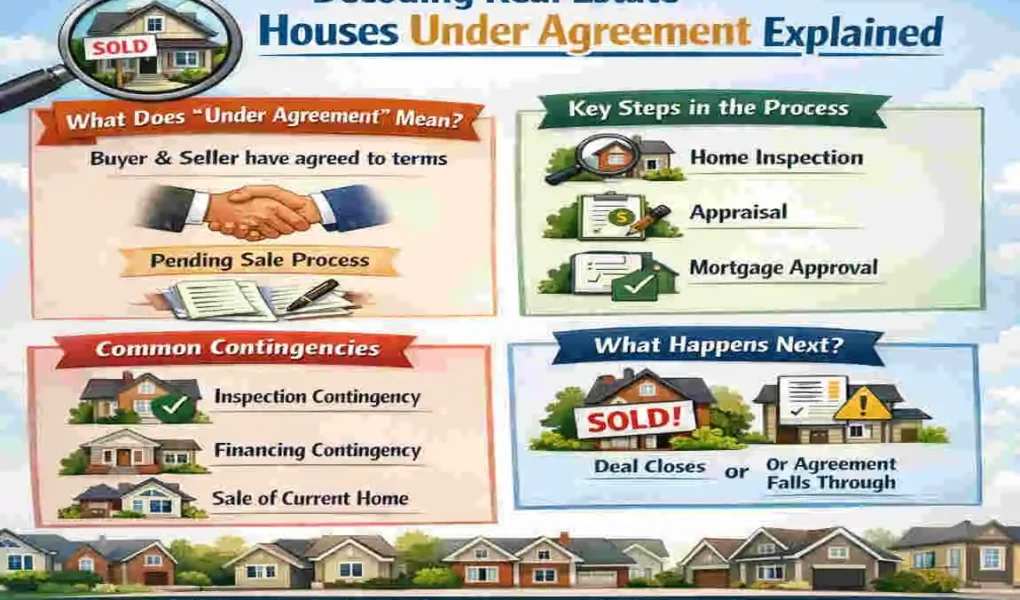
If you are house hunting, you may keep seeing the phrase “under agreement” and wonder what it really means. In simple terms, it usually means the buyer and seller have agreed on the sale terms and are moving forward with a contract.
| Topic | Details |
|---|---|
| Meaning | The buyer and seller have agreed to proceed with the sale. |
| Purchase Agreement | A contract outlining the sale terms and conditions. |
| Home Inspection | The buyer checks the property’s condition. |
| Mortgage Approval | The lender reviews and approves the buyer’s financing. |
| Closing Process | Final documents and payments are completed. |
| Can the Deal Fall Through? | Yes, depending on the contract and applicable conditions. |
| Can Other Buyers Make an Offer? | A backup offer may be possible, depending on the seller’s circumstances and local rules. |
| Final Status | The property is considered sold after the transaction closes and ownership transfers. |
what does it mean when a house is under agreement? It usually means the home is no longer open to general offers, but the sale isn’t fully finished yet. The exact meaning can vary by state, local real estate practice, and the contract’s wording.
What Does It Mean When a House Is Under Agreement?
Definition of a House Under Agreement
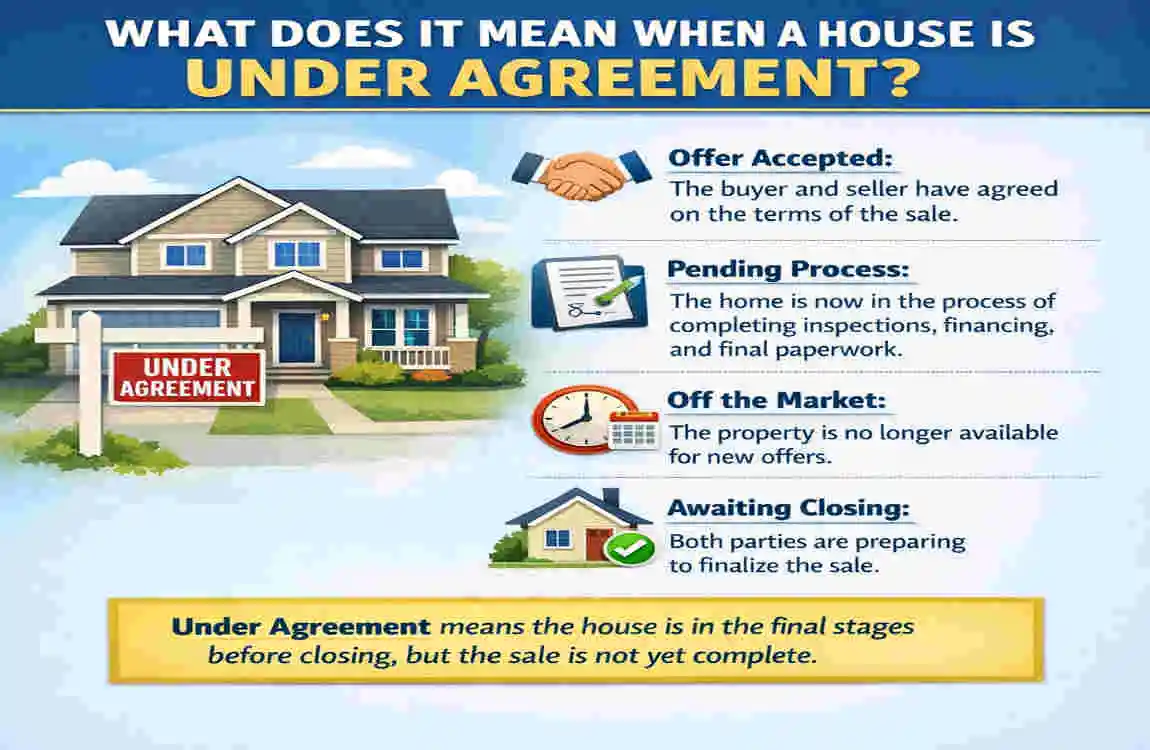
A house under agreement is a property where the seller has accepted an offer, and both sides are working through the next steps toward closing. The contract usually includes the price, deposit, deadlines, contingencies, and closing date.
This does not always mean the home has legally changed hands. Ownership usually transfers only at closing.
Why Real Estate Listings Use the Term “Under Agreement”
Real estate agents use this label to show buyers that the property is already tied to an accepted offer. It sets expectations and lets people know the home isn’t fully open to new offers.
You may also see terms like active, contingent, pending, or sold. These labels are not always used the same way in every market.
Does Under Agreement Mean the House Is Sold?
Not yet. A home under agreement is still in the middle of property the transaction. The sale may still depend on inspections, financing approval, title checks, and other contract terms.
For example, a buyer and seller sign the agreement, but the buyer still needs mortgage approval before the deal can close.
How Does the Under-Agreement Process Work?
Making an Offer on a Property
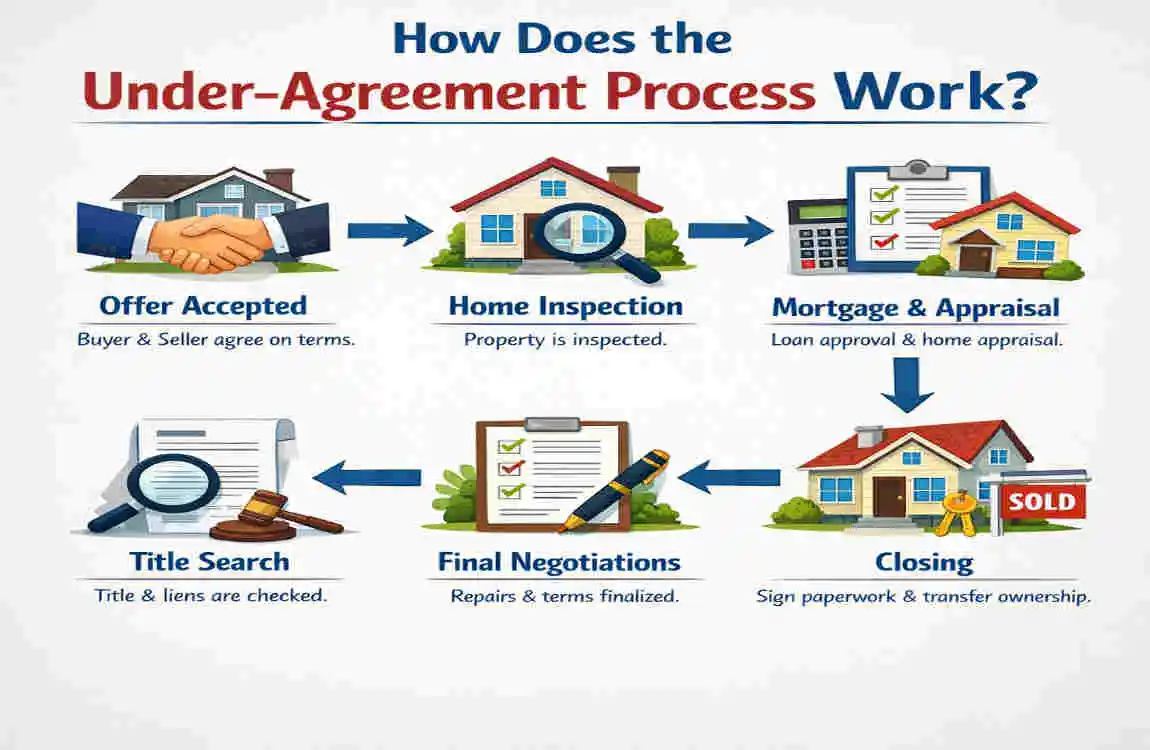
The process usually starts when a buyer submits an offer through an agent or, where allowed, directly. That offer often includes the price, deposit, closing date, and any contingencies.
The seller can accept, reject property, or negotiate the offer. Once both sides agree in writing, the contract may become binding, depending on local laws.
Seller Acceptance and the Purchase Agreement
After acceptance, both parties review and sign the purchase agreement. This document matters because it sets the rules for the rest of the process.
The buyer and seller then need to meet deadlines, share documents, and follow the contract terms closely.
Home Inspection and Property Evaluation
After agreement, the buyer usually arranges a home inspection. This helps reveal issues with the roof, foundation, plumbing, electrical system, heating, or cooling.
If problems come up, the buyer may ask for repairs cost, request a price change, or decide whether to continue. Missing inspection deadlines can limit the buyer’s options.
Mortgage Approval and Financing
Even after a deal is accepted, the buyer still has to finish the mortgage process. The lender will usually review income, credit, property value, and paperwork before final approval.
This is why preapproval is not the same as final loan approval. If financing does not come through on time, the deal may be at risk.
Title Search and Preparing for Closing
A title search checks for ownership issues, liens, or other problems that could affect the transfer. Title insurance may also help protect the buyer, depending on the situation.
At the same time, the buyer prepares closing documents and arranges final payment details so the sale can move toward completion.
What Happens After a House Goes Under Agreement?
The Buyer Completes Remaining Requirements
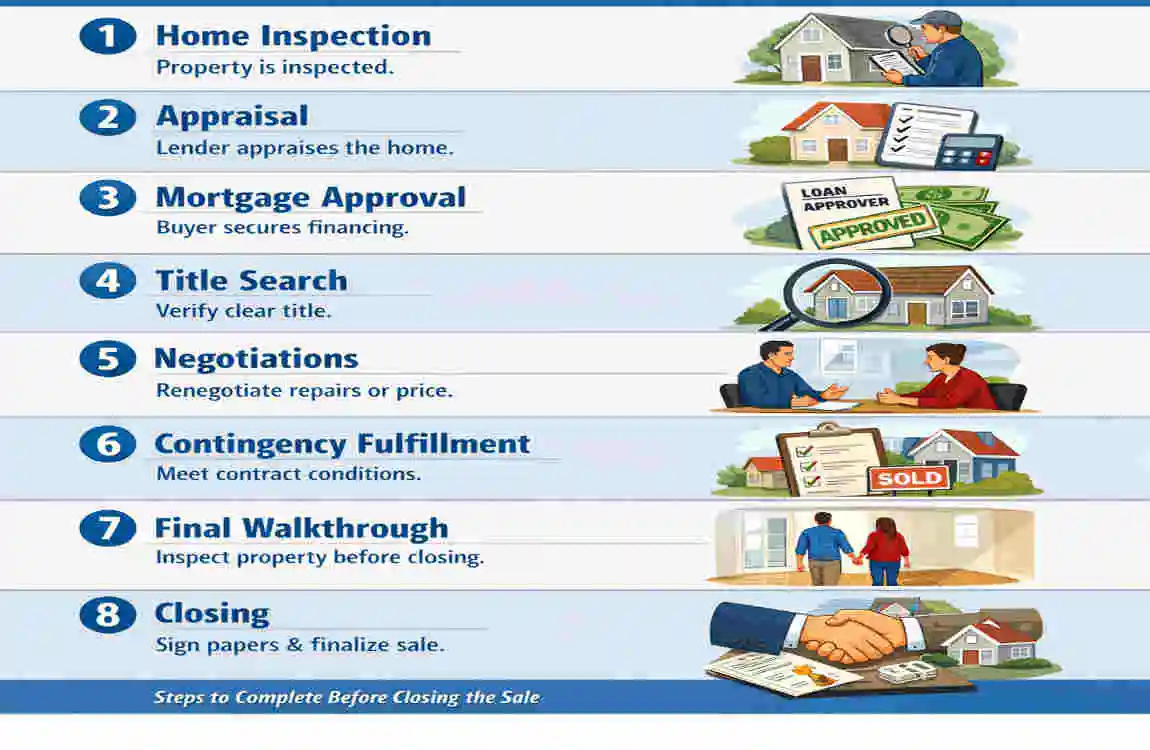
After signing, the buyer still has work to do. This may include submitting more paperwork, scheduling inspections, arranging insurance, and meeting deadlines.
It is also smart to avoid big financial changes property, like taking on new debt, because that can affect mortgage approval.
The Seller Prepares for Closing
The seller may need to provide disclosures, complete agreed repairs, and help with inspections or appraisal visits. In some cases, the seller must also address title issues or provide additional documents.
What the seller must do depends on the contract and local rules.
The Final Walkthrough and Closing Day
Before closing, the buyer usually does a final walkthrough to make sure the home is in the agreed condition. Use this time to check repairs and confirm that items included in the sale are still there.
On closing day, both sides sign the final papers, transfer the money, and ownership changes hands. Keys are usually given according to the closing plan and local practice.
What If the Deal Falls Through?
Sometimes a deal ends before closing. This can happen because of financing problems, inspection issues, title concerns, or missed deadlines.
What happens next depends on the contract and applicable law. In some cases, the home returns to the market.
Under Agreement vs. Pending vs. Contingent vs. Sold
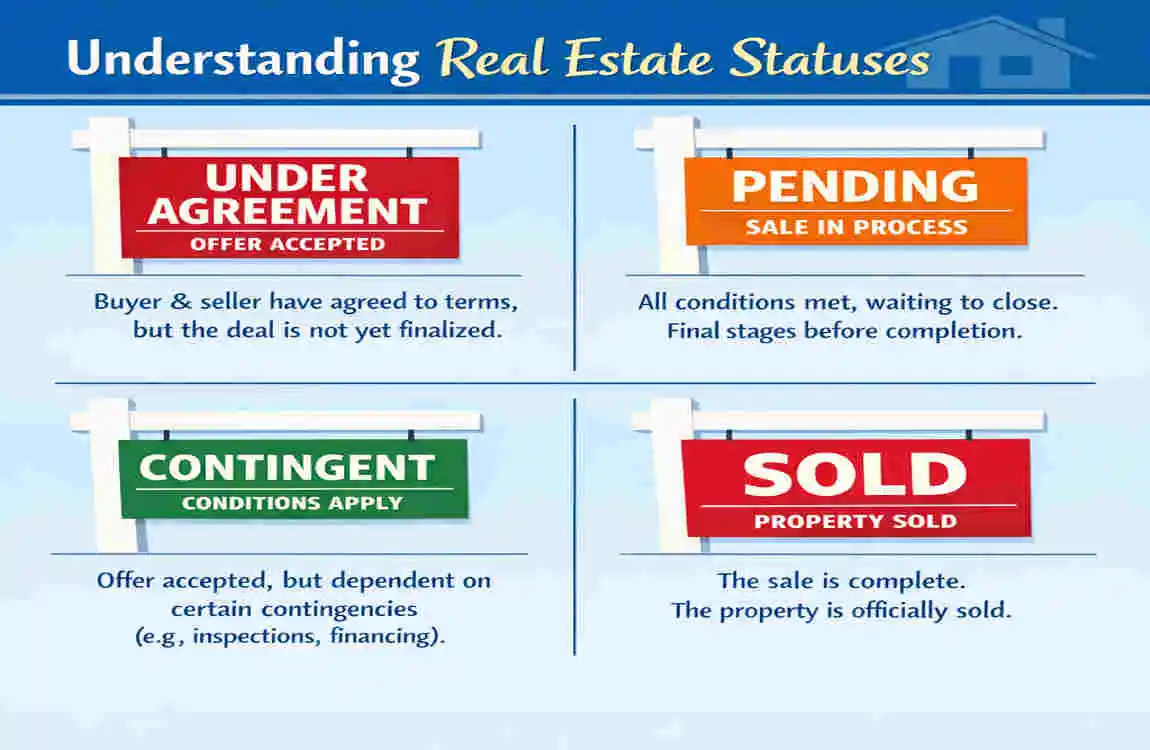
Understanding the Difference Between These Listing Statuses
These terms can look similar, but they often describe different stages of the sale process. Local markets may use them differently, so the listing label alone does not tell the full story.
Quick Comparison Table
| Listing status | General meaning | Can the transaction still fail? | | ————— | “`– | ——————————- | | Active | The property is being marketed for sale | Yes | | Under agreement | The buyer and seller have reached an agreement and are proceeding under a contract | Yes | | Contingent | One or more contractual conditions remain relevant | Yes | | Pending | The sale is progressing toward completion | Yes | | Sold | The transaction has generally closed | The sale is generally complete |
What Buyers and Sellers Should Know About an Under-Agreement Property
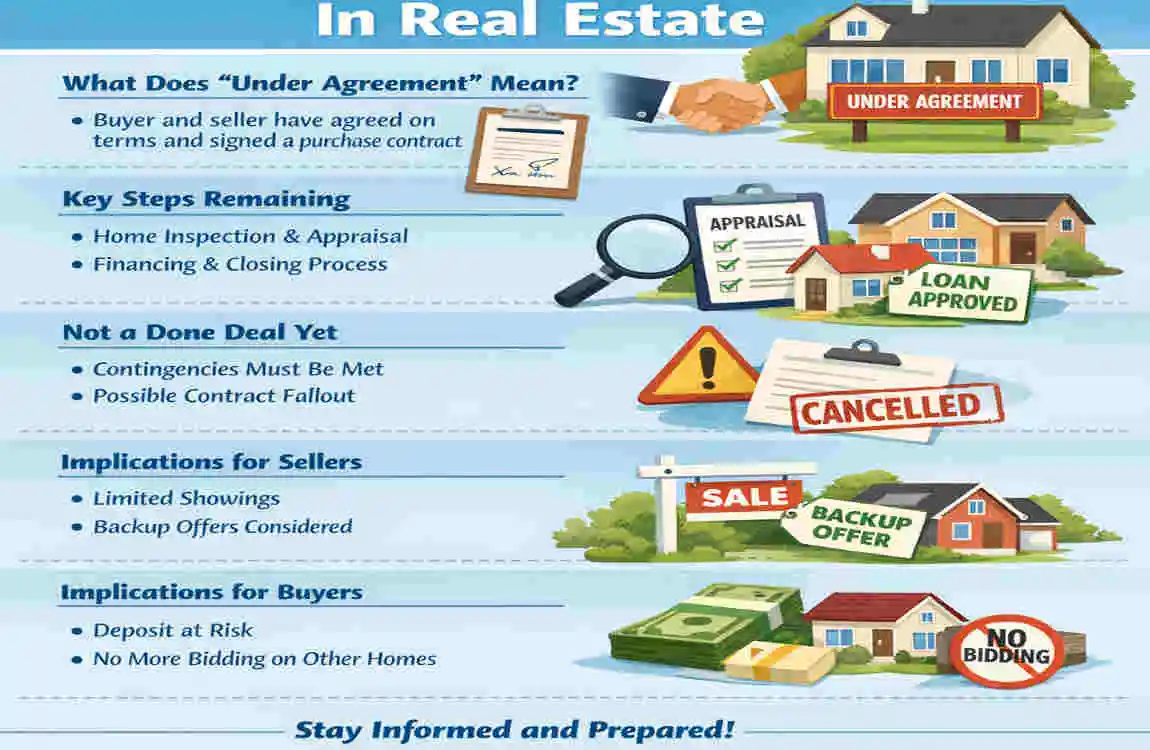
Important Considerations for Buyers
- Read the contract carefully before signing.
- Watch all inspection, financing, and appraisal deadlines.
- Keep your lender and agent updated.
- Be ready for closing costs and moving expenses.
Important Considerations for Sellers
- Follow the signed agreement closely.
- Cooperate with inspections and requested documents.
- Be careful not to promise anything that conflicts with the contract.
- Check with a real estate professional before changing the deal.
Frequently Asked Questions About Houses Under Agreement
What does it mean when a house is under agreement?
It means the buyer and seller have agreed to move forward with a sale under set terms, but the deal may still need inspections, financing, and closing steps.
Can you still view a house that is under agreement?
Sometimes yes. It depends on the seller, the agent, and whether the seller is considering backup offers.
Can a seller accept another offer after agreeing to sell?
It depends on the contract and local law. In some cases, backup offers may be allowed, but the seller must still follow the existing agreement.
Is under agreement the same as pending?
Not always. Some places use the terms differently, while others use them almost the same way.
Can a house under agreement return to the market?
Yes. If the deal ends before closing, the home may be relisted.