Housing construction projects do more than add new buildings to a neighborhood. They change how people live, work, travel, and connect. In many places, new homes are needed because populations are growing, housing is limited, and families want better living spaces. That is why these projects often become a major topic in local planning and business discussions.
| Project Type | Main Work | Typical Outcome |
|---|---|---|
| Single-family home | Foundation, framing, roofing, utilities | One private house |
| Townhouse development | Shared walls, separate units, common services | Multiple attached homes |
| Apartment building | Structural frame, elevators, shared systems | Multi-unit residential block |
| Low-cost housing | Simple design, affordable materials | Budget-friendly homes |
| Housing renovation | Repairs, upgrades, remodeling | Improved existing housing |
At first glance, a new housing site may seem like just another development. But the truth is deeper. These projects can create jobs, improve roads, boost business activity, and introduce new services. At the same time, they can also create pressure on traffic, schools, utilities, and the environment. So, the impact is not always simple.
What Are Housing Construction Projects?
Definition of Housing Construction Projects
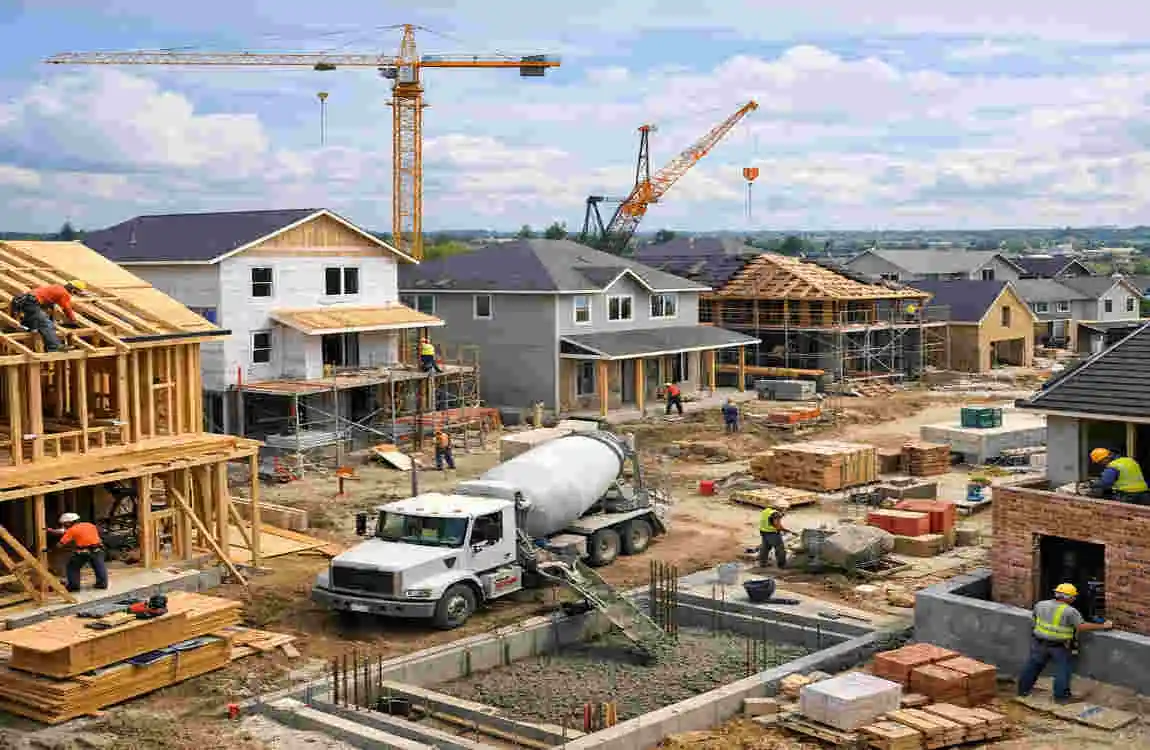
Housing construction projects are developments that create or improve residential spaces. These can include single-family houses, apartment buildings, affordable housing units, townhomes, and mixed-use communities. Some projects are small and local, while others are large and reshape entire neighborhoods.
Common Types of Residential Construction
These projects appear in different forms depending on the area:
- Urban housing, such as high-rise apartments
- Suburban developments, such as new home communities
- Rural housing, often built to support smaller populations
- Public housing, designed to improve access for low-income families
Main Stakeholders Involved
Many groups take part in these projects. Government agencies set rules, developers plan the project, contractors build it, investors fund it, and residents are the people most affected by the results.
Economic Impact of Housing Construction Projects on Communities
Boosting Local Economies
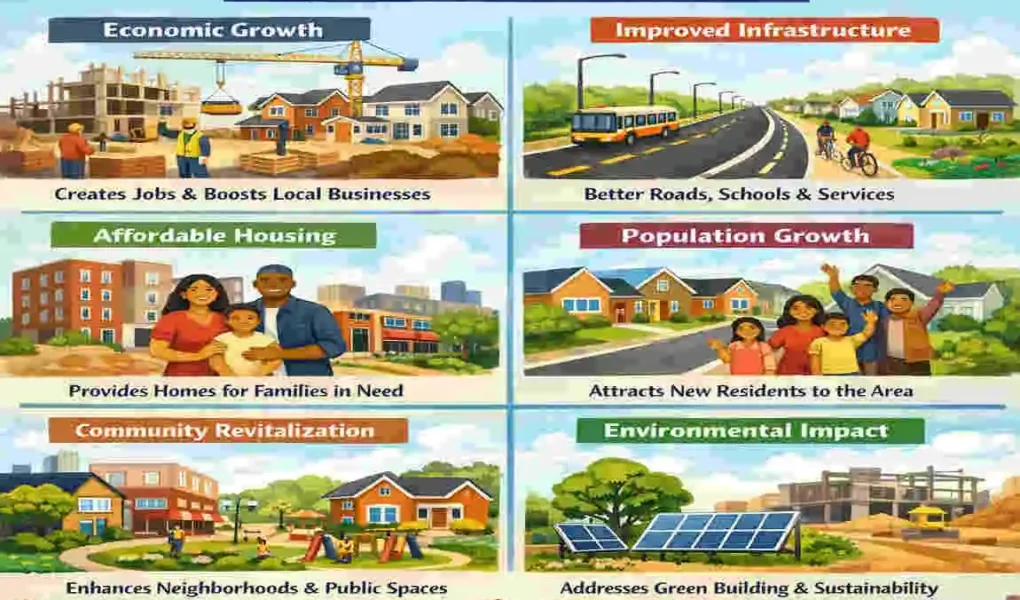
One of the biggest benefits of housing construction projects is their economic impact on nearby areas. When building begins, money starts moving through the community. Workers are hired, materials are purchased, and local services often see more demand.
Job Creation
Construction projects create both temporary and long-term jobs. Skilled workers like electricians, plumbers, architects, engineers, and site managers all play a role. Even after the building is complete, new homes can support jobs in maintenance, property management, and local services.
Increased Business Activity
Local shops often benefit too. Construction crews buy food, fuel, tools, and transport services. Later, new residents bring steady demand for groceries, schools, clinics, and retail stores. This helps small businesses grow.
Property Value Changes
When a neighborhood improves, nearby property values may rise. That can increase tax revenue for the area and encourage more investment. In some cases, better housing also makes a community more attractive to buyers and renters.
Infrastructure Spending
New housing often leads to spending on roads, water systems, electricity, and public services. While this can be costly, it may also improve the area for everyone.
Area Affected Possible Benefit Possible Challenge
Jobs More employment opportunities Mostly temporary during building
Businesses Higher customer demand Busy areas may face strain
Property values Stronger local investment Higher costs for some residents
Infrastructure Better roads and services Expensive upgrades needed
Social Impact of Housing Construction Projects
How Communities Change Socially
Housing projects often alter a neighborhood’s social fabric. More homes usually mean more people, and more people bring new habits, cultures, and needs into the area.
Population Growth
When new residents move in, communities can become more diverse and active. This may create stronger local networks and more social interaction. It can also bring fresh ideas and new energy to the area.
Improved Housing Access
One important benefit is better access to housing. Affordable housing development can help families find safer and more stable homes. This may reduce overcrowding and improve living conditions for many people.
Community Development
New housing often encourages the growth of schools, parks, healthcare centers, and recreation spaces. These services make daily life easier and can improve residents’ quality of life.
Risks of Displacement
Not every social effect is positive. In some areas, rising rents and property prices can push long-term residents out. This is a major concern in places facing gentrification. Good planning is needed to protect existing communities.
Environmental Effects of Housing Construction Projects
Positive and Negative Environmental Impacts
The environmental effects of construction can be both harmful and helpful. Much depends on how the project is planned and built.
Land Use Changes
New housing often uses land that was once open space, farmland, or natural habitat. This can reduce green areas and contribute to urban sprawl if development spreads too far.
Pollution During Construction
Construction work creates dust, noise, waste, and vehicle emissions. These can disturb nearby residents and affect air quality. Heavy machinery also uses energy and fuel.
Energy Consumption
Building materials like concrete, steel, and wood all require energy to produce and transport. Large projects can leave a sizeable carbon footprint if sustainable methods are not used.
Sustainable Construction Opportunities
There is also a better path. Sustainable housing construction can reduce harm through energy-efficient design, solar panels, water-saving systems, and eco-friendly materials. These choices support healthier communities over time.
Impact on Local Infrastructure and Public Services
Transportation Systems
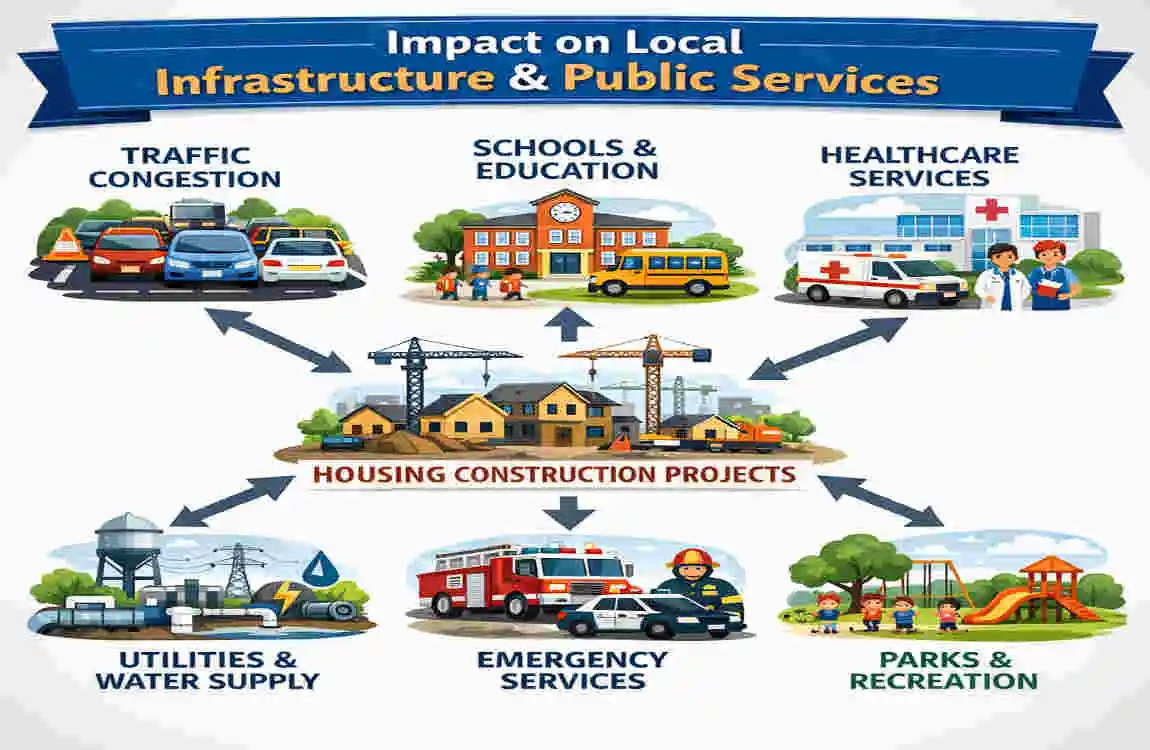
New housing means more people on the move. This can increase traffic and place pressure on roads and parking. In response, cities may need to improve road networks or expand public transit.
Water and Electricity Networks
More homes also mean greater demand for water, power, and sewage systems. If these networks are old or underbuilt, they may need major upgrades before the new homes are fully occupied.
Schools and Healthcare Services
As populations grow, schools and hospitals can become crowded. Communities must plan so that services keep up with demand.
Digital Infrastructure
Today, housing development also affects internet access and smart city planning. Reliable digital services matter for work, school, and daily life, so they should not be ignored.
Positive Long-Term Benefits of Housing Construction Projects
Urban Revitalization
One strong benefit is the renewal of neglected land. Old or empty lots can be turned into useful neighborhoods, helping cities feel safer and more active.
Increased Tax Base
As more homes are built and occupied, local governments may collect more tax revenue. This money can support roads, parks, schools, and community programs.
Stronger Local Business Ecosystems
New housing often brings more customers to the area. That supports local stores, cafes, and service providers, making the business environment healthier overall.
Improved Standard of Living
Better housing can mean better comfort, safety, and stability. For many families, that is one of the most meaningful results of all.
Negative Challenges Communities May Face
Common Risks of Large Housing Developments
Even useful projects can cause problems if they are too large or poorly managed.
Overcrowding
If too many people move in at once, the area may feel crowded. That can affect parking, schools, and public spaces.
Traffic and Noise
Construction can be noisy and disruptive. After completion, traffic may be a problem if roads were not carefully planned.
Rising Living Costs
A new development may raise rents and property prices in the area. This can make the area less affordable for long-time residents.
Environmental Degradation
If developers are not careful, they can damage habitats, remove trees, and reduce biodiversity.
Unequal Development
Sometimes one part of a city grows fast while another is left behind. That can deepen social and economic gaps.
How Governments and Developers Can Reduce Negative Effects
Smart Planning for Better Community Impact
The best results happen when planners think ahead and listen to residents. Good planning can reduce harm and increase long-term value.
Community Engagement
Public meetings, surveys, and local discussions help people share concerns early. This makes projects more balanced and fair.
Sustainable Urban Planning
Eco-friendly zoning and green design can protect land and lower long-term damage.
Affordable Housing Policies
When cities support affordable housing, they help more people stay in the community and reduce displacement.
Infrastructure Expansion Before Construction
Roads, utilities, schools, and transit should be reviewed before major building begins. This helps the area handle growth.
Transparent Regulations
Clear rules for safety, building quality, and environmental protection keep projects responsible and trustworthy.
Real-World Examples of Housing Construction Projects Impacting Communities
Case Studies
Some housing projects bring clear success, while others offer cautionary lessons.
Urban Redevelopment Successes
In many cities, old industrial or neglected areas have been transformed into active neighborhoods. These projects often bring new life, businesses, and public spaces.
Affordable Housing Success Stories
Affordable housing developments can reduce shortages and help families find stable homes. This often supports better health, education, and work outcomes.
Failed Projects
When planning is weak, a project can overload roads, utilities, and services. These failures show why community needs must come first.
Future Trends in Housing Construction Projects
What Communities Can Expect
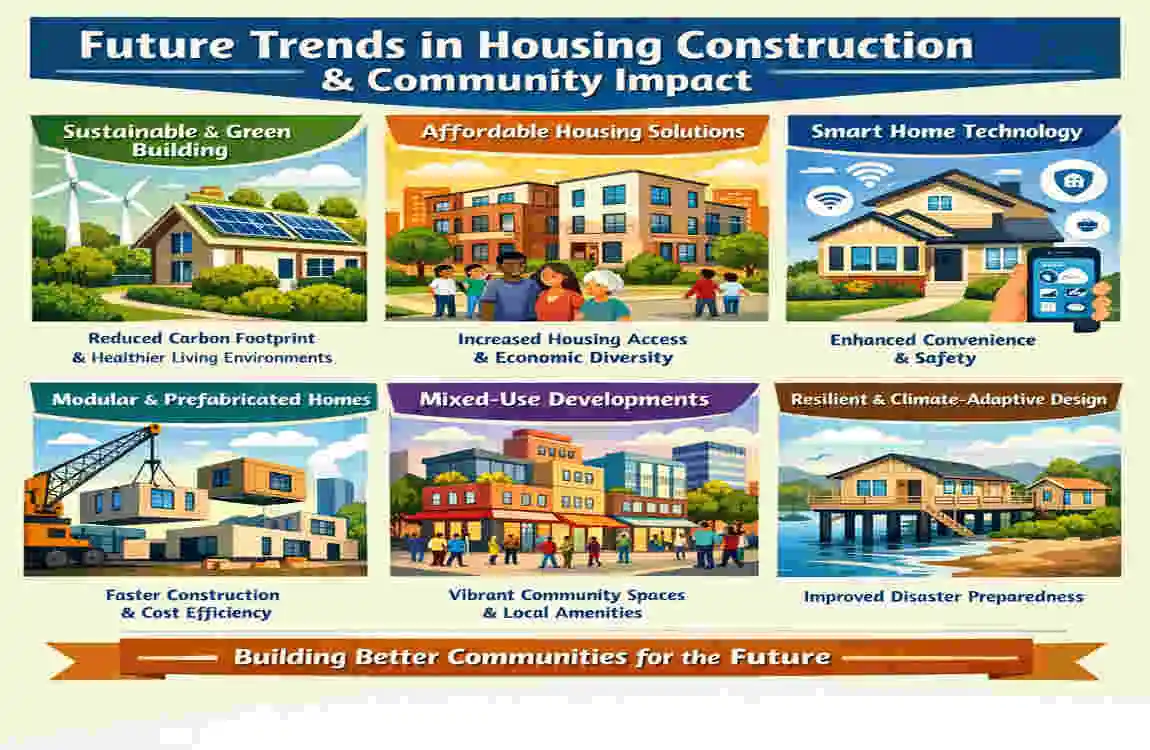
The future of housing is changing fast, and communities will feel that change in many ways.
Smart Cities
Connected systems will make housing areas more efficient. Think of better traffic flow, smarter energy use, and easier service access.
Modular Housing
Modular building methods can speed up construction and reduce waste. This makes development faster and often more flexible.
Green Construction
More projects are moving toward net-zero housing, which uses less energy and creates less pollution.
Mixed-Use Communities
Future neighborhoods will likely combine dream homes, shops, and offices. This can reduce travel needs and create more lively communities.’
FAQ: Housing Construction Projects
What are housing construction projects?
Housing construction projects are developments that involve building new residential properties such as houses, apartments, townhomes, or affordable housing communities.
How do housing construction projects impact communities?
They can create jobs, improve housing availability, boost local businesses, and upgrade infrastructure, but they may also increase traffic, noise, and living costs.
Why are housing construction projects important?
They help meet growing housing demand, support economic growth, and improve living conditions for residents.
What are the common challenges of housing construction projects?
Common challenges include budget overruns, delays, labor shortages, environmental concerns, and zoning regulations.
How do housing construction projects affect the environment?
They can impact land use, create waste and pollution, but sustainable construction methods can reduce environmental damage.
Who is involved in housing construction projects?
Developers, contractors, architects, engineers, local governments, investors, and community members all play key roles.
How can housing construction projects benefit local economies?
They create employment, increase tax revenue, support nearby businesses, and improve infrastructure development.