Rolled roofing is one of the simplest and most affordable roofing choices you can buy. Many homeowners use it for sheds, garages, porches, workshops, and low-slope roofs where they want quick protection without spending a lot.
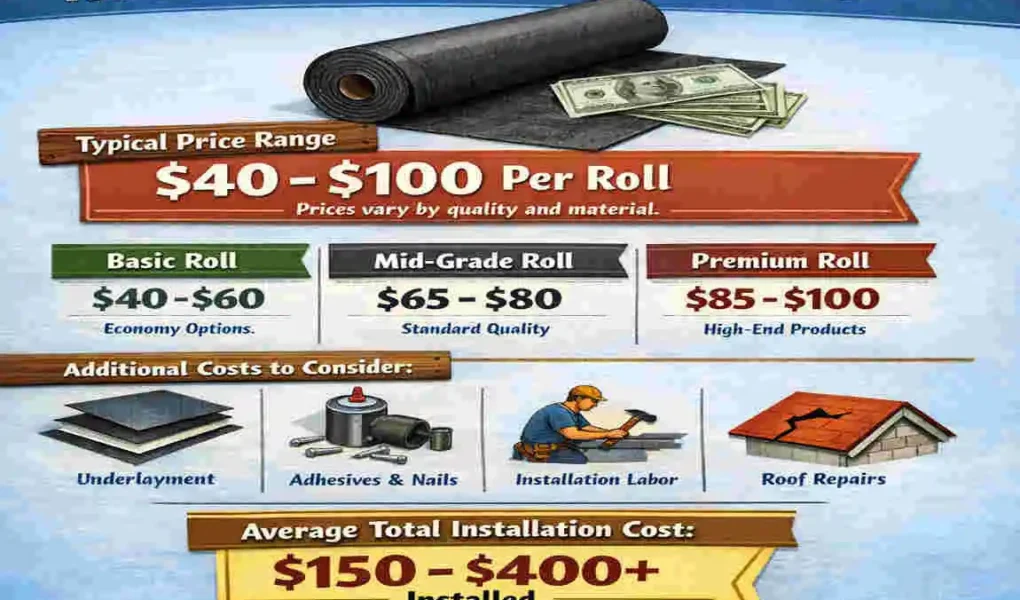
If you are asking how much a roll of rolled roofing costs, the short answer is that prices usually range from $40 to $200+ per roll, depending on the material, quality, and size. The final cost also changes based on installation, roof shape, and local labor prices.
What Is Rolled Roofing?
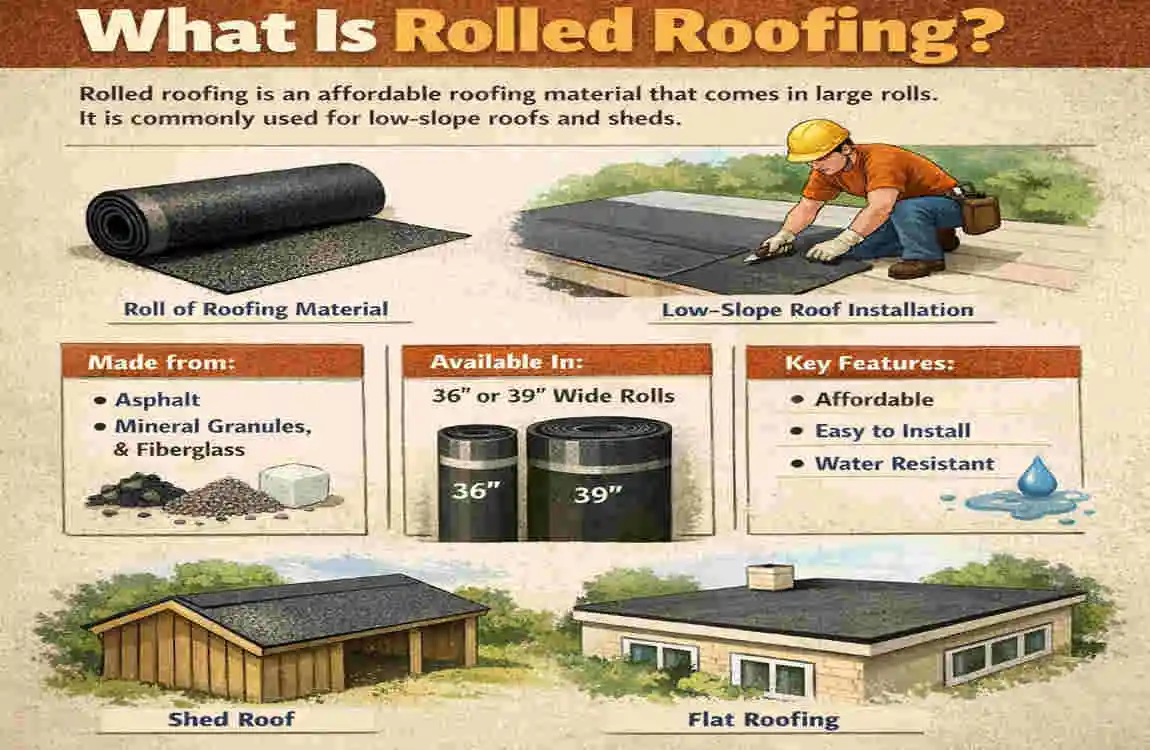
Understanding Rolled Roofing Materials
Rolled roofing is a continuous roofing material that comes in rolls instead of individual shingles. People often choose it when they need a fast and affordable way to cover a roof.
It differs from traditional asphalt shingles in that it is installed in larger sheets rather than small pieces. That means fewer seams and quicker coverage, but also less style variety and a shorter lifespan.
Common types include:
- Mineral-surfaced rolled roofing
- Asphalt roll roofing
- Rubber rolled roofing
- Modified bitumen roofing
Each type has its own cost and durability level. Basic asphalt options are the cheapest, while rubber and modified bitumen products cost more but usually last longer.
Common Uses of Rolled Roofing
Rolled roofing is usually used for smaller or simpler structures, such as:
- Sheds
- Garages
- Workshops
- Porches
- Low-slope residential roofs
It is not usually the first choice for a full-size steep home roof, but for the right structure, it can be a very practical solution.
How Much Does a Roll of Rolled Roofing Cost?
Average Price Range of Rolled Roofing Rolls
The cost depends on the material type and product quality. Here is a simple breakdown:
Roofing Type Average Cost Per Roll Coverage
Asphalt rolled roofing $40–$80 Around 100 sq. ft.
Mineral-surfaced roofing $50–$100 Around 100 sq. ft.
Modified bitumen rolls $100–$200 100+ sq. ft.
Rubber roofing rolls: $ 200+. Depends on thickness.
If you are mainly focused on how much a roll of rolled roofing costs, this table gives you the basic price range. Asphalt is the cheapest, while rubber is usually the most expensive.
Average Cost Per Square Foot
Rolled roofing is often priced by square foot too.
- Materials: about $0.50–$2.50 per sq. ft.
- Professional installation: about $2–$5 per sq. ft.
The total cost depends on the size of your roof. A small shed may only need a few rolls, while a larger garage can quickly drive up the price.
For example, a 500-square-foot roof may cost much more than just the roll price because you also need fasteners, adhesive, labor, and possibly old roof removal.
Factors That Affect Rolled Roofing Cost
Type and Quality of Roofing Material
Not all rolled roofing is made the same. Cheaper products are more basic and usually wear out faster. Better materials cost more, but they often handle weather better and last longer.
If you want the lowest upfront price, asphalt is usually the best fit. If you want a stronger product, modified bitumen or rubber roofing may be worth the extra cost.
Roof Size and Coverage Area
The bigger the roof, the more rolls you need. That seems obvious, but it is one of the biggest factors in total cost.
Before buying anything, measure your roof carefully. Even a small measurement error can lead to wasted money or insufficient material.
Roof Pitch and Complexity
Rolled roofing works best on flat or low-slope roofs. These are easier to cover and usually cost less to install.
If the roof is steeper or has lots of angles, the job becomes harder. That can raise labor costs and slow installation.
Installation Method
There are a few ways to install rolled roofing:
- Nail-down installation
- Peel-and-stick roofing
- Adhesive installation
Some methods are faster and cheaper. Others create a stronger bond but cost more in materials or labor.
Local Labor Costs
Where you live matters too; contractor rates vary by region, and some seasons are busier than others.
If roofers are in high demand, the installation cost may rise. In slower seasons, you might find better pricing.
Cost Breakdown of Installing Rolled Roofing
Material Costs
Material costs may include more than just the rolls themselves. You may also need:
- Roofing rolls
- Roofing nails
- Adhesive
- Underlayment
- Flashing materials
Each of these adds to the final price. Even a budget roofing project can grow once you include all the small supplies.
Labor Costs
If you hire a contractor, labor becomes a major part of the total. Professional installation is often worth it for larger or more complex roofs because it saves time and reduces the risk of mistakes.
DIY installation can save money, but only if you already have the skill and tools.
Removal of Old Roofing
If you need to remove an old roof first, expect extra charges. Repairs may also be needed before the new roofing goes on.
This can include:
- Tear-off labor
- Dump fees
- Deck repairs
- Surface preparation
A clean, solid roof deck is important for rolled roofing to work properly.
How Many Rolls of Rolled Roofing Do You Need?
Understanding Roofing Coverage
Most rolls cover about 100 square feet. That makes planning easier.
Here is a simple example:
- A 500 sq. ft. roof may need around 5 rolls
- Add extra material for overlaps and waste
- It is smart to buy a little more than the exact estimate
Factors That Increase Material Needs
You may need more material if the roof has:
- A complicated shape
- Extra cuts and seams
- More waste from trimming
- Overlapping sections
If you are trying to figure out how much a roll of rolled roofing costs for your project, the number of rolls matters as much as the cost per roll.
Rolled Roofing vs Other Roofing Materials
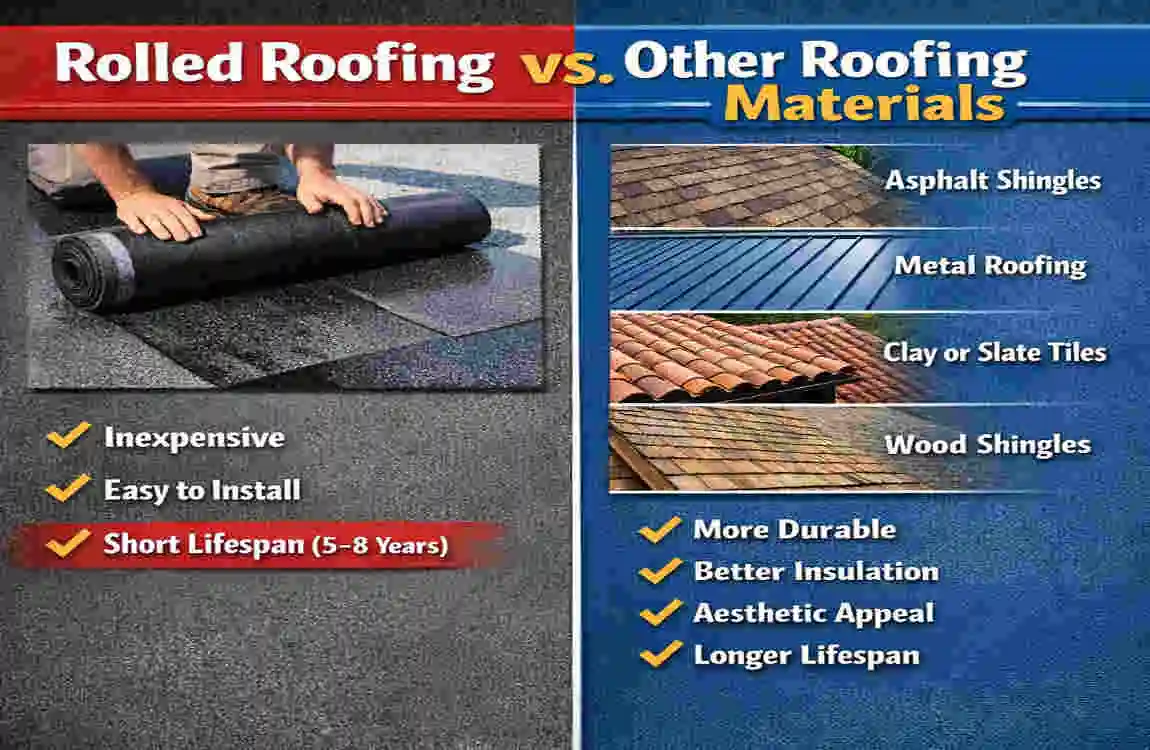
Rolled Roofing vs Asphalt Shingles
FeatureRolled RoofingAsphalt Shingles
Cost Lower Higher
Installation Faster More complex
Lifespan 5–15 years 20–30 years
Best Use Small roofs Homes
Rolled roofing is cheaper and faster, but shingles usually last much longer. That is why shingles are better for full homes, while rolled roofing works better for small structures.
Rolled Roofing vs Metal Roofing
Metal roofing costs more upfront, but it usually lasts much longer and requires fewer replacements over time.
Rolled roofing is better when:
- You need a low-cost option
- The roof is small
- The structure is temporary or simple
Metal is better when:
- You want long-term value
- You want stronger durability
- You are roofing a main house
Benefits of Choosing Rolled Roofing
Affordable Roofing Solution
The biggest benefit is cost. Rolled roofing gives you a practical way to cover a roof without spending a lot.
Easy Installation
It is much faster to install than many other roofing types. That makes it a popular choice for simple projects and small buildings.
Lightweight Material
Rolled roofing is easy to handle and does not place much stress on the structure.
Good Waterproof Protection
When installed correctly, it helps protect the roof from rain and moisture. That makes it useful for sheds, garages, and low-slope spaces.
Drawbacks of Rolled Roofing
Shorter Lifespan
Rolled roofing usually does not last as long as shingles or metal roofing. That means you may need replacement sooner.
Limited Appearance Options
There are fewer color and style choices. So if appearance matters a lot, you may want something more decorative.
Not Suitable for Every Roof
Rolled roofing works best on low-slope roofs. It is not the best choice for steep residential roofs.
DIY Rolled Roofing Installation Cost
Average DIY Expenses
If you install it yourself, your main costs may include:
- Roofing rolls
- Tools
- Adhesive
- Fasteners
DIY can lower your total spending, especially on small projects.
Pros of DIY Installation
- Saves labor costs
- Can be faster for tiny roofs
- Good for handy homeowners
When to Hire a Professional
Hiring a pro makes more sense for:
- Large roofs
- Complex roof shapes
- Safety concerns
- Roofs that need repairs first
If you are not sure about your skills, paying for professional help may be worth it.
How to Save Money on Rolled Roofing
Compare Material Prices
Do not buy the first product you see. Compare prices from different suppliers and look for seasonal deals.
Buy the Correct Amount
Overbuying wastes money. Underbuying causes delays. Measure carefully so you can order the right amount.
Perform Regular Maintenance
A well-maintained roof lasts longer. That means fewer repairs and slower replacement costs.
Simple maintenance includes:
- Checking for loose edges
- Cleaning debris
- Repairing small damage early
Is Rolled Roofing Worth the Cost?
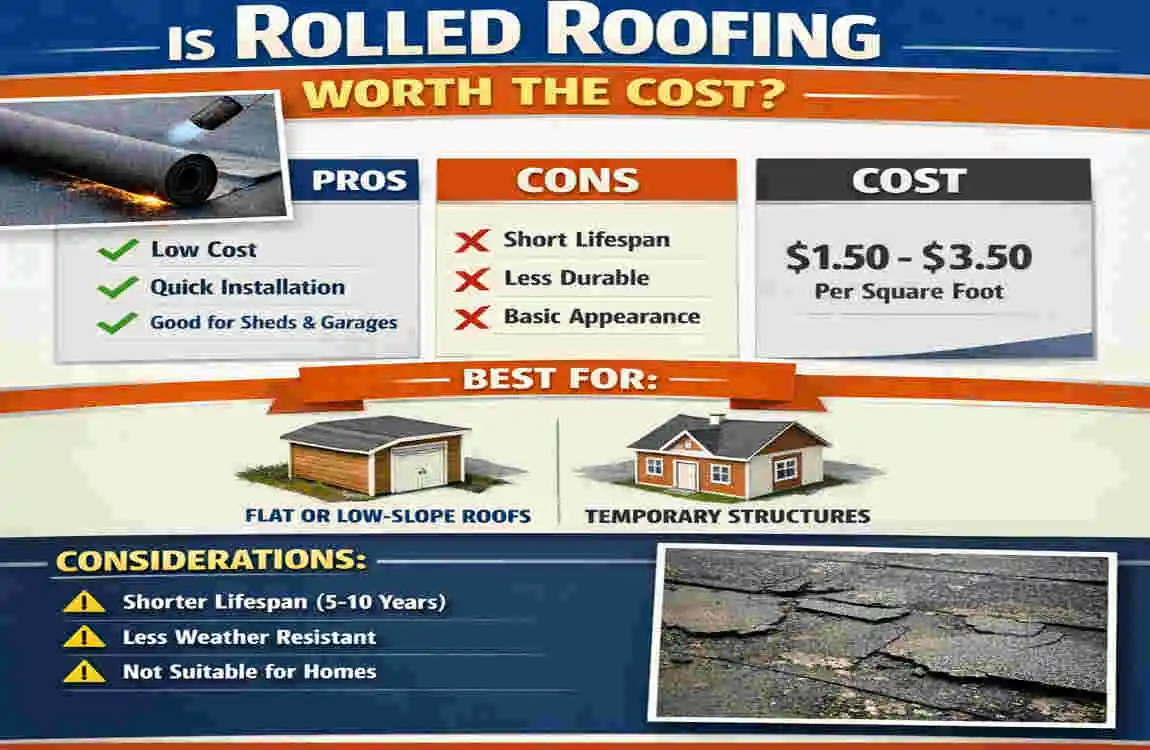
Rolled roofing is worth it when you need a budget-friendly, fast, and simple roofing option.
It works best for:
- Sheds
- Garages
- Workshops
- Porches
- Low-slope surfaces
It may not be the best choice for a main home roof because it typically has a shorter lifespan than shingles or metal roofs.
So if you are asking how much does a roll of rolled roofing cost and whether it is worth it, the answer depends on your project. For small structures, it can be a very smart buy. For a house, you may want something more durable.
Frequently Asked Questions
Q: How much does a roll of rolled roofing cost?
A roll of rolled roofing usually costs between $40 and $200, depending on the material type, quality, and coverage.
Q: How much area does one roll of rolled roofing cover?
Most rolls cover about 100 square feet, though exact coverage can vary by product.
Q: Is rolled roofing cheaper than shingles?
Yes, rolled roofing is generally cheaper than asphalt shingles because it uses fewer materials and installs faster.
Q: How long does rolled roofing last?
Rolled roofing usually lasts between 5 and 15 years with proper installation and care.
Q: Can I install rolled roofing myself?
Yes, small projects can be DIY-friendly, but professionals are better suited to handle larger or more complicated roofs.
Q: Is rolled roofing waterproof?
Yes, properly installed rolled roofing provides good waterproof protection.
| Item | Average Cost |
|---|---|
| Cost per Roll of Rolled Roofing | $50 – $150 per roll |
| Premium Rolled Roofing Materials | $150 – $300 per roll |
| Coverage per Roll | About 100 square feet |
| Material Cost per Square Foot | $0.50 – $1.50 |
| Installation Cost (Labor) | $1.50 – $3.00 per sq. ft. |
| Total Installed Cost | Around $2 – $5 per sq. ft. |
| Average Roof Project Cost | $1,000 – $3,000 (depending on roof size) |
| Factors Affecting Price | Material type, roof size, labor rates, location, and roof condition |