Luxury vinyl flooring has become a favorite in many homes. People like it because it looks stylish, feels comfortable, and handles daily life well. It comes in many looks, from wood-style planks to stone-style tiles, so it works in kitchens, living rooms, hallways, and even busy family spaces.
But once the floor is installed, a big question arises: can you steam luxury vinyl flooring?
That question matters because cleaning affects both the look and the life of your floor. Steam sounds like a quick, deep-cleaning solution, but luxury vinyl is not the same as ceramic tile or sealed concrete. It reacts differently to heat and moisture.
What Is Luxury Vinyl Flooring?
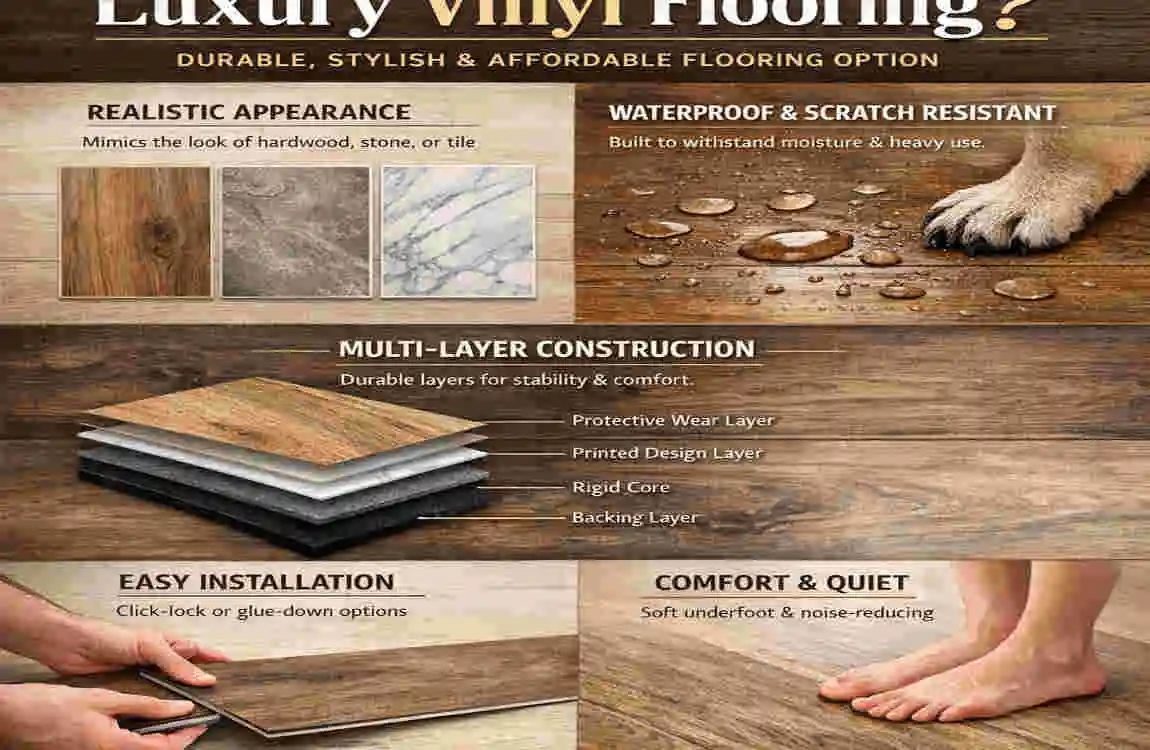
Luxury vinyl flooring is a strong, stylish flooring option designed to look like real wood or stone without the high cost or difficult maintenance. It is popular because it gives homeowners a nice finish while staying easier to clean than many natural materials.
You will usually see two main types: LVP and LVT. They look a little different, but they share many of the same cleaning rules.
Luxury Vinyl Plank (LVP) vs Luxury Vinyl Tile (LVT)
Luxury Vinyl Plank (LVP) looks like wood planks. It is often used when someone wants the appearance of hardwood but needs a more practical flooring option.
Luxury Vinyl Tile (LVT) looks like stone or ceramic tile. It is often chosen for bathrooms, kitchens, and entryways because it gives a polished look without the cold feel of real tile.
Both types are made to be durable, but they still need careful cleaning. That is why people often ask whether you can steam luxury vinyl flooring before using a steam mop on it.
How Luxury Vinyl Flooring Is Constructed
Luxury vinyl is usually made in layers. Those layers work together to give the floor its strength, look, and comfort.
A typical luxury vinyl floor may include:
- A wear layer that protects against scratches and scuffs
- A printed design layer that gives the floor its look
- A vinyl core that adds structure
- A backing layer that helps with support and stability
Some products are rigid core, while others are more flexible. That difference matters because some floors handle moisture and heat better than others.
Even if the surface looks tough, the layers beneath can still be sensitive to heat and steam. That is one reason cleaning needs to be done carefully.
Benefits of Luxury Vinyl Flooring
Luxury vinyl has become popular for good reason. It offers several real advantages.
- It looks attractive
- It costs less than many natural materials
- It resists everyday wear
- It feels comfortable underfoot
- It works in many rooms
- It is easier to maintain than hardwood
These benefits make it a smart choice for busy homes. Still, even a durable floor can be damaged by the wrong cleaning method.
Can You Steam Luxury Vinyl Flooring?
The Short Answer
The short answer is usually no.
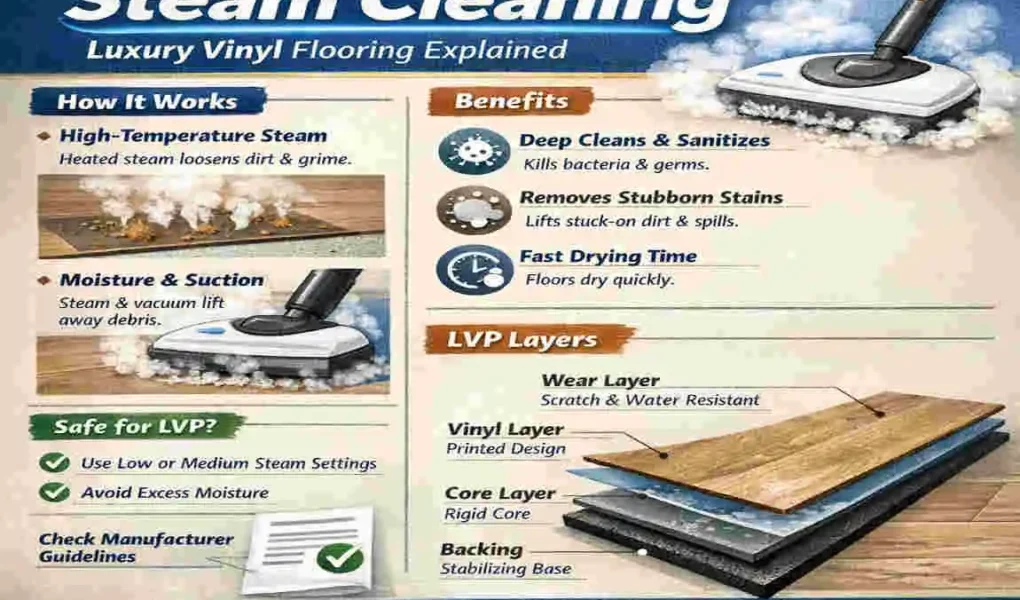
In most cases, manufacturers do not recommend steam cleaning luxury vinyl flooring. While a steam mop may seem like a quick way to sanitize and clean, the heat and moisture can create problems over time.
If you are asking, “Can you steam luxury vinyl flooring safely?” the answer depends on your exact product. Some brands may allow it under strict conditions, but many do not.
Why Most Manufacturers Discourage Steam Cleaning
Luxury vinyl flooring is designed to resist normal spills and routine cleaning. That does not always mean it can handle hot steam.
Steam mops can push heat and moisture into places the floor is not meant to absorb. Over time, that may weaken the floor’s structure.
Manufacturers often discourage steam cleaning because it can:
- Break down adhesive
- Affect seam integrity
- Cause edges to lift
- Shorten the floor’s lifespan
- Void the warranty
That last point is important. If your warranty says not to use steam, doing so may leave you without protection if damage occurs later.
When Steam Cleaning May Cause Damage
Steam cleaning becomes risky when the floor has:
- Gaps between planks
- Loose edges
- Weak adhesive
- Damaged seams
- Older installation
- Unsealed transitions near walls or fixtures
Even a floor that looks solid can be vulnerable. Steam can enter small openings and work its way beneath the surface.
So even though the floor may seem waterproof on top, that does not mean every part of it is safe from steam.
Risks of Steam Cleaning Luxury Vinyl Flooring
Moisture Seeping into Seams
One of the biggest risks is moisture getting into the seams between planks or tiles.
Luxury vinyl floors often have tight joints, but those joints are still potential entry points for water or steam. Once moisture gets below the surface, it may stay trapped.
That trapped moisture can cause swelling, weakening, or hidden damage that gets worse over time.
Weakening Adhesive Layers
Some luxury vinyl products are glued down. Others use locking systems. In both cases, heat can create problems.
Too much steam may weaken the adhesive that holds the floor in place. If the floor is click-lock style, heat and moisture can still affect the fit and stability of the locking edges.
This is one of the main reasons people ask, “Can you steam luxury vinyl flooring?” and are told to be careful. The floor may survive a few cleaning sessions, but repeated exposure can create slow damage.
Warping and Lifting Edges
Heat can cause vinyl to expand. If the floor expands too much or too quickly, you may notice:
- Slight warping
- Raised edges
- Loose corners
- Uneven seams
These problems do not always happen right away. Sometimes they show up after repeated steam use.
Warranty Concerns
Many flooring warranties are very specific. They may allow basic mopping and approved cleaners but not steam.
If you ignore the manufacturer’s care instructions and damage appears later, the warranty may not cover the repair or replacement.
That is why it is always smart to check the product instructions first. A quick look can save a lot of money later.
Safe Ways to Clean Luxury Vinyl Flooring
If steam is risky, what should you use instead? The good news is that luxury vinyl is fairly easy to care for when you use the right methods.
Daily Dust Removal
The easiest way to keep your floors looking good is to remove loose dirt often.
You can use:
- A soft broom
- A microfiber dust mop
- A vacuum in hard-floor mode
Dust, grit, and small debris can scratch the floor over time if left in place. Regular sweeping helps protect the surface.
Damp Mopping Correctly
Damp mopping is usually the safest wet-cleaning method.
The keyword here is damp, not wet. You want the mop to be lightly moist, not dripping.
A good routine is:
- Sweep or vacuum first
- Use a lightly damp microfiber mop
- Clean in small sections
- Dry any extra moisture right away
This method cleans the floor without soaking it.
Using pH-Neutral Cleaners
A pH-neutral cleaner is usually the safest option for luxury vinyl. It is gentle and does not leave a harsh film behind.
Avoid strong cleaners unless the label clearly says they are safe for vinyl flooring. Harsh chemicals can dull the finish or break down protective layers.
Removing Stubborn Stains Safely
For stuck-on spots, start gently.
You can try:
- A soft cloth
- Warm water
- A small amount of approved floor cleaner
If needed, gently rub the area. Do not use steel wool, hard scrub pads, or sharp tools. Those can scratch the surface.
When Is Steam Cleaning Acceptable?
Check Manufacturer Recommendations
This is the first thing you should do.
If the manufacturer says steam cleaning is okay, follow their instructions closely. If they say no, do not risk it.
Even if one brand allows it, another may not. Luxury vinyl is not a single product so that rules can vary by brand and model.
Low-Heat Steam Settings
If steam is allowed, use the lowest heat setting possible. High heat is more likely to cause damage.
You should also move the mop quickly instead of letting it sit in one place. Holding steam over one spot too long can create heat buildup.
Proper Steam Mop Technique
If your floor is approved for steam, use the mop carefully.
Good habits include:
- Moving steadily
- Not over-saturating the floor
- Avoiding repeated passes in one spot
- Testing a small hidden area first
Even then, steam should be treated as an exception, not a daily routine.
Areas to Avoid
Some areas are more sensitive than others.
Avoid steaming:
- Around loose seams
- Near damaged edges
- In places where water has already seeped through
- On older luxury vinyl that is showing wear
If the floor is already vulnerable, steam can make the problem worse.
Best Cleaning Tools for Luxury Vinyl Floors
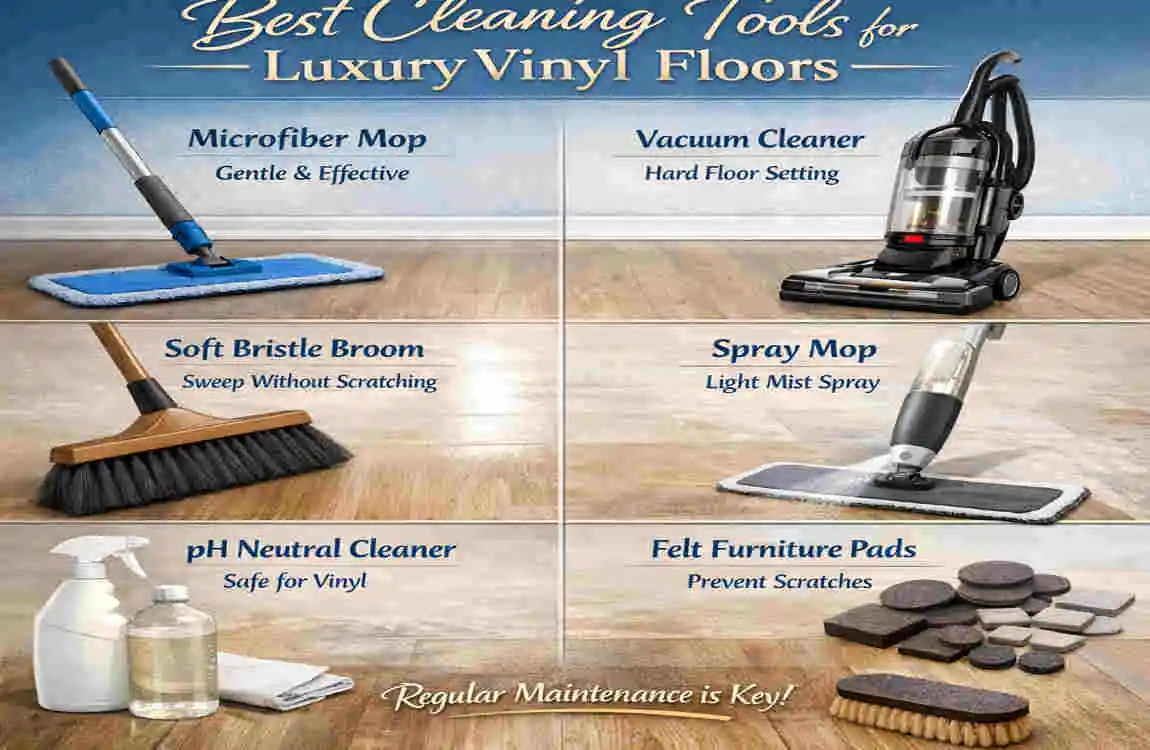
If you want to keep your floors safe, use tools that are gentle but effective.
- Microfiber mop
- Soft broom
- Vacuum in hard-floor mode
- pH-neutral vinyl floor cleaner
- Soft cleaning cloths
These tools work well because they clean without adding too much moisture or pressure.
A microfiber mop is especially useful because it picks up dirt well and does not leave the floor soaked. That makes it a much safer choice than steam for regular care.
Cleaning Mistakes to Avoid
Some cleaning habits can cause more harm than good. Avoid these common mistakes to keep your floor lasting.
Excess Water
Too much water can seep into seams and edges. Even if the top looks dry, moisture may still sit under the planks.
Abrasive Scrubbers
Hard scrub pads and rough brushes can scratch the surface. Once the wear layer is damaged, the floor becomes harder to keep clean.
Harsh Chemicals
Strong chemicals may strip the finish or leave behind a cloudy residue. This can make the floor look dull over time.
Wax-Based Products
Wax is usually not a good choice for luxury vinyl. It can create buildup and make the surface sticky or uneven.
High-Temperature Steam
This is the biggest one for this topic. If you keep asking, “Can you steam luxury vinyl flooring?” remember that high heat is the main concern. It may not cause immediate damage, but repeated use can shorten the floor’s lifespan.
Luxury Vinyl Floor Maintenance Tips
Good maintenance is the easiest way to protect your flooring investment.
Prevent Scratches
Dust and grit can act like sandpaper under your shoes. Sweep often and keep debris off the floor.
Protect Against Furniture Damage
Use furniture pads under chairs, tables, and heavy items. This helps prevent dents and scuffs.
Clean Spills Immediately
Do not let spills sit. Wipe them up quickly so moisture does not work into seams or corners.
Use Entry Mats
Mats near doors help catch dirt before it gets tracked inside. That reduces wear and keeps cleaning easier.
Maintain Indoor Humidity
Very high or very low humidity can affect flooring over time. Try to keep your home’s indoor environment stable.
Steam Cleaning vs Traditional Mopping
Here is a simple comparison to help you choose the safer method.
FeatureSteam CleaningDamp Mopping
Moisture Level High Low
Safe for LVP Usually No Yes
Deep Cleaning Good Good
Warranty Friendly Often No Yes
Daily Use Not Recommended Recommended
This table clearly shows the main difference. Steam may clean fast, but damp mopping is usually better for regular care and long-term protection.
Best Practices for Long-Lasting Luxury Vinyl Flooring
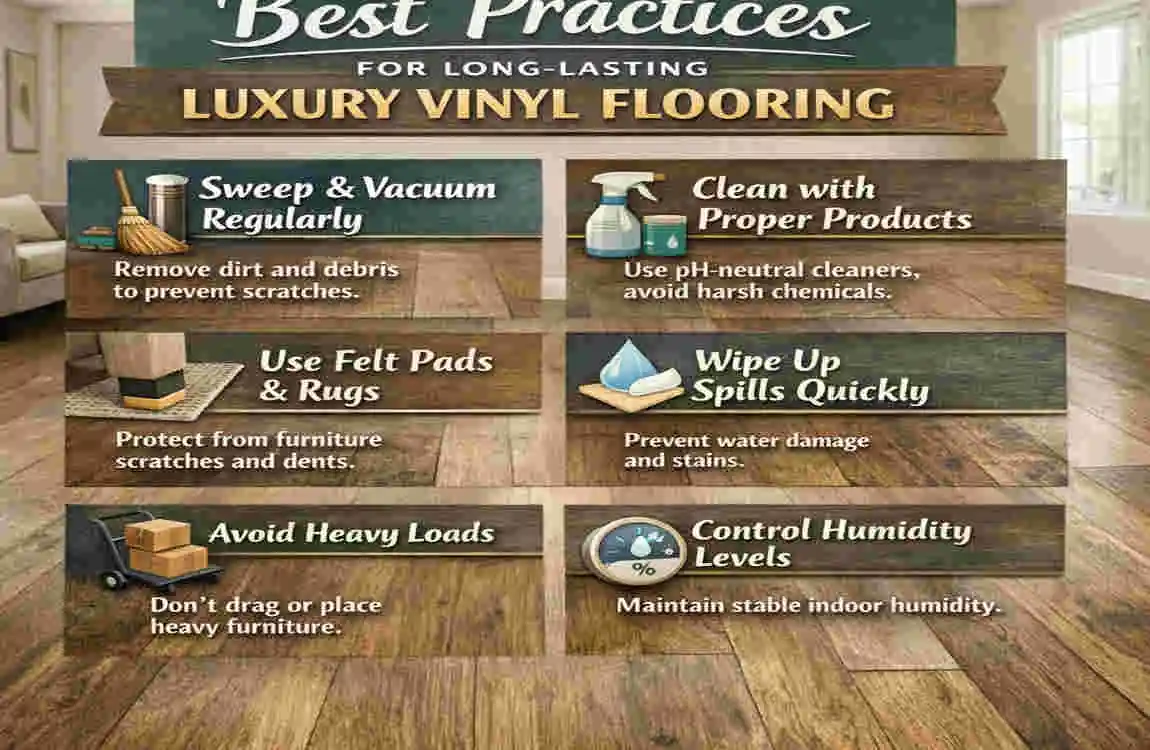
If you want your floors to stay attractive for years, keep these habits in mind:
- Follow manufacturer guidelines
- Sweep regularly
- Mop with minimal water
- Use furniture pads
- Avoid excessive heat
- Clean spills promptly
These steps are simple, but they make a big difference over time.
Luxury vinyl is built for convenience, but it still needs the right care. A gentle routine will usually protect it better than a heavy-handed cleaning method.
Frequently Asked Questions
Can you steam luxury vinyl flooring safely?
Only if the flooring manufacturer specifically approves steam cleaning. Otherwise, damp mopping is the safer choice.
Will steam damage luxury vinyl flooring?
Yes, it can. Excessive heat and moisture may weaken adhesives, damage seams, and reduce the floor’s lifespan.
What is the best cleaner for luxury vinyl flooring?
A pH-neutral cleaner made for vinyl flooring is usually the safest and best option.
Can I use a steam mop occasionally?
Only if your flooring manufacturer allows it and you use the lowest heat setting. Even then, use caution.
How often should luxury vinyl flooring be cleaned?
Sweep or vacuum several times a week and damp mop as needed, usually about once a week.
Is luxury vinyl flooring waterproof?
Many products are waterproof on the surface, but water can still get through seams and damage the subfloor if left standing.
| Topic | Information |
|---|---|
| What Is Luxury Vinyl Flooring (LVF)? | A durable, water-resistant flooring made to resemble wood or stone. |
| Can You Steam Clean It? | Generally no. Most manufacturers do not recommend steam cleaning. |
| Why Avoid Steam Cleaning? | High heat and moisture can weaken adhesives, warp planks, or damage the wear layer. |
| Best Cleaning Method | Sweep or vacuum regularly and mop with a damp microfiber mop and a pH-neutral vinyl floor cleaner. |
| Safe Water Temperature | Use cool or lukewarm water instead of hot steam. |
| Recommended Cleaning Frequency | Sweep daily or as needed; damp mop once a week or when dirty. |
| Stain Removal | Use a soft cloth with a manufacturer-approved vinyl cleaner for stubborn spots. |
| Avoid Using | Steam mops, abrasive scrubbers, wax, bleach, ammonia, and harsh chemicals. |
| Benefits of Proper Care | Extends floor lifespan, preserves appearance, and maintains the manufacturer’s warranty. |
| Key Takeaway | Steam cleaning is not recommended for most luxury vinyl flooring. Use gentle, low-moisture cleaning methods for the best results. |