You wake up in the morning, walk into your kitchen to brew a cup of coffee, and suddenly, you feel a suspicious squish beneath your slippers. A leaky dishwasher, an overflowing sink, or a knocked-over pet water bowl has left a puddle on your beautiful floors. Panic sets in. You quickly grab a towel to wipe up the surface, but a lingering question remains. What about the moisture that seeped into the cracks?
Figuring out how to dry laminate flooring with water under it is a race against the clock. Unlike solid hardwood or waterproof vinyl, traditional laminate planks are highly vulnerable to trapped moisture. If left unaddressed, that hidden dampness will swell the core of your floor planks, leading to ugly buckling, irreversible warping, and even dangerous mold growth.
Why Water Under Laminate Causes Damage

To truly understand how to save your floors, you first need to understand why moisture is such a massive enemy to this material. Laminate flooring looks like real wood or stone on top, but it is actually a manufactured product composed of multiple layers.
The most vulnerable layer is the core. This thick center is usually made of High-Density Fiberboard (HDF). Think of HDF as a highly compressed, incredibly dense sponge made of wood fibers. As long as it stays completely dry, it remains strong and rigid. But the moment water sneaks past the protective wear layer and enters through the seams, that HDF core begins to drink it up.
When this core absorbs moisture, it physically expands. This expansion causes the tight joints and the carefully planned expansion gaps around your room’s perimeter to fail. When the planks have nowhere left to expand, they push upward against each other. This creates the visible signs of a laminate water damage fix gone wrong, such as peaking seams, bubbling surfaces, and severe buckling.
Beyond the structural warping, there is an invisible threat lurking beneath your feet: fungal growth. Mold under the flooring is a serious health hazard that can trigger allergies and respiratory issues for your family. And the timeline is shockingly short.
Here is a quick breakdown of what happens when your flooring goes from perfectly dry to soaking wet:
Issue: Dry Laminate Flooring, Wet Laminate Flooring
Warping Risk Very Low Extremely High within just 24 hours
Mold Growth None. Fungal spores start multiplying in 48 hours
Repair Cost Minimal (Standard upkeep) Ranging from $5 to $15 per square foot
If you suspect moisture is lingering beneath the surface, it is highly recommended to grab a subfloor moisture meter. These handy devices use pins or advanced scanning technology to read the dampness levels through the planks. Normal readings should be quite low. If your meter spikes above 15%, you have an active moisture problem that requires urgent attention.
Assess the Damage First
Before you start tearing off baseboards or dragging heavy equipment into the room, you need to step back and assess the battlefield. Properly evaluating the scope of the problem will tell you whether this is a quick weekend DIY fix or a disaster that requires professional intervention.
First, determine the sheer size of the affected area. Walk around the spill zone barefoot or in thin socks. Feel for any raised edges, spongy spots, or subtle shifts in the planks. Is the damage contained to a tiny two-foot square near the refrigerator, or has the water migrated across half the living room?
Next, get down on your hands and knees to inspect the seams. Are the edges of the planks starting to curl upward? Gently press down on the affected boards. If water visibly squishes out from the seams when you apply pressure, you have a significant amount of trapped liquid underneath.
If you own or can borrow a moisture meter, use it now. Map out the damp zone by testing the planks moving outward from the original spill site until you find normal, dry readings.
When should you call the pros versus tackling it yourself?
- The DIY Route: If the wet area is small (under 50 square feet), the water is clean (like a spilled pitcher of tap water), and you have caught it within the first few hours, you are in a great position to fix it yourself.
- The Pro Route: If the affected area spans more than 50 square feet, if the water came from a contaminated source (like a backed-up sewer line), or if you already see visible black mold growing along the baseboards, stop immediately. It is time to call in water damage restoration experts to protect your home and your health.
Essential Tools You’ll Need

If your assessment shows that this is a manageable DIY project, it is time to gather your gear. When learning how to dry laminate flooring with water under it, having the right equipment makes the difference between saving your planks and having to replace them entirely.
You do not necessarily need to buy commercial-grade machinery, but relying on just a few paper towels will not cut it. You need tools designed to extract liquid, move air forcefully, and pull humidity out of the environment.
Here is a look at the essential tools you should gather, along with a rough idea of what they might cost if you need to rent or buy them:
Tool Primary Purpose Estimated Cost / Budget
Wet/Dry Shop Vacuum Sucks up standing surface water and pulls moisture from seams. $50 – $100 to purchase
Microfiber Towels: Highly absorbent cloths for gentle blotting without scratching. $10 – $20 for a bulk pack
A dehumidifier pulls ambient moisture out of the air to speed up evaporation. $150 to purchase
High-Velocity Air Movers circulate air rapidly across and under the floorboards. $30 – $50 per day to rent
Power Drill (Advanced) Used for drilling hidden relief holes to inject air beneath the floor. Already in most toolboxes
If you are trying to dry water under laminate flooring on a strict budget, a DIY kit consisting of a borrowed wet vac, your home’s existing box fans, and a lot of elbow grease might cost you under $100. However, if you need to rent professional air movers and large dehumidifiers from a hardware store, expect to spend closer to $150 to $250 for a few days. While this might sound pricey, it is vastly cheaper than the $500 to $2000+ it would cost to hire professionals or replace the flooring completely!
Step-by-Step: How to Dry Laminate Flooring with Water Under It
Now that you have assessed the situation and gathered your tools, it is time to take action. This step-by-step process is designed to attack the moisture from every possible angle. Follow these instructions carefully to maximize your chances of saving your floors.
Remove Surface Water
Your very first priority is to stop more water from seeping into the core of your planks. You need to get the surface bone dry as fast as humanly possible.
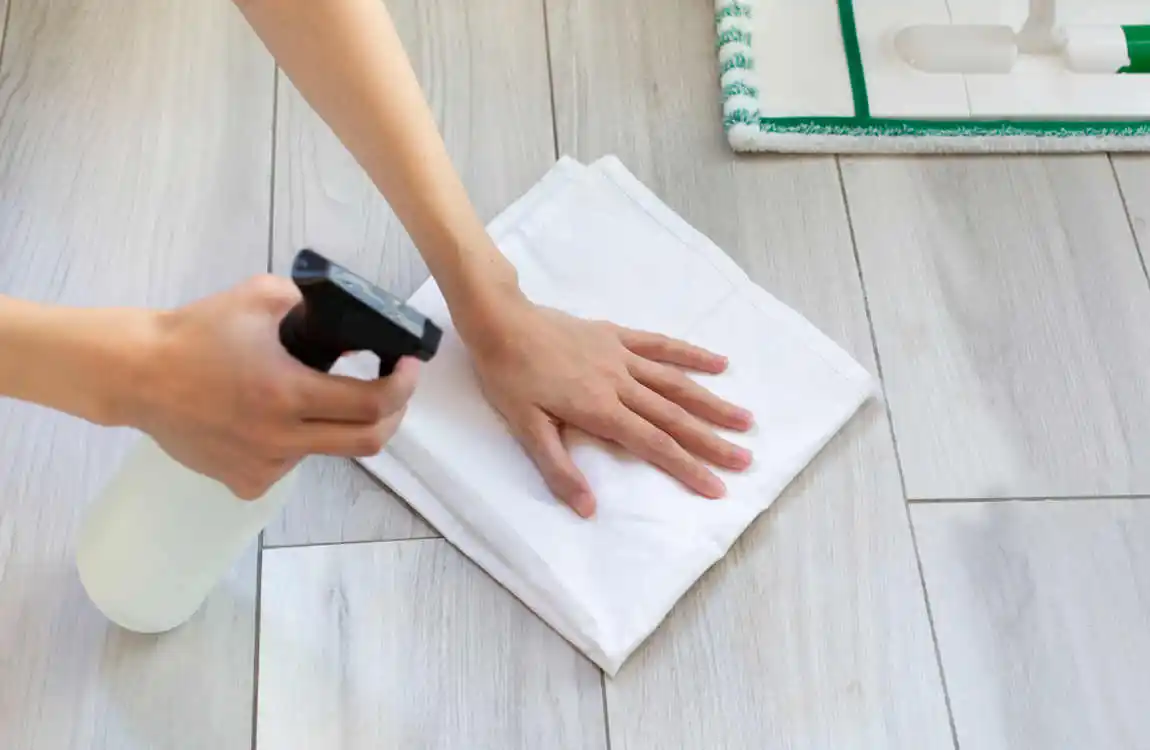
Start by grabbing your thickest microfiber towels. Blot the surface heavily. Do not aggressively rub or scrub the floor. Vigorous rubbing can actually push the sitting water deeper into the microscopic cracks and expansion joints between the planks. Just lay the towels down, step on them gently to absorb the liquid, and swap them out for dry ones.
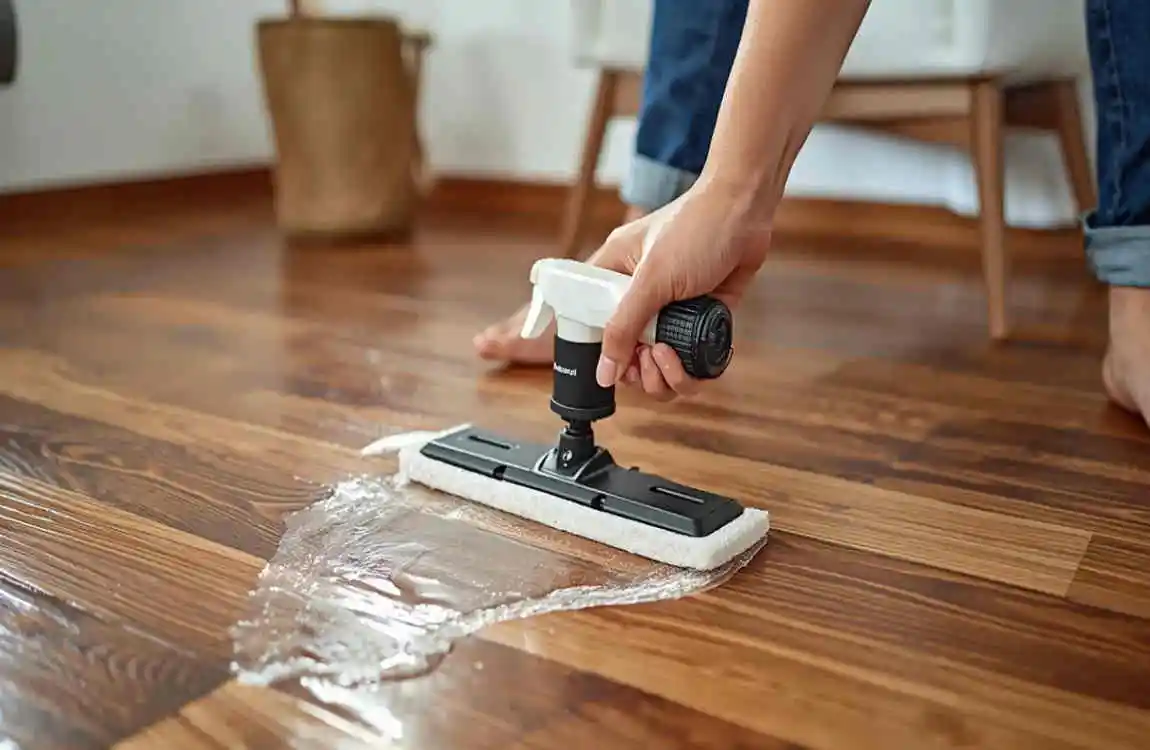
Once the visible puddles are gone, fire up your wet/dry shop vacuum. Use a wide attachment and slowly run it directly over the seams of the planks. The strong suction will help pull up the hidden water droplets that have just begun to slip down into the locking mechanisms. Take your time with this step; extracting water mechanically is always faster than waiting for it to evaporate.
Boost Airflow with Fans
Evaporation is your best friend right now, and evaporation requires massive amounts of airflow. Your standard ceiling fan won’t cut it. You need directed, high-velocity air moving straight across the surface of the damp flooring.
Position your box fans, or better yet, rented industrial air movers, so they blow directly across the wet zone. Set up the fans to create a cross-breeze. Place one fan on one side of the room, blowing inward, and another fan on the opposite side to keep the air circulating.
To maximize the efficiency of your fans, try creating a “drying chamber.” Close the doors to the affected room and seal off the space. By doing this, your fans and dehumidifiers only have to dry the air in that specific room, rather than trying to condition the entire house. Plan to leave these fans running continuously for at least 24 to 72 hours. Do not turn them off at night!
Deploy Dehumidifiers
While your fans are busy turning the trapped water into water vapor, that moisture is now floating in the air of your room. If you do not remove that humid air, the moisture will settle right back down into the floorboards. This is where your dehumidifier becomes the hero of the story.
Place a high-capacity dehumidifier right in the middle of your drying chamber. Set the machine to its absolute maximum setting. Ideally, you want to drive the ambient humidity in the room down to a target of 35% to 55%.
As the dehumidifier works, it will collect the moisture in its internal bucket. You must check and empty this bucket frequently—sometimes every hour or two during the initial stages of drying. If the bucket gets full, the machine will automatically shut off, completely halting your drying progress. If your dehumidifier has a continuous drainage hose attachment, run it to a nearby sink or drain to keep the machine running 24/7 without interruption.
Advanced – Drill Relief Holes
If you are dealing with a severe spill and the water has deeply penetrated the underlayment, surface drying might not be enough. You may need to inject air directly underneath the planks. This is an advanced trick used by the pros, but it requires a very careful hand.
Find a spot on the wet laminate plank that features a dark, printed “knot” in the wood grain pattern. Using a power drill with a tiny 1/8-inch drill bit, carefully drill a hole straight through the center of that dark knot. The dark pattern will help hide the hole later.
Drill a few of these relief holes across the damp area. This allows trapped moisture to escape and gives your fans a pathway to push dry air under the floor. Caution: Be fully aware that taking a drill to your flooring will almost certainly void your manufacturer’s warranty. Only use this drastic step if you are desperate to save the floor from total ruin. You can fill the tiny holes with color-matching wood putty later.
Lift & Dry Planks (If Needed)
Sometimes, despite your absolute best efforts, the water is just stubbornly trapped between the moisture barrier and the subfloor. When this happens, your only option to prevent laminate warping is to lift the planks to expose the subfloor physically.
Start by gently prying off the baseboards or quarter-round molding along the wall closest to the spill. Be careful not to snap the trim. Once the expansion gap is exposed, gently unclick the laminate planks. Most modern laminates use a tongue-and-groove click-lock system. Lift them at a slight angle to unlock them without breaking the fragile connecting edges.
Stack the removed planks flat in a dry room with weights on top of them so they do not curl while drying. Now that the bare subfloor is exposed, point your fans and dehumidifiers directly at the wet underlayment and concrete or plywood subfloor.
Monitor the exposed subfloor with your moisture meter. Once the meter readings drop back to normal, dry levels (recheck this after 48 hours), you can carefully click the saved planks back into place and reattach your baseboards.
Fast Fixes to Prevent Warping

If you have caught the spill incredibly early, you might notice the planks just barely starting to bow or peak at the seams. You do not always have to rip the floor apart to stop this. There are a few clever, fast hacks you can use to force the planks to dry flat.
One of the most effective strategies is to weigh down the buckles physically. As the HDF core absorbs water and expands, it wants to curl upward. By placing extremely heavy objects directly over the peaking seams, you force the plank to remain flat as the moisture slowly evaporates. Stack heavy textbooks, cinder blocks wrapped in towels, or free weights directly onto the curling edges. Leave the heavy objects in place for a full 24 to 48 hours while your dehumidifier runs.
Another excellent fast fix is to gently introduce heat into the room to speed up the evaporation process. You can turn up your home’s HVAC thermostat or bring in a small space heater. However, you must be incredibly careful. Do not heat the room above 80°F. If the environment gets too hot too fast, the extreme temperature change will actually cause the laminate layers to separate and delaminate, permanently destroying the planks. Gentle, consistent warmth is the key.
Once you have managed to dry the area, consider injecting a liquid moisture barrier or specialized seam sealer into the joints to protect the floor from the next inevitable spill.
Here is a quick look at the effectiveness of these quick hacks:
Quick Hack Strategy: Time Required, Effectiveness against Warping
Weighing Down Buckles 24 – 48 hours Very High (If done early)
Gentle Room Heating Continuous Moderate (Speeds up drying)
Seam Sealing Post-Dry 1 – 2 hours Excellent for future prevention
Preventing Mold Growth Under Flooring
Warping and bubbling are ugly, but mold is truly dangerous. The dark, damp, and stagnant environment between your laminate planks and the subfloor is the absolute perfect breeding ground for fungal spores.
The most critical fact you need to remember is the 48-hour rule. Mold spores can begin to multiply and colonize within just 24 to 48 hours of water exposure. Beating the clock is essential.
Ventilation is your primary weapon against mold. By keeping the air aggressively circulating with your fans, you deny the mold the stagnant, humid air it craves to grow. But sometimes, air is not quite enough.
If you have chosen to lift your planks (as detailed in Step 5), you have a golden opportunity to treat the subfloor. Lightly mist the concrete or plywood subfloor with a specialized anti-mold spray. You can purchase commercial antimicrobial treatments at the hardware store, or mix up a simple DIY solution of equal parts distilled white vinegar and water. The acidity of the vinegar naturally kills most household mold spores. Let the treatment completely dry before reinstalling your planks.
Additionally, make sure you check your home’s HVAC system. Ensure your air filters are clean so they can capture any airborne spores that get kicked up during your drying process.
A crucial biohazard warning: Be on the lookout for the telltale signs of severe mold. If you notice a strong, pungent, musty odor that smells like dirty gym socks, or if you lift a plank and see fuzzy black, green, or white patches, stop what you are doing. Disturbing active black mold can release millions of toxic spores into your breathing air. At this stage, it is a biohazard, and you must call in professional remediation experts.
When to Call Professionals
We all love a good DIY victory, but sometimes a water damage situation is too big, too complex, or too dangerous to handle on your own. Knowing when to wave the white flag and call in the professionals can save your home from severe structural rot.
You should immediately reach out to a water damage restoration company if you experience any of the following signs:
- Persistent Moisture: If your dehumidifiers and fans have been running non-stop for 72 hours, but your moisture meter is still flashing great danger warnings, the water is trapped too deeply for your household tools to reach.
- Large Scale Flooding: If a pipe bursts and floods more than 50 square feet of your home, the volume of water is too massive for a single shop vac to handle.
- Health and Safety Risks: As mentioned, if the water came from a raw sewage backup or if you spot toxic black mold, do not attempt to clean it yourself.
Professionals have access to incredibly powerful tools that you do not. They use truck-mounted water extractors, commercial-grade desiccant dehumidifiers, and thermal imaging cameras that can actually “see” hidden water trapped behind your drywall and under your floors.
Cost is always a concern, but it is better to pay for drying than full replacement. On average, a professional drying service will cost between $2 to $4 per square foot. While this adds up quickly, it is generally much cheaper than paying to rip out your entire subfloor, remediate massive mold colonies, and purchase brand-new flooring.
Long-Term Prevention Tips

Congratulations! You have successfully learned how to dry laminate flooring with water under it, and your floors look as good as new. Now, let’s make sure you never have to go through this stressful, noisy, fan-filled ordeal ever again.
The best way to handle water damage is to stop it before it happens. Long-term humidity control is your first line of defense. Laminate flooring performs best in an environment with stable, moderate humidity. Invest in a whole-house humidifier or a smart thermostat that monitors indoor moisture levels. Keep your home’s relative humidity sitting comfortably between 35% and 55% year-round. This prevents the planks from expanding in the summer and shrinking in the winter, which keeps the joints tight and water-resistant.
Next, prepare for the inevitable accidents. Build a dedicated spill kit and keep it easily accessible under your kitchen sink. Stock it with ultra-absorbent microfiber towels, a gentle floor cleaner, and perhaps a small handheld wet vac. When someone drops a glass of water, you will be ready to strike in seconds.
You should also make it a habit to inspect your major appliances regularly. Check the hoses behind your refrigerator’s ice maker, peek under your dishwasher for slow drips, and ensure your washing machine connections are secure. Catching a tiny drip today prevents a massive flood tomorrow.
Finally, if you ever decide to replace your flooring in the future, seriously consider upgrading your underlayment. While basic foam underlayment is cheap, spending a little extra on a Premium underlayment with an integrated, high-quality vapor barrier will add a massive layer of protection. For more insights on upgrading and protecting your property, be sure to check out our comprehensive real estate maintenance posts in our blog archives!
Common Mistakes to Avoid
When panic sets in over a spilled bucket of water, homeowners often make rash decisions that accidentally ruin their floors faster. Avoid these common, yet disastrous, pitfalls:
- Rubbing the Wet Areas: We mentioned it earlier, but it bears repeating. Do not scrub or aggressively wipe the wet surface. Pressing down on the water forces it like a plunger directly into the microscopic seams of the laminate. Always blot gently.
- Using Intense Heat: Never grab your hair dryer or a high-powered industrial heat gun and point it at the floorboards. Extreme, targeted heat will literally melt the top wear layer of the laminate and cause the glues holding the HDF core together to separate instantly.
- Ignoring the Subfloor: It is easy to look at the top of the plank, see that it is dry, and assume the job is done. The surface dries in hours; the subfloor takes days. If you turn your fans off too early, the hidden moisture will slowly rot your floor from the bottom up. Always verify with a moisture meter.
- Delaying Action: Time is your worst enemy. Waiting until the weekend to deal with a Wednesday night spill guarantees warping and mold. You must act the minute you discover the water.
FAQ Section
Even with a detailed guide, you may still have a few burning questions about rescuing your floors. Here are the answers to the most common questions homeowners ask about laminate water damage.
How long does it take to dry the laminate with water under it? Patience is required here. While the surface might feel dry to the touch in just a few hours, the trapped moisture underneath takes significantly longer to evaporate. With proper airflow and commercial-grade dehumidifiers running on high, it typically takes between 48 and 72 hours to completely dry out the subfloor and the HDF core. Do not turn your equipment off prematurely!
Can laminate be saved after water damage? Yes, absolutely! Laminate flooring can absolutely be saved, but only if you act incredibly fast. If you remove the standing water, extract the moisture from the seams, and set up your drying chamber within the first 12 to 24 hours, you have an excellent chance of preventing permanent warping. However, if the planks have already severely buckled and the edges are permanently deformed, those specific boards will need to be replaced.
Will water under the laminate dry on its own? No, it will not. The underlayment and the moisture barrier beneath your flooring are designed to block air and moisture from moving between the concrete and the wood. When water gets trapped in this dark, airtight sandwich, it has nowhere to go. Without active intervention using fans and dehumidifiers, it will simply sit there, soak into the planks, and spawn mold.
Does a dehumidifier fix water under laminate flooring? A dehumidifier is one of the most crucial tools for fixing the problem, but it cannot do the job alone. A dehumidifier pulls moisture out of the air, but you need high-velocity fans to pull the moisture out from under the floorboards and put it into the air first. They must be used together as a team for fast results.
How do I know if the subfloor is finally dry? You cannot rely on your eyes or your hands. The only accurate way to know if the subfloor is completely dry is by using a digital moisture meter. You want the meter to read the same low percentage on the previously wet spot as it does on a section of the floor that was never exposed to water.