If you have ever looked at a puddle near your AC unit and thought, “Is HVAC connected to house plumbing?” you are definitely not alone. A lot of homeowners ask this same question, especially when they see water around an air conditioner, hear odd gurgling sounds, or notice a drain line running near other pipes.
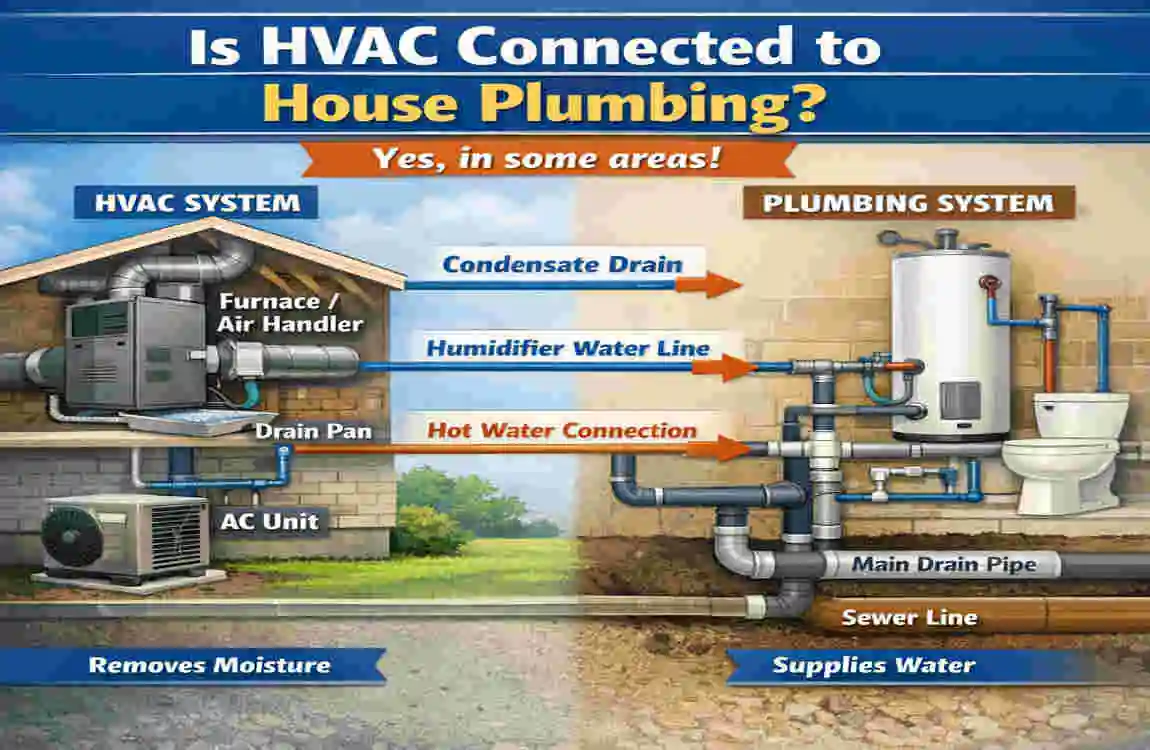
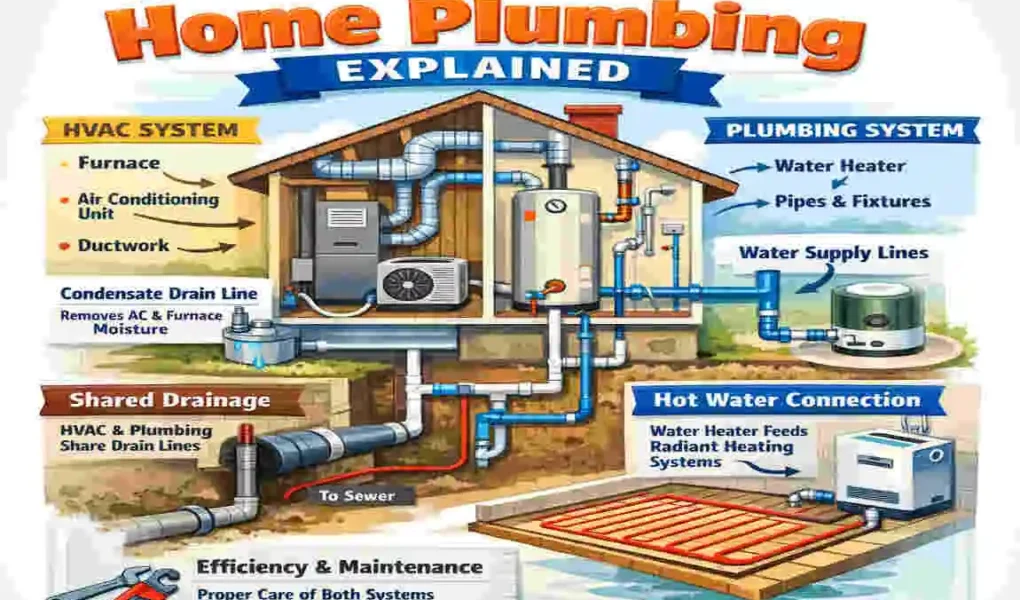
Even though HVAC and plumbing are separate systems, they often intersect at a few key points. The most common one is the HVAC drain line, which carries away condensation. In some homes, the system may also connect to plumbing for humidifiers, condensate pumps, or water-based heating equipment. So while the answer to is HVAC connected to house plumbing is mostly no, there are still real ties you should understand.
| Connection Type | Description | Potential Issues |
|---|---|---|
| Condensate Drain | AC/furnace moisture drains to plumbing | Clogs cause overflows, mold |
| High-Efficiency Furnace | Exhaust condensate (acidic) to drain | Corrosion if not neutralized |
| Hydronic Boilers | Hot water loops tie into plumbing | Leaks affect both heating/water |
| Shared Maintenance | Vents/pipes run parallel | Condensation damages ducts |
What Is HVAC? A Quick Breakdown for Homeowners

HVAC stands for Heating, Ventilation, and Air Conditioning. That sounds technical, but the idea is simple. HVAC system that keeps your home comfortable by controlling temperature, airflow, and indoor air quality.
Heating, Ventilation, and Air Conditioning Explained Simply
Each part of HVAC has its own job:
- Heating warms your home during cold weather.
- Ventilation brings in fresh air and helps remove stale air.
- Air conditioning cools your home and removes moisture from the air.
In many homes, these functions work together through one network of equipment. That may include a furnace, indoor unit, outdoor compressor, ducts, filters, thermostat, and sometimes a heat pump.
What is important here is that HVAC is mainly an air system, not a water system. It moves air through ducts and uses refrigerant to transfer heat. That is one of the biggest reasons people ask does HVAC use house plumbing and get confused. The answer is usually no because the main system does not need household water lines to perform its basic function.
How HVAC Works in Everyday Terms
Think of HVAC like a breathing system for your house.
It pulls in air, treats it, and sends it back out. In cooling mode, the system removes heat from indoor air and transfers it outside. At the same time, it removes moisture from the air, which is why you often see water around an AC system. That water is condensation, and it needs to go somewhere.
That is where the plumbing connection may appear.
But again, the core heating and cooling cycle does not depend on house plumbing. It depends on air movement, refrigerant flow, electrical power, and controls.
HVAC vs. Plumbing at a Glance
Here is a simple comparison to make the difference clear:
ComponentHVAC RolePlumbing Tie?
Compressor Moves refrigerant and helps cool air No
Furnace or heat pump Heats air No
Ducts Move air through the home No
Thermostat Controls system operation No
Condensate drain line Removes moisture from cooling process Yes, often
Humidifier feed line Supplies water to add moisture Yes, sometimes
Hydronic heating pipes Carry hot water for heating Yes, in some systems
This table clearly shows the key point: HVAC is not the same as plumbing, but it can connect to plumbing in certain places.
House Plumbing 101: Pipes, Drains, and Water Flow
To fully answer is HVAC connected to house plumbing, you also need a basic understanding of plumbing.
Plumbing is the system that brings clean water into your home and carries wastewater out. It includes supply pipes, drain pipes, traps, vents, valves, and fixtures like sinks, toilets, showers, and washing machines.
What Plumbing Does in a Home
Plumbing has two main jobs:
- Bring water in
- For drinking
- Cooking
- Bathing
- Laundry
- Cleaning
- Take wastewater away
- From sinks
- From toilets
- From tubs and showers
- From appliances
Plumbing also uses vents to help air move through drain lines properly. Without good venting, drains can gurgle, slow down, or smell bad.
Why Plumbing Is Different from HVAC
Plumbing handles water. HVAC handles air.
That is the easiest way to remember it.
Yes, both systems move something through pipes or ducts. But the purpose is different. Plumbing moves water for use and disposal. HVAC moves air for comfort and indoor air quality.
In homes across Pakistan, especially in cities like Lahore, plumbing also has to deal with heavy seasonal rain, high water use, and occasional drainage issues. During the monsoon season, poor drainage or blocked lines can cause backups and dampness. That is one reason a proper HVAC drain setup matters so much. It keeps extra moisture from becoming a bigger problem inside the home.
A Simple Way to Think About It
If you want a quick rule, remember this:
- Plumbing = water in and water out
- HVAC = air in and air out
The two systems may live close together, but they do not do the same job.
The Truth: Is HVAC Connected to House Plumbing?
Now let’s answer the main question directly.
The Short Answer
No, HVAC is not directly connected to house plumbing for its core heating and cooling functions.
Your air conditioner, furnace, ducts, and thermostat do not need the house plumbing system to work. They use electricity, air movement, refrigerant, and controls. They are built to manage climate, not water supply.
So, if you are asking whether HVAC is connected to house plumbing in a basic, everyday sense, the answer is mostly no.
Why People Think HVAC Uses Plumbing
Many homeowners assume there must be a plumbing connection because they see water around the unit. That is understandable.
Here are the most common reasons for the confusion:
- Water comes out of the AC
- There is a drain pipe near the unit
- A humidifier may use a water line
- Some heating systems use hot water pipes
- A condensate pump may discharge into a drain
Because of these things, people often ask does HVAC use house plumbing. In many cases, the answer is still no for the main system, but yes for certain add-ons or drainage parts.
Why the Science Is Different
HVAC cooling works by removing heat from the air, not by using household water. The refrigerant inside the system changes from liquid to gas and back again. That process absorbs heat indoors and releases it outdoors.
Plumbing does not play a role in that cycle.
That is why a standard central AC system can run just fine even if the home plumbing is turned off. The HVAC system only starts to depend on plumbing when it has a special accessory or a shared drainage setup.
Common Ties Between HVAC and Plumbing Systems

Even though the main systems are separate, HVAC and plumbing systems do connect in several real-world ways. This is where things get practical for homeowners.
Condensate Drain Lines: The Most Common Link
This is the biggest connection between HVAC and plumbing in most homes.
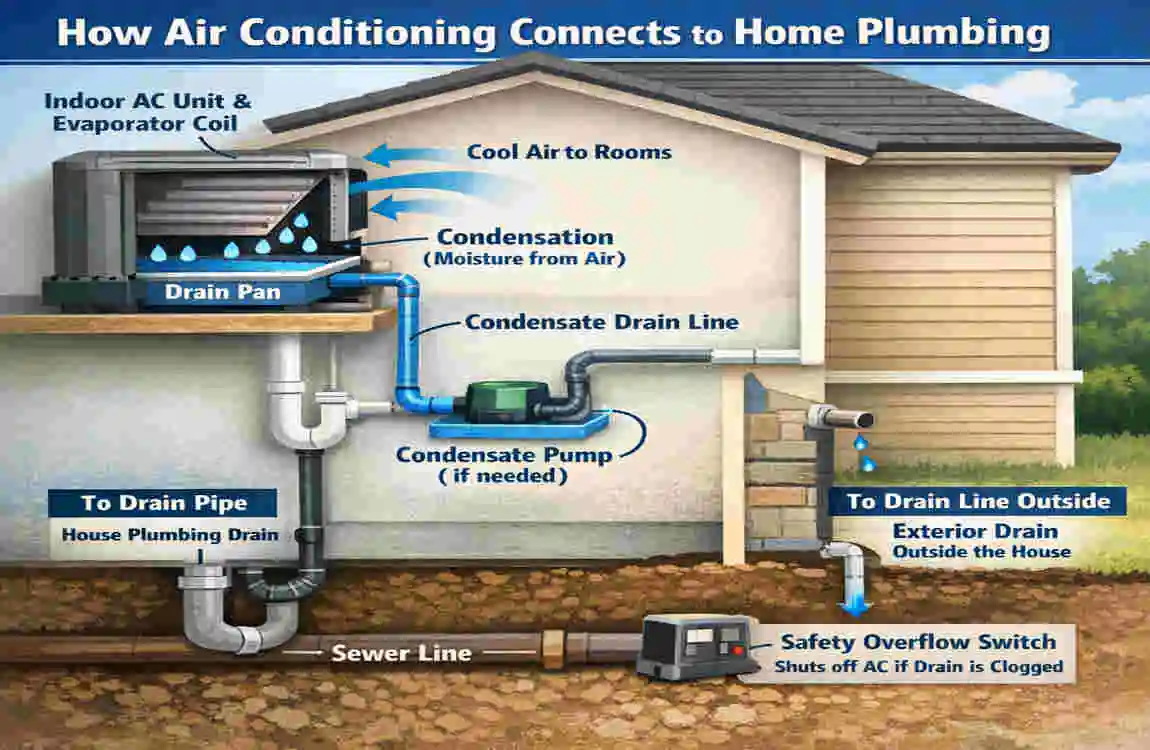
When your AC cools warm air, it also removes moisture from that air. That moisture turns into water on the indoor coil. This water collects and drains away through a condensate drain line.
In simple words, your AC makes water as a natural part of cooling. That water has to go somewhere safe.
In many homes, the drain line may go to:
- A floor drain
- A plumbing drain line
- An outdoor drain point
- A condensate pump
- A sink trap or utility drain, where allowed and properly installed
This is one of the main reasons people ask about the HVAC condensate line going to the plumbing. The line may not connect directly to the main plumbing system in every house, but it often drains into or near a plumbing route.
In hot, humid weather, like Lahore summers, condensate can build up quickly. A hardworking AC may produce a surprising amount of water each day. If the line clogs, water backs up and spills into ceilings, walls, or floors.
That is why this tiny pipe matters so much.
Condensate Pumps and Why They Matter
Sometimes gravity cannot do the job. Maybe the indoor unit sits in a basement, on a low floor, or in a place where the drain line cannot slope downward enough.
That is when a condensate pump helps.
A condensate pump collects water from the AC and drains it. This is especially useful when the HVAC unit is far from a suitable drain or when the drain line must travel upward before descending.
This is one of the clearest examples of condensate pump plumbing in action. The pump creates a bridge between the HVAC unit and the plumbing drainage path.
If the pump fails, water can overflow fast. If the float switch sticks, the unit may leak. If the discharge line gets blocked, water may back up again.
So yes, the pump is small, but it plays a big role in keeping the home dry.
Humidifiers, Water Lines, and Comfort Add-Ons
Some HVAC systems include a humidifier, especially in dry climates or in homes that need better indoor moisture levels in winter.
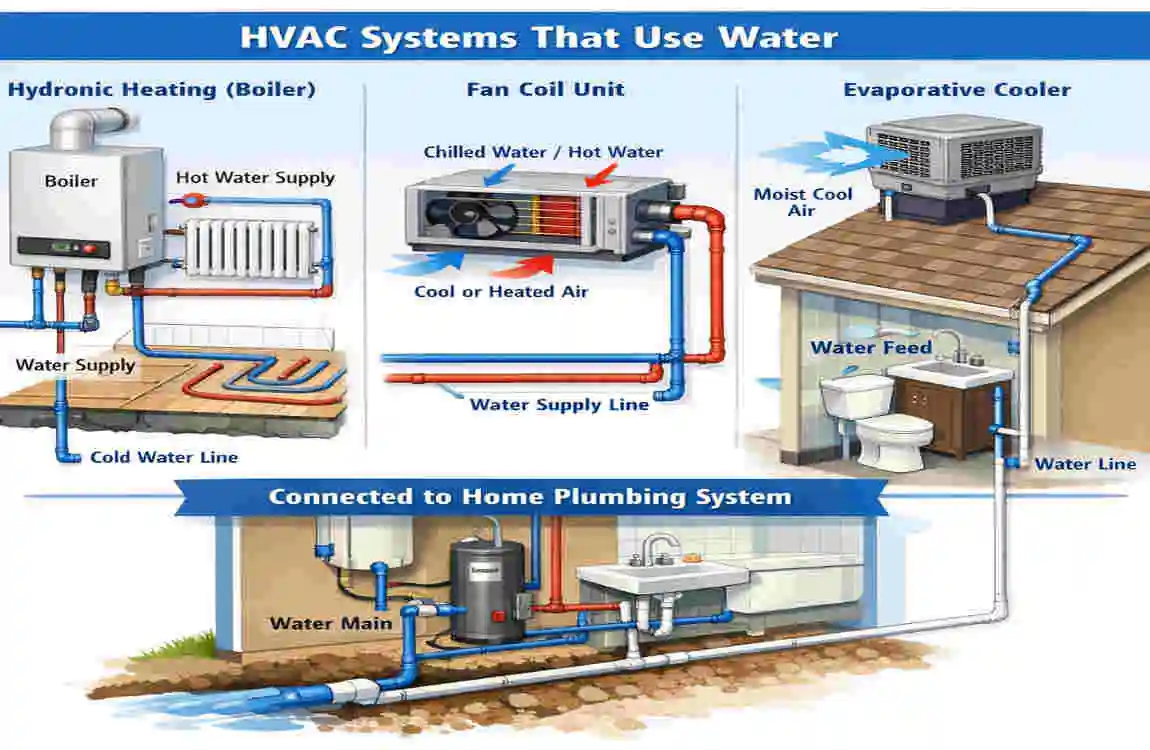
A humidifier may connect to a cold-water line to add moisture to the air. That means the HVAC system does, in this case, connect to plumbing.
This does not change the main rule. It just means there are special cases where the systems overlap.
Other water-based add-ons can also create connections, such as:
- Whole-home humidifiers
- Steam humidifiers
- Hydronic heating systems
- Specialized dehumidifiers with drainage hookups
In these systems, water helps improve comfort or heating performance. That is why HVAC and plumbing systems can sometimes work together, even though they are still separate by design.
Hydronic Heating: When Water Carries Heat
Some homes use hydronic heating, in which hot water flows through pipes to provide heat. This is very different from a standard forced-air system.
In hydronic systems, the boiler, pump, and water piping are all part of the heating setup. This is a true plumbing connection because the system depends on water flow.
That means the answer to is HVAC connected to house plumbing can become more complex in homes with hydronic heat. In that case, yes, part of the comfort system really does depend on plumbing.
But most homes with standard AC and furnace systems do not work that way.
Ventilation, Exhaust, and Shared Spaces
Sometimes people think an HVAC system is connected to plumbing because they see vents, drains, and pipes all near each other in ceilings, walls, or utility rooms.
In reality, they may simply be sharing space.
For example:
- Bathroom exhaust fans move moist air out of the home
- Kitchen exhaust systems remove cooking smoke and grease
- Dryer vents push warm air outside
- Plumbing vents help drains flow properly
These are different systems, but they often run through similar building cavities. That can make them feel connected even when they are not.
Common HVAC-Plumbing Tie Overview
Tie TypeWhat It DoesWhy It MattersRisk If Ignored
Condensate drain Carries AC moisture away Prevents leaks and mold Water damage, clogs
Condensate pump Moves water when gravity is not enough Helps drainage in tough layouts Overflow, shutdown
Humidifier feed Supplies water to add humidity Improves comfort in dry air Leaks, poor performance
Hydronic heating Uses hot water to heat the home Efficient in certain homes Cold rooms, boiler issues
Shared vent areas Routes air and pipes through similar spaces Saves building space Confusion, hidden damage
This is the practical side of is HVAC connected to house plumbing. The answer depends on which part of the system you are looking at.
Problems When HVAC and Plumbing Aren’t Aligned
When HVAC drainage and plumbing do not work together properly, homeowners usually notice problems fast. And the longer they wait, the worse the damage can get.
Clogged Condensate Drain Lines
This is one of the most common issues.
Dust, algae, debris, and slime can accumulate in the condensate line. When that happens, water cannot flow out correctly. Instead, it backs up into the unit or spills onto the floor.
Common signs include:
- Water dripping from the indoor unit
- A musty smell near vents
- AC shutting off unexpectedly
- Water stains on ceilings or walls
- Gurgling or bubbling sounds
In many service calls, a clogged drain line turns out to be the real problem, not a broken AC. That is why the answer to is HVAC connected to house plumbing matters so much. A drainage issue can look like an HVAC failure, but it may actually be a plumbing-style blockage at the drain point.
Leaks and Water Damage
Water is one of the most expensive things a homeowner can ignore.
A small leak from a condensate line can damage drywall, paint, insulation, wood, and even electrical parts. In apartments and multi-level homes, water can also move to lower floors, leading to larger repair bills.
In humid cities, the risk goes up because the AC runs more often and produces more condensation. If the system does not drain properly, the leak may persist for hours before anyone notices.
That is when a simple maintenance issue turns into a costly repair.
Higher Energy Bills
Poor drainage can also affect efficiency.
When an AC unit struggles with moisture removal or airflow, it may work longer than it should. That means:
- More electricity use
- More wear on parts
- Less comfort in the home
- More frequent service calls
A dirty drain line, clogged trap, or failing condensate pump can make the whole system less efficient. So if you are asking, “Does HVAC use house plumbing?” and hoping for a simple answer, remember this: even a small drainage problem can make the HVAC system work harder.
Mold, Odors, and Poor Indoor Air
Standing water and damp surfaces create ideal conditions for mold and odor growth. Once that starts, the smell can spread quickly through the home.
You may notice:
- A damp or sour smell
- Allergy symptoms
- Stale air
- Visible mold near the unit or vent openings
This is why good HVAC drainage is not just about comfort. It is also about healthy indoor air.
What Goes Wrong Most Often
Here is a short list of the most common failure points:
- Blocked drain line
- Broken or weak condensate pump
- Incorrect drain slope
- Loose drain connections
- No trap where one is needed
- Poor insulation around the line
- Ignored maintenance
Many of these problems are easy to prevent if you regularly inspect the system.
Efficiency Hacks: Optimize HVAC-Plumbing Integration

If your home has an HVAC drain connection, you can take a few simple steps to keep it working well. These are practical habits, not complicated upgrades.
Keep the Condensate Line Clear
This is the easiest and most important maintenance step.
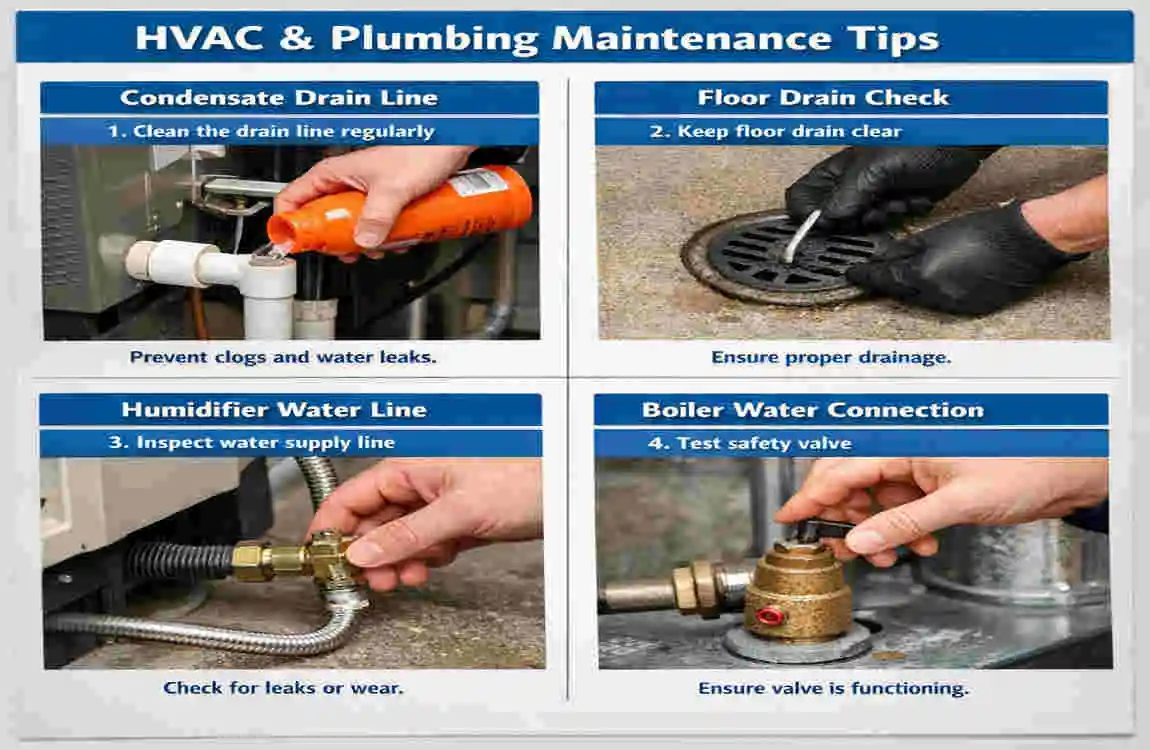
A clean drain line helps prevent water backups and indoor leaks. In many homes, a simple flush can make a big difference.
You can use these basic habits:
- Pour a safe cleaning solution through the line on a regular schedule
- Check that water drains freely
- Look for slime, debris, or slow drainage
- Make sure the drain outlet is not blocked outside
If you are comfortable doing light maintenance, this is one of the simplest ways to protect your system. If you see repeated clogging, it may point to a larger issue with the line layout.
Make Sure the Drain Has the Right Slope
Drain lines work best when gravity can help move water away. If the pipe is flat, tilted the wrong way, or sagging in the middle, water can pool and create clogs.
A proper slope helps water flow continuously toward the drain point.
This is a small detail, but it matters a lot. Many drainage problems begin with poor pipe positioning rather than a major equipment fault.
Insulate Where Needed
In some setups, insulation around the drain line helps prevent unwanted sweating or heat gain. This can reduce moisture around the system and protect nearby materials.
It also helps keep the line in better shape when temperatures swing from hot to cooler indoor conditions.
Use a Reliable Condensate Pump
If your HVAC unit uses a pump, choose a strong one and test it regularly.
A good pump should:
- Start and stop smoothly
- Discharge water without strain
- Shut off the system if water backs up, if supported by the setup
- Handle the expected water volume
This matters a lot in homes where gravity drainage is not possible. A weak pump can cause repeated flooding.
Add a Float Switch for Extra Protection
A float switch can shut the system down if water rises too high. That gives you an extra layer of protection against overflow.
Think of it like a safety net.
If the drain becomes blocked or the pump fails, the switch warns the system before water spills everywhere. This can save you from major damage.
Seasonal Checklists Help More Than You Think
Many HVAC and drain problems show up only when the system starts running hard again.
That is why a seasonal check is so useful. Before summer begins, look at the drain line, the pump, and the area around the indoor unit. Make sure nothing is leaking, blocked, or damaged.
A simple check at the right time can prevent a long repair later.
Table of Practical Efficiency Hacks
HackWhy It HelpsApproximate Cost
Flush the condensate line Prevents algae and clogs Low
Inspect the drain slope Improves water flow Low to medium
Install a float switch Reduces overflow risk Medium
Use a condensate pump Moves water where gravity cannot Medium
Insulate exposed lines Reduces moisture issues Low
Schedule yearly service Catches problems early Medium
These upgrades may seem small, but they can make a real difference in how smooth your system runs.
Simple Homeowner Checklist
If you want a quick maintenance routine, use this short list:
- Check the indoor unit for water stains
- Make sure the drain line is flowing
- Listen for unusual sounds
- Smell for mildew or damp odors
- Confirm the pump is working, if you have one
- Book service if the AC keeps shutting down
Small checks like these often prevent bigger issues before they start.
Smart Upgrades for Lahore Homes
Homes in Lahore face a special mix of heat, humidity, dust, and long cooling seasons. That makes drainage and HVAC care even more important.
Why Lahore Homes Need Extra Attention
In very hot weather, air conditioners run for longer periods. That means they create more condensation and put more load on the drain line.
Dust can also clog filters and drain paths. Monsoon humidity can add even more moisture to the air, increasing the amount of water to remove.
If the system is already weak, these conditions can quickly reveal the problem.
Best Upgrades for Better Comfort
If you want to improve your home setup, focus on upgrades that support both comfort and reliability:
- Better drain management
- Reliable condensate pumping
- Good insulation around exposed lines
- Regular cleaning before peak summer
- Moisture control in rooms that stay damp
- Proper airflow around indoor units
These changes do not always look dramatic, but they often improve performance noticeably.
Why Smart Sensors Help
Some homes now use sensors that can alert you when water levels rise or when a line gets blocked. That can be a very helpful safety feature.
If you spend time away from home during the day, early warning matters. A small alert can prevent a soaked ceiling or a flooded room.
When to Call a Pro
There are some jobs you can handle yourself. But there are also times when you should bring in a trained technician.
Red Flags You Should Not Ignore
Call a professional if you notice:
- Water pooling around the indoor unit
- Repeated drain clogs
- Gurgling or bubbling sounds in the line
- AC shutting off for no clear reason
- Mold or mildew that keeps coming back
- A condensate pump that keeps failing
- Water stains on walls or ceilings
These signs usually mean the issue is beyond a simple cleaning.
Typical Costs in Pakistan
Costs can vary by city, system type, and the exact problem. But in general, a basic inspection is much cheaper than repairing water damage later.
You may pay for:
- Inspection and diagnosis
- Drain line cleaning
- Pump replacement
- Leak repair
- Water damage repair
- Full HVAC servicing
Even if the inspection feels like an extra expense, it can save money in the long run.
Why Professional Help Matters
A technician can check the full picture, not just one symptom. That is important because the real problem might be:
- A clogged line
- A poor drain slope
- A faulty pump
- A hidden leak
- An installation issue
Sometimes the question is HVAC connected to house plumbing is not the real issue. The real issue is whether the drainage path was installed correctly in the first place.
FAQs: Is HVAC Connected to House Plumbing?
Is HVAC connected to house plumbing?
Not directly for heating and cooling, but yes indirectly through condensate drains, humidifiers, condensate pumps, and some special heating systems.
Does HVAC use house plumbing?
Usually no. Standard HVAC systems use air, refrigerant, and electricity. They only use plumbing in special cases, such as humidifiers or hydronic heating.
Does my AC drain into plumbing?
It often drains into a drain line that may connect to plumbing or discharge to a safe drain point. If the line clogs, water can back up.
What is an HVAC drain line?
It is the pipe that removes moisture created when your AC cools indoor air. It is one of the main reasons people ask is HVAC connected to house plumbing.
What is a condensate pump?
A condensate pump moves water from the HVAC unit to a drain when gravity drainage is not possible. It is a common plumbing-style tie-in.
Can I clean an HVAC drain line myself?
Yes, basic cleaning and flushing are often simple. But if the line keeps clogging or the system leaks, call a professional.
Why does my HVAC smell bad near the drain?
A bad smell often means standing water, algae, mold, or a blocked drain line. That needs attention quickly.
Is HVAC connected to house plumbing in every home?
No. Many homes have completely separate systems except for the condensate drain or a few optional accessories.