what's a bi level house
Architecture

Exploring the Charm of Bi-Level Homes: A Unique Design

If you have ever driven past a home that seems to sit halfway between two levels, you have already seen the charm of this design in action. It feels a little different from the usual house style, and that is exactly why many people notice it right away.

The front door often opens onto a middle landing, with stairs going up to one part of the house and down to another. This layout gives the home a compact, practical feel while still creating separate spaces for daily life.

A bi-level house, also called a split-level home, is often compared to a raised ranch house. These homes became popular because they made smart use of space, worked well on sloped lots, and offered a layout that felt both efficient and private.

Today, bi-level homes still have a loyal following. Some buyers love their character. Others appreciate the way they make the most of a smaller footprint. And many homeowners enjoy how easily these houses can be updated for modern living.

Aspect Description Key Benefits/Charm
Design Overview Split-level homes with 2-3 short flights of stairs connecting living areas; entry midway up. Maximizes sloped lots; compact yet spacious feel.
Layout Features Upper: bedrooms/baths; main: kitchen/living; lower: family room/garage. Privacy zones; seamless indoor-outdoor flow.
Pros Cost-effective build; energy-efficient; great natural light on multi-levels. Affordable unique style; suits families.
Cons Stairs challenge mobility; potential noise between levels. Retrofit ramps for accessibility.
Popular Styles Mid-century modern, ranch bi-levels; customizable exteriors (brick, siding). Timeless appeal; trending in urban suburbs.
Modern Trends (2026) Open-concept updates, smart home integration, eco-materials like sustainable siding. Rising value: 10-15% premium in resale markets.

What’s a Bi-Level House? A Simple Breakdown

what's a bi level house

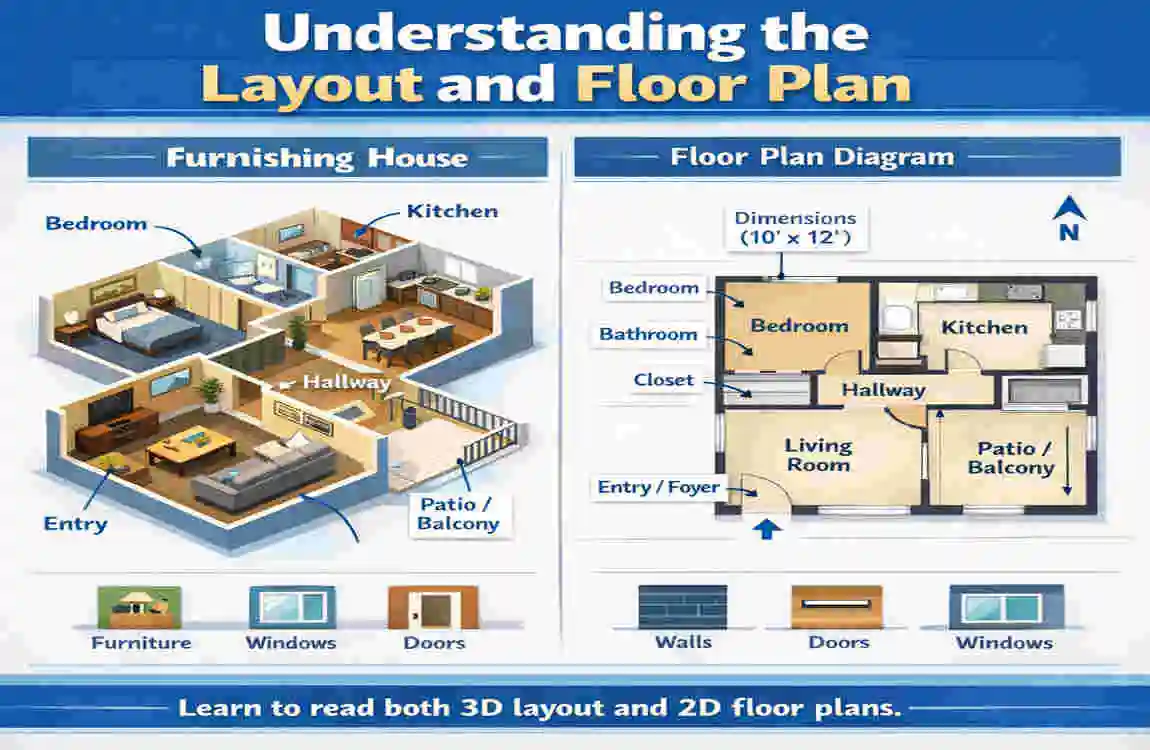
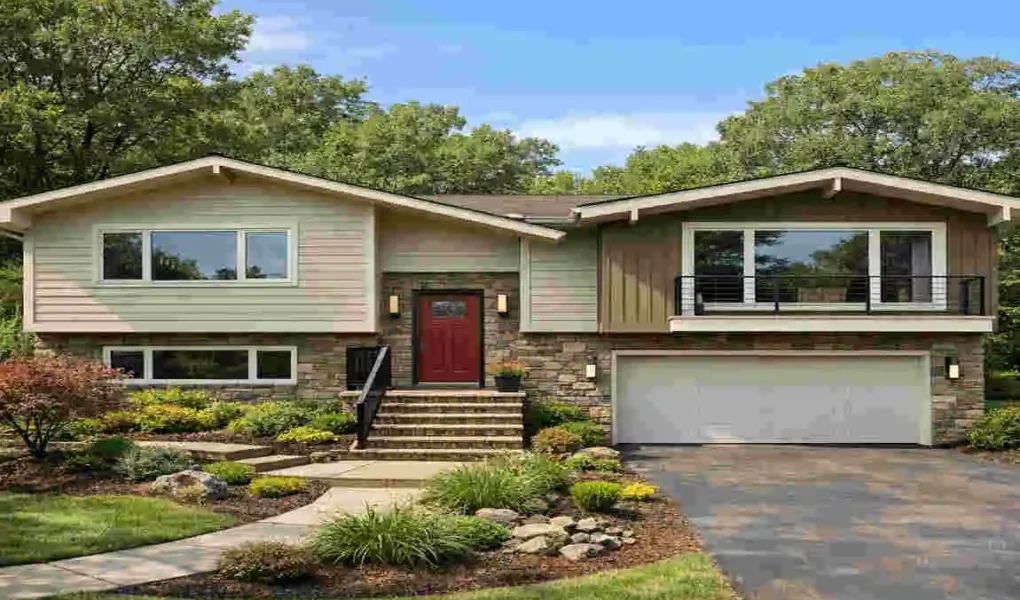
A bi-level house is a home design with two main levels that are connected by a short staircase. Instead of walking straight into a large main floor like in a ranch house, you usually enter the home at a landing between floors. From there, you go up to one level and down to another.

That is the basic idea behind a bi-level floor plan. It is simple, efficient, and easy to recognize once you know what to look for.

The basic layout

Most bi-level homes have a similar structure:

  • A front entry that opens to a small landing
  • A main upper level with the kitchen, living room, dining area, and bedrooms
  • A lower level with extra living space, a family room, garage access, laundry, or storage

Some bi-level homes have only two main levels. Others may feel a little more layered, especially if the lower level is partly finished or if the design includes a garage on one side.

How it is different from a regular two-story house

This is where people sometimes get confused. A bi-level house is not the same as a standard two-story home.

In a two-story house, both floors are full levels stacked directly on top of each other. In a bi-level home, the floors are often offset or split, making the home feel more compact and more connected to the land beneath it.

That difference may sound small, but it changes the whole feel of the house.

Bi-level house meaning in simple terms

If we keep it very plain, the bi-level house meaning is this:

It is a home with two main living levels separated by a short staircase, usually entered at a landing between floors.

That is the quickest way to explain it. It is a practical home design that creates useful space without needing a large footprint.

Quick reference table: Bi-level house explained

Feature Bi-Level House Explained

Number of levels Usually 2 main living levels

Entry style Front door opens to a mid-level landing

Stair layout Short stairs go up and down from the entry

Common names Bi-level, split-level home, split foyer, raised ranch

Best fit Sloped lots, compact lots, efficient floor plans

Typical use Family living, flexible lower-level space

A simple example

Imagine a 1,800-square-foot home. When you open the front door, you do not step into a big open room. Instead, you arrive on a landing with a staircase going up and another going down.

Upstairs, you may find the kitchen, dining area, living room, and bedrooms. Downstairs, you may see a family room, laundry space, garage access, or a guest room.

That is the charm of a bi-level house. It gives you separation without making the home feel huge or overwhelming.

The History and Evolution of Bi-Level Homes

Bi-level homes did not become popular by accident. They grew out of a need for affordable, practical, and easy-to-build homes on different types of land.

Where bi-level architecture came from

The rise of bi-level architecture is closely tied to the growth of suburban housing in the mid-20th century. After World War II, many families sought modern, efficient, and affordable homes. Builders needed designs that could be produced quickly, but still feel comfortable and attractive.

The split-level concept answered that need very well.

It offered more usable space than a simple single-story home, but without the full cost and structure of a large two-story house. This made it a smart choice for growing families and new suburban neighborhoods.

Why the design became so popular

There were several reasons why the bi-level house caught on:

  • It made good use of smaller or sloped lots
  • It allowed separate spaces for living and sleeping
  • It created a sense of privacy inside the home
  • It often cost less to build than larger, more complex homes
  • It gave neighborhoods a fresh, modern look

At the time, many buyers wanted homes that felt practical but not plain. The bi-level fit that goal nicely.

How the style evolved over time

As decades passed, bi-level homes changed with the times. Some builders added garages at the lower level. Others adjusted the floor plan to include larger family rooms, bigger windows, or more open living spaces.

Later, homeowners started remodeling older bi-level houses to make them feel brighter and more connected. Walls came down. Kitchens opened into living areas. Lower levels were turned into guest suites, offices, or entertainment spaces.

Today, the bi-level house is no longer seen as just a basic suburban home. In many cases, it is now viewed as a smart canvas for renovation.

Why people still talk about them today

Bi-level homes still matter because they solve real problems. They use land well. They separate daily activity from quiet areas. And they can adapt to changing family needs.

That makes them a lasting part of home design, not just a passing trend.

Key Design Features of Bi-Level Floor Plans

The real charm of a bi-level home lies in its layout. The design may look simple from the outside, but inside, it can create a very practical living experience.

The split-foyer entry

One of the most recognizable features is the split foyer or mid-level landing.

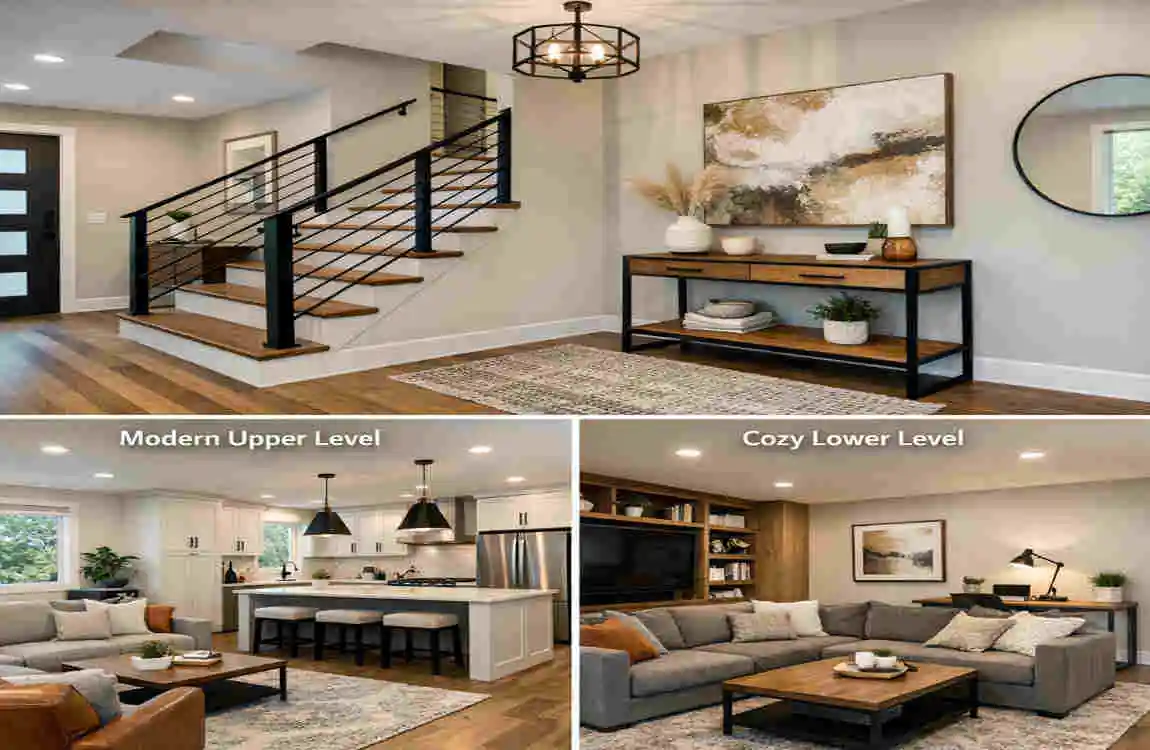
When you walk into the home, you usually meet a small entry area first. From that point, stairs lead both up and down. This layout may feel unusual at first, but it creates a clear divide between public and private spaces.

The entry often helps the home feel compact and organized. It also gives the house a distinctive identity right away.

Upper-level living spaces

The upper level usually contains the spaces people use most during the day. These often include:

  • Living room
  • Kitchen
  • Dining area
  • Bedrooms
  • Main bathroom

This level often feels like the heart of the house. It is where families gather, eat, rest, and spend most of their time together.

Because the upper level is often raised above the ground, it can also bring in more natural light. That helps the home feel brighter and more open.

Lower-level flexibility

The lower level is one of the biggest strengths of a bi-level house. This space can be used in many ways depending on the family’s needs.

Common lower-level uses include:

  • Family room
  • Home office
  • Guest room
  • Laundry area
  • Storage space
  • Exercise room
  • Playroom
  • Rental suite

This flexibility is one of the reasons why people still like bi-level floor plans. The lower level can grow with you. A young couple may use it as a casual lounge, while a family with teens may turn it into a second living area.

How the design supports daily life

A bi-level home can make everyday life feel more organized. The upper level often stays quieter, while the lower level becomes the place for movement, hobbies, and flexible use.

That separation can be helpful if you want:

  • More privacy
  • Less noise in bedroom areas
  • A second gathering space
  • Better room for guests
  • A dedicated work-from-home setup

In other words, the layout does a lot of quiet work behind the scenes.

Outdoor flow and lot efficiency

Bi-level homes also work well with the land around them. On sloped lots, the design can sit naturally into the terrain. That often makes the home feel more stable and balanced.

Many bi-level houses also connect easily to outdoor spaces such as:

  • Patios
  • Back decks
  • Side yards
  • Lower-level walkouts

This creates a nice flow between indoor and outdoor living. If you enjoy spending time outside, that’s a big plus.

Why the shape of the home matters

A bi-level house may not always have the grand appearance of a large two-story home, but its shape is part of its appeal. It often looks neat, compact, and practical. For many buyers, that is exactly what they want.

Pros and Cons of Living in a Bi-Level Home

what's a bi level house

Like any home style, a bi-level house has both strengths and challenges. Understanding both sides will help you decide whether it fits your lifestyle.

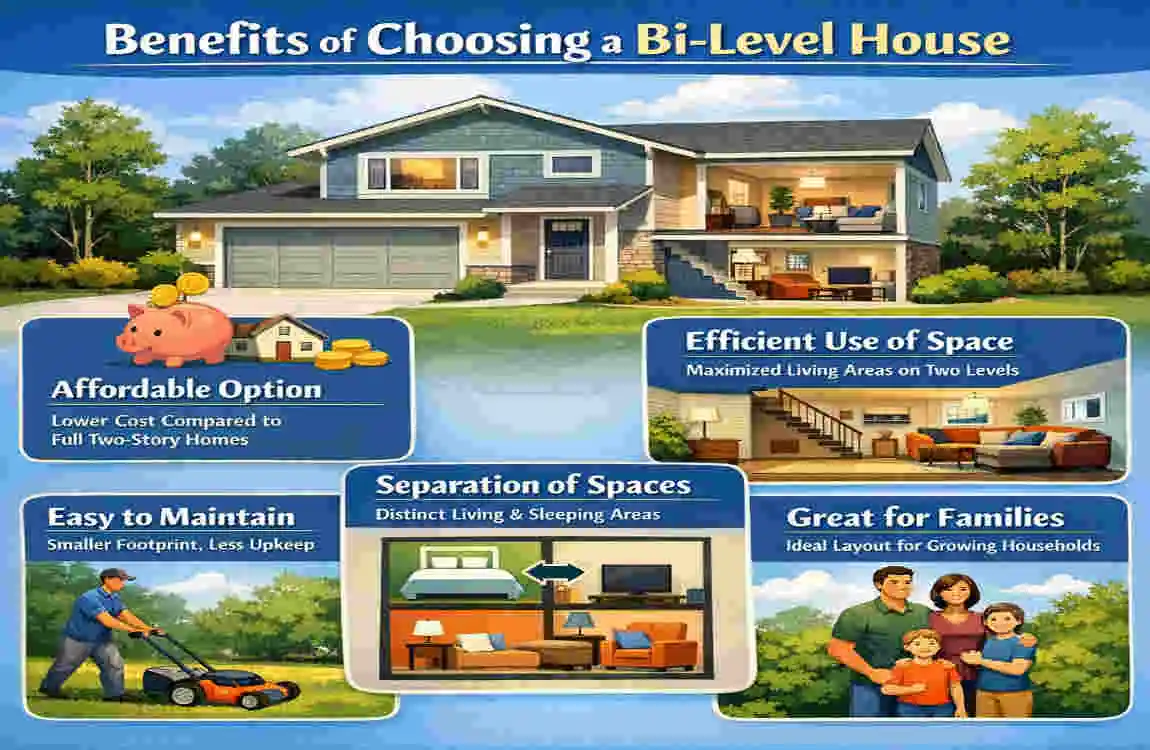
The advantages of a bi-level home

There are several reasons people love this design.

It makes good use of space

A bi-level home gives you more usable space without needing a huge footprint. That can be especially helpful on smaller lots or uneven land.

 It creates natural separation

The split layout divides the home into zones. That means you can keep bedrooms quieter while using another level for social activity.

 It can be more affordable

In many cases, a bi-level home can be less expensive to build than a larger custom home. The footprint is often efficient, and the structure is straightforward.

It works well on sloped lots

This is one of the biggest reasons the style remains useful. A bi-level home can sit comfortably on land that would be harder for other home types to sit on.

It gives you flexible living space

The lower level can become almost anything you need. That kind of flexibility is very appealing, especially for growing families.

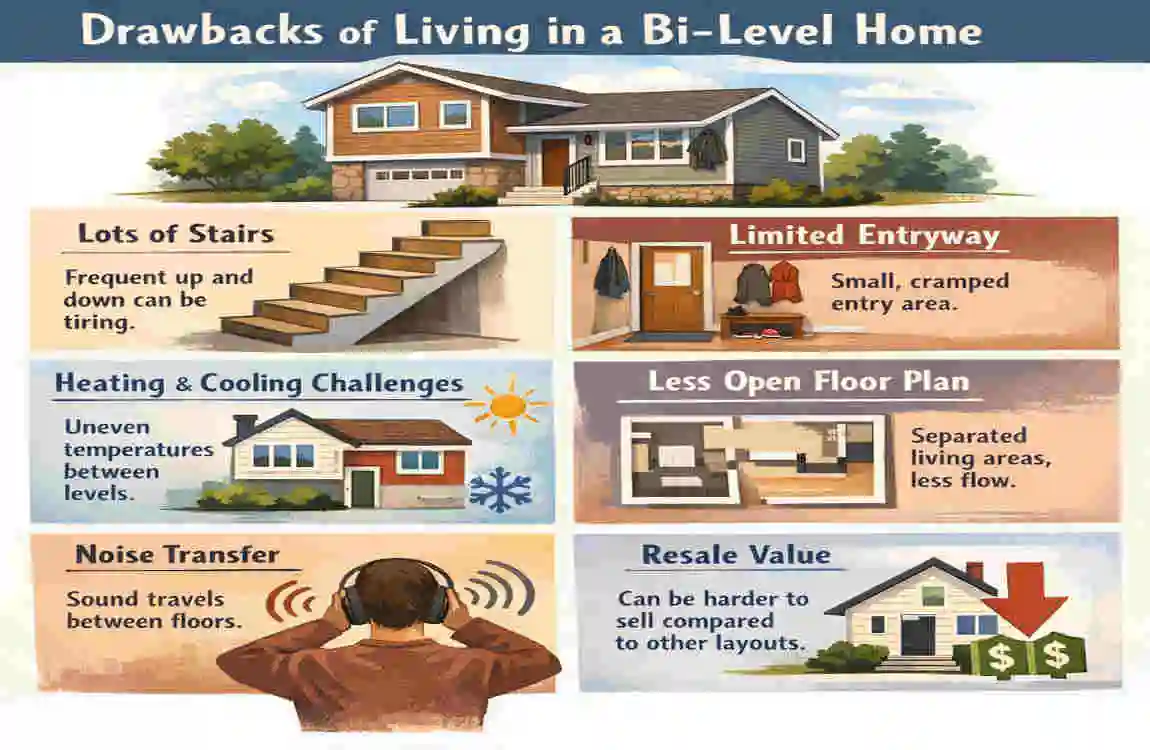
The challenges of a bi-level home

Of course, no design is perfect.

Stairs can be tiring

The most common concern is the stairs. Since you often need to move between levels, this can be less comfortable for older adults, small children, or anyone with mobility concerns.

The entry may feel less open

Some people prefer a home where the front door opens into a large main room. A bi-level entry can feel smaller or more enclosed at first.

 Renovations may be needed

Older bi-level homes sometimes need updates to feel more modern. That may include opening walls, improving lighting, or refreshing the lower level.

Resale appeal can depend on the market

Some homebuyers love bi-level homes, while others prefer different layouts. That means resale interest can vary depending on location and buyer preferences.

Pros and cons at a glance

Aspect Pro Con

Space use Efficient use of square footage Stairs can interrupt flow

Privacy Clear separation between zones Not ideal for mobility issues

Cost Often practical and affordable Renovations may be needed in older homes

Lot fit Works well on slopes Can feel less open at the entry

Flexibility Lower level can serve many roles Some layouts need modern updates

Who tends to like bi-level homes most?

Bi-level homes often appeal to people who want:

  • A practical layout
  • A flexible lower level
  • A home that works on uneven land
  • A style with character
  • A balance between privacy and shared space

If that sounds like you, then this design may be worth a closer look.

Bi-Level vs. Other Home Styles: A Quick Comparison

When people ask what’s a bi-level house, they often want to know how it compares to other common home styles. That is a smart question, because the differences can help you see whether this layout truly fits your needs.

Bi-level house vs. ranch house

A ranch house is usually a single-story home with all the main rooms on one level. That makes it easy to move around in, and many people love the simple flow.

A bi-level house, on the other hand, spreads living space across two main levels. That gives it more separation and more flexibility, but it also means more stairs.

Main difference:

  • Ranch: one level, easier movement
  • Bi-level: split levels, better zoning and compact design

Bi-level house vs. two-story home

A two-story home usually has a full upper floor stacked above the main level. The staircase is often more central and more obvious.

A bi-level home feels more compact and often less formal. The split entry makes the levels feel separated, not stacked.

Main difference:

  • Two-story: full upper floor, more vertical structure
  • Bi-level: staggered levels, more compact flow

Bi-level house vs. split-level and raised ranch

This is where the language can get a little confusing, because people often use these terms in similar ways.

A split-level home is a broad term for a home with floors that are staggered. A bi-level house is one type of split-level home, usually with two main levels. A raised ranch house often looks similar and may have an entry at the middle level. However, it may vary slightly by region and builder.

So, while these terms are often used interchangeably, they do not always mean the same thing.

Quick comparison table

Home Style Levels Best For Key Strength

Bi-Level 2 main split levels Sloped lots, flexible families Efficient layout

Ranch 1 main level Easy movement, simple living Accessibility

Two-Story 2 full levels Larger families, formal separation Clear floor division

Split-Level Staggered levels, varies Varied terrain and zoning Unique layout

Raised Ranch Similar to bi-level, often elevated entry Compact lots Practical design

Which one should you choose?

That depends on what you value most.

If you want easy movement, a ranch may be a better option. If you want strong separation between activity areas and quiet areas, a bi-level can be a very smart choice. If you want a more traditional stacked layout, a two-story home may be the answer.

The bi-level stands out for offering a middle ground. It is not too large, not too plain, and not too difficult to adapt. For many families, that balance is the real attraction.

Modern Bi-Level Homes: Trends and Inspiration

A lot of people think bi-level homes belong to an older era, but that is not the full story. In fact, modern buyers and designers are finding new ways to make this style feel fresh and useful.

Open-concept updates

One of the biggest modern changes is the move toward open living spaces.

Older bi-level homes often had more walls between the kitchen, dining room, and living room. Today, many homeowners are choosing to remove those barriers. That creates a brighter, larger feeling inside the home.

This kind of update can make a huge difference. It helps the main level feel more social and more connected.

Better lower-level living

Modern bi-level renovations often focus on the lower level. Instead of leaving it unfinished or using it only for storage, homeowners are turning it into a true living area.

Popular uses include:

  • Guest suite
  • Teen hangout area
  • Home office
  • Fitness room
  • Media room
  • Income-generating rental space

That is a smart way to increase the home’s usefulness without adding a new wing or building up.

Smart home features

Today’s bi-level homes can easily include smart technology. That may include:

  • Smart thermostats
  • Lighting controls
  • Security cameras
  • Energy-efficient appliances
  • Wi-Fi enabled systems

These upgrades help older homes feel more current and more convenient.

Sustainable and efficient updates

Many homeowners are also looking for ways to make their homes more energy efficient. A bi-level house can be a good fit for that because it already has a compact structure.

Modern improvements may include:

  • Better insulation
  • Energy-saving windows
  • Efficient heating and cooling
  • Durable flooring
  • Low-maintenance exterior materials

These changes can improve comfort while lowering long-term costs.

Why designers are paying attention again

Bi-level homes are getting new attention because they offer something many buyers want right now: space that works hard.

People do not always need bigger homes. Often, they need homes that make better use of the space they already have. Bi-level layouts are very good at that.

They also appeal to buyers who want a home with personality. A bi-level does not feel generic. It has a shape and flow that people remember.

Modern charm in everyday life

The best modern bi-level homes are not trying to hide what they are. Instead, they embrace the layout and improve it.

That might mean brighter paint, wider stairways, larger windows, and a more open main level. It might also mean turning the lower level into a space that feels just as welcoming as the upper level.

When done well, a bi-level house can feel stylish, comfortable, and very practical.

Buying, Building, or Maintaining a Bi-Level House

what's a bi level house

If you are thinking about buying or updating a bi-level home, a few practical points are worth keeping in mind.

What to inspect before buying

Before you buy, pay close attention to the structure and layout. Ask yourself how well the home fits your daily routine.

Look at:

  • The condition of the stairs
  • The lighting at the entry
  • The layout of the upper and lower levels
  • The amount of natural light
  • The condition of the foundation
  • The quality of the lower-level finishing
  • How easy it is to move furniture in and out

These details matter more than people sometimes realize.

What to budget for

Older bi-level homes may need updates to match modern expectations. Common improvements include:

  • Flooring replacement
  • Kitchen refresh
  • Bathroom updates
  • Stair improvements
  • Better lighting
  • Lower-level finishing
  • Exterior curb appeal changes

Even small updates can make a big difference in how the home feels.

Accessibility considerations

One thing to think about carefully is mobility. Since bi-level homes rely on stairs, they are not always the easiest choice for everyone.

If you plan to stay in the home long-term, ask how the layout would work in the future. Could the lower level serve as a more accessible living area? Could you add handrails, better lighting, or a stair lift if needed?

Thinking ahead can save stress later.

Maintenance tips for bi-level homes

A bi-level home is not especially difficult to maintain, but it does benefit from regular care.

A few simple habits help a lot:

  1. Check stair railings and flooring regularly to keep them safe and secure.
  2. Keep the lower level dry and well-ventilated to avoid moisture problems.
  3. Refresh the entry area to make the first impression feel inviting.
  4. Use lighting well to make both levels feel connected.
  5. Keep the layout tidy so the split design feels intentional rather than cramped.

These small steps can help the home stay comfortable and appealing for years.

Frequently Asked Questions

What’s a bi-level house?

A bi-level house is a home with two main living levels connected by a short staircase, usually entered from a mid-level landing.

Is a bi-level house the same as a split-level home?

Not always, but they are closely related. A bi-level is usually considered a type of split-level home, and people often use the terms interchangeably.

Are bi-level homes good for families?

Yes, many families like them because the layout creates clear zones for living, sleeping, and gathering. The lower level can also become a playroom, office, or guest space.

What is the biggest drawback of a bi-level house?

The stairs are usually the main concern. They can be less convenient for people with mobility issues or for anyone who wants a fully single-level home.

Can a bi-level house be renovated to feel more modern?

Absolutely. Many bi-level homes are updated with open-concept layouts, better lighting, fresh finishes, and finished lower levels. These changes can make the home feel much more current.

Is a bi-level home a good long-term choice?

It can be, especially if you value flexibility and efficient use of space. The best choice depends on your needs now and how you expect them to change over time.

You may also like...

Leave a Reply

Your email address will not be published. Required fields are marked *