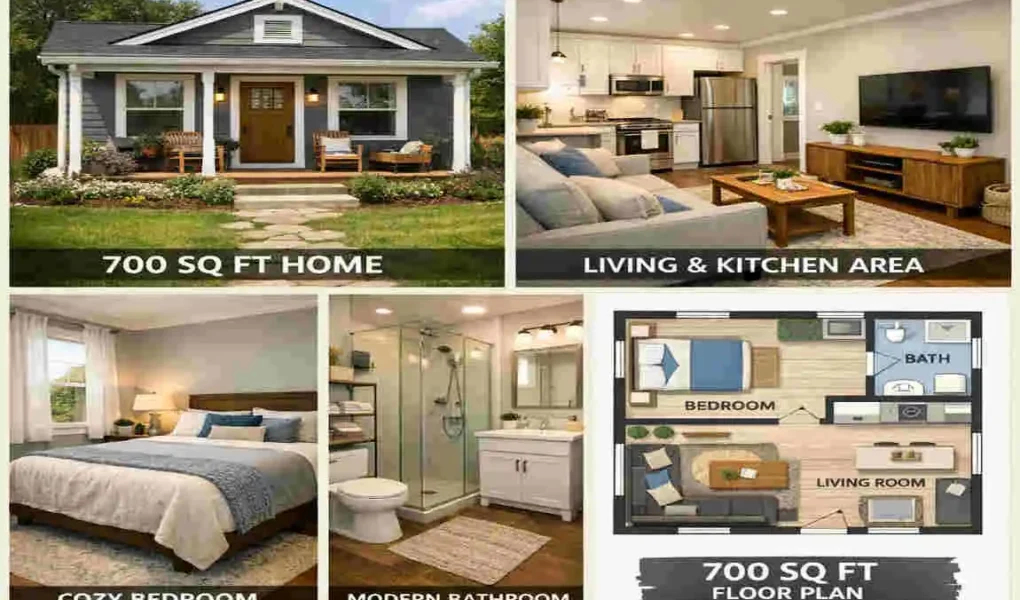
A 700-square-foot home is not huge, but it is not cramped by default either. In fact, many people find this size comfortable for daily life, especially when the design makes good use of every corner. For a single person, it can feel roomy. For a couple, it can work very well. For a small family, it depends a lot on the floor plan and storage.
| Aspect | What it usually means |
|---|---|
| Size feel | Similar to a larger one-bedroom apartment . |
| Typical layout | Living area, kitchen, bathroom, and 1 bedroom; some plans fit 2 bedrooms . |
| Comfort level | Comfortable for singles, couples, or minimalist living when the layout is efficient . |
| Best design approach | Open floor plan, built-in storage, and multi-purpose furniture |
This size is popular because it sits in a useful middle ground. It is larger than a tiny home, but smaller than a typical starter house. That means lower costs, easier cleaning, and less wasted space. At the same time, it also means you need to be thoughtful about furniture, storage, and room layout.
What Does 700 Square Feet Actually Look Like?
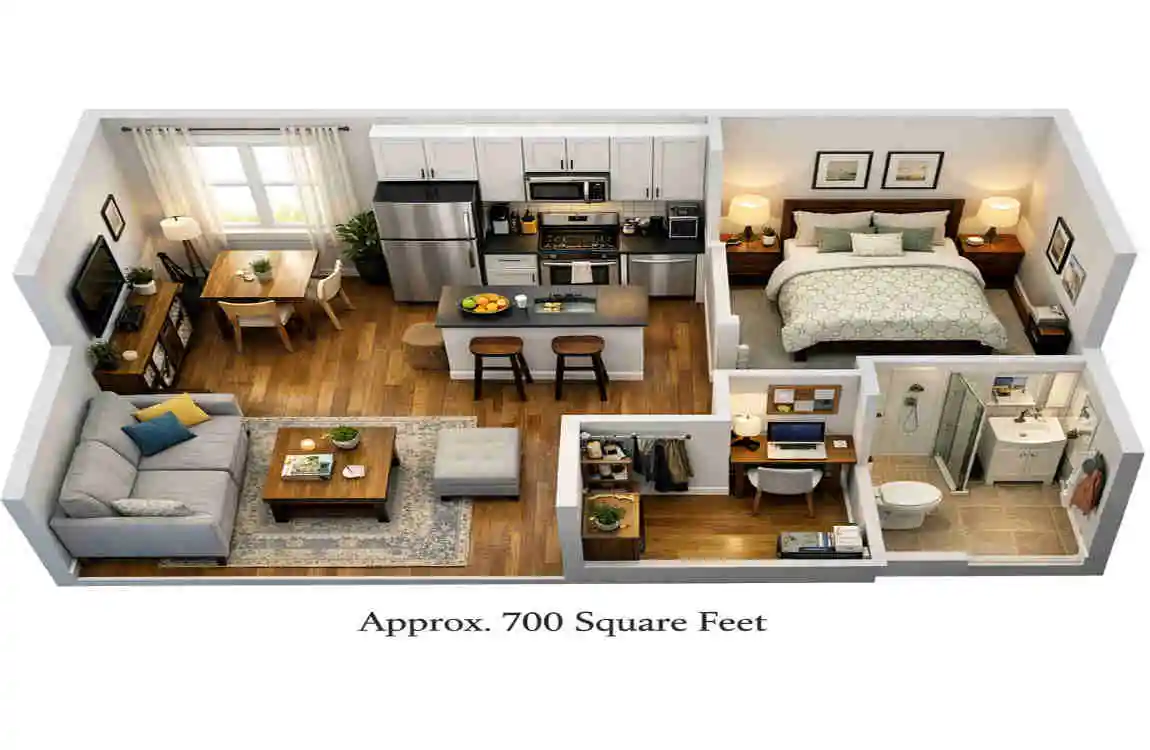
Basic Size Breakdown
A 700 square foot house is about the size of a small apartment, a compact condo, or a modest single-family home.
To picture it more clearly, think of a space measuring about 26 feet by 27 feet. That is only one simple way to imagine it, of course, because real homes are rarely perfect squares. Some are long and narrow. Others are wider with a better flow.
What matters most is not just the number itself, but how that space is divided. A well-planned 700-square-foot house can feel much larger than a poorly designed one of the same size.
Visual Comparisons to Understand Space
It can help to compare 700 square feet with familiar spaces:
- A large one-bedroom apartment
- A small two-bedroom condo
- A compact cottage
- A two-car garage with living space added
- A hotel suite with extra rooms
These comparisons show that 700 square feet is not tiny in everyday life. It is enough space for basic living, sleeping, cooking, and relaxing. The real question is whether the layout supports your needs.
Why Floor Plan Matters More Than Square Footage
This is where many people make a mistake. They focus only on the square footage number, but layout matters just as much.
For example, an open floor plan can make a 700 square foot home feel bright and connected. On the other hand, a home with too many hallways and closed-off rooms can feel smaller than it really is.
So when you look at a 700-square-foot house, do not ask only, “How big is it?” Ask, “How is the space used?” That is the better question.
Is 700 Square Feet Considered Small?
Comparing House Sizes
Yes, 700 square feet is considered small by modern U.S. housing standards. But small does not mean bad.
The average American home is much larger than 700 square feet. Tiny homes may be under 400 square feet. Apartments often range from 500 to 900 square feet. So 700 square feet sits right in the middle of compact living.
That makes it a practical choice for people who do not need much extra space and prefer lower costs and easier upkeep.
When 700 Sq Ft Feels Spacious
A 700-square-foot house can feel surprisingly roomy when the design works well. It feels better when it has:
- High ceilings
- Large windows
- Open rooms
- Light paint colors
- Furniture that serves more than one purpose
If the home is bright, uncluttered, and open, it can feel comfortable rather than tight. The feeling of space often comes from light, flow, and smart design.
When It Can Feel Cramped
On the other hand, the same size can feel crowded if:
- Storage is limited
- Furniture is too large
- Rooms are divided too much
- More than two or three people live there
- Clutter builds up quickly
So yes, 700 square feet is small. But with the right setup, it can still feel pleasant and functional.
Typical Layout of a 700 Square Foot House
1-Bedroom Layout
A common 700-square-foot house layout is a one-bedroom design. This often includes:
- Living room: 150–180 sq ft
- Bedroom: 120–150 sq ft
- Kitchen: 70–100 sq ft
- Bathroom: 35–50 sq ft
- Closet or storage space
This kind of layout works well for singles, couples, or retirees who want a simple home with enough comfort.
2-Bedroom Compact Layout
Yes, a 2-bedroom layout is possible in 700 square feet, but it usually means the rooms are smaller.
In this setup, the bedrooms may be compact, while the kitchen and living area share space. It can work well for children, guests, or a home office, but it requires careful planning.
Open-Concept Floor Plan
An open floor plan is one of the best ways to make a 700 square foot house feel larger. When the kitchen, dining area, and living room connect without too many walls, the home feels more open and airy.
This design also improves natural light and makes daily movement easier. You do not waste space on narrow halls or awkward corners.
Loft-Style Layout
Some 700-square-foot houses use vertical space well. A loft-style layout may include a sleeping area above or extra storage below.
This is useful in compact homes because it frees up floor space. If you like creative design, this style can make the home feel modern and efficient.
How Many People Can Comfortably Live in a 700 Sq Ft House?
Single Occupant
For one person, a 700-square-foot house can feel very comfortable. There is usually enough room for a bedroom, a living area, a kitchen, a bathroom, and even a work corner.
If you work from home or enjoy having a bit of extra space, this size can feel just right.
Couples
For two people, 700 square feet can still work well. Many couples live happily in homes this size, especially if they keep things organized and avoid oversized furniture.
The key is shared storage and good communication about space use.
Small Families
A small family can live in 700 square feet, but it takes more planning. It is possible, especially if children are young or share a bedroom.
Still, family life in this size home may feel tight if everyone needs private space. This is where smart storage and flexible room use become very important.
Seniors and Downsizers
For seniors or anyone looking to downsize, 700 square feet is often a great fit. It is easier to clean, cheaper to maintain, and simpler to manage day to day.
That is one reason compact homes are becoming more attractive to older adults who want comfort without extra burden.
Vacation Homes or Airbnb Use
A 700 square foot house can also work well as a vacation home or short-term rental. Guests often appreciate cozy spaces that feel easy to relax in.
If the design is attractive and practical, this size can be a strong choice for rental use.
Room-by-Room Breakdown of a 700 Square Foot Home
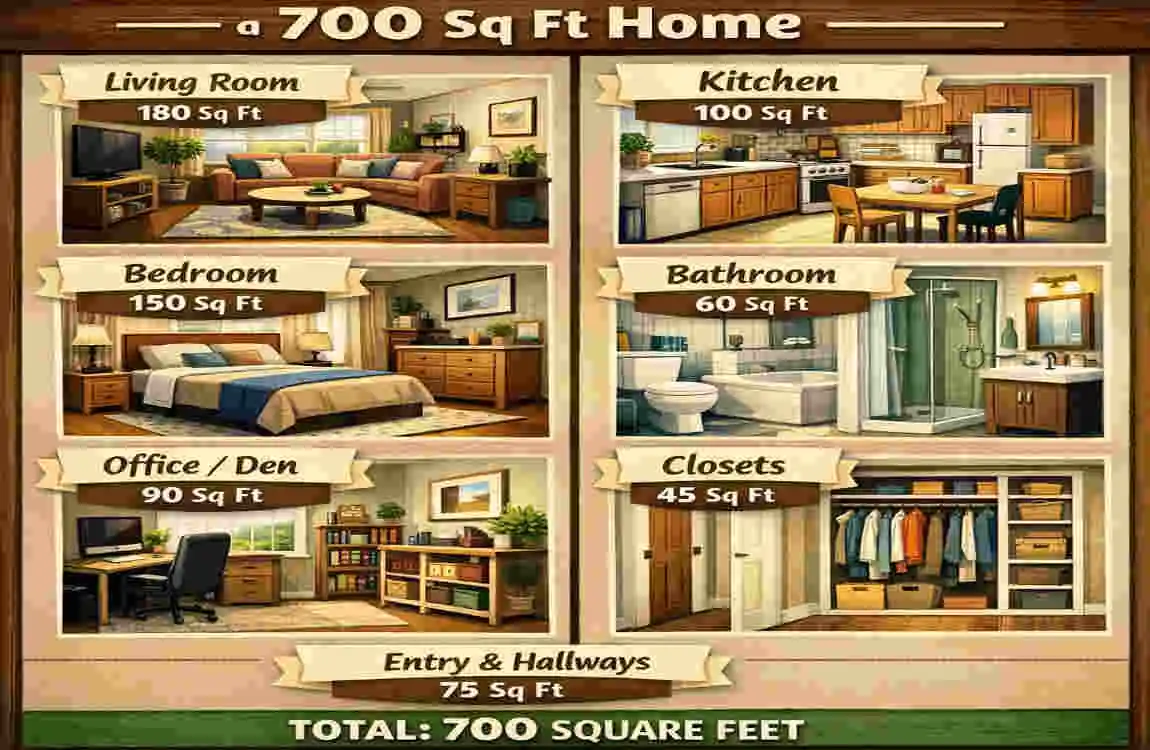
Living Room
The living room in a 700 square foot house usually needs to do a lot of work. It should be a place to relax, entertain, and sometimes even work.
To keep it comfortable, use space-saving furniture like a slim sofa, nesting tables, or a wall-mounted TV. Avoid bulky chairs and oversized coffee tables.
A simple setup often works best.
Kitchen
Kitchens in compact homes are usually small, but they can still be very practical. A galley kitchen or straight-line layout is common.
Use vertical cabinets, compact appliances, and open shelves if needed. This helps maximize storage without making the room feel closed in.
Bedroom
The bedroom may fit a queen bed, but sometimes a full bed works better if you want more walking space and storage.
Under-bed drawers, sliding doors, and built-in closets can make a big difference here.
Bathroom
A 700-square-foot house often has one bathroom, so the design should be efficient. A walk-in shower may be better than a tub if you want to save space.
Floating vanities and wall storage can also help the room feel less crowded.
Dining Space
Some homes this size have a full dining nook, while others use a breakfast bar or fold-down table.
If you do not host often, a small dining setup may be enough.
Work-from-Home Corner
Many people now need a home office, even in smaller homes. A wall desk, a corner shelf, or a quiet nook can turn unused space into a useful work area.
The best setup is simple, clean, and easy to move through.
Pros of Living in a 700 Square Foot House
Lower Housing Costs
One of the biggest benefits is cost. Smaller homes usually cost less to buy, rent, or build.
That can make homeownership more reachable, especially for first-time buyers.
Reduced Utility Bills
A smaller home often uses less energy for heating and cooling. That means lower utility bills and better efficiency.
This can save you money month after month.
Easier Maintenance
Less space means less cleaning. It also means fewer repairs and less time spent on upkeep.
If you want a simpler lifestyle, this is a major advantage.
Encourages Minimalist Living
A smaller house naturally pushes you to think carefully about what you own. You keep the things that matter and let go of the rest.
That can lead to a calmer, less stressful home.
Better Urban Accessibility
Compact homes are often found in cities or established neighborhoods. That can mean better access to work, stores, and services.
For some people, this location benefit matters just as much as the house itself.
Cons of Living in a 700 Square Foot House
Limited Storage
Storage is one of the biggest challenges. Closets may be small, and every item needs a place.
If you have a lot of seasonal items, sports gear, or bulky belongings, you will need a plan.
Privacy Challenges
When more than one person lives in a small home, privacy can be harder to find. This matters most for couples, children, or roommates.
Hosting Limitations
Entertaining guests may be difficult if your living room or dining area is small. You may need to keep gatherings simple.
Harder for Large Families
A 700-square-foot home is usually not the best choice for large families. Everyone may feel squeezed, especially over time.
Furniture Restrictions
You cannot just buy any furniture you like. Every piece has to fit the room and support the flow of the house.
That means compact, multi-use furniture is usually the best choice.
How to Make a 700 Square Foot House Feel Bigger
Use Open Floor Plans
Open layouts reduce visual barriers and create a sense of flow. When the eye can travel farther, the home feels larger.
Even a small home can feel generous when the main living spaces connect well.
Choose Light Paint Colors
Light colours reflect more light, making rooms feel brighter. Soft whites, pale grays, beige tones, and light blues are common choices.
This simple trick can make a big difference.
Maximize Vertical Storage
When floor space is limited, go upward. Tall cabinets, wall shelves, and hanging storage help you make better use of the room.
Buy Multi-Functional Furniture
Furniture that does more than one job is a huge help in a 700 square foot house.
Good examples include:
- Sofa beds
- Storage ottomans
- Foldable desks
- Drop-leaf dining tables
These pieces save space and keep the home flexible.
Use Mirrors Strategically
Mirrors make rooms look larger by reflecting light and creating the illusion of space. A well-placed mirror can improve the feel of a narrow hallway or small living room.
Declutter Regularly
Clutter makes small homes feel even smaller. If you live in a compact space, regular decluttering is not optional. It is part of making the home work.
Optimize Natural Light
Natural light helps a home feel open and welcoming. Use sheer curtains instead of heavy drapes if possible, and keep window areas clear.
700 Square Foot House vs Other Common Home Sizes
House Size Feels Like Best For
400 sq ft Tiny home Solo living
500 sq ft Studio/compact apartment Singles
700 sq ft Small but practical Singles/couples
900 sq ft Comfortable apartment Small family
1200 sq ft Standard starter home Family
Which Size Offers Best Value?
The best value depends on your lifestyle.
If you want lower costs and less upkeep, 700 square feet may be ideal. If you need more privacy, more storage, or space for children, a larger home may be a better option.
For many people, the best choice is not the biggest home. It is the home that fits daily life without stress.
Can a 700 Square Foot House Have 2 Bedrooms?
Yes—If Designed Well
Yes, a 700-square-foot house can have 2 bedrooms. It usually means the bedrooms will be smaller, and shared living space will need to do more work.
Best Floor Plan Options
The most practical setups include:
- Side-by-side bedrooms
- A split layout
- A loft bedroom
- A bedroom plus a flex room
These ideas help balance privacy and function.
Trade-Offs
The trade-off is usually a smaller kitchen or living room. So if you want two bedrooms, be ready to give up space somewhere else.
Is a 700 Square Foot House Good for Investment?
Rental Property Potential
In many cities, compact homes are in demand. They often rent well because they are affordable and easier to maintain.
Vacation Rentals
A small, attractive home can work very well as a short-term rental. Guests often like simple, cozy spaces.
Lower Build Costs
Smaller houses usually cost less to build, which can help investors manage risk and improve returns.
Downsizing Market
More people are looking for smaller homes as they age or simplify their lives. That creates a steady market for compact housing.
Design Ideas for Comfortable Compact Living
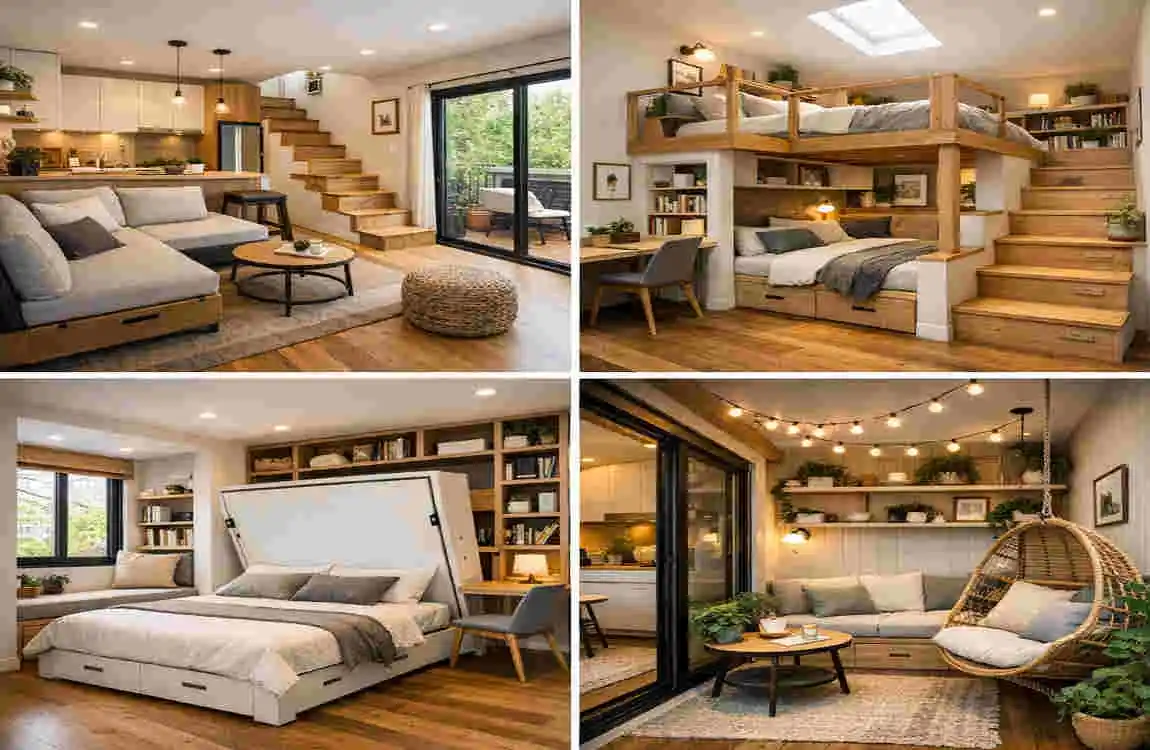
Scandinavian Minimalism
This style uses light colors, simple shapes, and clean lines. It works beautifully in small homes because it creates a calm and open feeling.
Modern Open Layout
A modern layout focuses on clean furniture and fewer visual barriers. It helps the space feel fresh and uncluttered.
Industrial Loft Style
This style uses vertical elements, open ceilings, and practical finishes. It can make a small house feel stylish without wasting space.
Japandi Compact Design
Japandi blends function and simplicity. It is a great choice if you want a peaceful home with thoughtful storage.
Built-In Storage Concepts
Built-ins are excellent in a 700 square foot house. They use awkward areas well, such as under stairs, under windows, or inside wall niches.
Is 700 Square Feet Enough for You? Questions to Ask Before Buying
Lifestyle Considerations
Before choosing a 700 square foot house, ask yourself:
- Do you work from home?
- Do you need a guest room?
- Do you have pets?
- Do you have children?
- Do you keep a lot of belongings?
Your daily habits matter more than the number on paper.
Budget Comparison
A smaller home may save you money, but only if it also fits your needs. A cheaper home is not a good deal if it feels too tight and stressful.
Future Flexibility
Think ahead. Will your life change in the next few years? Will your family grow? Will you need more room later?
A smart purchase should work now and still make sense in the future.
Frequently Asked Questions About 700 Square Foot Homes
Is 700 square feet enough for 2 people?
Yes, it often is. A couple can live comfortably in 700 square feet if the layout is efficient and storage is planned well.
Can a family live in 700 sq ft?
Yes, but it is better for a small family and usually works best when children are young or share a room.
How many rooms fit in 700 sq ft?
That depends on the layout. Many homes of this size have 1 bedroom, 1 bathroom, a kitchen, and a living area. Some can fit 2 bedrooms.
Is 700 sq ft bigger than an apartment?
It depends on the apartment, but 700 square feet is a very common size. It is often considered a small-to-medium-sized apartment.
Does a 700 sq ft home feel cramped?
It can, but not always. Good design, natural light, and smart storage can make it feel comfortable and open.
What furniture works best?
The best furniture is compact, simple, and multi-purpose. Think sofa beds, folding tables, storage ottomans, and wall-mounted shelves.