House centipedes can make even calm people jump. They move fast, look strange, and seem to appear out of nowhere, especially in bathrooms, basements, and kitchens. So it is very normal to ask: should I kill house centipedes when they show up inside your home?
House centipedes are unsettling, but they are often helpful. They eat other pests that you probably want gone even more, like roaches, ants, silverfish, and spiders. At the same time, they can be a sign that your home has moisture problems or other insects hiding nearby.
What Is a House Centipede?

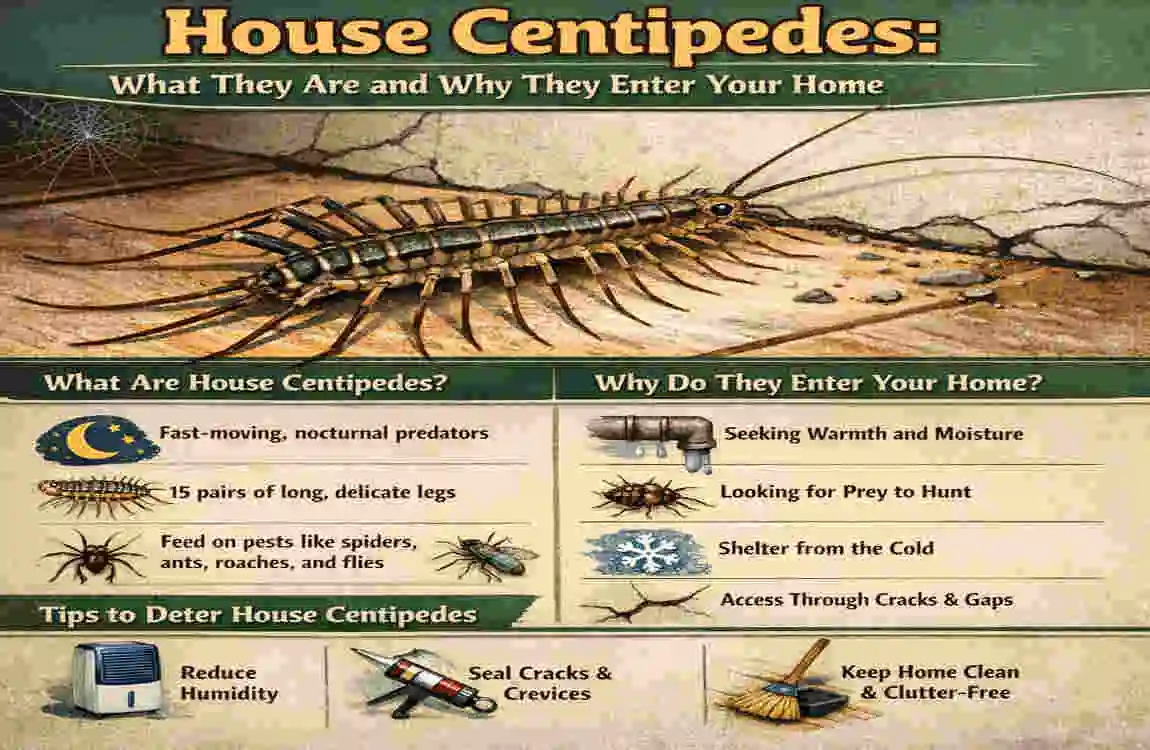
A house centipede is a long, many-legged insect that lives indoors, often in dark, damp places. It is one of the most common indoor centipedes people find in homes. Many homeowners panic when they see a house centipede in house because it looks alarming. Still, it is not the same as a dangerous pest.
Physical Appearance
A common house centipede has a yellow-gray body with dark stripes running along it. Its legs are long, thin, and very noticeable. Most people count around 15 pairs of legs, which is why it looks so strange and fast at the same time.
It does not crawl slowly like many insects. It darts across floors, walls, and baseboards in a sudden burst. That speed is a big reason people fear it.
Where House Centipedes Live
House centipedes usually live in moist, quiet, dark places. You may find them in:
- Basements
- Bathrooms
- Kitchens
- Laundry rooms
- Storage spaces
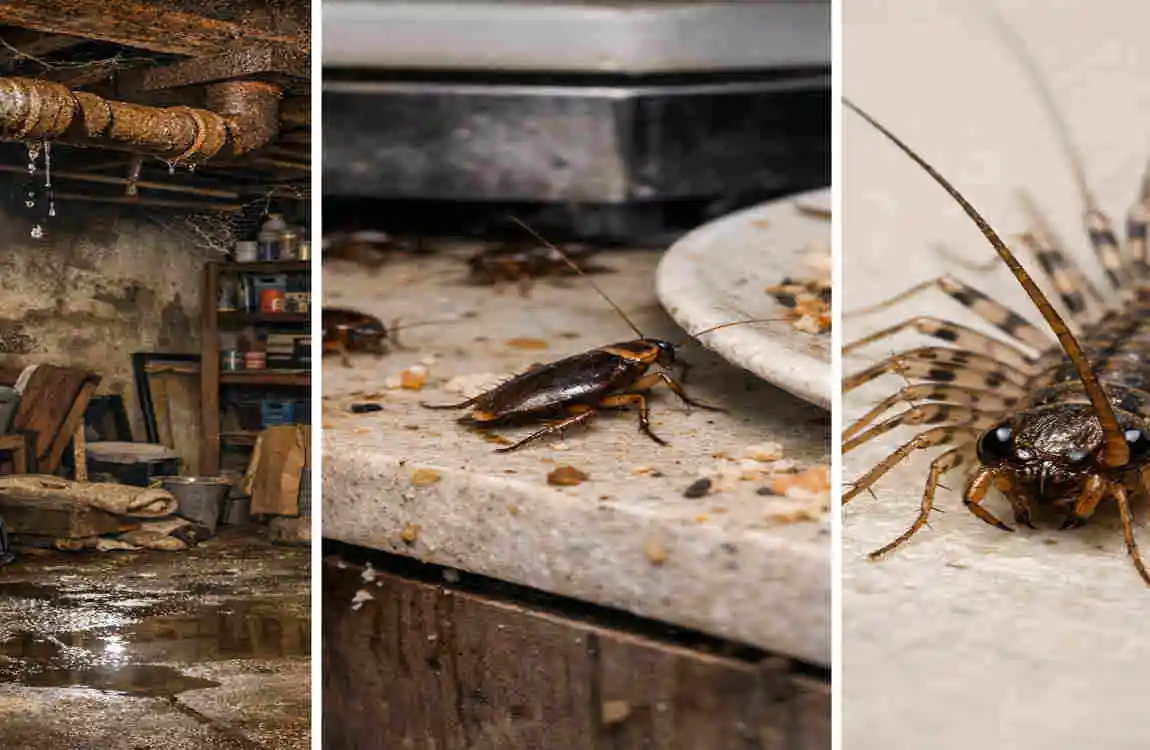
They like hidden spots under sinks, behind furniture, and near drains. If your home has damp corners, there is a good chance a centipede may settle there.
Why They Enter Homes
House centipedes enter homes for three main reasons: moisture, food, and shelter. They hunt smaller insects and need damp conditions to survive well.
If your home has ants, spiders, silverfish, or roaches, a centipede may move in because it sees a food source. So if you keep seeing them, the problem may be more than the centipede itself.
Should I Kill House Centipede Bugs in My Home?
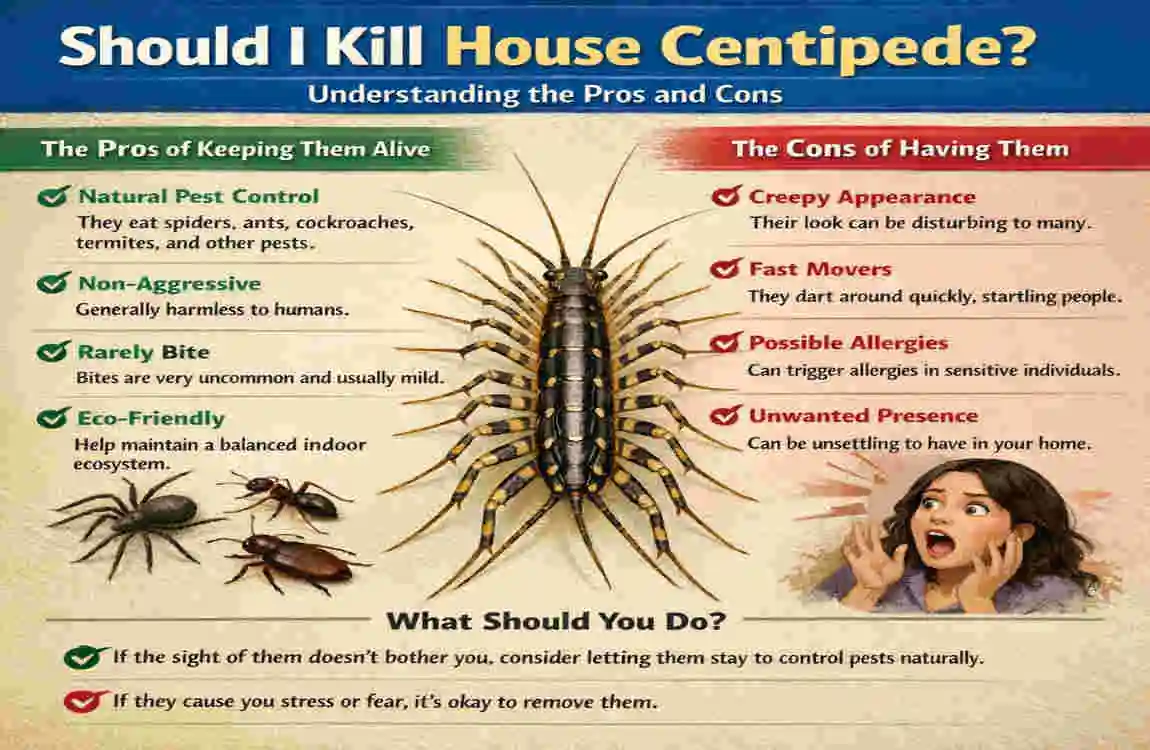
This is the big question, and the honest answer is that it depends. In many cases, it is not necessary to kill them. They often serve as natural pest control, helping your home in a quiet way.
The Short Answer
If you see one house centipede now and then, you usually do not need to panic. In fact, leaving it alone may actually help reduce other bugs in your home.
Why People Want to Kill Them
Most people want them gone because they look creepy. Their speed makes them worse. One second they are still, and the next they are gone.
People also worry about bites, even though that is rare. Some homeowners also simply do not want any large-looking insect indoors, no matter how useful it may be.
Expert Perspective
Many pest experts see house centipedes as beneficial predators. They eat insects you likely do not want around. That makes them different from pests that damage food, fabric, or wood.
Situations Where Removal Makes Sense
Sometimes removal is the smarter choice. For example:
- You see them often
- Your family is very afraid of them
- You may have a moisture problem
- You suspect a bigger pest issue
If house centipedes keep showing up, they are usually telling you that something else in the home needs attention.
Reasons to Keep Them Reasons to Remove Them
Eat pests naturally Unpleasant appearance
Reduce cockroaches and ants Can scare family members
Generally harmless May indicate moisture problems
Are House Centipedes Dangerous to Humans?
Most of the time, no, house centipedes are not dangerous. They can look scary, but they are not a major threat to people. The fear is often bigger than the real risk.
Do House Centipedes Bite?
They can bite, but they usually do not bite humans unless they feel trapped or threatened. That means if you pick one up or crush it, it may react defensively.
A house centipede bite is uncommon and usually mild. For most people, it is not a medical emergency.
Are Their Bites Poisonous?
House centipedes do have venom, but they use it to catch prey, not to harm people. Their venom is meant for small insects, not humans.
For most people, the bite is about as serious as a mild sting. Sensitive people may feel more discomfort, but the risk is still low. So when people ask, “Are centipedes poisonous?” the practical answer is that they are not a serious poisoning threat to humans.
Health Risks Explained
The health risk from house centipedes is very small. You may get some redness or pain if bitten, but this is uncommon. Rare allergic reactions can happen, but they are not typical.
If you are bitten and the area swells, it is smart to wash the spot and watch it. If the reaction seems unusual, contact a medical professional.
Are They Dangerous to Pets?
House centipedes are usually harmless to cats and dogs. A pet may bat one around or eat it, but this is not normally a serious issue.
That said, if your pet reacts badly or keeps eating insects, it is still wise to keep an eye on them. But in general, these centipedes are not a major threat to pets.
Psychological Fear vs Real Danger
This is where the real conflict happens. People often react more to the look of a house centipede than to the actual risk. The legs, speed, and sudden appearance create fear.
So while the danger is low, the emotional reaction can be high. That is why many homeowners decide to remove them even when they know the insect is not harmful.
Benefits of Having House Centipedes Indoors
It may sound strange, but house centipedes can actually help your home. Their biggest strength is their ability to hunt other insects quietly and consistently.
Natural Pest Control
House centipedes feed on a wide range of pests, including:
- Cockroaches
- Ants
- Silverfish
- Spiders
- Bed bugs
- Termites
That means one centipede may be doing work that otherwise would require sprays or traps. They are active hunters, so they do not just sit around waiting.
Why They’re Called Helpful Predators
They are called helpful predators because they naturally reduce the numbers of other insects. In simple terms, they help keep the pest population in check.
If your home has a few hidden bugs, a house centipede may be one reason those numbers stay lower. It is not a perfect solution, but it does help.
Eco-Friendly Alternative to Chemicals
If you want to use fewer pesticides, house centipedes can help maintain a more natural balance. They do not replace full pest control when there is a serious infestation, but they can reduce the need for constant spraying.
That means fewer harsh chemicals in the air and fewer treatments on your walls, floors, and baseboards.
Silent Night Hunters
House centipedes are mostly active at night. They stay hidden during the day and come out to hunt when the house is quiet.
This is why you often find them after dark in bathrooms or basements. They are not trying to bother you. They are just doing their job.
Downsides of Keeping House Centipedes Around

Even though they can be useful, house centipedes are not perfect house guests. There are still some reasons you may want them gone.
They Still Look Frightening
The biggest downside is simple: many people just do not want to see them. Their body shape and movement can feel disturbing, especially if they appear in a bedroom or bathroom.
That reaction is valid. A bug does not need to be harmful to still make you uncomfortable.
Fast Reproduction Concerns
If you keep seeing them, the home may be too damp or may have too many prey insects. In that case, one centipede can become several over time.
This is why people sometimes worry about a house centipede infestation. The real issue is usually not the centipede itself but the conditions that support it.
Seeing Them Often May Signal Another Pest Problem
If you are asking, “Why do I have centipedes in my house?” the answer often points to another insect problem. Centipedes do not show up for no reason.
If they are hunting well, it may mean roaches, ants, or silverfish are already living nearby.
They Thrive in Damp Conditions
If you keep seeing centipedes in bathrooms or damp storage areas, your clean home may have a moisture problem. That can also lead to mold, mildew, and other pests.
So the centipede may be a warning sign, not just an unwanted visitor.
How to Get Rid of House Centipedes Safely
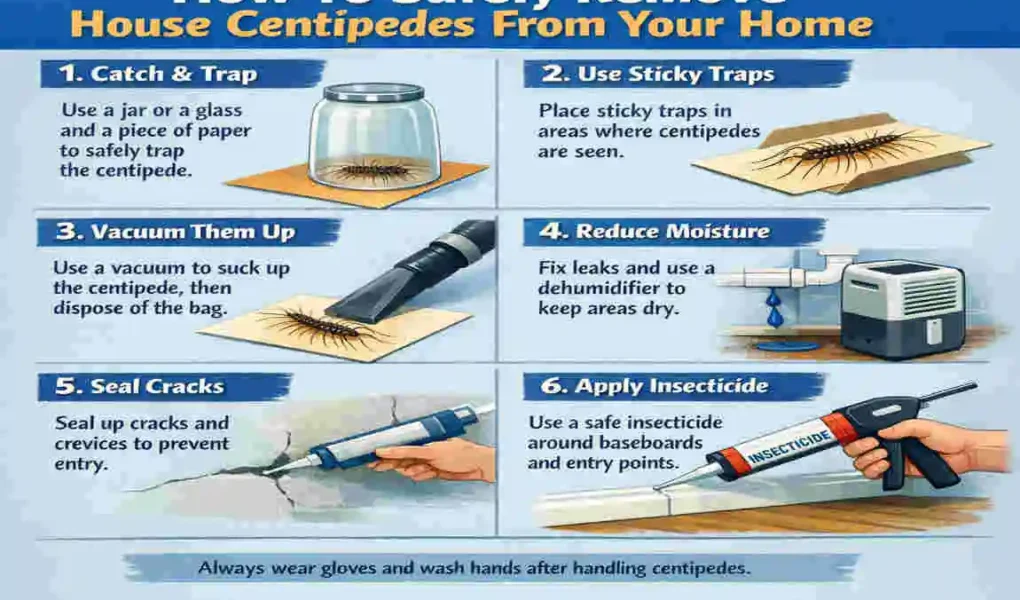
If you do want them gone, there are safe ways to handle it. The best approach is not just killing one bug. It is fixing the conditions that attract them.
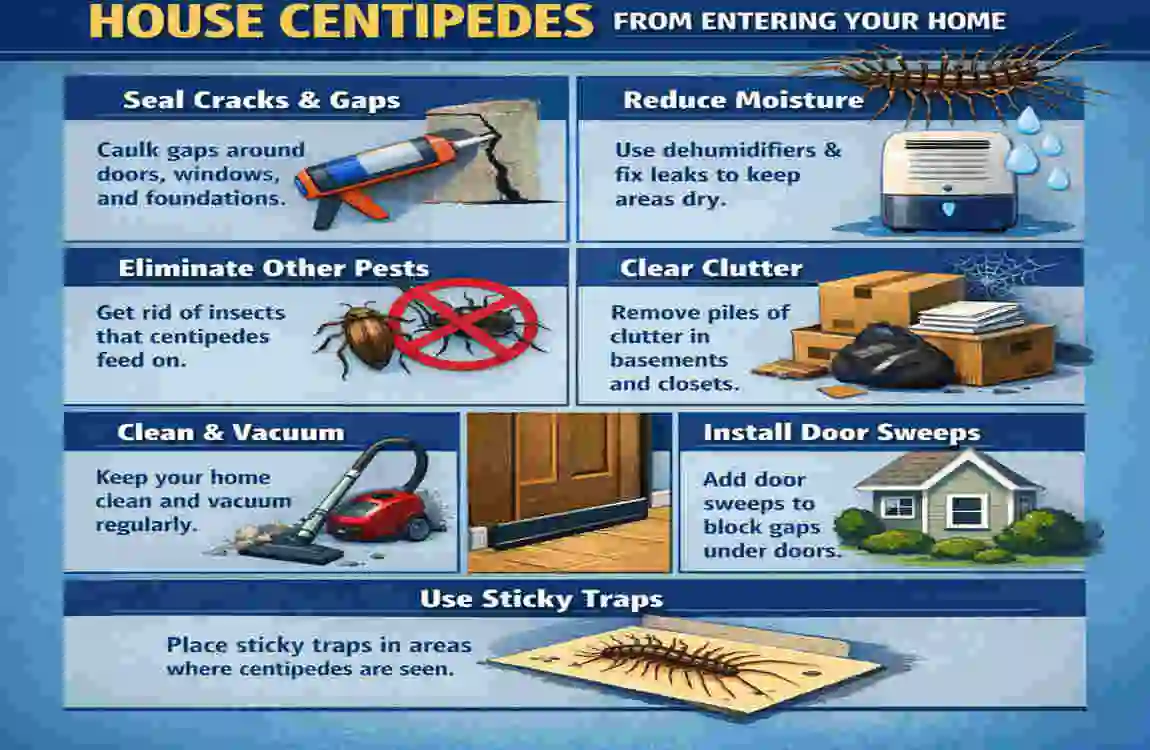
Reduce Moisture in Your Home
This is one of the most important steps. House centipedes love humidity, so dry spaces are less inviting to them.
You can:
- Use dehumidifiers
- Fix leaking pipes
- Improve ventilation in bathrooms and basements
- Run exhaust fans after showers
- Dry out damp storage areas
When you lower moisture, you make the home less friendly to centipedes and the insects they eat.
Eliminate Their Food Sources
If you remove the bugs they feed on, centipedes will have less reason to stay. That means controlling ants, roaches, silverfish, and spiders.
Vacuuming often, storing food properly, and cleaning hidden corners can make a big difference. A centipede without food usually moves on.
Seal Entry Points
House centipedes can slip in through tiny gaps. That is why sealing your home matters.
Check for:
- Cracks in walls
- Gaps around pipes
- Openings near doors
- Spaces around windows
- Holes in basement walls
Sealing these spots helps keep many pests out, not just centipedes.
Natural Repellents
Some people prefer gentler methods first. Natural repellents may help reduce sightings, especially when the problem is small.
Common options include:
- Essential oils
- Vinegar sprays
- Cedar
These may not solve a serious pest issue, but they can help make certain areas less attractive to pests.
Sticky Traps and Safe Removal
Sticky traps can catch centipedes in spots where you see them often. They are simple and low-cost.
If you prefer, you can also use a catch-and-release method with a jar or a cup, then move the centipede outside. That works well if you do not want to kill it.
When to Call Pest Control
If you keep seeing them, it may be time to call a pest professional. This is especially true if you also have a moisture problem or many other insects.
Professional help makes sense when:
- The problem keeps returning
- You suspect a hidden infestation
- You cannot find the source of moisture
- You want a full home inspection
Quick Removal Checklist
Use this simple checklist if you want to act fast:
- Dry damp rooms
- Vacuum regularly
- Seal wall cracks
- Remove clutter
- Reduce other pests
- Use natural repellents
Can You Coexist with House Centipedes?
Yes, many homeowners do coexist with them. If you are not too bothered by the occasional sighting, you may not need to do much at all.
Why Some Homeowners Leave Them Alone
Some people leave them alone because they act like free pest control. If a centipede is quietly eating other bugs, it may actually be helping more than hurting.
That is why many people decide that the benefits of the house centipede outweigh the discomfort.
Creating a Balanced Indoor Environment
Coexistence works best when the home is clean and dry. If humidity stays low and food sources are limited, centipedes usually remain rare and hidden.
That means you can keep your home comfortable without making it perfect for pests.
When Coexistence Is Realistic
This approach makes sense when you only see one now and then. A single centipede, once in a while, is not the same as a repeated problem.
When It’s Better to Remove Them
If you or your family has a strong fear of bugs, coexistence may not be realistic. The same goes for homes with many sightings or children who are very upset by them.
In those cases, removal and prevention are better choices.
Common Myths About House Centipedes
There are many centipede myths out there. Let’s clear up the biggest ones.
They Crawl Into Beds Often
This is very uncommon. House centipedes usually stay near the floor, damp corners, and hidden spaces. They do not normally seek out beds.
They’re Highly Venomous
This is false for humans. They do have venom for hunting, but they are not highly dangerous to people.
One Centipede Means Infestation
Not always. Seeing one bug does not mean your home is overrun. It may simply mean the centipede wandered in from a damp area.
Killing One Attracts More
There is no strong scientific evidence that killing one centipede brings more. What usually happens is that the home already has the conditions that attract them.
Preventing House Centipedes from Returning

Once you get rid of them, the next step is keeping them out. Prevention is usually easier than dealing with repeat visits.
Keep Your Home Dry
Dry homes are less attractive to centipedes. Focus on moisture control in bathrooms, basements, laundry rooms, and under sinks.
Good airflow matters. So does fixing leaks quickly.
Regular Deep Cleaning
Cleaning helps remove the small insects that centipedes feed on. Pay special attention to corners, baseboards, and hidden spaces.
Basements and bathrooms should get extra attention because they are common hiding places.
Outdoor Prevention
Keep the outside of your home tidy too. Remove leaves, wood piles, and other damp clutter near the foundation.
This reduces the number of insects that may move inside and makes your home less inviting overall.
Routine Pest Inspections
It helps to check your home often for signs of moisture or insect activity. Finding problems early is easier than dealing with a larger issue later.
Frequently Asked Questions
Should I kill house centipede bugs immediately?
Usually, no. If you only see one, you can leave it alone or gently remove it. They are mostly helpful and rarely dangerous.
Are house centipedes good for your home?
Yes, in many cases. They eat pests like ants, roaches, and silverfish, helping keep your home more balanced.
What attracts house centipedes indoors?
They are attracted to moisture, shelter, and other insects. Damp bathrooms, basements, and cluttered spaces are common problem areas.
Can house centipedes climb beds?
It can happen, but it is not common. They usually stay close to floors, walls, and hidden corners.
How long do house centipedes live?
Many house centipedes can live for several years under the right conditions. That is another reason moisture control matters.
Will house centipedes go away on their own?
Sometimes, yes. If the home gets drier and their food source disappears, they may leave or become much less common.
What smell do centipedes hate?
Some people use scents like peppermint, cedar, or vinegar as part of their prevention plan. These may help, but they work best with cleaning and moisture control.
Do house centipedes mean my house is dirty?
Not necessarily. They usually point to dampness or the presence of other insects, not just dirt. A clean home can still have them.