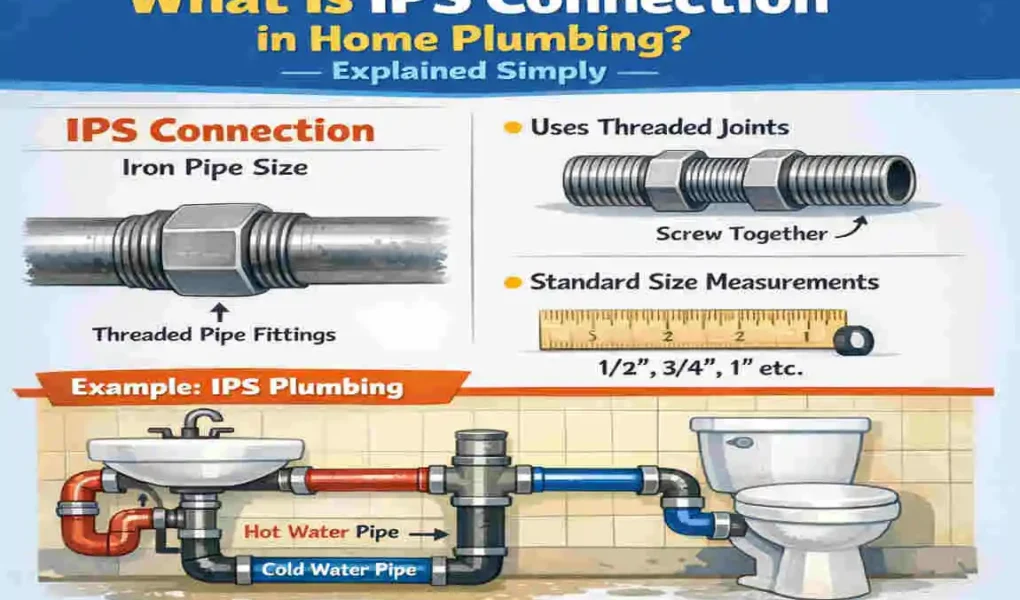
If you have ever shopped for pipe fittings, looked at a shutoff valve, or tried to replace part of a water line, you may have asked yourself: what is IPS connection in home plumbing? It is a common plumbing term, but it can feel confusing if you do not work with pipes every day.
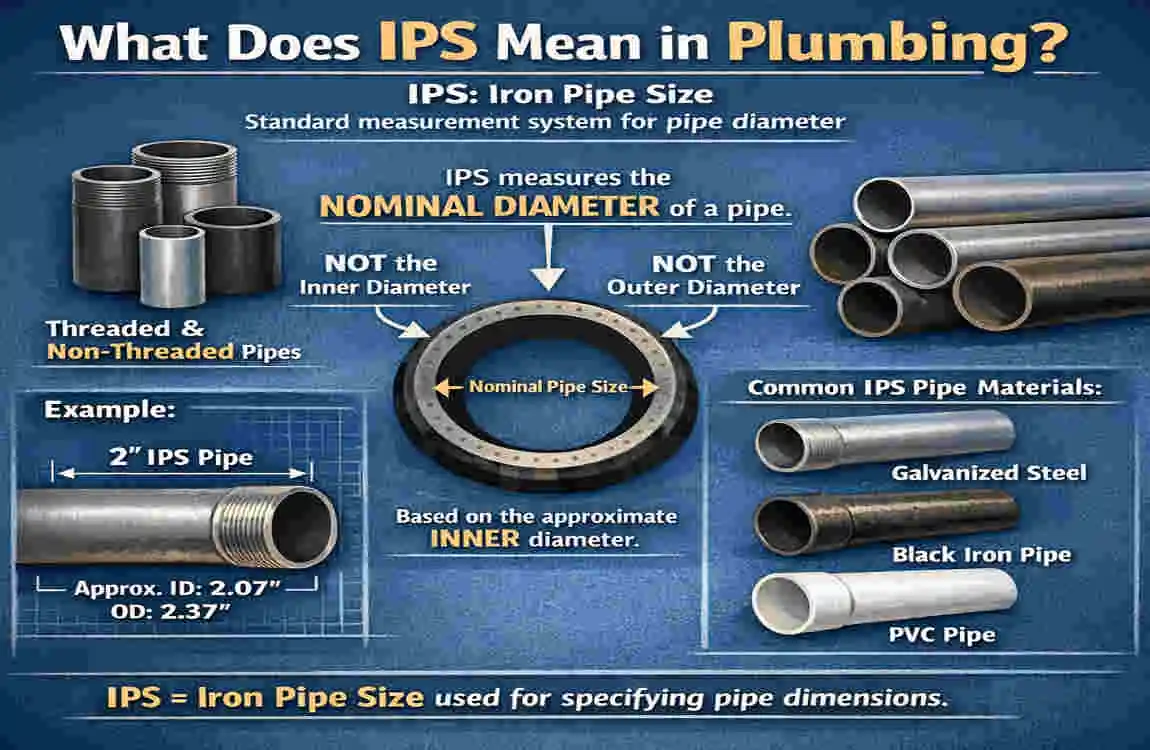
In simple words, IPS stands for Iron Pipe Size. It is a standard way to size certain pipes and fittings used in home plumbing. The important thing to know is that IPS usually refers to a pipe-and-fitting system that matches by outer diameter, not by the actual inside diameter of the pipe.
That detail matters more than most homeowners realize. If you choose the wrong size or mix IPS with a different pipe standard, the parts may not fit correctly. That can lead to wasted time, extra trips to the store, weak joints, or leaks that show up later.
In modern homes, IPS sizing is used across a range of plumbing situations. You may see it in plastic pipe systems, some water supply lines, irrigation lines, drain connections, and larger residential plumbing runs. Even when the material changes from metal to PVC or other plastics, the sizing language often stays the same.
| Feature | Description | Benefit |
|---|---|---|
| Size Range | 1/2″ to 12″ nominal diameters | Fits most home applications like sinks, toilets, and mains. |
| Sealing Method | Rubber gasket/O-ring or thread sealant (vs. tapered NPT) | Ensures leak-proof joints with easy installation. |
| Materials | PVC, steel, HDPE; corrosion-resistant | Durable for water/gas under high pressure. |
| Common Fittings | Couplings, elbows, tees, reducers | Versatile for direction changes and branching. |
What Does IPS Stand for in Plumbing?

The basic meaning of IPS
IPS stands for Iron Pipe Size. The term dates back to older plumbing systems that used iron pipe as a standard. Over time, the name remained in use even as plumbing materials changed, now including PVC, CPVC, polyethene, and other modern materials.
That is why the term can sound outdated at first. You may hear “iron pipe size” even when the pipe in front of you is clearly plastic. The name is historical, but the sizing system is still very real and very useful.
Why the name can be confusing
Many people assume pipe size always refers to the inside of the pipe. That would seem logical because the water flows through the inside. But IPS sizing does not work that way in the simple sense most homeowners expect.
In older systems, the naming was related to the inner diameter. Today, IPS sizing is treated as a nominal system, meaning the number is more like a category name than an exact measurement. In practice, the pipe and fitting are designed to work together according to standard dimensions, especially the outside diameter.
So if you buy a 1-inch IPS pipe, that does not mean the opening inside the pipe is exactly 1 inch wide. The real inside dimension depends on the pipe wall thickness.
Why homeowners should care
You do not need to become a plumber to understand this. You need to know that the label is not always the actual measurement. That one idea can save you from choosing the wrong parts.
When you understand the meaning of IPS, you can shop smarter, talk more clearly with a plumber, and avoid mixing mismatched plumbing systems.
How IPS Pipe Sizing Works in Homes
Common IPS pipe sizes used in homes
In residential plumbing, you may come across standard IPS sizes such as 1/2 inch, 3/4 inch, 1 inch, 1 1/2 inch, and 2 inch. Smaller sizes are often used for branch lines or fixture connections. In comparison, larger sizes may be used for drains, main supply lines, outdoor lines, or special plumbing setups.
Even though these numbers sound exact, they are nominal sizes. Think of them as plumbing labels rather than tape-measure dimensions.
For example, a 3/4-inch IPS pipe belongs to the standard-size family. The fitting marked 3/4 IPS is made to fit that same standard family. That is what makes the system work. The fitting is not guessing. It is made to match the pipe’s expected outside dimension.
Nominal vs actual diameter in IPS plumbing
This is where many DIY problems begin.
A nominal size is a name, not a literal measurement. So a 1-inch IPS pipe does not have a true 1-inch inside diameter and may not measure exactly 1 inch outside, as you expect. The actual dimensions depend on the pipe material and the standard wall thickness.
Modern materials often have thinner or different wall designs than older iron pipe. That means the inside opening can vary while the outer dimensions remain within the standard required to fit the matching IPS fitting.
This is why two pipes with the same nominal size can have different inner flow areas when their wall thicknesses differ. The fitting still works because the outer sizing standard is what matters for connection.
Why matching the standard matters
You may look at two pipes and think they seem close enough to fit together. In plumbing, close enough is usually not good enough.
A fitting made for IPS pipe may be too loose or too tight on a pipe from another sizing system. Even if you force it, the seal may fail. That can cause drips, pressure issues, or a sudden leak later.
If you remember only one thing from this section, make it this: IPS pipe should be matched with IPS fittings unless a proper adapter is used.
IPS compared with other sizing systems
In home plumbing, you may also run into other pipe standards. A few common ones include:
- CTS: Copper Tube Size, often used with copper tubing and some water supply products
- NPT: National Pipe Thread, a threaded system used with metal fittings and valves
- DIPS: Ductile Iron Pipe Size, often used in larger utility or specialty applications
These systems are not interchangeable just because the numbers look similar. A 1-inch fitting in one system may not fit a 1-inch pipe in another. That is why reading the markings matters so much.
Common IPS Fitting Types in Home Plumbing
Why fittings matter just as much as the pipe
When people think about plumbing, they often picture the pipe first. But the fittings do a lot of the real work. They connect straight runs, turn corners, split lines, reduce size, and control water flow.
With IPS plumbing, each fitting is designed to match the pipe’s standard outside sizing. That is how the system stays reliable.
The main IPS fittings you are likely to see
Here are the most common fitting types used with IPS plumbing:
- Couplings connect two straight sections of IPS pipe.
- Elbows change the direction of the line, often by 45 or 90 degrees.
- Tees create a branch so one line can split into two paths.
- Reducers connect one IPS size to another.
- Valves open, close, or regulate flow within an IPS line.
- Adapters connect IPS to another plumbing standard or connection type.
Each fitting has a simple purpose, but choosing the wrong one can affect both flow and sealing.
Couplings: the simple connector
A coupling is one of the most basic plumbing fittings. It joins two straight pipe sections in a straight line. Homeowners often use couplings when repairing a damaged section or extending an existing run.
This sounds easy, but it still requires the correct size. A 3/4-inch IPS coupling is made for 3/4-inch IPS pipe, not for “something close.”
Elbows: turning the flow
An elbow changes the direction of the pipe. If a water line needs to go around a wall corner, down toward a fixture, or across a framing space, an elbow helps make that turn.
In most homes, 90-degree elbows are very common. Some systems also use 45-degree elbows where a smoother turn is needed.
Tees: branching one line into another
A tee fitting allows a pipe branch to split from a main run. You may see this when a larger supply line feeds a smaller fixture line, or when an outdoor line splits to serve different zones.
Tees are useful, but they also require careful size matching. The main run and the branch must be planned correctly, especially if the water demand changes.
Reducers: connecting different pipe sizes
A reducer joins two different nominal sizes of IPS pipe. For example, a larger line may reduce down before feeding a smaller appliance or branch.
This fitting is common in real plumbing systems because homes rarely use only one pipe size from end to end. The key is to reduce with the correct fitting instead of trying to “make” the wrong size work.
Valves and adapters: control and compatibility
Valves allow you to stop or regulate water flow. These may include shutoff, ball, or control valves designed for IPS-compatible systems.
Adapters are especially important because not all plumbing in a home follows the same standard. An adapter can safely connect IPS to another system, such as a threaded component or a copper-based line, when used correctly.
That is the right way to transition between systems. The wrong way is forcing unmatched parts together and hoping the joint holds.
Typical Places IPS Connections Appear in Home Plumbing
Main water lines and branch runs
In many homes, IPS sizing appears in main supply branches or larger water-carrying lines. This is especially common when the system uses plastic materials designed around IPS dimensions.
Because IPS works well across a wide range of sizes, it is useful for both moderate and larger residential plumbing runs.
Outdoor irrigation and pump lines
You are also likely to find IPS connections in irrigation systems, yard lines, and pump-related plumbing. These installations often use PVC or polyethylene pipe that follows IPS-style sizing.
Outdoor systems benefit from easy-to-match fittings and practical connection methods. That makes IPS a familiar standard in many residential exterior plumbing jobs.
Laundry, utility, and hose connection areas
Some homes use IPS-sized components near laundry areas, utility sinks, or hose bib connections. These locations often involve larger or more durable line setups, where standard-fitting compatibility matters.
If you have ever replaced a utility valve or checked a fitting near a washing area, you may have seen IPS markings without realizing it.
Drain and larger plastic pipe applications
IPS can also appear in certain drain, waste, or vent installations, especially when larger plastic piping is involved. Not every drain line uses IPS language in the same way. Still, it does appear in residential systems where pipe standards overlap with common fitting sizes.
Why it is not everywhere in the house
It is important to know that not every household pipe is an IPS pipe. Some plumbing uses copper tube sizing, flexible supply lines, threaded fittings, or other standards.
That is why you should never assume a pipe is IPS just because it is in a water system. Always check the marking, measure carefully, or confirm with a supply store if you are unsure.
How IPS Plumbing Connections Are Installed

The connection method depends on the material
An IPS connection is not just one single type of joint. The sizing standard stays the same, but the actual joining method depends on the pipe material and the fitting design.
That means one IPS system may use glue, while another uses gaskets, clamps, or compression-style sealing.
Gasket or O-ring push-fit style
Some modern IPS connections use a gasket or O-ring seal. In this setup, the pipe slides into the fitting until it reaches the proper depth. The seal comes from the rubber ring compressing around the pipe’s outside surface.
This method is popular because it can be fast and clean when done correctly. But it still requires care. If the pipe end is rough, out of square, or pushed in at a bad angle, the seal can be damaged.
Clamp-on or band-style joints
Larger plastic systems may use clamp-style or banded joints. In these setups, a fitting or coupling goes over the pipe, and the clamp is tightened to create a firm, sealed connection.
This type of connection appears in some outdoor, irrigation, and utility plumbing applications. It works well when the fitting and pipe are correctly matched and properly tightened.
Solvent-welded PVC IPS joints
Many PVC systems that follow IPS dimensions use solvent welding, often called “gluing” in everyday language. The process involves cleaning the pipe, applying the appropriate primer if required, adding cement, and quickly joining the pipe and fitting before the material sets.
Even though people call it glue, it is really more than a surface adhesive. It softens and fuses the materials, making the joint strong and leak-resistant.
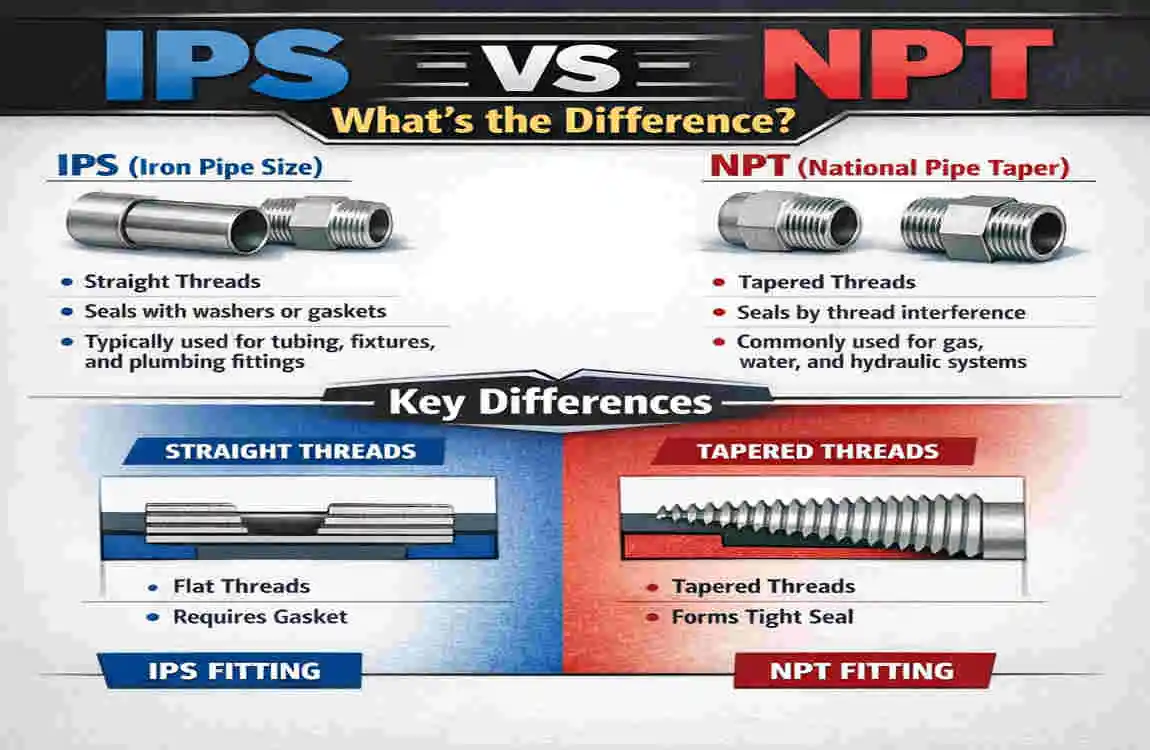
IPS is not the same as threaded NPT
One common mistake is assuming all pipe standards involve threading. In reality, many modern IPS plastic systems are not threaded at all.
Threaded connections are more often associated with NPT, especially in steel, brass, and certain valve connections. Some IPS-related components may use threaded parts via adapters. Still, the sizing language and connection style are not the same thing.
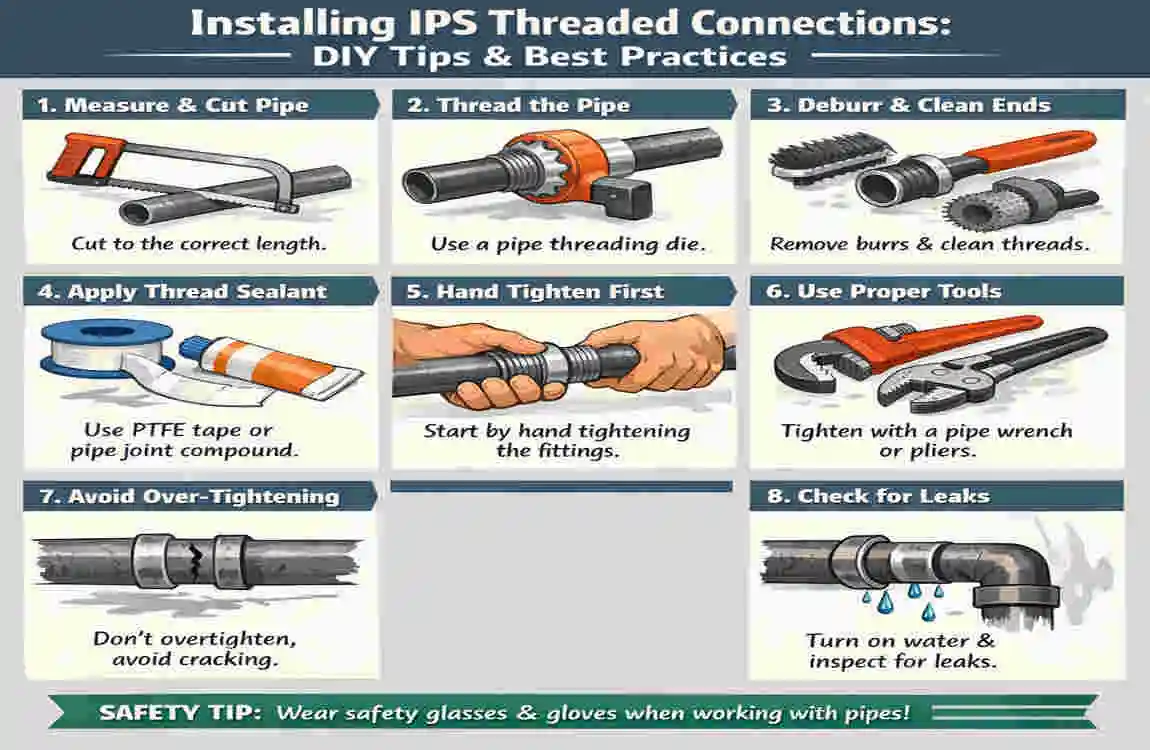
Basic installation habits that prevent leaks
If you are working with IPS pipe at home, small details make a big difference. Good installation starts with careful prep and clean technique.
Here are a few smart habits to follow:
- Measure twice before cutting any pipe.
- Cut the pipe square so it seats evenly in the fitting.
- Deburr and clean the end before joining.
- Do not force the pipe into a gasketed fitting.
- Use the correct cement, clamp, or seal method for the specific material.
- Check insertion depth and alignment before finishing the connection.
None of these steps is complicated, but skipping any of them often causes the leak you notice later.
Advantages of IPS Plumbing Connections at Home
Easy sizing language
One reason IPS remains popular is that the system is straightforward once you understand it. If the pipe and fitting are both marked 3/4 IPS, they are meant to work together. That makes product selection easier and helps homeowners avoid guesswork.
Broad material compatibility
IPS sizing is used across a variety of materials, including some plastic and metal systems. That makes it flexible in residential plumbing, especially where larger or more durable lines are needed.
You do not have to learn a totally new language every time the material changes. The standard helps keep sizing familiar.
Reliable, leak-resistant joints
When installed properly, IPS connections can be very dependable. Gasketed fittings seal tightly. Solvent-welded joints can last for years. Clamp-style systems also perform well when correctly matched and tightened.
The common thread is simple: good sizing plus good installation equals fewer leaks.
Useful for many home plumbing jobs
IPS works for a wide size range, so it fits many household needs. It can serve smaller supply applications, medium branch lines, utility connections, and larger outdoor or drain-related plumbing.
That range is one reason plumbers and builders continue to rely on it.
Faster work in the right setup
Some IPS systems install faster than traditional threaded or soldered methods. That can reduce labor time and make repairs easier, especially for straightforward replacements or extensions.
For homeowners, that usually means less hassle and a clearer path to getting the job done right.
Common Mistakes When Working with IPS Connections
IPS vs CTS: what can go wrong?
One of the biggest mistakes is confusing IPS with CTS. The names look like plumbing shorthand, and the pipe sizes may sound similar. But they are not the same standard.
If you put an IPS fitting on CTS pipe without a proper adapter, the fit can be wrong even if it looks close. The result may be a weak seal, a slow drip, or a connection that fails under pressure.
Forcing a pipe into a gasketed fitting
A gasketed fitting should feel firm but not require brute force. If you jam the pipe too hard or insert it at the wrong angle, you can damage the O-ring or shift the seal.
Once that happens, the connection may leak even though everything appears tight from the outside.
Skipping pipe prep before gluing
PVC IPS joints need clean, square, well-prepared ends. If you leave burrs, dirt, or uneven cuts, the solvent-welded joint may not bond properly.
This mistake is common because the pipe can still seem connected at first. The problem may only show up later when pressure, vibration, or time weakens the joint.
Over-tightening clamps or adapters
Tighter is not always better. Over-tightening a clamp can distort the pipe or damage the fitting. Over-tightening adapter connections can also create stress points that later crack.
Good plumbing work is about correct pressure, not maximum force.
Mixing IPS with other pipe standards
Another major problem happens when people mix IPS, DIPS, CTS, or threaded systems without checking the actual dimensions. The labels may look familiar, but the outside diameters and fitting designs can differ enough to cause real trouble.
If the fit is off by even a small amount, alignment problems and sealing failures can follow.
Ignoring markings and guessing by eye
Many DIY errors happen because someone tries to “eyeball” the pipe size. That rarely ends well. Pipes that look nearly identical can belong to different standards.
Read the printed markings whenever possible. If there are no markings, measure the outside diameter and compare it to the proper chart before buying parts.
IPS vs CTS vs NPT vs DIPS in Home Plumbing
Understanding the differences between these standards can help you avoid costly mistakes. Here is a simple comparison.
StandardFull NameMain ReferenceCommon UseKey Point
IPS Iron Pipe Size Standardized outer sizing for matching pipe and fittings Plastic and metal plumbing lines, irrigation, utility piping Common in residential systems where matching OD-based standards matter
CTS Copper Tube Size Copper-based sizing standard Copper tubing, some water supply lines, some PEX-related products Not the same as IPS, even if the nominal size sounds similar
NPT National Pipe Thread Tapered thread standard Steel, brass, valves, threaded fittings Focuses on threaded sealing, not just pipe outside size
DIPS Ductile Iron Pipe Size Larger OD-based pipe standard Utility, municipal, and some specialty piping Similar idea to IPS but not interchangeable
Why this comparison matters
From a homeowner’s point of view, the most important lesson is simple: same-number labels do not always mean same fit.
A 1-inch IPS connection and a 1-inch CTS connection are not automatically compatible. A threaded NPT fitting may be connected via an adapter, but it is not the same as a plain IPS fitting. DIPS may look related in name, but they differ in external dimensions in many cases.
So before you replace a fitting, slow down and identify the exact standard. That one step can prevent leaks, returns, and frustration.
How to Tell If a Pipe Is IPS in Your Home
Look for printed or molded markings
The easiest way to identify IPS pipe is to check the pipe or fitting itself. Many products are labeled with markings such as 1/2 IPS, 3/4 IPS, 1 IPS, or 1 1/2 IPS.
These markings may be printed along the pipe or molded into the fitting body.
Measure the outside diameter
If the marking is missing or worn off, measure the outside diameter. Then compare that number with a standard IPS sizing chart.
This method is more reliable than guessing based on the inside opening, especially since wall thickness can vary.
Check the style of the fitting
Sometimes the fitting gives clues. IPS plastic pipe often pairs with fittings designed for slip, gasket, clamp, or solvent-weld connections. If the whole setup looks like a matched plastic system with IPS markings, that is a helpful sign.
Still, visual clues should support measurement, not replace it.
Bring a sample if needed
If you are still unsure, take a short sample piece or a clear photo to a plumbing supply counter. That can save you from buying the wrong part.
There is no shame in double-checking. In plumbing, confirmation is cheaper than repair.
When DIY Isn’t Enough: Signs You Need Professional Help

Small jobs may be manageable
Homeowners can often handle simple tasks such as replacing a basic coupling, installing a matching fitting, or repairing a straightforward non-critical line if they understand the material and the correct IPS size.
But that does not mean every IPS project is a safe weekend job.
Red flags that call for a plumber
You should strongly consider professional help if you notice any of these problems:
- Repeated leaks at the same joint or along the same line
- Visible cracks in the pipe or fitting
- Pressure loss after a repair or upgrade
- Unclear pipe standard when multiple systems meet
- Work near the main water shutoff or a major supply line
- Drain or sewer issues that affect more than one fixture
These situations often involve bigger system issues than a simple fitting change.
Codes and safety matter
Some plumbing work must meet local code requirements, especially when it involves main water lines, sewer ties, structural openings, or pressure systems. In many places, certain jobs must be handled or inspected by a licensed professional.
If you are not sure, it is better to ask first than fix a code problem later.
Professional help can save money
A plumber may cost more up front, but the right repair can prevent water damage, mold, repeat leaks, and wasted materials. That matters even more when the line is hidden behind walls or under flooring.
If the job affects your home’s main plumbing performance, professional help is often the smartest choice.
FAQ: What Is IPS Connection in Home Plumbing?
What is IPS connection in home plumbing, and where is it used?
An IPS connection in home plumbing is a pipe-and-fitting connection based on the Iron Pipe Size standard. It is used in various residential plumbing systems, including some water lines, irrigation lines, utility connections, and larger plastic or metal pipe runs.
Are IPS fittings the same as NPT or CTS fittings?
No. IPS fittings are not the same as NPT or CTS fittings. NPT refers to tapered-threaded connections, while CTS follows a different sizing standard, often used with copper tubing. You usually need an adapter if different systems must connect safely.
Can I join IPS pipe to copper pipe?
Yes, but you normally need the correct transition fitting or adapter. Do not force an IPS fitting directly onto copper-based tubing unless the fitting is specifically designed for that purpose.
What tools do I need to work with IPS plumbing?
That depends on the material and fitting type. You may need a tape measure, pipe cutter or saw, deburring tool, primer and cement for PVC, clamp tools, or simple hand tools for valve or adapter work. The key is using tools that match the connection style.
Why is IPS sizing important for preventing leaks?
IPS sizing matters because the fittings are designed around a specific standard. If the pipe and fitting do not match, the seal may fail. Correct sizing helps create a strong, leak-resistant connection.
Is a 1-inch IPS pipe actually 1 inch wide inside?
No. The “1-inch” label is a nominal size, not the actual inside diameter. The real opening depends on wall thickness and material, which is why you should rely on the pipe standard rather than assumptions.
How do I know if what I have is really IPS?
Check for printed markings, measure the outside diameter, compare it to a standard chart, and confirm with a supply store if needed. That is the safest way to identify the system before buying replacement parts.