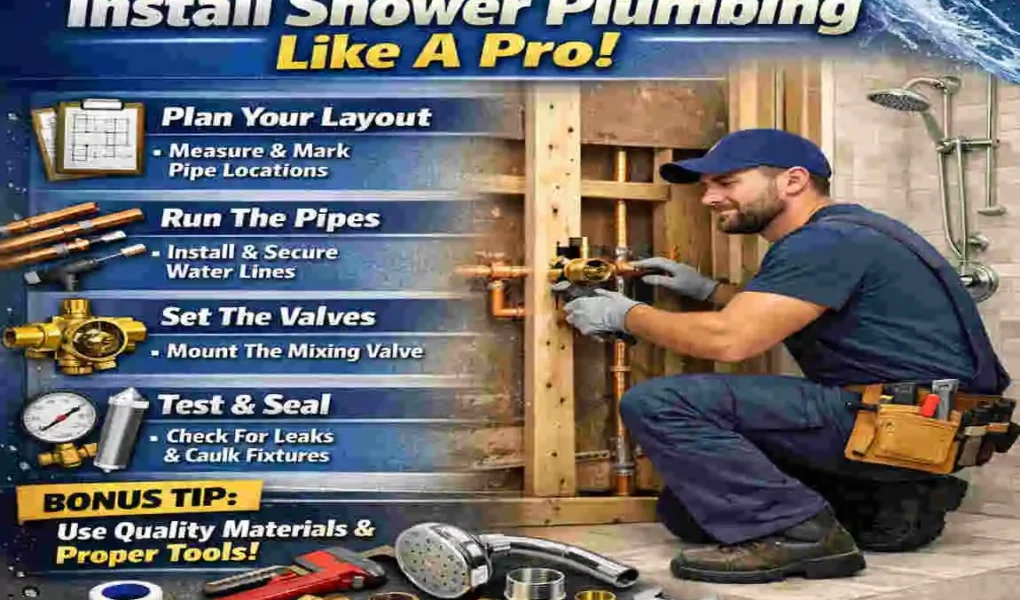
Installing shower plumbing is not just about getting water to the showerhead. It is also about water supply, drainage, pressure, and waterproofing working together properly. When you plan these parts well, your shower feels comfortable, works efficiently, and lasts longer.
| Shower Plumbing Part | Main Purpose | Key Consideration |
|---|---|---|
| Water Supply Pipes | Deliver hot and cold water | Use suitable, approved piping |
| Shower Valve | Controls water flow and temperature | Install at the correct position |
| Showerhead Pipe | Carries water to the showerhead | Secure all connections |
| Shower Drain | Removes used water | Maintain proper drainage slope |
| Drain Trap | Helps block sewer gases | Install correctly and securely |
| Pipe Fittings | Connect plumbing components | Check carefully for leaks |
| Waterproofing | Protects walls and floors | Seal shower areas properly |
| Leak Testing | Confirms plumbing is secure | Test before closing walls |
If you understand how to install shower plumbing, you can make smarter choices before the work starts. That helps you plan space, materials, and pipe routes with less stress.
Plan Your Shower Plumbing Before Installation
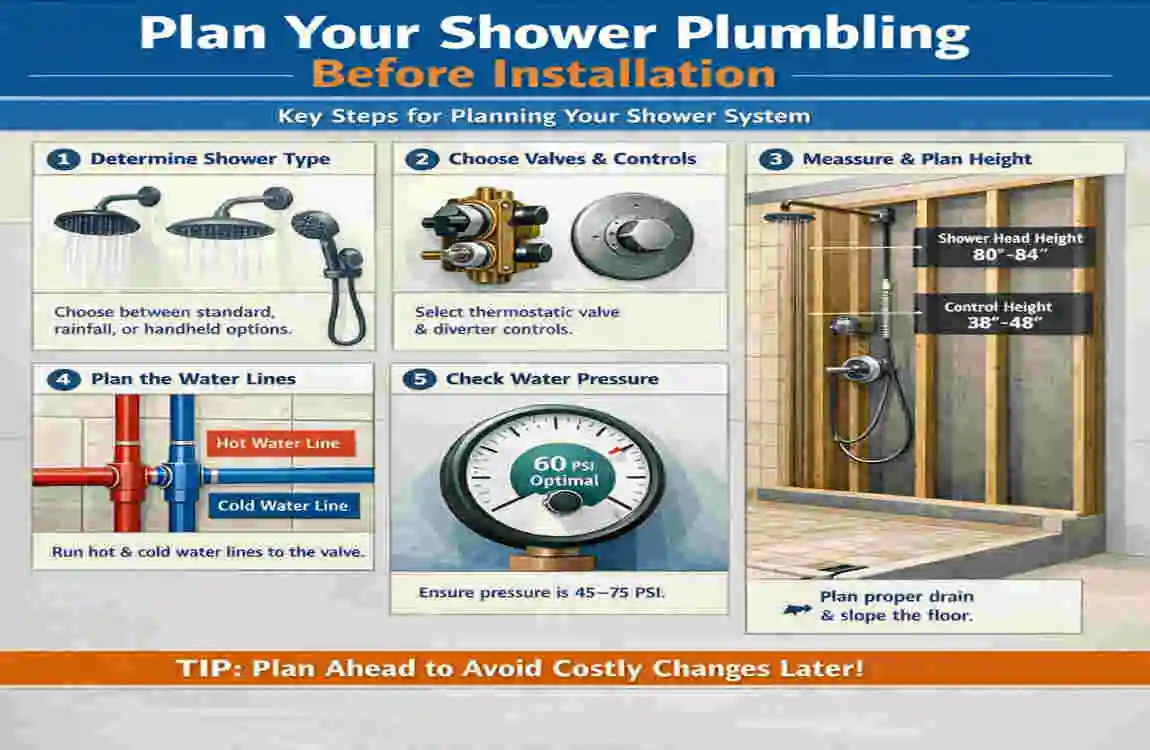
A good shower starts with a good plan. Before you cut or fit any pipe, consider where the shower will sit, where the water will come from, and how the used water will leave.
Choose the Shower Location
The shower’s position affects almost everything. It changes how far the supply lines must run, where the drain can go, and how the wall structure needs to be built. It also affects whether the shower can connect easily to existing plumbing.
A smart location can save time and reduce later repairs. A poor location can create extra bends, hidden joints, and difficult access.
Identify Water Supply Lines
Shower systems need both hot and cold water lines. Plan these lines carefully before opening walls. Pipe size, routing, and access matter because they affect water flow and future maintenance.
If the pipes are too small or badly routed, the shower may not deliver steady pressure. That can make daily use frustrating.
Plan the Shower Drain
The drain needs as much attention as the water lines. Its location, slope, and trap placement must support proper drainage. The shower waste line must also connect correctly to the home’s drainage system.
If the drain isn’t planned well, water may pool in the shower base or drain too slowly. That can lead to damage and odour problems.
Check Local Plumbing Requirements
Plumbing rules can vary by area. Some jobs need permits, and some materials may not be allowed in certain places. Always check local requirements before starting.
This step helps you avoid costly rework and makes sure the shower is safe and legal.
Understand the Main Parts of Shower Plumbing
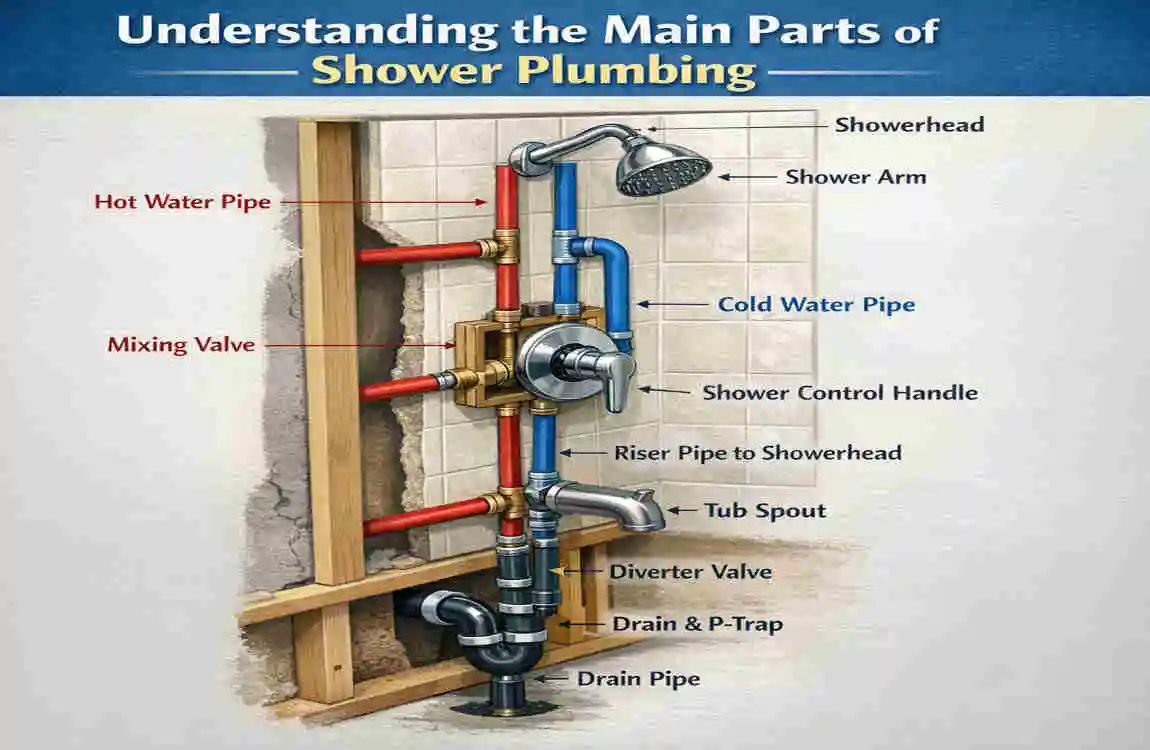
A shower system has a few key parts, and each one has a clear job. When you understand them, the whole project becomes easier to manage.
Hot and Cold Water Pipes
These pipes bring temperature-controlled water to the shower. They feed the valve, which blends the water before it reaches the showerhead. Good supply pipes help maintain even water flow and reduce temperature swings.
Shower Valve and Mixing Controls
The shower valve controls both flow and temperature. It must sit at the correct height and in the right position for comfortable use. It must also be installed according to the manufacturer’s instructions.
If the valve is placed badly, the shower can be awkward to use and harder to repair later.
Showerhead and Arm
The showerhead connects to the supply system through the shower arm. Secure fittings matter because loose joints can leak over time. A tight, stable connection supports better performance and less maintenance.
Drain, Trap, and Waste Pipe
Used water leaves through the drain, then passes through the trap and waste pipe. The trap is important because it helps stop sewer gases from coming back into the home. Without it, the shower can become unpleasant and unsafe.
Quick Reference Table
Part Main Job Why It Matters
Supply pipes Carry hot and cold water Support steady flow and temperature
Shower valve Mix and control water Helps set the right shower temperature
Showerhead and arm Deliver water into the shower Need secure fittings to avoid leaks
Drain and trap Remove used water safely Helps block sewer gases
How to Install House Plumbing for Shower
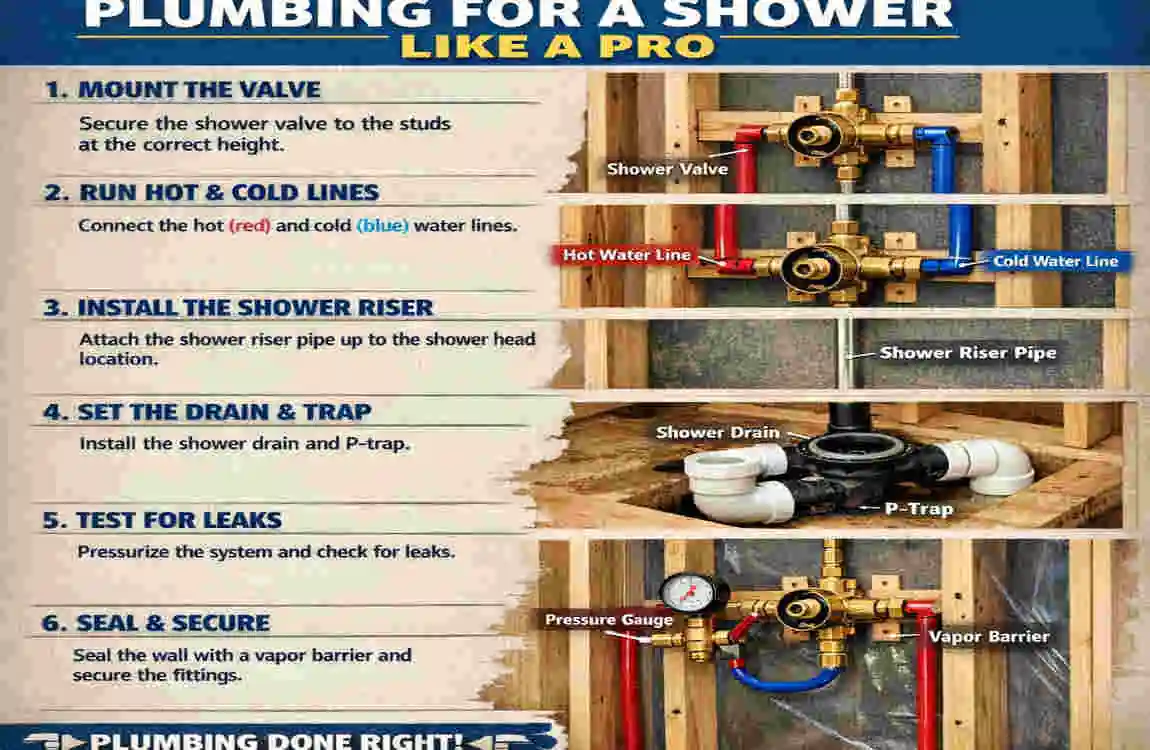
This is a general overview of the process. Complex systems, hidden pipework, and major changes require care and often a professional.
Prepare the Work Area
Start by shutting off the water supply. Protect the area around the work zone so dust and debris do not spread. Then confirm the planned pipe routes before opening walls or floors.
A little preparation can prevent a lot of trouble later.
Install the Supply Pipes
Run the hot and cold lines to the shower valve in a way that keeps them neat and practical. Whenever possible, leave connections accessible for future service.
This makes repairs pipe easier and reduces the chance of hidden problems.
Connect the Shower Valve
Position the valve correctly and connect it exactly as the instructions require. This part matters because the valve controls both comfort and safety.
A misplaced valve can make the shower harder to use and more difficult to maintain.
Install the Drain Assembly
Connect the shower drain to the trap and waste line while keeping the right drainage slope. Proper slope helps water drain properly.
If the slope is wrong, water may sit in the line and create slow drainage or odour issues.
Secure and Test Connections
Before closing walls, check every connection carefully. Look for loose fittings, leaks, or weak points. Testing now is much easier than fixing a hidden leak later.
Once the wall is closed, even a small mistake can become a big job.
Common Shower Plumbing Mistakes to Avoid
Small mistakes can cause big shower problems. Leaks, poor pressure, slow drainage, and difficult repairs often start with planning errors.
- Installing pipes without planning access for maintenance
- Incorrect drain slope
- Poorly sealed threaded or compression connections
- Positioning the shower valve incorrectly
- Failing to test plumbing before closing the wall
- Ignoring local plumbing requirements
- Mixing incompatible pipe materials or fittings
Each of these can shorten the shower’s life or make future repairs harder. Careful planning saves time, money, and stress.
Finishing, Testing, and Maintaining Your Shower Plumbing
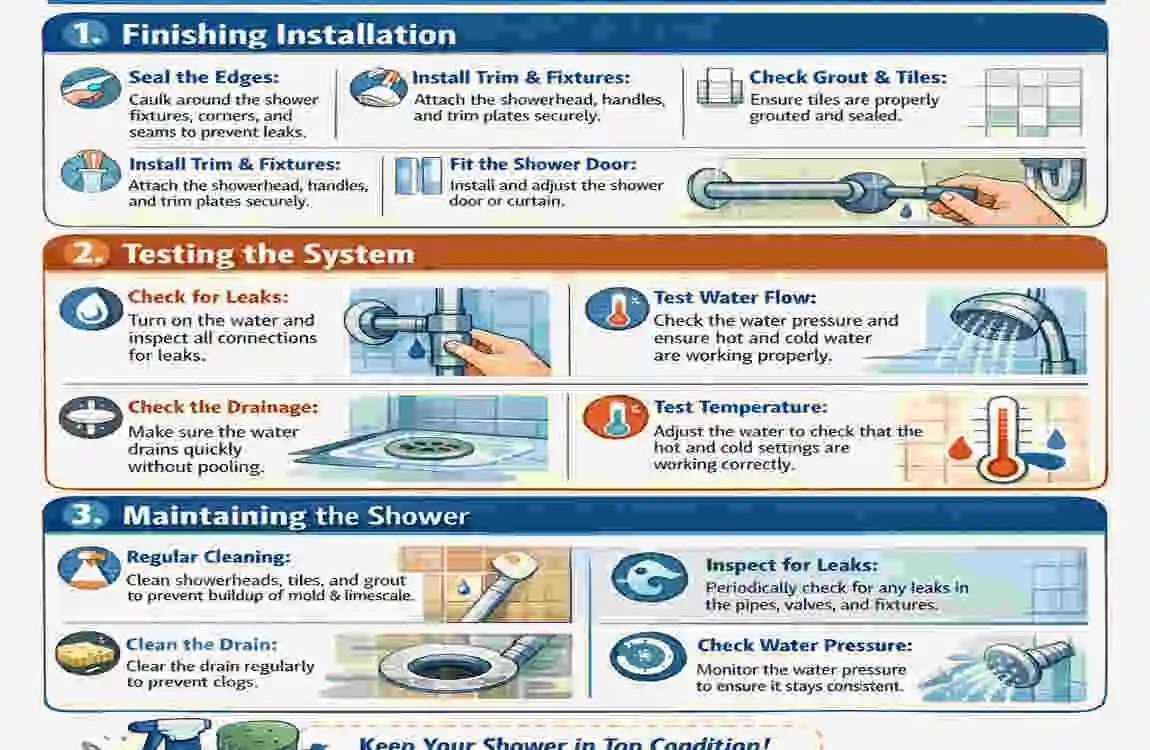
Once the plumbing is in place, the work is not quite done. Testing and upkeep matter as much as installation.
Test for Leaks
Test the water supply and drainage system thoroughly before finishing the shower walls. This helps find leaks early, while they are still easy to fix.
Even a small drip can cause hidden damage if it is left alone.
Check Water Flow and Drainage
Turn on the shower and check the flow, temperature control, and drainage speed. The shower should respond well and drain without delay.
If the flow seems weak or the drain is slow, you may need to adjust something.
Waterproof the Shower Area
Waterproofing is a major part of a successful shower. Protect the walls, corners, pipe openings, and shower floor with suitable materials so moisture does not get behind the surfaces.
Without proper waterproofing, even a well-plumbed shower can develop long-term damage.
Maintain the Plumbing
Regular maintenance keeps the plumbing system working well. Clean the drain, look at visible fittings, and watch for signs of leaks or slow drainage.
Catching small issues early helps prevent costly repairs later.
FAQ About Installing Shower Plumbing
Can I install shower plumbing myself?
Simple and accessible work may be manageable for experienced DIY homeowners. But concealed plumbing, major pipe changes, and work tied to code requirements often need a professional.
What pipes are commonly used for shower plumbing?
Common residential options include PEX, copper, and approved plastic piping, depending on local rules and project needs.
How high should a shower valve be installed?
The right height depends on the shower design, user comfort, valve model, and local requirements. Follow the manufacturer’s guidance.
Does a shower drain need a trap?
Yes. A properly installed trap helps prevent sewer gases from entering the home and keeps the shower safer and more comfortable.