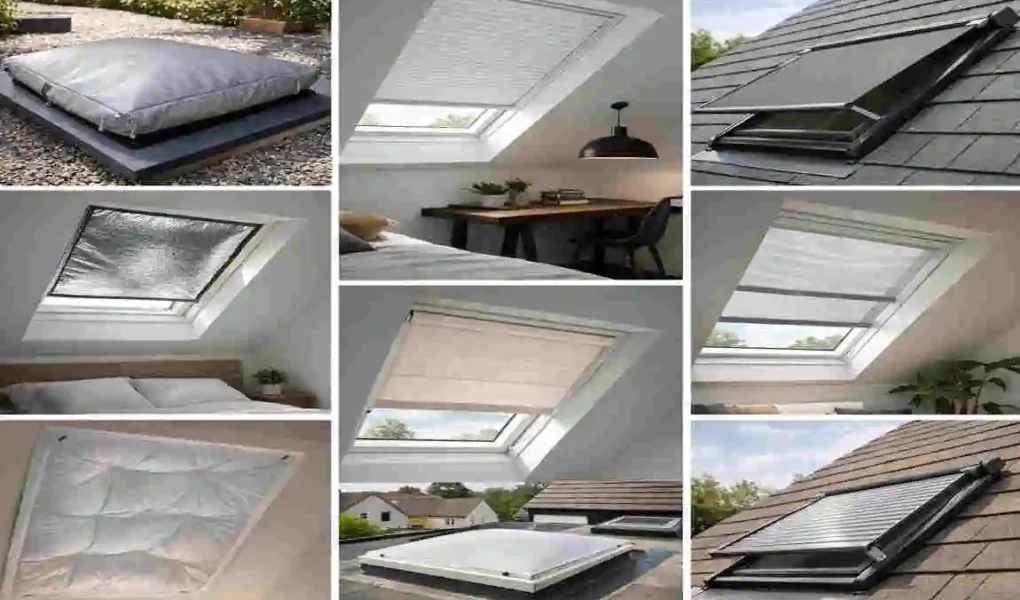
Skylights have become one of the most wanted home features in the UK. It is easy to see why. They bring in more daylight, make small rooms feel bigger, and can turn a dark loft or landing into one of the brightest spaces in the house.
But in 2026, many UK homeowners are seeing the downside too.
Energy bills are still a major concern. Summer heatwaves are lasting longer. Even on mild days, a skylight can act like a magnifying glass above your room. That extra light feels lovely in the morning. Still, by midday it can turn a bedroom, loft conversion, or conservatory into an overheated box. In some homes, the temperature in a room under a skylight can rise by 10 to 15°C compared with other parts of the house.
That is where skylight covers come in.
A good skylight cover can block up to 80% or more of heat and glare, depending on the product you choose, while still allowing useful light into the room. It can also help protect flooring, furniture, rugs, and artwork from fading due to UV exposure. On top of that, it gives you more privacy, better sleep, and improved comfort during both hot spells and bright early mornings.
You will find 7 of the best skylight cover options below, from budget-friendly DIY films to Premium smart glass systems. Some are ideal for bedrooms. Others work better for kitchens, lofts, conservatories, or south-facing roof windows. We will also cover costs in GBP, key pros and cons, installation advice, energy-saving potential, and how to choose the right option for your home.
If your skylight is making your room too hot, too bright, or too expensive to cool, you are in the right place.
Why UK Homes Need Skylight Covers
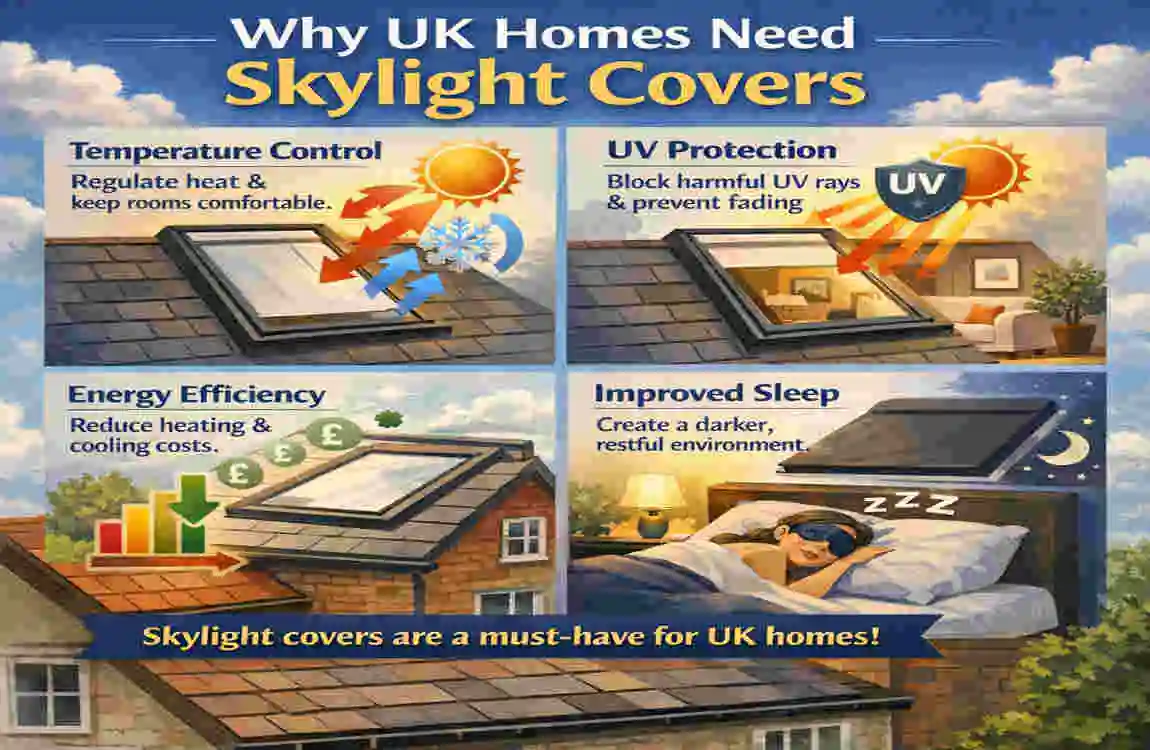
In the UK, skylights are not just about natural light anymore. They are now closely tied to comfort, energy use, and even home efficiency standards.
The biggest issue is solar gain, which means heat building up indoors from sunlight. A skylight sits directly in the roof, so it receives strong sunlight for long periods. In summer, that can cause serious overheating. Bedrooms in loft conversions often become hard to sleep in. Conservatories can feel unusable in the afternoon. Even family rooms with roof windows may need fans or portable air conditioners more often.
Then there is glare. Too much direct sun can make it difficult to watch TV, work on a laptop, or relax. And over time, UV rays can fade soft furnishings, wooden floors, and fabrics.
There is also the money side of it. With energy prices still high and households watching every bill, uncovered skylights can raise cooling costs. A well-chosen skylight cover may help reduce cooling demand by up to 25%, especially in warmer parts of the UK or in rooms with large roof windows.
UK homes also face some specific conditions:
- Shorter, colder winters mean insulation still matters.
- Rainy, changeable summers call for durable materials that can withstand moisture and temperature fluctuations.
- Part L of the building regulations places greater emphasis on thermal performance and energy efficiency in renovations and new builds.
Skylight covers do more than just control heat. They can improve privacy in overlooked lofts, soften the look of a modern roof window, and make a room feel more finished and balanced.
So if you are asking what to use to cover a skylight in UK homes, the answer depends on your room, your budget, and how much heat, glare, or darkness you need to control.
Best Skylight Covers for UK Homes
There is no one-size-fits-all answer. The best skylight cover for your home depends on how you use the room and what problem you are trying to solve.
Some covers are best for full blackout. Others are better for insulation, budget DIY upgrades, or blocking heat before it enters the glass.
Below is a practical breakdown of the top seven options for UK homes in 2026.
Quick Comparison Table
Cover Type Heat Block %Cost (GBP)Ease of Install Best For
Motorised Blinds 85-95 150-400 Medium Bedrooms
Cellular Shades 50-70 80-250 Easy Family Rooms
Window Films 70-99 20-60 DIY Budget Homes
Roller Blinds 60-80 50-200 Easy Kitchens
External Awnings 90+ 300+ Pro Conservatories
Thermal Curtains 40-60 30-100 DIY Traditional
Smart Glass 70-85 500+ Pro Modern Builds
Motorised Blackout Blinds
If you want the most complete answer to what to use to cover a skylight in a UK bedroom, motorised blackout blinds are one of the strongest options.
These are electric blinds designed to fit roof windows and skylights. They usually operate by remote control, wall switch, or mobile app. Some systems can even connect to smart home setups and timers. Hence, the blind closes automatically during the hottest part of the day.
Their biggest strength is control. You can block almost all incoming light, sharply reduce glare, and reflect a large amount of heat away from the room. That makes them especially useful in bedrooms, nurseries, media rooms, and loft spaces where direct summer sun becomes uncomfortable.
Many UK homeowners choose motorised blackout blinds for high or hard-to-reach skylights. If your roof window is above a stairwell or a vaulted ceiling, a manual blind may be awkward to use. A motorised system solves that problem neatly.
Popular names in the UK market include Luxaflex and Somfy, both known for motorised shading systems that can be tailored to roof windows.
The downside is cost. Expect to pay around £150-£400 per skylight, depending on size, fabric, and motor type. Professional fitting can add more. Battery-powered versions may be easier to install than mains-wired models. Still, wired systems often feel more seamless over the long term.
Best points: full blackout, strong heat reflection, easy operation, ideal for high skylights.
Drawbacks: higher upfront cost, may need electrical setup, not the cheapest route for multiple windows.
Installation tip: always measure the visible glass area and the internal recess carefully. Many roof windows are not perfectly standard, especially in older UK homes.
If sleep quality and summer comfort are top priorities, this is one of the best skylight covers available.
Cellular or Honeycomb Shades
Cellular shades, also called honeycomb shades, are a smart option if you want both daylight control and better insulation.
These shades are made from pleated fabric that forms small air pockets, much like a honeycomb. Those pockets trap air, creating an extra barrier between the room and the glass. In plain terms, they help slow down heat transfer. That means they can keep rooms cooler in summer and reduce heat loss in winter too.
For many UK homeowners, that year-round benefit is the real selling point.
They usually block around 50% to 70% of heat, depending on the fabric and fit. While they do not always create a total blackout like dedicated blackout blinds, they do soften strong light and reduce glare nicely. They are a good choice for family rooms, studies, loft spaces, and children’s rooms where you want comfort without making the room fully dark.
They also look neat and modern. Because of their pleated design, they fit well with popular roof window brands such as Velux, and many UK stockists, including stores like B&Q, carry compatible or made-to-measure options.
Prices typically range from £80 to £250. That makes them a middle-ground choice: more expensive than simple film or curtains, but cheaper than smart systems or external shading.
Their main drawback is maintenance. The pleats can collect dust over time, especially in kitchens or homes near busy roads. They need regular light cleaning to keep them looking fresh.
Best points: good insulation, stylish look, improved comfort in both summer and winter, suitable for many room types.
Drawbacks: dust can settle in the folds, less complete blackout, and custom sizing may increase cost.
Installation tip: mount the shade as close to the frame as possible to improve thermal performance. Gaps around the edges reduce the insulating effect.
If your goal is to balance heat control, appearance, and energy efficiency, honeycomb shades are a very sensible choice for UK homes.
UV-Blocking Window Films
If you need a low-cost answer for covering a skylight in the the UK, UV-blocking window film is one of the easiest solutions to start with.
This is a self-adhesive film that sticks directly onto the skylight glass. Some versions are lightly tinted, while others are clearer and mainly designed to cut UV and glare. Better products can reduce UV rays by up to 99%, helping protect furniture, flooring, and fabrics from fading.
Window film is especially useful in south-facing UK homes, where rooms get long periods of direct light. It softens harsh brightness and can reduce the greenhouse effect you feel under untreated glass. It will not make the room pitch black, but it does make the light more comfortable.
The best part is the price. Most DIY window films cost between £20 and £60, depending on size and quality. That makes them ideal for homeowners who want a quick fix without spending hundreds of pounds.
Another advantage is that film requires little structural change. If you cannot fit blinds easily or want to preserve a clean, minimal look, it is a practical option.
But there are limits. Film usually provides less blackout than blinds or shades. It also needs careful application. Bubbles, creases, or poor alignment can spoil the look.
Best points: affordable, easy DIY option, strong UV protection, keeps the skylight looking simple.
Drawbacks: limited blackout, less insulation than fabric-based options, and application needs patience.
Installation tip: clean the glass thoroughly before fitting, use a spray mist for positioning, and smooth from the centre outwards with a squeegee.
For many households, window film is the easiest first upgrade before moving on to a fuller shading system later.
Custom Fabric Roller Blinds
Custom fabric roller blinds are among the most flexible and affordable skylight-covering options for UK homes.
They work familiarly: a fabric sheet rolls up and down over the skylight using a side pull, rod, or simple manual mechanism. The reason they remain so popular is simple. They are easy to understand, easy to fit, and available in many fabrics, colours, and light-control levels.
If you want something tailored to your room without paying motorised-blind prices, custom roller blinds are a strong middle option. Costs usually fall between £50 and £200, depending on the size, fabric, and whether the blind is made for a standard or pitched skylight.
You can choose from blackout, dim-out, or light-filtering materials. Polyester and coated canvas are common choices because they hold shape well and handle sunlight reasonably well. In the UK, stores such as John Lewis and specialist blind makers often offer skylight-friendly designs, including options for pitched roof windows.
These blinds are a good fit for kitchens, home offices, bathrooms, and general living spaces. They can reduce heat, cut glare, and improve privacy without making the room feel heavy or bulky.
The main compromise is that many are manual rather than electric. That is fine for accessible skylights, but less ideal if your roof window sits high up. Some cheaper models may also let light leak at the edges if the fit is not exact.
Best points: affordable, lots of fabric choices, easy retrofit, suitable for many room styles.
Drawbacks: manual operation in most cases, edge light gaps possible, less Premium than motorised systems.
Installation tip: check whether your skylight needs side channels to keep the blind taut on a sloping window. Without them, the fabric may hang away from the glass.
If you want a straightforward and practical answer to what to use to cover a skylight in UK homes without overspending, custom roller blinds deserve serious consideration.
Retractable Awnings or External Shades
When heat is the main problem, external shading is often the most effective solution.
Retractable awnings or external shades sit outside the skylight, not inside the room. That matters because they stop sunlight before it reaches the glass. In simple terms, they block heat before it even enters your home. That is why they can offer 90% or more solar rejection, which is higher than many internal coverings.
This makes them especially useful for conservatories, garden rooms, large roof lanterns, and sun-exposed loft spaces. If your room becomes unbearable during warm spells, external shading can make a dramatic difference.
Most systems use weather-resistant fabric and can be fixed or retractable. Some Premium models are motorised and include wind or sun sensors. UK suppliers such as Everest and specialist conservatory shading companies often provide made-to-measure options.
The main issue is cost. Prices usually start at £300 and increase quickly depending on size, access, and mechanism. Installation almost always needs a professional, especially for roof-mounted systems.
There is also the matter of planning and compliance. In some cases, especially in conservation areas or where the roof‘s external appearance changes significantly, you may need to check planning permission or local rules.
Best points: excellent heat blocking, reduces solar gain before it enters, ideal for conservatories and hot lofts.
Drawbacks: higher cost, professional fitting needed, and possible planning considerations.
Installation tip: ask the installer about wind resistance, drainage, and fabric durability for UK weather. Rain, gusts, and moss buildup can shorten the the lifespan if the product is not well designed.
If your room is overheating badly, external shades are one of the most powerful fixes available.
Thermal Curtains or Drapes
Thermal curtains may not be the first thing you imagine for a skylight, but in some UK homes, they are still a very practical solution.
These are heavy-lined curtains or drapes made to improve insulation and reduce light. They work best when a skylight is positioned in a dormer, vertical loft window, or a roof area where a curtain track can be fitted around the recess. In more traditional homes, they often feel more in keeping with the rest of the décor than modern blinds.
They are also budget-friendly. A decent set of thermal curtains or insulated drapes can cost around £30 to £100, which makes them one of the cheaper options in this guide.
Their main benefit is versatility. They can soften the room, add texture, improve privacy, and reduce both heat gain and heat loss to some degree. In winter, they can help prevent heat from escaping through the glass. In summer, they reduce glare and direct sun, though they are not as effective as external shades or fitted blackout blinds.
The biggest drawback is bulk. In tight loft spaces or small skylight recesses, curtains can feel awkward. They also need the right support system to hang neatly on a sloped or recessed opening.
Best points: low cost, easy to change, works well in traditional interiors, adds softness and privacy.
Drawbacks: can be bulky, less effective on awkward roof angles, and not ideal for every skylight style.
Tip for loft conversions: use slim thermal linings and ceiling-mounted tracks where possible. That helps keep the look tidy and avoids losing too much headroom.
Thermal curtains are a good option when budget matters, and your skylight setup allows for a softer, more classic treatment.
Smart Glass or Switchable Smart Film
If you want a Premium, future-focused answer to what to use to cover a skylight in UK modern homes, smart glass or switchable smart film is the standout choice.
This technology changes the glass’s opacity or tint at the touch of a button, via a wall switch, or via an app. In clear Mode, the skylight lets in light as usual. In tinted or frosted Mode, it cuts glare, improves privacy, and reduces heat build-up.
It feels high-end because it is.
Smart glass systems can reduce heat by around 70% to 85%, depending on the product, and they look very clean because there is no visible blind or curtain. For architects, designers, and homeowners creating sleek modern spaces, that minimalist look is a major advantage.
This option is becoming more common in smart homes, luxury extensions, roof lanterns, and design-led renovations across the UK. It is also a useful future-proof choice if you want a home that adapts to changing weather without adding extra hardware.
Costs are the main barrier. You are usually looking at £500 or more per unit, and often much more for bespoke sizes or replacement glass systems. Installation should be handled by professionals, particularly where wiring or specialist glazing is involved.
Another point to consider is that smart film retrofits can vary in quality. Some products are better for privacy than true solar control, so always check performance claims carefully.
Best points: modern appearance, app-based control, strong glare and heat reduction, and no bulky blind system.
Drawbacks: expensive, specialist fitting required, quality can vary across products.
Installation tip: ask whether the system is being applied as a film or installed as full smart glass, because the price, lifespan, and performance can differ significantly.
If you are upgrading a Premium property or planning a modern build, this is one of the most advanced skylight-covering solutions available in 2026.
Choosing the Right Cover for Your UK Home
Now that you have seen the top options, the next step is choosing the one that actually fits your home.
The right answer depends on a few practical factors: room type, budget, roof pitch, access, and where you live in the UK.
A skylight in a London loft bedroom may need stronger heat control than one in a shaded Scottish hallway. A south-facing conservatory in the Midlands may benefit most from external shades. At the same time, a small roof window in a family bathroom may only need a roller blind or film.
Start by asking yourself what matters most.
A Simple Decision Guide
- If heat is your main problem, choose external shades or motorised blackout blinds.
- If insulation matters in both summer and winter, go for cellular or honeycomb shades.
- If your budget is tight, start with UV-blocking window film or thermal curtains.
- If you need complete darkness for sleep, pick motorised blackout blinds or a blackout roller blind.
- If your skylight is hard to reach, choose a motorised or smart-controlled option.
- If you want a sleek, modern finish, consider smart glass.
- If your home has a traditional style, thermal curtains may look more natural.
You should also think about the roof angle and frame type. Some covers work best with standard roof windows, such as Velux models. Others need custom fitting.
And do not ignore compliance. In the UK, it is wise to check that products and installations align with relevant safety and performance expectations, including Part L energy efficiency goals and, where applicable, standards such as BS 5710 for shading and blind systems. If you are renovating or converting a loft, this matters even more.
In short, the best cover is not just the one that blocks the most heat. It is the one that suits your room, your lifestyle, and your budget without creating extra hassle.
Installation Guide: DIY vs Professional
Some skylight covers are easy to fit yourself. Others really need professional help.
For inside covers like roller blinds, films, cellular shades, or curtains, DIY is often realistic if the skylight is low enough to reach safely.
Basic DIY Steps
- Measure carefully
- Measure the visible glass, frame width, and recess depth. Check whether the blind or shade fits inside the frame or over it.
- Clean the area
- Dust, grease, and moisture affect film adhesion and the performance of blind fittings. Clean both the frame and the glass before starting.
- Mark bracket or track positions
- Use a pencil and a level. Even a small misalignment can make a skylight blind sit unevenly.
- Fit brackets or tracks.
- Secure them according to the manufacturer’s guide. For sloped windows, side channels may be needed.
- Install the cover and test it.
- Open and close it several times to make sure it moves smoothly and seals properly.
DIY is best for window films, curtains, and basic internal blinds. But if the skylight is high up, if the roof is steep, or if you are fitting external shades, motorised systems, or smart glass, hire a professional.
Safety matters a lot in the UK, especially with wet weather. Ladders on damp floors, sloping loft spaces, or awkward stairwells can quickly become dangerous.
If you are working above head height, always use stable access equipment, avoid installation during rain, and never stretch beyond a safe reach point.
Cost Analysis and Energy Savings
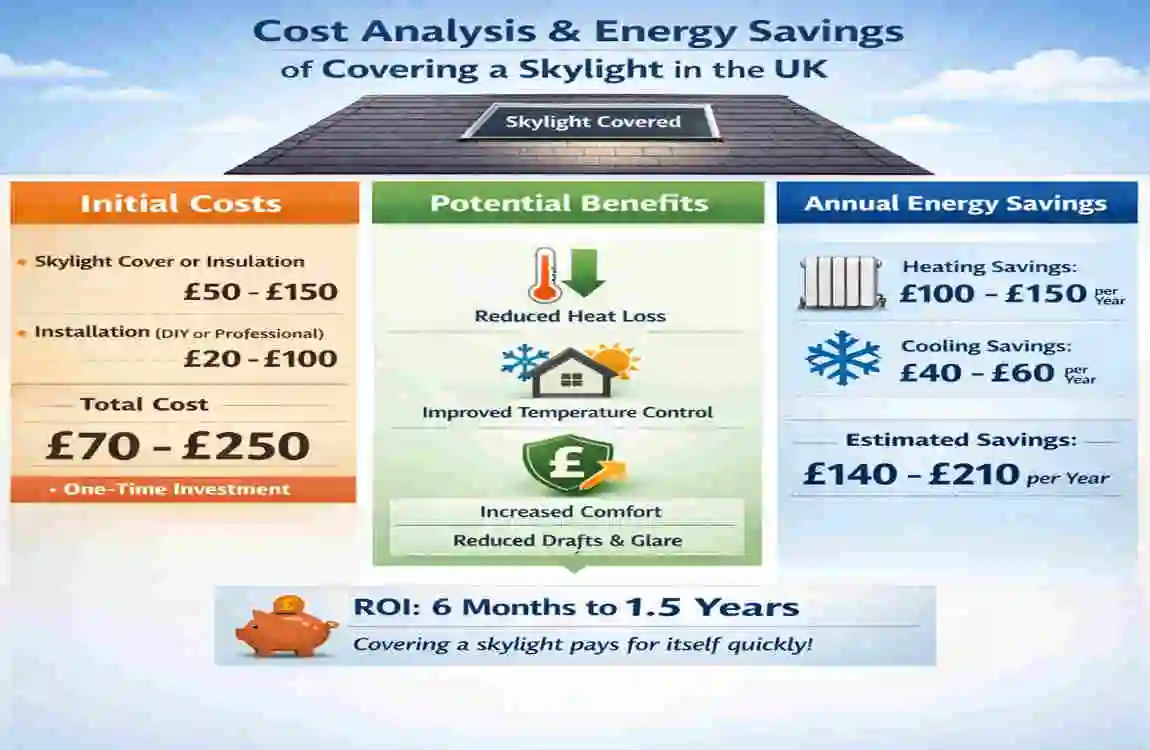
The upfront cost of a skylight cover can feel like an extra expense, but in many luxury homes, it pays back faster than expected.
A basic window film may cost only £20 to £60, while a quality roller blind might cost £100 to £200 to fit. A motorised blackout blind at £200 or more can seem expensive at first, but if it reduces overheating, improves sleep, and cuts cooling costs, the long-term value becomes clearer.
As a rough example, a £200 skylight blind that helps save around £150 a year in cooling and energy use could pay for itself quite quickly, especially during years of high energy tariffs and ongoing pressure from the Ofgem price cap.
Compared with leaving a skylight uncovered, almost any effective cover reduces wasted heat gain, glare, and UV damage. That means less need for fans, portable air conditioners, and replacement furnishings.
So while the cheapest option is not always the best, the right one can deliver both comfort and real savings.
FAQs
What should you use to cover a house’s skylight cheaply in the UK?
The cheapest options are usually UV-blocking window film and thermal curtains. If you want a low-cost answer for what to use to cover a skylight in the UK, these are the easiest places to start.
Which skylight cover blocks the most heat?
External shades or retractable awnings usually block the most heat by preventing sunlight from reaching the glass.
Are blackout blinds good for loft bedrooms?
Yes, they are one of the best options for loft bedrooms. They reduce glare, improve sleep, and help keep the room cooler during summer mornings and heatwaves.
Can I install skylight covers myself?
You can often install films, curtains, and some manual blinds yourself. For high skylights, external shades, or motorised systems, professional installation is safer.
Do skylight covers help in winter, too?
Yes. Cellular shades and thermal curtains are especially helpful because they add insulation and reduce heat loss.
Are smart glass skylight covers worth it?
They can be worth it for modern homes, Premium renovations, or anyone seeking a clean, tech-friendly solution. The main downside is the high price.