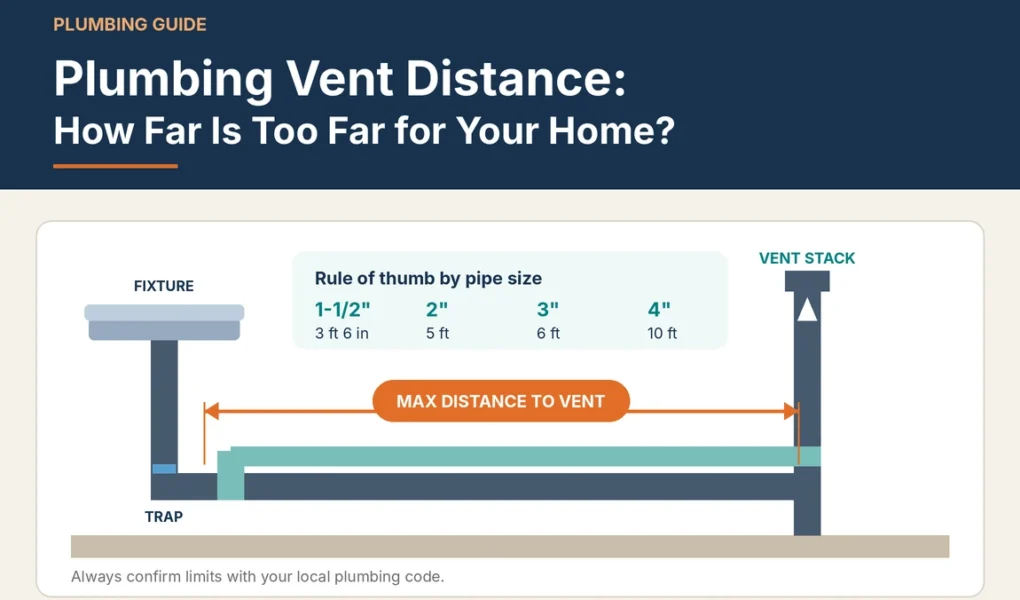
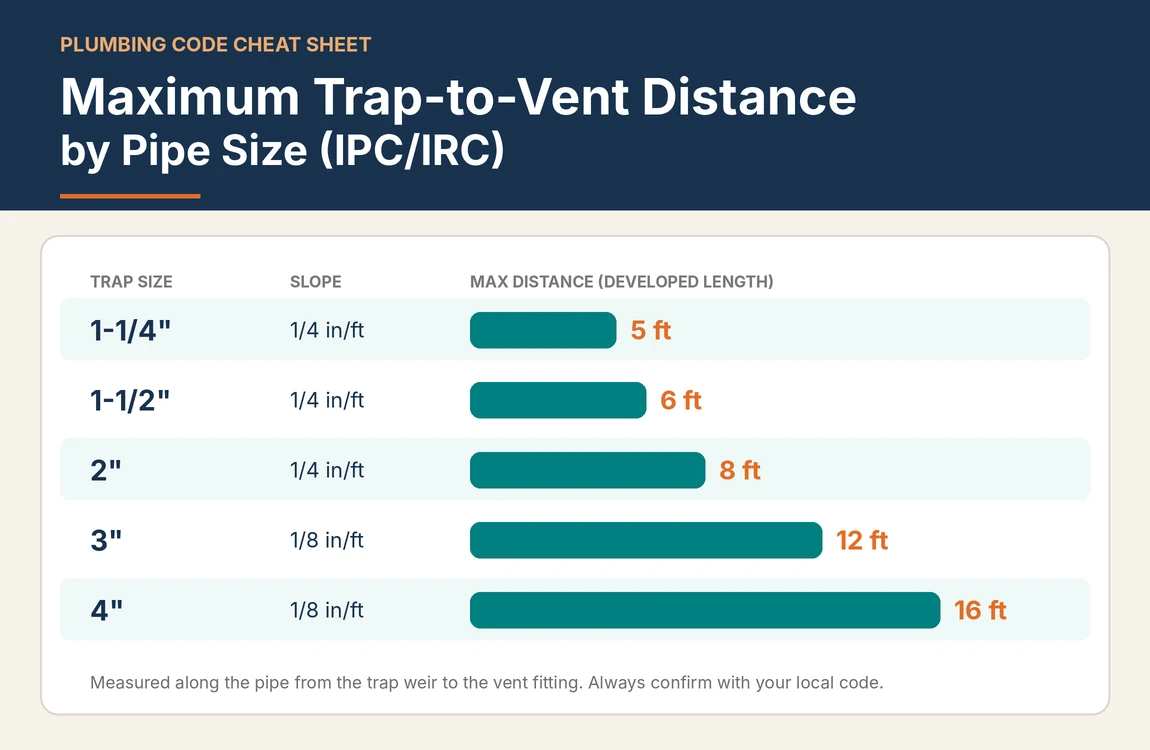
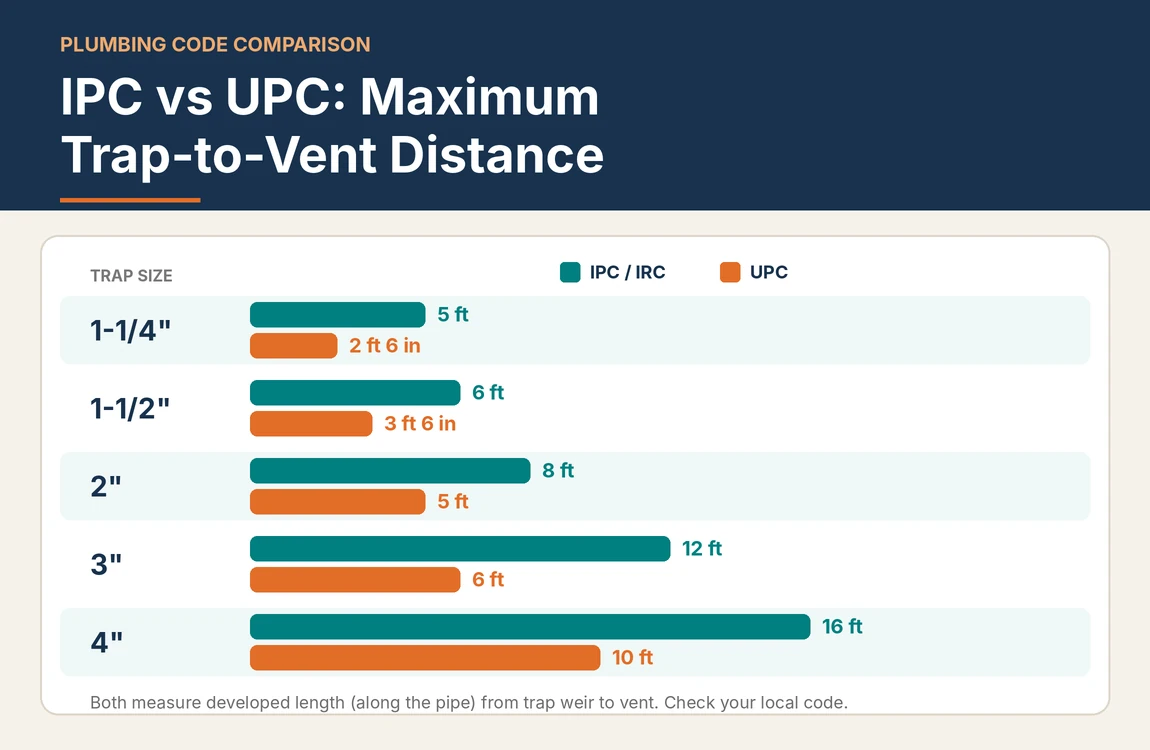
Under the International Plumbing Code (IPC), a plumbing vent can be about 5 feet from a fixture trap with a 1¼-inch pipe, 6 feet with 1½-inch, 8 feet with 2-inch, 12 feet with 3-inch and 16 feet with 4-inch pipe. Under the Uniform Plumbing Code (UPC), the limits are shorter, from 2 ft 6 in for 1¼-inch pipe up to 10 ft for 4-inch pipe. The distance is measured along the pipe from the trap weir to the vent connection.
Why Does Vent Distance Matter in Your Home?
Every sink, shower and tub in your house has a P-trap that holds a small plug of water. That water seal blocks sewer gas from entering your living space. A vent lets air into the drain line so wastewater can flow freely and does not pull the water out of the trap (siphoning). If the vent sits too far away, the draining water can suck the trap dry, leading to gurgling, slow drains and unpleasant sewer smells.
How Far Can a Plumbing Vent Be From a Fixture? (IPC / IRC Table)
The IPC and the International Residential Code (IRC) set the maximum distance between a fixture trap and its vent based on trap size and pipe slope. According to the International Code Council, the distance is 5 feet for a 1¼-inch trap, 6 feet for a 1½-inch trap and 8 feet for a 2-inch trap, all at a ¼-inch-per-foot slope. Larger 3-inch and 4-inch traps are allowed 12 and 16 feet at a ⅛-inch-per-foot slope, as shown in Journal of Light Construction.
| Trap / Pipe Size | Slope | Max Distance (IPC/IRC) |
|---|---|---|
| 1¼ inch | ¼” per foot | 5 ft |
| 1½ inch | ¼” per foot | 6 ft |
| 2 inch | ¼” per foot | 8 ft |
| 3 inch | ⅛” per foot | 12 ft |
| 4 inch | ⅛” per foot | 16 ft |
UPC Vent Distance Limits (Western U.S. and Some States)
Areas that follow the Uniform Plumbing Code, including California, use tighter limits. The California Plumbing Code lists a maximum of 30 inches for 1¼-inch pipe, 42 inches for 1½-inch, 60 inches for 2-inch, 72 inches for 3-inch and 120 inches for 4-inch pipe. The UPC also sets a minimum distance, so the vent cannot sit too close to the trap either.
How Is Vent Distance Measured?
- Start point: the trap weir, which is the highest point of the water seal.
- End point: where the vent pipe connects to the drain line.
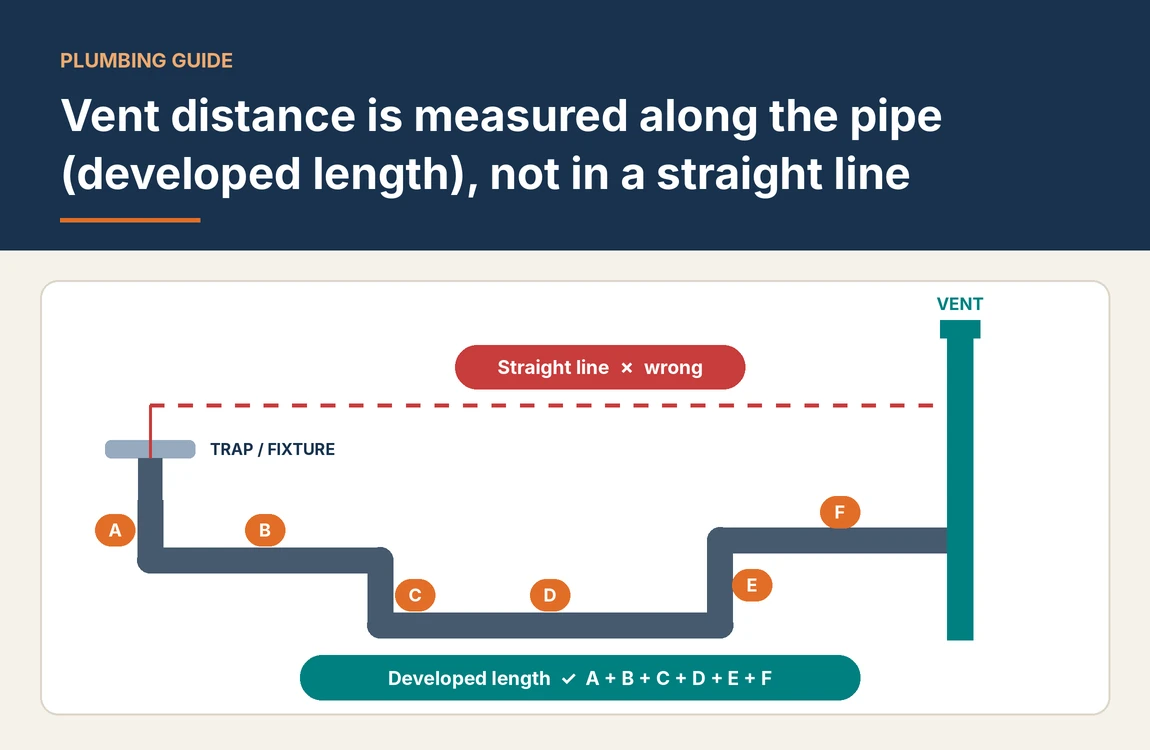
- Path: the full length of pipe including any bends, not a straight line.
- Slope: the drain should fall about ¼ inch per foot toward the vent connection.
The code also limits how far the fixture outlet can sit from the trap. Per the ICC Building Safety Journal, the vertical distance from the fixture outlet to the trap weir is capped at 24 inches and the horizontal distance at 30 inches.
Why Slope and Pipe Size Set the Limit
A 2-inch drain sloped at ¼ inch per foot drops 2 inches over 8 feet, which equals the pipe diameter. Code writers use that fall as the cut-off, because a steeper total drop lets the draining water pull air out of the line and siphon the trap, as Journal of Light Construction explains.
What Happens If the Vent Is Too Far Away?
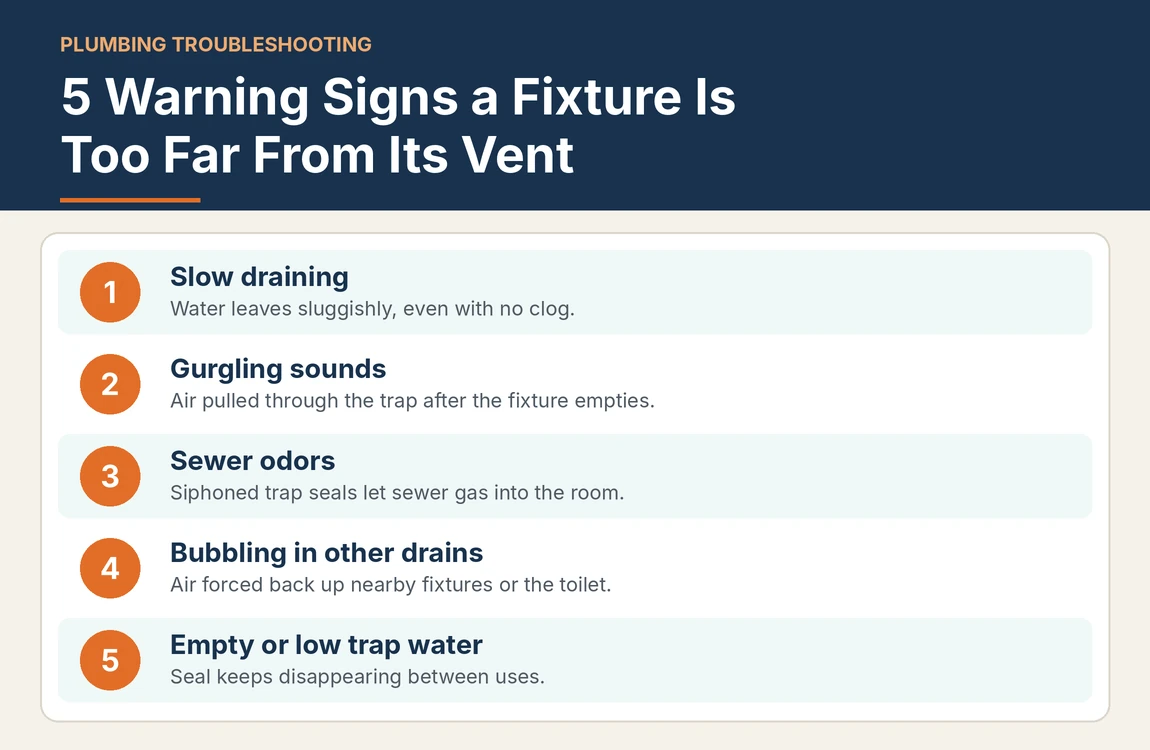
- Gurgling noises from sinks, tubs or toilets
- Slow drains that keep coming back
- Sewer odors in the bathroom or kitchen
- Toilet bubbling when another fixture drains
- Dry or partly empty P-trap
What If Your Fixture Is Too Far From the Vent?
- Move or add a vent closer to the trap, connected above the trap weir.
- Upsize the pipe where allowed, since larger pipe permits a longer run.
- Use an approved alternative method such as a re-vent, wet vent or circuit vent, as covered in the ICC venting guide.
- Consider an air admittance valve (AAV) only if your local code allows it.
Note: Rules differ by city and state, and many places amend the model codes. Always confirm with your local building department or a licensed plumber before starting work. Water closets (toilets) are handled differently under both codes, and the IPC does not limit their trap-arm length in the same way.
Frequently Asked Questions
How far can a plumbing vent be from a sink?
For a standard 1½-inch kitchen or bathroom sink trap, the IPC allows up to 6 feet. The UPC allows up to 3 ft 6 in. A 2-inch trap allows 8 ft (IPC) or 5 ft (UPC).
Can a vent be too close to the trap?
Yes. A vent should not be installed within two pipe diameters of the trap weir, per ICC Chapter 9.
Does the vent distance rule apply to toilets?
Not in the same way. The IPC exempts self-siphoning fixtures such as water closets from the length limit, while the UPC uses its own maximum developed length for them.
What is the minimum vent pipe size for a fixture?
A fixture vent must be at least half the diameter of the drain it serves, and never smaller than 1¼ inches, according to the ICC.
Can I use an air admittance valve instead of a vent?
Only where your local plumbing code approves it. Some jurisdictions restrict or ban them, so check before buying one.
Final Thoughts
Keeping a vent within the allowed distance protects your trap seal, keeps drains quiet and stops sewer gas from entering your home. Measure along the pipe, match the distance to your pipe size and code, and have a licensed plumber confirm anything you are unsure of.
Sources
- International Code Council – 2021 Plumbing Venting Brochure
- ICC Building Safety Journal – Methods of Venting Plumbing Fixtures and Traps
- ICC Building Safety Journal – Plumbing Trap Requirements Under the IPC
- Journal of Light Construction – Maximum Length for Fixture Drains
- Journal of Light Construction – Locating Plumbing Vents
- California Plumbing Code – Chapter 10, Traps and Interceptors
- InterNACHI – Maximum Distance of Fixture Trap from Vent