When it comes to decorating your home, curtains may not always be the first thing that comes to mind. However, they play a pivotal role in shaping a room’s ambiance, functionality, and style. One of the most debated questions about curtains is: “Should curtains touch the house floor?”
This seemingly simple question sparks a variety of opinions among interior design enthusiasts, especially when considering the unique characteristics of UK homes. From style and practicality to insulation and privacy, choosing the right curtain length can make all the difference in your space.
Understanding Floor-Length Curtains
What Are Floor-Length Curtains?
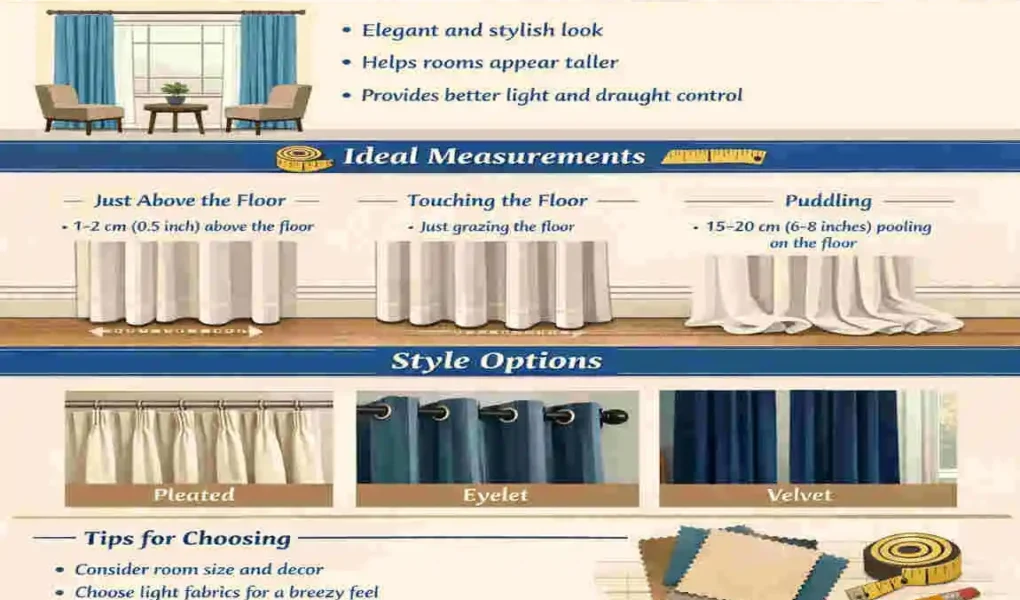
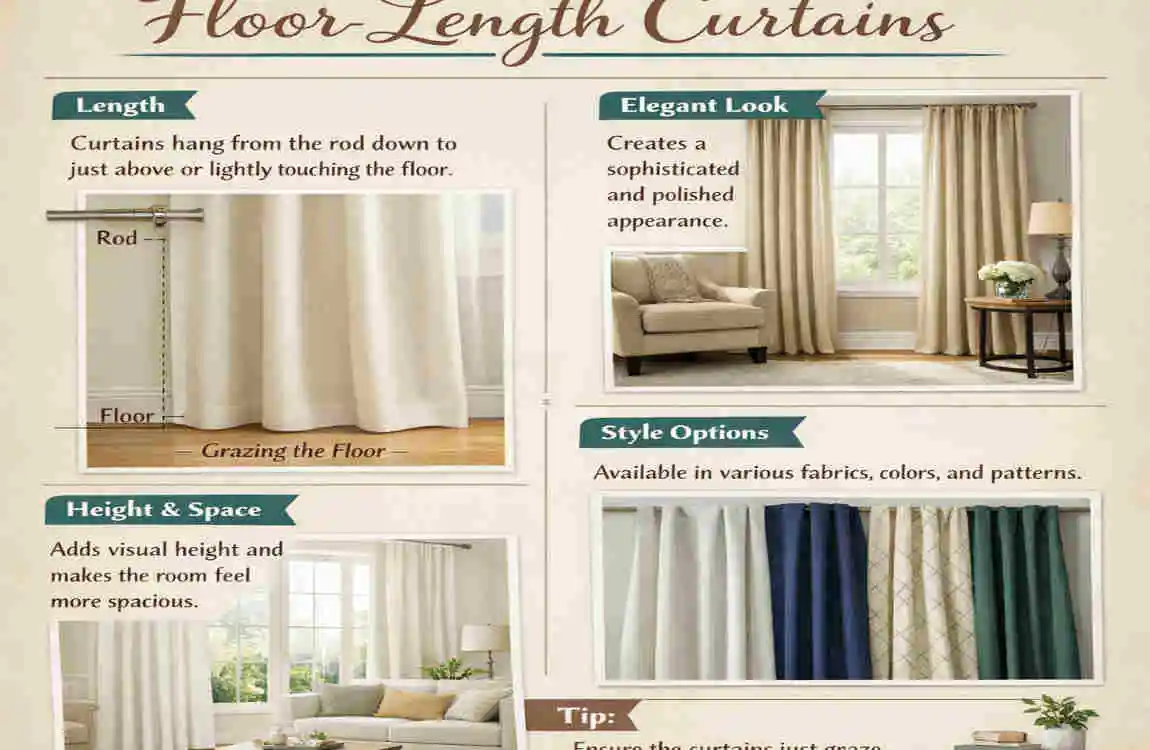
Floor-length curtains, as the name suggests, are designed to reach the floor, creating a sleek, elongated appearance. These curtains typically start from the curtain rod and extend fully to either hover above, just touch, or even pool on the floor.
Key characteristics of floor-length curtains include:
- Length: Typically ranges from 84 inches to over 120 inches, depending on ceiling height.
- Materials: Common materials include cotton, linen, velvet, silk, and synthetic blends.
- Styles: They come in various styles, including sheer, blackout, and patterned designs, to suit different interiors.
Benefits of Floor-Length Curtains in UK Homes
Floor-length curtains offer more than just visual appeal. Here are some key benefits:
- Aesthetic Appeal: These curtains add a sense of elegance and height to any room, making your space feel more polished and complete.
- Energy Efficiency: In the UK, where winters can be chilly, floor-length curtains provide excellent thermal insulation, helping to retain heat and reduce energy bills.
- Privacy and Light Control: Whether you live in a bustling city or a serene countryside, these curtains help maintain privacy and control the amount of natural light entering your home.
Types of Floor-Length Curtains
When it comes to curtain length, there are several options to choose from, each with its own unique style and purpose:
Type Description Best For
Puddle-Length Curtains Extend several inches onto the floor, creating an opulent “puddle” effect. Formal settings like dining rooms.
Break-Length Curtains Slightly touch the floor with a subtle “break” or fold. Contemporary and transitional homes.
Hovering-Length Curtains : Stop just above the floor for a clean, modern look. High-traffic areas like kitchens.
Touching-Length Curtains Exactly reach the floor without extra fabric pooling. Minimalist and neat interiors.
“Should Curtains Touch the House Floor?” – Key Considerations
The Pros of Curtains Touching the Floor
If you’re aiming for a luxurious, cohesive look, letting your curtains reach the floor is a great choice. Here’s why:
- Elegant and Luxurious Look: Floor-length curtains create a seamless flow from ceiling to floor, enhancing the room’s grandeur.
- Better Light Blocking and Insulation: Floor-length curtains help block drafts and sunlight more effectively, keeping your interiors cozy.
- Ideal for Formal Spaces: Rooms like living rooms, dining rooms, and bedrooms benefit from the sophistication of floor-touching curtains.
The Cons of Curtains Touching the Floor
While they look stunning, curtains that touch the floor can pose certain challenges:
- Cleaning and Maintenance: Curtains that touch or puddle on the floor are prone to collecting dust, dirt, and pet hair, requiring frequent cleaning.
- Unsuitable for Damp Areas: In areas like kitchens or bathrooms, floor-length curtains can absorb moisture, becoming unhygienic.
- Safety Concerns: For households with small children or pets, long curtains may pose a tripping hazard or attract playful paws.
Factors to Determine Curtain Length for Your Home
When choosing curtain length, consider the following factors:
- Room Function: Bedrooms may benefit from floor-to-ceiling blackout curtains for complete light control, while kitchens may require shorter, more practical lengths.
- Window Placement: If your windows are unusually high or low, adjust the curtain length accordingly for a balanced look.
- Flooring Type: Curtains that touch the floor work better on smooth surfaces like hardwood or tile than on thick carpets.
Styling Tips for Floor-Length Curtains
Choosing the Right Fabric
The fabric you choose can dramatically affect the functionality and appearance of your curtains. Here are some tips:
- For Insulation: Heavy fabrics like velvet or thermal blackout curtains work well for colder months.
- For Airy Spaces: Opt for light materials like linen or cotton for a breezy, relaxed vibe.
- UK Climate Consideration: Choose fabrics that suit the UK’s seasonal variations—lightweight for summer and thick for winter.
Matching Curtain Styles with Interior Design
Your choice of curtain length should align with your home’s design style:
- Minimalist Style: Hovering-length curtains offer a clean and fuss-free look.
- Traditional Homes: Puddle-length curtains add a touch of grandeur.
- Contemporary Style: Break-length curtains blend modern aesthetics with functionality.
Colour and Pattern Selection
Curtains are a great way to add personality to your space. Here’s how to choose wisely:
- Neutral Tones: Beige, grey, and white curtains create a timeless and versatile look.
- Bold Colours: Deep reds, blues, or greens can serve as statement pieces.
- Patterns: Geometric or floral patterns can add texture and visual interest to an otherwise plain room.
Practical Guidance: Measuring and Installing Curtains
How to Measure Curtains for Your Home
Accurate measurements are crucial for perfect-fitting curtains. Here’s how:
- Tools You’ll Need: Measuring tape, pencil, and paper.
- Steps: Measure the width and height of your window, including curtain rods and brackets.
- Avoid Mistakes: Don’t forget to leave extra fabric for pooling or breaking, depending on your chosen style.
Installation Tips for Floor-Length Curtains
Installing curtains is easier than it seems. Follow these tips:
- Choose Quality Rods: Ensure curtain rods are sturdy enough to support the fabric’s weight.
- Hanging Techniques: Use hooks or rings to achieve a polished finish.
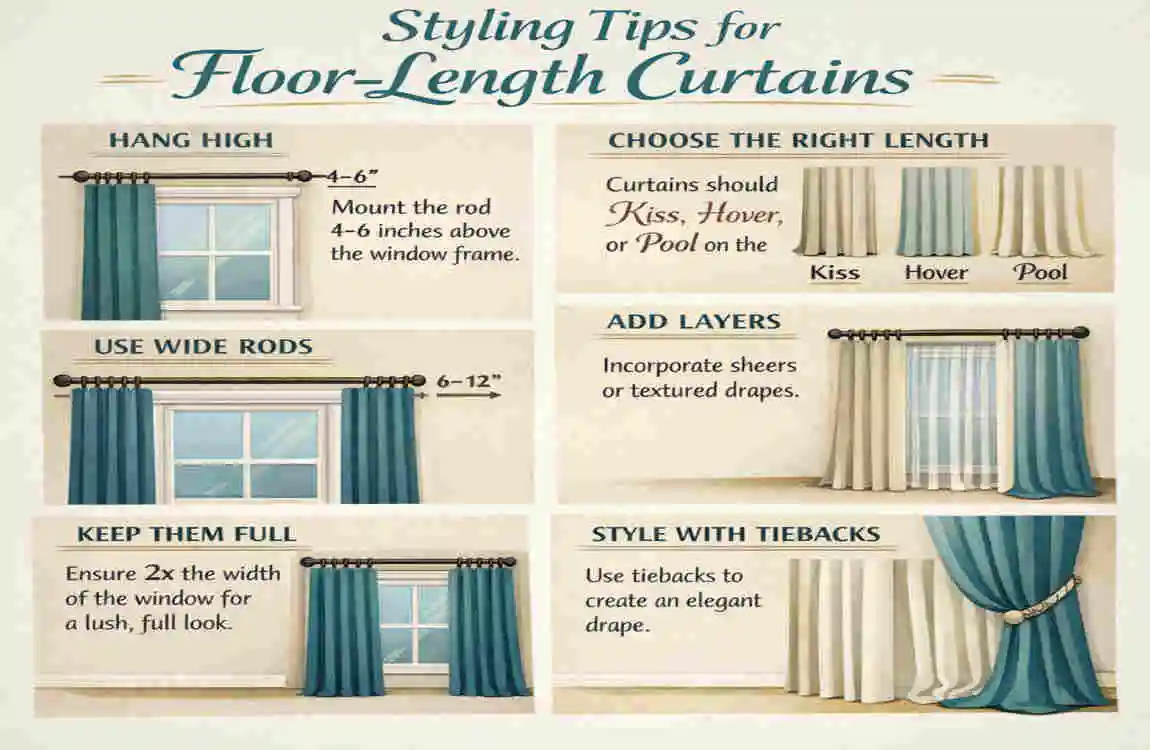
- Perfecting the Look: Adjust the fabric to create an even “break” or “hover” in line with your preferred style.
Alternatives to Floor-Length Curtains

Shorter Curtain Options
If floor-length curtains aren’t ideal for your space, consider these alternatives:
- Café Curtains: Cover only the lower half of the window, perfect for kitchens.
- Sill-Length Curtains: Stop at the window sill for a casual yet functional look.
- Apron-Length Curtains: Extend slightly below the sill to balance practicality and style.
Modern Alternatives to Curtains
For a contemporary twist, explore these options:
- Blinds and Shades: Ideal for minimalist interiors and small spaces.
- Sheer Panels: Provide privacy while allowing natural light to filter through.
Combining Curtains with Other Window Treatments
Layering is an excellent way to elevate your window treatments:
- Curtains + Blinds: Combine for added texture and versatility.
- Dual-Purpose Setups: Use blackout curtains with sheer panels for day-to-night functionality.
FAQs About Curtain Length
Should Curtains Always Touch the Floor?
The answer depends on your style preferences and the needs of your room. For a formal and cohesive look, floor-length curtains are ideal. However, in high-traffic or damp areas, shorter lengths may be more practical.
What’s the Best Length for Curtains in Small UK Homes?
In compact spaces, hovering-length curtains create the illusion of height while maintaining a clean and airy feel.
How Do I Maintain Floor-Length Curtains?
- Cleaning Tips: Vacuum regularly, and machine wash or dry-clean as per the fabric care instructions.
- Preventing Dust: Use tiebacks or keep curtains slightly off the floor to reduce accumulation.
| Aspect | Key Points |
|---|---|
| Should Curtains Touch the Floor? | Yes, for elegance and insulation; No, for easy maintenance and safety. |
| Common Curtain Lengths | Puddle-length, Break-length, Hovering-length, Floor-touching. |
| Best Fabrics | Velvet, thermal blackout (winter); Linen, cotton (summer). |
| Ideal Rooms | Living rooms, bedrooms (floor-touch); Kitchens, bathrooms (hover). |
| Measurement Tips | Measure from curtain rod to floor; allow slight break or hover. |
| Maintenance | Regular vacuuming, professional cleaning for heavy fabrics. |
| UK Climate Consideration | Use thermal curtains for insulation during colder months. |