If you have ever lived through a strong monsoon season, you already know how fast normal life can turn stressful. In cities like Lahore, one heavy downpour can fill streets, block drains, and push water where it does not belong. Suddenly, a toilet starts making strange sounds, a floor drain begins to smell bad, or water backs up into places that should stay dry. That is when many homeowners ask the same question: Can heavy rain cause home plumbing issues, or is this just bad luck?
The truth is simple. Heavy rain can strain your home’s plumbing system in several ways. It can overload drains, increase pressure in underground lines, flood sewer systems, and even weaken soil around your foundation. When that happens, small plumbing weaknesses become big problems very quickly.
The good news is that most of these problems are preventable. With a little planning before the storm, a few smart actions during heavy rain, and some long-term care, you can protect your home from backups, overflow, and costly repairs.
Can Heavy Rain Cause Home Plumbing Issues? Understanding the Main Culprits

Heavy rain affects more than your roof and yard.
When people think about rain damage, they usually picture leaking ceilings, soaked walls, or standing water outside. But rain can also create serious plumbing trouble below the surface. Your home’s pipes, drains, and sewer connections all work as a connected system. When one part gets overloaded, the pressure can spread through the rest of the system.
That is why the answer to can heavy rain cause home plumbing issues is not just yes, but yes in several different ways.
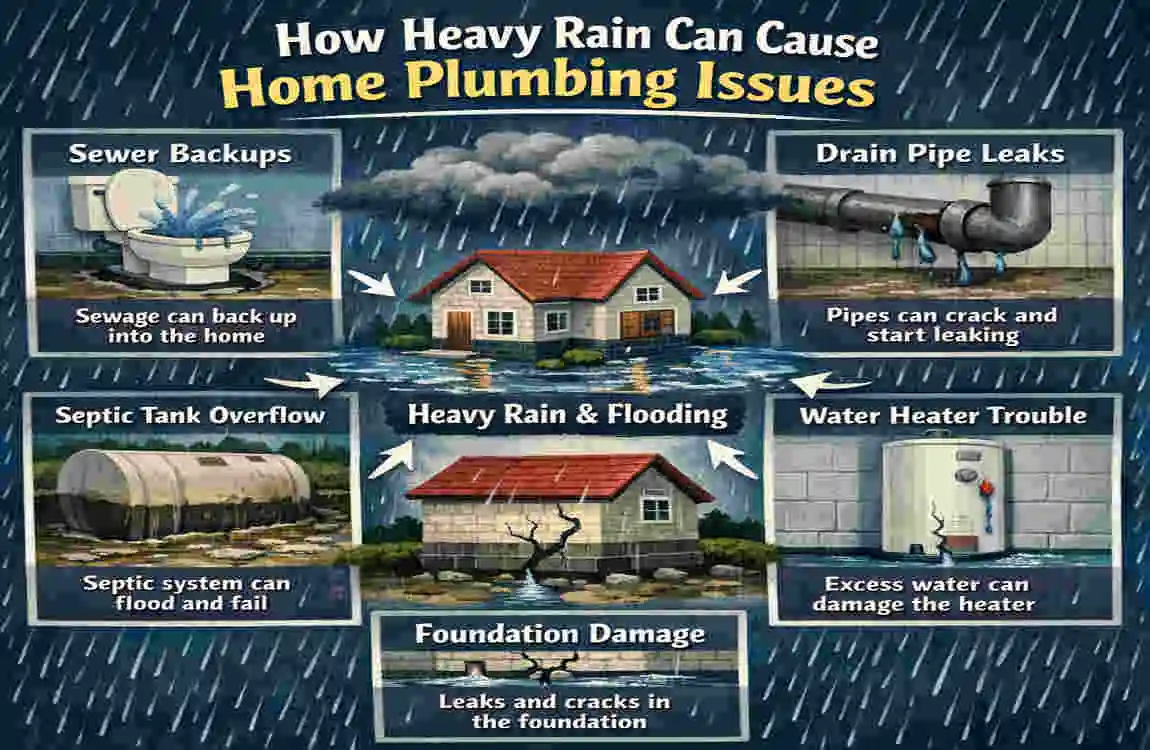
The main reasons rain creates plumbing trouble are:
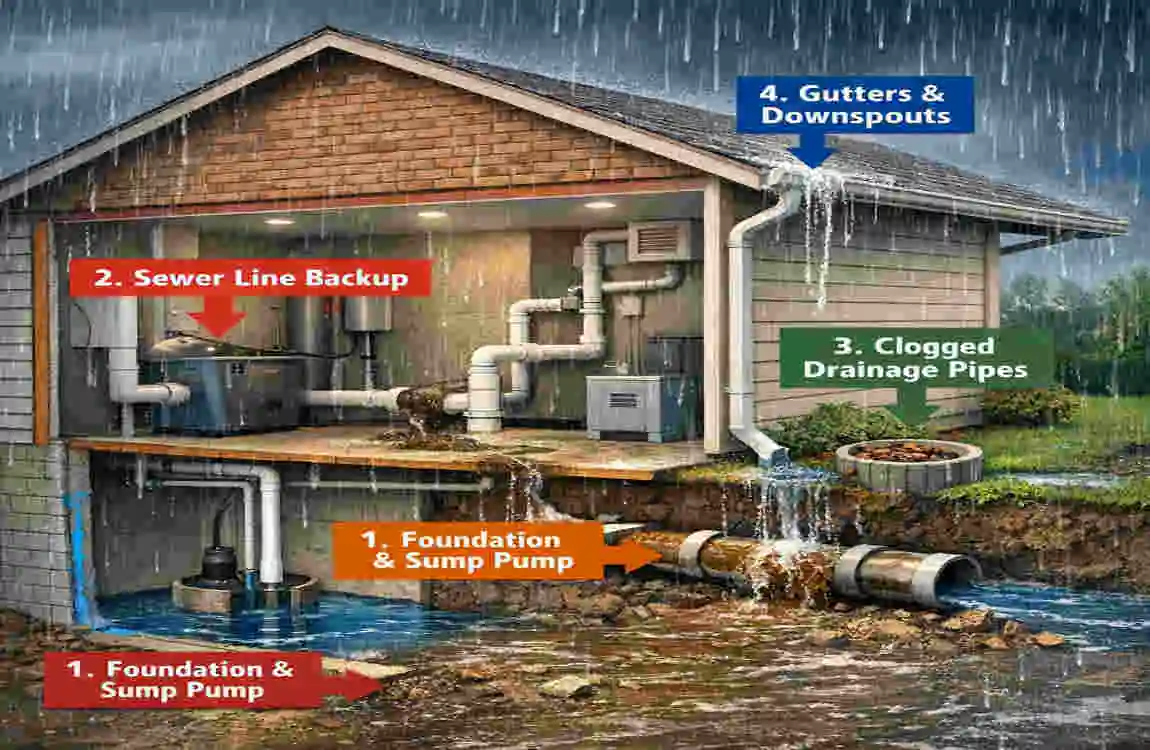
Here are the biggest causes:
- Overloaded sewer lines occur when too much rainwater enters the municipal system
- Clogged storm drains that cannot move water away fast enough
- Blocked gutters and downspouts that push water toward your house
- Soil movement around pipes and foundations after long periods of wet weather
- Tree root intrusion that becomes worse when the ground softens
When heavy rain continues for hours or days, these problems can build up fast. Water has to go somewhere. If drains cannot handle it, that water will look for the next easiest path, which may be inside your home.
Hydrostatic pressure: the hidden force behind many problems
One of the most common reasons heavy rain causes damage is hydrostatic pressure. That is a simple term for water pressure in the ground. When the soil becomes soaked, it pushes against basement walls, floor drains, and buried pipes.
If your plumbing system has even a tiny crack, weak seal, or old joint, that pressure can force water through it. Over time, this can lead to damp floors, sewer odors, or full backups.
This is one of the reasons homeowners should not ignore drainage issues around the house. What looks like a small puddle outside may be a warning sign of a bigger problem below ground.
Common triggers that make the problem worse
Before moving on, here is a quick list of the most common triggers:
- Heavy rain with poor drainage around the home
- Old or damaged sewer lines
- Gutters full of leaves and dirt
- Downspouts that drain too close to the foundation
- Clogged floor drains or outdoor grates
- Roots growing into underground pipes
If you understand these causes, you can take action before the storm does the damage. That is the real key to stopping rain-related plumbing problems early.
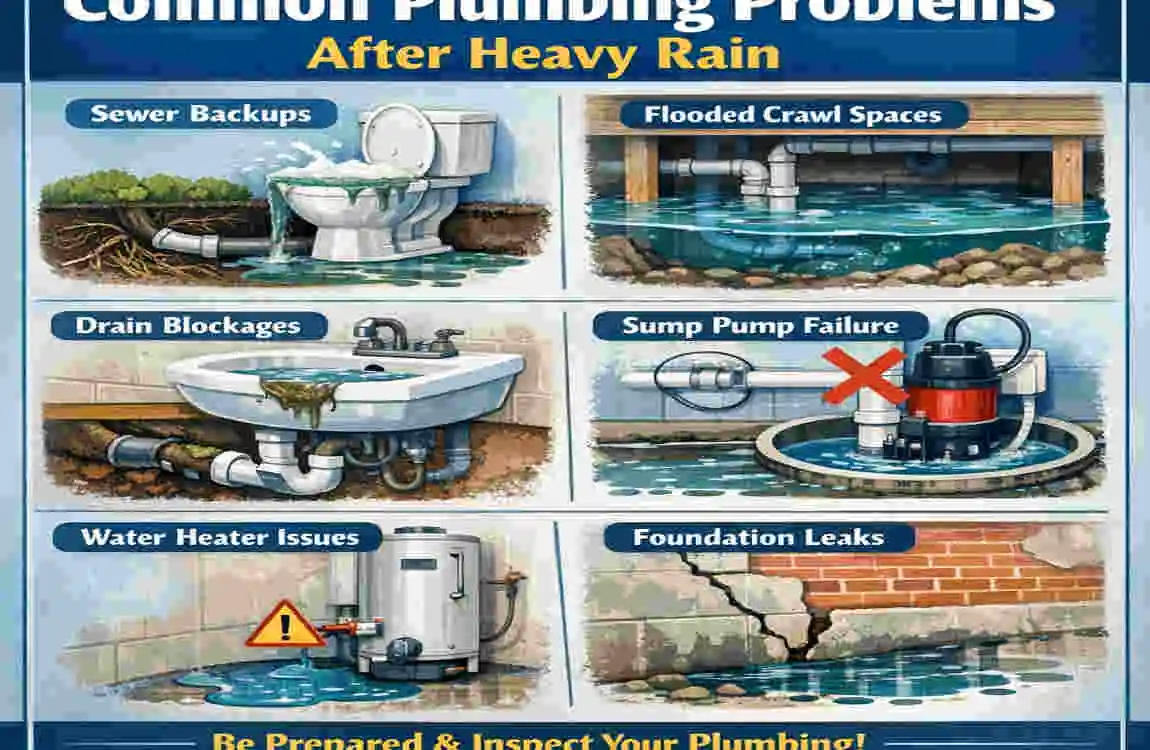
Common Rain-Induced Plumbing Failures in Homes
Not every plumbing issue looks the same.
When heavy rain hits, not every home reacts in the same way. Some homes experience slow drains. Others get full sewer backups. In some cases, the damage is not obvious at first, but it slowly grows over time.
That is why it helps to know the most common failures. If you have ever wondered if heavy rain can cause home plumbing issues in a real and practical way, this section shows exactly how it happens.
Sewer backups
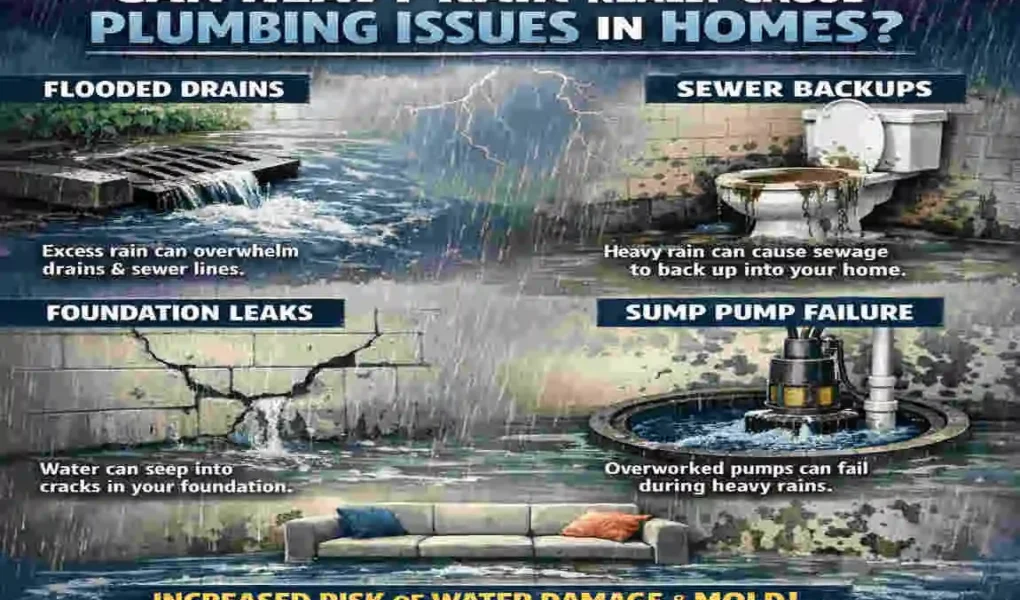
A sewer backup is one of the most stressful plumbing problems during heavy rain. It happens when the sewer system becomes overloaded, and wastewater starts moving in the wrong direction. Instead of leaving your home, it can come back through toilets, floor drains, or basement fixtures.
This problem is especially common in crowded urban areas where drainage systems already work hard during normal weather. When stormwater enters the same system, it can overwhelm the pipes quickly.
Drain overflow
Drain overflow often starts with something simple, like clogged gutters or a blocked yard drain. When rainwater cannot move away from your home, it begins to pool. That standing water can find its way into floor drains, laundry areas, or low spots around the house.
At first, this may seem minor. But repeated overflow can damage floors, walls, and even the structure of the home if ignored.
Pipe cracks and joint failures
Heavy rain also affects underground pipes. When the soil shifts, expands, or softens, old pipes can crack or loosen at the joints. This may not lead to a dramatic flood right away. Instead, you may notice small leaks, damp patches, or bad smells.
Over time, these small signs can become expensive repairs.
Sump pump failure
If your home has a sump pump, it plays a major role in keeping water out of basements and low areas. But sump pumps can fail during heavy rain if they are too small, blocked, old, or not properly maintained.
When that happens, water collects faster than the pump can remove it, and flooding becomes much more likely.
Quick comparison table
Plumbing Issue: Cause from Heavy Rain, Potential Cost (PKR)
Sewer Backup Overloaded municipal lines 20,000–50,000
Drain overflow, clogged gutters or downspouts , 10,000–30,000
Pipe Cracks , Ground shifting, and soil pressure 15,000–40,000
Sump Pump Failure : Power loss, blockage, or wear 12,000–35,000
Basement Seepage Water pressure around foundation 18,000–45,000
These numbers can change depending on the home and the damage, but the point is clear: prevention is much cheaper than repair.
7 Signs Your Plumbing Is at Risk During Heavy Rain

Watch for these warning signs early.
Many homeowners wait until water is already backing up before they call for help. That is understandable, but it is also risky. Plumbing systems usually give warning signs before a major failure.
If you are asking, can heavy rain cause home plumbing issues soon, these signs often give you the answer before the damage becomes serious.
Gurgling toilets
If your toilet makes strange bubbling or gurgling sounds during rain, it may be a sign that air is trapped in the drain line. This can happen when the sewer system is under pressure.
Do not ignore this sound. It often means water is not moving as it should.
Slow drains
A slow sink, shower, or floor drain is not always just a small clog. During heavy rain, it can mean your drainage system is struggling with extra pressure or a partial blockage.
If several drains slow down at the same time, the problem may be larger than a simple clog.
Bad smells from drains
A foul sewer smell is a warning sign that something is wrong with the flow of waste or water. Rain can push sewer gases back up through weak spots in the plumbing system.
If you smell sewage during storms, take it seriously.
Water pooling near the foundation
When water gathers around your home after rain, it may point to poor grading, clogged downspouts, or a drainage issue. Over time, this can lead to seepage and cracking.
Even small puddles should not be dismissed if they keep returning.
Wet spots in the yard
Wet areas in your yard, especially if the rest of the ground is dry, can signal a leaking underground pipe or poor drainage. Heavy rain can make these spots more noticeable.
If the wet patch appears close to the sewer line, it may be a sign of a bigger issue.
Unusual toilet water movement
Sometimes the toilet water may rise, bubble, or drop oddly during heavy rain. That often means pressure changes in the sewer line are affecting your home.
This is a classic sign that your plumbing is under stress.
Water in floor drains or basement corners
If water starts showing up in places that should stay dry, heavy rain may be pushing water through weak points in your home’s drainage system.
This can happen quickly, especially in older homes or homes with poor waterproofing.
A simple action step
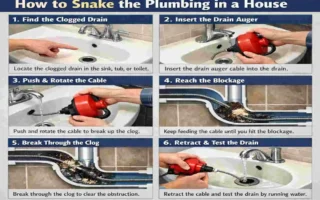
If you notice any of these signs, use a plumbing snake for a quick check if you are comfortable doing so. This may help clear a small blockage before it becomes a bigger problem. If the issue continues, call a professional before the next storm.
10 Proven Ways to Prevent Plumbing Issues During Heavy Rain
Preparation matters more than panic.
The best time to deal with rain-related plumbing problems is before the storm, not during it. Most serious issues can be reduced with a few smart habits and simple maintenance steps.
Let’s go through 10 proven ways to reduce the risk of damage and answer the question can heavy rain cause home plumbing issues in the safest way possible: by stopping them early.
Preparation Steps Before the Storm Hits
Inspect and clean gutters and downspouts
Your gutters and downspouts are your home’s first line of defense against rainwater buildup. If they are clogged with leaves, dirt, or trash, water will overflow and run down walls or collect near the foundation.
That can lead to many problems, including basement seepage and soil erosion.
How to clean them properly:
- Wear gloves and remove debris from the gutter by hand.
- Flush the gutter with water to check the flow.
- Make sure the downspouts send water away from the house.
- Clear any blockages at the bottom opening.
- Repeat after every major storm or at least before monsoon season.
A clean gutter system may sound basic, but it can save you from major repair costs.
install gutter guards
If your home gets a lot of leaves or debris, gutter guards can be a smart upgrade. They help keep larger material out while still letting rainwater flow through.
This is especially useful if you do not want to clean your gutters every few weeks. Gutter guards do not solve every problem, but they reduce the chance of blockages that lead to overflow.
Test your sump pump
If your home has a sump pump, test it before the rainy season begins. Pour a bucket of water into the sump pit and make sure the pump turns on and sends water away properly.
If the pump does not start, makes a strange noise, or drains slowly, get it checked right away.
A sump pump that fails during heavy rain can quickly turn a manageable situation into a serious flood.
During Heavy Rain: Quick Fixes to Avoid Backups
Reduce water use inside the home
During heavy rain, try to reduce the amount of water your home sends into the plumbing system. Avoid running multiple water-heavy tasks at the same time.
That means:
- Taking shorter showers
- Avoiding laundry if possible
- Delaying dishwashing loads
- Not flushing toilets unnecessarily
Why does this help? Because if the sewer system is already under pressure, less water in your home means less chance of a backup.
Use drain screens and strainers
Drain screens help keep hair, dirt, food scraps, and debris out of sinks and floor drains. During storms, even small bits of blockage can become a bigger problem if the system is already stressed.
This is a low-cost habit that can make a real difference. It is simple, but it works.
Watch municipal warnings and drainage updates
If you live in a city where storm alerts are issued, pay close attention to them. Flood warnings, sewer alerts, and drainage notices can help you prepare before conditions get worse.
If local authorities warn that drains are under pressure, take that seriously. It may be the difference between a dry home and a flooded one.
Long-Term Prevention for Lahore Homes and Beyond
install a backwater valve
A backwater valve is one of the best tools for stopping sewage from flowing backward into your home. It allows waste to move out of the house but blocks it from coming back in.
This is especially helpful in areas where sewer lines are known to overflow during heavy rain.
If you live in a place with frequent monsoon flooding, this upgrade is worth serious consideration.
Improve yard drainage with French drains
A French drain helps move water away from areas where it tends to collect. It is basically a gravel-filled trench with a pipe that redirects water to a safer place.
This can be very useful if water often gathers near your foundation, driveway, or side yard.
Better drainage outside means less pressure on your plumbing system inside.
Add tree root barriers
Tree roots naturally search for water. When soil becomes wet after heavy rain, roots may spread closer to pipes and eventually break into them.
Root barriers help keep trees from damaging underground plumbing lines. This is a long-term solution that can protect older homes especially well.
Schedule annual professional inspections
A yearly inspection can catch small problems before they turn into major damage. A plumber can check pipe condition, drain performance, fixture seals, and potential weak spots.
This is one of the smartest investments you can make if you live in a storm-prone area.
Step-by-step: how to clean downspouts
Here is a simple method you can use before the rainy season:
- Detach the lower part of the downspout if needed.
- Remove visible leaves and dirt.
- Run water through the pipe to check the flow.
- Use a hose or flexible tool to clear deeper blockages.
- Reattach and test again.
This small task can prevent overflow around the roof and walls.
Long-term prevention table
DIY PreventionPro ServiceAvg. Savings (PKR)
Gutter cleaning , full pipe jetting 5,000–15,000
Sump pump testing , Backflow preventer install 10,000+
Drain screen cleaning , Sewer line inspection , 8,000–20,000
Yard drainage check , French drain design 15,000–30,000
The main idea is easy to remember: small maintenance now can prevent expensive repairs later.
DIY vs. Pro: When to Call a Plumber

Know your limits before the problem grows.
Some plumbing issues are simple enough to handle on your own. Others need a trained plumber. If you wait too long, a small fix can become an emergency.
That is why it helps to know when to do it yourself and when to get professional help.
What you can usually do yourself
You can often handle:
- Cleaning gutters
- Checking drain screens
- Testing a sump pump
- Looking for visible puddles or wet spots
- Reducing water use during storms
These tasks are simple, affordable, and very useful.
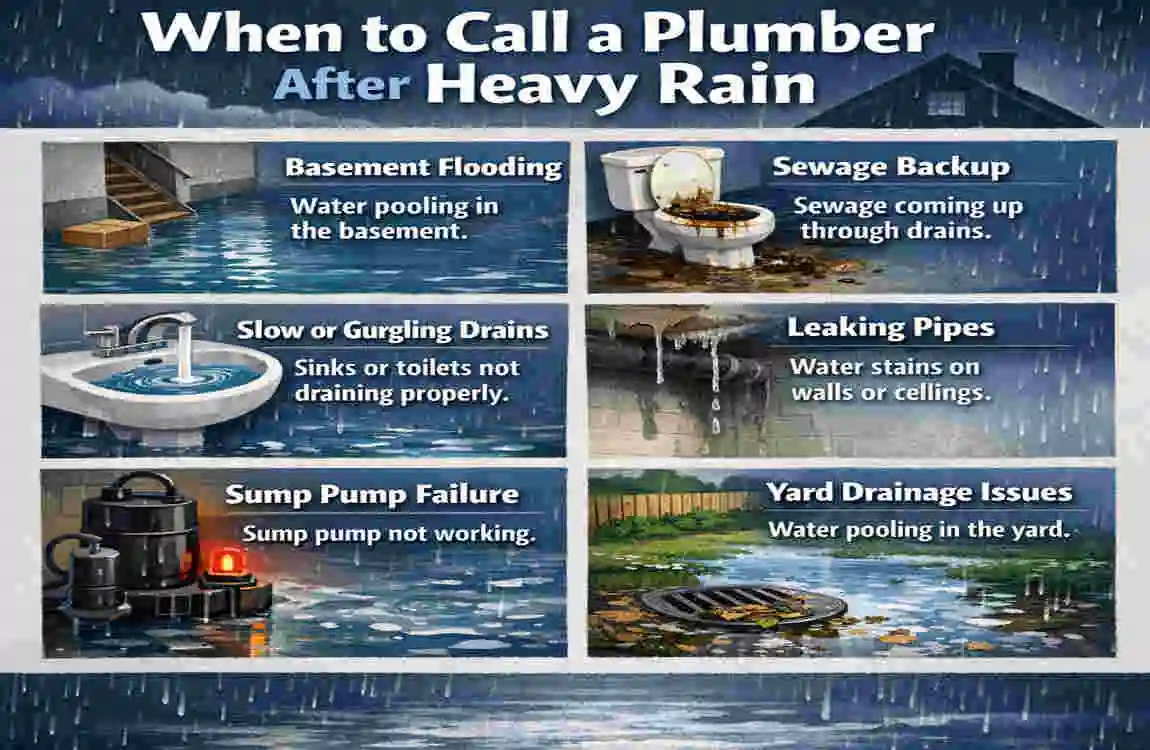
When you should call a plumber
Call a professional if you notice:
- Sewer smell inside the house
- Repeated drain backups
- Gurgling toilets that do not stop
- Water rising from floor drains
- Wet walls or foundation seepage
- A sump pump that fails repeatedly
These problems often point to a deeper issue in the plumbing system. Trying to fix them without the right tools can make the damage worse.
Why professional help can save money
A plumber can use special tools to inspect lines, clear blockages, and find hidden damage. This can prevent repeat problems during the next storm.
Here is a simple comparison table:
DIY PreventionPro ServiceAverage Savings (PKR)
Gutter cleaning , full pipe jetting 5,000–15,000
Sump pump test , Backflow preventer installation 10,000+
Drain screen cleaning , Sewer camera inspection 8,000–20,000
Checking for wet spots , Underground leak repair 12,000–35,000
If you are unsure, it is usually safer to call a plumber before the rain gets worse.
Real-Life Case Studies and Expert Insights
How Lahore homeowners beat heavy rain plumbing nightmares
Many homeowners only think about plumbing after a problem appears. But those who prepare early often avoid the worst damage.
For example, one family in Lahore noticed that their backyard always flooded after heavy rain. Instead of waiting for a disaster, they cleaned the gutters, added a drain screen, and had a plumber check the main sewer line before monsoon season. When the next storm came, their home stayed dry while nearby houses struggled with backups.
In another case, a homeowner had repeated toilet gurgling every rainy season. After an inspection, the plumber found a partial blockage in the drainage line and a weak seal near the connection point. A small repair fixed the issue before it turned into a flooded bathroom.
These stories show a simple truth: if you act early, you reduce both the damage and the stress.
What experienced plumbers often say
Plumbers who deal with monsoon damage often point to the same lesson: most rain-related plumbing problems do not happen out of nowhere. They build up slowly.
The most common issues are usually preventable with regular cleaning, drainage checks, and timely repairs. In many homes, the real problem is not the rain itself. It is the weak point the rain exposes.
That is why the question is not only can heavy rain cause home plumbing issues, but also what you can do to stop it before it starts.
The biggest lesson from the experts
The biggest takeaway is this: your plumbing system needs support during storms. It is not enough to hope for the best. You need to prepare the home so water has a safe place to go.
That is what separates a dry house from a damaged one.
FAQs
Can heavy rain cause home plumbing issues in apartments?
Yes. Apartments can still face plumbing problems during heavy rain, especially if shared sewer lines or balcony drains become blocked. Water can back up through common drainage points, so residents should keep balcony and bathroom drains clear.
How much does backwater valve installation cost in Lahore?
In many cases, backwater valve installation can cost around 15,000 to 25,000 PKR, depending on the pipe layout, labor, and parts needed. Older homes may cost more if extra repairs are required.
What is the fastest way to stop rain-induced backups?
The fastest short-term step is to stop using water inside the home and check for a blocked drain or cleanout. If the backup is severe, call a plumber right away. A backwater valve helps prevent future problems.
Does home insurance cover heavy rain plumbing damage?
Sometimes, but not always. Coverage depends on the policy and the cause of the damage. Some plans may cover sudden water damage, while others exclude flooding or long-term drainage issues. Always check your policy details.
How often should I inspect plumbing before monsoon season?
A good rule is to inspect your plumbing twice a year, with one inspection before the rainy season. If your home is older or has drainage issues, you may need checks more often.