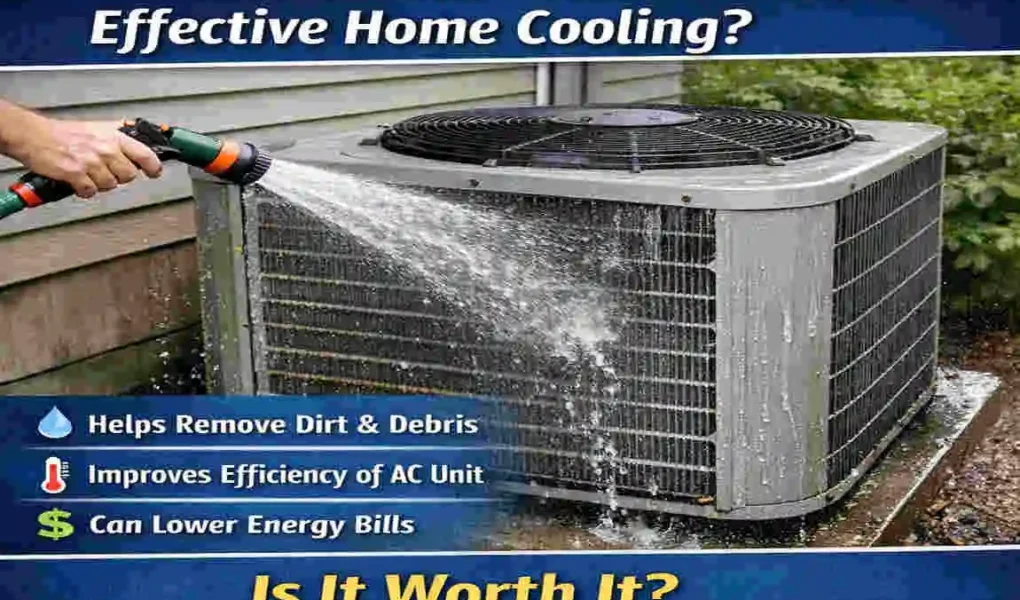
It is the middle of July, and the afternoon sun is beating down on your roof mercilessly. You walk into your living room expecting a wave of crisp, refreshing air, but instead, the house feels uncomfortably warm. You check your thermostat, and it is struggling to reach your desired temperature. Panic lightly sets in as you listen to your outdoor air conditioning unit humming loudly, working overtime to battle the intense summer heat. In a moment of desperation, you remember a trick your neighbor mentioned or a video you saw online. You grab your trusty garden hose, march outside, and point it directly at the metal box humming in the sun.
The way you apply the water, the current outdoor temperature, the humidity levels in your area, the mineral content of your tap water, and the overall condition of your cooling system all play a massive role in the outcome. **What seems like a simple, harmless act actually intersects with principles of thermodynamics, material science, and HVAC engineering. The difference between helping your system and accidentally destroying it often comes down to understanding a handful of key variables. This comprehensive guide walks you through the science, the benefits, the serious risks, and the smarter alternatives so you can make a truly informed decision before ever picking up that hose.
What an AC Condenser Does
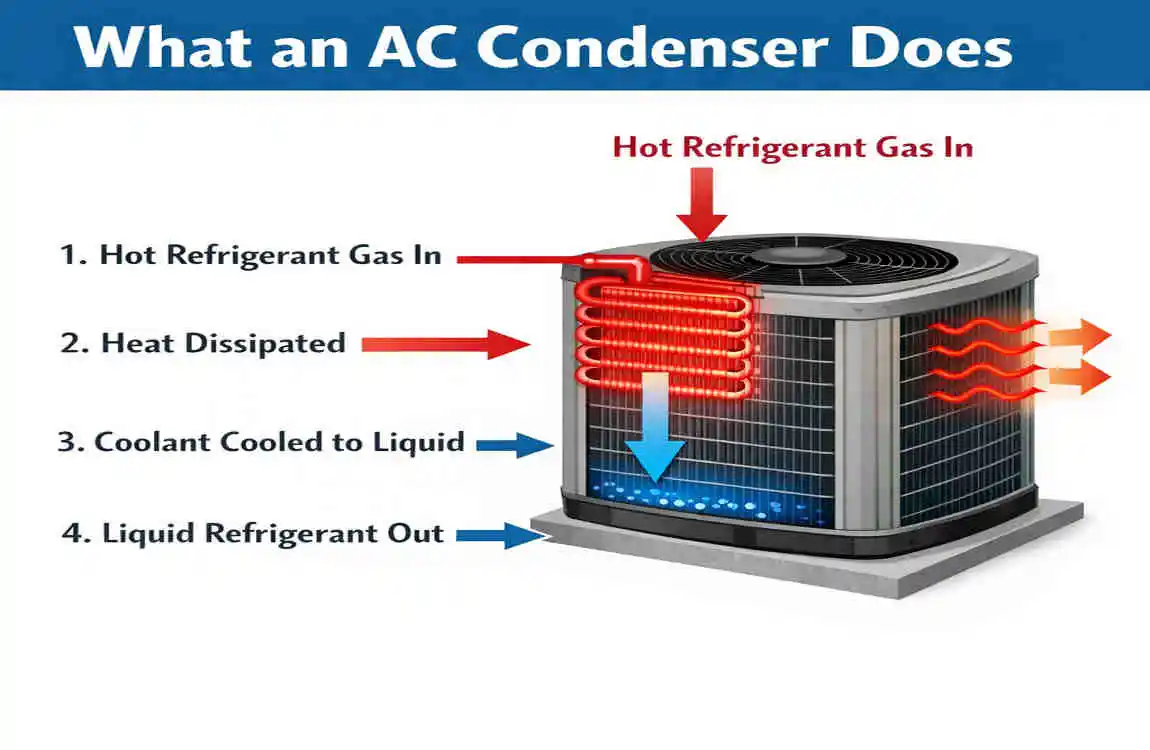
To understand whether water will help or harm your air conditioner, we first need to understand what that big metal box sitting in your backyard actually does. Most homeowners simply call it “the AC,” but in the HVAC world, it is known as the condenser unit. **It is one half of a split-system air conditioner—the outdoor half—and it houses some of the most critical and expensive components in your entire cooling setup, including the compressor, the condenser coil, the condenser fan motor, and various electrical relays and capacitors. Understanding how each of these parts works together will give you a much clearer picture of why water can sometimes help and sometimes cause catastrophic damage.
The Heart of Your Cooling System
Your central air conditioning system is essentially a heat transportation machine. It does not actually “create” cold air out of nothing. Instead, it absorbs the unwanted heat from inside your home and pumps it outside.
The indoor part of your system (the evaporator) acts like a giant sponge, soaking up the heat and humidity from your living room, bedrooms, and kitchen. This heat is transferred into a chemical refrigerant, which travels through copper pipes out to the condenser unit in your yard. The condenser’s primary job is to take that hot, highly pressurized refrigerant gas and release its heat into the outdoor air. Once the heat is dumped outside, the refrigerant cools, turns back into a liquid, and heads back inside to repeat the cycle.
**This process is known as the refrigeration cycle, and it repeats continuously as long as your thermostat is calling for cooling. The refrigerant used in modern systems—most commonly R-410A or the newer R-32—is specifically engineered to change states between liquid and gas at temperatures that make residential cooling practical. When the refrigerant arrives at the condenser as a superheated, high-pressure gas (typically between 150°F and 200°F), it must shed an enormous amount of heat energy before it can condense back into a liquid. The condenser coil and fan are designed to facilitate exactly this process, and anything that interferes with it—or enhances it—will have a direct impact on the overall performance of your air conditioning system.
To support this continuous cycle, many systems rely on stable electrical input, which is why components like a voltage converter can become relevant in certain setups, especially in regions with fluctuating power supply or when using imported HVAC equipment. Maintaining consistent voltage helps ensure the compressor and fan motors operate efficiently, preventing unnecessary strain that could otherwise reduce cooling performance.
The Magic of Heat Transfer
For efficient heat transfer, the condenser relies on a few critical components. Inside that metal cage, you will find miles of thin metal fins and coils, along with a massive fan. The fan sucks outdoor air through the hot metal coils. As the relatively cool outdoor air passes over the scorching coils, the heat from the refrigerant transfers into the air, which is then blown out of the top of the unit.
Think of it like blowing on a hot spoonful of soup. The air you blow over the liquid carries away the heat. But for this process to work effectively, the coils must be able to “breathe.” **The aluminum fins that surround the copper coils are spaced incredibly close together—typically 12 to 20 fins per inch—to maximize the total surface area exposed to the airflow. This massive surface area is what allows the system to dump tens of thousands of BTUs (British Thermal Units) of heat energy per hour. In a typical 3-ton residential AC unit, the condenser must reject roughly 36,000 BTUs of heat from your home plus the additional heat generated by the compressor itself, totaling upward of 42,000 to 48,000 BTUs per hour. Any reduction in the condenser’s ability to transfer that heat—whether caused by dirt, damage, or environmental factors—immediately reduces the system’s cooling capacity and increases energy consumption.
Why Airflow and Clean Coils Matter
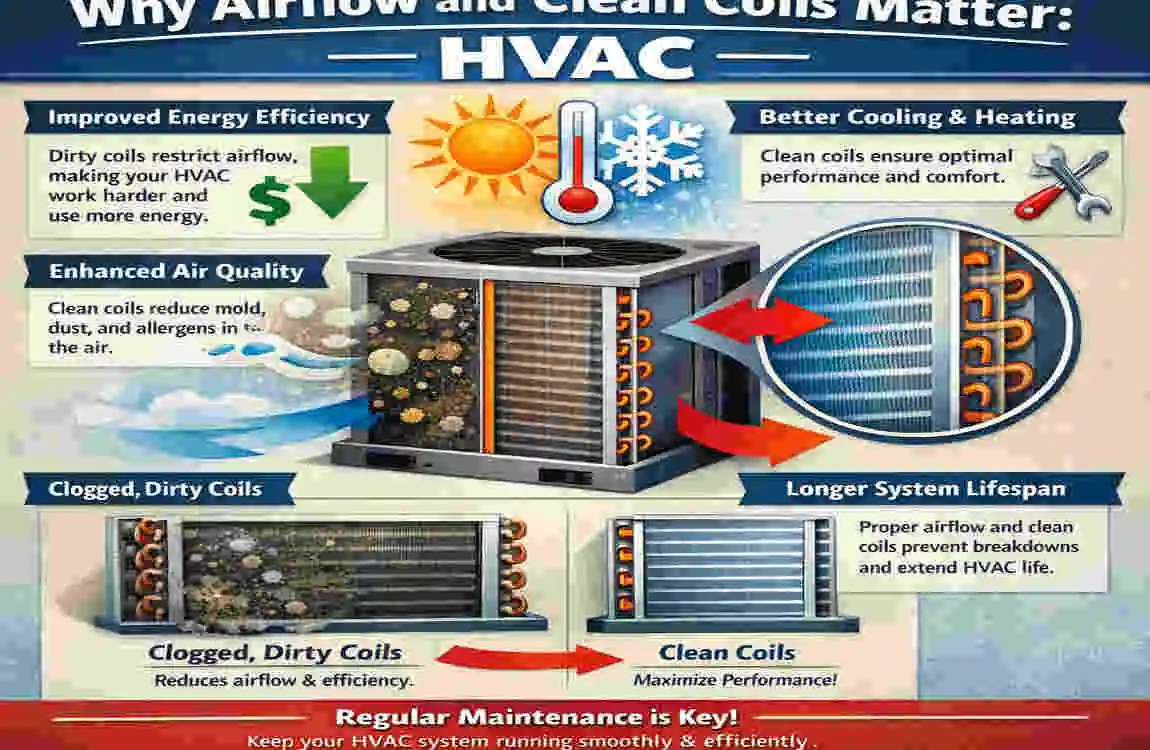
This brings us to the most important factor in your AC’s performance: airflow. If your condenser coils are caked in dirt, wrapped in a blanket of cottonwood seeds, or smothered by overgrown bushes, the heat cannot escape. The dirt acts as a thick, insulating sweater on a summer day.
When the condenser struggles to release heat, the whole system backs up. Your compressor has to work twice as hard, drawing more electricity and driving up your utility bills. Eventually, the indoor air stops feeling cold, and your house feels warmer than you expect. This is usually the exact moment homeowners grab the garden hose, hoping to force the heat away with cold water. **What many people do not realize is that a dirty condenser does not just reduce comfort—it can also cause dangerous operating conditions. When the condenser cannot reject heat fast enough, the head pressure (the pressure on the high side of the refrigeration system) climbs dramatically. Excessive head pressure forces the compressor to draw more amperage, which generates more internal heat. Over time, this elevated temperature breaks down the lubricating oil inside the compressor, leading to premature mechanical failure. In extreme cases, persistently high head pressure can trip a safety switch and shut the system down entirely, or worse, cause the compressor to seize—a repair that typically costs between $1,500 and $3,000 for parts and labor alone. This is why maintaining clean coils is not just about comfort; it is about protecting the single most expensive component in your entire HVAC system.
Does Spraying AC Condenser with Water Help Cool House?
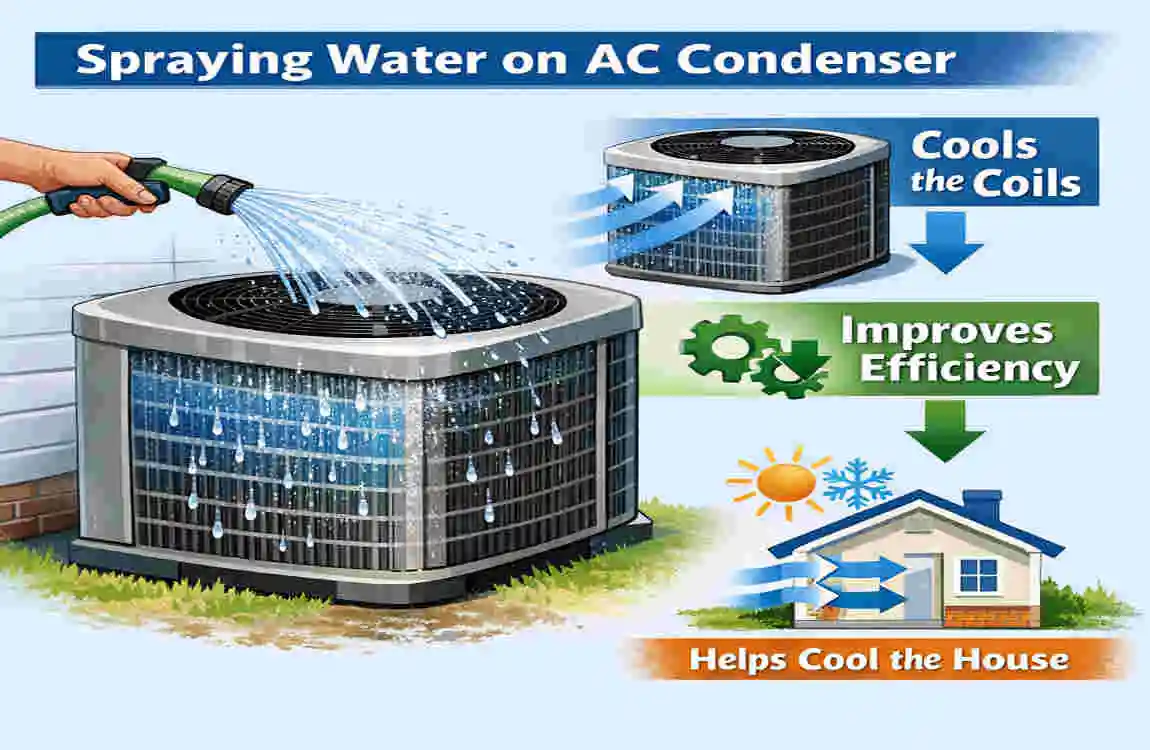
Now we arrive at the core question: does spraying the AC condenser with water help cool the house? To get to the bottom of this, we have to look past the myths and focus on the actual science of thermodynamics and heat transfer.
Understanding Evaporative Cooling
When you spray water onto the hot metal coils of your AC condenser, you are triggering a process known as evaporative cooling. This is the same biological mechanism your body uses when you sweat.
As water hits the hot surface of the condenser coils, it rapidly absorbs the heat from the metal. For the liquid water to turn into a vapor (evaporate), it requires a significant amount of thermal energy. It steals this energy directly from the hot refrigerant inside the coils. As water evaporates into the air, it carries heat away, drastically lowering the coils’ temperature almost instantly. **To put this into perspective, the latent heat of vaporization of water is approximately 970 BTUs per pound. That means every single pound of water that evaporates off your condenser coils removes nearly 1,000 BTUs of heat from the system. Compare that to the air passing over the coils, which only absorbs heat through sensible heat transfer—a far less efficient process. This is why water-based evaporative cooling can produce such a dramatic, albeit temporary, drop in condenser temperature. In practice, a fine mist of water can lower the ambient air temperature around the condenser by 10°F to 20°F, which significantly increases the temperature differential between the hot refrigerant and the surrounding air, making heat rejection faster and easier.
Reducing Strain on Your Compressor
When the coils drop in temperature, the magic really begins. The refrigerant inside the coils cools much faster than it would if it were relying solely on the hot summer air blowing across it. Because heat is being removed from the system more efficiently, the pressure inside the system drops.
With lower pressure to fight against, the heart of your AC unit—the compressor—does not have to work nearly as hard. It can pump the refrigerant back into the system with less physical and electrical effort. When the compressor works less, your system draws less electricity, and the air coming out of your indoor vents can feel noticeably crisper and cooler. **The relationship between condensing temperature and compressor workload is well-documented in HVAC engineering. For every 1°F reduction in condensing temperature, the system’s energy efficiency improves by approximately 1% to 2%. So if misting the condenser lowers the effective condensing temperature by 10°F, you could theoretically see a temporary efficiency improvement of 10% to 20%. Additionally, a lower condensing pressure means the compressor motor generates less internal heat and experiences less mechanical wear on its bearings, pistons, or scroll elements. Over the short term, this translates into cooler supply air temperatures, faster cool-down times in your home, and reduced risk of the compressor tripping its thermal overload protector—a common problem on brutally hot days when outdoor temperatures exceed 100°F.
What the Research Shows About Performance Gains
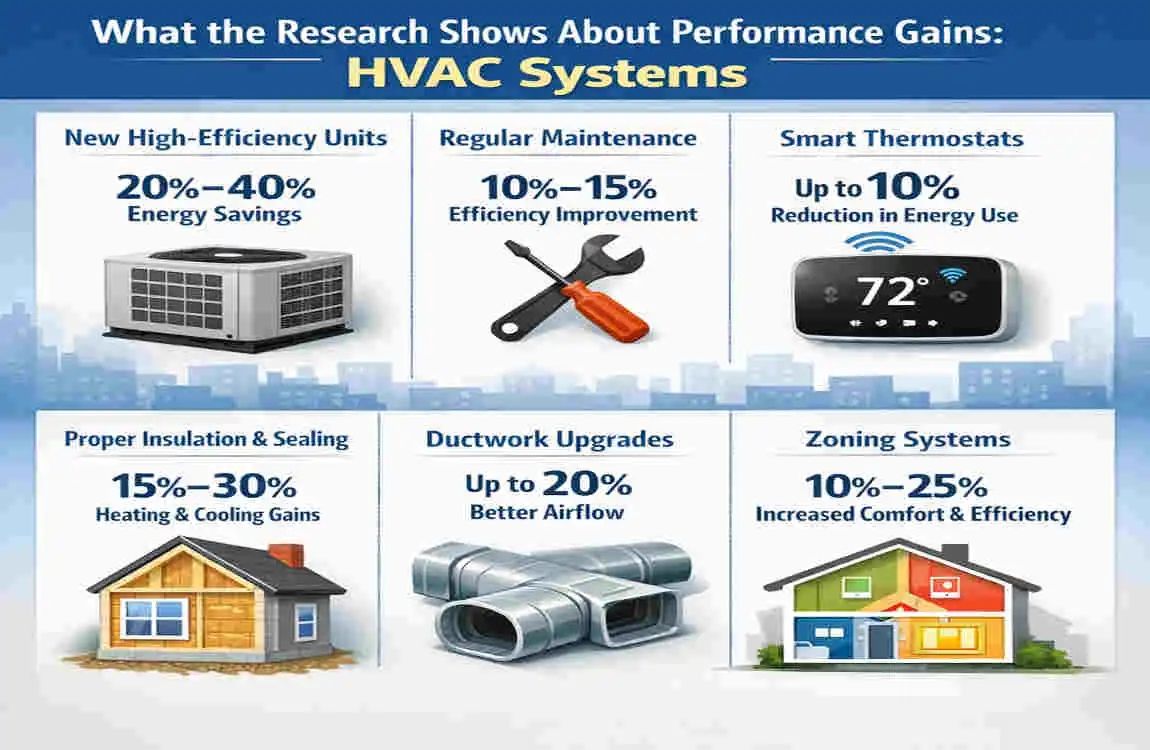
This isn’t just a backyard myth; there is actual science backing it up. Various engineering studies and HVAC performance tests have shown that misting a hot condenser coil with water can lead to measurable short-term performance gains.
During these tests, technicians recorded drops in electrical consumption and in overall operating pressure as the water evaporated. In a perfectly controlled environment, evaporative cooling undeniably improves heat transfer. However, a residential backyard is not a controlled laboratory, which is why this trick comes with a massive list of caveats. **Commercial and industrial HVAC systems have actually embraced this principle for decades. Pre-cooling systems—sometimes called condenser misting systems or evaporative pre-coolers—are widely used in data centers, large commercial buildings, and industrial plants to boost the efficiency of rooftop air conditioning units during peak heat. These commercial systems use purified or softened water, precisely calibrated nozzles, and automated controls to deliver the exact right amount of mist without over-saturating the coils. The key difference between these professional systems and a homeowner with a garden hose is the level of precision and water quality control. In a laboratory setting, researchers have documented COP (Coefficient of Performance) improvements of 15% to 30% using evaporative pre-cooling on condenser coils. But those results assume ideal water quality, perfect mist droplet size, optimal humidity conditions, and zero mineral contamination—conditions that are virtually impossible to replicate in a typical residential setting.
When Spraying Water Works Best
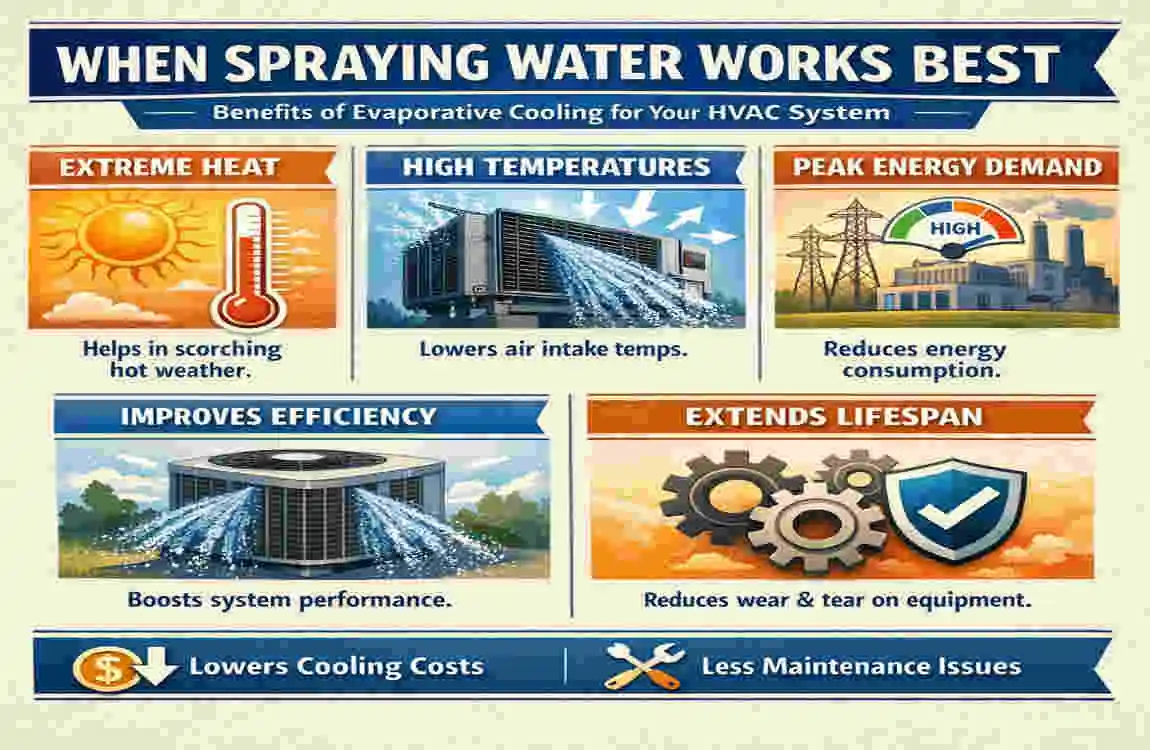
If you are going to use the water-spraying method, you need to understand that it is heavily dependent on the weather and your technique. It is not a magical cure-all for every sweltering day.
The Perfect Weather Conditions: Hot and Dry
For evaporative cooling to work, the water actually has to evaporate. Therefore, this trick is incredibly effective in hot, arid climates. If you live in a desert region like Arizona, Nevada, or parts of Southern California, the air is incredibly dry.
When you spray water on a hot AC condenser in an environment with very low humidity, the dry air sucks the moisture up immediately. The rapid evaporation pulls the heat away from the coils at an astonishing rate, giving your system a massive, albeit temporary, sigh of relief. **The technical measure that determines how effective evaporative cooling will be is the “wet-bulb depression”—the difference between the dry-bulb temperature (the standard air temperature you see on a thermometer) and the wet-bulb temperature (the lowest temperature air can reach through evaporation alone). In Phoenix, Arizona, on a typical July afternoon, the dry-bulb temperature might be 110°F while the wet-bulb temperature is only 70°F, giving a wet-bulb depression of 40°F. That is a tremendous amount of cooling potential. By contrast, in Houston, Texas, where the dry-bulb might be 95°F and the wet-bulb 80°F, the wet-bulb depression is only 15°F—meaning there is far less room for evaporative cooling to make a meaningful impact. As a general rule of thumb, if the relative humidity in your area is consistently below 40%, evaporative misting on a condenser can provide noticeable performance gains. Above 60% humidity, the returns diminish rapidly, and above 80%, the technique is essentially useless.
The Power of a Fine Mist
How you apply the water matters just as much as the weather. Dumping a massive bucket of water on the unit or blasting it with a high-pressure jet is completely counterproductive.
To maximize evaporative cooling, you want to create as much surface area for the water as possible. A very fine, gentle mist is the ultimate way to achieve this. Tiny water droplets evaporate much faster than large puddles. When a fine mist settles onto the aluminum fins, it flashes into vapor almost instantly, carrying away the maximum amount of heat. **The ideal droplet size for condenser misting is typically between 10 and 30 microns—so small that the droplets are nearly invisible and feel like a cool fog rather than a spray. At this size, each droplet has an enormous surface-area-to-volume ratio, which means nearly all of the water evaporates before it even has a chance to pool or drip off the fins. By contrast, when you use a standard garden hose on a “jet” or “stream” setting, the droplets can be hundreds of times larger. These oversized droplets tend to splash off the coils, pool at the base of the unit, and run off into the ground without ever evaporating—wasting water and providing minimal cooling benefit. If you are serious about misting, consider purchasing an inexpensive outdoor misting kit designed for patios. These kits use brass or stainless-steel nozzles that produce ultra-fine droplets and can be temporarily clipped near (but not touching) the condenser intake to create a continuous cooling curtain of mist.
Timing and Repetition for Maximum Effect
You should also keep your expectations realistic. Misting your condenser once at 1:00 PM won’t keep your house cool until midnight. The cooling effect only lasts as long as the water is actively evaporating.
Once the coils dry off, the system returns to its normal operating temperature, and the compressor resumes working just as hard as before. Some homeowners who swear by this trick install automated misting systems that release a tiny mist every few minutes during the hottest part of the afternoon. While this provides a continuous benefit, it introduces a whole new set of risks that we will discuss shortly. **The peak demand window for most residential air conditioning systems falls between approximately 2:00 PM and 6:00 PM, when outdoor temperatures hit their daily maximum and the sun’s angle maximizes heat absorption on west-facing walls and roofs. If you are going to experiment with misting, this is the window where you will see the greatest benefit. Misting in the early morning or late evening, when temperatures are already moderate, will produce negligible results because the condenser is not under significant thermal stress to begin with. Additionally, be mindful that your AC system cycles on and off throughout the day. Spraying the condenser while the unit is in its “off” cycle is completely pointless because the refrigerant is not flowing and no heat is being rejected. Ideally, you should only mist while the compressor is actively running, which you can verify by listening for the distinctive hum of the compressor motor or watching the fan spin at the top of the unit.
When It Won’t Help Much

While the science of evaporative cooling is sound, there are plenty of scenarios where spraying your AC condenser with water is a complete waste of time—and might even make your situation worse.
The Problem with High Humidity
If you live in Florida, Texas, or anywhere along the humid coast, you can practically put the garden hose away right now. In environments with high humidity, the air is already saturated with moisture. It is like trying to dry a wet spill with a towel that is already soaked.
When you spray water on your AC condenser on a muggy, humid day, the water has nowhere to go. It sits on the coils, refusing to evaporate. Because there is no evaporation, there is no cooling effect. You simply end up with a wet, hot air conditioner. **In fact, adding water to the condenser in a high-humidity environment can actually make performance slightly worse. When water sits on the coils without evaporating, it forms a film that partially blocks the airflow between the tightly packed aluminum fins. This water film acts as an additional barrier to heat transfer because the air must now push through a layer of stagnant moisture to reach the hot metal surfaces. Furthermore, the standing water increases the local humidity around the condenser even further, reducing the already-slim temperature differential that drives heat rejection. In regions like the Gulf Coast, where summer relative humidity routinely exceeds 75% to 90%, the air simply cannot absorb any more moisture, making evaporative cooling techniques practically ineffective. Homeowners in these climates are far better off investing in proper airflow maintenance, shade structures, and professional coil cleaning rather than trying to fight physics with a garden hose.
Dirty Units Turning into Mud Baths
We mentioned earlier that dirt and debris are the enemies of airflow. If your AC condenser has not been cleaned in a few years, it is likely coated in a fine layer of dust, pollen, and yard dirt.
If you spray a dirty unit with water without first thoroughly cleaning it, you will create a major problem. The water will mix with the dust, forming a thick, sticky mud. This mud will bake onto the tiny aluminum fins as the unit heats up, creating a hard, cement-like crust. This crust acts as a powerful insulator, completely blocking heat transfer and forcing your AC to work harder than ever before. Spraying water is never a substitute for a proper, deep chemical cleaning. **In many cases, the damage caused by spraying a neglected, filthy condenser is worse than leaving it alone entirely. The baked-on mud mixture is extremely difficult to remove with water alone, and subsequent sprayings only add additional layers to the problem. Professional HVAC technicians use specialized coil-cleaning chemicals—either alkaline-based foaming agents for greasy or organic buildup, or acid-based cleaners for mineral and scale deposits—that chemically dissolve the contaminants and allow them to be rinsed away cleanly. These professional-grade cleaners can cost $15 to $30 per application but are specifically formulated to be safe for aluminum and copper coil materials. Attempting to scrub baked-on mud off the delicate fins with a brush or abrasive tool will almost certainly bend or crush the fins, creating permanent airflow obstructions. The lesson here is straightforward: if your condenser is visibly dirty, do not spray it with water as a cooling trick—clean it properly first, or hire a professional to do it for you.
Water Temperature and Mineral Content
Have you ever left a garden hose sitting in the sun all afternoon? The water inside gets scalding hot. If you pick up that hose and immediately spray it onto your AC unit, you are essentially dumping hot water onto a machine that is desperately trying to cool down. You are adding heat to the system, totally defeating the purpose.
Furthermore, if your municipal water supply is “hard,” meaning it contains high levels of minerals, spraying it on your AC unit can cause severe damage over time. **The U.S. Geological Survey classifies water hardness on a scale measured in milligrams per liter (mg/L) of calcium carbonate. Water with less than 60 mg/L is considered soft, while water above 180 mg/L is classified as very hard. Many regions across the American Southwest, Midwest, and parts of Florida have water hardness levels exceeding 200 to 300 mg/L. Every time you spray this hard water onto your condenser and it evaporates, it leaves behind a thin, invisible film of calcium and magnesium deposits. After just a few weeks of daily misting, these deposits become visible as a white, chalky residue on the fins. After a full summer season, the scale layer can be thick enough to measurably reduce heat transfer efficiency by 10% to 25%. If you are determined to use misting, the safest approach is to use water that has been run through a water softener or to use distilled water, though the cost of distilled water makes this impractical for most homeowners. At a minimum, always flush the first 30 seconds of hot, stagnant water out of the hose and onto the ground before directing the flow at the condenser—this ensures you are spraying cooler, fresher water from the supply line.
Spraying Can’t Fix Underlying System Failures
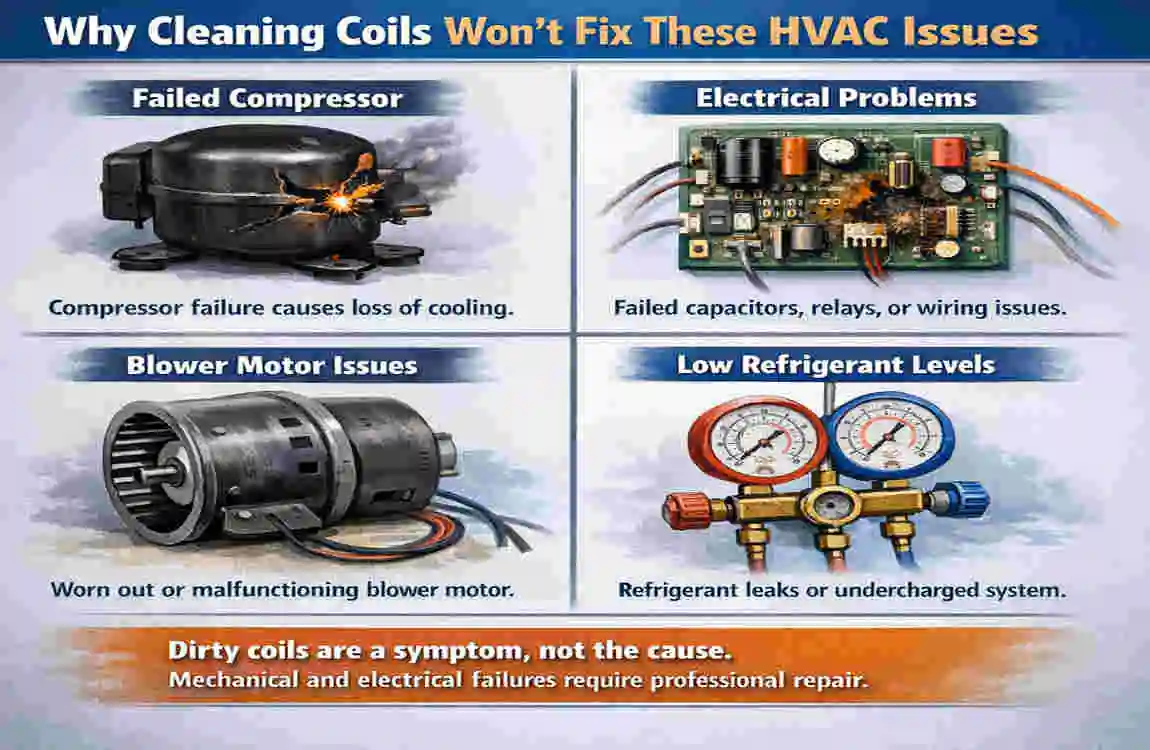
Finally, you have to be honest with yourself about why your house is warm. If your AC is running constantly but the air coming out of the vents is at room temperature, a splash of water won’t help.
Water cannot fix a leaky coil that has lost all its refrigerant. It cannot repair a failing compressor motor, and it certainly cannot fix an AC system that is simply too small for the square footage of your home. If your system is fundamentally broken, water is nothing more than a band-aid on a broken leg. **Common system failures that no amount of water can address include: a refrigerant leak (evidenced by ice forming on the indoor evaporator coil or the refrigerant lines), a failed or weak run capacitor (the compressor hums but does not start), a stuck or failed contactor relay (the outdoor unit does not turn on at all), a clogged metering device or expansion valve (uneven cooling or freezing), or ductwork that has collapsed, disconnected, or developed major leaks in the attic or crawl space. If you notice that your system’s supply air temperature is higher than 58°F to 62°F at the closest vent to the air handler, or if the temperature split between your return air and supply air is less than 14°F to 20°F, you almost certainly have a mechanical or refrigerant issue that requires a licensed HVAC technician to diagnose and repair. Using water to “cool down” a system that is already failing can actually mask the symptoms and delay necessary repairs, potentially turning a $300 fix into a $3,000 compressor replacement.
Risks of Spraying Water on an AC Unit
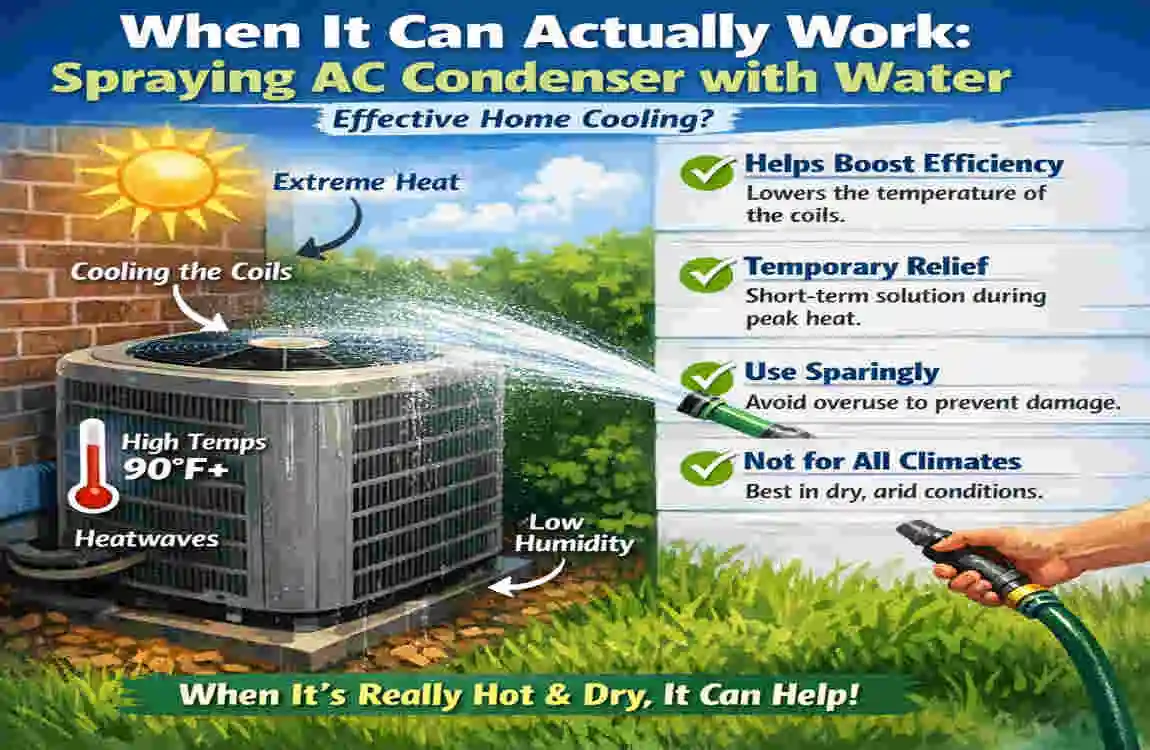
Before you make misting your AC unit a daily summer habit, you absolutely must understand the severe risks involved. While you might save a few pennies on your afternoon electricity bill, you could end up causing thousands of dollars in long-term damage.
The Danger of Mineral Buildup and Scale
The biggest enemy of this cooling hack is hard water. Tap water is not pure H2O; it contains dissolved minerals like calcium and magnesium.
When you spray tap water onto your hot condenser coils, the pure water evaporates into the air, but the heavy minerals do not. They are left behind, baked onto the delicate aluminum fins. Over time and with repeated spraying, these microscopic mineral deposits accumulate into a thick, white, chalky substance known as scale.
Scale is incredibly destructive. It coats the coils, acting as a thermal insulator. Just a millimeter of scale can drastically reduce your unit’s heat transfer efficiency. Worse yet, scale bridges the tiny gaps between the aluminum fins, blocking the airflow completely. Once scale builds up on the coils, it is nearly impossible to remove without harsh, acidic chemicals that can further damage the metal. **The compounding nature of scale buildup is what makes it so insidious. In the first few weeks of misting, the scale layer is microscopically thin and has virtually no noticeable impact on performance. This gives homeowners a false sense of security—they believe the misting is helping without any downsides. But scale accumulation is exponential: each new layer of minerals bonds to the rough surface of the previous layer more easily, and the rate of buildup accelerates over time. By mid-summer, what started as an invisible film has become a visible white crust that can reduce heat transfer efficiency by 20% or more. Removing heavy scale typically requires a professional coil cleaning using a specialized acid-based cleaner, which can cost $150 to $300 per service. In severe cases where the scale has penetrated deep between the fins or corroded the aluminum, the entire condenser coil may need to be replaced—an expense that ranges from $800 to $2,500 depending on the unit size and brand.
Corrosion and Rust Concerns
Air conditioning units are designed to live outdoors and endure rainstorms. However, they are not designed to sit in a constant state of artificial dampness.
When it rains, the water eventually stops, and the unit dries out naturally. But if you mist your unit every afternoon, you are exposing its metal components to relentless moisture. This can rapidly accelerate rusting on the outer cabinet, screws, and the fan motor housing.
Additionally, if your tap water has high chlorine levels or an unbalanced pH, it can actively corrode the aluminum fins, making them brittle and prone to crumbling. Without those fins, heat transfer becomes impossible, and your condenser is ruined. **It is important to understand the distinction between occasional rain exposure and chronic artificial wetting. Rain is naturally soft water with very low mineral content and a relatively neutral pH. Your tap water, on the other hand, is treated with chlorine or chloramine disinfectants, may have a pH anywhere from 6.5 to 8.5, and carries dissolved minerals that rain does not. The combination of chlorine, minerals, and heat creates a particularly aggressive corrosive environment for metals. Galvanic corrosion is another hidden risk: when dissimilar metals (such as the copper tubing and aluminum fins in your condenser coil) are both in contact with mineral-laden water, an electrochemical reaction can occur that accelerates the deterioration of the less noble metal—in this case, the aluminum. Over several seasons of repeated misting, this galvanic corrosion can eat through the aluminum fins and even cause pinhole leaks in the copper refrigerant tubing, resulting in a complete refrigerant loss that requires not just a coil replacement but also an expensive system recharge.
Short-Term Gains vs. Long-Term Maintenance Costs
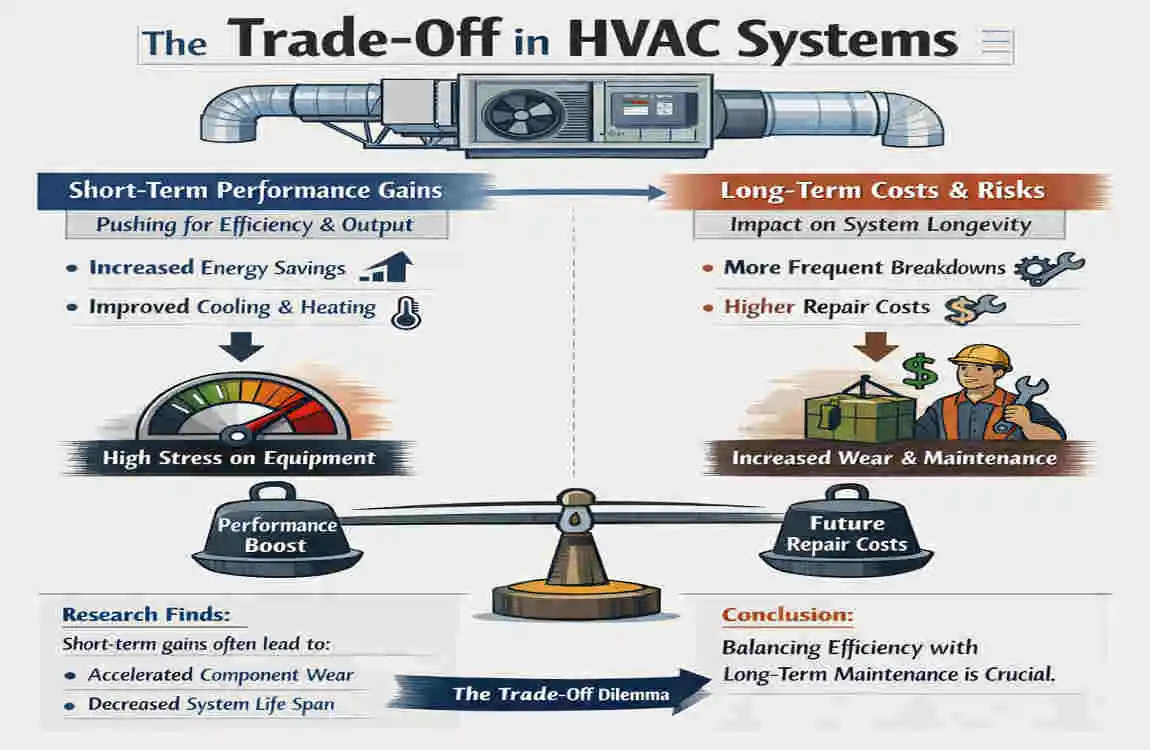
You have to weigh the pros and cons. Yes, spraying water might make your AC run 5% more efficiently for an hour on a Tuesday afternoon. But if doing so causes the fan motor bearings to rust out or the coils to become permanently scaled over, you are looking at a massive repair bill.
Most HVAC professionals strongly advise against repeated misting precisely for this reason. The marginal savings you might see on your energy bill will be instantly wiped out the moment you have to pay a technician to replace a corroded condenser coil. **To put the math into perspective: on an extremely hot day, misting your condenser for one hour might save you $0.50 to $1.50 in electricity costs, depending on your local utility rates and the size of your system. If you misted every hot afternoon for an entire summer season (approximately 90 days), you might save $45 to $135 total. However, a single fan motor replacement costs $200 to $600; a condenser coil replacement costs $800 to $2,500; and a compressor replacement can run $1,500 to $3,500. Even under the most optimistic assumptions, it would take years of misting to recoup the cost of just one premature component failure caused by water damage. The smarter financial strategy is to invest that money and effort into preventive maintenance—annual professional tune-ups, regular filter changes, and keeping the area around the condenser clean and clear—which will deliver far greater energy savings and system longevity without any of the corrosion or scale risks associated with misting.
Safe Ways to Use Water on an AC Condenser
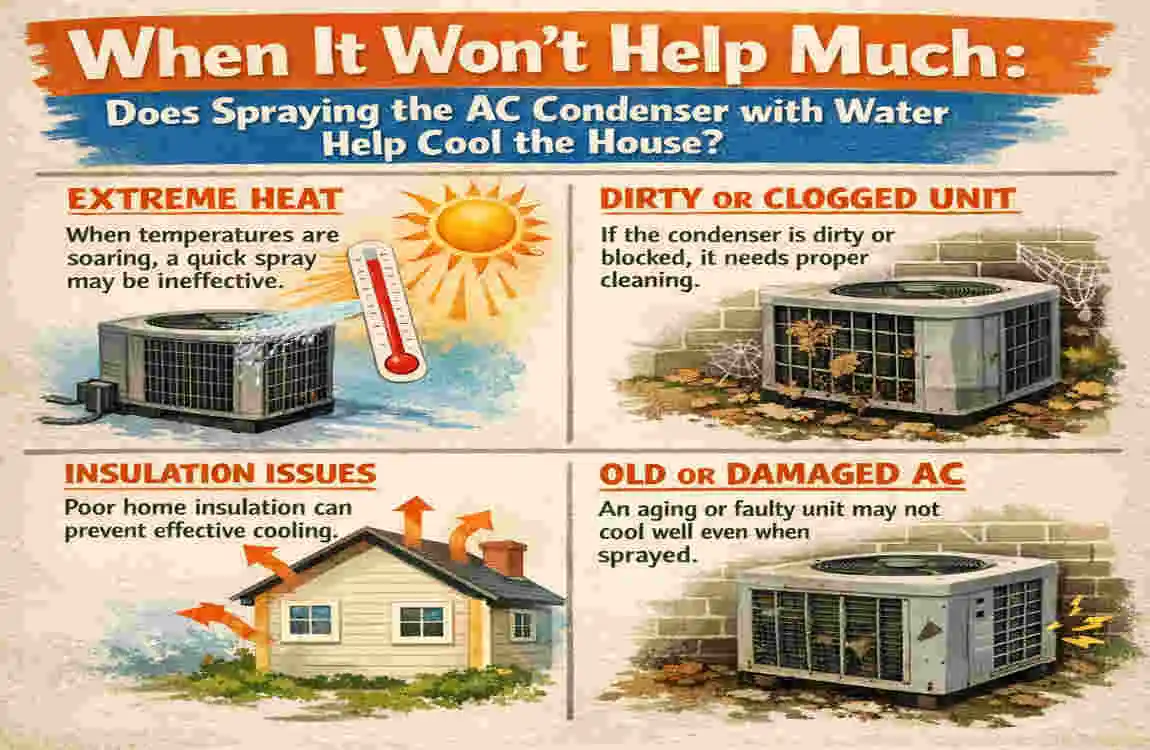
If you understand the risks and still want to clean your unit or give it a rare, occasional cool-down spray on the absolute hottest day of the year, there is a right way and a wrong way to go about it. Follow these steps to keep your equipment safe.
Always Turn Off the Power First
Water and electricity are a deadly combination. Before you even unkink your garden hose, walk over to the electrical disconnect box located on the exterior wall near your AC unit. Pull the disconnect block out or flip the switch to the “off” position.
If you cannot find the exterior disconnect, go to your main breaker panel in the garage or basement and flip the dedicated breaker for the air conditioner. Never spray water directly into a machine that has hundreds of volts of live electricity actively flowing through it. **Most residential AC condensers operate on a 240-volt circuit, which carries enough electrical current to cause serious injury or death if water creates a conductive path between the live components and your body. Even though modern condenser units are designed with weather-resistant housings, they are not waterproof—they are weather-resistant. There is a significant difference. Weather resistance means the unit can withstand normal rainfall falling on it from above. It does not mean it can safely handle a directed stream of water being sprayed into its interior at various angles and pressures. Additionally, be aware that even after you flip the breaker, the run capacitor inside the electrical compartment can hold a residual electrical charge for several minutes. While the risk of shock from a capacitor discharge through a water stream is low, it is an additional reason to wait a few minutes after shutting off power before beginning any cleaning, and to never direct water at the electrical access panel.
Choose the Right Spray Setting
Put away the pressure washer. A pressure washer is powerful enough to strip paint off a deck; it will instantly bend and crush the paper-thin aluminum fins on your AC unit. Once those fins are flattened, airflow is permanently blocked.
Instead, use a standard garden hose with a multi-pattern spray nozzle. Select the “Mist” or “Shower” setting. You want a gentle, raining motion, not a concentrated, laser-like stream. Keep the nozzle pointed at a slight downward angle to mimic the natural fall of rain. **To give you a sense of the pressure difference, a standard garden hose with an open nozzle delivers water at approximately 40 to 60 PSI (pounds per square inch), which is generally safe for condenser coils. A residential pressure washer, on the other hand, outputs anywhere from 1,300 to 2,800 PSI—roughly 30 to 50 times the force of a garden hose. The aluminum fins on a condenser coil are typically only 0.006 to 0.010 inches thick—about the thickness of a sheet of heavy aluminum foil. They will bend, fold, and flatten under even moderate pressure washer force. Once fins are bent, they restrict airflow and can only be restored using a specialized fin comb tool, which requires patience and skill to use without causing further damage. When using your garden hose, maintain a distance of at least 12 to 18 inches between the nozzle and the coil surface, and spray from straight on rather than at a steep angle to avoid forcing debris deeper into the fin pack rather than washing it out.
Avoid the Electrical Components
Your condenser unit is split into different sections. The large section with the visible metal fins is safe to get wet. However, there is a solid metal panel at one corner of the unit where the electrical wires run. Behind this panel sits the contactor, the capacitor, and the circuit boards.
Do not spray water directly at this electrical panel. While it is designed to resist rain, blasting it with a hose at an angle can force water behind the seals and short out your electrical components. Focus purely on the exterior fin and coil area. **Some newer high-efficiency condenser units also include sensitive electronic components such as variable-speed inverter boards, communication modules that link to smart thermostats, and diagnostic LED panels. These components are even more vulnerable to water intrusion than traditional mechanical contactors and capacitors. If you own a variable-speed or inverter-driven AC system (common in brands like Carrier Infinity, Trane XV, Lennox XC, or Daikin), exercise extra caution and consult your owner’s manual before spraying any water near the unit. Replacement inverter boards can cost $500 to $1,200, and water damage to these components is typically not covered under the manufacturer’s warranty because it is classified as owner-caused damage rather than a manufacturing defect.
Step-by-Step Guide for a Safe AC Wash:
(Keep the existing ordered list exactly as-is)
Better Ways to Improve Home Cooling
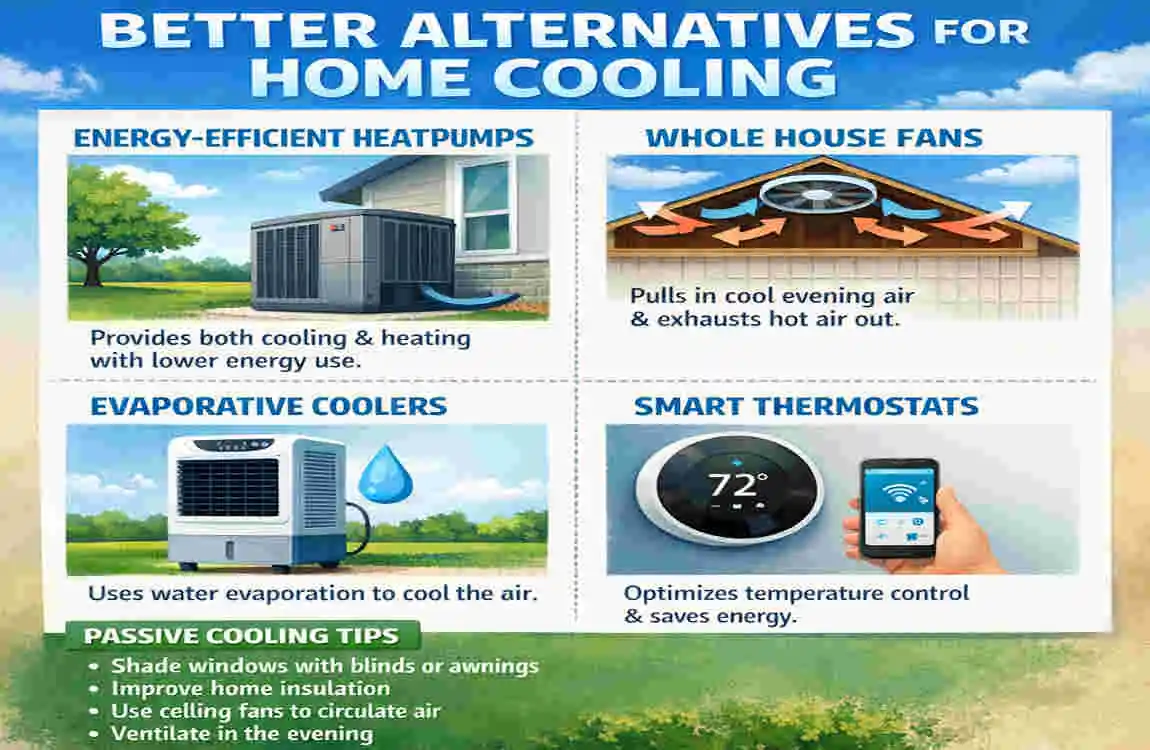
If you find yourself constantly tempted to spray your AC unit just to survive the summer heat, it is a clear sign that your home cooling strategy needs an upgrade. Instead of relying on a risky, short-term hack, try implementing these proven, long-term solutions to boost your home’s comfort and energy efficiency.
Master Your Air Filters
The single most common reason an air conditioner struggles to cool a house is a clogged indoor air filter. All the air blowing into your rooms must first pass through that filter. If it is choked with dog hair, dust, and dander, the blower motor cannot push the cold air into your living spaces.
Check your filter every 30 days. If you hold it up to a light and cannot see through it, throw it away and install a fresh one. This simple $10 fix solves more cooling problems than any other maintenance task. **Understanding filter ratings can also help you choose the right balance between air quality and airflow. Filters are rated on the MERV (Minimum Efficiency Reporting Value) scale, which ranges from 1 to 20. For most residential systems, a MERV 8 to MERV 11 filter provides excellent dust and allergen filtration without restricting airflow too much. Higher-rated filters (MERV 13 and above) capture finer particles like bacteria and smoke, but they also create more resistance, forcing the blower motor to work harder and potentially reducing airflow across the evaporator coil. If you have pets, live in a dusty area, or have family members with allergies, you may need to change your filter as frequently as every two to three weeks during peak cooling season. Additionally, make sure you install the filter in the correct direction—most filters have an arrow printed on the frame indicating the direction of airflow, which should always point toward the blower motor and away from the return air grille.
Give Your AC Unit Some Shade
If your outdoor condenser is sitting in direct, baking sunlight all day, it has to work much harder to release heat. Providing shade for the unit can naturally lower the ambient temperature around the coils, giving you the same benefits as misting without any of the water-related risks.
Consider planting a few leafy trees or installing a decorative wooden trellis near the unit. However, you must be incredibly careful not to block airflow. Any structure or plant must be kept at least 2 to 3 feet away from the sides of the unit, and you should never build a solid roof directly over the fan exhaust. **Studies on the effects of shading on AC performance suggest that a properly shaded condenser can operate in an environment that is 5°F to 10°F cooler than an unshaded unit in direct sunlight, potentially improving efficiency by 5% to 10% over the course of a summer. Deciduous trees are an ideal choice because they provide thick, leafy shade during the summer when you need it most, and then drop their leaves in the fall, allowing winter sunlight to reach the unit and the surrounding area. Fast-growing options like red maples, river birches, and tulip poplars can provide meaningful shade within three to five years of planting. If trees are not practical, a pergola-style shade structure with open slats works well because it breaks up the direct solar radiation without creating a solid barrier that traps hot air around the unit. Avoid using solid fencing or privacy screens directly around the condenser, as these create a “heat pocket” that recirculates the hot exhaust air back into the intake, which is far worse than direct sunlight exposure.
Seal Leaks and Block the Sun
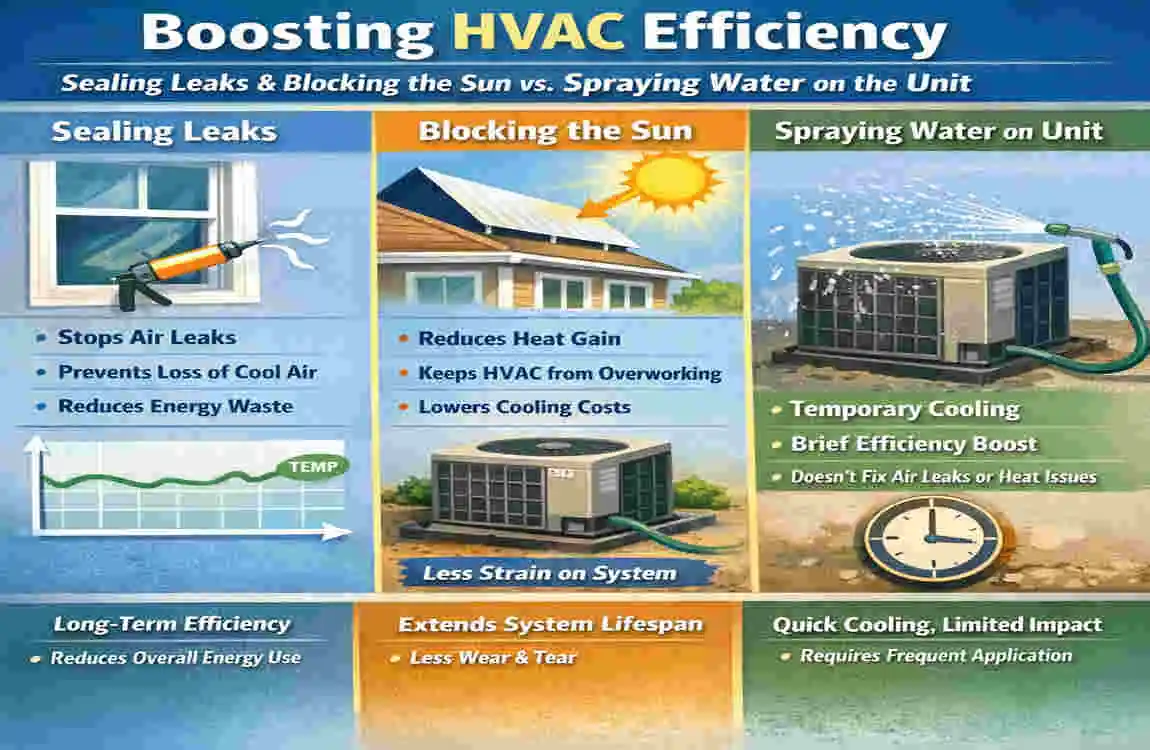
Your AC might be working perfectly, but if your house is leaking cold air like a sieve, you will never feel comfortable.
Invest in some affordable weather stripping and caulk. Seal up the gaps around your windows and exterior doors to keep the heavy, hot summer air outside where it belongs. Additionally, close your blinds, drapes, or plantation shutters during the peak afternoon hours. Sunlight beaming directly through your windows creates a greenhouse effect that your AC simply cannot compete with. **According to the U.S. Department of Energy, air leaks can account for 25% to 40% of the energy used for heating and cooling in a typical home. The most common leak points include gaps around windows and door frames, electrical outlets on exterior walls, recessed lighting fixtures in ceilings below the attic, plumbing and electrical penetrations, and the seams where walls meet the foundation or the attic floor. A tube of silicone caulk costs about $5 and can seal dozens of small gaps; a roll of self-adhesive foam weather stripping costs about $8 and can seal several doors and windows. For south- and west-facing windows that receive the most direct afternoon sun, blackout curtains or solar-reflective window film can reduce solar heat gain by 40% to 70%, dramatically reducing the cooling load on your AC system. These upgrades pay for themselves within a single cooling season and continue to deliver savings year after year—a far better return on investment than spraying your condenser with water.
Quick Comparison: Cooling Strategies
To help you decide where to focus your energy, take a look at this breakdown of different home cooling strategies:
By focusing your time and budget on the long-term solutions listed above, you will create a consistently comfortable home environment without risking your expensive HVAC equipment.
FAQs About Spraying AC Condenser with Water
Does spraying water on AC condenser help cool house?
Yes, but only a little, and only temporarily. Spraying water onto the hot coils creates an evaporative cooling effect, lowering the refrigerant’s temperature more quickly. This allows your compressor to work with less strain, which can result in slightly cooler air blowing from your vents. However, the effect disappears the moment the water evaporates. **The improvement is most noticeable in hot, dry climates where rapid evaporation enhances the heat transfer process. In humid environments, the benefit is negligible because the moisture-saturated air prevents efficient evaporation. For most homeowners, the realistic cooling improvement amounts to a 1°F to 3°F drop in supply air temperature at the indoor vents—perceptible but not transformative.**
Is it safe to spray water on an AC unit?
It is generally safe to gently rinse the coils with a light shower setting to remove loose dust, provided the power is turned off. Air conditioners are built to withstand rain. However, intentionally blasting the unit with high pressure, or spraying water into the electrical panels, is highly dangerous and can destroy the equipment. **As an added safety precaution, always inspect the unit’s wiring and connections for visible damage before spraying. Frayed or exposed wires combined with water can create a serious electrocution risk. If you see any signs of wiring damage, call a licensed electrician or HVAC technician before proceeding.**
How often should I spray my condenser with water?
You should aim to thoroughly wash your condenser with a gentle hose spray once or twice a year as part of routine maintenance to remove dirt. As for spraying it just to cool it down, professionals recommend doing so rarely, if at all. Daily misting greatly increases your risk of mineral scale buildup and rust. **The best times for a maintenance rinse are in the spring before the cooling season begins and again in the fall after the season ends. A spring cleaning removes the debris that has accumulated over the winter months and ensures the coils are ready for peak performance, while a fall cleaning removes the dirt and organic matter (grass clippings, pollen, and cottonwood seeds) that accumulated during the summer to prevent corrosive buildup during the off-season.**
Will spraying water lower my electricity bill?
In a strictly theoretical, laboratory sense, yes. If the compressor doesn’t have to work as hard, it draws less electricity. However, in real-world application, the financial savings from misting your unit for an hour are likely measured in pennies. It will not result in a dramatic, noticeable drop in your monthly utility bill. **To provide context, a typical 3-ton residential AC system draws approximately 3,000 to 3,500 watts during full-load operation. Even a generous 10% efficiency improvement from misting would save 300 to 350 watts per hour—roughly $0.03 to $0.05 per hour at the average U.S. electricity rate of $0.12 per kWh. Over an entire month of daily one-hour misting sessions, the total savings would be approximately $1 to $1.50—far less than most homeowners expect.**
Can hard water damage the AC condenser?
Absolutely. This is the primary reason HVAC technicians advise against routine misting. Hard water contains calcium and magnesium. When the water evaporates, those minerals bake onto the aluminum fins, creating a crusty white scale. This scale blocks airflow, insulates the coils, and forces your AC to run hotter and harder, eventually leading to expensive breakdowns. **If your home has hard water (which you can test with an inexpensive water hardness test strip available at any hardware store for about $8), you should either avoid misting entirely or use softened or distilled water. Installing a simple garden hose water filter designed to reduce mineral content (typically priced between $25 and $50) can also help reduce scale-forming minerals if you choose to occasionally rinse your condenser as part of seasonal maintenance.