A washing machine needs the right water supply, drainage, and plumbing connections to work safely and smoothly. If any part is missing or poorly installed, you may face leaks, bad drainage, or even damage to your floor and walls.
| Installation Type | What It Includes | Typical Cost Range |
|---|---|---|
| Basic washer hookup | Connect existing water and drain lines | $50–$150 |
| New water supply lines | Install new hot/cold water connections | $150–$400 |
| New drain connection | Add or modify washing machine drain | $200–$500 |
| Washer box installation | Install box, valves, and connections | $150–$350 |
| Complete new plumbing | Water lines, drain, valves, and labor | $400–$1,000+ |
| Difficult installation | Long pipe runs, wall access, or major modifications | $800–$1,500+ |
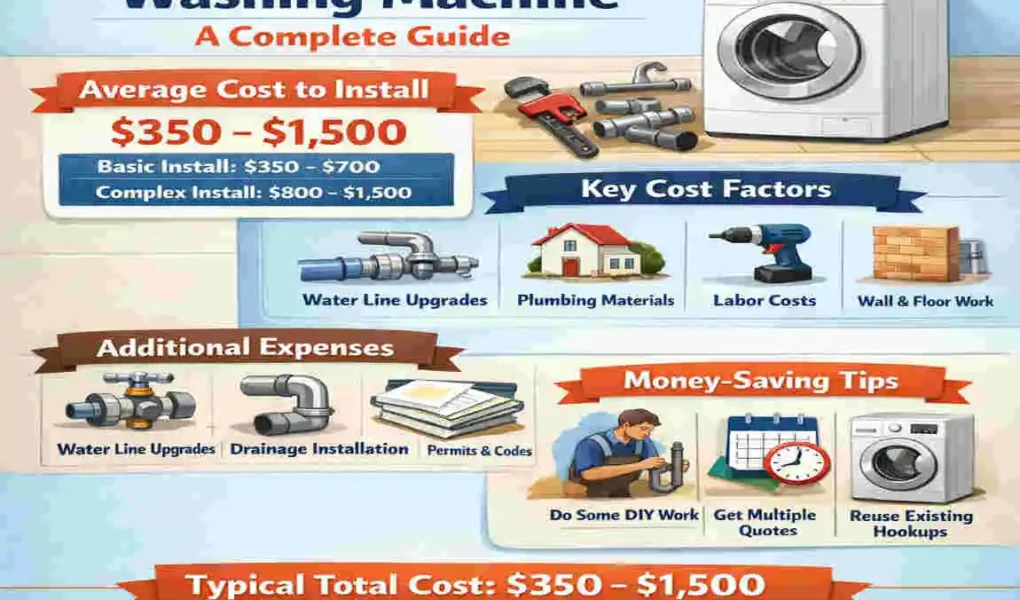
Washing machine plumbing installation costs depend on several factors, including whether plumbing already exists, how far the pipes need to run, the labour involved, the materials used, and whether new connections must be added.
Washing Machine Plumbing Installation: What Is Included?
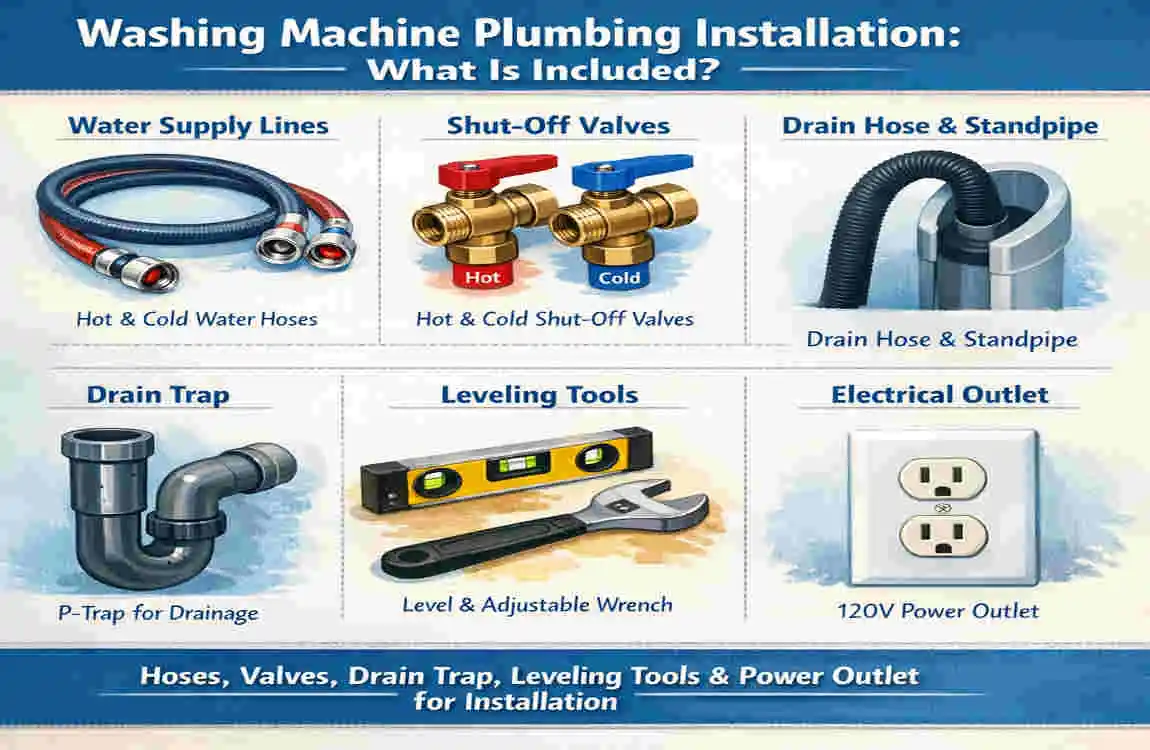
Washing machine plumbing is not just about plugging in a hose. It usually includes a few key parts that help the machine take in water and drain wastewater properly.
Water Supply Connections
A washing machine usually needs hot and cold water lines. These connect to shutoff valves and hoses that deliver water to the appliance. Good supply connections help prevent leaks and make it easy to turn off the water when needed.
Drainage and Standpipe
The washer also needs a proper drain path. This usually means connecting the drain hose to a standpipe or another approved drain setup. Proper drainage matters because it helps the machine empty water without backing up or spilling.
Washing Machine Box and Valves
Many homes use a recessed washing machine box. This holds the water valves and drain connection in one neat place. It makes the setup easier to use and maintain, and it looks cleaner.
Existing vs. New Plumbing
If the washer is installed where plumbing already exists, the job is usually simpler and cheaper. If you are putting the washer in a brand-new location, the plumber may need to run new water lines, install a drain, and add valves and a washer box. That takes more work and usually costs more.
How Much Does It Cost to Install Plumbing for a Home Washing Machine?
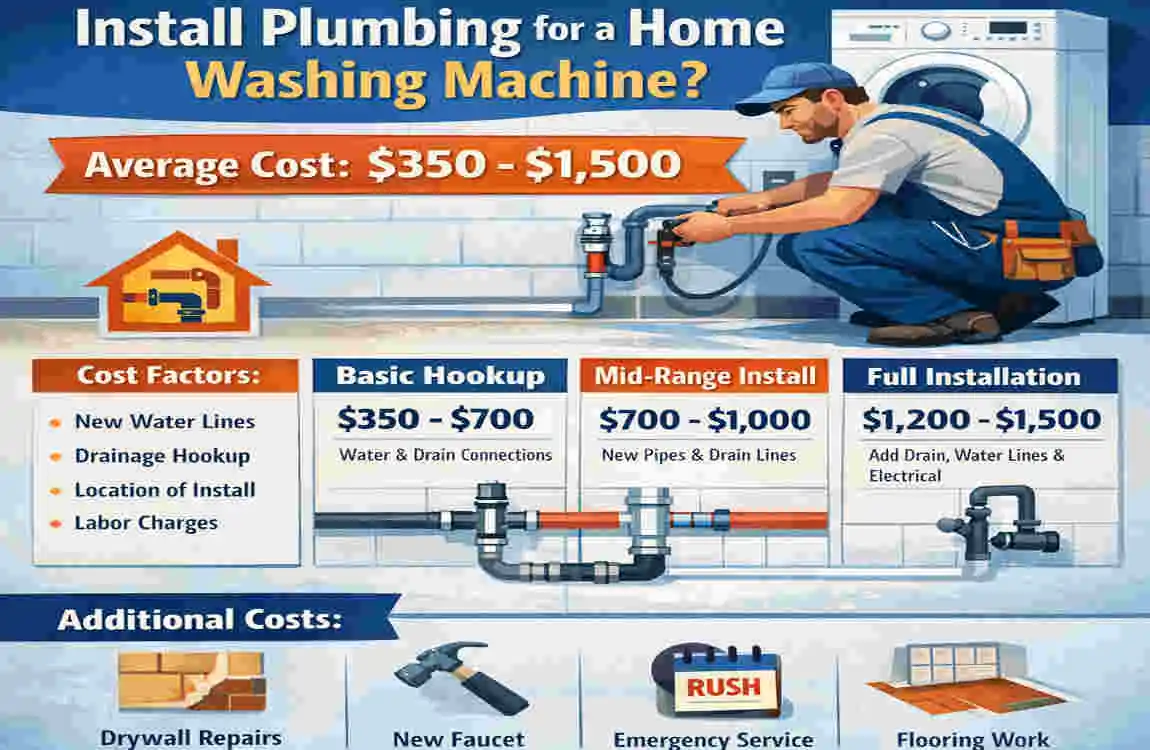
Costs can vary a lot, but the main difference is whether you are doing a simple hookup or a full plumbing installation. Your location, the home’s condition, and the amount of labour all affect the final price.
Basic Installation
If water and drain connections are already in place, the job may only involve standard hookups. This is usually the least expensive option because the plumber does not need to open walls or run new pipes.
New Plumbing Installation
If the home does not already have the right setup, the plumber may need to install supply lines, drainage pipes, valves, and a washer box. This adds labour and materials, which can quickly increase the cost.
Labour and Material Costs
Labour makes up a large part of the price, especially if the work involves cutting into walls or floors. Materials can also add up, including pipes, fittings, shutoff valves, hoses, and outlet boxes—even small parts matter because they all support a safe installation.
Factors That Can Increase the Price
Some jobs cost more because they are more difficult. Here are common reasons:
Type of Plumbing Work What It Involves Possible Effect on Cost
Simple hookup Connecting to existing water and drain lines Lower cost
New water lines Running fresh supply pipes Higher cost
New drain work Adding or changing drain pipes Higher cost
Washer box installation Adding a recessed box and valves Moderate to higher cost
Wall or floor repair Fixing access areas after plumbing work Adds to total cost
Factors That Affect Washing Machine Plumbing Installation Cost
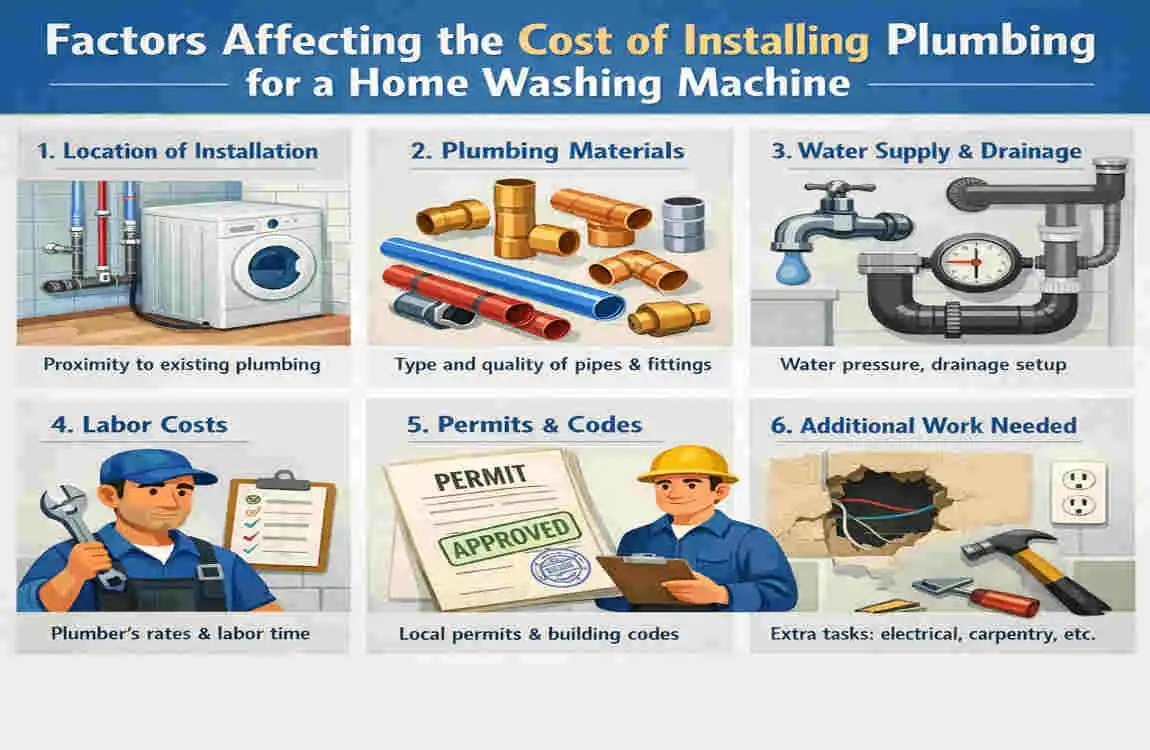
Several details can affect the job price. Before asking for an estimate, it helps to understand what the plumber will need to work with.
Location of the Washing Machine
A washer in a basement may be easier to connect in some homes, while an upstairs laundry room may require more careful pipe routing. Garages, kitchens, and bathrooms can each create different plumbing needs. The location matters because it affects access, drainage, and pipe length.
Distance From Existing Pipes
The farther the washer is from the nearest water and drain lines, the more pipe and labour you need. A short run is usually simpler. A long run often means more work, more materials, and a higher price.
Condition of Existing Plumbing
Old, damaged, corroded, or undersized pipes may need repair or replacement before installing the washer. If the existing plumbing is in poor shape, the project may become larger than expected.
Drainage Requirements
The drain must be sized and connected correctly to avoid backups and slow draining. Proper venting is also important. If the drainage system isn’t right, the washer may not drain properly, which can lead to messes or damage.
Local Plumbing Rates
Plumber rates vary by city and region. Some areas also require permits, which can add to the overall cost. This is why one home may pay much less or much more than another for a similar job.
DIY vs. Professional Washing Machine Plumbing Installation
Some parts of washer setup are simple, but plumbing work can become risky fast if the home needs new lines or drain changes.
What Homeowners May Be Able to Do
If the home already has the correct setup, a homeowner may be able to connect approved supply hoses and position the drain hose correctly. This is usually only reasonable when everything is already in place and matches the machine’s needs.
When a Plumber Is Recommended
A plumber is the better choice when you need new water lines, drain changes, washer boxes, or wall plumbing work. These jobs require more skill and experience, especially if the work must meet local code.
Common Installation Mistakes
Common mistakes include loose hose connections, incorrect drain placement, missing shutoff valves, poor drainage, and leaks. These problems may seem small at first, but they can lead to water damage and repair bills later.
How to Prepare Before the Plumber Arrives
A little preparation can save time and help the project go more smoothly.
- Clear the area so the plumber can easily reach the walls, floor, and connections.
- If you can, find the existing water and drain lines so you can show the plumber where everything is.
- Check the washing machine manual for any special plumbing or drainage requirements.
- Make sure the space is ready for tools, materials, and post-installation testing.
How to Save Money on Washing Machine Plumbing Installation
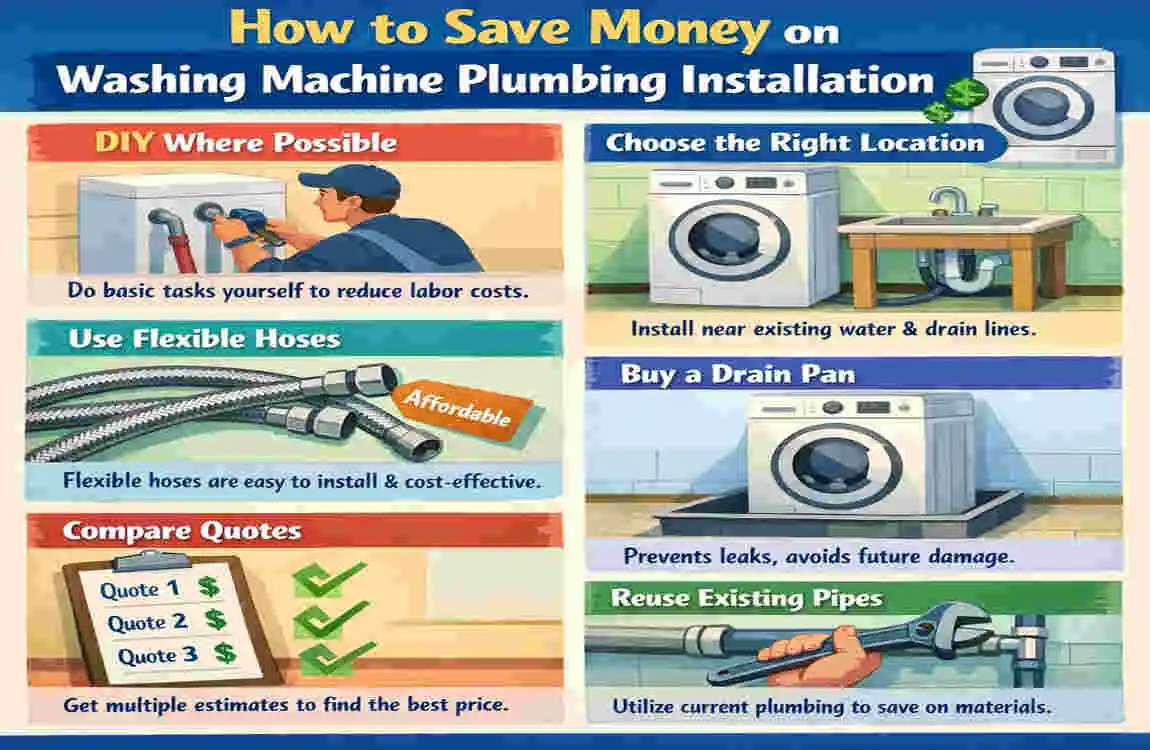
You can control costs by making smart choices before the work starts.
Choose a Location Near Existing Plumbing
Placing the washer close to existing water and drain lines usually keeps the project simpler. Less pipework often means less labour and fewer materials.
Get Multiple Estimates
Ask for a few detailed quotes so you can compare them fairly. A good estimate should separate labour, materials, and extra work like wall repair or permit costs.
Avoid Unnecessary Plumbing Changes
Keep the layout simple if possible. Moving the washer far from existing plumbing or changing the design too much can raise the price.
Plan for Future Maintenance
Use accessible shutoff valves and quality connections. Good planning now can reduce leaks, repairs, and service calls later.
Questions to Ask a Plumber
Before you hire anyone, ask clear questions such as:
- What is included in the total price?
- Are materials included?
- Do I need permits?
- How long will the job take?
- Is warranty coverage included?
- Are wall or floor repairs part of the estimate?
Washing Machine Plumbing FAQs
How much does it cost to install plumbing for a home washing machine?
The price depends on whether the home already has water and drain connections. A basic hookup usually costs less, while new plumbing work costs more.
How much does it cost to add a washing machine hookup?
A simple hookup is different from a full plumbing install. If the connections already exist, the cost is usually lower. If you need new lines and drains, the cost goes up.
Does a washing machine need a dedicated drain?
Yes, it needs a properly sized drain that is correctly connected. This helps prevent backups and drainage problems.
Does a washing machine need hot and cold water?
Most machines use both, but it depends on the model. Some setups differ, so it is best to check the manufacturer’s instructions.
Can a washing machine be installed anywhere in a house?
Not really. The space needs water supply, drainage, electrical service, and enough room for the machine to fit safely.
How long does washing machine plumbing installation take?
A basic hookup can be fairly quick. A job that needs new plumbing, wall access, or drain changes can take much longer.
Can I install washing machine plumbing myself?
You may be able to handle a simple hookup if the right connections are already in place. But if the job involves new plumbing or drain changes, a plumber is the safer choice.