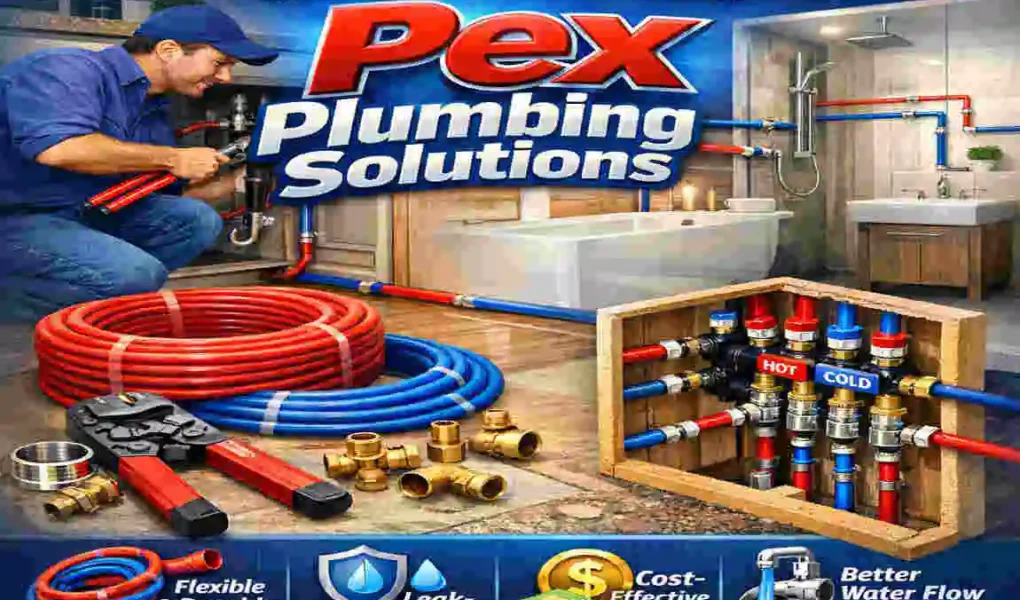
PEX plumbing has quickly become a favourite for homeowners who want a reliable, flexible water‑supply system. Its bendable nature, easy‑to‑learn installation steps, and compatibility with a wide range of projects make it a smart choice for both new builds and remodels.
| PEX Plumbing Feature | Benefit for Your Home |
|---|---|
| Flexible Tubing | Easily routes around walls and obstacles |
| Easy Installation | Simplifies many plumbing projects |
| Corrosion Resistant | Does not rust like traditional metal pipes |
| Fewer Connections | Can reduce potential leak points |
| Hot & Cold Water | Suitable for approved residential water-supply applications |
| Low Maintenance | Durable and easy to repair or replace |
How to Use PEX Home Plumbing
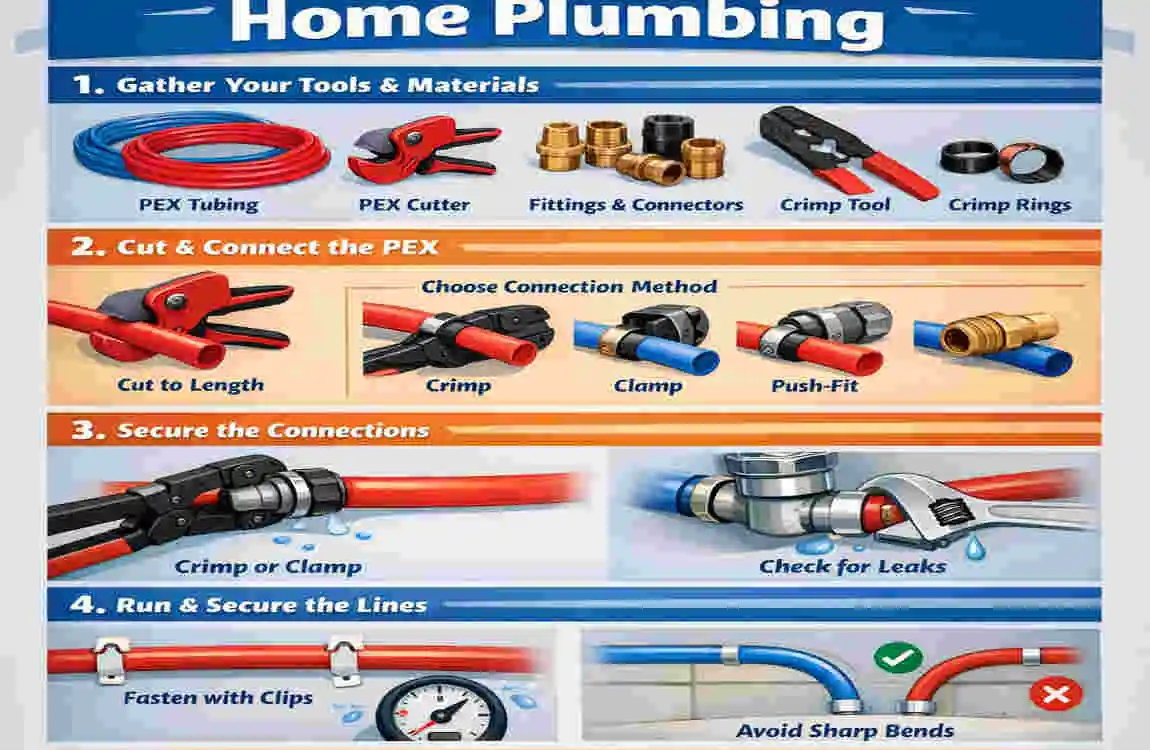
Below is a quick roadmap from house planning to testing your new water lines.
Plan the Plumbing Layout
Start by measuring the distance between the water source and each fixture. Sketch hot‑ and cold‑water routes so you know where each pipe will run before you cut anything.
Choose the Right PEX Size
Typical residential sizes are ½‑inch and ¾‑inch. Pick a diameter that matches each branch’s flow demand; larger pipes carry more water with less pressure loss.
Cut and Connect PEX Tubing
- Use a dedicated PEX cutter for a clean, square cut.
- Slide the appropriate fitting onto the tube, then secure it with the chosen connection method (crimp, clamp, or push‑fit).
Secure and Support the Tubing
Clamp the tubing to studs or joists every 32‑48 inches. Keep it away from sharp edges, high heat sources, and direct sunlight to protect the material.
PEX Plumbing Installation Methods
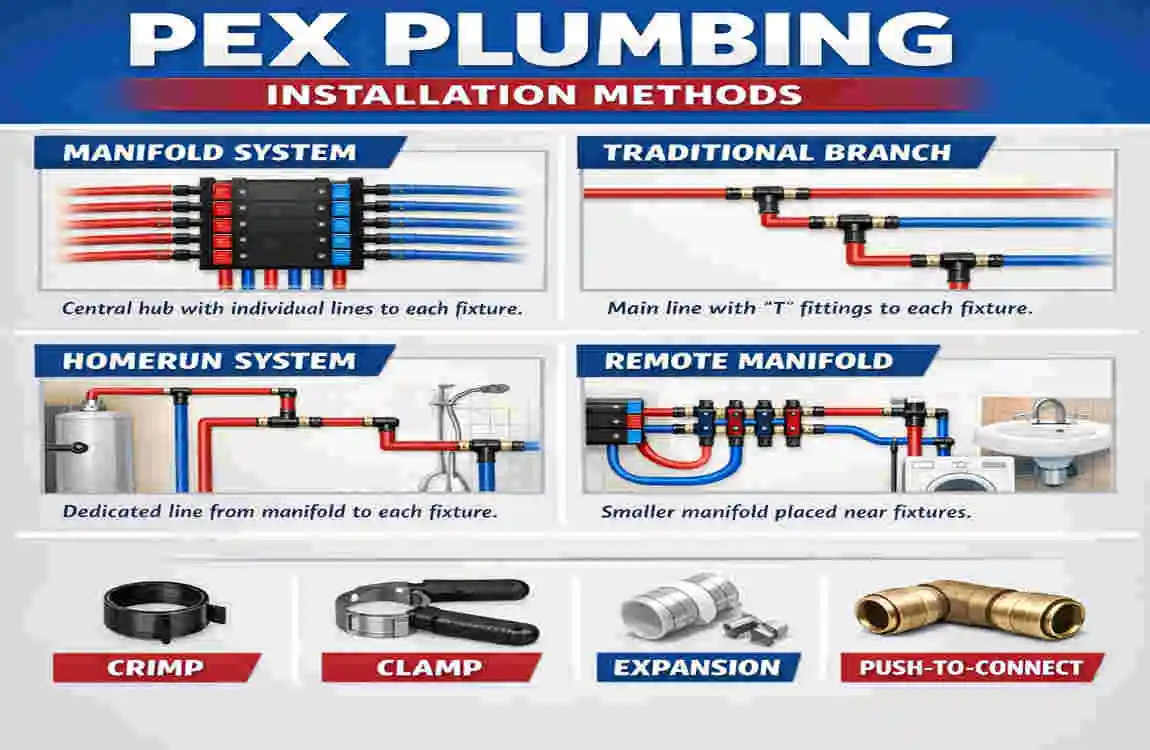
Crimp Connections
Place a crimp ring over the pipe, then use a crimping tool to compress it onto a copper or brass fitting, creating a tight seal.
Clamp Connections
Clamp‑style fittings use a stainless‑steel band that is tightened with a clamp tool. They are reusable and work well for repairs.
Push‑Fit Connections
Push‑fit fittings let you slide the PEX tube directly into the fitting—no special tools needed. They’re perfect for quick adjustments.
Manifold Plumbing
A manifold acts like a central hub, sending water to each fixture through individual lines. This setup lets you shut off a single branch without affecting the whole house.
Benefits and Limitations of PEX for Your Home
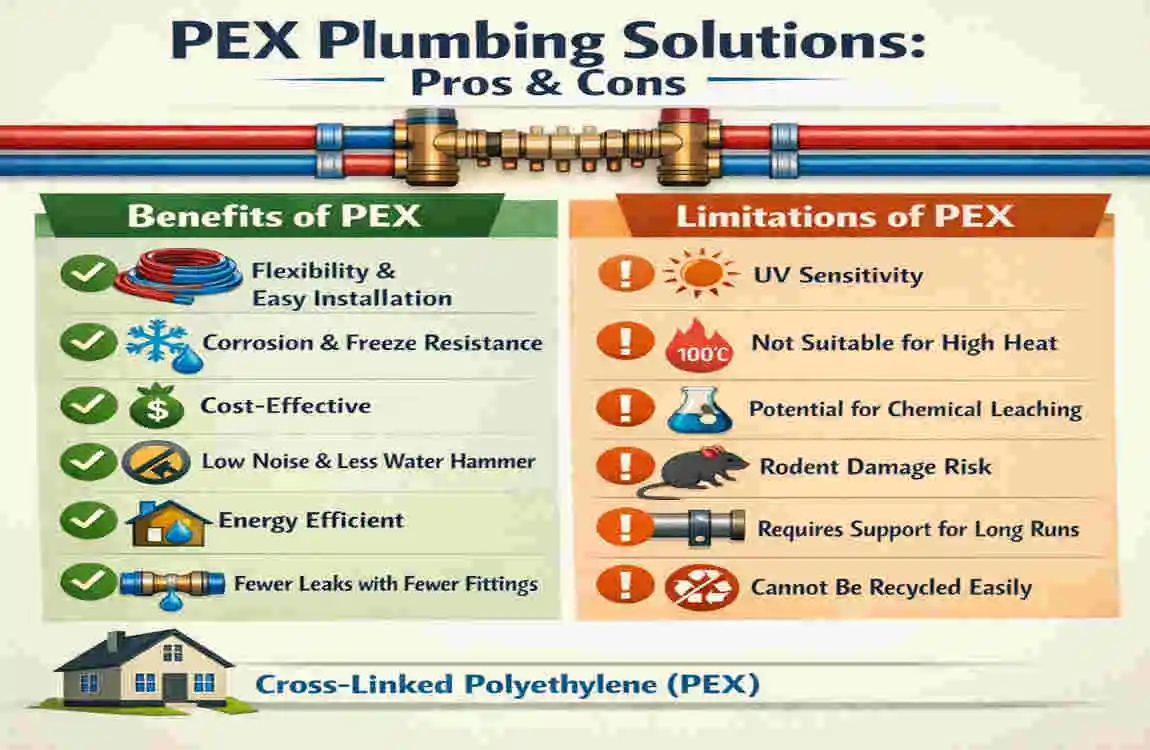
Feature PEX Plumbing
Flexibility Easy to route around obstacles
Corrosion Does not rust like metal piping
Installation Generally simple with proper tools
Connections Multiple fitting systems available
Maintenance Individual sections can be repaired or replaced
Outdoor Use Requires protection from sunlight and unsuitable conditions
Advantages of PEX
- Bends around obstacles without extra elbows.
- Less labour because you spend less time soldering or threading.
- Potential cost savings on both material and installation time.
Things to Consider
- Watch for temperature limits; some PEX types aren’t rated for extreme heat.
- Keep it out of direct sunlight to avoid UV damage.
- Verify local plumbing codes—some jurisdictions require a permit or licensed plumber.
- In rodent‑prone areas, protect the tubing with metal sleeves.
Common PEX Home Plumbing Projects
Replacing Old Water Lines
Swap aging copper or galvanised pipes for PEX for a quieter, corrosion‑free system.
Bathroom Plumbing
Run PEX to showers, tubs, sinks, and toilets for fewer joints and easier cleanups.
Kitchen Plumbing
Supply hot and cold water to faucets, dishwashers, and refrigerators with a single, flexible run.
Basement or Remodelling Projects
Fit PEX through tight spaces, across joists, or around existing framing when you’re finishing a basement or updating a floor plan.
Tips for a Safe and Successful PEX Installation

- Avoid sharp bends and kinks – use bend guides or gentle curves.
- Protect PEX from damage – sleeve it near studs and keep it away from heat sources.
- Test before closing walls – pressurise the system and check every joint for leaks.
- Follow local plumbing codes – obtain any necessary permits and consider a professional inspection for large jobs.
Frequently Asked Questions About PEX Home Plumbing
Is PEX good for home plumbing?
Yes – its flexibility and ease of installation make it a solid choice for residential water supply.
How do you connect PEX pipes?
Using crimp, clamp, push‑fit, or other approved fittings designed for the specific PEX type.
Can I install PEX plumbing myself?
Small, straightforward projects are DIY‑friendly, but larger or code‑critical work may need a licensed plumber.
Can PEX be used for hot water?
Yes, as long as the tubing is rated for hot‑water service.
Does PEX need to be insulated?
Insulation helps prevent freezing in cold climates and reduces heat loss for hot‑water lines.
How long can PEX plumbing last?
When installed correctly and protected from UV and extreme temperatures, PEX can serve a home for 30‑50 years.